

In the ancient Indian tradition of Jainism, one of the most sacred and revered festivals is Paryushana. This auspicious event, which spans over eight days for Svetambara Jains and ten days for Digambara Jains, is a time of profound spiritual reflection, austerity, and purification. As the monsoon rains subside and the harvest season approaches, Jains across the world come together to observe this holy period, seeking forgiveness, practicing non-violence, and renewing their commitment to the path of enlightenment.
The origins of Paryushana can be traced back to the 6th century, when the 24th Tirthankara, Lord Mahavira, walked the earth and propagated the teachings of Jainism. It is believed that during the monsoon season, when travel was difficult and the risk of harming life was heightened, Lord Mahavira encouraged his followers to remain in one place and dedicate themselves to spiritual pursuits.
This practice of staying in one place and focusing on self-purification became known as Paryushana, derived from the Sanskrit word Paryu-shan, which means abiding or coming together. Over time, this period of spiritual retreat evolved into a sacred festival, celebrated annually by Jains worldwide.
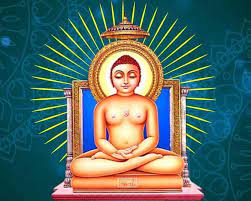
Paryushana is a time of intense spiritual discipline, where Jains strive to adhere to the core principles of their faith with unwavering commitment. The festival is marked by a series of rituals and observances that are deeply rooted in the Jain philosophy of non-violence or ahimsa, truthfulness or satya, non-stealing or asteya, celibacy or brahmacharya, and non-attachment or aparigrahass.
During Paryushana, Jains observe various forms of fasting and abstinence. Some may choose to abstain from food and water entirely for the duration of the festival, while others may opt for partial fasts or consume only specific types of food. This practice of self-denial is believed to purify the body and mind, cultivating a sense of detachment and spiritual clarity.
One of the most significant rituals of Paryushana is the Pratikraman, a ceremony of confession and forgiveness. Jains believe that even unintentional harm caused to living beings through thoughts, words, or actions accumulates negative karma. During Pratikraman, Jains seek forgiveness from all living beings, including plants and animals, for any harm they may have caused knowingly or unknowingly. This act of humility and repentance is seen as a crucial step towards spiritual purification.
Throughout Paryushana, Jains engage in the recitation and study of sacred texts, such as the Kalpa Sutra for Svetambara Jains and the Tattvartha Sutra for Digambara Jains. These texts contain the teachings and principles of Jainism, and their recitation is believed to deepen one’s understanding and commitment to the faith.
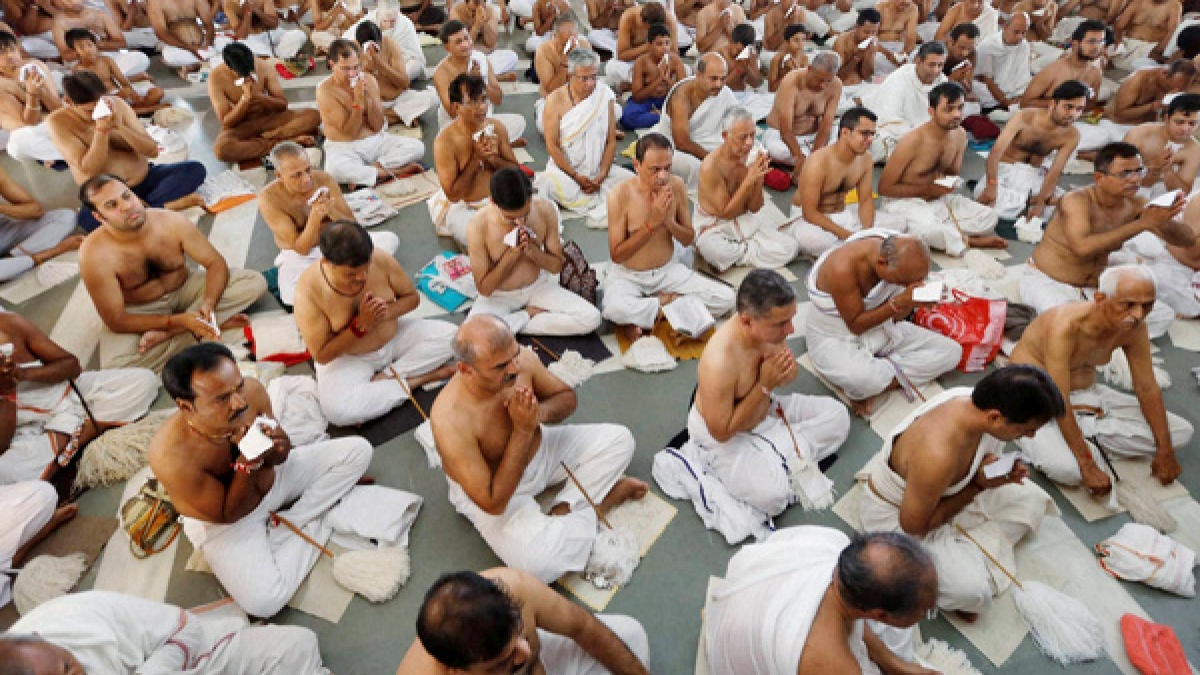
Paryushana is a time for intense meditation and spiritual discourse. Jains gather in temples or community centres to engage in collective meditation, listen to sermons and discourses by monks and scholars, and participate in discussions on the teachings of Jainism. These activities are designed to cultivate inner peace, wisdom, and a deeper connection with the spiritual path.
Like many ancient festivals, Paryushana is steeped in rich mythology and traditions that have been passed down through generations. These stories and customs not only add to the cultural significance of the festival but also serve as powerful reminders of the core values of Jainism.
According to Jain mythology, it was during the Paryushana period that Lord Mahavira, the 24th Tirthankara, attained enlightenment after years of intense spiritual practice and austerities. This event is celebrated on the fifth day of Paryushana, known as Bhagavan Mahavir Janma Kalyanak, which commemorates his birth and enlightenment.
Another significant myth associated with Paryushana is the story of Anant Nath, the 14th Tirthankara. It is believed that on the 14th day of Paryushana, known as Anant Chaturdashi, Anant Nath attained moksha which is the liberation from the cycle of birth and death. This day is celebrated with special rituals and ceremonies, including the worship of the Anant Nath idol.
One of the most revered and controversial traditions of Jainism is Santhara, a voluntary and peaceful fast unto death. While not directly associated with Paryushana, this practice is often undertaken by Jain monks and nuns during the festival, as it is considered an auspicious time for spiritual purification and the attainment of moksha.

For Digambara Jains, the sixth day of Paryushana is celebrated as Sugandh Dashami. On this day, Jains offer fragrant flowers and incense to the Tirthankaras who are enlightened beings as a symbol of their devotion and commitment to the path of non-violence and spiritual purity.
While Paryushana has its roots in ancient traditions, its significance extends far beyond the realm of religious observance. In today’s fast-paced and often materialistic world, the festival serves as a powerful reminder of the importance of spiritual growth, self-reflection, and environmental consciousness.
At the heart of Paryushana lies the principle of non-violence or ahimsa, which is not only a core tenet of Jainism but also a universal value that resonates with people of all faiths and backgrounds. By observing Paryushana, Jains actively promote a lifestyle of compassion and respect for all living beings, setting an example for others to follow.
The practice of fasting and abstinence during Paryushana has a direct impact on reducing one’s carbon footprint and promoting environmental sustainability. By minimizing consumption and adopting a more mindful approach to resource utilization, Jains demonstrate their commitment to preserving the delicate balance of nature.
In a world plagued by stress, anxiety, and constant distractions, Paryushana offers a much-needed opportunity for introspection, meditation, and the cultivation of inner peace. By disconnecting from the material world and focusing on spiritual growth, Jains not only benefit themselves but also contribute to a more mindful and compassionate society.
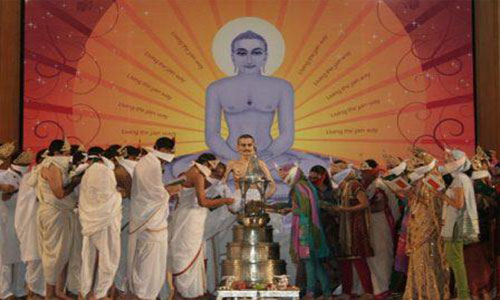
Paryushana is not just an individual journey but also a communal celebration. Jains from all walks of life come together during this festival, fostering a sense of unity, solidarity, and shared purpose. This collective experience strengthens the bonds within the Jain community and serves as a powerful reminder of the importance of social cohesion and mutual support.
The Jain festival of Paryushana is a profound and transformative experience that transcends religious boundaries. It is a celebration of spiritual purification, non-violence, and the unwavering pursuit of enlightenment. Through its rituals, myths, and traditions, Paryushana not only honors the teachings of Lord Mahavira and the Tirthankaras but also serves as a beacon of hope and inspiration for a more compassionate and sustainable world.
As we navigate the complexities of modern life, the lessons of Paryushana remind us to pause, reflect, and reconnect with our inner selves and the natural world around us. By embracing the principles of non-violence, truthfulness, and detachment, we can cultivate a deeper sense of harmony and peace within ourselves and with all living beings.
So, whether you are a follower of Jainism or simply someone seeking spiritual growth and environmental consciousness, the festival of Paryushana offers a powerful opportunity to embark on a journey of self-discovery, compassion, and enlightenment.
 Memories and Such