In My Hands Today…

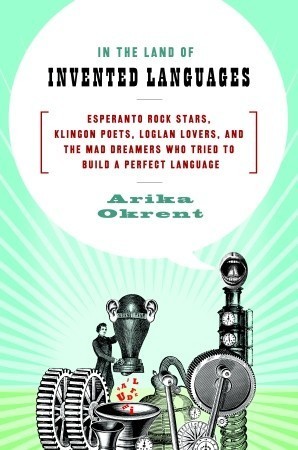
In the Land of Invented Languages: Esperanto Rock Stars, Klingon Poets, Loglan Lovers, and the Mad Dreamers Who Tried to Build a Perfect Language – Arika Okrent

Just about everyone has heard of Esperanto, which was nothing less than one man’s attempt to bring about world peace by means of linguistic solidarity. And every Star Trek fan knows about Klingon, which was nothing more than a television show’s attempt to create a tough-sounding language befitting a warrior race with ridged foreheads. But few people have heard of Babm, Blissymbolics, and the nearly nine hundred other invented languages that represent the hard work, high hopes, and full-blown delusions of so many misguided souls over the centuries.

In In The Land of Invented Languages, author Arika Okrent tells the fascinating and highly entertaining history of man’s enduring quest to build a better language. Peopled with charming eccentrics and exasperating megalomaniacs, the land of invented languages is a place where you can recite the Lord’s Prayer in John Wilkins’s Philosophical Language, say your wedding vows in Loglan, and read Alice’s Adventures in Wonderland in Lojban.

In My Hands Today…

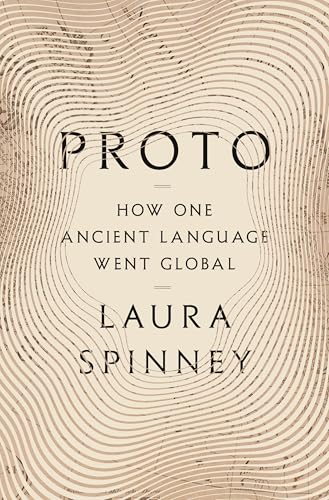
Proto: How One Ancient Language Went Global – Laura Spinney

As the planet emerged from the last ice age, a language was born between Europe and Asia, by the Black Sea. This ancient tongue, which we call Proto-Indo-European, soon exploded out of its cradle, changing and fragmenting as it went, until its offspring were spoken from Scotland to China. Today, those descendants constitute the world’s largest language family, the thread that connects disparate languages, such as Dante’s Inferno and the Rig Veda, to the love poetry of Rumi and The Lord of the Rings. Indo-European languages are spoken by nearly half of the world’s population. How did this happen?

Laura Spinney set out to answer that question, retracing the Indo-European odyssey across continents and millennia. With her we travel the length of the steppe, navigating the Caucasus, the silk roads and the Hindu Kush. We follow in the footsteps of nomads and monks, Amazon warriors and lion kings – the ancient peoples who spread these languages far and wide. In the present, Spinney meets the scientists on a thrilling mission to retrieve those lost the linguists, archaeologists and geneticists who have reconstructed this ancient diaspora. What they have learned has vital implications for our modern world, as people and their languages are on the move again. Proto is a revelatory portrait of world history in its own words.

In My Hands Today…

Word Perfect: Etymological Entertainment For Every Day of the Year – Susie Dent

From ‘Turning a Blind Eye’ (Nelson putting the telescope to his missing eye to ignore the order to stop fighting) to why May Day became a distress call; from stealing someone’s thunder to the real Jack the Lad, from tartle (forgetting someone’s name) to snaccident (unintentionally eating a whole packet of biscuits), Word Perfect is her brilliant linguistic almanac full of unforgettable true stories tied to every day of the year. You’ll never be lost for words again.

In My Hands Today…

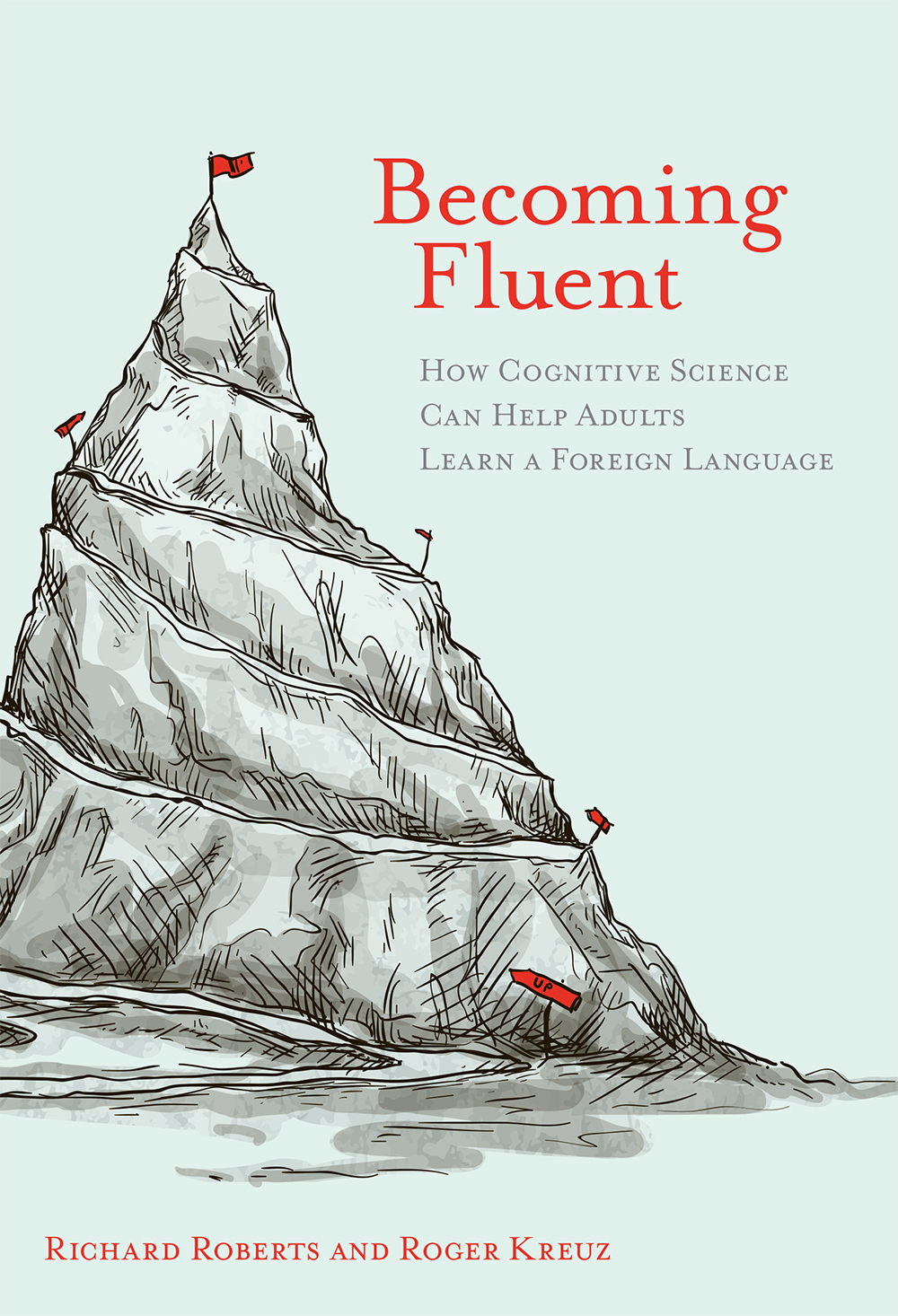
Becoming Fluent: How Cognitive Science Can Help Adults Learn a Foreign Language – Roger J. Kreuz, Richard Roberts

Adults who want to learn a foreign language are often discouraged because they believe they cannot acquire a language as easily as children. Once they begin to learn a language, adults may be further discouraged when they find the methods used to teach children don’t seem to work for them. What is an adult language learner to do? In this book, Richard Roberts and Roger Kreuz draw on insights from psychology and cognitive science to show that adults can master a foreign language if they bring to bear the skills and knowledge they have honed over a lifetime. Adults shouldn’t try to learn as children do; they should learn like adults.

Roberts and Kreuz report evidence that adults can learn new languages even more easily than children. Children appear to have only two advantages over adults in learning a language: they acquire a native accent more easily, and they do not suffer from self-defeating anxiety about learning a language. Adults, on the other hand, have the greater advantages—gained from experience—of an understanding of their own mental processes and knowing how to use language to do things. Adults have an especially advantageous grasp of pragmatics, the social use of language, and Roberts and Kreuz show how to leverage this metalinguistic ability in learning a new language.

Learning a language takes effort. But if adult learners apply the tools acquired over a lifetime, it can be enjoyable and rewarding.
Genres
Nonfiction
Language
Linguistics
Science
Psychology
Audiobook
Self Help

In My Hands Today…

A Place For Everything: The Curious History of Alphabetical Order – Judith Flanders

In A Place for Everything, historian Judith Flanders draws our attention to both the neglected ubiquity of the alphabet and the long, complex history of its rise to prominence. For, while the order of the alphabet itself became fixed very soon after letters were first invented, their ability to sort and store and organize proved far less obvious.

To many of our forebears, the idea of of organising things by the random chance of the alphabet rather than by established systems of hierarchy or typology lay somewhere between unthinkable and disrespectful. The author fascinatingly lays out the gradual triumph of alphabetical order, from its possible earliest days as a sorting tool in the Great Library of Alexandria in the third century BCE, to its current decline in prominence in our digital age of Wikipedia and Google.