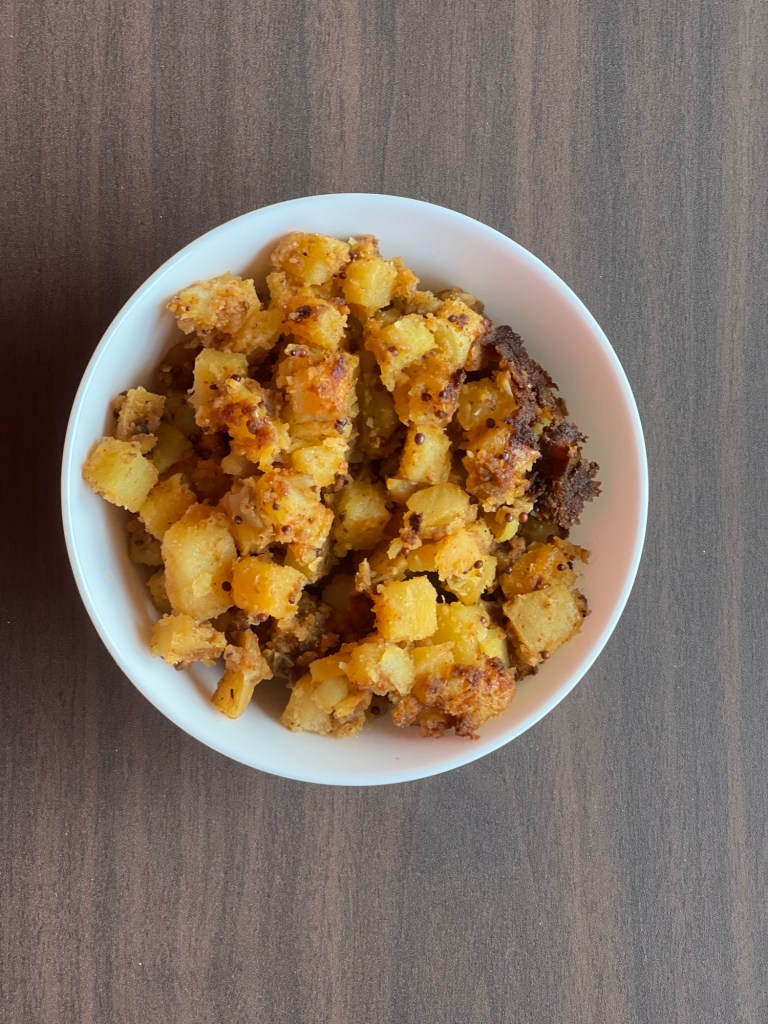
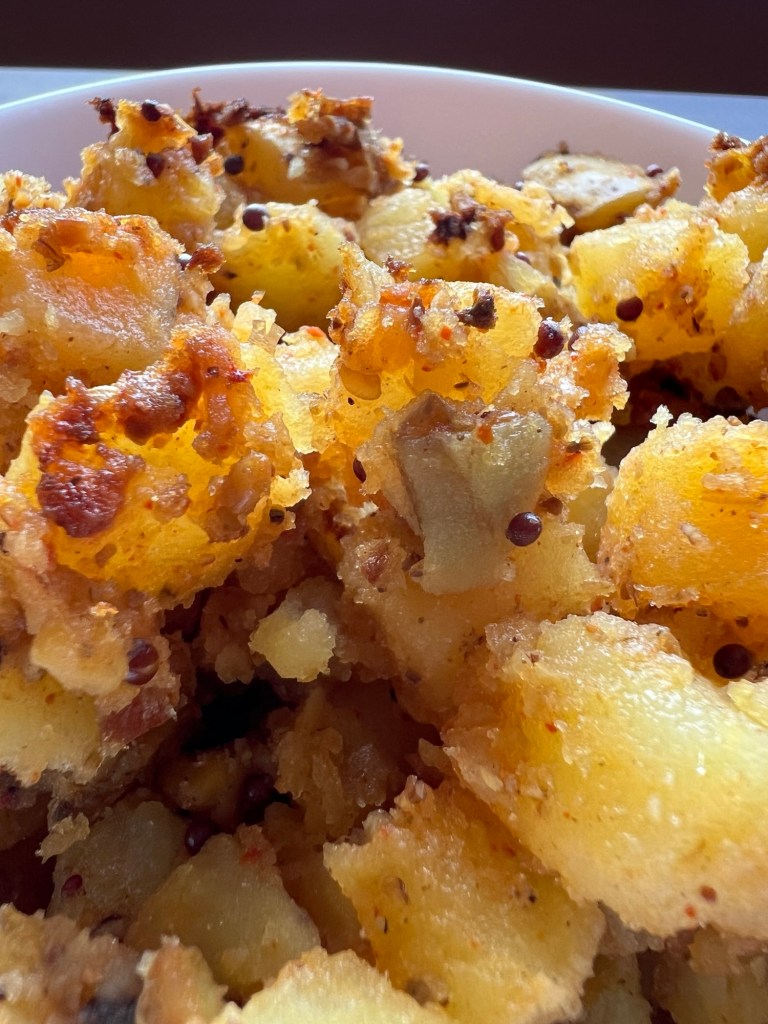
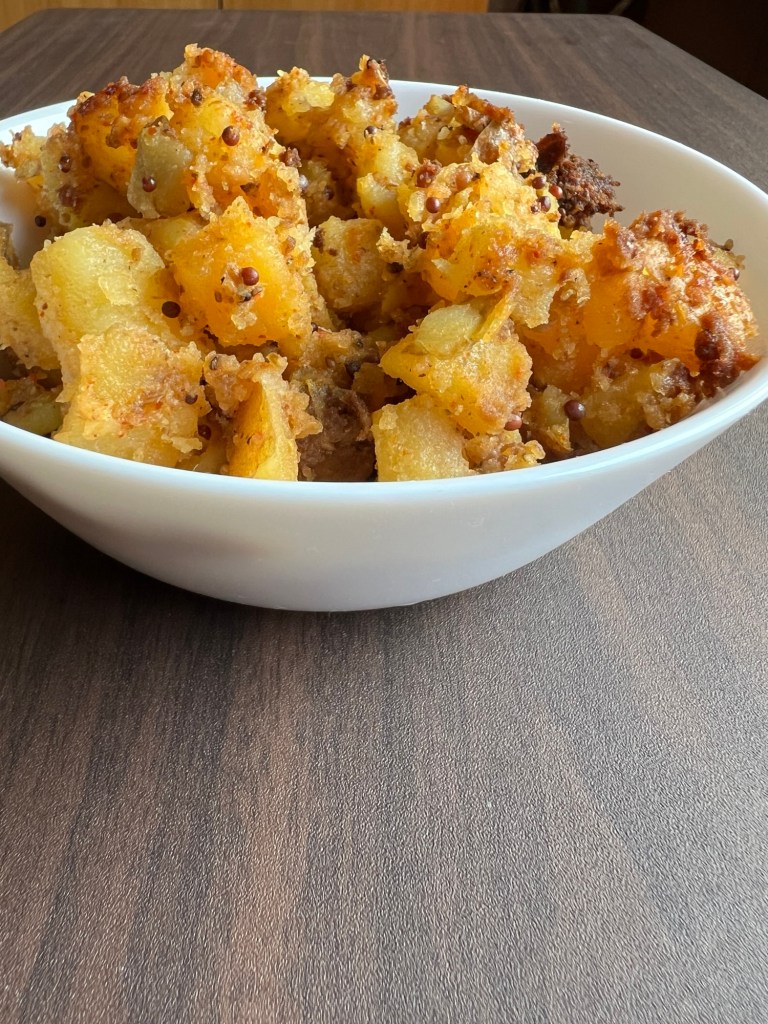
A staple in Tamil Brahmin weddings, Potato Podi Curry, or Urulai Kizhangu Kara Curry, holds a special place in Tamil Brahmin cuisine. This flavourful and spicy potato curry is made without onions and garlic, making it suitable for festive occasions.
Potato Podi Curry
Ingredients:
For the potatoes:
4-5 medium-sized potatoes
¼ tsp turmeric powder
¼ tsp asafoetida powder
Salt to taste
1 tbsp chopped coriander leaves
1 tbsp oil
2 tsp mustard seeds
10-12 curry leaves
For the Podi Powder
2 tbsp coriander seeds
2 tbsp chana dal (split Bengal gram)
2 tbsp urad dal
2 tbsp fennel seeds
2 tbsp black peppercorn
2-3 tbsp Kashmiri chilli powder
¼ tsp fenugreek seeds
Method:
Wash the potatoes thoroughly. This curry will have unpeeled potatoes, so make sure the potatoes are cleaned.
Chop the potatoes into small, bite-sized pieces. Drop the potatoes in cold water to avoid oxidisation.
In the meantime, heat a small skillet and dry roast the ingredients for the podi powder one by one, until they are crisp. Keep aside and let them cool.
Once cool, grind the spices to a fine powder. Keep aside.
In a large saucepan, add about 4-5 cups of water, add ¼ tsp turmeric and some salt and once the water comes to a rolling boil, add the potatoes and cook the potatoes until they are about 80% done, stirring occasionally.
Check to see if the potatoes are done. This can be done by taking a piece and pressing it with your finger. If you can mash it with your fingers, it is cooked. At this point remove the potatoes from the saucepan, drain them and keep aside.
Heat about 2-3 tbsp oil in a large pan and once warm add in the mustard seeds. When the mustard seeds pop, add in the curry leaves and mix.
Now add in the asafoetida powder and once that is mixed, add in the drained potatoes. Season with salt.
Add the podi powder and Kashmiri red chilli and mix gently.
On a low flame let the potatoes finish cooking. This should take about 7-10 minutes.
Serve the potato podi curry with any South Indian meal.
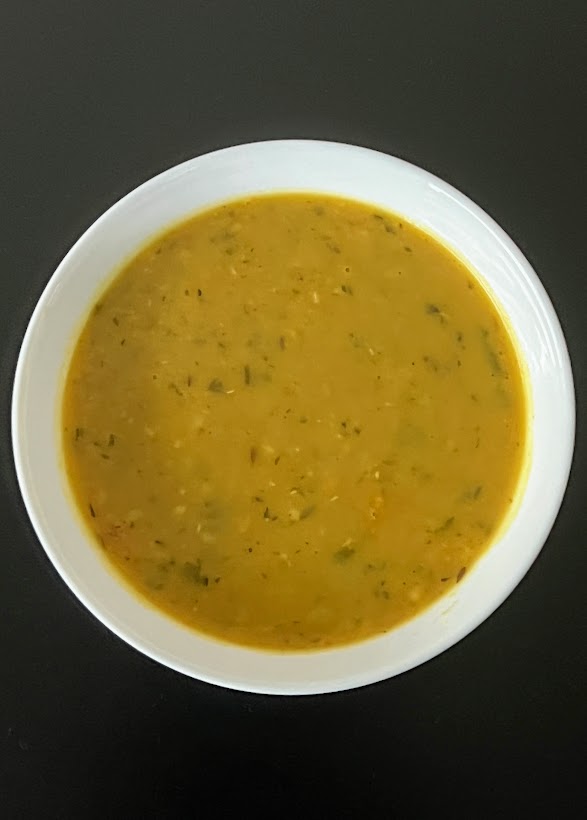
In a vegetarian diet, lentils or dals are a very important source of protein and most Indian households, especially those who follow a vegetarian diet try to incorporate some lentils in their diet daily. But then the problem comes that we end up eating the same three or four types of lentils daily. Fed up, a couple of weeks back, I tried a new recipe which was surprisingly easy to make and very yummy to boot. The addition of yoghurt and milk elevated the recipe and make it special.
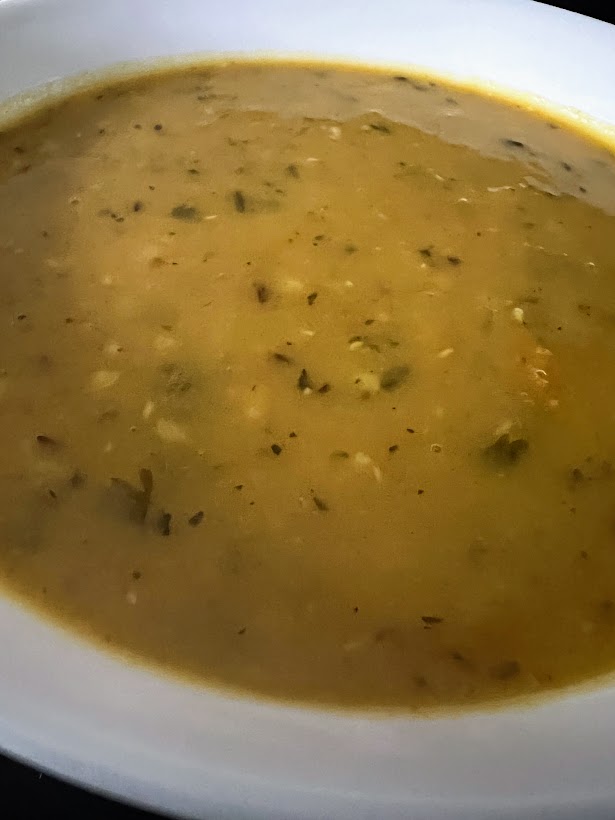
Dal Darbari
Ingredients:
½ cup Yellow Moong Dal
½ cup Masoor Dal or Orange Dal
2 medium-sized onions, finely chopped
2 medium-sized tomatoes, finely chopped
1 tsp cumin seeds
1 tbsp ghee
½ tsp green chilli paste or 1 finely chopped green chilli
¼ tsp ginger paste or 1 inch finely chopped ginger
½ tsp turmeric powder
2 to 3 tsp red chilli powder
½ tsp garam masala Powder
1 tbsp kasuri methi
3 tbsp beaten yoghurt
3 tbsp milk (either skimmed or full cream)
Salt to taste
1-2 tbsp finely chopped coriander leaves
Method:
Wash and soak masoor and moong dal in warm water for about 20 minutes.
After that, add half the turmeric powder and pressure cook the dals for about 3-5 whistles until the dals are very soft and mushy. This can also be done on the stovetop.
When the cooker has cooled down, open it and whisk the dals until they become a homogenous mass.
In a pan, heat half the ghee and add in the cumin seeds and let them splutter a bit.
Now add the green chillies and ginger and saute for a few seconds.
Then add the onions and saute till the onions become translucent in colour.
Once the onions are translucent, add in the tomatoes and saute till the tomatoes become soft and mushy.
At this point, add ½ the red chill powder, the balance turmeric powder, salt and garam masala and saute till the masalas are incorporated.
Pour this masala over the cooked and whisked dals and mix well.
Add the yoghurt and milk and water to bring it to the desired consistency. Keep it on a slow to medium flame until the dal comes to a rolling boil.
In the same pan that you made the masala, heat the balance ghee and once it heats up, crush the kasoori methi in the palms of your hands and add it as well as the remaining red chilli powder and saute for a few seconds before pouring it over the dal.
Cover for about 10 minutes before serving so that the flavours get time to infuse.
Enjoy with rice or any flatbread
Notes: The recipe called for fresh cream which I substituted with skim milk. It didn’t detract from the taste and you can add in 1-2 tbsp of cream instead of milk.
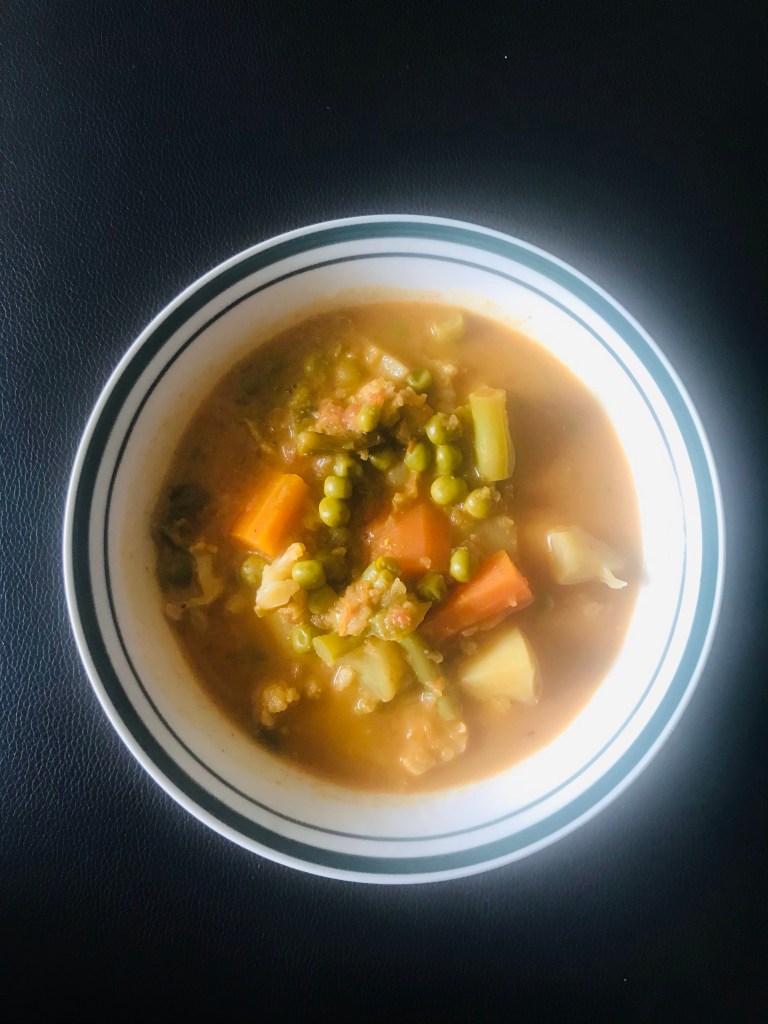
In another episode of no rice Sunday, I was wondering what to make. I had made soups and some roasted vegetables the last few weeks and wanted something different. I was thinking of making a vegetable stew,but didn’t want to make a Kerala-styled coconut milk one. So I decided to improvise and hope and pray it turned out to be edible!
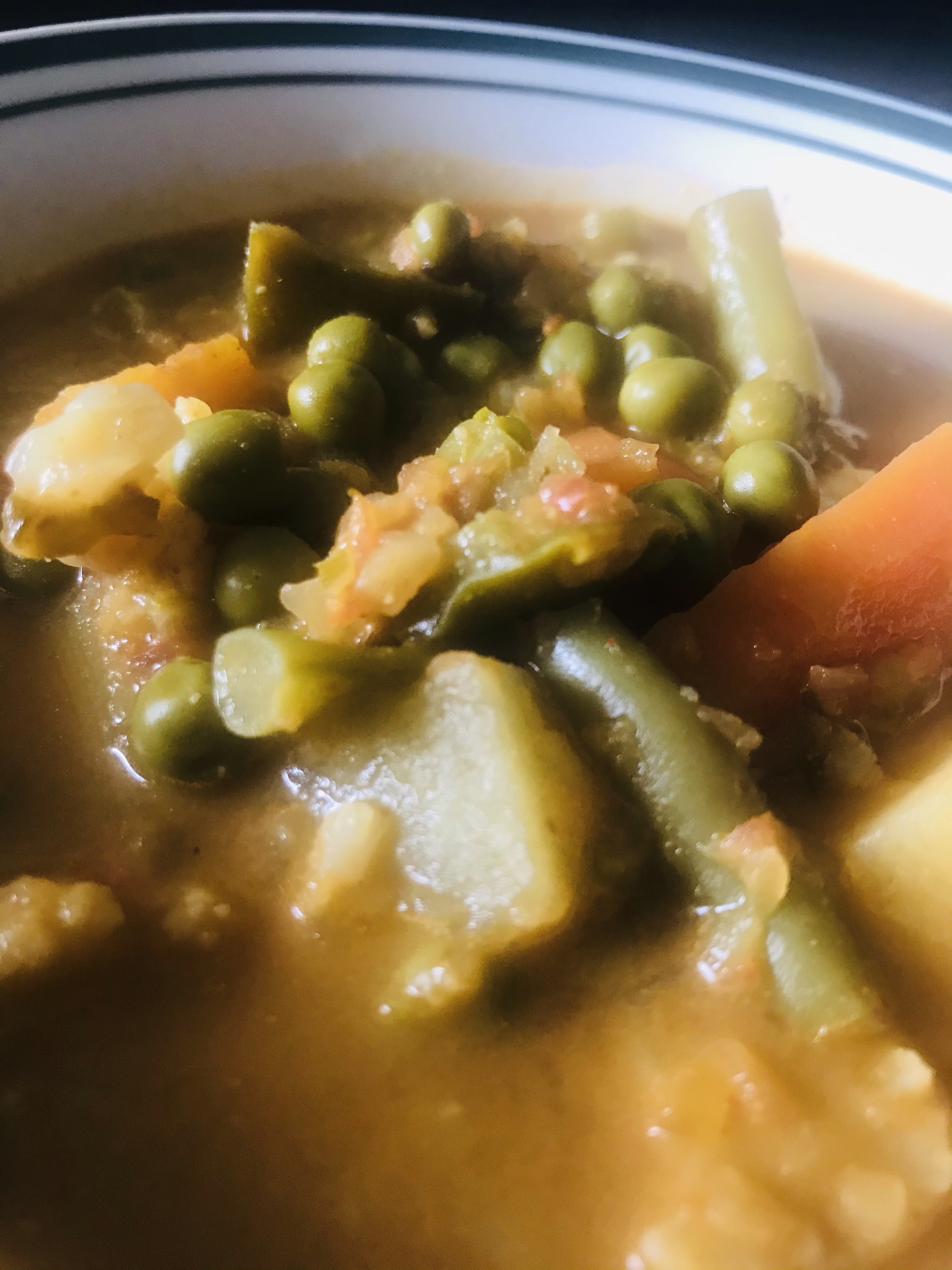
The recipe turned out to be a cross between a soup and a gravy curry and was so flavourful. It is also very healthy with just a tbsp of oil used in the entire recipe. Another good thing about the recipe is that it is a one-pot recipe and would work beautifully for a slow cooker. It just cooks by itself and you need not sit around, stirring and adding ingredients.
My family loved it and I am blogging about it so I can add it to my reportoire and make it another day.
Hearty Vegetable Soup
Ingredients:
3 medium sized onions, minced
2 carrots, chopped bigger than bite sized
2 potatoes, chopped
1 head of cauliflower, chopped
1 green bell pepper, chopped
1 small cup frozen green peas
3-4 medium sized tomatoes, minced
2 green apples, minced (optional)
1 tsp red chilli powder
1/4 tsp turmeric powder
1 tsp cumin powder
1 tsp coriander powder
1-2 tsp garam masala powder
1 tsp cumin seeds
1 tsp fennel seeds
15 cashew nuts, soaked in hot water for 15-20 minutes
15-20 peanuts, soaked in hot water for 15-20 minutes
1 tbsp oil
Salt to taste
Water as required
Method:
Chop the vegetables into pieces larger than bite-sized. I chopped them roughly into 3/4 to 1 inch pieces. Just make sure all the vegetables, with the exception of the green peas are of roughly the same size. Wash and keep aside.
Mince the onions into small, fine pieces. I did this using my food processor which took me seconds as compared to chopping by hand.
Heat the oil in a large pan or dutch oven and when the oil warms up, add the cumin seeds and let them splutter. Then add the fennel seeds and stir for a couple of seconds.
Now add the onions and stir well and let the onions soften and become translucent.
Once the onions are translucent, add the chopped green bell pepper and let it cook for about 3-4 minutes.
Then add the dry spices – turmeric powder, red chilli powder, cumin powder and coriander powder and stir well.
Now add the other chopped vegetables and stir well so the vegetables are covered with the spices. Cover and cook on a medium flame for about 5 minutes.
While this is cooking mince or grate the tomatoes and green apples and keep aside. I again used the food processor and minced both ingredients together.
Then add the minced tomatoes and green apple to the vegetables, lower the flame to a medium-low and let it cook till the vegetables are about 80% cooked. You can also add water to the vegetables at this point, because it will become quite thick with all the vegetables.
While the vegetables are cooking, blend the cashewnuts and peanuts into a smooth paste. Keep aside.
Once the vegetables are about 80% cooked, add the garam masala and the blended cashew-peanut paste and add any seasoning if needed.
Let it continue to cook on a low flame till the vegetables are completely cooked and serve hot with some crusty bread.
If you plan to make this ahead of time, then you may need to add some water when you heat it up before serving because it will thicken up because of the cashewnuts and peanuts. If you are going to add more water, then you will need to check seasoning also which may become diluted.
Dal is a staple in most indian households with some variety of the protein packed dish made across the country. So, in order that we don’t get bored with the same kind of dal, I am always on the lookout for interesting takes and variations.
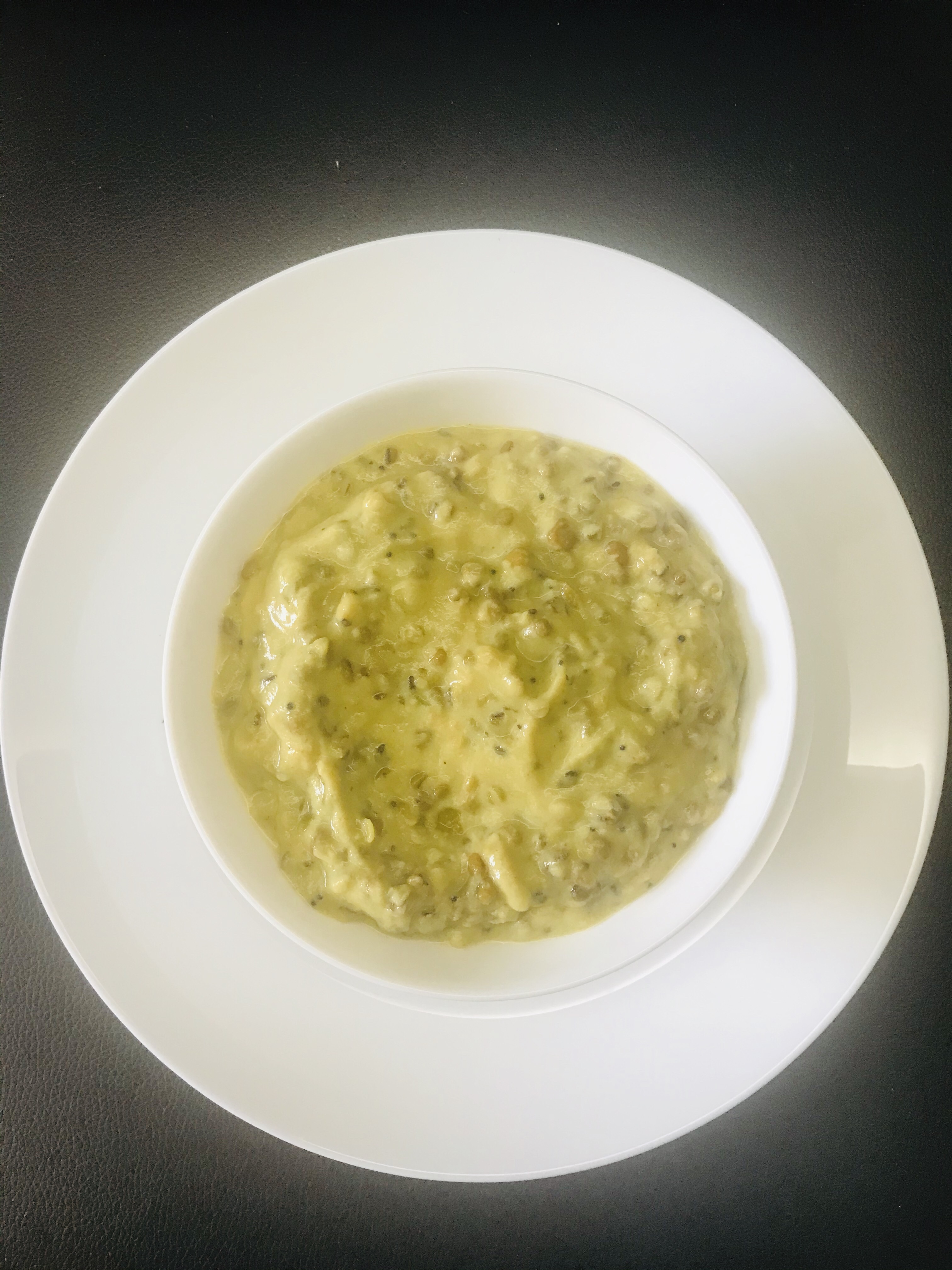
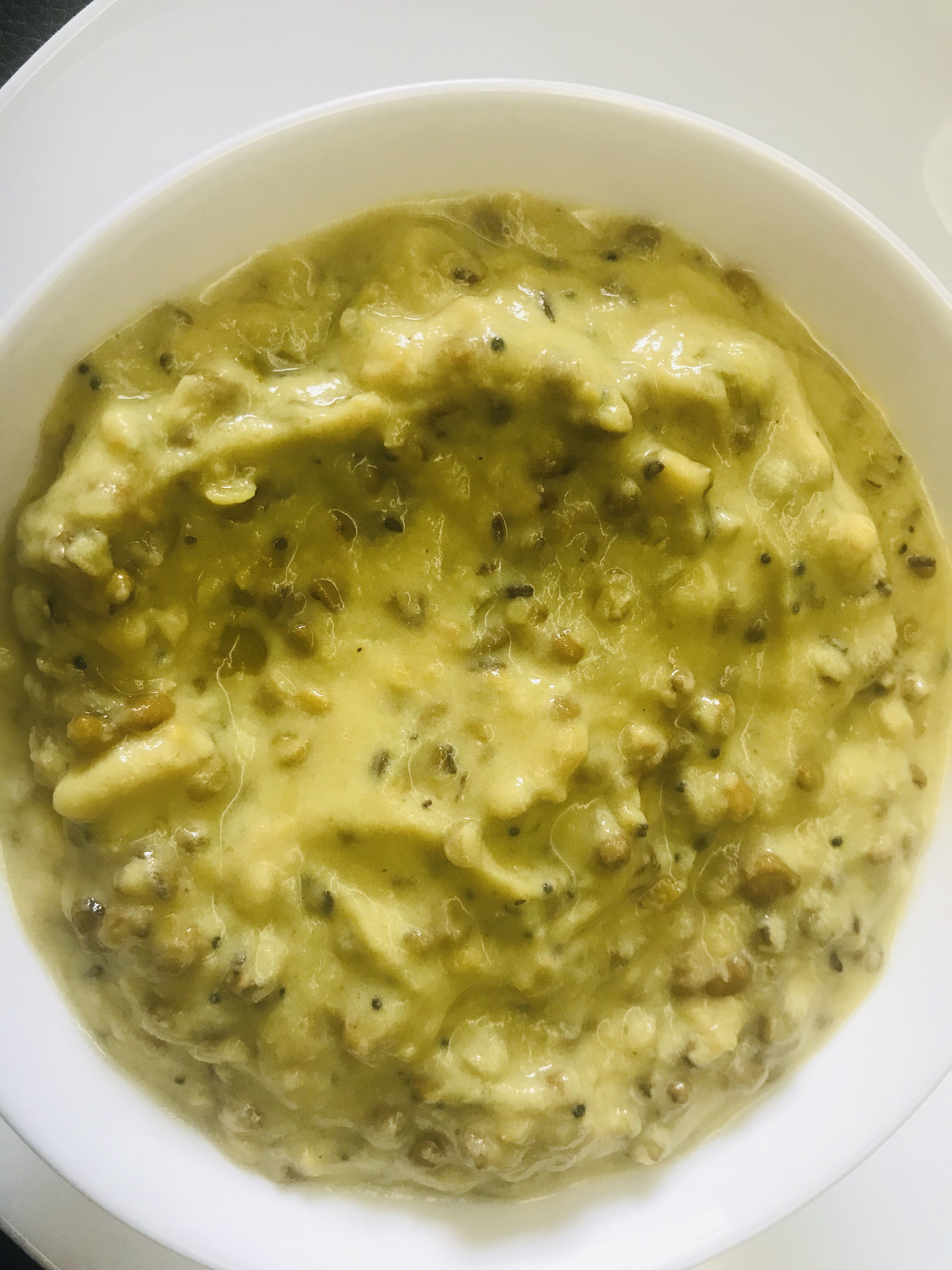
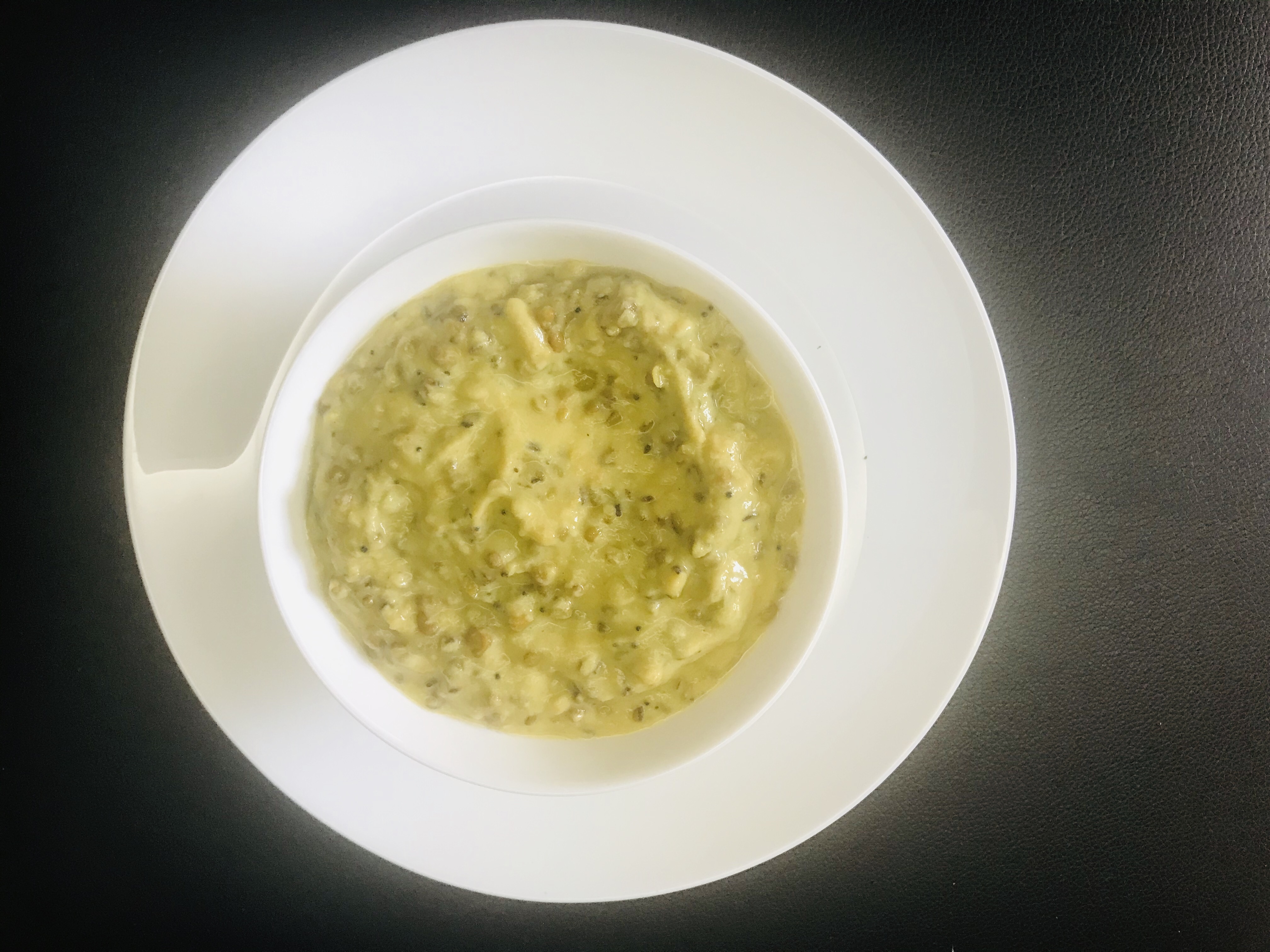
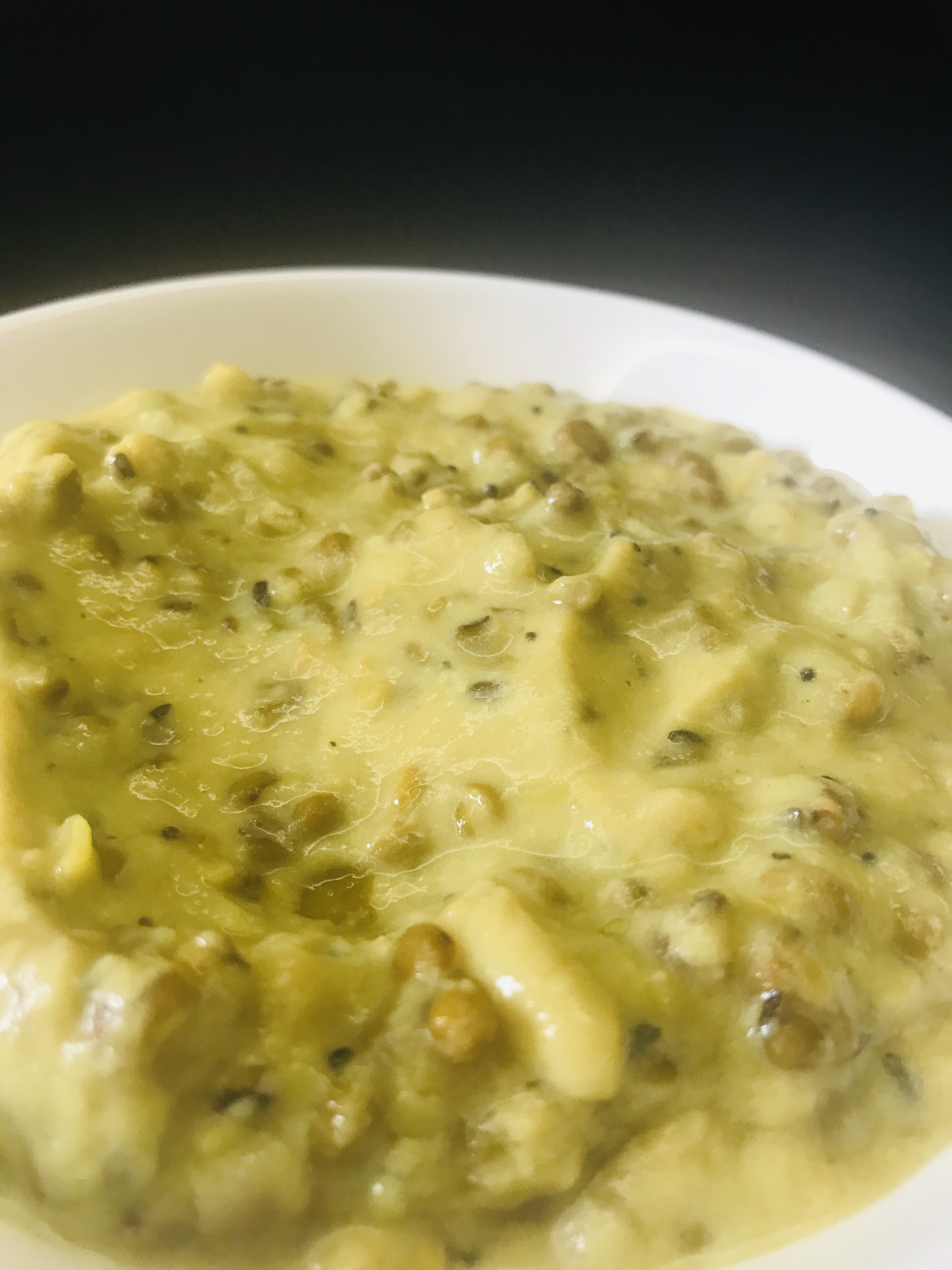
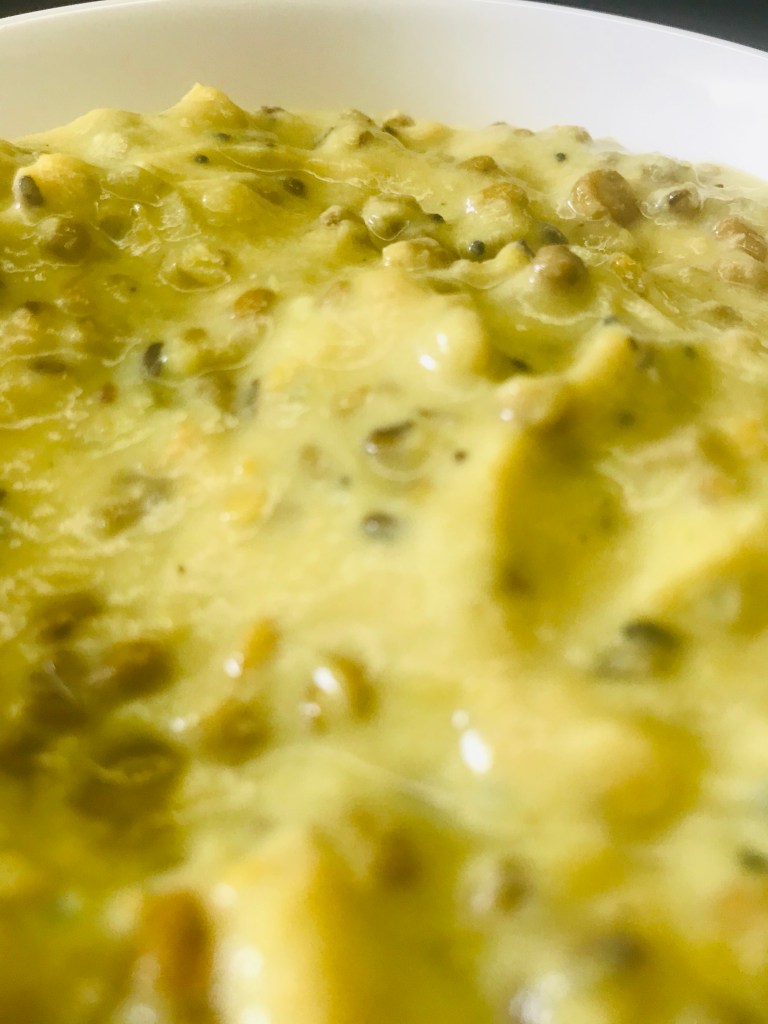
I saw this dal in one of my friend’s Facebook posts and it looked interesting enough to try it. My version may not be the most authentic one, but I enjoyed making and eating the dal. This is a staple in most Gujarati households, but you won’t find this in most restaurants. So let’s see how this is made…
Gujarati Khatta Mung aka Whole Green Gram Dal in a Buttermilk Gravy
Ingredients:
½ cup whole green moong dal, soaked for 4-6 hours
½ to 1 cup yoghurt
2-3 tbsp gram flour or besan
¼ tsp turmeric powder
¼ tsp asafoetida
1 tsp mustard seeds
1 tsp cumin seeds
5-6 curry leaves
1-inch piece of minced ginger
2 green chillies, slit lengthwise
1 tbsp oil
Salt to taste
Coriander leaves, finely chopped to garnish
Method:
Drain the soaked moong dal and in a large pan, cook the soaked and drained moong dal with just enough water to cover it for about 5-7 minutes until it is just cooked and tender. Make sure it does not get mushy.
In a separate bowl, whisk the yoghurt well and add the gram flour, turmeric powder, asafoetida, some salt and about a cup of water and whisk till it is smooth with no lumps. Keep aside.
Heat oil in another pan and when the oil warms, add the mustard seeds and let the seeds crackle. Then add the cumin seeds and stir for a couple of seconds, followed by the curry leaves. Stir till the curry leaves start to become crisp. Then add the slit green chilles and the ginger and saute for about 30-40 seconds.
Now add the cooked moong dal into this tempering and then the yoghurt gram flour mixture and allow everything to come to a nice rolling boil. Let this simmer on a low flame for about 5 minutes.
Check for seasoning and add salt if needed.
Turn off the flame and garnish with finely chopped coriander leaves and serve hot with rice and a simple vegetable stir fry for a homely lunch.
Misal is probably a quessiantial Maharashtrian dish, you will find it in every corner of the state and each city, town or district has their own variation of this dish. Misal pav consists of usal which is a spicy curry usually made from moth beans, which I think is called haricot beans and pavwhich is a type of an Indian bread roll. The final dish is topped with farsan which are dry snacks or sev, onions, lemon and coriander. It is served as a breakfast dish, as a snack and also as a full meal.
I have been wanting to try and make this for the longest time, but somehow the fact that this is quite a lengthy recipe to make always put me off. Then one Sunday, I finally decided to make it. I read up a few recipes and then did it my own way. Traditionally Misal is made with sprouted green gram or sprouted brown gram, but I decided to make this more healthy by incorporating many dried beans and also since this was a fairly last minute decision, I did not sprout the beans and just soaked them in water. The version I have made is in the Pune style which incorporates poha or flattened rice flakes, while the Nashik version is usually spicy and served with pav, curd, chopped coriander and onion.
Pune Style Maharashtrian Misal
Ingredients:
For the Usal
1.5 – 2 cups mixed dried beans soaked in water overnight (I used a mixture of dried chickpeas, dried black-eyed peas, dried green peas, dried black beans and black chickpeas, but you can use what you have in the kitchen)
1 tbsp oil
1 tsp mustard seeds
5-8 curry leaves
2 medium sized onions, chopped finely
3-4 medium sized tomatoes, chopped finely
1 tbsp tamarind pulp
Kashmiri red chilli powder to taste
1 tsp coriander powder
1 tsp cumin powder
¼ tsp turmeric powder
¼ tsp asafoetida powder
For the dry masala paste
1 tbsp cumin seeds
1 tbsp coriander seeds
1 tbsp sesame seeds
7-8 pepper corns
5-6 dried red chillies
1 inch piece of cinammom
4-5 cloves
¼ cup dessicated coconut
For the wet masala paste
1 medium sized onion
1 bulb garlic, peeled
1 inch piece ginger
For the poha
1 cup poha or flattened rice flakes
¼ tsp plus a pinch turmeric powder
1 tsp sugar
¼ tsp asafoetida powder
1 small onion, finely chopped
Salt to taste
1 tsp oil
To serve
2-3 onions, finely chopped
2 medium sized potatoes, boiled, peeled and chopped into small pieces
1 cup mixed farsan
Date Tamarind chutney (optional)
Green Coriander chutney (optional)
1 cup beaten yoghurt mixed with rock salt
Method:
Cook the soaked dals in a pressure cooker with a bit of salt and cook till the beans are soft, but not overcooked. Let it cool and keep aside. Don’t drain the water it has been cooked in.
For the dry masala
In a dry pan, heat the masala ingredients except the coconut and let them brown.
When the dry spices become brown and start to emit an aroma, add the desiccated coconut and continue stirring until the coconut becomes crisp and brown and loses its moisture.
Remove from the flame and keep aside till it becomes cool.
Then grind it to a fine powder and keep aside. If there is any left over after using it for the usal, you can use it to spice other stir fries.
For the wet masala
Grind together the ginger, garlic and onion to a smooth paste and keep aside.
For the Poha
Wash the poha in running water till it softens and then let the water drain.
Add some salt and the sugar plus a pinch of turmeric powder and mix well. Keep aside.
Heat 1 tsp oil in a pan and when the oil heats up, add 1 tsp mustard seeds and let the mustard crackle. Next add the curry leaves and let the leaves become crisp.
Then add ¼ tsp turmeric powder and ¼ tsp asafoetida powder and stir for a few seconds.
Then add the finely chopped onions and a pinch of salt and let the onions soften.
When the onions soften and become translucent, add the soaked poha and mix well.
Cover and cook for 3-4 minutes. Remove into a serving dish and keep aside.
For the Usal
Heat oil in a large pan and when the oil heats up, add the mustard seeds and let it crackle.
When the mustard seeds crackle, add the curry leaves, turmeric powder and asafoetida and let the curry leaves crisp up.
Then add the finely chopped onions and let it cook for a while.
When the onions are translucent, add the wet masala paste and let it cook for a while.
Add the finely chopped tomatoes and cover and cook till the tomatoes become mushy and disintegrate.
Now add about 3-4 tbsps of the dry masala (or as much as you want) and then add the cooked beans along with the water it was cooked in.
Add in the dry spice powders – cumin powder, coriander powder as well as salt and cook covered for about five minutes.
Add in the tamarind paste and about 1 to 2 cups of water (you can make this as thick or thin as you like it) and continue cooking covered for about 10 minutes more.
Cover and keep aside till it’s time to assemble it.
To assemble the Misal Pav and Dahi Misal
In a bowl, layer some poha and pour in some usal above the poha.
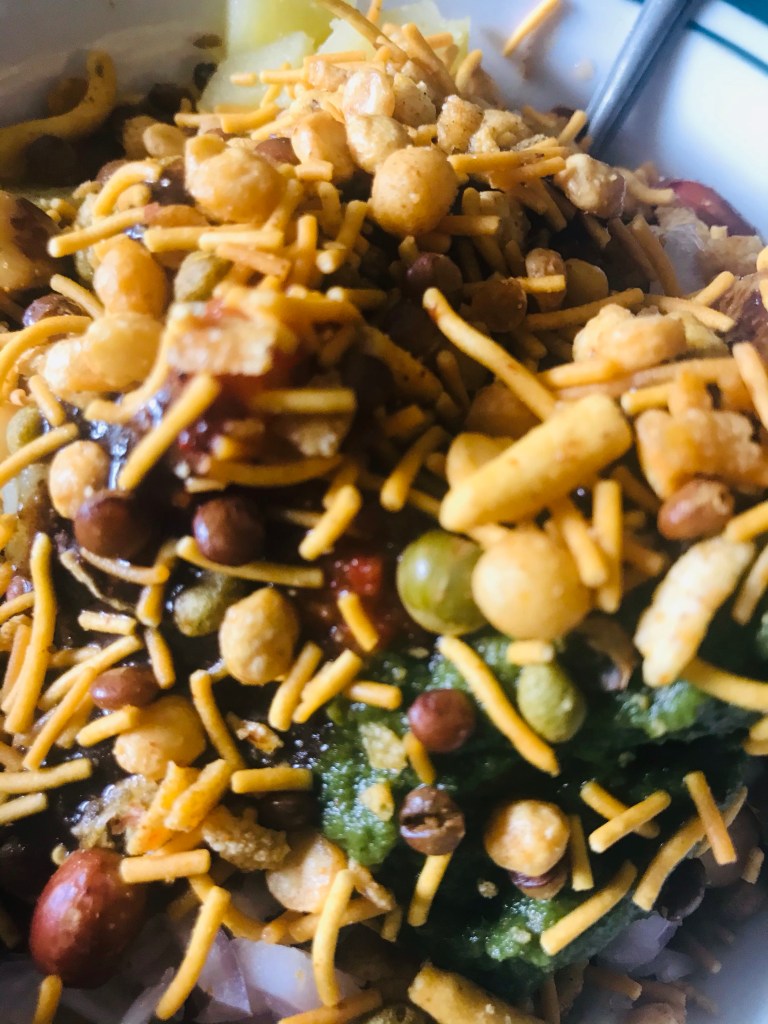
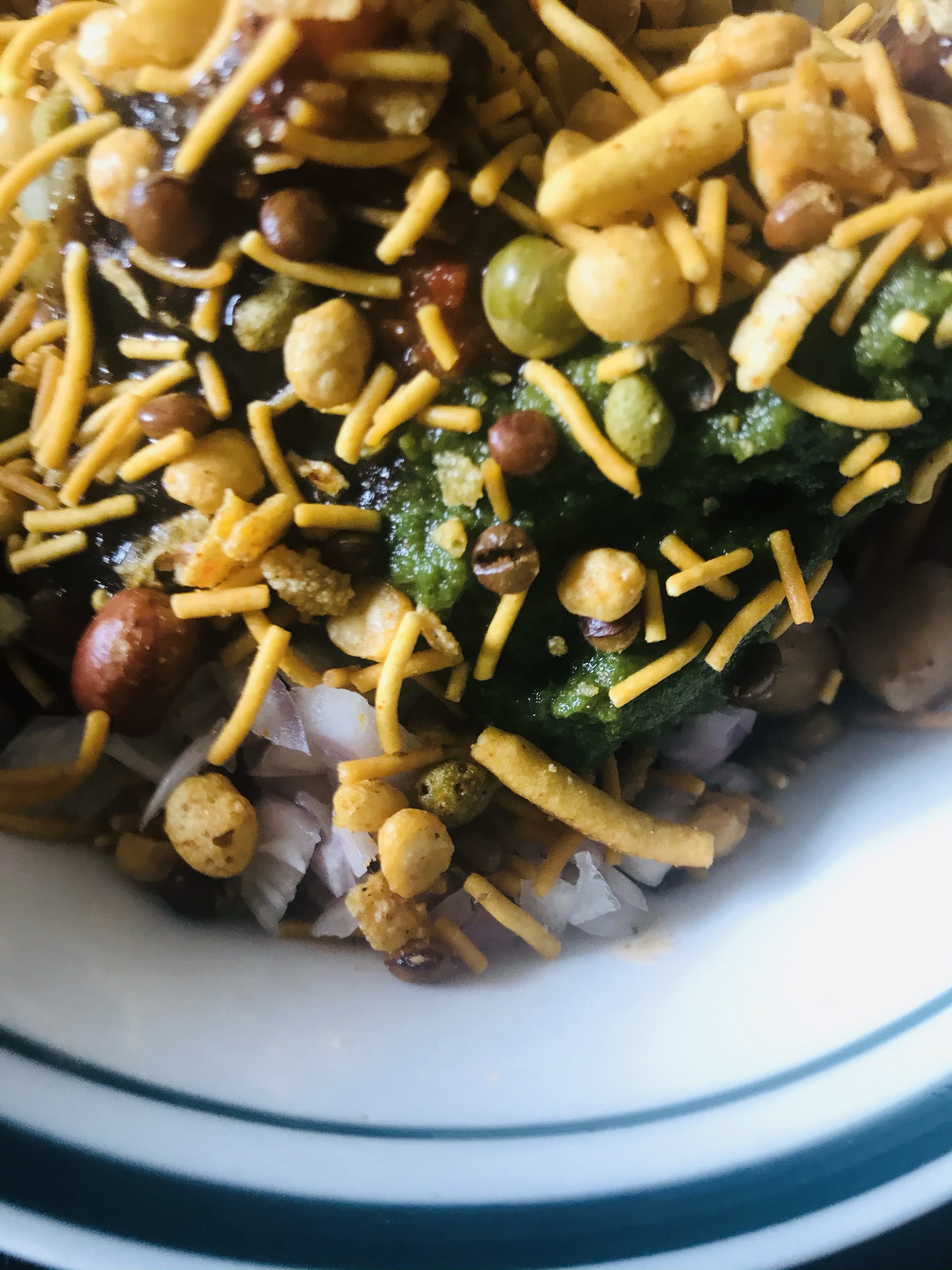
Top with some of the onions and potatoes and finally add some farsan on top of it.
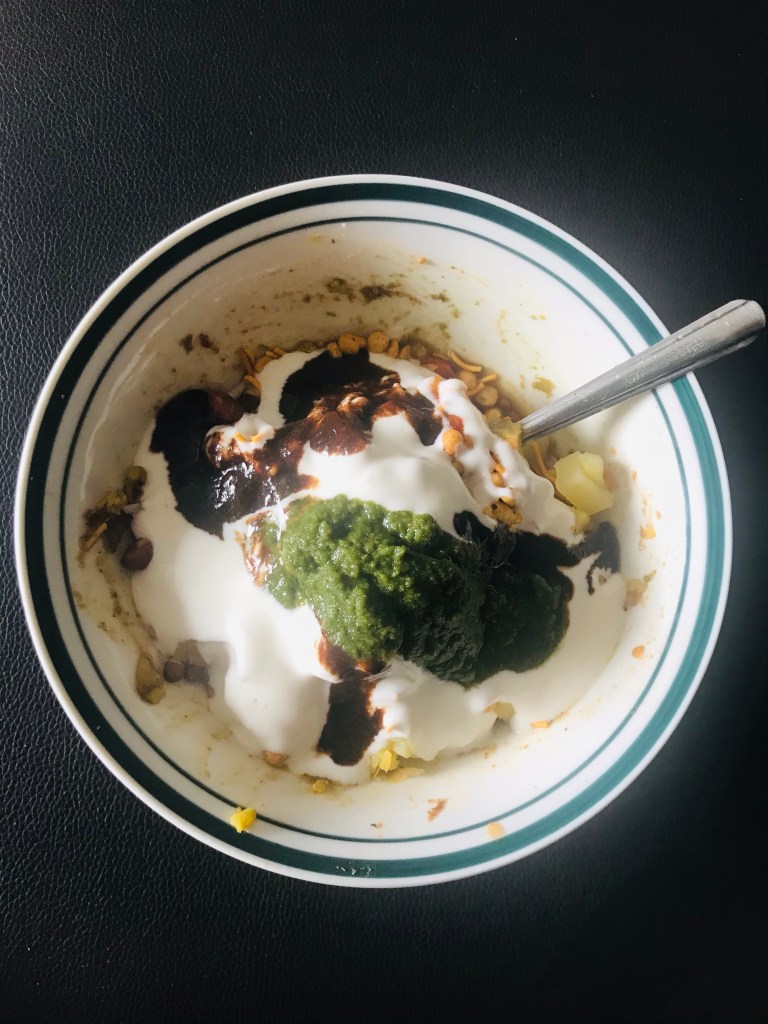
Add some of the green and tamarind chutney if you want and also a squeeze of lime.
You can eat it as it is or with some pav or bread.
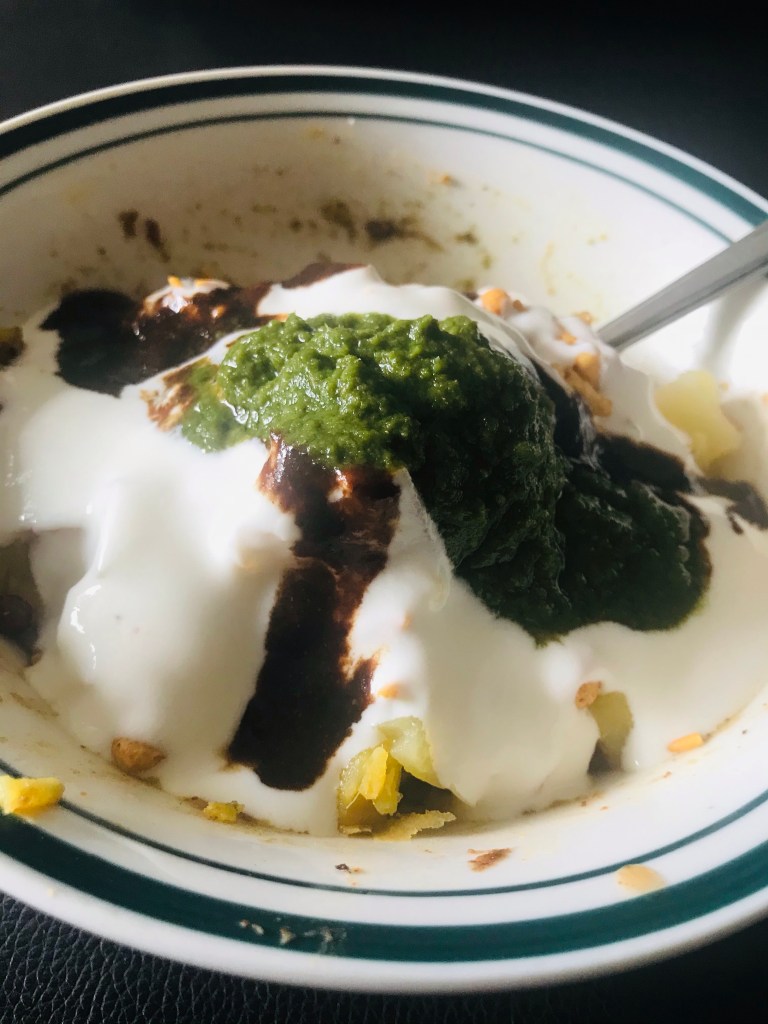
To make dahi missal after you top the farsan, add some of the prepared yoghurt and tp with the chutneys and then eat as it is.
It’s a tad long to make and takes time, but the taste is totally worth it!




 Memories and Such