Recipes: Dal Bukhara

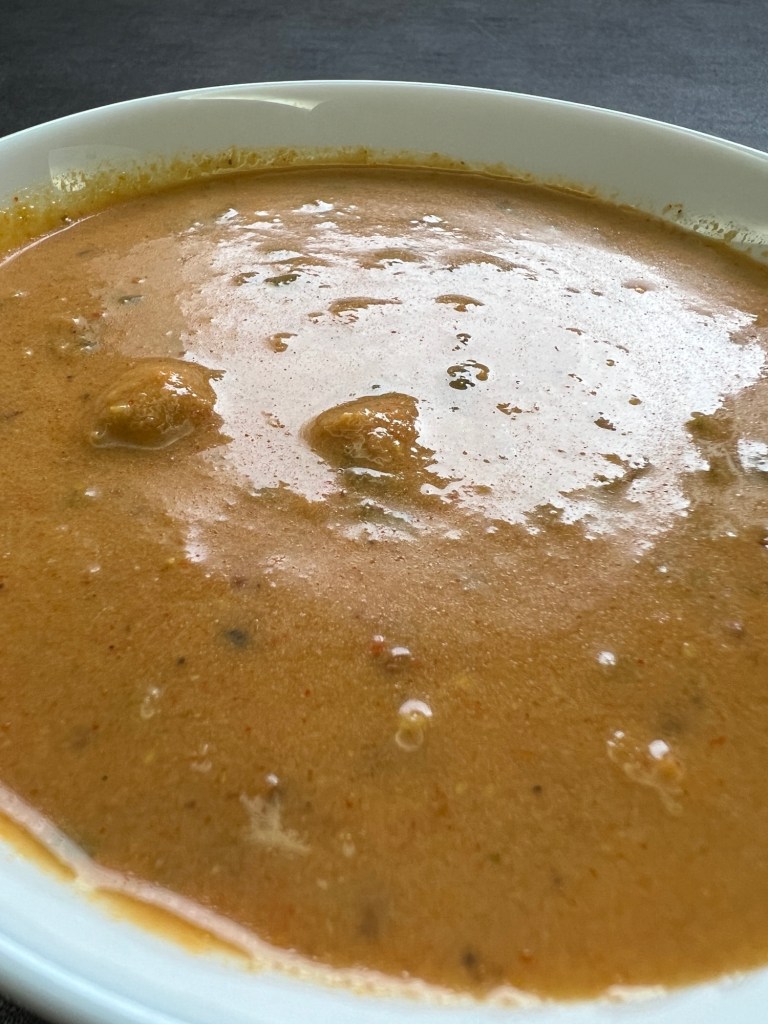
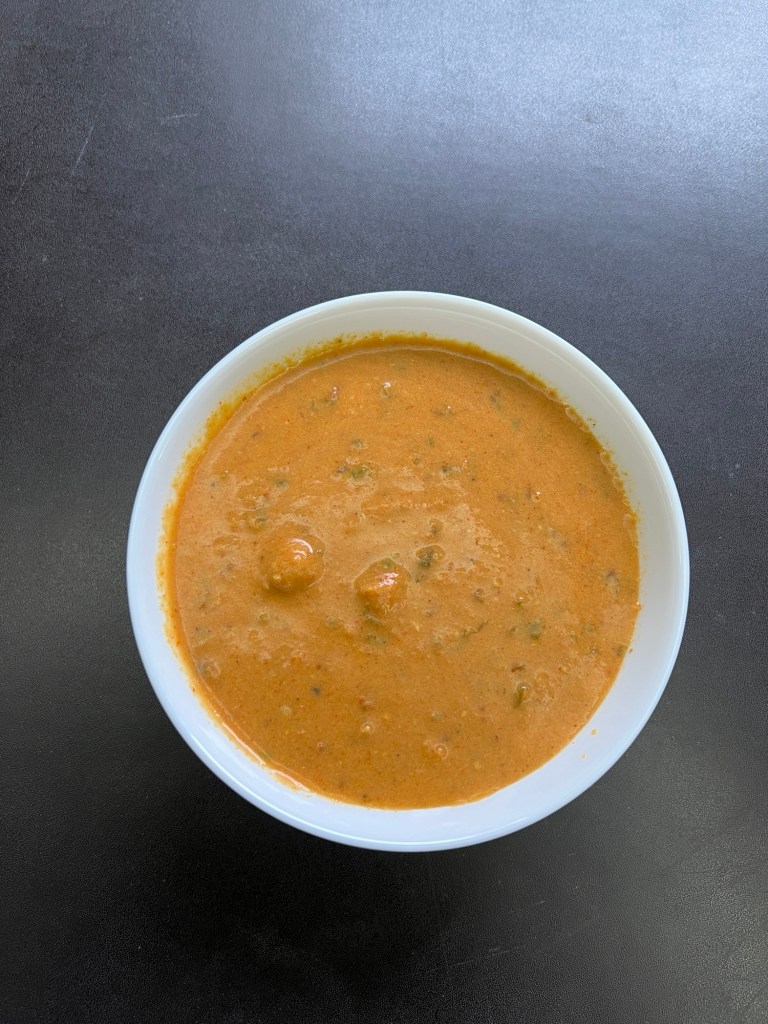
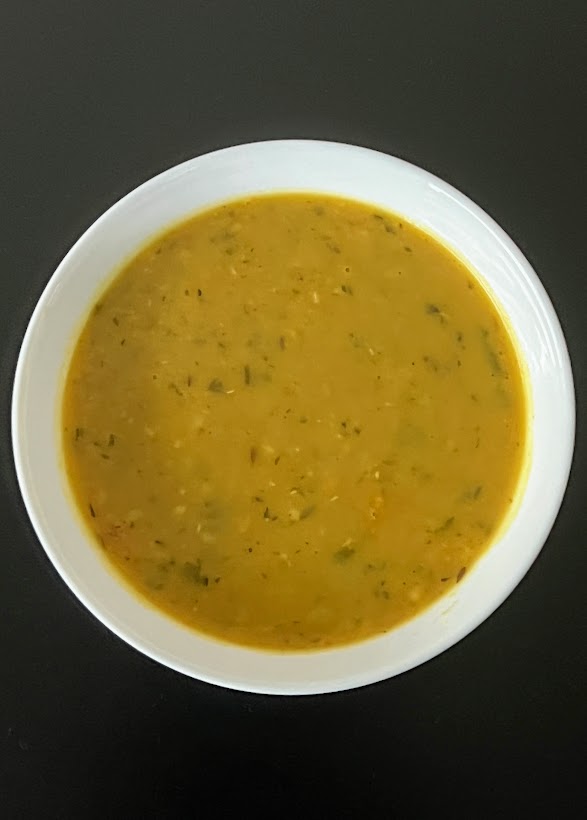
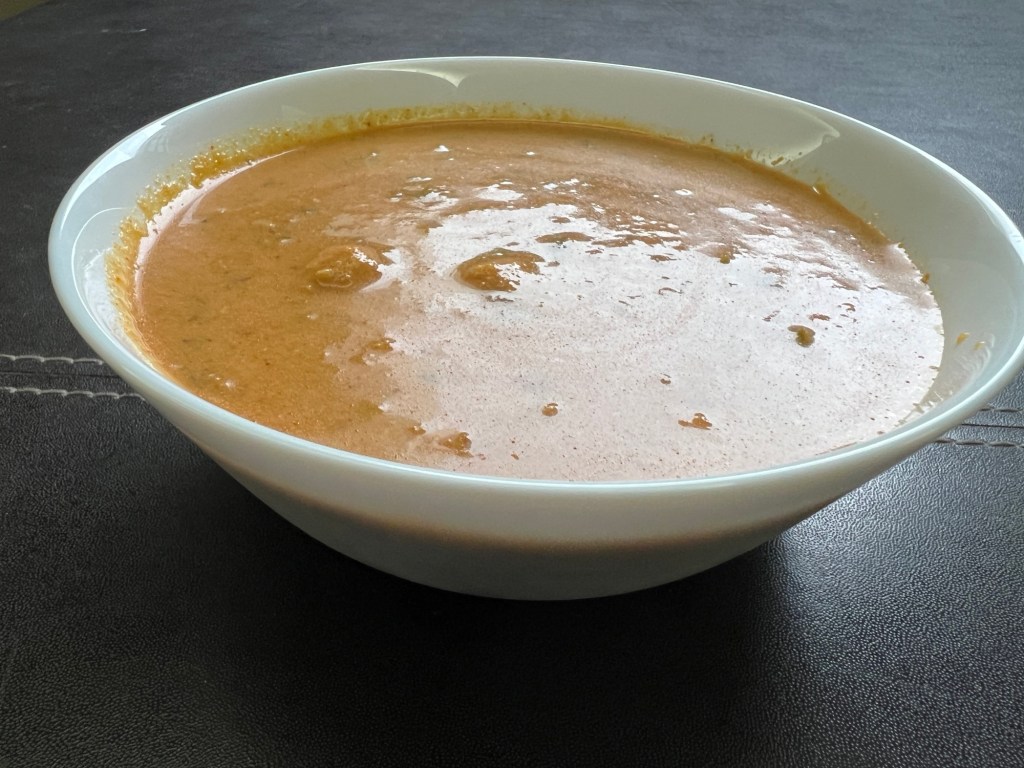
Some time back, I saw a reel about Dal Bukhara and I was intrigued by the recipe. So I made it. Dal Bukhari is a rich, creamy lentil dish that originated at the Bukhara restaurant in ITC Maurya Hotel, New Delhi. The dish was created by Chef Madan Jaiswal at the Bukhara restaurant in the 1970s. It quickly gained popularity and was associated with many accolades. Dal Bukhara is considered a more refined version of the well-known Dal Makhani.

Chef Jaiswal introduced Dal Bukhara when the Bukhara restaurant opened at the ITC Maurya Hotel in 1978. While coming up with Dal Bukhara, Chef Jaiswal focused on using only whole black gram or urad dal, without the kidney beans used in Dal Makhani. He emphasised slow-cooking the dal, sometimes overnight, to develop deep flavours, using minimal ingredients but incorporating generous amounts of butter and cream. 

Dal Bukhara

Ingredients:

  • 1.5 cups whole black gram or urad dal
  • 3 medium to large tomatoes, pureed
  • 2 tsp ginger-garlic paste
  • 1 tsp or more Kashmiri red chilli powder
  • ½ tsp garam masala
  • 6-7 tbsp butter, preferably white, but normal butter will also do
  • 7-8 tbsp light cream or 3-4 tbsp heavy whipping cream
  • Salt to taste
  • Water for cooking

Method:

  • Soak the black gram overnight.
  • Pressure cook the soaked lentils with 4.5-5 cups of water until soft.
  • Add the cooked lentils, tomato puree, ginger-garlic paste, and red chilli powder in a heavy-bottomed pan.
  • Simmer the dal on low heat for about 1-1.5 hours, stirring occasionally to prevent sticking.
  • Add butter and cream gradually during the cooking process.
  • Season with salt and garam masala towards the end of cooking.
  • The final consistency should be thick and creamy, not runny.
  • Serve hot, garnished with a dollop of cream or butter, with naan, tandoori roti, or jeera rice.

Notes:

  • As a last stage, before serving, you can also smoke the dal using the dhungar method for an authentic charcoal flavour.
  • Traditionally, Dal Bukhara is slow-cooked overnight on charcoal ovens in restaurants, which gives it its distinctive taste and texture.
  • Slow cooking and generous use of butter and cream are the key to achieving authentic flavour at home.

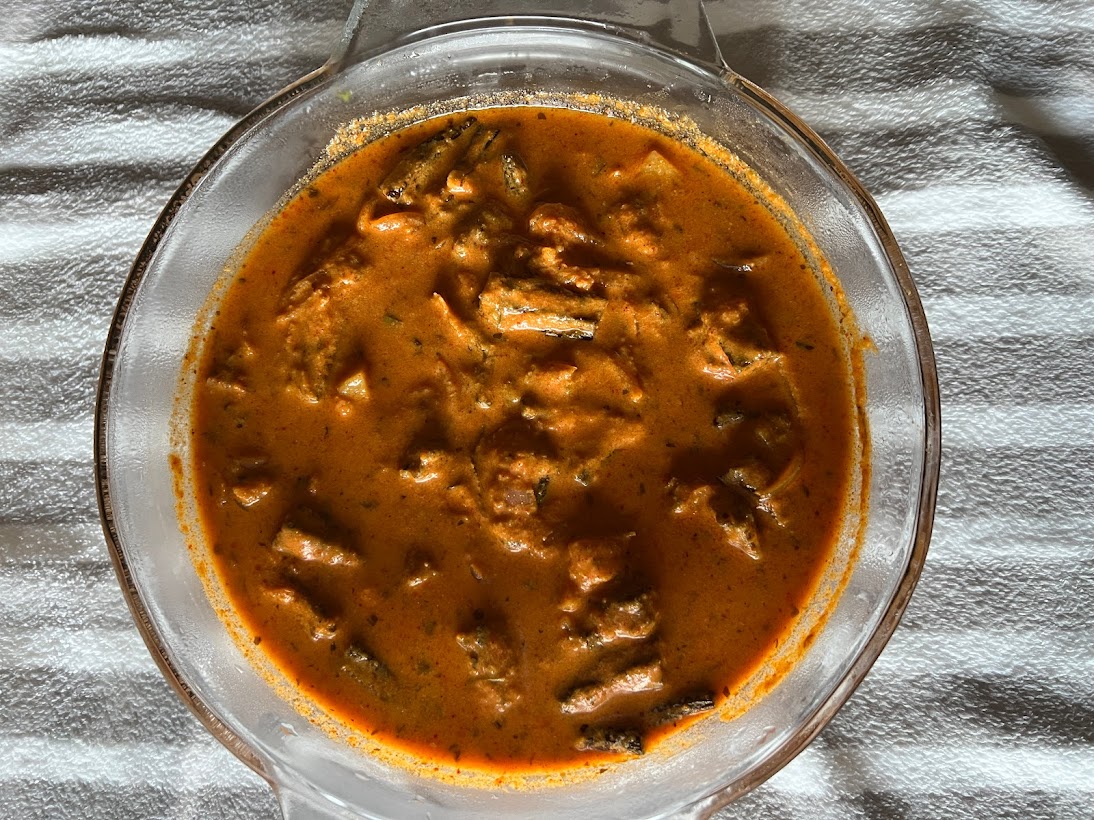
Recipes: Bhindi Do Pyaza/Bhindi Masala

I have been sitting on this recipe since December of last year for no reason. GG, BB and I made this recipe for S’ birthday last year.

Bhindi, Ladies’ Finger or Okra, is a tricky vegetable to make and like. Most people don’t like it because of the sliminess of its seeds that ooze out while cooking. Also known as ladies finger in some countries (including India), Okra is a flowering plant in the mallow family with edible green seed pods. The geographical origin of okra is disputed, with theories of its origin spread across West Africa, South and Southeast Asia. It is cultivated in tropical, subtropical, and warm temperate regions around the world and is used in many cuisines.

This recipe is a blend of Bhindi Masala, and Bhindi Do Pyaza. The recipe is richer than the usual recipes I cook and takes longer to make. But it is super delicious and will be a hit at any gathering if you are making it for family and friends. So on to the recipe…

Bhindi Masala/Bhindi Do Pyaza

Ingredients:

  • 500 gms bhindi or okra, washed and dried
  • 2 medium-sized onions, thinly sliced
  • 2 medium-sized onions, roughly chopped
  • 2 tomatoes, chopped
  • 7-8 garlic cloves, peeled
  • inch piece of ginger, peeled
  • 1 tsp cumin seeds
  • ¼ tsp turmeric powder
  • 1-2 tsp red chilli powder
  • 1 tsp coriander powder
  • 1 tsp cumin powder
  • ½ tsp garam masala
  • ½ tsp dry mango powder or amchur powder
  • 1 tbsp kasuri methi or dried fenugreek leaves
  • Salt to taste
  • ½ cup beaten yoghurt
  • 3 tbsp oil + oil to fry the okra
  • Finely chopped coriander leaves to garnish

Method:

  • Trim the ends of the okra and cut them into 2-inch pieces. Keep aside.
  • In a pan or kadhai, heat 2 tbsp oil and let the oil warm up.
  • Add the cumin seeds and let them splutter.
  • Add the ginger and garlic and saute for a few seconds. Then add the chopped onions and let the onions become translucent and a nice golden brown.
  • Now add the chopped tomatoes and a pinch of salt and let the tomatoes cook well and become mushy.
  • Remove from the pan and let it cool. Once cool, blend it to a smooth paste.
  • While waiting for the onion-tomato mixture to cool down, heat oil in another pan or kadai over medium heat. Add in the cut okra and deep or shallow fry until the okra is cooked and crisp. Keep aside.
  • Heat the balance of 1 tbsp oil, and when it warms up, add in the sliced onions and sauté until they turn golden brown and caramelised.
  • Now add in the blended paste and cook. Add in the dry spices at this point, adding in the turmeric powder, red chilli powder, coriander powder and cumin powder, plus some salt. Mix well and cook for a couple of minutes until the spices are well combined.
  • Add the fried bhindi and mix gently, ensuring that the spices coat the okra evenly. Cook uncovered for 4-5 minutes, stirring occasionally.
  • Reduce the heat to low, add some water to bring it to the consistency you want, cover the pan, and simmer for about 5 minutes, stirring occasionally.
  • Add in the beaten yoghurt and stir continuously so the yoghurt does not separate.
  • Sprinkle garam masala and dry mango powder and crush the kasuri methi in the palms of your hands and sprinkle in the gravy. Mix well to combine all the flavours.
  • Garnish with freshly chopped coriander leaves and serve hot with roti, naan or rice. I served this with jeera rice.

You could also add cooking cream instead of beaten yoghurt to make the dish even richer and add more flavour to it.

Recipes: Dal Darbari

In a vegetarian diet, lentils or dals are a very important source of protein and most Indian households, especially those who follow a vegetarian diet try to incorporate some lentils in their diet daily. But then the problem comes that we end up eating the same three or four types of lentils daily. Fed up, a couple of weeks back, I tried a new recipe which was surprisingly easy to make and very yummy to boot. The addition of yoghurt and milk elevated the recipe and make it special.

Dal Darbari

Ingredients:

  • ½ cup Yellow Moong Dal
  • ½ cup Masoor Dal or Orange Dal
  • 2 medium-sized onions, finely chopped
  • 2 medium-sized tomatoes, finely chopped
  • 1 tsp cumin seeds
  • 1 tbsp ghee
  • ½ tsp green chilli paste or 1 finely chopped green chilli
  • ¼ tsp ginger paste or 1 inch finely chopped ginger
  • ½ tsp turmeric powder
  • 2 to 3 tsp red chilli powder
  • ½ tsp garam masala Powder
  • 1 tbsp kasuri methi
  • 3 tbsp beaten yoghurt
  • 3 tbsp milk (either skimmed or full cream)
  • Salt to taste
  • 1-2 tbsp finely chopped coriander leaves

Method:

  • Wash and soak masoor and moong dal in warm water for about 20 minutes.
  • After that, add half the turmeric powder and pressure cook the dals for about 3-5 whistles until the dals are very soft and mushy. This can also be done on the stovetop.
  • When the cooker has cooled down, open it and whisk the dals until they become a homogenous mass.
  • In a pan, heat half the ghee and add in the cumin seeds and let them splutter a bit.
  • Now add the green chillies and ginger and saute for a few seconds.
  • Then add the onions and saute till the onions become translucent in colour.
  • Once the onions are translucent, add in the tomatoes and saute till the tomatoes become soft and mushy.
  • At this point, add ½ the red chill powder, the balance turmeric powder, salt and garam masala and saute till the masalas are incorporated.
  • Pour this masala over the cooked and whisked dals and mix well.
  • Add the yoghurt and milk and water to bring it to the desired consistency. Keep it on a slow to medium flame until the dal comes to a rolling boil.
  • In the same pan that you made the masala, heat the balance ghee and once it heats up, crush the kasoori methi in the palms of your hands and add it as well as the remaining red chilli powder and saute for a few seconds before pouring it over the dal.
  • Cover for about 10 minutes before serving so that the flavours get time to infuse.
  • Enjoy with rice or any flatbread

Notes: The recipe called for fresh cream which I substituted with skim milk. It didn’t detract from the taste and you can add in 1-2 tbsp of cream instead of milk.

Recipes: Hearty Vegetable Stew

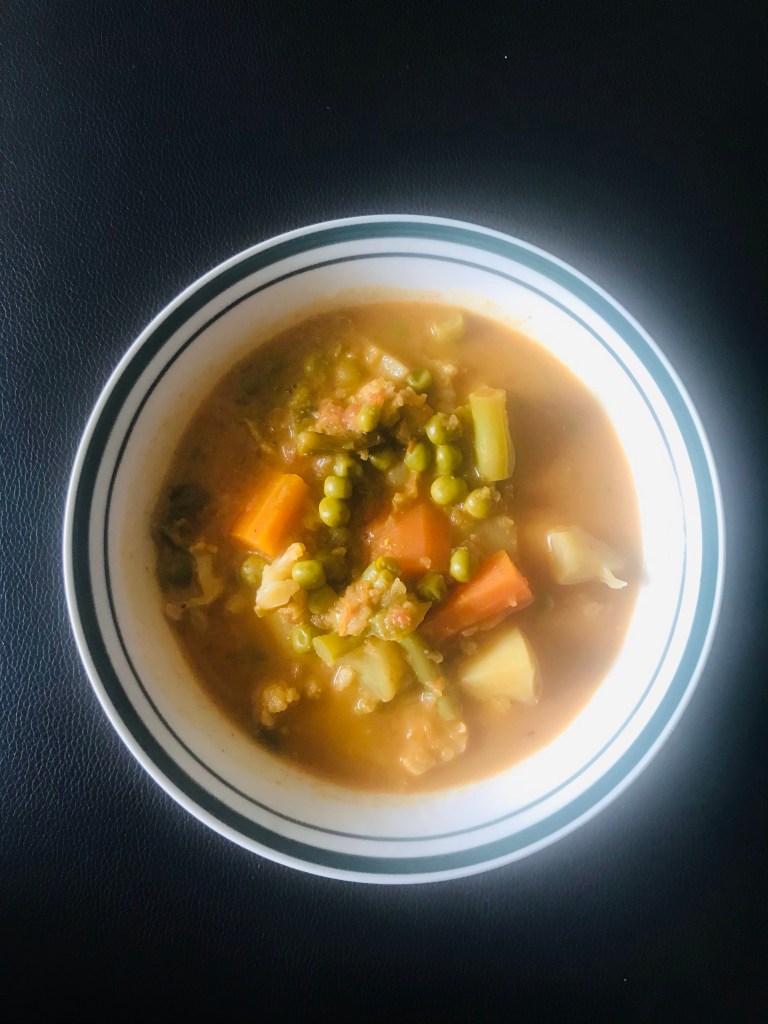
In another episode of no rice Sunday, I was wondering what to make. I had made soups and some roasted vegetables the last few weeks and wanted something different. I was thinking of making a vegetable stew,but didn’t want to make a Kerala-styled coconut milk one. So I decided to improvise and hope and pray it turned out to be edible!

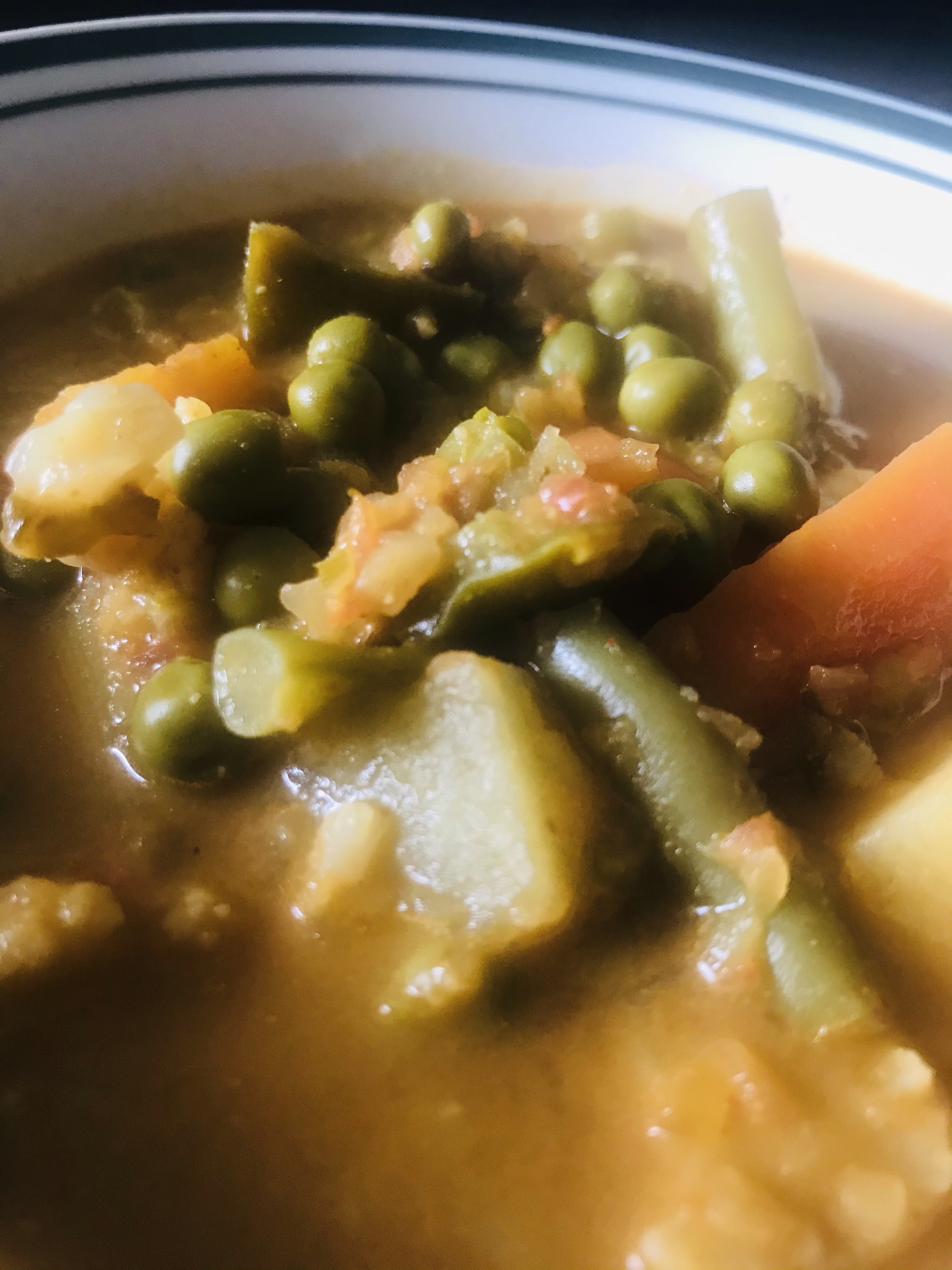
The recipe turned out to be a cross between a soup and a gravy curry and was so flavourful. It is also very healthy with just a tbsp of oil used in the entire recipe. Another good thing about the recipe is that it is a one-pot recipe and would work beautifully for a slow cooker. It just cooks by itself and you need not sit around, stirring and adding ingredients.

My family loved it and I am blogging about it so I can add it to my reportoire and make it another day.

Hearty Vegetable Soup

Ingredients:

  • 3 medium sized onions, minced
  • 2 carrots, chopped bigger than bite sized
  • 2 potatoes, chopped
  • 1 head of cauliflower, chopped
  • 1 green bell pepper, chopped
  • 1 small cup frozen green peas
  • 3-4 medium sized tomatoes, minced
  • 2 green apples, minced (optional)
  • 1 tsp red chilli powder
  • 1/4 tsp turmeric powder
  • 1 tsp cumin powder
  • 1 tsp coriander powder
  • 1-2 tsp garam masala powder
  • 1 tsp cumin seeds
  • 1 tsp fennel seeds
  • 15 cashew nuts, soaked in hot water for 15-20 minutes
  • 15-20 peanuts, soaked in hot water for 15-20 minutes
  • 1 tbsp oil
  • Salt to taste
  • Water as required

Method:

  • Chop the vegetables into pieces larger than bite-sized. I chopped them roughly into 3/4 to 1 inch pieces. Just make sure all the vegetables, with the exception of the green peas are of roughly the same size. Wash and keep aside.
  • Mince the onions into small, fine pieces. I did this using my food processor which took me seconds as compared to chopping by hand.
  • Heat the oil in a large pan or dutch oven and when the oil warms up, add the cumin seeds and let them splutter. Then add the fennel seeds and stir for a couple of seconds.
  • Now add the onions and stir well and let the onions soften and become translucent.
  • Once the onions are translucent, add the chopped green bell pepper and let it cook for about 3-4 minutes.
  • Then add the dry spices – turmeric powder, red chilli powder, cumin powder and coriander powder and stir well.
  • Now add the other chopped vegetables and stir well so the vegetables are covered with the spices. Cover and cook on a medium flame for about 5 minutes.
  • While this is cooking mince or grate the tomatoes and green apples and keep aside. I again used the food processor and minced both ingredients together.
  • Then add the minced tomatoes and green apple to the vegetables, lower the flame to a medium-low and let it cook till the vegetables are about 80% cooked. You can also add water to the vegetables at this point, because it will become quite thick with all the vegetables.
  • While the vegetables are cooking, blend the cashewnuts and peanuts into a smooth paste. Keep aside.
  • Once the vegetables are about 80% cooked, add the garam masala and the blended cashew-peanut paste and add any seasoning if needed.
  • Let it continue to cook on a low flame till the vegetables are completely cooked and serve hot with some crusty bread.
  • If you plan to make this ahead of time, then you may need to add some water when you heat it up before serving because it will thicken up because of the cashewnuts and peanuts. If you are going to add more water, then you will need to check seasoning also which may become diluted.

Recipes: Gujarati Khatta Mung aka Whole Green Gram Dal in a Buttermilk Gravy

Dal is a staple in most indian households with some variety of the protein packed dish made across the country. So, in order that we don’t get bored with the same kind of dal, I am always on the lookout for interesting takes and variations.

I saw this dal in one of my friend’s Facebook posts and it looked interesting enough to try it. My version may not be the most authentic one, but I enjoyed making and eating the dal. This is a staple in most Gujarati households, but you won’t find this in most restaurants. So let’s see how this is made…

Gujarati Khatta Mung aka Whole Green Gram Dal in a Buttermilk Gravy

Ingredients:

  • ½ cup whole green moong dal, soaked for 4-6 hours
  • ½ to 1 cup yoghurt
  • 2-3 tbsp gram flour or besan
  • ¼ tsp turmeric powder
  • ¼ tsp asafoetida
  • 1 tsp mustard seeds
  • 1 tsp cumin seeds
  • 5-6 curry leaves
  • 1-inch piece of minced ginger
  • 2 green chillies, slit lengthwise
  • 1 tbsp oil
  • Salt to taste
  • Coriander leaves, finely chopped to garnish

Method:

  • Drain the soaked moong dal and in a large pan, cook the soaked and drained moong dal with just enough water to cover it for about 5-7 minutes until it is just cooked and tender. Make sure it does not get mushy.
  • In a separate bowl, whisk the yoghurt well and add the gram flour, turmeric powder, asafoetida, some salt and about a cup of water and whisk till it is smooth with no lumps. Keep aside.
  • Heat oil in another pan and when the oil warms, add the mustard seeds and let the seeds crackle. Then add the cumin seeds and stir for a couple of seconds, followed by the curry leaves. Stir till the curry leaves start to become crisp. Then add the slit green chilles and the ginger and saute for about 30-40 seconds.
  • Now add the cooked moong dal into this tempering and then the yoghurt gram flour mixture and allow everything to come to a nice rolling boil. Let this simmer on a low flame for about 5 minutes.
  • Check for seasoning and add salt if needed.
  • Turn off the flame and garnish with finely chopped coriander leaves and serve hot with rice and a simple vegetable stir fry for a homely lunch.