

It is often said people don’t leave bad organisations, but leave bad bosses. And this is so true. When coworkers get together, stories are bandied about bosses and rarely are good managers discussed, but the spotlight is mostly on bad bosses. Many bosses fall into the bad boss category because they fail to provide clear direction, regular feedback, recognition for contributions, and a strategic framework of goals that enable their employees to see their progress. These kinds of bad bosses are what are called generic bad bosses because all employees need these types of support and feedback, and they suffer when they don’t receive it.
I’ve had my fair share of bosses, both good and bad. In my first job, we were a very young team, all of us fresh out of school and in our first jobs. The company was also a fairly young one, but the management were not very young, they had about a decade plus experience and you could probably call them middle management. While we didn’t really really report to them, they oversaw our work. My expectations with managers and bosses are most likely influenced by how they interacted with us. They were friendly and fair and had an open office policy. But one thing really stands out for me and is something that has been a sort of guiding principle for me all these years.

The office was a split office, with us in the ground floor and the managers and finance people in level 2. Officially the office would end at 5:30 pm and at 6 pm, one of the bosses, lets call him D would come down to go back home and if he saw us around, we would have to have a good reason why we were still around. 90% of the time, we were around, because we were hanging out with each other. Except for one, none of us were married and had no responsibilities, so there was no pressure to get out of the office and go home.
When D saw us hanging around, not leaving the office, he would ask us why were still there and used to say something like this. I am paraphrasing this, but he would say that if you are staying late because you have too much work, then there could be two reasons for this. One because you have too much on your plate or two because you have not finished your work in the scheduled hours of work. In both cases, we should have a talk, because if you have too much work, then we need to figure out how to reduce your workload and if it’s the second reason, then we also need to talk about why you are not able to finish your work on time. This is something that has always resonated with me and I have always tried to be as productive as possible while at work and leave on time as much as possible.

Another manager who made an impact in my life was someone who was my manager for the longest period of time. I was also in this organisation the longest, for almost a decade and of the multiple managers whom I reported to, this one was the one I reported to the longest. He was fair, but had his faults, the biggest of which was playing favourites. While I was not a favourite, I was also on his dislike list and so I escaped some of the worst things he said to others. From him I learnt how not to play favourites, especially when hiring people for the organisation and to not enable them so much they they believed to be above all others. He used to catch up with us every time he passed through Singapore but died a few years back.
The third manager was someone whom I reported to for less than a couple of years, but he was a peer in terms of age. A very supportive manager, he gave me more responsibilities when he saw I could handle them and also credit where it is due. I learnt a lot from him, especially on how to manage people as he was someone who was friendly with everyone and even learnt some of the finer points of office politics from him. Unfortunately after about two years of reporting to him, he was transferred to a different country, but we are still in touch.
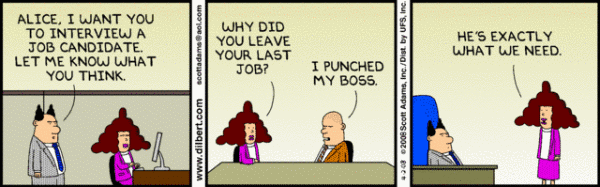
The last manager I was to talk about was the most toxic one. I have written about this person previously and even today, years after I left the organisation, I still have nightmares about how they used to literally torture me there. I can now think about them without my heart palpitating and getting stressed out, but it took me many years to get there.
Bosses are just like people, there are good ones and bad ones. A good boss or manager will set clear expectations from their subordinates, coach and give feedback, is inclusive and recognises efforts made by those reporting to him, knows his reportees, especially their talents and what they are good at and most importantly is there for them and takes a stand when it is needed.
A bad boss on the other hand, is everthing but what a good boss is. A boss is the umbilical cord that connects employees to an organisation, and if that cord is damaged, the employees will eventually leave. So if you are one of the lucky employees who has a great boss, don’t take that relationship for granted and show your boss how much you appreciate them.
 In my years of being in the workforce, I’ve had many managers, good, bad and even indifferent, but I don’t think I’ve had one as the one I reported to in my last short-lived job. This person, who was a nice person by nature, exemplified everything that a manager should not be. It was not because this person was being a manager for the first time, this person had been a good 40 odd years in the workforce and probably had been a manager for at least half that time. But the traits the person brought to the table as someone overseeing a team were traits that do not make a good manager. I kept thinking back to how this person treated people and this became the fodder for this blog post.
 Leadership:
 Problem-Solving:
 Flexible:
 Memories and Such