In My Hands Today…

The Country of the Blind: A Memoir at the End of Sight – Andrew Leland
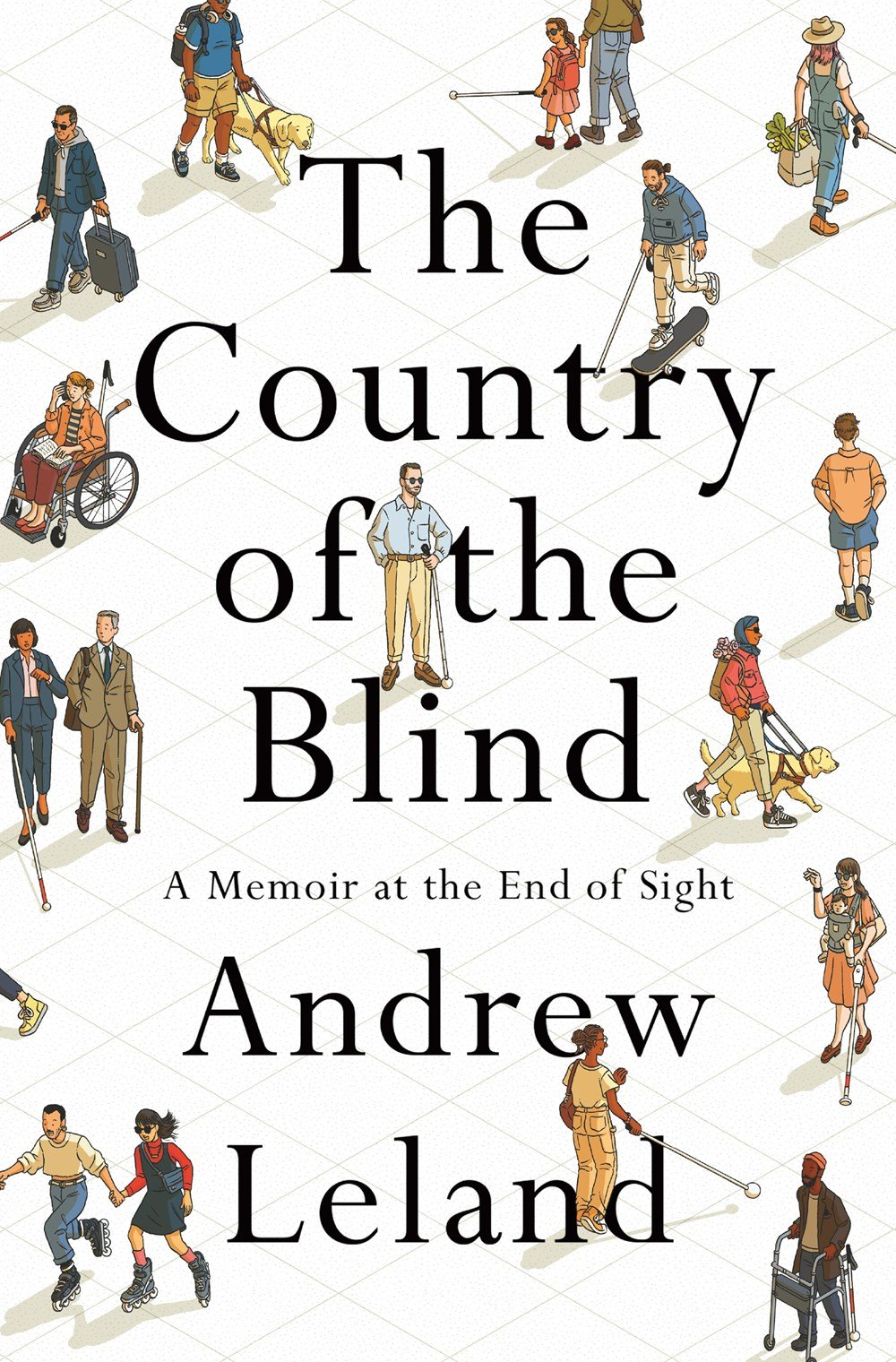
We meet Andrew Leland as he’s suspended in the liminal state of the soon-to-be he’s midway through his life with retinitis pigmentosa, a condition that ushers those who live with it from sightedness to blindness over years, even decades. He grew up with full vision, but starting in his teenage years, his sight began to degrade from the outside in, such that he now sees the world as if through a narrow tube. Soon—but without knowing exactly when—he will likely have no vision left.

Full of apprehension but also dogged curiosity, Leland embarks on a sweeping exploration of the state of being that awaits not only the physical experience of blindness but also its language, politics, and customs. He negotiates his changing relationships with his wife and son, and with his own sense of self, as he moves from his mainstream, “typical” life to one with a disability. Part memoir, part historical and cultural investigation, The Country of the Blind represents Leland’s determination not to merely survive this transition but to grow from it—to seek out and revel in that which makes blindness enlightening.

Thought-provoking and brimming with warmth and humor, The Country of the Blind is a deeply personal and intellectually exhilarating tour of a way of being that most of us have never paused to consider—and from which we have much to learn.
In My Hands Today…

Fear Is Just a Word: A Missing Daughter, a Violent Cartel, and a Mother’s Quest for Vengeance – Azam Ahmed

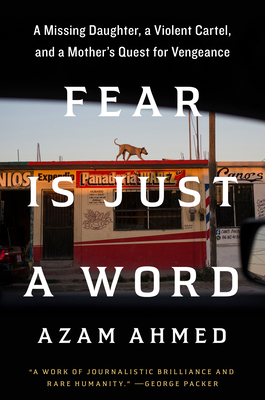
Fear Is Just a Word begins on an international bridge between Mexico and the United States, as fifty-six-year-old Miriam Rodríguez stalks one of the men she believes was involved in the murder of her daughter Karen. He is her target number eleven, a member of the drug cartel that has terrorized and controlled what was once Miriam’s quiet hometown of San Fernando, Mexico, almost one hundred miles from the U.S. border. Having dyed her hair red as a disguise, Miriam watches, waits, and then orchestrates the arrest of this man, exacting her own version of justice.

Woven into this deeply researched, moving account is the story of how cartels built their power in Mexico, escalated the use of violence, and kidnapped and murdered tens of thousands. Karen was just one of the many people who disappeared, and Miriam, a brilliant, strategic, and fearless woman, begged for help from the authorities and paid ransom money she could not afford in hopes of saving her daughter. When that failed, she decided that “fear is just a word,” and began a crusade to track down Karen’s killers and to help other victimized families in their search for justice.

What do people do when their country and the peaceful town where they have grown up become unrecognizable, suddenly places of violence and fear? Azam Ahmed takes us into the grieving of a country and a family to tell the mesmerizing story of a brave and brilliant woman determined to find out what happened to her daughter, and to see that the criminals who murdered her were punished. Fear Is Just a Word is an unforgettable and moving portrait of a woman, a town, and a country, and of what can happen when violent forces leave people to seek justice on their own.

In My Hands Today…

The Memory Palace – Mira Bartok

People have abandoned their loved ones for much less than you’ve been through,” Mira Bartók is told at her mother’s memorial service.

It is a poignant observation about the relationship between Mira, her sister, and their mentally ill mother. Before she was struck with schizophrenia at the age of nineteen, beautiful piano protégé Norma Herr had been the most vibrant personality in the room. She loved her daughters and did her best to raise them well, but as her mental state deteriorated, Norma spoke less about Chopin and more about Nazis and her fear that her daughters would be kidnapped, murdered, or raped.

When the girls left for college, the harassment escalated–Norma called them obsessively, appeared at their apartments or jobs, threatened to kill herself if they did not return home. After a traumatic encounter, Mira and her sister were left with no choice but to change their names and sever all contact with Norma in order to stay safe. But while Mira pursued her career as an artist–exploring the ancient romance of Florence, the eerie mysticism of northern Norway, and the raw desert of Israel–the haunting memories of her mother were never far away.

Then one day, Mira’s life changed forever after a debilitating car accident. As she struggled to recover from a traumatic brain injury, she was confronted with a need to recontextualize her life–she had to relearn how to paint, read, and interact with the outside world. In her search for a way back to her lost self, Mira reached out to the homeless shelter where she believed her mother was living and discovered that Norma was dying.

Mira and her sister traveled to Cleveland, where they shared an extraordinary reconciliation with their mother that none of them had thought possible. At the hospital, Mira discovered a set of keys that opened a storage unit Norma had been keeping for seventeen years. Filled with family photos, childhood toys, and ephemera from Norma’s life, the storage unit brought back a flood of previous memories that Mira had thought were lost to her forever.

In My Hands Today…

Hello, Molly!: A Memoir – Molly Shannon, Sean Wilsey

At age four, Molly Shannon’s world was shattered when she lost her mother, baby sister, and cousin in a car accident with her father at the wheel. Held together by her tender and complicated relationship with her grieving father, Molly was raised in a permissive household where her gift for improvising and role-playing blossomed alongside the fearlessness that would lead her to become a celebrated actress.

From there, Molly ventured into the wider world of New York and Los Angeles show business, where she created her own opportunities and developed her daring and empathetic comedy. Filled with behind-the-scenes stories involving everyone from Whitney Houston to Adam Sandler to Monica Lewinsky, many told for the first time here, Hello, Molly! spans Molly’s time on Saturday Night Live—where she starred alongside Will Ferrell, Adam Sandler, Cheri Oteri, Tracy Morgan, and Jimmy Fallon, among many others. At the same time, it explores with humor and candor her struggle to come to terms with the legacy of her father, a man who both fostered her gifts and drive and was left with the impossible task of raising his kids alone after the loss of her mother.

Witty, winning, and told with tremendous energy and heart, Hello, Molly!, written with Sean Wilsey, sheds new and revelatory light on the life and work of one of our most talented and free-spirited performers.
Genres
Memoir
Audiobook
Nonfiction
Humor
Biography
Biography Memoir
Comedy

In My Hands Today…

Slow Noodles: A Cambodian Memoir of Love, Loss, and Family Recipes – Chantha Nguon

A haunting and beautiful memoir from a Cambodian refugee who lost her country and her family during Pol Pot’s genocide in the 1970s but who finds hope by reclaiming the recipes she tasted in her mother’s kitchen.

Take a well-fed nine-year-old with a big family and a fancy education. Fold in 2 revolutions, 2 civil wars, and one wholesale extermination. Subtract a reliable source of food, life savings, and family members, until all are gone. Shave down childhood dreams for approximately two decades, until only subsistence remains.

In Slow Noodles, Chantha Nguon recounts her life as a Cambodia refugee who lost everything and everyone—her house, her country, her parents, her siblings, her friends—everything but the memories of her mother’s kitchen, the tastes and aromas of the foods her mother made before the dictator Pol Pot tore her country apart in the 1970s, killing millions of her compatriots. Nguon’s irrepressible spirit and determination come through in this emotional and poignant but also lyrical and magical memoir that includes over 20 recipes for Khmer dishes like chicken lime soup, banh sung noodles, pâté de foie, curries, spring rolls, and stir-fries. For Nguon, recreating these dishes becomes an act of resistance, of reclaiming her place in the world, of upholding the values the Khmer Rouge sought to destroy, and of honoring the memory of her beloved mother.

From her idyllic early years in Battambang to hiding as a young girl in Phnom Penh as the country purges ethnic Vietnamese like Nguon and her family, from her escape to Saigon to the deaths of mother and sister there, from the poverty and devastation she experiences in a war-ravaged Vietnam to her decision to flee the country. We follow Chantha on a harrowing river crossing into Thailand—part of the exodus that gave rise to the name “boat people”—and her decades in a refugee camp there, until finally, denied passage to the West, she returns to a forever changed Cambodia. Nguon survives by cooking in a brothel, serving drinks in a nightclub, making and selling street food, becoming a suture-nurse treating refugees abused by Thai authorities, and weaving silk. Through it all, Nguon relies on her mother’s “slow noodles” approach to healing and to cooking, one that prioritizes time and care over expediency. Haunting and evocative, Slow Noodles is a testament to the power of culinary heritage to spark the rebirth of a young woman’s hopes for a beautiful life.