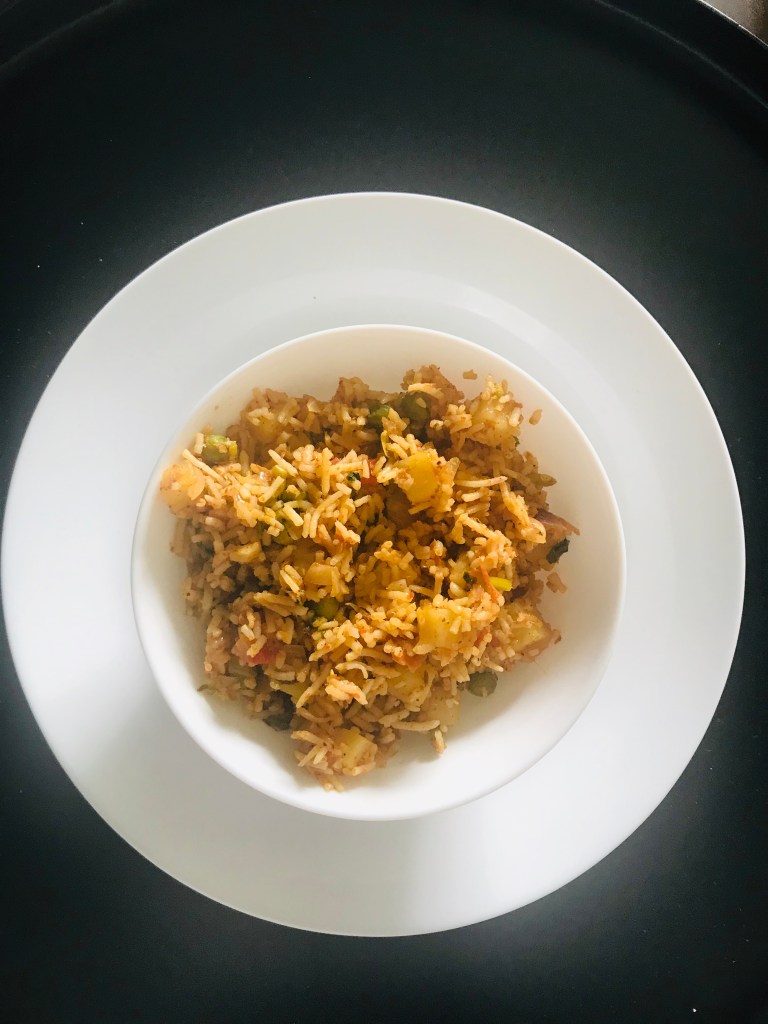
Recipes: Bombay Tawa Pulao

In Bombay or Mumbai, there are street stalls which sell Pav Bhaji and towards the end of the day, when the bhaji is almost over, they add some rice to the gravy and this is the origin of the Tawa Pulao. This rice works best with leftover rice, but can be made with fresh rice which has been cooled down. This makes a very good lunchbox recipe and if you cook the rice in advance, it’s a jiffy dish to make during the morning rush

Bombay Tawa Pulao

Ingredients:

  • 1 cup Basmati rice which has be cooked and completely cooled. It’s best if you can make the rice a day earlier, but making it far ahead of time also works.
  • 1 carrot, chopped into bit sized pieces
  • 1 potato, chopped into bite-sized pieces
  • 2-3 tbsp frozen peas
  • 2 medium sized onions, finely chopped
  • 2 medium sized tomatoes, finely chopped
  • 1 inch piece of ginger
  • 1 pod garlic, peeled
  • 4-5 fresh red chillies (or green if you don’t have red chillies)
  • 2-3 tbsp pav bhaji masala
  • 1 tsp cumin seeds
  • 2 tbsp oil
  • 2 tbsp coriander leaves, finely chopped
  • 2-3 tsp lemon juice (more or less as per taste)
  • 1 tbsp butter
  • 1/4 tsp turmeric powder
  • Salt to taste
  • 1 tsp red chilli powder (optional)

Method:

  • Blend the ginger, garlic and chillies into a smooth paste and keep aside.
  • Wash the chopped carrots, potatoes and peas and keep aside.
  • Heat 1 tsp oil in a pan and when the oil warms, add the cumin seeds and let them splutter.
  • Then add the turmeric powder and stir for a couple of seconds.
  • Now add the chopped and washed vegetables and a bit of salt and cook until the vegetables are almost cooked.
  • When the vegetables are almost cooked, remove the vegetables from the pan and keep aside.
  • In the same pan, add the balance oil and butter and when the butter melts, add in the blended ginger-garlic-chilli paste.
  • Let the paste cook a bit and then add the finely chopped onions and let the onions become translucent. Then add the finely chopped tomatoes and let the tomatoes cook and become mushy and break down.
  • Now add the pav bhaji masala and chilli powder if you want it spicer and salt to taste and cook till the mixture becomes slightly thicker.
  • Then add the cooked vegetables and also check for seasoning.
  • Add in the cooked and cooled rice and gently toss the rice to mix it with the vegetables till the rice is completely coated with the vegetables and the onion-tomato gravy.
  • Check for seasoning, remove from the fire and drizzle 1-2 tsp of lemon juice. Then garnish with coriander leaves and serve hot with a yoghurt raita.

The children and S loved it and asked me why I didn’t make it earlier for school. You can also substitute garam masala if you don’t have pav bhaji masala. The taste will still be fantastic, but will not taste like how it’s made in Bombay. You can also add more vegetables like french beans, cauliflower etc if you are planning to make a larger batch. Remember, in this recipe, a little goes a long way.

Want to know how I make Pav Bhaji? Here’s how I make it?

Try it and let me know how you liked it!

Pav Bhaji

Mention the word ‘Pav Bhaji’ to a Mumbaikar (a native of Mumbai) and see them go into a food swoon, thinking about their favourite Pav Bhaji thela (street stall) or restaurant. I remember this restaurant very close to my college which was supposed to have one of the best pav bhaji’s in our part of Mumbai and people used to come from near and far to eat this.

Pav Bhaji, which is a complete meal in itself started life as a quick on-to-go meal for the mill workers in what was then Bombay in 1850s. According to Wikipedia, “The mill workers used to have lunch breaks too short for a full meal, and a light lunch was preferred to a heavy one, as the employees had to return to strenuous physical labor after lunch. A vendor created this dish using items or parts of other dishes available on the menu.” In time this dish, along with a few others like Vada Pav, have come to become ubiquitous dishes that define Mumbai.

Since we had the long CNY break last week, I decided to make Pav Bhaji on one of the days. So without much further ado, here’s my take on the Mumbai street-food.

Pav Bhaji

IMG_3432[1]IMG_3436[1]Ingredients:

  • 1 head cauliflower, chopped into small pieces
  • 3 carrots, peeled and chopped into small pieces
  • ½ head broccoli, chopped into small pieces
  • 3-4 potatoes, peeled and chopped into small pieces
  • 1 cup frozen green peas
  • 1 cup French beans, finely chopped
  • 1 green capsicum, finely chopped
  • 8-10 red onions, finely chopped
  • 7-8 ripe red tomatoes, finely chopped
  • 1 tbsp ginger paste
  • 2 tbsps garlic paste
  • 1-2 tbsps green chilli paste
  • 2 tbsps red chilli powder
  • 2 tbsps Kashmiri red chilli powder (optional, for the colour)
  • Salt to taste
  • 3-4 tbsps Pav Bhaji Masala
  • Ghee or butter (optional, but if added gives a delicious taste to the bhaji)
  • Pav (We usually don’t get Pav, so use Burger or Hotdog bread)
  • 2-3 tbsps oil

Method:

Finely chop all the vegetables. In a pressure cooker, cook the cauliflower, carrots, broccoli, potatoes, French beans and peas for 3-4 whistles with little water, just enough that it does not burn. If you don’t have a pressure cooker, cook in a large pot until they become mushy. Do not add a lot a water as then the bhaji will become watery. Once the pressure is released, mash the vegetables till you get a nice consistency, none of the vegetables should be really seen.

In a separate pan, pour oil and when it heats up, add in the ginger, garlic and chilli pastes. Fry it for a while till the raw smell goes away, then add the onions, fry for a minute and add the capsicum. Once the raw smell of the onions and capsicum is gone, add the tomatoes and cook till they turn mushy. You can add some salt here to help the process. Also mash them so that they have the same consistency as the vegetables.

Once both the vegetables and the onion-tomato paste is of the same consistency, pour the paste into the vegetables. Add salt to taste, then add the pav bhaji masala and the Kashmiri red chilli powder. After a few minutes, add the ghee/butter and your bhaji is ready!

To serve, cut the bread into halves and toast lightly. You can also add butter to this to make it authentically Mumbai, but I prefer to dry toast it. Serve with loads of finely chopped onions and coriander with a dash of lime.

Enjoy and imagine you are in Mumbai!