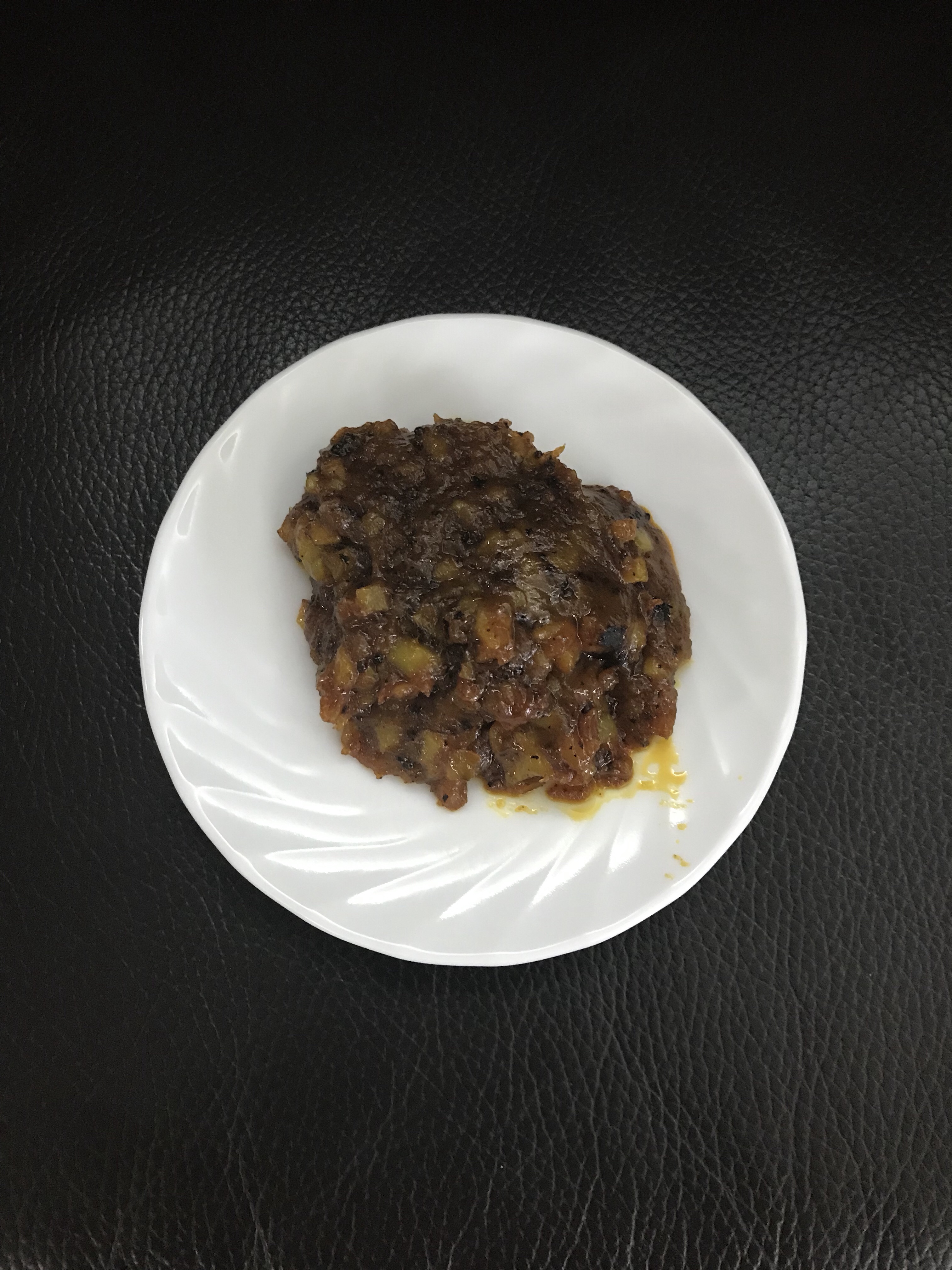
Recipes: Apple Pickle or Chutney

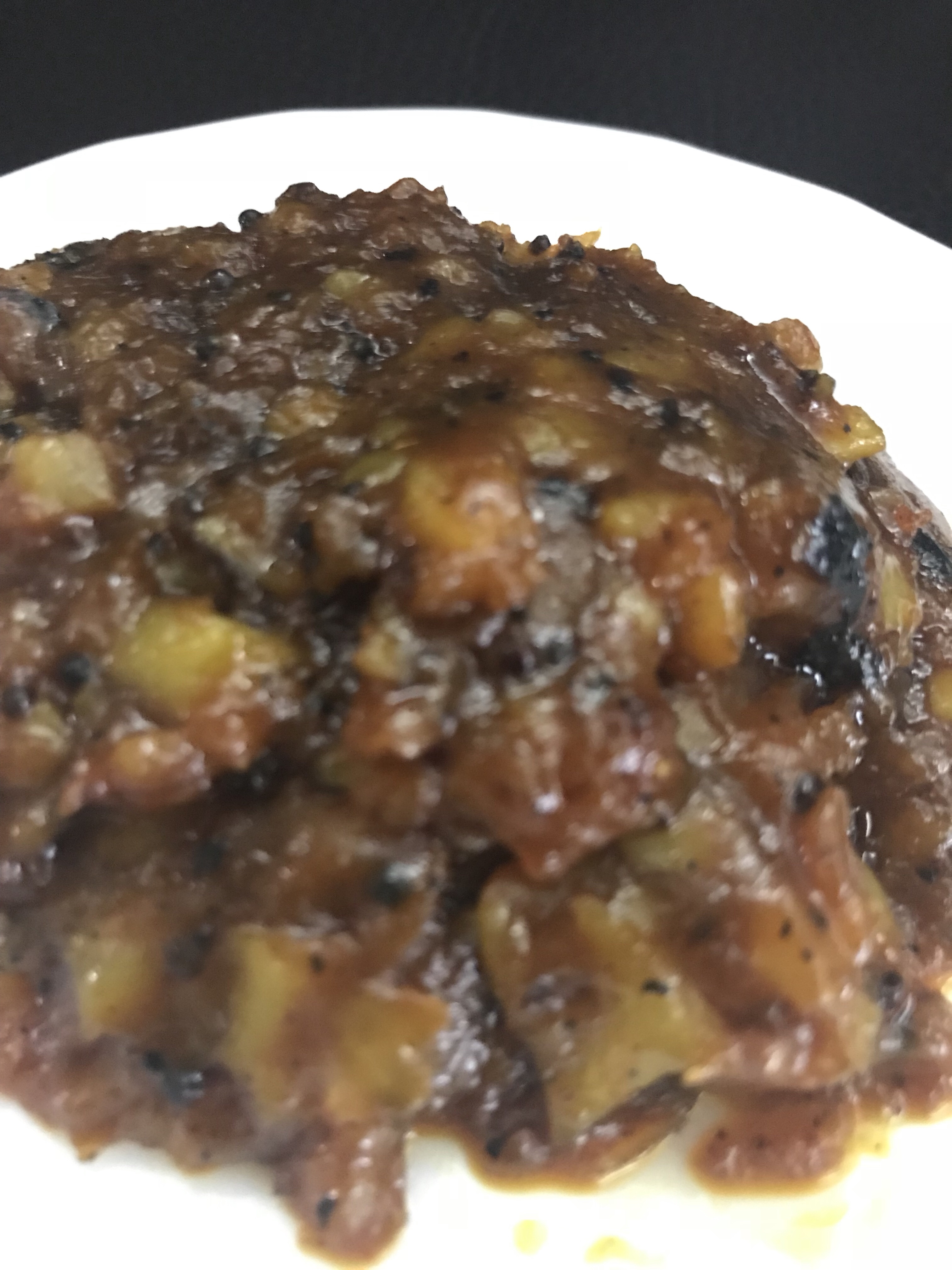
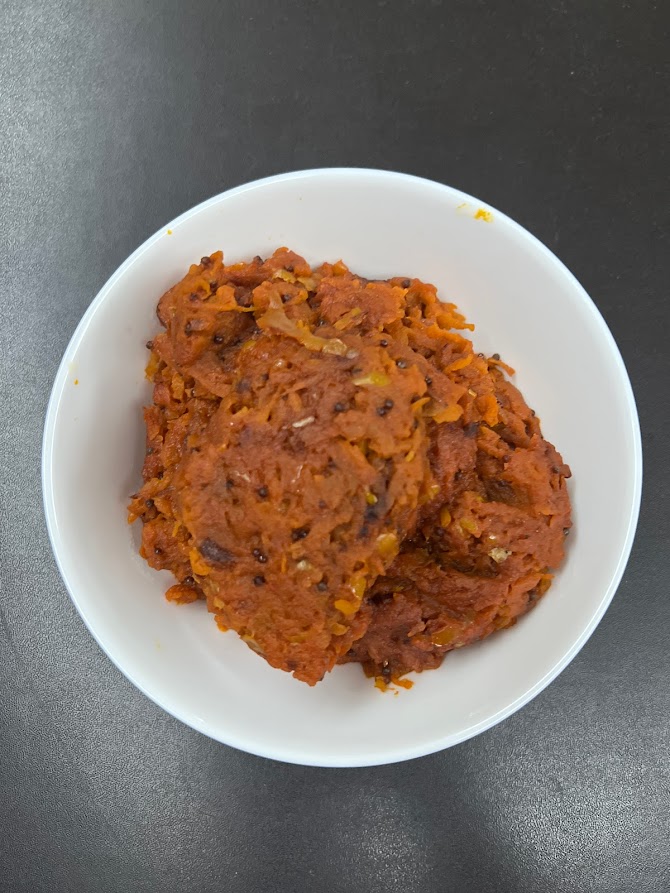
The other day, I had about 5-6 green apples in the fridge which would go bad in a couple of days. I didn’t feel like eating the apples, and when S asked me to make something with them, I decided to make this fusion chutney, thokku and chunda. I was cooking on the fly, but knew that if not good, at least the recipe won’t be bad. But it astounded me. I really enjoyed the result and this combination of chutney and pickle is so versatile. It can be used as a pickle, or as a spread, or even as a dip. Go ahead, try it and let me know how it tasted.

Apple Pickle or Chutney

Ingredients:

  • 5-6 green apples
  • 5-6 tbsp oil
  • 1 tsp mustard seeds
  • ¼ tsp asafoetida
  • ½ tsp turmeric powder
  • ¼ tsp cinnamon powder
  • 3 tsp (or more) red chilli powder
  • 3 tsp (or more) powdered jaggery
  • 2 tsp (or more) salt

Method:

  • Peel the apples and grate them. Once you have grated them, put the grated apples in a colander and salt them and let them sit for about 30 minutes.
  • The apples will start to ooze water. Once the water has drained out, remove it from the colander and keep it aside.
  • In a pan, heat the oil and when the oil is smoking hot, add in the mustard seeds.
  • Once the mustard seeds pop, add in the asafoetida and turmeric powder and stir.
  • Add in the grated apples and saute for about 2-3 minutes.
  • Once the apples soften, add in the red chilli powder, mix well and cook covered until the apples are cooked.
  • You may need to add more oil at this stage and continue cooking until the oil starts to ooze out.
  • At this point, add in the powdered jaggery or brown sugar and check for seasoning. Add what is missing and if need be, add some more oil.
  • Once the jaggery has combined with the apples and the apples start to look brownish-red and glossy, add in the cinnamon powder and combine well.
  • Mix for about a minute and switch off the gas. Cover and let the chutney cool. Transfer to a container and enjoy your meals.

Note: You can use any oil, but I used a combination of canola olive and gingelly oils. You can also make this with a combination of red and green apples. In that case, reduce the jaggery powder otherwise it will become too sweet.

The Art of Pickling: Growing Up with Indian Pickles

Pickles are an important part of any Indian meal. Known as achar in Hindi and oorgai in Tamil, most Indian households will have at least one kind of pickle in their fridge or larder. Part of the Indian culture and history for more than 4,000 years, it could be argued that the technique of pickling originated in India when people first started salting and curing food in brines to preserve it for long journeys.

Achar, a loanword of Persian origin, entered popular use as the Hindustani term for pickles under the Mughal Empire. In Persian, the word achar is defined as “powdered or salted meats, pickles, or fruits, preserved in salt, vinegar, honey, or syrup.” Early pickle recipes in Ayurvedic and Sangam period texts mention several varieties of pickles, including the earliest known mention of mango pickles. Nalachampu, a Sanskrit epic written by Trivikrama Bhatta in 915, describes pickles made from green mango, green peppercorns, long pepper, raw cardamom, lemon, lime, myrobalan, hog plum, stone apple, and fragrant manjack. Early medieval cookbooks published between 1025 and 1549 AD mention pickle recipes that use green mango, green peppercorns, long pepper, lemons and limes, turmeric root, mango-ginger root, ginger, radish, bitter gourd, cucumber, lotus root, and bamboo shoots. The religious text Lingapurana by Gurulinga Desika, published in 1594 mentions more than fifty kinds of pickles. Unique pickles made from edible flowers are also mentioned in the Ni’matnama cookbook published in 1500.

Chilli peppers were introduced to South Asia by Portuguese traders in ports controlled by the Mughal Empire on the western coast of Gujarat. It is unclear when red chilli peppers came to be used in pickles as they are today since medieval texts do not mention their use in pickles. Before the introduction of chilli peppers by the Portuguese, black pepper, long pepper, and Piper Chaba, in both fresh and dried forms, were the main source of heat in ancient and medieval pickles.

In India, there are two main types of pickles: pickles made with sesame or mustard oil, and pickles made without oil. Pickles without oil use salt to draw out the moisture from green mangoes or lemons to create a brine. A mixture of lemon or lime juice with salt or traditional sugarcane vinegar may also be used as brine. In some pickles from Gujarat and Rajasthan, jaggery is used as the main preserve. Homemade pickles are prepared in the summer. They are matured through exposure to sunlight for up to two weeks with the pickle traditionally covered with muslin while it is maturing.

Despite using the same main ingredients, differences in preparation techniques and spices have led to wide variation in Indian pickles. A mango pickle from South India tastes very different from one made in North India, as the southern states prefer sesame oil and tend to produce spicier pickles, while the northern states prefer mustard oil. In South India, most vegetables are sun-dried with spices, taking advantage of the immensely hot and sunny climate in the region. The sun-drying process naturally preserves the vegetables, along with spices and to speed up the process, vegetables may be cooked before drying.

While I like a good lemon or mixed vegetable pickle, my absolute favourite has to be mango pickles. I loved the different styles of mango pickles from all over the country, including avakkai and thokku from Tamil Nadu, Chunda from Gujarat and Punjabi-style mango pickles. I also love a good instant mango pickle that can be made in less than 15 minutes when one is in the mood for something spicy, but does not have the time to make pickles in the traditional way.

My mother’s signature pickle used to be the vadu mangai. Vadu Mangai or Mavadu is a pickle made from tiny tender baby mangoes and is a Tamil Nadu delicacy. The baby mangoes are pickled in a brine made from salt, red chilli powder and other spices and left in the hot summer sun for a few weeks until the mangoes shrivel up and absorb all the goodness of the brine. When ready, the tender mangoes are salty, spicy and oh-so-delicious and so good on a hot day with some rice and yoghurt. My mother was so famous in our family for this pickle that she used to make a few kgs of the pickle as soon as the baby mangoes come into the market. After making the pickle in large ceramic jars called pickle barnis, she would put aside some for my grandparents on both sides and pass it to them when we went to their homes. Over the years, as people moved away, my mother slowly started reducing the amount of pickle made and stopped making it a few years back. I miss my mother’s pickles but hope to learn how to make them so I can keep the tradition ongoing.

Over the past few years, I have learnt to make a few pickles and these now form a staple in my home. Earlier in the post, I have linked a few of the pickles I have made, so go ahead and check them out to make some quick pickles to spice up your meal.

Recipes: Instant Mango Chunda

If it’s summer, then it’s time for pickles. Everyone has their favourite type of pickle and while I enjoy a good lemon or mixed pickle, any mango pickle is by far my favourite. If given a choice, I would pick mango over any other pickle. The Mango Chunda is also one I enjoy, but it is S’ favourite pickle. Every trip from India, whether it is us or my parents, had to involve at least a few bottles of the chunda.

This pickle is from the western state of Gujarat and does not involve any cooking. The pickle is made from shredded mangoes and is sweet and sour, with a hint of spice and is made by keeping all the ingredients in the sun for up to a month until the sun cooks the pickle. But because we had not been to India for a while, one day, I found the instant version of the pickle and decided to make it.  It was an instant hit, so I decided to post it here, so I can reference it later.

Instant Mango Chunda

Ingredients:

  • 2 large green mangoes
  • 2 cups sugar
  • 1 tsp salt
  • ½ tsp turmeric powder
  • 2 tsp red chilli powder
  • 2 tsp roasted cumin powder

Method:

  • Rinse, dry and peel the mangoes. Grate them and keep them aside.
  • Measure the grated mangoes and put them in a large pan
  • In the same pan, for 2 cups of grated mangoes, add 2 cups of sugar
  • Add the salt and turmeric powder and mix well.
  • Switch on the gas and let the sugar dissolve. Once the sugar dissolves, reduce the flame to low and let the sugar syrup cook to single string consistency. This should usually take about 6-8 minutes and you will know when it reaches one string consistency when you take a drop of the syrup and your index finger and thumb and move the fingers apart and you can see a string forming.
  • At this point, and this is very important, switch off the flame and immediately transfer the mixture to another bowl. Don’t forget to do this step. If you don’t transfer it immediately, the chunda will become hard. I did this the first time I made this recipe and since then have learnt my lesson.
  • Let the mango sugar mixture cool down completely.
  • Once it is cooled down, add the chilli powder and cumin powder and mix thoroughly.
  • Store in a dry glass or ceramic container and it will remain fresh for up to a year. Though if your family is like mine, it won’t last that long.

Notes: I used country sugar instead of white sugar, hence the dark colour. You can also substitute brown sugar or jaggery. Also I used the same quantity of sugar to mangoes, but if your mangoes are especially sour, you may need to increase the sugar to compensate for the sourness. You can also increase the chilli powder according to taste.

Recipes: Raw Mango Thokku

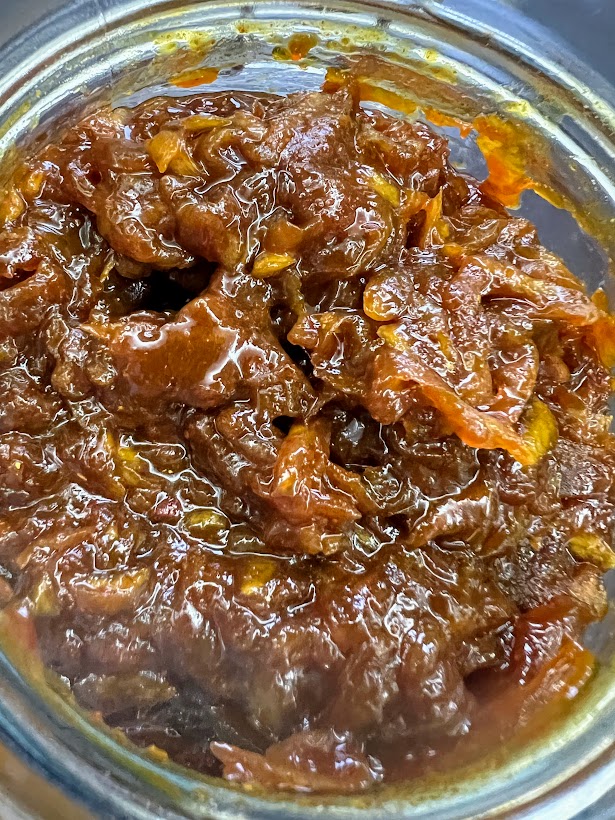
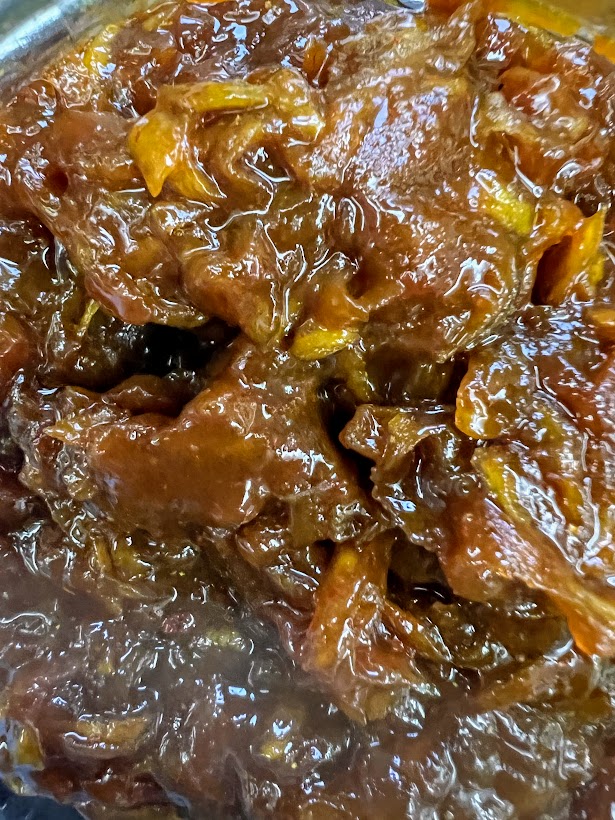
A thokku is a pickle which is cooked down to a paste. In normal pickles, you don’t cook them (or barely cook them) allowing the vegetables (or fruits) to absorb the spices from the spice paste that coats them. In a thokku, you cook it down until there is no moisture left in the vegetable (or fruit) and this can also be made with herbs like coriander (or cilantro as it is called in North America) or curry leaves.

A thokku can be eaten not only with rice or flatbreads, but you can eat it as a stuffing in a sandwich. The raw mango thokku is an all-time favourite pickle and I have been known for eating it as it is, that’s how much I love it!

Last year in December, when my mum was with me, one day when I was wondering if I should make my instant mango pickle with the raw mangoes that S brought home, she asked me if I wanted to make this raw mango thokku. Me being me, I instantly said yes and learnt it from her. Since then I’ve made it at least once a month, fine-tuning my recipe. I am now confident of this recipe enough to share with everyone.

This is an easy recipe, just a little tedious. For around 4 largish mangoes, it usually takes me an hour from start to finish. If you are making more, perhaps for the whole year, then yes it can even take the whole day!

Raw Mango Thokku

Ingredients:

  • 4 large raw mangoes
  • 4-6 tbsps gingelly oil
  • 1 tbsp mustard seeds
  • 1 tsp turmeric powder
  • 4 tbsp red chilli powder (approximately)
  • ½ cup jaggery
  • ½ tsp fenugreek seed powder
  • Salt to taste

Method:

  • Wash and dry the mangoes thoroughly.
  • Peel the skin and chop the flesh into small pieces, the smaller the better. Discard the seed.
  • In a large pan, heat the gingelly oil and when it starts smoking, add in the mustard seeds. When the seeds pop, pour in the chopped mangoes and stir well to cover all the pieces with the oil.
  • Stir well and cover and let it cook for a couple of minutes. Then add turmeric powder and salt and stir well and cook for 2 minutes.
  • Now add the chilli powder and continue to cook. You can do a taste test at this point to check for seasoning and the level of chillies in the thokku. When you feel it is slightly spicier than you can handle, that’s what you are looking for.
  • Add the jaggery (optional, you can omit this completely or even add some brown sugar) and let it cook till the oil starts leaving the sides of the pan. Add more oil if your thokku starts to stick to the bottom of the pan.
  • Just when it is ready, add the fenugreek powder and remove from the gas.
  • When the thokku is cool, remove it to a jar and enjoy!

Notes:

  • I have found that the best way to cut the mangoes is to peel them with the peeler (after you have removed the skin).
  • Peel the flesh until you come to the seed, and then chop the remaining flesh finely. This way, the flesh breaks down fast and you get a smooth paste like thokku.
  • In the photo below, (I made this version about a month back), I have chopped the flesh and you can still see the slightly grainy cubes which have not melted into a paste.
  • You can also grate the mango flesh.

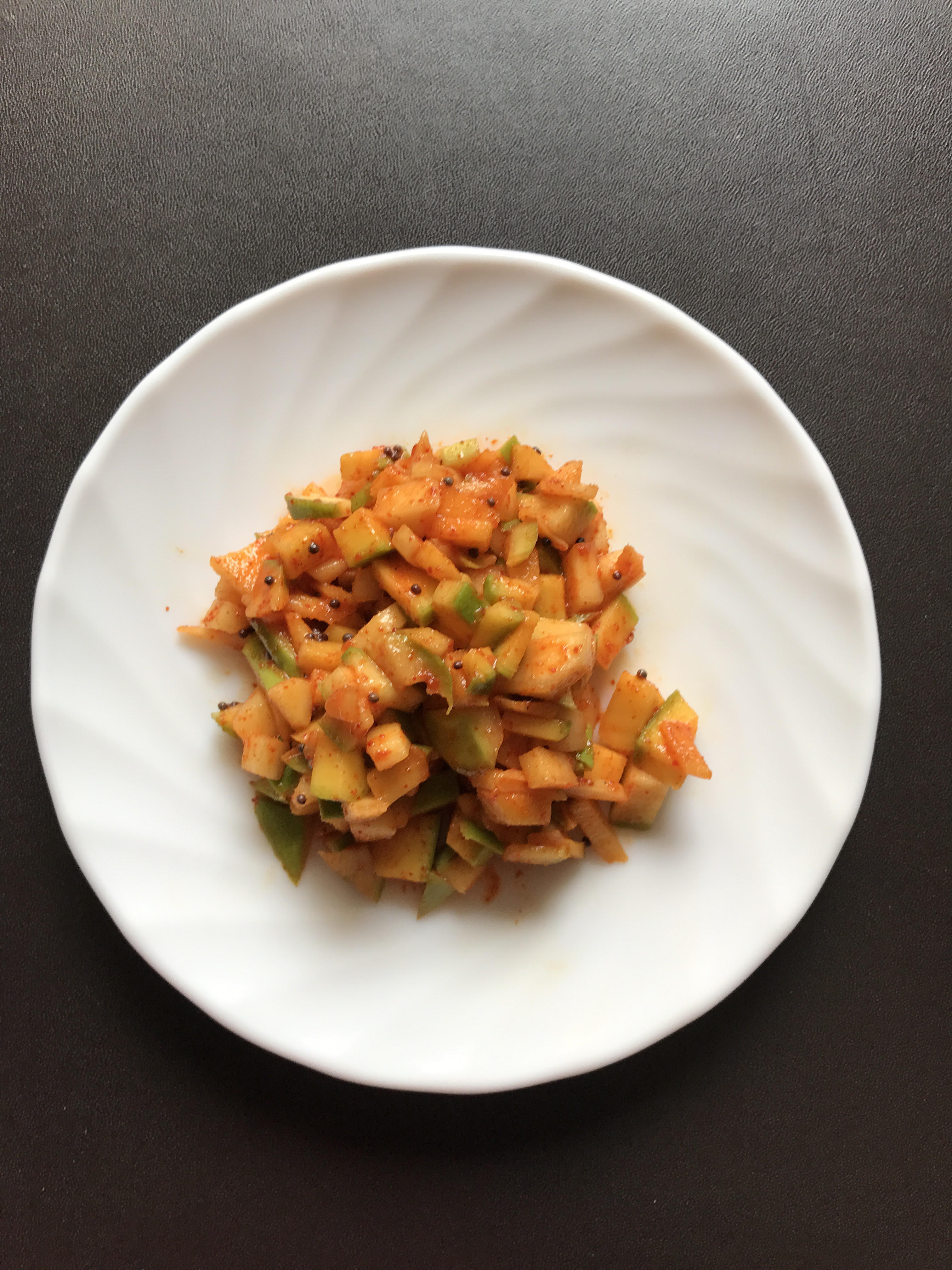
Recipe: Instant Raw Mango Pickle

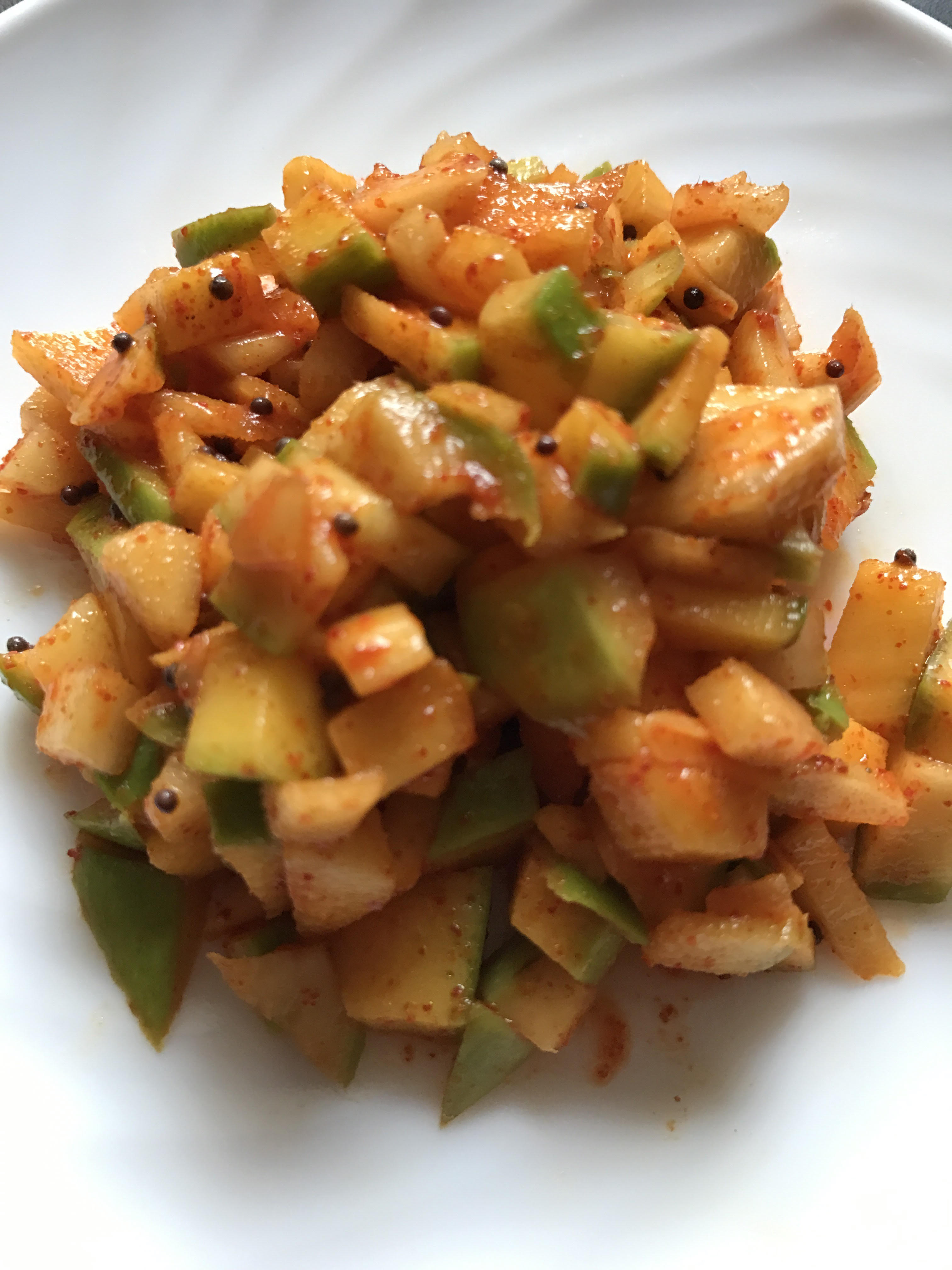
instant-mango-pickle-4Last year when I was in India, my mum made this and I really fell in love with the recipe. I was actually eating it like a snack, it was that tasty. I saw how she made it and came back and replicated a couple of times at home. I made this recently and thought to share it with everyone.

It’s a very simple and easy recipe with all ingredients (except the mangoes) which can be found in your kitchen. It also hardly takes any time to make, with only the cutting the mangoes the slightly tedious task.

This pickle stays good for a couple of weeks in the fridge, but it’s best to eat it soon. It also does not have any curing time, unlike traditional pickles.

instant-mango-pickle-1Instant Raw Mango Pickle

Ingredients:

  • 1 green, raw mango, chopped into tiny pieces
  • 1 tsp salt
  • 1 tsp red chilli powder
  • 1/2 tsp turmeric powder
  • 1/2 tsp asafoetida
  • 1 tsp sugar (optional)
  • 2 tbsps gingelly oil
  • 1 tsp mustard seeds

Method:

  • Wash and dry the mango and chop it into very small pieces
  • In a large pan, add the chopped mangoes, salt, sugar (if using), red chilli powder, turmeric powder and 1/4 tsp asafoetida and mix well.
  • In a smaller pan, heat the gingelly oil and when the oil starts smoking, put the mustard seeds and let them pop. Then add the asafoetida and pour the hot oil into the mango mixture. Mix thoroughly and store in a glass jar in the fridge.

instant-mango-pickle-2

instant-mango-pickle-5

instant-mango-pickle-3