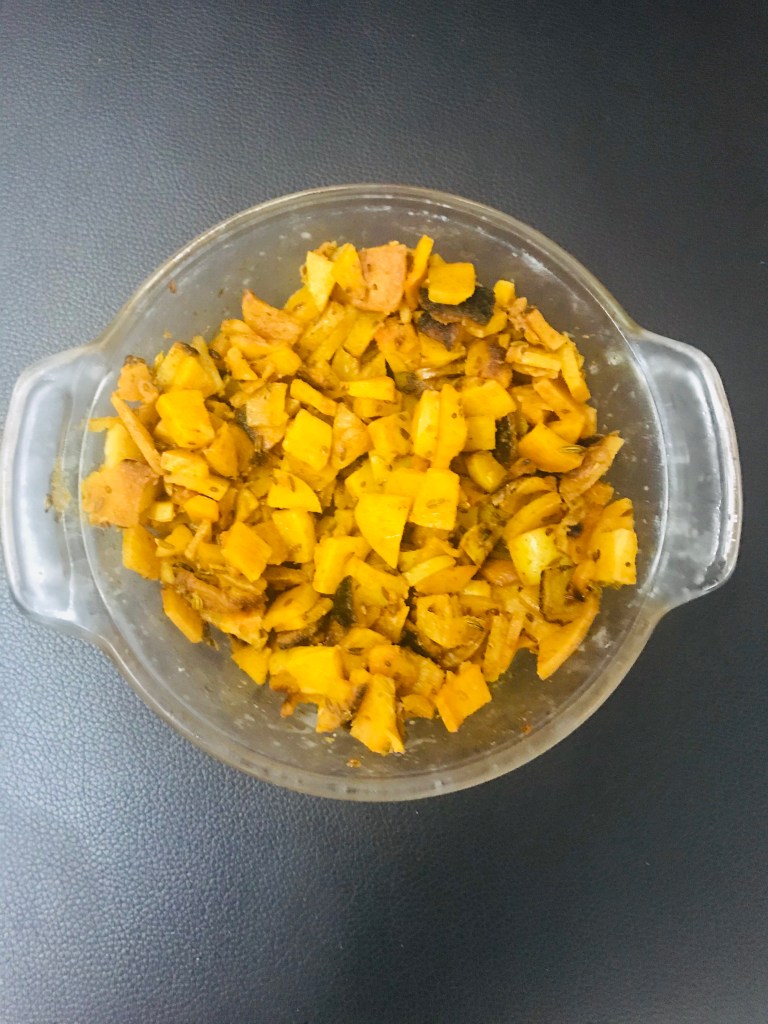
Recipes: Potato Podi Curry

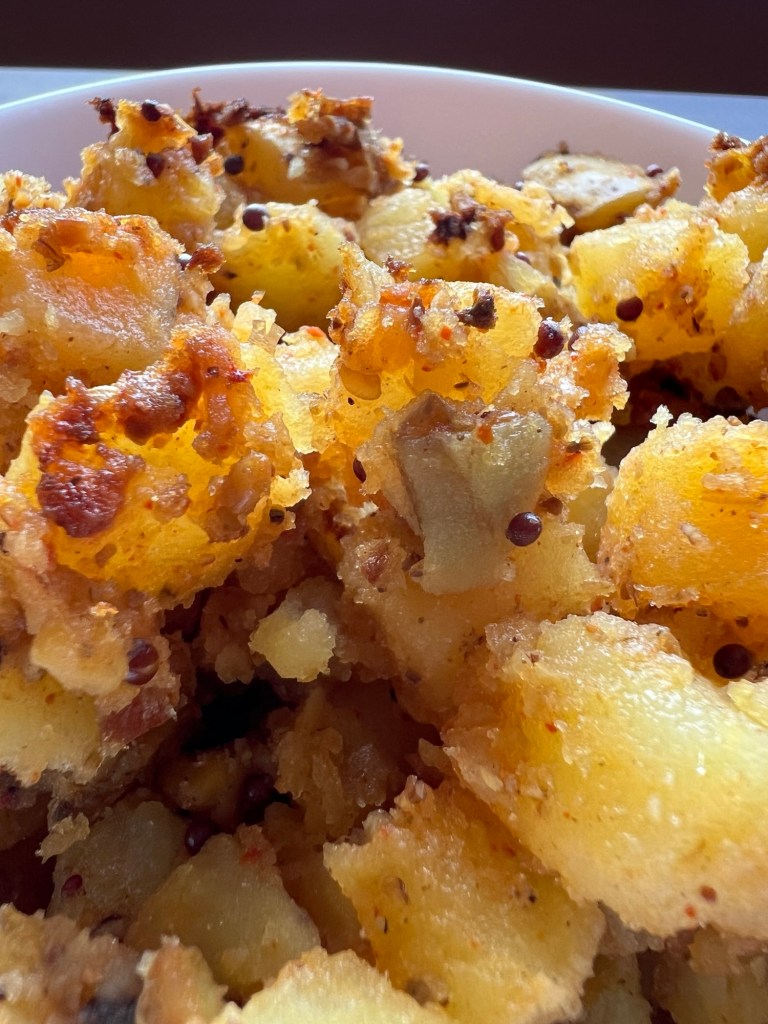
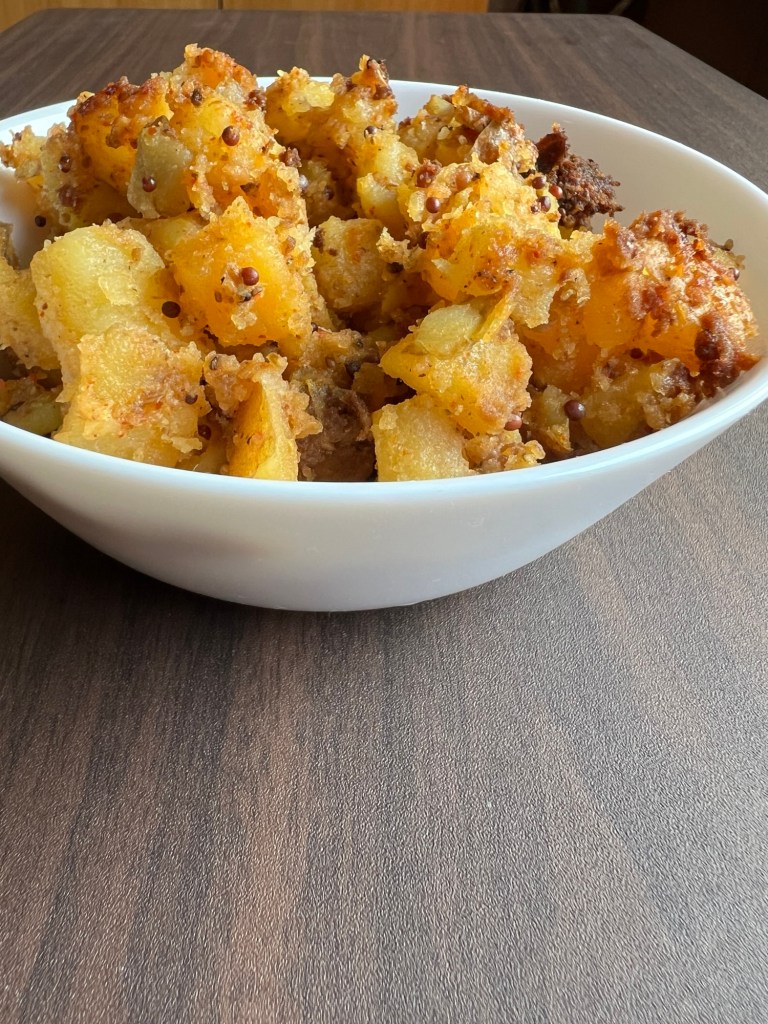
A staple in Tamil Brahmin weddings, Potato Podi Curry, or Urulai Kizhangu Kara Curry, holds a special place in Tamil Brahmin cuisine. This flavourful and spicy potato curry is made without onions and garlic, making it suitable for festive occasions. 

Potato Podi Curry 

Ingredients:

For the potatoes:

  • 4-5 medium-sized potatoes
  • ¼ tsp turmeric powder
  • ¼ tsp asafoetida powder
  • Salt to taste
  • 1 tbsp chopped coriander leaves 
  • 1 tbsp oil
  • 2 tsp mustard seeds
  • 10-12 curry leaves

For the Podi Powder

  • 2 tbsp coriander seeds
  • 2 tbsp chana dal (split Bengal gram)
  • 2 tbsp urad dal
  • 2 tbsp fennel seeds
  • 2 tbsp black peppercorn
  • 2-3 tbsp Kashmiri chilli powder
  • ¼ tsp fenugreek seeds

Method:

  • Wash the potatoes thoroughly. This curry will have unpeeled potatoes, so make sure the potatoes are cleaned. 
  • Chop the potatoes into small, bite-sized pieces. Drop the potatoes in cold water to avoid oxidisation.
  • In the meantime, heat a small skillet and dry roast the ingredients for the podi powder one by one, until they are crisp. Keep aside and let them cool.
  • Once cool, grind the spices to a fine powder. Keep aside.
  • In a large saucepan, add about 4-5 cups of water, add ¼ tsp turmeric and some salt and once the water comes to a rolling boil, add the potatoes and cook the potatoes until they are about 80% done, stirring occasionally.
  • Check to see if the potatoes are done. This can be done by taking a piece and pressing it with your finger. If you can mash it with your fingers, it is cooked. At this point remove the potatoes from the saucepan, drain them and keep aside.
  • Heat about 2-3 tbsp oil in a large pan and once warm add in the mustard seeds. When the mustard seeds pop, add in the curry leaves and mix. 
  • Now add in the asafoetida powder and once that is mixed, add in the drained potatoes.  Season with salt.
  • Add the podi powder and Kashmiri red chilli and mix gently.
  • On a low flame let the potatoes finish cooking. This should take about 7-10 minutes. 
  • Serve the potato podi curry with any South Indian meal.

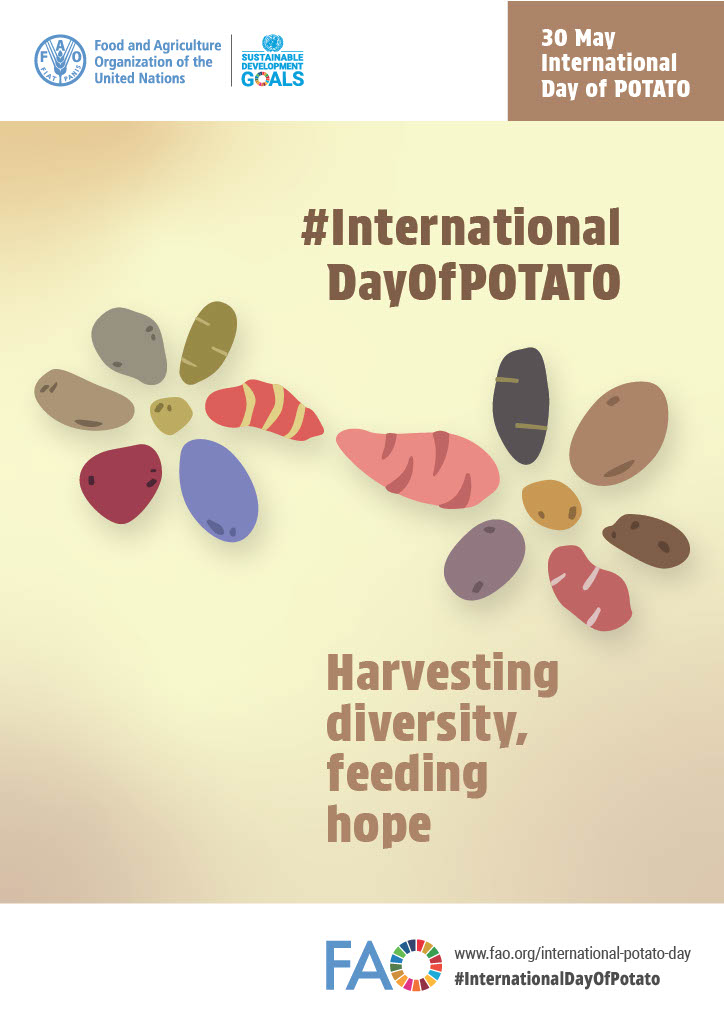
The International Day of Potato: Celebrating a Global Staple

The potato, a humble tuber that has nourished civilizations for millennia, is finally getting its due recognition on the global stage. On December 30, 2023, the United Nations General Assembly proclaimed May 30th as the International Day of the Potato, a testament to the crop’s enduring importance in feeding the world.

The potato’s origins can be traced back to the Andes of South America, where it was first cultivated by indigenous communities between 5,000 and 8,000 years ago. These early potato growers recognised the tuber’s remarkable resilience and nutritional value, making it a staple food that sustained the Inca civilization.

The potato’s journey to global prominence began in the 16th century, when Spanish conquistadors brought the crop back to Europe. Initially viewed with suspicion, the potato slowly gained acceptance and became a dietary mainstay, fueling the rise of urbanisation and the Industrial Revolution. During the Qing Dynasty in China, the introduction of the potato helped alleviate famine, solidifying its place as an essential crop.

The potato’s resilience was further tested during times of conflict, such as World War II, when its high yield and storage capabilities provided much-needed food security. However, the Irish Famine of the 1840s serves as a stark reminder of the dangers of relying on a single crop variety, as a lack of genetic diversity left the potato vulnerable to disease.

Today, the potato stands as a beacon of food security and a pillar of sustainable agriculture. With over 5,000 varieties worldwide, the potato’s genetic wealth offers a powerful tool to combat pests, diseases, and the impacts of climate change. From the 12,000-hectare Potato Park in the Andes, where indigenous communities manage and protect their potato genetic resources, to the innovative use of potato starch in bioplastics, the humble tuber continues to inspire innovation and drive progress.

The potato’s global significance is undeniable. It is the third most consumed food crop globally, with 159 countries cultivating the tuber. This widespread cultivation is a testament to the potato’s adaptability, as it thrives in diverse farming systems, from small-scale, hand-tended plots in the Andes to vast, mechanised commercial farms across different continents.

The potato’s nutritional profile is equally impressive. Rich in carbohydrates, vitamins, and minerals, the potato is a complete food that can help address issues of food security and malnutrition. Furthermore, the crop’s high yield and efficient use of resources make it a valuable tool in the fight against hunger and poverty.

The cultural and culinary dimensions of the potato are equally captivating. From the iconic Irish potato famine to the Russian love affair with vodka, the potato has woven itself into the fabric of human history and tradition. Across the globe, the potato has inspired a myriad of beloved dishes, from French fries and mashed potatoes to the Peruvian causa and the Indian aloo tikki.

The inaugural International Day of the Potato, to be celebrated tomorrow, will be a momentous occasion, marking a significant milestone in the global recognition of this remarkable crop. The day will provide an opportunity to showcase the potato’s multifaceted contributions to food security, nutrition, and sustainable agriculture, while also honouring the crucial role of small-scale family farmers, a significant proportion of whom are women, in safeguarding the crop’s genetic diversity.

The celebrations will be led by the Food and Agriculture Organization, or FAO of the United Nations, in collaboration with the World Potato Congress, Inc. and national governments. The day will feature a range of activities and initiatives designed to raise awareness, advocate for the potato, and celebrate its cultural and culinary significance.

One of the key highlights of the 2024 celebrations will be the formal adoption of the International Day of Potato proposal by the FAO during their annual general assembly in December 2022, followed by the approval and resolution of the declaration during the United Nations General Assembly in September 2023. This formal recognition will pave the way for the first-ever International Potato Day to be celebrated on May 30, 2024, just a few days before the next World Potato Congress in Adelaide, Australia.

The International Day of Potato 2024 will be a momentous occasion, a global celebration of a crop that has nourished civilisations, fueled economic progress and continues to play a vital role in addressing the challenges of food security, nutrition, and sustainable agriculture. As the world comes together to honour the humble potato, it is a testament to the enduring power of this remarkable tuber and the resilience of the communities that have cultivated it for millennia.

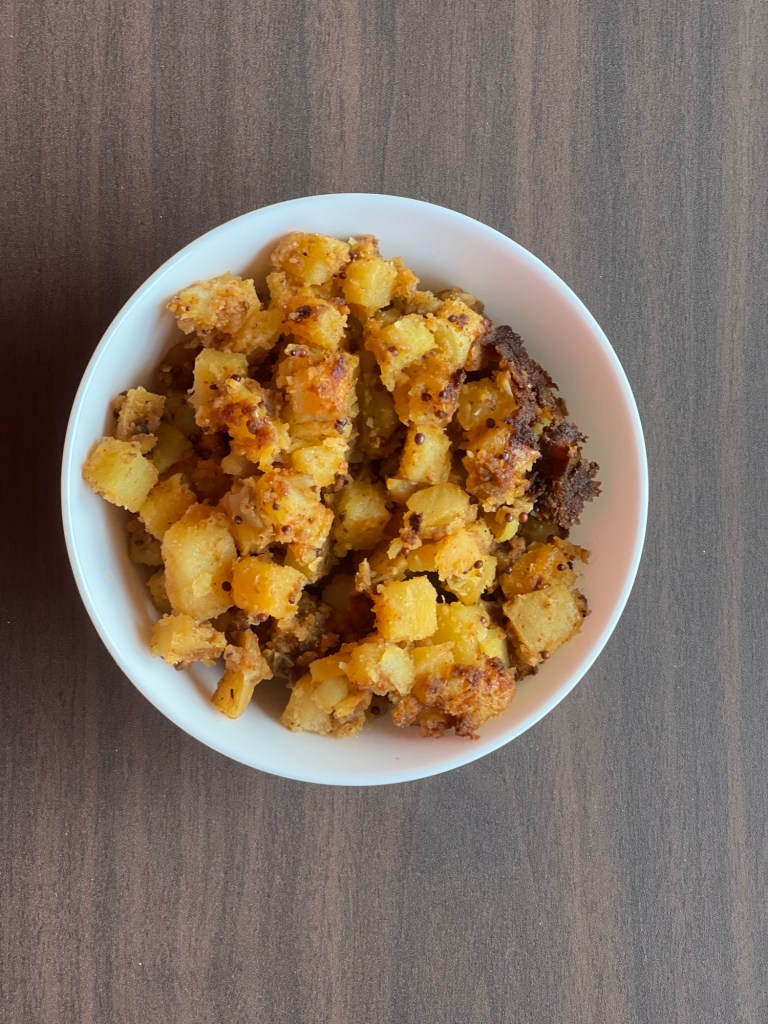
Recipes: Potato Halwa

Happy Navratri! Today is the first day of the nine days that are spent in prayer, contemplation, and celebrating women.

Last year during Navratri, I wanted to make a different sweet each day as an offering to the Goddess. One of the days, when I didn’t know what to make and had some boiled potatoes and sweet potatoes in the fridge, I made this recipe which I found online. Usually only made from potatoes, I added sweet potatoes to the mix and the result was a super delicious halwa, which nobody could believe was made from potatoes!

This recipe is slightly heavier during the summer months because of the carb and starch content in the potatoes and so is apt for winters. Also, because it is heavy, you can make it if you are fasting as potatoes are the quintessential fasting vegetable.

Potato Halwa

Ingredients:

  • 3 medium-sized potatoes, boiled, peeled, and mashed
  • 1 medium-sized sweet potato, boiled, peeled, and mashed
  • ½ cup milk
  • 1/3 to ½ cup sugar according to taste
  • ½ teaspoon cardamom powder
  • 4 tbsp ghee
  • A generous pinch of saffron
  • 2 tbsp chopped mixed nuts like cashews, almonds, and pistachios
  • 1 tsp raisins

Method:

  • Take the saffron in a small bowl and add 1 tbsp warm milk to it let the saffron dissolve. You may need to stir it a bit or even cook it in the microwave in 30-second increments.
  • In a small pan, with 1 tsp ghee, fry the mixed nuts and raisins and keep aside. You can also dry roast them as I did to make the recipe slightly healthy. Keep aside.
  • Heat ghee in a pan and when the ghee heats up, add the mashed potatoes.
  • Sauté on low heat for about 5-6 minutes until the potatoes start to change in colour and start becoming golden brown.
  • Add in the milk, sugar, cardamom powder and saffron and mix well to combine. The sugar will start to melt and the mixture becomes watery. Make sure you stir well that there are no lumps in this mixture.
  • Stir continuously until the halwa turns dry again and the ghee starts oozing out.
  • Add half the chopped nuts and raisins and mix well.
  • Cook for another minute and switch off the flame.
  • Serve warm garnished with the remaining nuts and raisins.
  • This dish is best served warm, so if you are planning to make it ahead of time, just warm it in the microwave or the stove and serve.

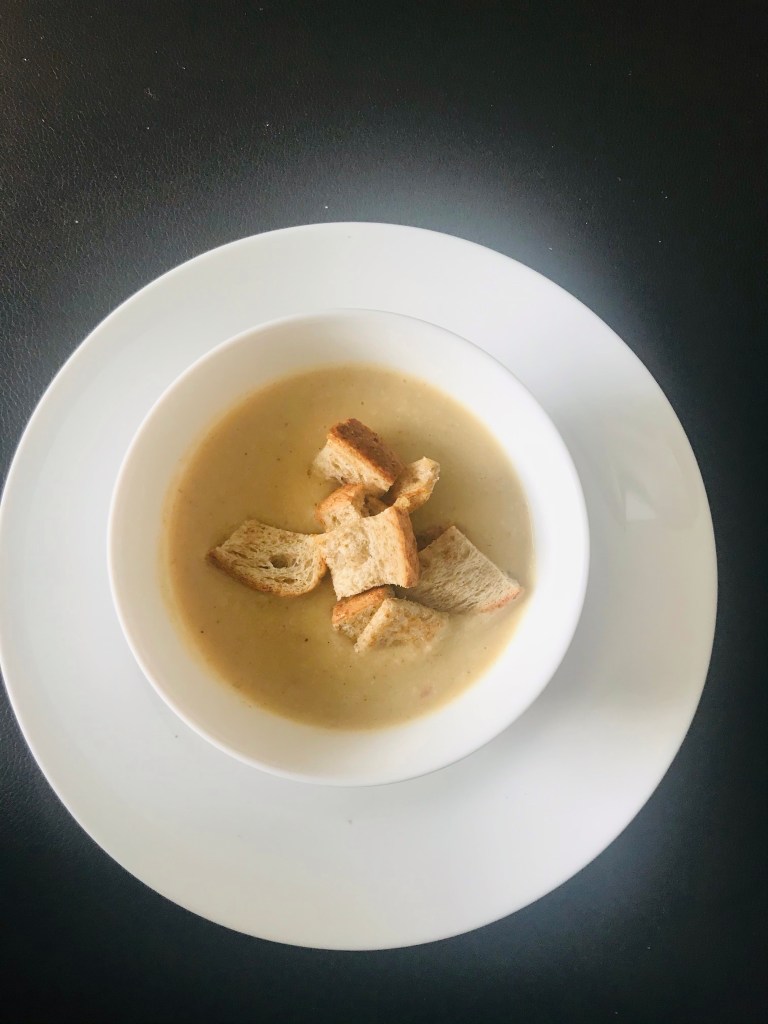
Recipes: Roasted Cauliflower and Potato Soup

These days we don’t eat rice on Sundays and so I am constantly on the look-out for recipes which we eat, mostly western dishes. One weekend, with an almost bare fridge, I decided to make a cauliflower and potato soup and decided to kick it up a notch by roasting the cauliflower first.

The soup was incredibly creamy and so filling. It also seemed to me to have a slight taste of mushroom soup and this was corroborated by BB & GG who loved it! I will be making this again and this will be added to my repertoire.

Roasted Cauliflower and Potato Soup

Ingredients:

  • 1 head cauliflower, cut into florets and kept aside
  • 1 large potato, peeled and chopped
  • 1 large sweet potato, peeled and chopped
  • 1 medium sized onion, chopped
  • 5-6 garlic cloves
  • 10-12 cashew nuts
  • Salt and Pepper to taste
  • 1 tbsp butter
  • 2-3 tbsps Olive oil

Method:

  • Preheat your oven to 200 degrees celcius.
  • Line a large tray with either baking paper or aluminium foil and spread the chopped cauliflower in it. Drizzle about a tbsp of olive oil and then some salt and pepper and mix well. Pop it into the oven to roast for about 20-25 minutes or until the cauliflowers start to brown. Remove and keep aside.
  • Heat the balance oil and butter in a large saucepan and when warm, add the galic cloves. When the garlic starts to brown, add the cashew nuts and stir for a few minutes.
  • Then add the chopped onions and stir until the onions are translucent.
  • At that point, add the chopped potatoes, some salt and cook covered until the potatoes are done, stirring every few minutes.
  • Let everything cool down and then blend it to a smooth paste in a blender. This works best with a proper blender and an immersion blender may not make it as creamy as we want it to be.
  • Once it is smooth and creamy, bring this back to the saucepan and bring to a boil. Season as needed with salt and pepper and serve hot with bread croutons.

Recipes: Ajwaini Aloo aka Potatoes spiced with Carom seeds

A very simple dish which I usually whip up for lunch, this dry curry pairs potatoes with ajwain or carom seeds.

Used quite widely across the Indian subcontinent, ajwain is said to counter gas in the stomach. Many communities have traditional recipes of ajwain water when you have an upset stomach and for this reason I like to pair it with potatoes because these tuber vegetables can give you a bad case of stomach bloating.

This is a very easy recipe and from start to finish took me less than 30 minutes, including cutting the potatoes. Eat it with rice and some dal or with any Indian flatbread. It is also yummy paid with a chutney and filled in bread as a sandwich.

Ajwaini Aloo

Ingredients;

4 medium sized potatoes

1 tbsp oil

1/2 tsp cumin seeds

1/2 tsp ajwain seeds

1/8 tsp asafoetida

1/4 tsp turmeric powder

1 tsp red chilli powder

1/2 tsp amchur powder

Salt to taste

Method

Wash and scrub the potatoes well. If the skin is fairly thin, you need not peel it, otherwise peel the skin. Make thick slices and then sticks of the slices. Now make small and thin squares of the potatoes. Cut as thin as you like. The smaller the potato piece, the faster it will cook.

Heat the oil in a pan and when warm, add the cumin seeds and stir for a couple of seconds. Then add the ajwain and stir for a couple of seconds.

Now add the dry spice powders – asafoetida, turmeric powder and red chilli powder and stir. Add the amchur powder and salt and give it a good stir. Make sure the flame is low to medium so that you don’t burn the spices.

Next add the chopped potatoes and cook covered, stirring occasionally. Check for seasoning once the potatoes are cooked. I like to make this dish a little crisp, but if you don’t like it crisp, you can remove it from the flame once it is cooked.

Serve hot with rice, rotis or bread.