In My Hands Today…

Foolproof: Why Misinformation Infects Our Minds and How to Build Immunity – Sander van der Linden
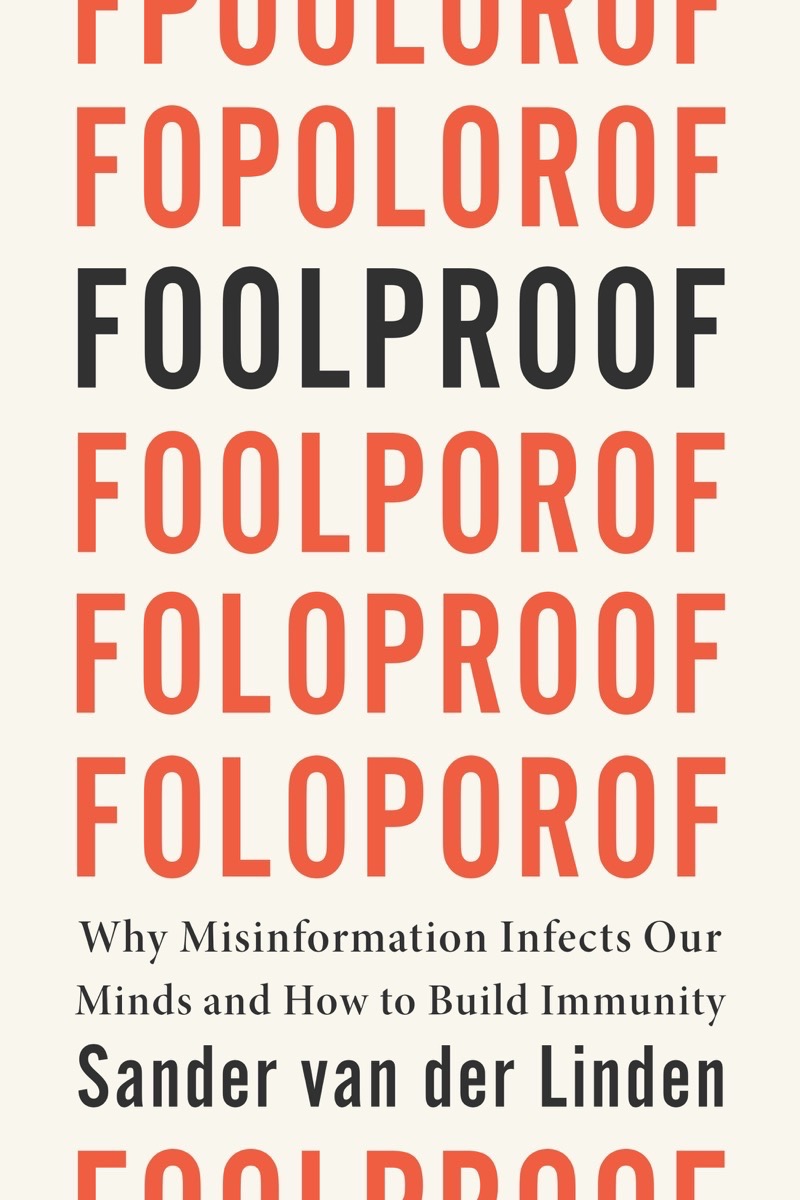
Informed by decades of research and on-the-ground experience advising governments and tech companies, Foolproof is the definitive guide to navigating the misinformation age.

From fake news to conspiracy theories, from inflammatory memes to misleading headlines, misinformation has swiftly become the defining problem of our era. The crisis threatens the integrity of our democracies, our ability to cultivate trusting relationships, even our physical and psychological well-being―yet most attempts to combat it have proven insufficient.

In Foolproof , one of the world’s leading experts on misinformation lays out a crucial new paradigm for understanding and defending ourselves against the worldwide infodemic. With remarkable clarity, Sander van der Linden explains why our brains are so vulnerable to misinformation, how it spreads across social networks, and what we can do to protect ourselves and others.

Like a virus, misinformation infects our minds, exploiting shortcuts in how we see and process information to alter our beliefs, modify our memories, and replicate at astonishing rates. Once the virus takes hold, it’s very hard to cure. Strategies like fact-checking and debunking can leave a falsehood still festering or, at worst, even strengthen its hold. But we aren’t helpless.

As van der Linden shows based on award-winning original research, we can cultivate immunity through the innovative science of “prebunking”: inoculating people against false information by preemptively exposing them to a weakened dose, thus empowering them to identify and fend off its manipulative tactics. Deconstructing the characteristic techniques of conspiracies and misinformation, van der Linden gives readers practical tools to defend themselves and others against nefarious persuasion―whether at scale or around their own dinner table.
In My Hands Today…

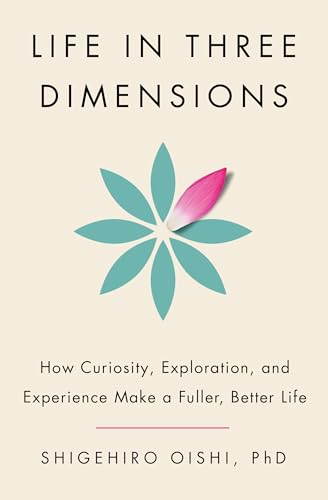
Life in Three Dimensions: How Curiosity, Exploration, and Experience Make a Fuller, Better Life – Shigehiro Oishi

For many people, a good life is a stable life, a comfortable life that follows a well-trodden path. This is the case for Shigehiro Oishi’s father, who has lived in a small mountain town in Japan for his entire life, putting his family’s needs above his own, like his father and grandfather before him. But is a happy life, or even a meaningful life, the only path to a good life?

In Life in Three Dimensions, Shige Oishi enters into a debate that has animated psychology since 1984, when Ed Diener (Oishi’s mentor) published a paper that launched happiness studies. A rival followed in 1989 with a model of a good life that focused on purpose and meaning instead. In recent years, Shige Oishi’s award-winning work has proposed a third dimension to a good psychological richness, a concept that prioritizes curiosity, exploration, and a variety of experiences that help us grow as people.

Life in Three Dimensions explores the shortcomings of happiness and meaning as guides to a good life, pointing to complacency and regret as a “happiness trap” and narrowness and misplaced loyalty as a “meaning trap.” Psychological richness, Oishi proposes, balances the other two, offering insight and growth spurred by embracing uncertainty and challenges.

In a lively style, drawing on a generation of psychological studies and on examples from famous people, books and film, Oishi introduces a new path to a fuller, more satisfying life with fewer regrets.

In My Hands Today…

How to Be Enough: Self-Acceptance for Self-Critics and Perfectionists – Ellen Hendriksen

Are you your own toughest critic? Learn to be good to yourself with this clear and compassionate guide.

Do you set demanding standards for yourself? If so, a lot likely goes well in your life: You might earn compliments, admiration, or accomplishments. Your high standards and hard work pay off.

But privately, you may feel like you’re falling behind, faking it, or different from everybody else. Your eagle-eyed inner quality control inspector highlights every mistake. You try hard to avoid criticism, but criticize yourself. Trying to get it right is your guiding light, but it has lit the way to a place of dissatisfaction, loneliness, or disconnection. In short, you may look like you’re hitting it out of the park, but you feel like you’re striking out.

This is perfectionism. And for everyone who struggles with it, it’s a misnomer: perfectionism isn’t about striving to be perfect. It’s about never feeling good enough.

Dr. Ellen Hendriksen—clinical psychologist, anxiety specialist, and author of How to Be Yourself—is on the same journey as you. In How to Be Enough, Hendriksen charts a flexible, forgiving, and freeing path, all without giving up the excellence your high standards and hard work have gotten you. She delivers seven shifts—including from self-criticism to kindness, control to authenticity, procrastination to productivity, comparison to contentment—to find self-acceptance, rewrite the Inner Rulebook, and most of all, cultivate the authentic human connections we’re all craving.

With compassion and humor, Hendriksen lays out a clear, effective, and empowering guide. To enjoy rather than improve, be real rather than impressive, and be good to yourself when you’re wired to be hard on yourself.

In My Hands Today…

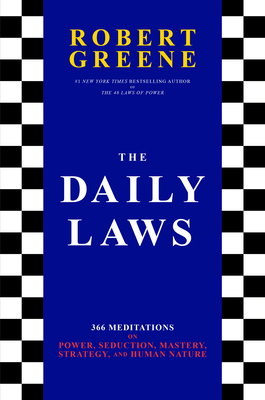
The Daily Laws: 366 Meditations from the author of the bestselling The 48 Laws of Power – Robert Greene

Over the last 22 years, Robert Greene has provided insights into every aspect of being human whether that be getting what you want, understanding others’ motivations, mastering your impulses, and recognizing strengths and weaknesses. The Daily Laws distills that wisdom into daily entries.

Each entry delivers refined and concise wisdom from one of his books, in an easy to digest lesson that will only take a few minutes to read, as well as a Commandment — a prescription or prompt for the reader to follow.

Not only is The Daily Laws the perfect entry point for those new to Greene’s penetrating insight, but it will also help the many Greene fans throughout the world understanding and internalizing the many lessons that fill his books. It is a guide to a lifetime of reading and re-reading about power, seduction, strategy, psychology and human nature.

In My Hands Today…

How to Think Like a Roman Emperor: The Stoic Philosophy of Marcus Aurelius – Donald J. Robertson

Roman emperor Marcus Aurelius was the final famous Stoic philosopher of the ancient world. The Meditations, his personal journal, survives to this day as one of the most loved self-help and spiritual classics of all time. In How to Think Like a Roman Emperor, cognitive psychotherapist Donald Robertson weaves the life and philosophy of Marcus Aurelius together seamlessly to provide a compelling modern-day guide to the Stoic wisdom followed by countless individuals throughout the centuries as a path to achieving greater fulfillment and emotional resilience.

How to Think Like a Roman Emperor takes readers on a transformative journey along with Marcus, following his progress from a young noble at the court of Hadrian—taken under the wing of some of the finest philosophers of his day—through to his reign as emperor of Rome at the height of its power. Robertson shows how Marcus used philosophical doctrines and therapeutic practices to build emotional resilience and endure tremendous adversity, and guides readers through applying the same methods to their own lives.

Combining remarkable stories from Marcus’s life with insights from modern psychology and the enduring wisdom of his philosophy, How to Think Like a Roman Emperor puts a human face on Stoicism and offers a timeless and essential guide to handling the ethical and psychological challenges we face today.