
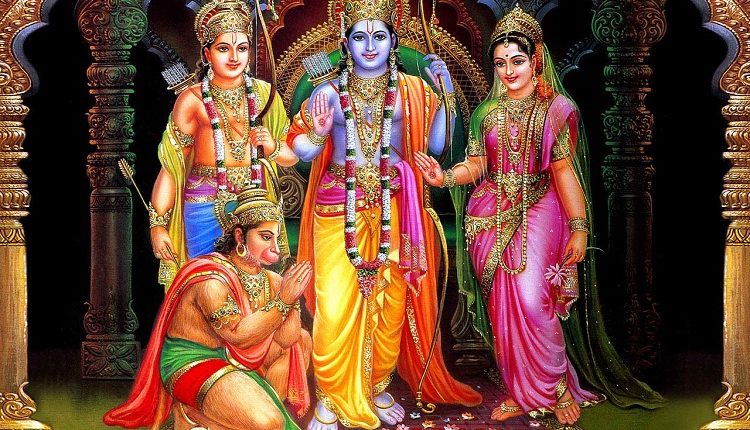
India, a land steeped in mythology and spirituality, celebrates a multitude of festivals. Among these, Rama Navami holds a special place—a day that reverberates with devotion, storytelling, and vibrant traditions. Let us delve into the origins, legends, and unique customs associated with this auspicious occasion.
The tale of Lord Rama begins in the ancient city of Ayodhya, where King Dasharatha and Queen Kausalya longed for an heir. Their prayers bore fruit when the celestial sage Rishyasringa conducted a yajna or sacrifice, leading to the divine appearance of Rama. Born at noon, Rama embodied virtue, righteousness, and compassion. His life would become a beacon for humanity.
Rama, the seventh avatar of Lord Vishnu, symbolises dharma, or righteousness and duty. His unwavering commitment to truth, justice, and love for all beings makes him an enduring icon. The epic Ramayana, attributed to the sage Valmiki, narrates Rama’s journey—his exile, the abduction of his wife Sita by the demon king Ravana, and the eventual triumph of good over evil.
Rama’s marriage to Sita is a pivotal moment. To win her hand, suitors must string the divine bow of Lord Shiva. Rama effortlessly lifts and breaks the bow, signifying his destiny as Sita’s husband. The cunning demon Maricha transforms into a golden deer to distract Rama and Lakshmana. While they chase the deer, Ravana abducts Sita, leading to the epic quest for her rescue. Rama’s battle against Ravana, the ten-headed demon king of Lanka, culminates in the victory of virtue. The burning of Lanka, the rescue of Sita, and the return to Ayodhya are celebrated during Rama Navami.
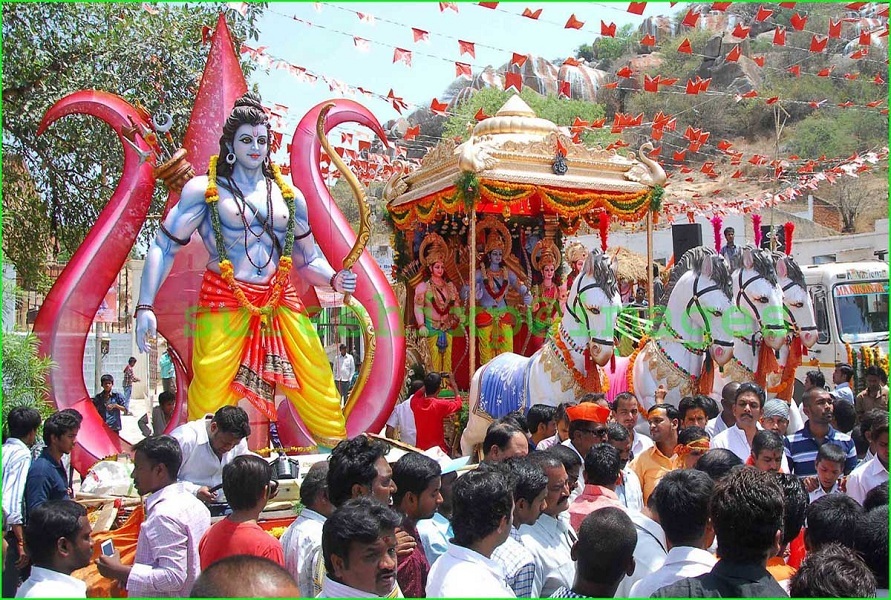
Ayodhya, Rama’s birthplace, becomes a pilgrimage site during Rama Navami. Devotees throng the Ram Janmabhoomi temple, where Rama’s birth is commemorated. The Sarayu River witnesses devotees taking a purifying dip before offering prayers. In various cities, grand chariot processions depict Rama, Sita, Lakshmana, and Hanuman. These yatras symbolise Rama’s triumphant return to Ayodhya after defeating Ravana. Temples resonate with spiritual discourses, narrating episodes from the Ramayana. Devotees sing bhajans or devotional songs in praise of Rama’s valour and compassion. In some regions, Rama is revered like an infant. Devotees place an image of baby Rama in a cradle, symbolizing his divine birth. Charitable events and community feasts exemplify Rama’s compassion. Sharing food and resources with others is a way to honour his legacy.
Not just when it was written, the Ramayana continues to hold immense significance in today’s world. The epic promotes moral and ethical values that remain relevant even in contemporary society. Through the characters and their actions, it depicts virtues such as righteousness, loyalty, duty, and sacrifice. The story serves as a guide, providing ethical guidelines for individuals to lead virtuous lives.

Life is akin to a game of chess or a battlefield. The Ramayana teaches the threefold Dharma, the code of conduct about the individual, family, and society. It emphasises the importance of understanding our duties in these realms. Lord Rama’s character exemplifies compassion and love, which are essential for navigating the complexities of modern life. The epic delves into the true identity of the individual, the significance of family bonds, and the sanctity of society. In an era where corruption prevails in various fields—business, education, and politics—the principles of the Ramayana offer guidance. It outlines relationships between brothers, fathers and sons, and preceptors and disciples, emphasising mutual respect and duty.
The Ramayana reminds us of our shared existence on this earth. Despite apparent multiplicity, we all breathe the same air and drink the same water. Ignoring this underlying unity leads to the mistaken perception of division.
The festival of Rama Navami holds immense importance and relevance in today’s world and continues to resonate with millions of people. It invites introspection. As we celebrate Lord Rama’s birth, we reflect on our paths—our choices, virtues, and struggles. The festival reminds us that goodness prevails, even in the face of adversity.
Rama Navami transcends time, connecting generations through devotion and storytelling. As we chant “Jai Shri Ram,” we honour not just a historical figure, but an eternal truth—the victory of light over darkness, of love over hatred. May Rama’s grace guide us, and may our hearts echo the timeless chant: Raghupati Raghava Raja Ram, Patita Pavana Sita Ram. Here’s the uncomparable MS Subbalakshmi with the song. Rama Navami celebrates not just a historical figure, but an eternal truth—the victory of light over darkness, love over hatred. Lord Rama’s teachings continue to guide us, inspiring courage, sacrifice, and devotion.
 Memories and Such