Recipes: Thippili Rasam

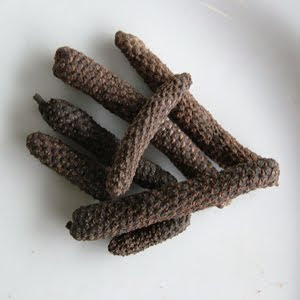
One of the forgotten spices in India, Thippili or Long pepper is no longer used in Indian cooking. This amazing ayurvedic medicinal plant or spice has so many benefits that once I started using it, I actually wondered why people were not incorporating it into their cooking.

According to Wikipedia, this spice has been referred to in ancient texts of Ayurveda. It reached Greece in the sixth or fifth century BCE, though Hippocrates discussed it as a medicament rather than a spice. As peppers are wont to be, these are very useful in curing or suppressing coughs and colds.

My kids call this rasam as “Medicine Rasam” and love it when they are sick. You can also drink it as a soup when you don’t really feel like eating and having this on a rainy day is bliss!

It’s not a very difficult recipe, with the biggest challenge being to get the Thippili. You should be able to get it in any Indian stores. There are different versions of the rasam and here’s how I make it…

Thippili Rasam

IMG_4685

Ingredients:

  • 1 small lemon sized ball of tamarind, soaked in warm water
  • 6-8 sticks of Thippili
  • 1/2 tsp whole black pepper
  • 1 cup Toor dal, cooked till it is mushy
  • 2 tbsps Coriander seeds
  • 2 tsps Cumin seeds
  • 4-6 dried Red Chillies (this depends on the spice intensity of the chillies plus your spice tolerance)
  • a pinch of Asafoetida
  • 1-2 tsps jaggery (you can omit this or use brown or white sugar as a substitute)
  • 1 tsp mustard seeds
  • 8 – 10 curry leaves
  • 1 tbsp ghee
  • 1-2 tomatoes

Method:

  • Soak the tamarind in warm water, then squeeze it out and run the water through a seive to get tamarind water. Discard the paste which is left behind.
  • In a pan, heat 1 tsp of ghee and lightly fry the thippili, coriander seeds, 1 tsp cumin seeds and red chillies. Once cool, blend it into a smooth paste along with the tomatoes.
  • Next mix together the tamarind water, asafoetida, salt and jaggery and start boiling it. Once the raw smell of the tamarind goes away, add the ground paste and continue boiling. After 10 mins, add in the cooked Toor dal and continue to boil for another 10 mins.
  • In a seperate, smaller pan, put the remaining ghee and heat it. Then add the mustard and balance cumin seeds. When the seeds pop, add the curry leaves and a pinch of asafoetida. Stir for a couple of seconds, switch off the gas and pour this seasoning over the rasam.

IMG_4686

Delicious Thippili Rasam is ready. Eat with rice or by itself as a soup!

Milagu Kozambu (Pepper Sauce)

My Bible and go-to book for everything in traditional Iyer cooking is the “Cook and See (Samaithu Paar)” series by S. Meenakshi Ammal. The series of three book was originally written in the late sixties/early seventies. I refer to them all the time, especially when I want to make traditional food. This book takes the place of calls to my mum, especially since international calls are so expensive!

The recipe I made today is Milagu Kozambu or Pepper Soup as Meenakshi Ammal calls it. I am copying the recipe exactly as it was in the book and I made it also the exact same way it said in the recipe.

Milagu Kozambu

(This recipe prepares 1 cup)

 Ingredients:

  • 1 tsp Peppercorns
  • 6 Red Chillies
  • 1 tsp Black Gram Dal (Urad Dal)
  • 2 tsps Bengal Gram Dal (Chana Dal)
  • ½ tsp Cumin Seeds
  • 2 tsps Coriander Seeds
  • 1 tsp Mustard Seeds
  • Tamarind as big as a small piece of lime
  • Salt
  • A handful of curry leaves
  • Asafoetida
  • Oil

 Method:

Heat oil in a kadhai and fry peppercorns, red chillies, Bengal gram dal, 1 tsp black gram dal, cumin seeds and coriander seeds. When the dals turn red, add the curry leaves and fry till the curry leaves are crisp. At this point, add the asafoetida. Grind to a smooth paste with the tamarind, salt and a little water. The paste should be very smooth.

Heat oil and fry 1 tsp mustard seeds and 1 tsp black gram dal. Mix the paste with enough water to make 1.5 cups of the paste. Add this to the oil and let it cook on a slow flame till it reduces to 1 cup.

This kozambu will keep for about 2 days outside and about a week in the fridge. Eat with hot rice and some papad. So soul satisfying on a cold or rainy day!

Pulao/Biryani With A Twist

I recently read somewhere in the Internet about the street foods in Mumbai and that started a nostalgic tone for me. I love the street food that Mumbai has to offer, be it vada pav, or the ubiquitous bhel puri, sev puri and pani puri or Mumbai’s very own pav bhaji. Vendors who sell this yummy dish also make a rice dish with the vegetables that go into the bhaji making a fairly different type of pulao/biryani. This pulao is therefore inspired by the pav bhaji pulao.

Pulao/Biryani with a Twist

Ingredients:

  • 11/2 cups basmati rice, washed and soaked for atleast 20 minutes
  • 2 medium sized onions, chopped finely
  • 1 fairly big potato, peeled and cubed into bite-sized pieces
  • 1 carrot, peeled and cubed into bite sized pieces
  • 1/2 cup frozen green peas
  • 1 green capsicum, cut into bite-sized pieces
  • 4 medium sized tomatoes, finely chopped
  • 2 flakes of garlic, finely chopped
  • 1 inch piece of ginger, peeled and finely chopped
  • 1 tsp cumin seeds
  • 1/4 tsp turmeric powder
  • 1 tsp (or more) red chilli powder
  • 1 tsp cumin seed powder
  • 1 tsp coriander seed powder
  • 2 tsps (or more) pav bhaji masala
  • 1 tsp sabzi masala (optional)
  • Salt to taste
  • 2 tbsps oil

Method:
Heat oil in a pan and when it is fairly hot, put in the cumin seeds. When it splutters, add the garlic, stir for a few seconds, then add the ginger and give it a quick stir.

Next, add the onions, capsicum, carrots, peas and potatoes in the following order making sure you give a quick stir before you add the next vegetable. Now add the tomatoes and the spices and stir well. Once all the vegetables have been nicely coated with the spices, add the rice from which the water has been completely drained.

Stir and let the rice mix well with the vegetables and let it cook for a couple of minutes.

Now transfer everything to a rice cooker, add around 2.5 cups of water and let it cook.

When the rice is done, keep it covered for another 10 minutes, then fluff lightly with a fork, garnish with coriander leaves and serve hot.

Paneer in a Minty Yoghurt Sauce

I’ve been on a roll recently and have been experimenting a lot in the kitchen. Hope this continues on after I’m done being a career woman and started my break. Today’s recipe is a variation on a standard paneer recipe that I tweaked. Everyone in my home, especially BB love paneer and I make some sort of paneer recipe atleast twice a month. The result was this delicious paneer in a minty yoghurt sauce.

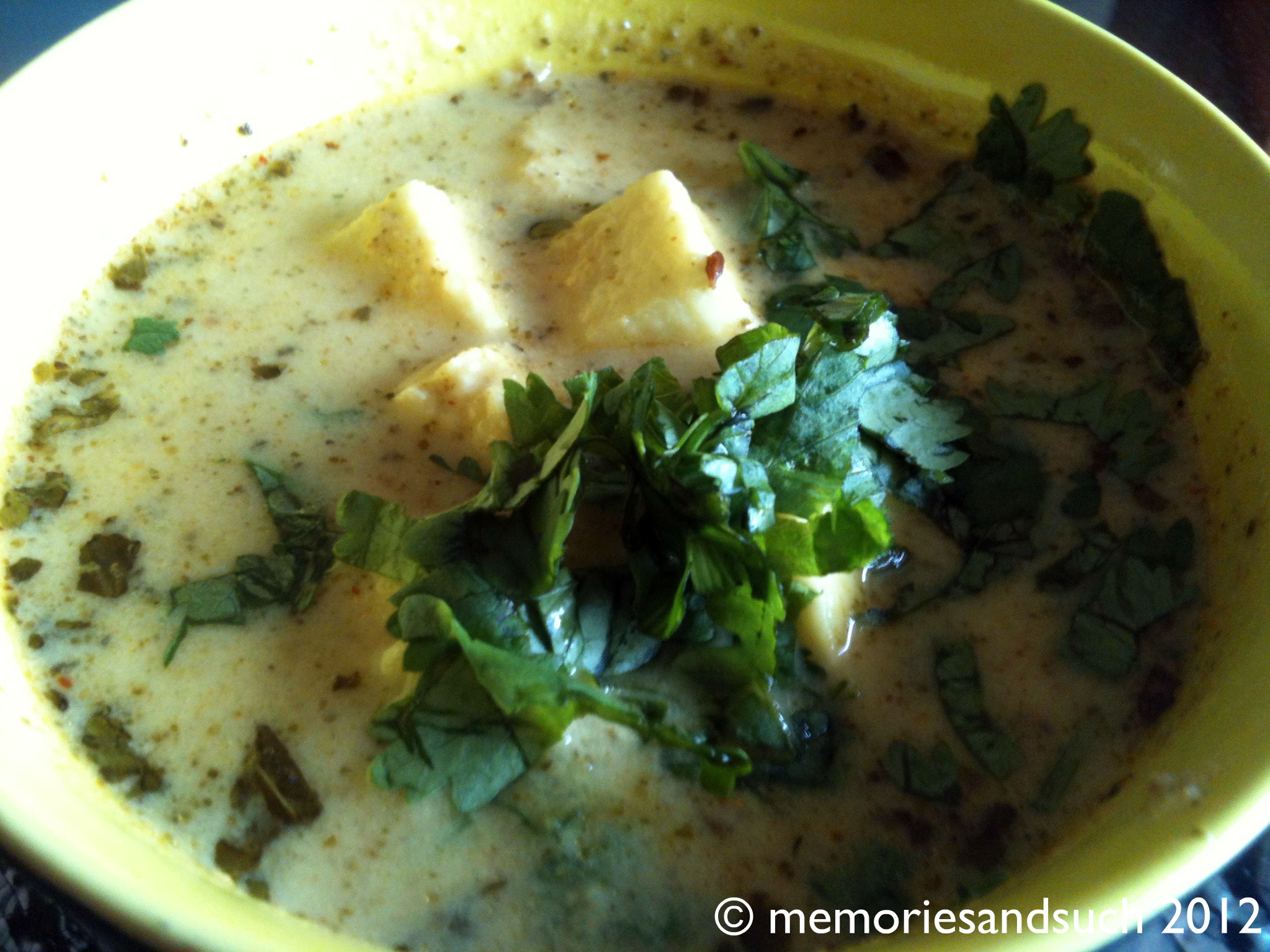
Paneer in a Minty Yoghurt Sauce

Ingredients:

  • 2 cups frozen paneer, (cubed if not already done so)
  • 2 medium sized onions
  • 2 medium sized tomatoes
  • 3 flakes garlic
  • 1 inch size ginger
  • 3 fresh green chillies
  • 1/2 cup mint leaves
  • 2 cups yoghurt
  • 2 tbsps kasoori methi (dried fenugreek leaves)
  • 2 tsps oil
  • 1 tsp cumin seeds
  • salt to taste
  • 1/4 tsp turmeric powder
  • 2 tsps sabzi masala (I used Everest)
  • Coriander to garnish

Method:

Put the frozen paneer in a largish dish and pour hot water over it to soften it. This will take around 10 minutes. You can do the other prep work while the paneer softens.

In a grinder/blender zip the following ingredients and make it into as smooth a paste as you can – garlic, ginger, onions, tomatoes, green chillies, mint. You can use some of the yoghurt instead of water if you need.

Heat oil in a pan and when it is hot enough add the cumin seeds. When the seeds splutter,  put in the turmeric powder and then pour in the blended paste and let it cook for a while. When the paste is cooked and starts leaving the sides of the pan, add the paneer and turn a few times to make sure all the paneer pieces are coated with the paste. Now add some more yoghurt to this (as thin as you like it to be) and then lightly crush the kasoori methi in your palms and add it to the mixture. Add salt to taste and the sabzi masala and let the mixture bubble well.

Transfer to a serving bowl, garnish with coriander leaves and eat with rice or rotis.

Verdict: The recipe was a bit different due to the mint added which gave a slight minty taste to the paneer. Good to eat with pulao and rotis, but if I was going to eat it with rotis, I would make it a bit more thicker that I made it today. Definitely something to try again.

Arachavitta Sambhar

This is a very traditional South Indian recipe. Archavitta literally means with ground spices. This sambhar is different from the usual one we make on a regular basis in that there is no sambhar powder used.

I have wanted to make this for a few weeks now. The last time I tried making it, I found I didn’t have coconut at home and so had to postpone making it. I finally made it with the basic recipe from my bible of tam bram cooking – Cook and See by S. Meenakshi Ammal. I used the recipe from Book 1 of Cook and See and tweaked it a bit using advice given to me by my mother and mother-in-law.

Arachivitta Sambhar

Ingredients:

  • ½ cup red gram dal (toor dal)
  • 1 small lime sized ball of tamarind, soaked in water and the pulp squeezed out
  • 1 cup shallots
  • 1-2 carrots, peeled and cut into big pieces
  • ½ a yellow pumpkin, peeled and cut into big cubes
  • 4-5 potatoes, cut into largish cubes
  • 2-3 tsps oil
  • 1 tsp mustard seeds
  • Salt to taste
  • Coriander leaves to garnish

To be ground into a paste:

  • 6-8 dried red chillies
  • 2 tsps coriander seeds
  • 1 tsp Bengal gram seeds (chana dal)
  • 1 tsp fenugreek seeds
  • 4-5 shallots
  • ½ cup fresh, grated coconut

Method:

In a small pressure cooker, pressure cook the toor dal with a pinch of turmeric powder till it is soft and the dal has broken down. This usually will take around 3 whistles in the cooker.

Heat 1 tsp of oil in a pan and one by one add the ingredients to be gound into a paste and roast them till the coconut is golden and the water in it evaporates. Transfer to a mixer and when cool, grind it to a fine paste using a bit of water. Keep aside.

In the same pan, heat the remaining oil and add the mustard seeds. When they pop, put in the shallot and stir for a few minutes. Then add the potatoes, carrots and pumpkin and fry for a few minutes.

Now add the gound paste and stir into the vegetables. Once it is all mixed in, pour in the tamarind water and add salt to taste.

Let this boil for around ten minutes. Check to see if the vegetables are cooked. When the vegetables and shallots reached the almost cooked stage, add the cooked dal.

Let it boil well, check for seasoning and switch off the gas. Garnish with coriander leaves and serve hot with white rice.