Healthier Chivda

The way BB’s timetable is structured, he does not have a lunch break even though they end school around 3 pm (after starting school at 7:30 am), so when he comes home, he is super hungry and starts rooting for something to eat. We usually have some biscuits at home, but I was on the lookout for something slightly healthier.
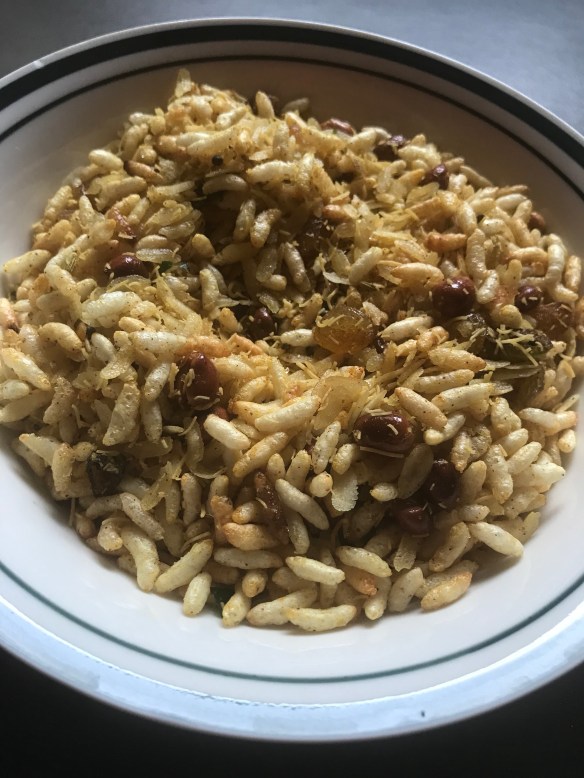
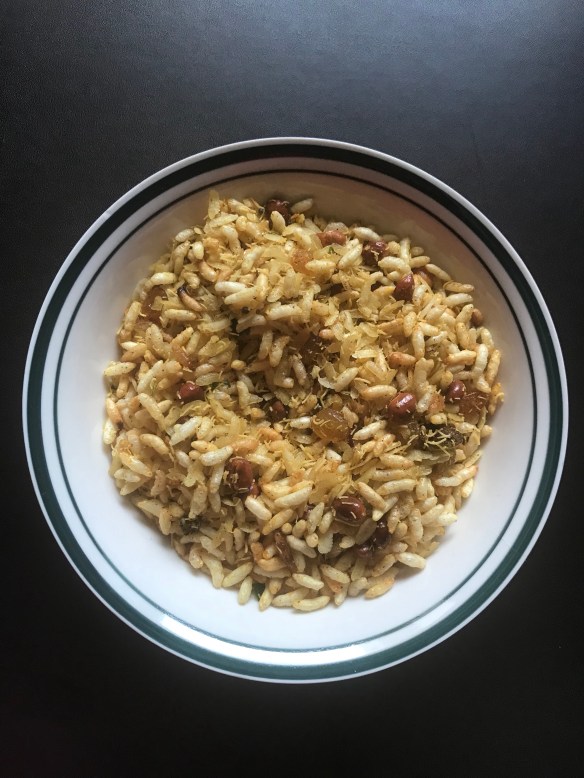
I came across a couple of versions of this chivda, which is basically a mixture of various ingredients, traditionally deep fried, but which in this case, was dry roasted and so healthier. I made it and it was a hit, and a large bottle of this chivda didn’t even last a week. As soon as I finish this blog post, I’m off to making a new batch!

Puffed Rice and Flattened Rice Flakes Chivda
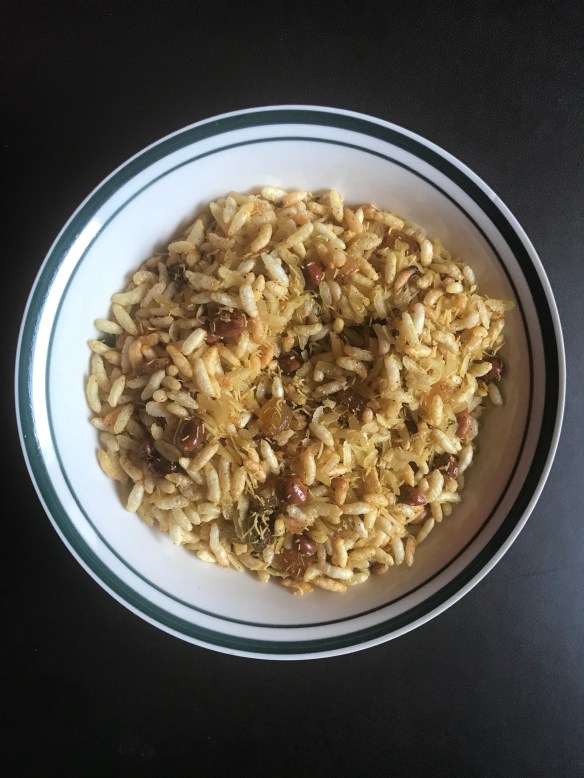
Ingredients:

  • 2 cups flattened rice flakes (Poha)
  • 4 cups puffed rice (Mumra)

For the seasoning

  • 3 tbsps oil
  • 1 tsp mustard seeds
  • 1 tsp cumin seeds
  • 1 tsp fennel seeds
  • 1/2 tsp turmeric powder
  • 2 green chillies, finely chopped
  • 1/2 cup raw peanuts
  • 8-10 curry leaves
  • 1 tbsp sugar (optional)
  • Salt to taste

Method:

  • In either the stove top or the microwave, dry roast the flattened rice flakes and puffed rice till they are crisp, but not burned. This should take around 10-15 minutes on the stove top and around 5-6 minutes in the microwave.
  • If you are using a microwave, make sure you roast it in increments of 1 minute each and in between each roasting, stir well. In the stovetop, also keep stirring to ensure it does not burn.
  • In a smaller pan, in the meantime, heat the oil, and when the oil becomes warm, add the raw peanuts and fry for a while till the peanuts start to become crisp.
  • When the peanuts start to crisp up, add the other seasoning one by one in this order – mustard seeds, cumin seeds, fennel seeds, green chillies, curry leaves and turmeric powder. When the peanuts are really crisp and ready, add the sugar and salt and remove the pan from the fire.
  • Pour this seasoning over the roasted flattened rice flakes and puffed rice and mix thoroughly. Check for sugar and salt and let it cool completely before storing it in an airtight container. It should easily last for a couple of weeks or so, but I seriously doubt it will last that long.

Recipe: Dum Paneer Kali Mirch

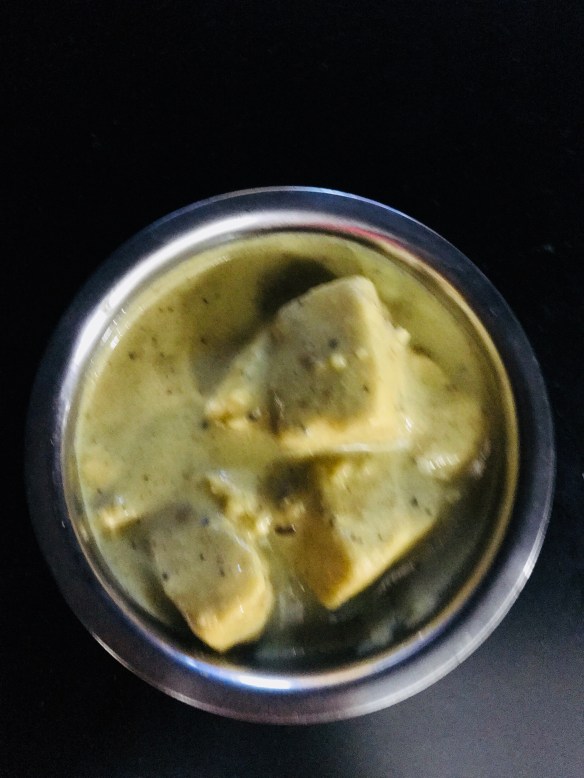
A couple of weeks back, I was searching for recipes to make when I chanced upon this recipe in NDTV food which was a pure paneer recipe. It intrigued me enough that I decided to make it, after making some changes to it based on what I had at home. It was super delicious and it’s a definite keeper at home.

This recipe cooks on dum in the last stage which essentially means cooking it in its own steam and not let the steam escape. I have cooked something on dum on a stovetop for the first time and it was achievement unlocked for me with this recipe!

Dum Paneer Kali Mirch

Ingredients:

  • 2 cups paneer, chopped into biggish chunks
  • 2-3 pieces of clove
  • 2-3 pieces of cardamom pods
  • 1 inch piece of cinnamon
  • 2 medium-sized onions, finely chopped
  • 3-4 garlic pods
  • 1 inch piece of ginger
  • 4 green chillies (use a lesser number if you are using the smaller green chillies as they tend to be spicier)
  • 10 pieces of cashew nuts soaked in warm milk for 20 mins and then blended to a smooth paste
  • 1 small cup of beaten yoghurt
  • 1 tsp coriander powder
  • 1 tsp pepper powder
  • 1/2 tsp turmeric powder
  • 1/2 tsp red chilli powder
  • 1 tsp garam masala powder
  • 2 tbsp oil
  • Salt to taste
  • 1 tsp freshly cracked pepper (to garnish)
  • Coriander leaves to garnish

Method:

  • Heat 1 tbsp oil in a pan and add the onions and on fry them on a medium to low flame. We need to brown the onions, but not burn it, so you need to keep stirring. When nice and brown, cool it, blend into a fine paste and keep aside.
  • Grind the ginger, garlic and green chillies to a fine paste and keep aside.
  • In the same pan, add the remaining oil and fry the dry whole spices – cloves, cinnamon and cardamom and let them fry till the oil becomes fragrant.
  • Now add the browned onion paste and let it fry for around 5 minutes till the oil starts leaving the sides of the pan.
  • At this point, add the ginger-garlic-chilli paste and saute for a few minutes.
  • After this, add the cashew paste and let it cook for a few minutes.
  • Next, add the beaten yoghurt and the dry spices – turmeric powder, chilli powder, pepper powder and garam masala and let it cook.
  • Add some water to bring it to the consistency you want and let it come to a rolling boil.
  • Add the paneer/cottage cheese and salt and any extra water should you need.
  • Now you need to cook it in dum. What it means is that you cook it in its own juice with no steam being able to escape. You seal the pan with aluminium foil and then cover it with the lid of the pan and let it cook on a low flame for 5-10 minutes.
  • Remove the foil, garnish with coriander seeds and cracked pepper and serve hot with any rice dish or even Indian flatbreads. I served this with a simple pulao.

Simply delicious!!

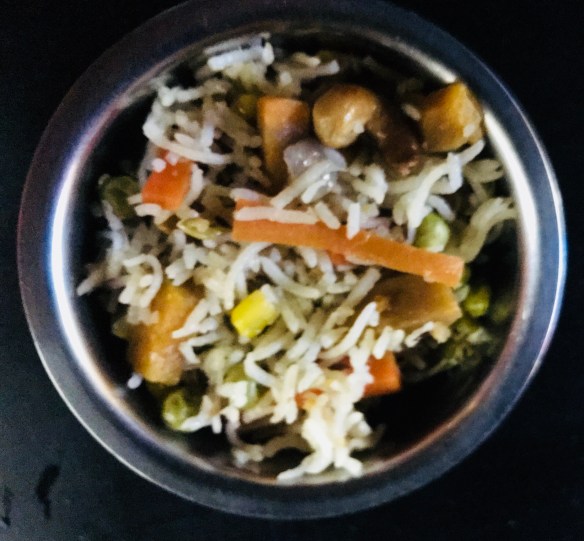
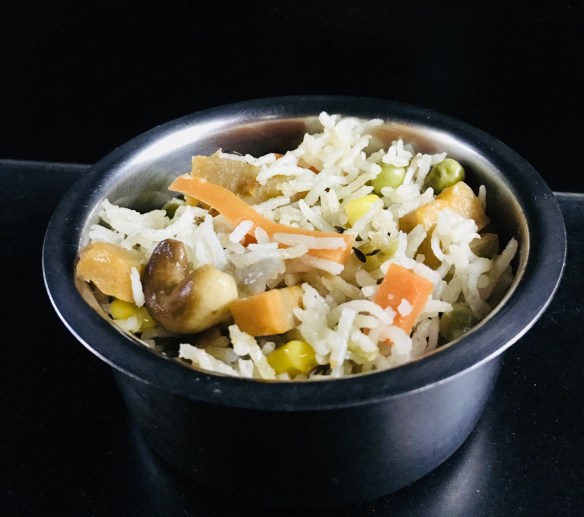
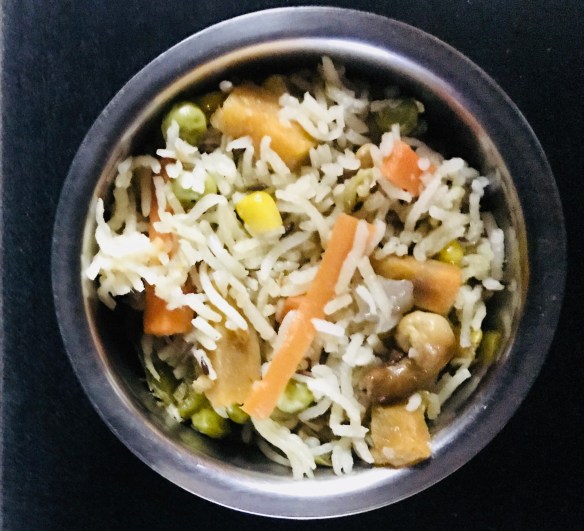
Recipe: Navratan Pulao

A couple of weeks back, this recipe popped up in my Facebook feed. It is a recipe from the Sanjeev Kapoor’s WonderChef brand. I only had one view and when I was wondering what to cook this weekend, I decided to make this and used what I thought was the recipe.

Navratan traditionally means nine gems and so I decided to make this with nine ingredients, including dry fruits and excluding rice and spices.

Navratan Pulao

Ingredients:

  • 2 cups basmati rice, washed and soaked for 30 minutes
  • 1 large onion, sliced finely
  • 1 carrot, julienned into slightly thick strips
  • 1 sweet potato, julienned into the same size and shape as the carrot
  • 1/2 cup green peas
  • 1/2 cup frozen corn
  • 10-12 cashew nuts
  • 10-12 almonds
  • 1 handful raisins
  • 2 green chillies, chopped into large pieces
  • 1 tsp finely chopped ginger
  • 2 tbsp ghee
  • 1 tsp cumin seeds
  • 4-5 cloves
  • 1 large bay leaf
  • 4-5 green cardamom pods
  • 2-inch cinnamon
  • Salt to taste

Method:

  • Drain the rice and keep aside
  • In a pan, heat the ghee and when warm, fry the cashew nuts, almonds and raisins, one by one, remove, drain and keep aside.
  • In the same pan, with the remaining ghee, add the cumin seeds, cloves, cinnamon, bay leaf and cardamom and stir for a couple of seconds.
  • Now add the chopped chillies and ginger and give it a stir.
  • Add the vegetables and stir well.
  • Now add the washed rice, the fried dry fruits and salt and stir well.
  • If you are cooking this in a rice cooker, pour the rice into the rice cooker, add 3.5 cups of water and check for salt and let it cook.
  • If you are cooking on the stove top, add 2 cups of water and let it cook. Check occasionally and add more water if needed.
  • You can serve this with any gravy based vegetable or even just with a salad and a raita.

Recipes: Peanut Tomato Chutney

I am a huge fan of chutneys, believing that these really add something to your meal. I also believe that chutneys are very versatile, going well with full Indian meals as an accompaniment and you can also slather them on a slice of bread for a quick snack or even use them for lunch box ideas for your children or even yourself!
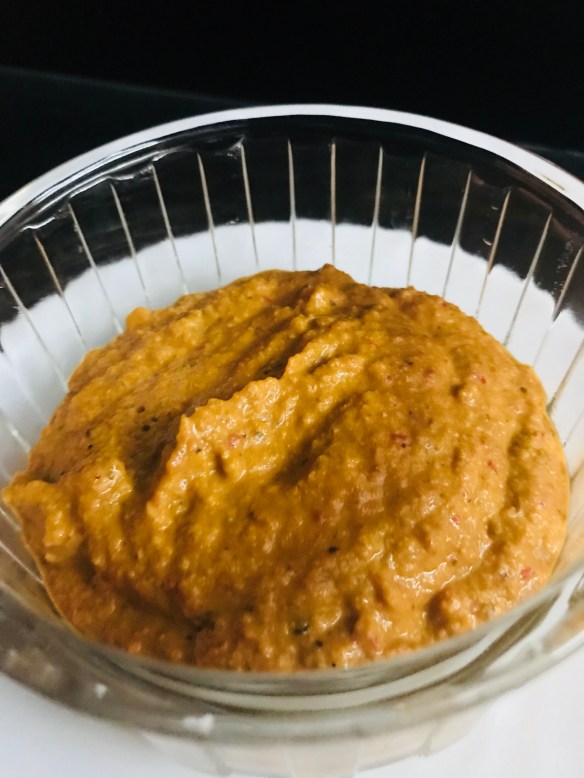
I usually have some chutney or the other in the fridge and I was looking for ideas to extend my chutney repertoire when I chanced upon the Andhra style Peanut and Tomato chutney. The recipe intrigued me and so I decided to tweak it a bit to make it my own (as I am usually wont to do). It was a surprise hit and a definite keeper. I made it slightly spicier than usual, so do keep that in mind when you make it yourself.

This is also a no-onion, no-garlic recipe, so it’s good for days when you don’t add these ingredients to your food!

Tomato Peanut Chutney

Ingredients:

  • 6-7 medium-sized tomatoes, chopped
  • 1/4 cup raw peanuts
  • 7-8 fresh red chillies (can substitute with dried red chillies also)
  • 1-inch piece of ginger
  • 1 tsp mustard seeds
  • 1/4 tsp fenugreek seeds
  • 2 tsp white sesame seeds
  • 2 tbsp gingelly oil
  • 1/2 tsp asafoetida powder
  • Salt to taste

Method:

  • Chop the tomatoes, ginger and red chillies and keep aside
  • If using dried chillies, soak them in warm water for 10 minutes, drain and keep aside.
  • Heat gingelly oil in a pan and when warm, add the mustard seeds
  • When the seeds pop, add the fenugreek seeds and the sesame seeds and let them pop.
  • When the seeds pop, add the peanuts and stir till the peanuts start popping and the skin starts to split.
  • Then add the chopped tomatoes, chillies and ginger and season with salt and asafoetida and let them cook until the tomatoes become mushy.
  • Switch off the gas and let it cool completely.
  • Blend into a smooth chutney using as little water as possible.
  • This goes very well with idlis, dosa, adai, rotis and even bread.

Recipes: Thalagam Kozambu

Earlier this week was the festival of Thiruvathirai which is mostly celebrated in the southern states of Tamil Nadu and Kerala. I decided, for the first time, to make this dish which is only made for this festival.

This dish is a traditional dish of the brahmins who come from the Tirunelveli district in Tamil Nadu (of which I am also a part of from my parents) and is something I’ve always grown up with, but never actually made.

It is traditionally eaten with a sweet rice dish called kali, but I decided to pair with Ven Pongal. I also didn’t have all the vegetables traditionally used for this dish, so I improvised!

Talaga Kozambu

Ingredients:

  • 1 small lime-sized ball of tamarind, soaked in warm water for 30 minutes and the juice squeezed out
  • 1 carrot, chopped into big pieces
  • 1 radish, chopped into big pieces
  • 2 large potatoes, chopped into big pieces
  • 2 raw bananas, chopped into large pieces
  • 1/2 tsp turmeric powder
  • Salt to taste

To be ground into a paste

  • 6 dried red chillies
  • 2 tsp toor dal
  • 2 tsp white sesame seeds
  • 1/2 cup grated coconut
  • 1 tbsp oil

To temper

  • 1 tbsp ghee
  • 1 tsp mustard seeds
  • 1/4 tsp fenugreek/methi seeds
  • 5-6 curry leaves
  • 1/2 tsp asafoetida powder

Method:

  • Heat oil in a pan and put in the red chillies, toor dal and sesame seeds and stir.
  • When the dal turns light brown, add the grated coconut and continuously stir until the coconut is crisp and brown. Ensure the coconut does not burn.
  • Let it cool completely and blend this into a fine paste with water.
  • Wash the vegetables and put them in the same pan. Add just enough water to cover and then the turmeric powder and some salt. Cover and cook until the vegetables are half cooked.
  • When the vegetables are half cooked, pour in the tamarind juice and cover and cook for approximately 5 minutes or till the raw smell of the tamarind goes away.
  • Next, add the blended masala and stir well. Check and add salt if needed. Remove from the flame around five minutes after it comes to a rolling boil.
  • In a smaller pan, heat the ghee and put in the mustard seeds, fenugreek/methi seeds, curry leaves and asafoetida. When the curry leaves become crisp, remove from the flame and pour over the Kozambu.
  • Enjoy with any rice of your choice through the traditional accompaniment is kali

Notes

The traditional vegetables used are raw banana, ash gourd, yellow/orange pumpkin, yam, brinjal/aubergine, broad beans, sweet potato, potatoes, radish, etc.