Sacred Stones, Spaces and Stories: Shakthipeeta Part 10

Shriparvat Temple, Ladakh
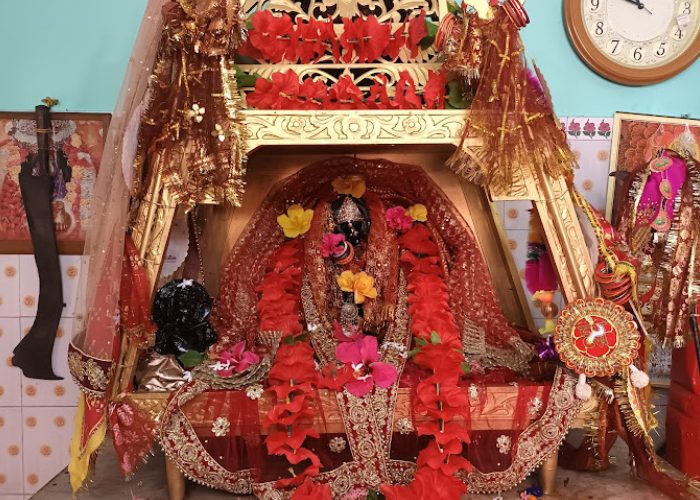
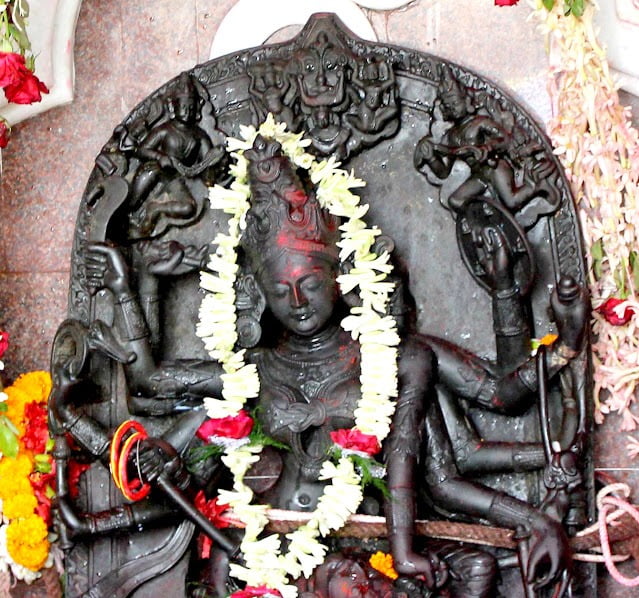
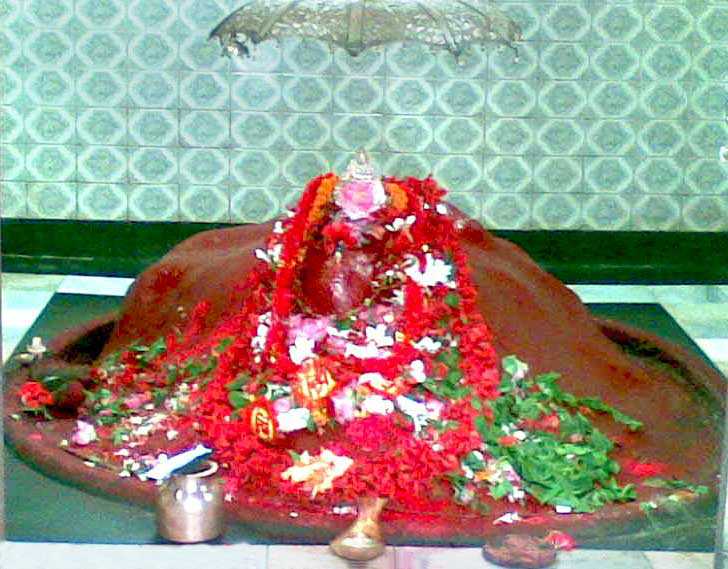
Situated in the breathtaking landscapes of Ladakh, the Shriparvat Shakti Peeth, also known as Shrisundari Shakti Peeth is dedicated to Goddess Mahamaya. While the exact date of the establishment of the temple remains uncertain, the temple is believed to be one of the most ancient Siddhpeeths in the region. Situated amidst the towering peaks of the Himalayas, the temple offers a unique spiritual experience, blending the raw power of nature with divine energy.

According to tradition, it is believed that the right anklet or right foot of Goddess Sati fell here. At the Shriparvat Shakti Peeth, the goddess is worshipped as Shri Sundari, which means the beautiful one. This name reflects the divine beauty and grace associated with the goddess at this particular site. The Bhairava, the fierce manifestation of Lord Shiva who accompanies the goddess at each Shakti Peetha, is known here as Sundarananda. The name Sundarananda, meaning the handsome one who brings joy, creates an interesting parallel with the goddess’s name, emphasising the divine couple’s beauty and bliss.

The temple’s setting in the Ladakh region, known for its stunning landscapes and challenging terrain, makes it a unique pilgrimage destination. It is considered one of the ancient Siddhpeeths, adding to its spiritual significance. The temple offers breathtaking views of the surrounding Himalayan landscape, creating a serene and awe-inspiring atmosphere for worship. Many devotees report feeling a powerful spiritual energy at the site, attributed to its status as a Shakti Peetha.

The temple is open from 6 am to 10 pm daily. Festivals celebrating the feminine energy like Navaratri and Durga Puja are celebrated at the temple as is Shivaratri. The best time to visit the temple is from June to October when the weather in Ladakh is most favourable for travel. The summer months offer clear skies and relatively warmer temperatures, making it easier to access the temple and enjoy the surrounding natural beauty.

The temple is steeped in the rich mythology of the Shakti Peethas. One interesting aspect is the difference in beliefs about its exact location. While most sources place it in Ladakh, some believe it might be in Kurnool, Andhra Pradesh. This geographical ambiguity adds an element of mystery to the temple’s lore.

When one stands at the Shriparvat Temple, surrounded by the majestic Himalayan peaks, you can’t help but feel a connection to the spiritual heritage that has shaped this land for millennia. The journey to the temple itself is part of the pilgrimage experience. The challenging terrain of Ladakh, with its high-altitude passes and breathtaking vistas, serves as a physical metaphor for the spiritual journey of the devotees. Each step towards the temple is seen as a step closer to the divine, making the pilgrimage as much about the journey as the destination.

Avanti/Harsiddhi Temple, Ujjain, Madhya Pradesh
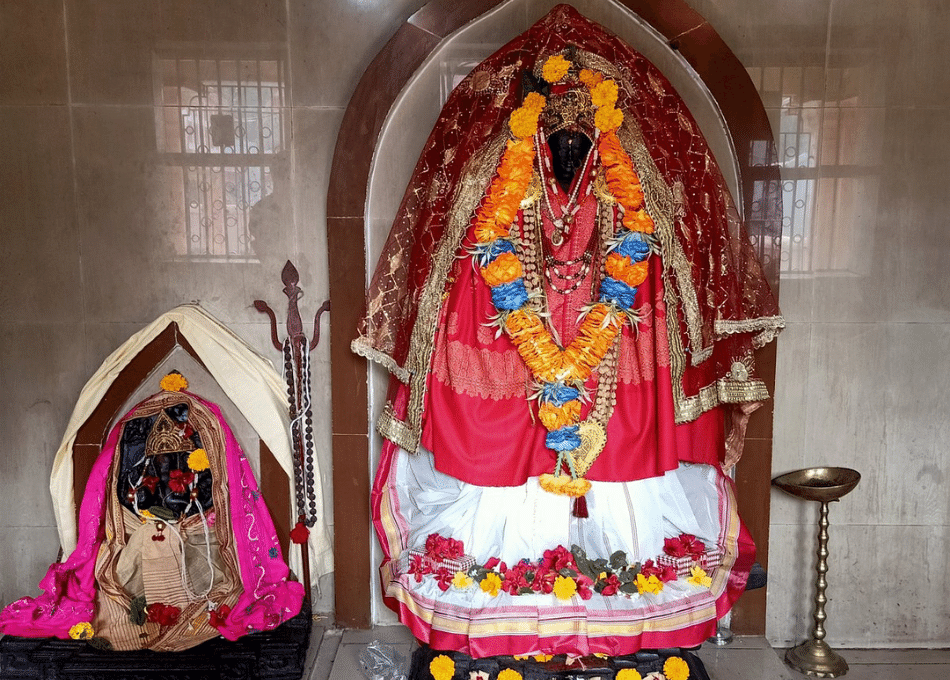
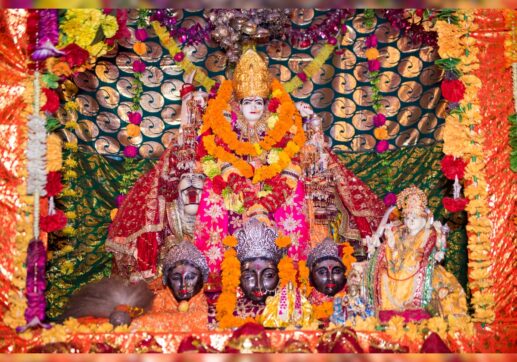
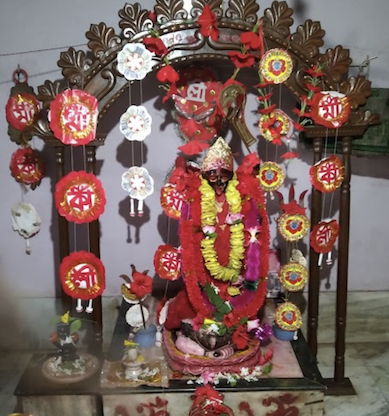
Located in the ancient city of Ujjain, the Avanti Shakti Peeth, also known as the Harsiddhi Temple is believed to be around 5000 years old. This ancient shrine’s spiritual significance predates recorded history with the exact date of its establishment uncertain. Some accounts attribute the temple’s original construction to King Bhadrasen, though its history has been shaped by various rulers and dynasties over the centuries. The temple’s location in Ujjain, once the capital of the ancient Avanti Kingdom, adds to its historical importance. Ujjain was one of the 16 Mahajanapadas of Ancient India and remained a significant cultural and trading centre until the early 19th century.

According to tradition, it is believed that the upper lip of Goddess Sati fell at this spot. Interestingly, there is some debate about the exact location of the Shakti Peetha in Ujjain. Some sources suggest that both the Harsiddhi Temple and the nearby Avantika Mata Temple on Bhairav Parvat are considered Shakti Peethas, with their idols facing each other. At the Avanti Shakti Peeth, the goddess is worshipped as Avanti or Mahakali. The Bhairava, the fierce manifestation of Lord Shiva who accompanies the goddess at each Shakti Peetha, is known here as Lambkarna.

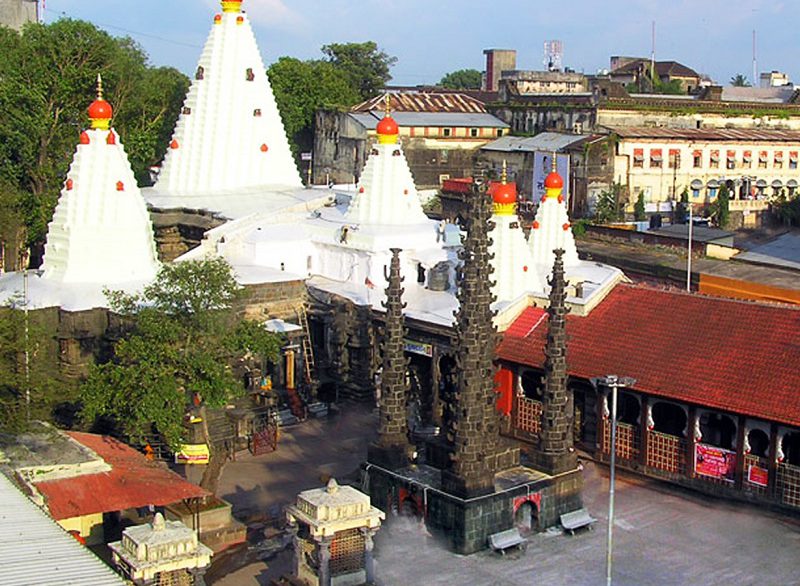
The temple structure evolved using unusual, vibrant stones. The walls and roof are constructed from high-quality stones, providing visitors with a picturesque vistas. The present structure of the temple shows Maratha influences, particularly in its lamp pillars. The temple houses a Sri Yantra, a powerful symbol in Tantric worship. A unique feature of the temple is the presence of two pillars adorned with lamps. These pillars, each holding 1111 lamps, are lit during festivals, creating a spectacular sight. The temple premises include an ancient well with an artistic pillar adorning its top. Besides the main goddess, the temple complex also houses idols of Goddess Annapurna, Mahalakshmi, and Mahasaraswati.

Navaratri is celebrated at the temple. The lamp pillars are lit during this time, creating a mesmerizing spectacle. As one of the holiest cities in India, Ujjain hosts the Kumbh Mela, during which the Avanti Shakti Peeth sees a surge in devotees. Given the temple’s connection to Lord Shiva, Shivaratri is an important celebration here.

According to local lore, there was once a demon named Andhakaleshwar who terrorised the earth. Adi Parashakti took the form of Kali to protect all the worlds. The demon had received a boon from Lord Brahma that wherever his blood was shed, demons like him would appear. During the battle, the goddess spread her tongue, absorbed all the blood released by the demon, and eventually killed him. After that, this place was named Avanti Peeth. King Vikramaditya, the legendary ruler of Ujjain, was a devoted worshipper of Goddess Harsiddhi. It is said that he dedicated his head to the goddess eleven times, and each time she brought him back to life.

Once when Shiva and Parvati were alone on Kailash, two demons Chand and Prachand tried to force their way in. Shiva called upon Chandi to destroy them, which she did. He then gave her the name Harsiddhi, meaning one who vanquishes all. In a small shrine just outside the main temple, dedicated to Mahamaya, there is a lamp that is said to have been burning continuously for ages. Only the pujari is allowed to enter this sanctum to offer prayers and maintain the lamp.

The Avanti Shakti Peeth, with its blend of myth, history, and living faith, continues to be a powerful force in India’s religious landscape. The temple’s significance extends beyond its religious importance. It is believed to be one of the seven locations on earth that lead to Moksha.

Maa Sharda Mandir, Maihar, Madhya Pradesh
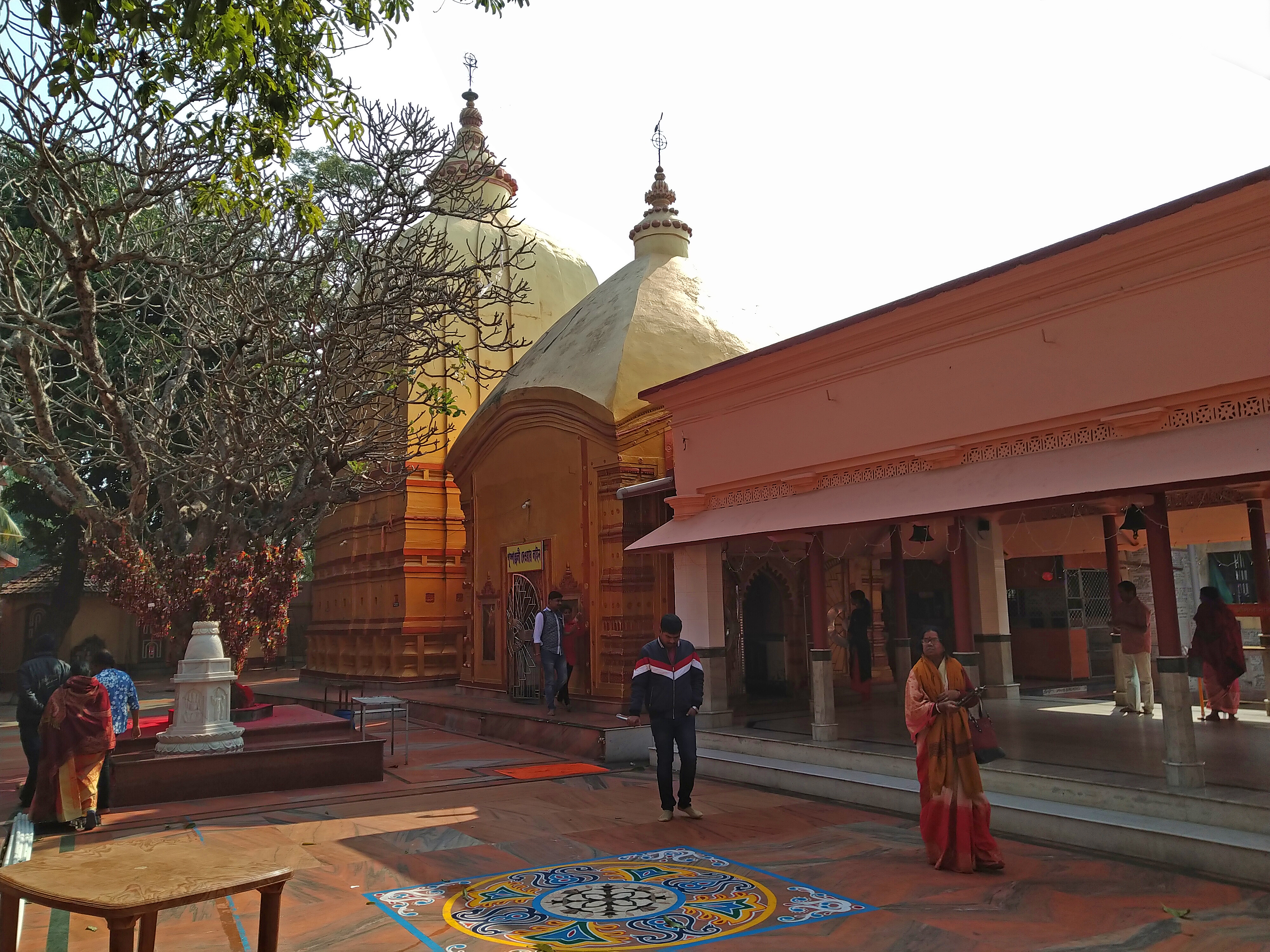
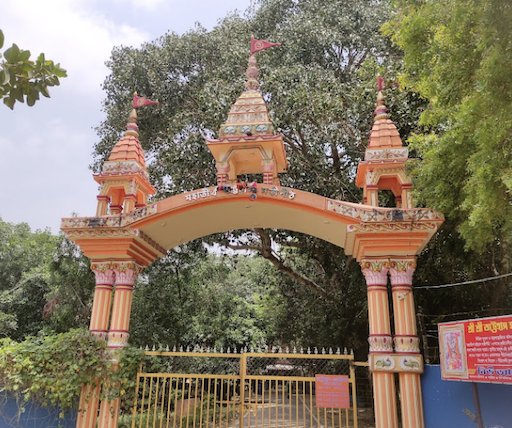
Nestled atop the majestic Trikuta Hill in Maihar, the Maa Sharda Mandir is an ancient shrine, dedicated to Goddess Sharda, a manifestation of Goddess Saraswati. According to Hindu mythology, the hill on which the temple is situated was once the abode of Lord Shiva and Goddess Parvati. The site’s sanctity was further established when Goddess Sharda appeared before the great sage Markandeya, granting him the boon of knowledge. While the exact date of the temple’s establishment remains uncertain, its present structure dates back to the 19th century. The ruling family of Maihar, the Bundelas, constructed the temple, blending Rajput and Mughal architectural styles to create a stunning edifice adorned with intricate carvings and designs.

The name Maihar itself is steeped in legend, derived from the words Mai or mother and Har or necklace. It is said that when Lord Shiva was carrying the body of Goddess Sati, her necklace fell at this place, giving rise to the name Maihar. The bhairava associated with this temple is known as Chandreshwar.

The temple is situated atop Trikuta Hill, requiring devotees to climb 1,057 steps to reach the shrine. This ascent is considered a symbolic journey towards attaining knowledge and wisdom. The temple’s architecture is a harmonious blend of Rajput and Mughal styles, featuring intricate carvings and designs that adorn its walls and ceilings. The hilltop location offers breathtaking views of the surrounding landscape, including the Holy Anandpur Sahib Gurudwara and the Gobind Sagar Lake. Besides the main goddess, the temple complex houses shrines dedicated to Kaal Bhairava, Lord Hanuman, Goddess Kali, Durga, Gauri Shankar, Shesh Nag, Phoolmati Mata, Brahma Dev, and Jalapa Devi. Behind the temple and downhill is Alha Pond, associated with the legendary warriors Alha and Udal.

Navratri is celebrated in a grand manner in the temple, The shrine is adorned with lights, and devotees from different parts of the country gather to seek the blessings of Maa Sharda. Since 1918-19, a statue immersion ceremony has been celebrated here, similar to practices in Maharashtra and West Bengal.

According to local lore, the warriors Alha and Udal who were brothers, who fought with Prithvi Raj Chauhan during the rule of King Parmardidev Chandel, were the first to discover the goddess in this remote forest. They called her Sharda Mai, and since then, she became known as Mata Sharda Mai. Alha performed penance for 12 years to please the Goddess. The Goddess blessed him with immortality. It is believed that even today, Alha visits the temple every day during Brahma Muhurta at 4 am and worships the Goddess.

A popular legend tells of demon king Ravana carrying a Shivalinga to Lanka. When he needed to answer nature’s call, he asked a passing shepherd to hold the linga. The shepherd put it down, and it became rooted to the spot. In his frustration, Ravana cut a part of the hill with his sword, which is believed to be the Trikuta Hill where the temple now stands. Another tale speaks of a Gujjar boy named Naina who observed a white cow showering milk on a particular stone while grazing his cattle. This phenomenon repeated for several days. One night, the boy had a dream where the Goddess claimed that the stone was her Pindi or symbolic representation. Upon hearing this story, Raja Bir Chand decided to construct the temple atop the hill.

The Maa Sharda Mandir, with its blend of myth, history, and living faith invites all who visit to partake in its timeless spiritual journey. The temple is believed to be a place of spiritual healing, with many devotees reporting miraculous recoveries from illnesses and diseases. The climb to the temple, while challenging, is seen as a purifying act that brings divine blessings.

Shondesh Temple, Amarkantak, Madhya Pradesh
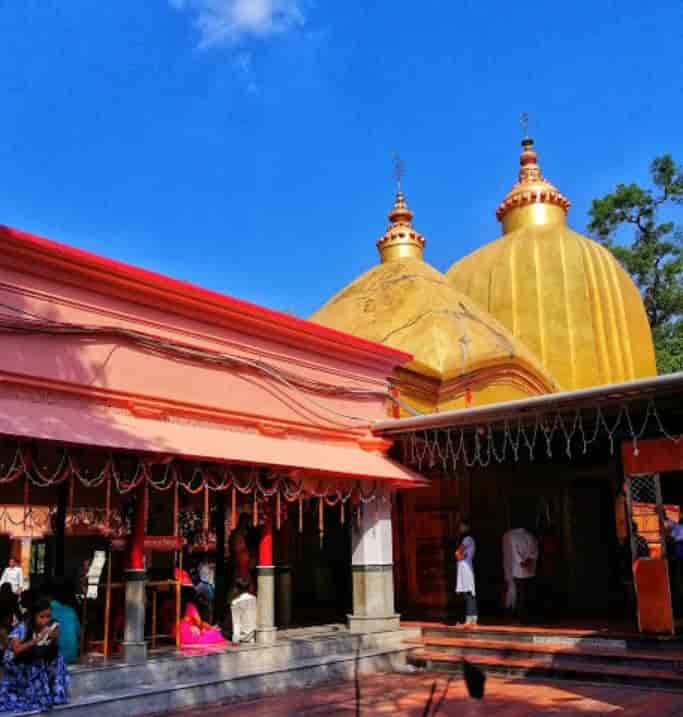
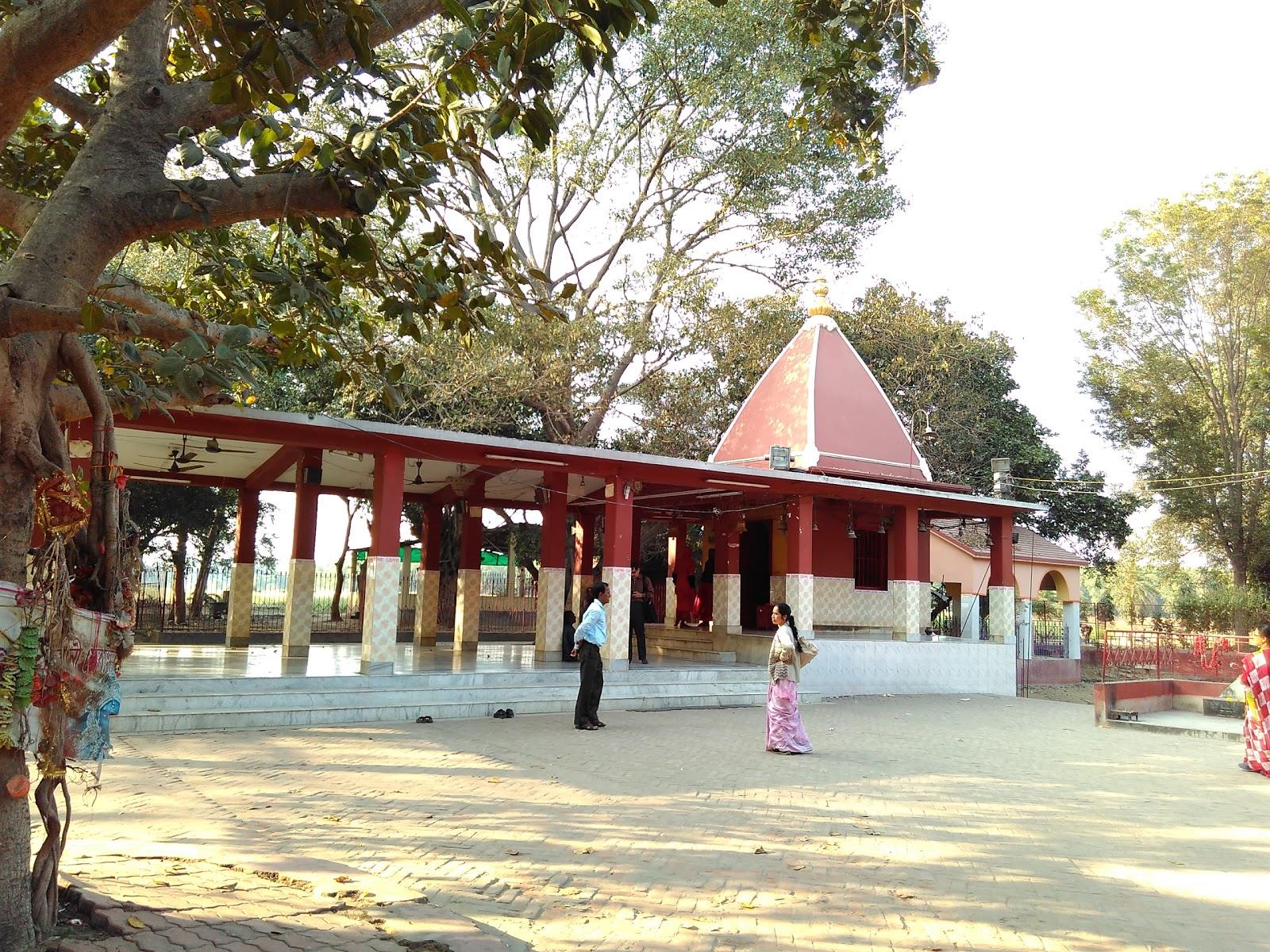
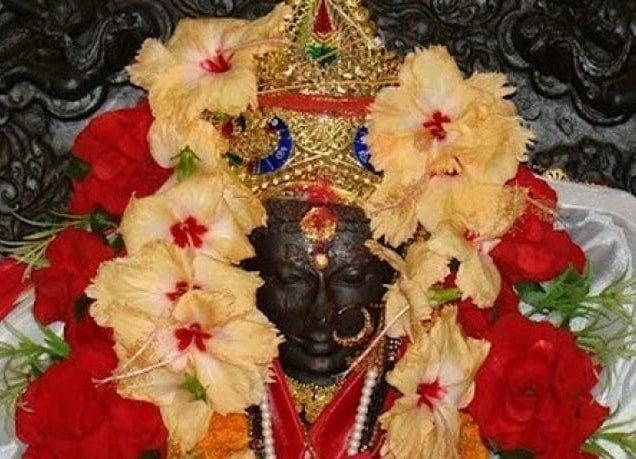
The Shondesh Temple, located in the picturesque town of Amarkantak at the source of the Narmada River is dedicated to Goddess Narmada. The temple is believed to be around 6000 years old, making it one of India’s most ancient shrines. The present structure of the temple is believed to have been constructed in the 16th century. However, the site’s sanctity predates the current building by several millennia. The temple has undergone renovations and expansions over the centuries, with notable contributions from various rulers and dynasties.

According to tradition, it is believed that the right buttock or hip of Goddess Sati fell here. The temple is also known as the Narmada Devi Shondesh Shakti Peetha, highlighting its connection to both the river goddess and the Shakti Peetha tradition. At the Shondesh Temple, the goddess is worshipped as Narmada Devi or Sonakshi or Shonakshi. This form of the goddess is closely associated with the Narmada River, which originates near the temple. The Bhairava, the fierce manifestation of Lord Shiva who accompanies the goddess at each Shakti Peetha, is known here as Bhadrasen.

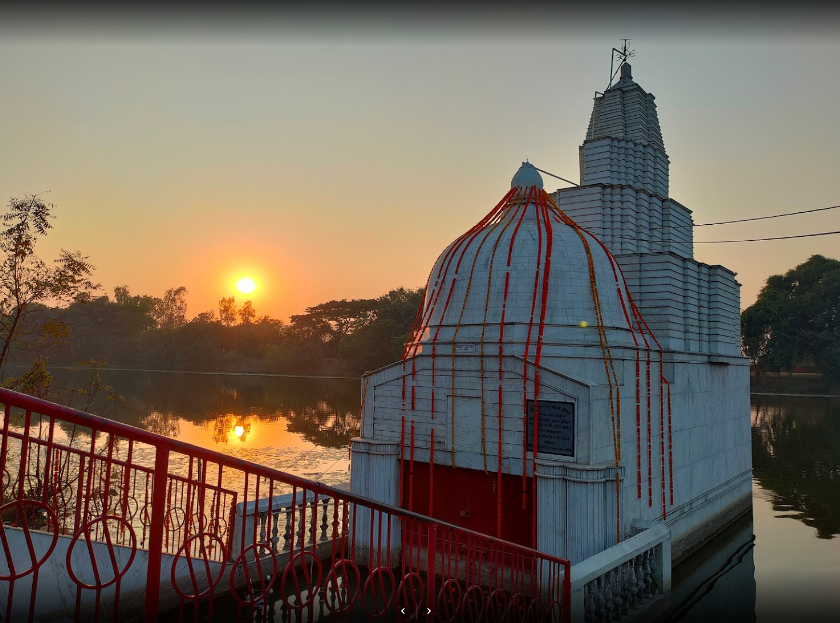
The temple is located at the origin point of the Narmada River, one of India’s most sacred waterways. The temple is constructed with white stone, showcasing the architectural styles of its time. The temple is situated at the confluence of the Vindhya and Satpura mountain ranges, with the Maikal Hills serving as a fulcrum. This unique geographical setting adds to the temple’s mystical aura. Besides the Narmada, the Son and Johila rivers also originate near the temple, making it a rare confluence of three river sources. The temple complex includes the Narmada Udgam Kund, believed to be the exact birthplace of the Narmada River. The idol of Goddess Narmada is adorned with a golden mukut or crown. The platform on which the goddess’s idol is placed is made of silver, further emphasising her importance.

The temple opens its doors to devotees from 6 am to 12 noon and again between 4 and 8 pm. Mahashivratri is the major festival celebrated at the temple with great pomp and glory. The nine-night Navaratri festival dedicated to the goddess is also celebrated with great fervour. The harvest festival of Makar Sankranti sees significant celebrations at the temple. Other festivals like Sharad Purnima, Deepavali, Somvati Amavasya and Ram Navami ate also celebrated with special rituals and ceremonies.

According to local lore, when Lord Shiva destroyed the three cities, Tripura, with fire, some of the ashes fell at Amarkantak. These ashes are believed to have transformed into countless Shiva Lingas, though only one remains visible today at Jwaleshwar. It is believed that any devotee who enters the Sona or Narmada Temple will have their soul cleansed due to the presence of these holy ashes. Amarkantak, where the temple is located, is considered an abode of gods. It is said that whoever dies in this sacred place is assured a place in heaven.

The name Amarkantak is derived from two Sanskrit words – Amar which means immortal and Kantak which means an obstruction Legend has it that this name signifies the place where gods resided but were upset by the obstruction of Rudraganas.

The Shondesh Temple, at the source of the holy Narmada River blends natural beauty, mythological significance, and living faith. Devotees often combine their visit to the temple with a pilgrimage to the river’s origin, believing that the waters here possess special purifying properties. The convergence of spiritual and natural elements creates a unique atmosphere of reverence and wonder.

Sacred Stones, Spaces and Stories: Shakthipeeta Part 9

Mata Vaishno Devi Temple, Katra, Jammu & Kashmir
Also known as the Shri Mata Vaishno Devi Temple and Vaishno Devi Bhavan, the Vaishno Devi Temple is located in Katra, in Jammu and Kashmir. The temple is dedicated to Vaishno Devi, a manifestation of Mahakali, Mahalakshmi, and Mahasarasvati on the Trikuta mountain at 5,000 feet above sea level.

Mata Vaishno Devi Temple’s origins predate recorded history. While the exact date of its establishment remains uncertain, legends trace its roots to ancient times. A geological study of the Holy Cave has indicated its age to be nearly a million years. There is also a mention of the Trikuta hill in Rigveda. Some accounts suggest that the Pandavas were among the first to visit the Holy Cave and pay homage to Mata Vaishno Devi during their exile, linking the shrine to the epic Mahabharata. The discovery of the shrine in its current form is attributed to Pandit Shridhar, about 700 years ago. According to legend, Mata Vaishnavi appeared in Shridhar’s vision, guiding him to the Holy Cave amidst the Trikuta Mountains. Upon entering the cave, he found a rock formation with three heads atop it, which Mata Vaishno Devi revealed as her manifestation.

While there are differing beliefs about its exact status as a Shakti Peetha, some traditions consider it one of the holiest Shaktipeeths. One belief suggests that the goddess’s skull fell at this location, while another states that her right arm fell in this region. The bhairava associated with the Mata Vaishno Devi Temple is Bhairo Baba.

The temple is created in a cave believed to have been the abode of Mata Rani, adding to its mystical allure. In the garbha griha, the sanctum sanctorum of the temple, the image of Mata Vaishno Devi is installed in the form of three significant stone structures called Pindies. These symbolise the goddess in her three divine forms – Maha Kali, Maha Lakshmi, and Maha Saraswati. The three pindis are naturally formed from a single rock, yet they have different colors and textures, adding to the shrine’s mystique. The feet of the icons are washed by the water brought from the perennial flowing river Banganga. Remains of a stone hand called Varad Hast can be seen inside the holy cave, believed to be connected to the Shakti Peetha status. A shrine dedicated to Bhairavnath, who was defeated by Vaishno Devi and turned into a devotee, is also part of the complex. Located about halfway between Katra town and the main shrine, the Ardha Kunwari Cave is where Vaishno Devi is said to have meditated for nine months. Festivals celebrated at the temple include the nine-night Navaratri festival, Makar Sankranti and Chaitra Navratras that are observed during the spring season.

According to Hindu mythology, a goddess was born in southern India as a young girl named Vaishnavi. She was a sincere devotee of Lord Vishnu from a young age. During the events of the Ramayana, she vowed to marry Lord Rama, who, being Ekpatnivrata or devoted to one wife, could not marry her. Impressed by her devotion, he promised to marry her in his last incarnation as Kalki and asked her to meditate in the cave of the Trikuta Mountains. When Bhairon Nath, a powerful demon, ran after Vaishno Devi to catch her, she reached the cave in the hill. She called upon Hanuman and instructed him to guard the cave entrance while she meditated inside for nine months.

Mata had helped organise a Bhandara, a community feast, at Pandit Shridhar’s place. When she left amidst the Bhandara to escape Bhairon Nath, Shridhar felt immense grief. His fervent prayers led to the goddess appearing in his vision and guiding him to the holy cave. After being defeated by Vaishno Devi, Bhairon Nath turned into a devotee. It is believed that his spirit still lingers around the temple. According to some stories, Mata Rani observed the Navratra to pray for Lord Rama’s victory against Ravana. In return, Rama blessed her with immortality and ensured that the world would sing her praises.

Surrounded by the majestic Trikuta Mountain, as one stands in the temple complex,one can’t help but feel a connection to the spiritual heritage that has shaped this land for millennia. The Mata Vaishno Devi Temple, with its blend of myth, history, and living faith, continues to be a powerful force in the religious landscape of India, inviting all who visit to partake in its timeless spiritual journey.

Baidyanath Dham, Deoghar, Jharkhand
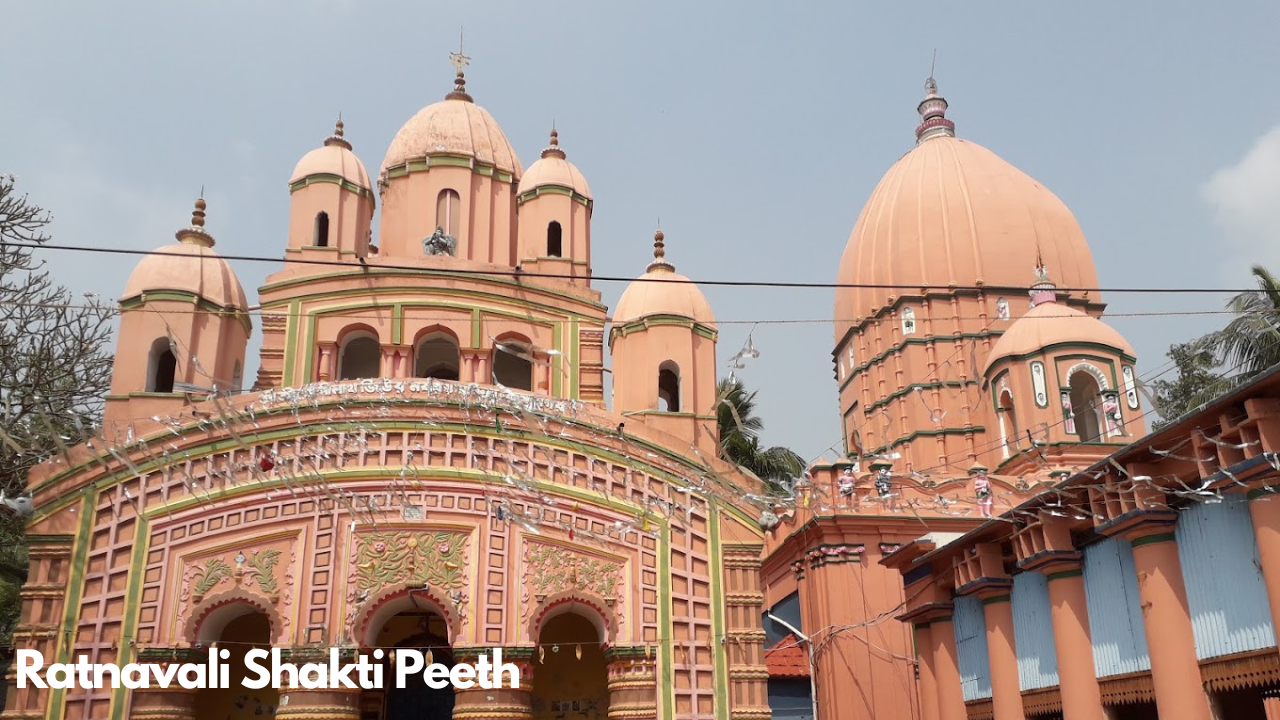
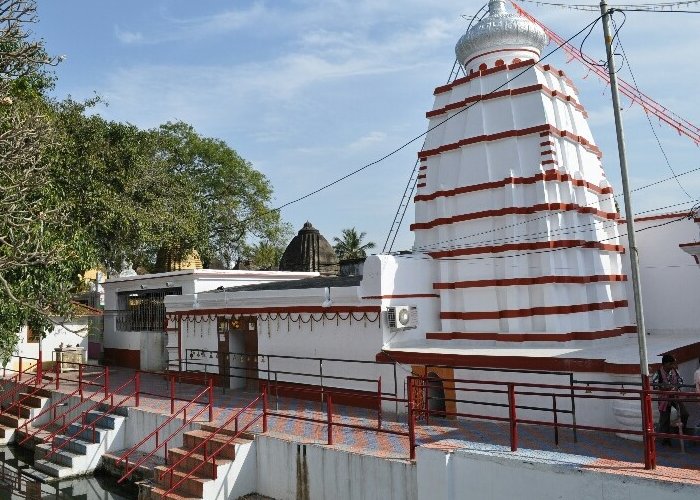
Dedicated to Lord Shiva, Baidyanath Dham in Deoghar is an ancient site of devotion and spiritual significance. According to historical records, the temple was originally built by Puran Mal, an ancestor of the Nagavanshi dynasty, in the 8th century. However, the temple has undergone several renovations and expansions over the centuries, with the present structure believed to have been built by Raja Man Singh in the 16th century.

The temple complex is spread over a vast area and is characterised by its towering spire, intricate carvings, and a sacred tank known as Shrawani Mela Kund. The temple’s architecture reflects a blend of various styles, including Nagara and Dravidian, showcasing the diverse cultural influences that have shaped its design.

Baidyanath Dham holds a unique position as it is both one of the 12 Jyotirlingas and one of the 51 Shakti Peethas. As a Shakti Peetha, it is believed that Sati’s heart fell at this location, making it the Hriday Peeth, or the Heart Shrine. The Shakti Peetha here is dedicated to Jaya Durga, a manifestation of Goddess Parvati, while the bhairava associated with the temple is Baidyanath.

The sanctum houses the sacred Jyotirlinga, believed to be Swayambhu or self-manifested. The Jyotirlinga is said to have healing powers, earning Lord Shiva the epithet Baidyanath, meaning the Lord of Physicians. The temple stands 72 feet tall and resembles a blooming lotus, symbolising purity and enlightenment. Three ascending gold vessels, donated by the Maharaja of Gidhaur, crown the temple. A trident-shaped emblem representing Shiva’s power adorns the temple while the Chandrakanta Mani, an eight-petaled lotus jewel adds to the temple’s mystical beauty.

The Shravani Mela is the the most significant festival at Baidyanath Dham, held during the Hindu month of Shravan. Hundreds and thousands of pilgrims converge at the temple, creating a vibrant and spiritual atmosphere. Devotees embark on a sacred journey known as the Kanwar Yatra, walking barefoot from the nearby town of Jasidih, carrying a kanwar, a decorated pot filled with holy water from the Ganges. Maha Shivaratri, the festival dedicated to Lord Shiva is celebrated at the temple with enthusiasm.

One of the most prominent myths associated with the temple is linked to the demon king Ravana from the epic Ramayana. According to the legend, Ravana, an ardent devotee of Lord Shiva, sought to bring the powerful Jyotirlinga from Mount Kailash to Lanka. As Ravana was carrying the Linga, Lord Vishnu intervened, and during the struggle, a piece of the Linga broke off and fell in Deoghar, where the Baba Baidyanath Temple now stands. The name Baidyanath, meaning the Lord of Physicians or The King of Remedies, originates from a legend where Lord Shiva assumed the role of a healer to cure Ravana, who was injured during his devotion. Impressed by Shiva’s healing powers, Ravana requested him to reside in the form of the Linga at Deoghar. Another popular legend speaks of Chandrakant Mani, the jewel on Lord Shiva’s forehead, which is said to have fallen in Deoghar. Devotees believe that this jewel is still present in the sanctum, radiating divine energy.

Baidyanath Dham, with its blend of myth, history, and living faith, converges the worship of Shiva and Shakti and thus is a unique Shakti Peetha. The temple’s significance extends beyond its religious importance and celebrations at the temple reflects the deep spiritual connection that people share with Baba Baidyanath.

Jnanakshi Rajarajeshwari Temple, Bengaluru, Karnataka
Located in India’s Silicon Valley, the Jnanakshi Rajarajeshwari Temple is dedicated to Goddess Rajarajeshwari. The origins of the temple are rooted in a divine vision experienced by Sri Sivaratnapuri Swamiji, popularly known as Sri Tiruchi Swamigal. On January 14, 1960, while traveling to Mysore, Sri Tiruchi Swamiji witnessed a remarkable sight – three sacred eagles circling in the sky. These eagles reminded him of the divine forms of Durga, Lakshmi, and Saraswathi that had appeared to him during a profound meditation on Mount Kailas.

Guided by this celestial sign, Swamiji followed a footpath leading to a small village called Kenchenahalli. There, amidst a grove of guava trees, he discovered a tiny cottage – the spot where the eagles continued to circle. Recognising the spiritual significance of this location, Swamiji decided to establish his Ashrama there. The foundation stone for the temple was laid on April 3, 1960, by Sri Tiruchi Mahaswamigal himself. Over the years, the once remote village of Kenchenahalli transformed into what is now known as Sri Rajarajeshwarinagar, a testament to the temple’s influence on the surrounding area.

According to the Tantra Chudamani, this site forms the karnabhaga or ear of the numerous Shaktipeethas in Bharat. It was once known as Kanchanagiri situated between the Cauvery and Vrishabhavati rivers. The ruling Bhairava, Abiru Bhairava, is known as Jaya Peetha. The temple is believed to have been the home of the pious wife Anusuya and the sage Atri, who attained siddhi by appeasing the holy mother Sri Rajarajeshwari. The temple grounds are believed to be a sacred place for various devas, rishis, munis, and siddhas.

The temple is a magnificent edifice built in pure granite, showcasing the Dravidian style of architecture. It stands as an excellent specimen of religious architecture, strictly adhering to agama prescriptions. The temple boasts five impressive Rajagopuras and the main attraction is the six-feet tall, inspiring stone image of Divine Mother Sri Raja Rajeshwari, also worshipped as Mother Sri Jnanakshi. The garbha griha houses the splendid stone image of the Divine Mother Sri Jnanakshi Rajarajeshwari, seated on a throne with a unique posture – her right leg folded and placed across the seat, while her left leg is bent at the knee and stretched below to rest on a lotus in full bloom.

The complex includes an elevated sanctum, or a garbha griha, a porch or a antarala, an open pillared hall or a Mukha Mantapa, a wide circumambulatory path or a Pradikshina patha, and an inner courtyard. The temple complex houses shrines for various deities including Vinayaka, Subramanya, Srichakra, and Navagrahas.

The temple is renowned for its grand Navarathri festivities. The temple Brahmotsavam is another significant celebration at the temple, featuring daily Chandi Homa performances as priests recite the Vedas and Saptashati. A unique phenomenon occurs on March 27 each year when the sun directly illuminates the Devi’s forehead and travels down to her feet, attracting numerous devotees.

The story of Sri Tiruchi Swamiji’s vision of the three sacred eagles, which led to the temple’s establishment, is a cornerstone of the temple’s lore. It is said that in the remote past, many devas, rishis, munis, and siddhas, including deva rishi Narada, have propitiated the divine mother Sri Rajarajeshwari at this very place and obtained siddhi. Sage Athreya and his devout wife Anusuya are believed to have lived at this site, adding to its spiritual significance.

The Jnanakshi Rajarajeshwari Temple, with its blend of divine vision, meticulous architecture, and living faith, continues to be a powerful force in Bengaluru, inviting all who visit to partake in its timeless spiritual journey. Under the guidance of the current Peethadhipathi, H.H. Sri Jayendra Puri Mahaswamiji, the temple continues to thrive, maintaining its spiritual essence while adapting to the needs of modern devotees.

Sri Chamundeshwari Temple, Mysuru, Karnataka
Perched atop the Chamundi Hills, overlooking the regal city of Mysuru, the Sri Chamundeshwari Temple can be reached after climbing 1,000 steps. The temple’s origins, dedicated to Goddess Chamundeshwari, the fierce avatar of Shakti, are intertwined with the legend of the demon Mahishasura, whose defeat at the hands of the goddess gave the city its name – Mahishooru, later anglicised to Mysore and now known as Mysuru.

As one approaches the temple, the imposing seven-tiered gopuram or tower looms, its intricate carvings telling stories of divine battles and celestial triumphs. This architectural marvel, added in the 17th century by the Vijayanagara rulers, stands atop the original shrine built by the Hoysala dynasty in the 12th century. It is believed that the hair of Goddess Sati fell at this spot.

As one enters the sanctum sanctorum, the air thick with the scent of incense and vibrating with the chants of devotees, the gaze is drawn to the mesmerising idol of Goddess Chamundeshwari. The deity, resplendent in her Ashtabhuja or eight-armed form, embodies the multifaceted nature of divine feminine power. One of the most striking features of the temple complex is the colossal statue of Nandi, Lord Shiva’s bull mount. Situated on the 700th step of the ascent, this 5-meter-high granite monolith, installed in 1664 by Mysore Maharaja Dodda Devaraja Wodeyar, serves as a silent guardian of the sacred hill.

In 1399, when the Wodeyar dynasty rose to power in Mysuru, they embraced Goddess Chamundeshwari as their tutelary deity. This royal patronage elevated the temple’s status and led to significant expansions and embellishments over the centuries.

The Ashada Shukravara, observed on Fridays during the month of Ashada, sees throngs of devotees seeking the goddess’s blessings. However, it is during Navaratri that the temple truly comes alive. This nine-night festival, celebrated as Mysuru Dasara, transforms the entire city into a spectacle of lights, music, and devotion. The goddess is adorned differently each day, representing the nine forms of Shakti. On the seventh day, dedicated to Kalaratri, the idol is bedecked with priceless jewels from the royal treasury, a tradition that continues to this day.

One of the most intriguing aspects of the temple’s history is its association with animal sacrifices. In ancient times, it was not uncommon for devotees to offer animal and even human sacrifices to appease the fierce goddess. However, this practice was discontinued in the 18th century, reflecting the evolving nature of worship and societal values.

As one stands in the temple courtyard, gazing out at the panoramic view of Mysuru spread out below, it’s easy to understand why this site has captivated the hearts and minds of devotees for centuries. The Chamundeshwari Temple is more than just a place of worship; it’s a living, breathing entity that continues to shape the spiritual and cultural landscape of the region. At the foot of Chamundi Hills lies the Jwalamalini Sri Tripura Sundari Temple, dedicated to the sister of Chamundeshwari. According to local lore, this goddess aided Chamundeshwari in her battle against the demon Raktabija, adding another layer to the rich tapestry of myths surrounding this sacred site.

Sacred Stones, Spaces, and Stories: Shakthipeeta Part 8

Nainadevi Temple, Nainadevi, Himachal Pradesh
Nestled atop a triangular hill in the Bilaspur district, the Naina Devi Temple is an ancient shrine, dedicated to Goddess Naina Devi. The origins of the temple stretch back in time, with its spiritual significance predating recorded history. While the exact date of its establishment remains uncertain, legends trace its roots to ancient times. One account attributes the temple’s construction to Raja Bir Chand in the 8th century, adding layers of historical depth to this sacred site.

The temple’s location, perched at an altitude of approximately 1,177 m above sea level, offers breathtaking views of the surrounding landscape, including the Holy Anandpur Sahib Gurudwara on one side and the Gobind Sagar Lake on the other.

This site is said to mark the spot where the eyes of Goddess Sati fell. The name Naina means eyes in Sanskrit, connecting to the legend of Sati’s eyes falling at this location. The temple is also known as Mahishapeeth because of the defeat of the demon Mahishasur by the Goddess. According to legend, Mahishasur was a powerful demon who was blessed with the boon of immortality by Lord Brahma, but the condition was that he could be defeated only by an unmarried woman. Due to this boon, Mahishasur started spreading terror on earth and the heaven. To cope with the demon, all Gods combined their powers and created a Devi to defeat him. The Devi was gifted different types of weapons by all Gods. When Mahishasur got mesmerised by the immense beauty of Devi and proposed her to marry him. Devi told him that she would marry him if he would overpower her. During the battle, Devi defeated the demon and took out both his eyes. This urged Gods to happily applaud Jai Naina and hence the name. The Shakti at Naina Devi Temple is called Mahishamardini Devi and the bhairav is known as Krodhishwar.

The main shrine reveals images of three deities. Goddess Kali can be traced on the extreme left, the image of Naina Devi is visible in the centre, while Lord Ganesha is on the right side. After crossing the main gate of the shrine, two striking statues of lions are visible, symbolising the goddess’s power and protection. The temple complex houses a huge Peepal tree that is said to have been present for many centuries, adding to the site’s historical and spiritual ambience. On the right side of the entrance to the main shrine, idols of Lord Hanuman and Lord Ganesha are placed, welcoming devotees. Close to the main shrine, there is a small cave known as Shri Naina Devi Cave, adding an element of mystery and spiritual intrigue to the site. In recent times, a cable car facility has been launched to make the journey to the hilltop temple easier and more enjoyable for pilgrims.

The temple comes alive during its numerous festivals and special occasions. Navaratri is celebrated with great fervour at the temple. It attracts devotees from all over the country, with special pujas performed each day to honour the nine forms of the goddess. The Chaitra Purnima Fair is held each year on the full moon of Chaitra, usually in April, drawing large crowds of devotees and tourists alike. Shravan Ashtami is celebrated in July-August and sees a significant influx of pilgrims seeking the goddess’s blessings. On Bhadrapad Shukla Ashtami, a statue immersion ceremony has been celebrated since 1918-19, similar to practices in Maharashtra and West Bengal.

According to local lore, a Gujjar boy named Naina once observed a white cow showering milk on a particular stone while grazing his cattle. This phenomenon repeated for several days. One night, the boy had a dream where the Goddess claimed that the stone was her Pindi or symbolic representation. Upon hearing this story, Raja Bir Chand, convinced by the divine sign, decided to construct the temple atop the hill. A variation of the above legend speaks of Raja Bir Chand himself witnessing the miracle of the white cow showering milk on the stone, leading to his decision to build the temple.

Another intriguing tale suggests that when Raja Bir Chand decided to build a temple for the goddess in the plains, she agreed on the condition that he should not look back while leading her down the hill. Unable to resist his curiosity, the king peeped back, causing the goddess to stop at the current temple site. It is believed that the goddess has the divine power to grant the boon of offspring to those who passionately seek her favor, making the temple a popular pilgrimage site for couples hoping to conceive.

As one stands in the temple courtyard, surrounded by centuries of devotion and the echoes of ancient rituals, one can’t help but feel a connection to the spiritual heritage that has shaped this land for millennia. The Naina Devi Temple, with its blend of myth, history, and living faith, invites all who visit to partake in its timeless spiritual journey.

Chhinnamastika Temple, Chintpurni, Himachal Pradesh
Located in the beautiful hills of Una, the Chhinnamastika Temple in Chintpurni is dedicated to Goddess Chhinnamastika. The temple’s origins predate recorded history and while the exact date of its establishment remains uncertain, local tradition attributes the temple’s founding to Pandit Mai Das, a Saraswat Brahmin, about 12 generations ago, approximately 300 years back. Over time, the village of Chhaproh where the temple was established came to be known as Chintpurni, after the eponymous deity. The temple’s location atop a hill not only provides a serene atmosphere for worship but also offers panoramic views of the surrounding landscape, enhancing the spiritual experience for devotees.

The temple is where the foot of Sati is said to have fallen. The Shakti at the Chhinnamastika Temple is known as Chhinnamastika Devi while the bhairava is known as Rudra Mahadeva. According to Markandeya Purana, goddess Chandi defeated the demons after a fierce battle but two of her yogini emanations, Jaya and Vijaya, were still thirsty for more blood. Goddess Chandi cut off her own head to quench Jaya and Vijaya’s thirst for more blood. Chhinnamasta, the headless goddess, is the great cosmic power who helps the sincere and devoted yogi to dissolve his or her mind, including all the preconceived ideas, attachments and habits into the pure divine consciousness. Cutting off the head suggests the separation of the mind from the body, that is the freedom of the consciousness from the material confines of the physical body.

According to Puranic traditions, Chhinnamastika Mata will be protected by Shiva – Rudra Mahadev in the four directions. There are four Shiva temples – Kaleshwar Mahadev in the east, Narayhana Mahadev in the west, Muchkund Mahadev in the north and Shiva Bari in the south – which are nearly equidistant from Chintpurni. In the garbha griha, the sanctum sanctorum of the temple, the image of Mata Chintpurni is installed in the form of a pindi – a round-shaped stone. The main shrine reveals images of three deities, the goddess flanked by her attendants, Jaya and Vijaya. Unlike many Hindu temples with elaborate idols, the main deity here is represented by the pindi, emphasising the formless aspect of the divine.

The temple comes alive during its numerous festivals and special occasions, including Navratri and Makar Sankranti. Observed on the Chaturdashi during the Shukla Paksha of the Vaishakha month, Chhinnamasta Jayanti commemorates the day when Goddess Shakti took the form of Mata Chhinnamasta. A fair is arranged during this auspicious celebration. Maha Shivaratri is also observed at the temple, highlighting the connection between Shiva and Shakti.

Another legend tells of Goddess Parvati bathing in the Mandakini river with her attendants. Losing track of time, she failed to notice her companions’ growing hunger. When she finally realized their plight, she beheaded herself to feed them with her blood. A variation of the bathing story tells that after slaying demons and drinking their blood, Goddess Chandi’s companions Jaya and Vijaya were still thirsty. The goddess then cut off her own head to satisfy their thirst. An oral tradition connects Chhinnamasta to the Samudra Manthan or the churning of the ocean episode. It’s said that she drank the demons’ share of the elixir of immortality and then beheaded herself to prevent them from acquiring it.

The Chhinnamastika Temple, with its blend of myth, history, and living faith, invites all who visit to partake in its timeless spiritual journey. The temple’s significance extends beyond its religious importance. It serves as a cultural centre, preserving ancient traditions and fostering community bonds.

Mahamaya Temple, Amarnath, Jammu & Kashmir
Located within the holy Amarnath Caves, the Mahamaya Temple lies at an altitude of 3,888 m and is believed to be over 5,000 years old. While the exact date of its establishment is unknown, the site’s sacred status stretches back millennia. The Amarnath cave itself is renowned for its naturally formed ice lingam, representing Lord Shiva, which forms each year. According to legend, it was in this cave that Lord Shiva imparted the secret of immortality to his consort Parvati.

A fascinating story from the 15th century adds another layer to the shrine’s history. It is said that a shepherd named Buta Mallik encountered a saint who gave him a bag of coal. Miraculously, upon reaching home, Buta found the coal had transformed into gold. When he returned to thank the saint, he instead discovered the holy cave containing the Shiva Linga. This tale spread, leading to increased worship at the site.

It is believed that Sati’s throat fell at this location, making devotees worship her as Mahamaya or the great illusion. The Bhairava is called Trisandhyeshwar.

Unlike many elaborate temple structures, the shrine is housed within a natural cave. The primary objects of worship – the ice lingam and the Shakti Peetha – are naturally formed. The journey to Amarnath is considered one of the most arduous pilgrimages in Hinduism. The difficult trek through snow-covered terrain is seen as a test of devotion and adds to the spiritual merit of visiting the shrine. Due to its high-altitude location, the shrine is only accessible for a short period during the summer months when the snow melts enough to allow pilgrims to make the journey. The site uniquely combines worship of both Shiva, in the form of the ice lingam, and Shakti, as the Mahamaya Peetha, making it significant for devotees of both deities.

The primary ritual for pilgrims is to have darshan or the sacred viewing of the naturally formed ice lingam, which represents Lord Shiva. Devotees offer prayers and perform rituals dedicated to Goddess Mahamaya, seeking her blessings and divine protection. A unique aspect of worship at this shrine is the offering of Vibhuti or sacred ash as prasad or offering to devotees. This ash is believed to carry the blessings of both Shiva and Shakti. The cave’s serene and spiritually charged atmosphere makes it an ideal place for meditation and the chanting of sacred mantras. The entire pilgrimage to Amarnath is filled with various rituals, from preparatory prayers before beginning the journey to specific observances along the trek.

The most significant period for the Mahamaya Shakti Peeth is during the annual Amarnath Yatra, which typically occurs in July and August. This pilgrimage attracts thousands of devotees who brave the challenging conditions to seek blessings at this sacred site. The month of Shravan in the Hindu calendar usually falls in July-August and is considered especially auspicious for the worship of Lord Shiva and visits to the shrine. While the shrine is not accessible during Maha Shivaratri, it is still an important day of worship and remembrance for devotees of the Amarnath shrine.

It is said that Lord Shiva chose this secluded cave to reveal the secret of immortality to Goddess Parvati, highlighting the site’s connection to profound spiritual wisdom. The tale of Buta Mallik’s miraculous encounter leading to the rediscovery of the holy cave in the 15th century adds a touch of wonder to the shrine’s history. Local legends speak of the goddess Mahamaya’s protective presence over the entire Amarnath region, safeguarding pilgrims on their arduous journey. Some interpretations suggest that the melting and reforming of the ice lingam each year symbolises the cycle of creation and dissolution in the universe, reflecting deep philosophical concepts.

The Mahamaya Shakti Peeth in Amarnath’s unique position high in the Himalayas, its naturally formed objects of worship, and its rich tapestry of legends and spiritual significance make it a truly special place in the landscape of Hindu pilgrimage sites. The story of the Mahamaya Shakti Peeth is ultimately a story of the meeting of earth and sky, of human devotion and divine grace. It teaches us about the power of faith to overcome obstacles, the importance of preserving our natural and spiritual heritage, and the eternal presence of the divine feminine in the cosmic dance of creation.

Sacred Stones, Spaces, and Stories: Shakthipeeta Part 7

Chandrabhaga Temple, Somnath, Gujarat
Located within the sacred complex of the Somnath Temple, the Chandrabhaga Temple stands as a unique and enigmatic Shakti Peetha. Unlike many other elaborate temples, this sacred site presents itself in a surprisingly modest form, challenging our conventional notions of what constitutes a temple.

The origins of the Chandrabhaga Temple are shrouded in antiquity, intertwined with the rich tapestry of myths and legends that surround the Somnath complex. While the exact date of its establishment remains elusive, its spiritual significance stretches back millennia, predating many of the structures in the area.
The temple’s name, Chandrabhaga, carries deep meaning. Chandra refers to the moon, while bhaga can be interpreted as a part or portion. This name is intimately connected to the legend of Chandra Dev, the Moon God and his interactions with Lord Shiva at Somnath.

According to tradition, the temple marks the spot where Sati’s Udara or stomach fell. What sets this Shakti Peetha apart is its unique form. Unlike most temples that house elaborate structures and idols, the Chandrabhaga Shakti Peetha is essentially the confluence of three rivers – Hiran, Kapila, and Saraswati. This Triveni Sangam or meeting point of three rivers, is considered the actual Shakti Peetha. At Chandrabhaga, the Bhairava is known as Vakratunda. The name Vakratunda, meaning one with a curved trunk, is intriguing, as it’s more commonly associated with Lord Ganesha. The goddess here is worshipped as Chandrabhaga, embodying the divine feminine energy in its cosmic form. However, it’s important to note that there is no specific idol or structure dedicated to the goddess at this site.

Unlike most Shakti Peethas, there is no dedicated temple structure for Goddess Chandrabhaga. The confluence of rivers itself is considered the sacred site. While the main shrine is absent, there are remnants of old temples in the vicinity. These include the Sitaleshwar Temple, Shiva Temple, Vishnu Temple, Kalika Devi Temple, also known as Navadurga Temple, and a Ganesha Mandapa. A banyan tree at the site is considered highly auspicious. It’s believed to symbolise the Trimurti of Lord Vishnu, Lord Shiva, and Lord Brahma, and is associated with life, fertility, and wish-fulfillment. The focus of devotion here is the river itself, with devotees considering the act of bathing in the Chandrabhaga as a sacred ritual. During the reconstruction of the Somnath Jyotirlinga, the trustees reportedly overlooked or chose not to rebuild the Devi shrine, leaving it in its current state. The month of Kartik sees a surge in devotees who come to bathe in the river and light lamps, following an ancient tradition.

The most prominent legend associated with this site is that of Chandra Dev or the Moon God. Cursed by his father-in-law Daksha Prajapati to lose his luster, Chandra came to Somnath and prayed to Lord Shiva. Pleased with his devotion, Shiva partially lifted the curse, allowing Chandra to wax and wane rather than remain permanently dimmed. In gratitude, Chandra built the first temple to Shiva at Somnath. The name Chandrabhaga is believed to have originated from this legend, representing the portion or bhaga of the moon or Chandra that was saved by Lord Shiva’s grace. One intriguing tale speaks of a Nataraja idol in the temple complex that supposedly floated in a hall with the help of magnetic walls. This was said to be part of the temple’s reconstruction in 1169 by King Kumarapala. The confluence of the three rivers – Hiran, Kapila, and Saraswati – at this spot is considered highly sacred. Each river is associated with different aspects of spirituality and purification.

The absence of a grand temple at the Chandrabhaga Shakti Peetha might initially seem perplexing, but it is this very absence that invites a deeper contemplation of the nature of divinity and worship. The sacred rivers flowing into each other, the ancient banyan tree standing sentinel, and the echoes of centuries of devotion create an atmosphere that transcends the need for man-made structures.

Bhadrakali Temple, Kurukshetra, Haryana
Located in the historic city of Kurukshetra, the Bhadrakali Temple, also known as Shri Devi Koop Temple, is dedicated to Goddess Bhadrakali, one of the eight forms of the Goddess Kali. The origins of the temple and its spiritual significance stretch back into unrecorded times. Archaeological evidence and ancient texts suggest that this location has been a place of worship since the times of the Mahabharata, making it one of India’s ancient temples.

The temple’s history is deeply intertwined with the epic Mahabharata. It is said that the Pandavas, the heroes of the epic, sought the blessings of Goddess Bhadrakali here before the great battle of Kurukshetra. According to tradition, it is believed that the right heel or ankle of Goddess Sati fell here.

The temple is also known by several other names, each highlighting its significance in the pantheon of Shakti worship. It is referred to as Savitri Peeth, Devi Peeth, Kalika Peeth, or Aadi Peeth. These various appellations underscore the temple’s importance in different traditions of goddess worship.

The temple is built around a well, known as Devi Koop, which is believed to be the exact spot where Sati’s ankle fell. A marble representation of the goddess’s ankle is installed in the temple, serving as a tangible reminder of the site’s Shakti Peetha status. One of the most unique aspects of this temple is the tradition of offering miniature horses. Devotees who have their wishes fulfilled offer terracotta or metal horses to the deity. The temple houses terracotta and metal horses offered by the Pandavas after their victory in the Mahabharata battle, adding to its historical significance.

The temple is open daily from 5 am to 1 pm and then again between 4 and 9 pm. One of the most significant daily rituals is the aarti, which is performed twice a day, the morning aarti between 6 and 6:40 am and the evening aarti between 7 and 7:40 pm.

The temple comes alive during its numerous festivals and special occasions. The Navratri festival sees a surge in devotees, and special pujas are performed, especially on the day of Durga Puja. The temple hosts special celebrations during Raksha Bandhan and it is believed that visiting the temple on Saturdays and worshipping the Goddess is particularly auspicious and fulfils the wishes of devotees. The temple is popular for the hair-removing ceremony of young children, believed to be connected to a similar ceremony performed for Lord Krishna and Balram at this site.

According to local lore, the Pandavas sought the blessings of Goddess Bhadrakali before the Kurukshetra War. After their victory, they returned to offer thanks and presented terracotta and metal horses to the deity. This story is the origin of the unique tradition of offering miniature horses at the temple. It is believed that the mundan or hair removal ceremony of Lord Krishna and his brother Balram was performed at this temple. This legend has made the temple a popular site for similar ceremonies for young children. A tale from the Dvapara Yuga speaks of King Mayurdhwaj, who ruled this area. Lord Krishna and Arjuna visited the king to test his charity. Krishna asked for the meat from the right side of the king’s son to feed his lion. As the king and queen prepared to fulfil this request, the Goddess appeared, blessing them with their devotion.

The temple’s significance extends beyond its religious importance. It serves as a cultural centre, preserving ancient traditions and fostering community bonds. The Bhadrakali Temple of Kurukshetra stands not just as a place of worship, but as a living link to India’s rich mythological past and a vibrant centre of contemporary devotion.

Jwaliji Temple, Kangra, Himachal Pradesh
Nestled in the picturesque Kangra valley of Himachal Pradesh, the Jwalaji Temple, dedicated to the Goddess of Light, is not just a place of worship but a powerful symbol of divine feminine energy.

Also known as the Jwala Devi Temple or Jwalamukhi Temple, the Jwalaji Temple is located on Kalidhar hill in the Kangra district. The temple’s exact date of establishment remains unknown, with legends tracing its origins to various eras of Hindu mythology. The temple’s construction is attributed to Raja Bhumi Chand, the Katoch ruler of Kangra, who was a great devotee of Goddess Durga. However, the present structure of the temple was completed in 1835 by Maharaja Ranjit Singh and Raja Sansar Chand. According to tradition, it is believed that the tongue of Goddess Sati fell here, making it a powerful centre of Shakti worship.

The most unique aspect of this temple is the presence of nine natural flames that have been burning continuously for centuries. These flames emerge from the earth through fissures in the rock and are considered manifestations of the goddess. Unlike most Hindu temples, no deity or idol is worshipped here. The eternal flames themselves are considered the embodiment of the goddess. The nine flames are known by different names: Annapurna, Chandi, Hinglaj, Vindhyavasani, Mahalakshmi, Saraswati, Ambika, Anjidevi, and Mahakali. The temple features a series of domes covered with gold, creating a striking visual against the backdrop of green hills.

Navaratri is celebrated with great fervour at the temple. It attracts thousands of devotees from across India. During Navaratri, Ashtami and Navami are considered particularly auspicious for worship at the temple. Ceremonial fire sacrifices known as havans are performed in the Chachar Chowk, an open square surrounding the temple.

According to local lore, a cowherd noticed that one of his cows always returned without milk. Upon following the cow, he saw a girl emerging from the forest to drink its milk before disappearing in a flash of light. This led to the discovery of the sacred site. The Mughal Emperor Akbar, skeptical of the temple’s miraculous flames, attempted to extinguish them. He tried covering them with an iron disk and even channeling water towards them, but all attempts failed. Impressed by this divine display, Akbar presented a golden parasol or chattar to the shrine, which is said to have transformed into an unknown metal due to his initial skepticism. The mystery of the eternal flames has attracted scientific attention. Despite digging nine kilometers deep, researchers have been unable to locate the source of the natural gas fueling these flames.

Some legends associate the temple with the Pandavas, heroes of the Mahabharata epic. It is said that they renovated the temple, as evidenced by the folk song Panjan Panjan Pandavan Tera Bhawan Banaya. The temple has been mentioned in various historical accounts. Firoz Shah Tughlaq is said to have translated a book from the temple’s library of 1300 volumes. Emperor Jahangir, after capturing Kangra fort in 1620 AD, also visited and mentioned this temple.

As one stands in the temple courtyard, surrounded by centuries of devotion and the mesmerising sight of the eternal flames, one can’t help but feel a connection to the spiritual heritage.
Vajreshwari Temple, Nagarkot, Himachal Pradesh
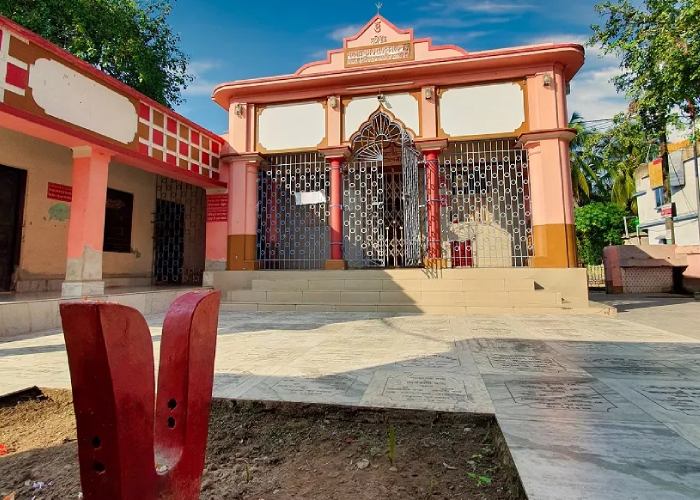
Located in the picturesque town of Nagarkot in Kangra district, the Vajreshwari Temple, dedicated to Goddess Vajreshwari is also known as Kangra Devi Mandir or Nagarkot Devi Temple. While the exact date of the temple’s establishment remains unknown, legends trace its roots to the epic era of the Mahabharata.
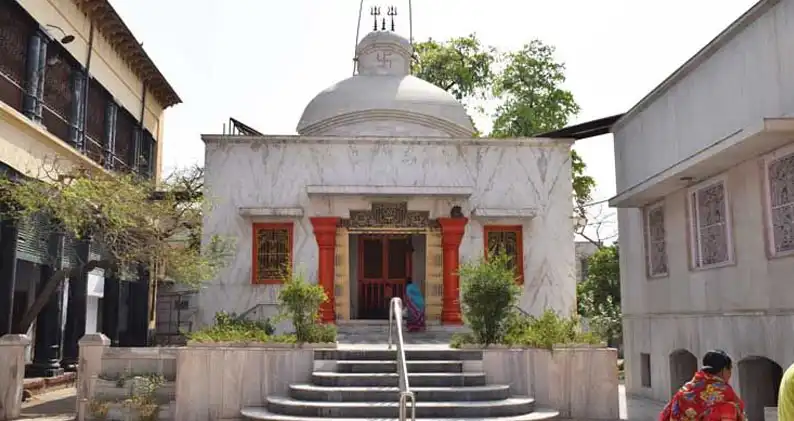
According to tradition, the original temple was built by the Pandavas. As the legend goes, the Goddess appeared to the Pandavas in a dream, revealing her presence in Nagarkot and instructing them to construct a temple for her protection. The Pandavas promptly built a magnificent shrine on the site, establishing what would become one of the most revered temples in the region.

However, the temple’s history is not one of uninterrupted peace. Over the centuries, it faced numerous challenges and destructions. Most notably, the infamous ruler Mohammed Ghazni is said to have looted the temple at least five times, drawn by its immense wealth of gold and silver. Despite these setbacks, the temple’s spiritual significance never waned, and it was always rebuilt and restored.

The present structure of the temple dates back to 1920. In 1905, a powerful earthquake had reduced the previous temple to ruins. However, it was reconstructed and restored to its former glory. According to tradition, this site marks the spot where the right breast of Goddess Sati fell. The name Vajreshwari is significant, literally meaning the lady of the thunderbolt, hinting at the goddess’s fierce and protective nature. The bhairava associated with the temple is Abhirunatheshwar, while the Shakti is Jayadurga Devi.

The temple is surrounded by a stone wall, reminiscent of a fort. This unique architectural feature not only adds to the temple’s grandeur but also speaks to its historical importance and the need for protection in turbulent times. Unlike many Hindu temples with elaborate idols, the main deity in the Vajreshwari Temple is present in the form of a Pindi. This abstract representation of the goddess adds to the mystical atmosphere of the shrine. Within the temple complex, there is a small shrine dedicated to Bhairav. This presence of Bhairav, a fierce manifestation of Lord Shiva, is typical of Shakti Peethas and symbolises the union of Shiva and Shakti energies.

In front of the main temple, an idol of Dhayanu Bhagat stands. According to local lore, Dhayanu Bhagat offered his head to the Goddess during the time of Akbar. Uniquely, the temple compound houses three tombs. While the significance of these tombs is not explicitly mentioned in the available sources, their presence adds an intriguing historical element to the temple complex.

One unique ritual associated with this temple occurs during Makar Sankranti, which falls in the second week of January. According to legend, after slaying the demon Mahishasura in battle, the Goddess sustained some injuries. To heal these wounds, she applied butter to her body in Nagarkot. To commemorate this event, the Pindi of the Goddess is covered with butter during Makar Sankranti, and the festival is celebrated for a week in the temple.

As mentioned earlier, the temple’s origin is linked to a divine dream of the Pandavas. This connection to the heroes of the Mahabharata adds a layer of epic significance to the shrine. Another legend speaks of a demon named Kalikala or Kalikut who terrorised humans, saints, and even gods in the region. The gods and sages, led by sage Vashista, performed a Chandi yajna to please Goddess Parvati. During this yajna, an offering was not given to Indra, enraging him. Indra hurled his Vajra or thunderbolt at the yajna, terrifying everyone. The Goddess then appeared, swallowed Indra’s weapon, and killed the demon. From this event, she came to be known as Vajreshwari Devi.

In a variation of the above legend, it’s said that when Indra hurled his Vajra at the demon Kalikala, the demon broke it into pieces. From these pieces, Vajra Devi appeared and slew the demon, hence earning the name Vajreshwari. The temple’s history of being looted multiple times by Mohammed Ghazni speaks to its immense wealth and importance. Despite these setbacks, the temple’s spiritual significance never diminished, and it was always restored. The presence of Dhayanu Bhagat’s idol in the temple complex hints at another intriguing story. It’s said that Dhayanu Bhagat offered his head to the Goddess during the time of Mughal Emperor Akbar.

As one stands in the temple courtyard, surrounded by centuries of devotion and the echoes of ancient rituals, one can’t help but feel a connection to the spiritual heritage that has shaped this land for millennia. The temple’s resilience in the face of natural disasters and human invasions is a testament to the enduring power of faith.

Sacred Stones, Spaces, and Stories: Shakthipeeta Part 6

Danteshwari Temple, Dantewada, Chhattisgarh
Dedicated to Goddess Danteshwari, the Danteshwari Temple located in the heart of Dantewada in Chhattisgarh is not just a place of worship but a powerful symbol of divine feminine energy and a crucial component of the spiritual landscape of the region.

The Danteshwari Temple was established in the 14th century, though this location has been a place for millennia according to archaeological evidence and ancient texts. The temple’s construction is attributed to the lords of Chindak Nagvanshi of Bastar. An inscription discovered in an archaeological site called Jatanpal reveals that in 1224 Devi Manikeswari was the tutelary deity of King Narsingh Jagdek Bhushan of the Chindak Nagvanshi dynasty. The Bhairamgarh inscription further indicates that the Goddess Danteswari was known as Manikeswari Devi at that time. The temple underwent significant repairs and renovations in the 14th century by Annamdev, the brother of Prataprudra of Warangal.

According to tradition, the temple marks the spot where the tooth or Daanth of Goddess Sati fell after her body was dismembered. At the Danteshwari Temple, the Bhairava presence is unique and intriguing. There is a Bhairav Temple located within the larger Danteshwari Temple complex. Initially, this Bhairav Temple was separate from the main shrine. However, with the construction of the Natamandap, the Bhairav Temple was incorporated into the main structure and still stands today.

Interestingly, two large idols of Bhairo Baba are installed on both sides outside the sanctum. These four-armed idols represent Bhairav Baba, who is considered the bodyguard of Maa Danteshwari. According to Vijendra Jiya, the nephew of the head priest, it is customary for devotees to visit Bhairav Baba after having the darshan of the goddess. It is believed that if devotees please Bhairav Baba, he conveys their wishes to the mother, leading to the swift fulfilment of their desires.

The temple is divided into four parts: the Garbh Griha or the sanctum sanctorum, the Maha Mandap, the Mukhya Mandap, and the Sabha Mandap. The Garbha Griha and Maha Mandap were constructed with stone pieces. The main idol of Goddess Danteshwari is chiselled out of black stone, and a Garuda Pillar stands prominently in front of the temple entrance, serving as a distinctive architectural element. The temple is located in a spacious courtyard surrounded by massive walls with the temple spire or shikhara adorned with intricate sculptural work. There are two Danteshwari temples – one in Dantewada and another in Jagdalpur. While the idol in Dantewada is black, the one in Jagdalpur is white, offering a unique duality in the goddess’s representation.

Throughout the day, multiple pujas are offered to the deity at specific times, accompanied by the chanting of hymns and recitation of sacred texts. These rituals are conducted with precision and adherence to traditional practices. The nine-night Navratri festival is celebrated with great fervour. Devotees participate in elaborate rituals, and the temple sees a surge in visitors seeking the goddess’s blessings.

The Danteshwari Temple is at the heart of the famous Bastar Dussehra celebrations. Unlike the traditional 10-day festival, Bastar Dussehra is a unique 75-day celebration. During this time, the idol of Goddess Danteshwari is taken out of the ancient temple and carried around the city in an elaborate procession, attracting thousands of devotees and tourists. During Navaratri, devotees participate in the Jyoti Kalash Sthapana ritual. This paid process involves lighting lamps in the name of family members and loved ones. In recent years, the temple has hosted over 5,500 Kalash Sthapanas.

Jogi Baithai is a unique ritual involving members of the Halda caste from specific villages becoming jogis or ascetics. The Maharaja himself initiates this ritual, which includes the sacrifice of seven Mangur fish. The jogi observes a strict fast for nine days, neither eating, drinking, nor attending to bodily functions. The temple conducts special worship three times a year – during Shardiya Navratri, Chaitra Navratri, and Phagun Madai, also known as the third Navratri. Every year, more than 7,000 ghee and oil lamps are lit in the temple. Devotees from abroad also participate in this ritual, lighting lamps for nine days.

According to legend, this temple marks the spot where the tooth of Goddess Sati fell during Lord Shiva’s cosmic dance of destruction. This event is said to have occurred in the Satya Yuga, the first of the four yugas in Hindu cosmology. Goddess Danteshwari is traditionally revered as the Kuldevi or family goddess of the Bastar state. The town of Dantewada itself is named after Goddess Danteshwari. Ancient inscriptions suggest that the goddess was initially known as Manikeswari Devi before being recognised as Danteshwari.

Another fascinating story ties the temple to King Annamdev, a 14th-century ruler who is credited with establishing the Bastar kingdom. According to legend, Annamdev was blessed by Goddess Danteshwari with a boon that allowed him to define his kingdom’s boundaries. The goddess instructed him that the territory he could cover while walking with his head held high would become his domain. During his journey, Goddess Danteshwari followed him to protect him, and he could hear her anklets as she walked behind him. However, when he reached a riverbed filled with sand, he could no longer hear her anklets and doubted whether she was still accompanying him. Overcome by curiosity, he turned around—breaking the condition set by the goddess. At that moment, Danteshwari stopped following him but blessed him and vowed to protect his descendants for 22 generations. She also gifted him a piece of fine cloth and declared that the area covered by it would mark his kingdom’s borders.

The Danteshwari Temple is uniquely situated at the confluence of two rivers: Shankini and Dhankini, which are considered sacred by devotees. According to local lore, these rivers were created from two streams of divine energy emanating from Goddess Danteshwari herself. They represent her nurturing and protective aspects. A lesser-known legend states that during ancient times, these rivers were believed to have healing properties due to their divine origin. Devotees who bathed in their waters or drank from them were said to be cured of ailments and cleansed of sins. Even today, pilgrims consider this confluence a sacred spot for purification rituals before entering the temple.

As one stands in the temple courtyard, surrounded by centuries of devotion and the echoes of ancient rituals, one can’t help but feel a connection to the spiritual heritage that has shaped this land for millennia.

Arasuri Ambaji Temple, Ambaji, Gujarat
Nestled in the Arasur hills of Gujarat’s Banaskantha district, the Arasuri Ambaji Temple is dedicated to Goddess Ambaji. Archaeological evidence and ancient texts suggest that this location has been a place of worship since the pre-Vedic period. The temple’s antiquity is so profound that its exact date of establishment remains unknown. The original temple is believed to have been built atop the Gabbar Hillock, which is considered the true seat of the goddess. This hilltop shrine continues to be maintained, with a lamp burning continuously, day and night. According to tradition, this site marks the spot where the heart of Goddess Sati fell.

Unlike most Hindu temples, the Arasuri Ambaji Temple does not house an idol of the goddess in its sanctum sanctorum. Instead, a sacred geometric diagram known as the Shree Visa Yantra is the main object of worship. This Vedic text on sacred geometry is fixed on a gold-plated marble inscription in a niche or gokh within the inner sanctum. It is believed to be so powerful that it cannot be photographed and is only worshipped after bandaging the eyes.

The temple, made of white marble with gold cones, was originally built by Nagar Brahmins. It features a main entrance in the front and only a small side door, as it is believed that the goddess has forbidden the addition of any other door. The temple is surrounded by an open square called Chachar Chowk, where ceremonial sacrifices known as havans are performed. The temple complex includes two shrines – the main temple in Ambaji town and the original hilltop shrine on Gabbar Hill.

The temple follows a strict schedule, opening its doors to devotees from 7 to 11:30 am, then from 12:30 to 4:30 pm, and again between 6:30 to 9 pm every day of the week. A grand fair, Bhadarvi Purnima Mela, is held on the full moon day of Bhadrapada month, attracting devotees from all over the country. The nine-night festival of Navratri is celebrated with great fervour, featuring garba dances and bhavai theatre performances by the Nayak and Bhojok communities. Every full moon day, a large number of devotees throng the temple to offer worship and attend the fair held outside. During Navaratri, devotees participate in the Jyoti Kalash Sthapana, a ritual where they light lamps in the name of family members and loved ones.

A fascinating local legend tells of a king from Danta who fervently prayed to Goddess Ambaji, requesting her to move from her original abode on Gabbar Hill to his town. The goddess agreed to his request on one condition: he must lead her down the hill without looking back even once. As he descended the hill, he could hear the sound of her anklets following him, reassuring him of her presence. Unable to resist his curiosity, the king peeped back, causing the goddess to stop at the current temple site. To this day, devotees consider their pilgrimage incomplete without visiting both the temple in Ambaji town and Gabbar Hill, where a sacred lamp burns perpetually.

It is said that Lord Rama and Lakshmana visited the ashram of Shrungi Rishi during their search for Sita. They were advised to worship Devi Ambaji at Gabbar, where the goddess bestowed upon Rama a miraculous arrow named Ajay, which helped him defeat Ravana. Legend also has it that the hair-removal ceremony or mundan of the infant Krishna was performed on Gabbar Hill in the presence of his foster parents, Nand and Yashoda.

The renowned Rajput king Maharana Pratap was a devoted follower of Arasuri Amba Bhawani. Once saved by the goddess, he gifted his famous sword to her holy feet. According to the Mahabharata, Princess Rukmini worshipped Mata Ambica on Gabbar Hill to invite Lord Krishna to abduct her from her swayamvar. The goddess granted her wish, allowing her to marry Krishna against her family’s wishes.

The Arasuri Ambaji Temple, with its blend of myth, history, and living faith, continues to be a powerful force in Gujarat’s religious landscape, inviting all who visit to partake in its timeless spiritual journey.

Kaali Mandir, Champaner Pavagadh Archaeological Park, Gujarat
Located in the Champaner-Pavagadh Archaeological Park, the Kalika Mata Temple is dedicated to Goddess Kali. Archaeological evidence and ancient texts suggest that this location has been a place of worship since the 10th or 11th centuries. The temple’s antiquity is so profound that it is considered the oldest in the area, predating many of the other structures in the Champaner-Pavagadh complex.

Initially, the Goddess Kalika Mata was worshipped by the local Bhil and Koli people, indigenous tribes of the region. The temple’s significance grew over time, and it was mentioned in the Gangadas Pratap Vilasa Natakam, a 15th-century drama. According to tradition, this site marks the spot where the right toe of Goddess Sati fell.

The temple houses a Kali yantra, a sacred geometric diagram used for worship. This yantra is considered a powerful representation of the goddess. The temple showcases a blend of architectural styles, reflecting its long history and the various influences it has absorbed over time. Situated at the summit of Pavagadh Hill, the temple offers breathtaking views of the surrounding landscape. The temple contains three goddess images: Mahakali Mata in the centre, Kali on the right, and another form on the left. The path to the temple, known as the Patha, is considered the soul of Champaner. It consists of thousands of steps and various decorative and functional structures along the way. One unique aspect of worship here is the tradition of devotees worshipping by beating bell-metal symbols. This practice adds a distinctive auditory element to the devotional atmosphere of the temple.

The temple comes alive during its numerous festivals and special occasions. Navaratri, the nine-night festival is celebrated with great fervour at the temple. It attracts lakhs of devotees from across Gujarat. The temple becomes a hub of activity, with special pujas performed each day to honor the nine forms of the goddess. The Chaitra Purnima Fair is held each year on the full moon of Chaitra, usually in April. Durga Puja which is celebrated in the month of Ashwin or September-October, during the Navaratri festivities, commemorates the triumph of Goddess Durga over the buffalo demon Mahishasura. Mahashivaratri is celebrated in the last week of February, is reminiscent of Lord Shiva bringing Goddess Parvati with him. A grand celebration is arranged by priests and the temple committee.

According to local legend, Sage Vishwamitra constructed an idol of Maa Kalika at the Pavagadh Temple. Locals believe that Vishwamitra’s power brought abundant blessings to the region. Faith-based legend suggests that Pavagadh Hill was formed when God sent a large hill to fill a deep valley created by the falling of Sati’s foot. This was done at the request of Rishi Vishwamitra to prevent his sacred cows from falling into the valley.

The temple has faced its share of historical challenges. In the 15th century, Mahmood Begda captured Pavagadh and damaged the temple, destroying its shikhara or temple spire. As an act of further insult, a Dargah was built directly next to the shikhara in the garbhagrih, the sanctum sanctorum. In recent times, the dargah was peacefully relocated nearby and in 2022, the temple underwent renovations, including the construction of a new shikhara.

The Kalika Mata Temple, with its blend of myth, history, and living faith, continues to be a powerful force, inviting all who visit to partake in its timeless spiritual journey.