In My Hands Today…

Filterworld: How Algorithms Flattened Culture – Kyle Chayka

A history and investigation of a world ruled by algorithms, which determine the shape of culture itself.

From trendy restaurants to city grids, to TikTok and Netflix feeds the world round, algorithmic recommendations dictate our experiences and choices. The algorithm is present in the familiar neon signs and exposed brick of Internet cafes, be it in Nairobi or Portland, and the skeletal, modern furniture of Airbnbs in cities big and small. Over the last decade, this network of mathematically determined decisions has taken over, almost unnoticed—informing the songs we listen to, the friends with whom we stay in touch—as we’ve grown increasingly accustomed to our insipid new normal.

This ever-tightening web woven by algorithms is called “Filterworld.” Kyle Chayka shows us how online and offline spaces alike have been engineered for seamless consumption, becoming a source of pervasive anxiety in the process. Users of technology have been forced to contend with data-driven equations that try to anticipate their desires—and often get them wrong. What results is a state of docility that allows tech companies to curtail human experiences—human lives—for profit. But to have our tastes, behaviors, and emotions governed by computers, while convenient, does nothing short of call the very notion of free will into question.

In Filterworld, Chayka traces this creeping, machine-guided curation as it infiltrates the furthest reaches of our digital, physical, and psychological spaces. With algorithms increasingly influencing not just what culture we consume, but what culture is produced, urgent questions What happens when shareability supersedes messiness, innovation, and creativity—the qualities that make us human? What does it mean to make a choice when the options have been so carefully arranged for us? Is personal freedom possible on the Internet?

To the last question, Filterworld argues yes—but to escape Filterworld, and even transcend it, we must first understand it.

In My Hands Today…

Not the End of the World: How We Can Be the First Generation to Build a Sustainable Planet – Hannah Ritchie

It’s become common to tell kids that they’re going to die from climate change. We are constantly bombarded by doomsday headlines that tell us the soil won’t be able to support crops, fish will vanish from our oceans, and that we should reconsider having children.

But in this bold, radically hopeful book, data scientist Hannah Ritchie argues that if we zoom out, a very different picture emerges. In fact, the data shows we’ve made so much progress on these problems that we could be on track to achieve true sustainability for the first time in human history.

Packed with the latest research, practical guidance and enlightening graphics, this book will make you rethink almost everything you’ve been told about the environment. From the virtues of eating locally and living in the countryside, to the evils of overpopulation, to plastic straws and palm oil , Not the End of the World will give you the tools to understand our current crisis and make lifestyle changes that actually have an impact. Hannah cuts through the noise by outlining what works, what doesn’t, and what we urgently need to focus on so we can leave a sustainable planet for future generations.

These problems are big. But they are solvable. We are not doomed. We can build a better future for everyone. Let’s turn that opportunity into reality.

In My Hands Today…

A City on Mars: Can We Settle Space, Should We Settle Space, and Have We Really Thought This Through? – Kelly Weinersmith and Zach Weinersmith

Earth is not well. The promise of starting life anew somewhere far, far away—no climate change, no war, no Twitter—beckons, and settling the stars finally seems within our grasp. Or is it?

Critically acclaimed, bestselling authors Kelly and Zach Weinersmith set out to write the essential guide to a glorious future of space settlements, but after years of research, they aren’t so sure it’s a good idea. Space technologies and space business are progressing fast, but we lack the knowledge needed to have space kids, build space farms, and create space nations in a way that doesn’t spark conflict back home. In a world hurtling toward human expansion into space, A City on Mars investigates whether the dream of new worlds won’t create nightmares, both for settlers and the people they leave behind. In the process, the Weinersmiths answer every question about space you’ve ever wondered about, and many you’ve never considered:

Can you make babies in space? Should corporations govern space settlements? What about space war? Are we headed for a housing crisis on the Moon’s Peaks of Eternal Light—and what happens if you’re left in the Craters of Eternal Darkness? Why do astronauts love taco sauce? Speaking of meals, what’s the legal status of space cannibalism?

With deep expertise, a winning sense of humor, and art from the beloved creator of Saturday Morning Breakfast Cereal, the Weinersmiths investigate perhaps the biggest questions humanity will ever ask itself—whether and how to become multiplanetary.

In My Hands Today…

Lady Doctors: The Untold Stories of India’s First Women in Medicine – Kavitha Rao

At a time when medicine is a highly sought-after career for Indian women, it is hard to imagine what it was like for the pioneers. The story of how firmly they were bound in fetters of family, caste, and society and how fiercely they fought to escape needs to be told. In Lady Doctors, Kavitha Rao unearths the extraordinary stories of six women from the 1860s to the 1930s who defied the idea that they were unfit for medicine by virtue of their gender.

From Anandibai Joshi, who broke caste rules by crossing an ocean, to Rukhmabai Raut, who escaped a child marriage, divorced her husband, and studied to be a doctor; from Kadambini Ganguly, who took care of eight children while she worked, to child widow Haimabati Sen, who overcame poverty and hardship—these women had a profound and lasting impact. And in their forgotten lives lie many lessons for modern women.

In truth, the compelling stories of these radical women have been erased from our textbooks and memories because histories have mostly been written by men, about men. In an immensely readable narrative and with impeccable research, Lady Doctors rectifies this omission.

In My Hands Today…

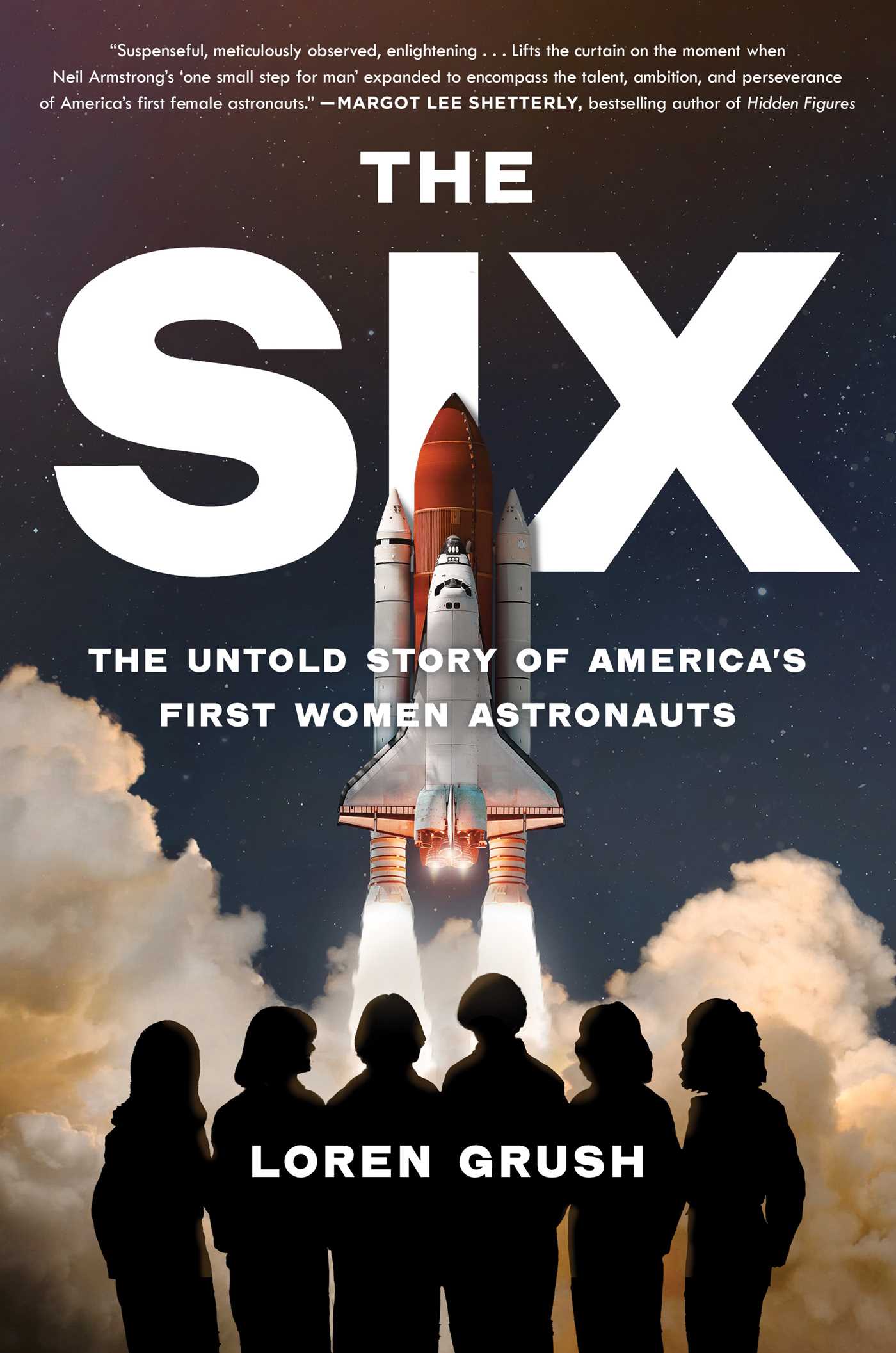
The Six: The Untold Story of America’s First Women Astronauts – Loren Grush

When NASA sent astronauts to the moon in the 1960s and 1970s, the agency excluded women from the corps, arguing that only military test pilots—a group then made up exclusively of men—had the right stuff. It was an era in which women were steered away from jobs in science and deemed unqualified for space flight. Eventually, though, NASA recognized its blunder and opened the application process to a wider array of hopefuls, regardless of race or gender. From a candidate pool of 8,000, six elite women were selected in 1978: Sally Ride, Judy Resnik, Anna Fisher, Kathy Sullivan, Shannon Lucid, and Rhea Seddon.

In The Six , acclaimed journalist Loren Grush shows these brilliant and courageous women enduring claustrophobic—and sometimes deeply sexist—media attention, undergoing rigorous survival training, and preparing for years to take multi-million-dollar payloads into orbit. Together, the Six helped build the tools that made the space program run. One of the group, Judy Resnik, sacrificed her life when the Space Shuttle Challenger exploded at 46,000 feet. Everyone knows of Sally Ride’s history-making first space ride, but each of the Six would make their mark.