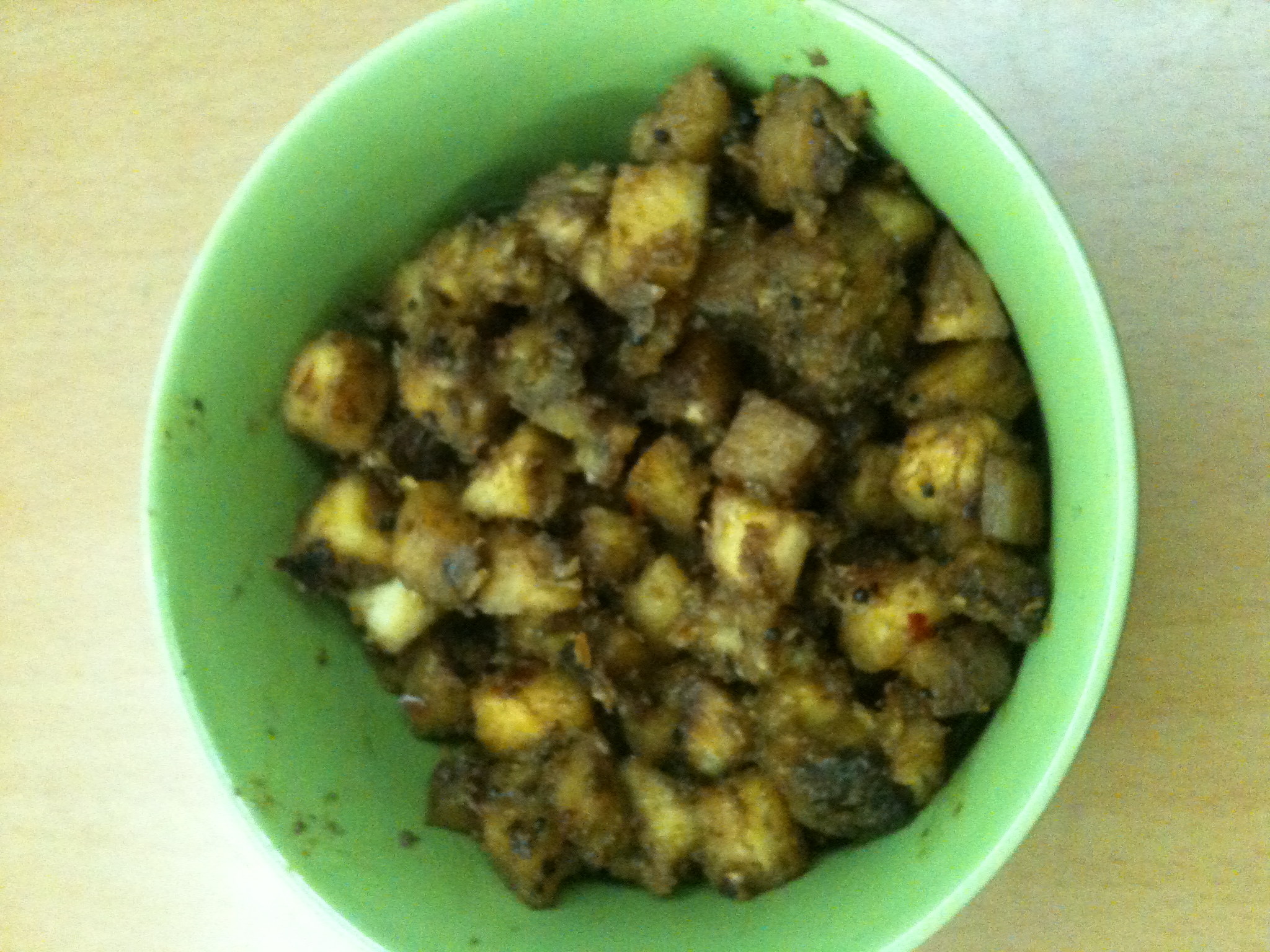
Vazhakkai Masala Curry (Raw Green Bananas Masala Curry)

I had the urge to try something different to the usual saturday cooking and so decided to make this raw green banana curry. I usually make this with just salt, red chilli powder and turmeric powder with a tadka of mustard, asafoetida and some curry leaves. Today was different. Here’s what I did.

Vazhakkai Masala Curry

Ingredients:

–   4-5 vazhakkais (raw green bananas), peeled and cubed

–   3 tbsps oil

–   1 tsp mustard seeds

–   ½ tsp turmeric powder

–   A pinch of asafoetida

–   3-4 sprigs curry leaves

To be ground into a coarse paste

–   4 tbsps fresh, grated cocounut

–   2 tsps coriander seeds

–   2 tsps cumin seeds

–   1 tsp fennel seeds (saunf)

–   6-8 dried red chillies

–   A small pebble-sized ball of tamarind

Method:

Grind to a coarse paste the ingredients for the paste, using as little water as possible.

In a deep bottomed pan, heat the oil and add the mustard seeds. When the mustard seeds splutter, add the asafoetida, turmeric powder and curry leaves.

Next put the ground masala paste and sauté it for a few minutes. Now add the cubed vazhakkai and mix well. Add salt to taste. At this point, if you feel the curry is not spicy enough, you can add some red chilli powder also. Let it cook well and enjoy. This goes well with rice and dal or sambhar.

Verdict: This was a very different from what we normally eat for this vegetable. It was spicy, but not overtly spicy and my children could eat it with complaining. There was also a tangy undertone to the curry due to the tamarind in the masala which I liked a lot!
Chow Chow (aka Chayote) Kootu

A kootu is another traditional South Indian food item. Kootus are generally vegetables mixed with a lentil or dal (usually moong, but can be others also) with a coconut/chilli gravy all mixed together. This is another example of Indian meals being complete meals as this kootu will have proteins from the lentils, plus fibre from the vegetables. This is usually eaten with a carbohydrate like rice or roti and you have all the important parts of a meal together.

Today’s recipe is Chayote or Chow Chow Kootu

Chayote is an edible plant belonging to the gourd family, being roughly pear-shaped and light green in colour. The skin is not used in Indian cooking and the flesh has a bland taste. This means it takes on any flavouring that is added to it. The seeds are generally not used in cooking.

Chow Chow Kootu

Ingredients:

  • 3 Chayotes (peeled, seeds removed and diced)
  • ½ cup Moong Dal
  • 3 tbsps Channa Dal
  • ½ tsp turmeric powder
  • salt to taste
  • ½ cup freshly grated cocounut (you can use frozen coconut if you don’t have access to fresh coconut. I have used frozen coconut in this recipe)
  • 4-5 fresh green chillies (this is what I used, but please adjust according to the intensity of the chillies and your spice tolerance level)
  • ½ tsp cumin seeds
  • ¼ tsp mustard seeds
  • 1 tsp oil
  • ¼ tsp urad dal
  • A small sprig of curry leaves
  • A pinch of asafetida

Method:

In a pressure cooker, cook the moong dal and 2 tbsps of the chana dal with ¼ tsp of turmeric powder. While the dals are cooking, peel the chow chow, remove the seeds and chop into small, bite-sized cubes. Cook the chow chow in a pan with very little water, ¼ tsp of turmeric powder and some salt.

In a mixer, add the coconut, cumin seeds and chillies and grind it to a fine paste without adding too much water. Some people prefer to add yoghurt here, but I don’t, preferiing to add water to provide the moisture to grind it.

Once the Chayote is cooked but firm, add the dal to it along with the coconut mixture. Adjust the salt and let it boil for a while, around 5-7 minutes. Then turn off the gas and start the tempering to finish the dish.

In a smaller skillet, pour 1 tsp oil oil and wait for it to heat up. Once heated up, put the mustard seeds and wait for it to pop. Once it pops, add the urad dal, curry leaves and asafetida and lightly stir. When the urad dal starts to brown remove from flame and add it to the kootu. Mix well and serve with rice or rotis.