
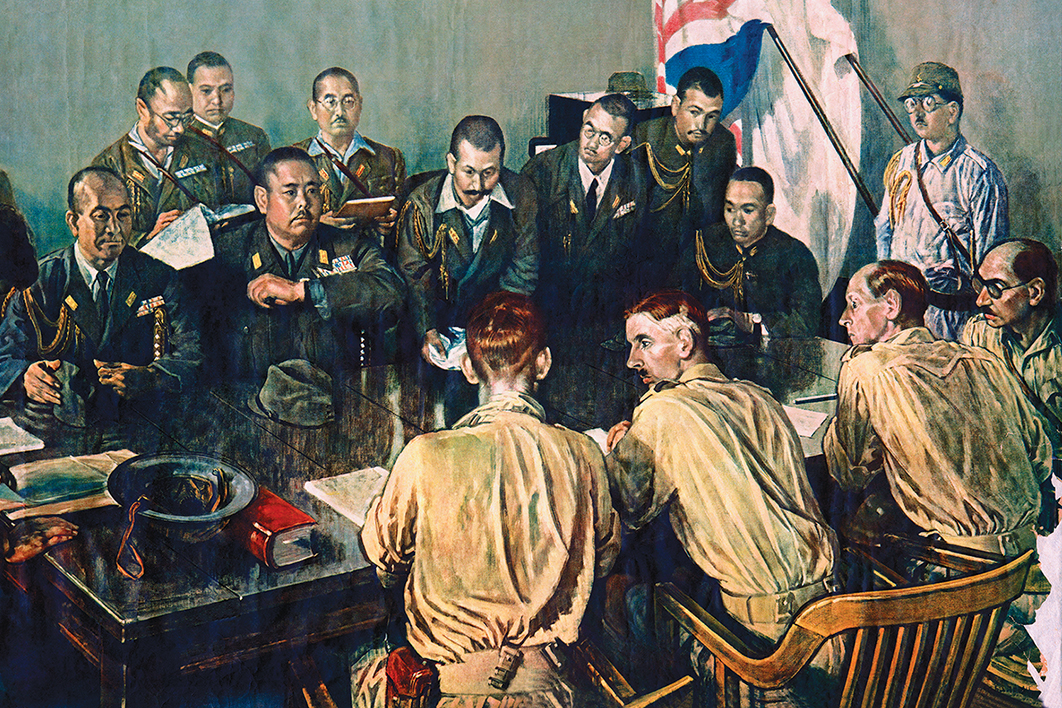
The date was February 15, 1942. After a week of intense fighting, the British colonial administration finally gave in and surrendered to the Japanese invaders. At the Ford Motor Factory, Lieutenant-General Arthur Percival formally surrendered to Japanese General Tomoyoki Yamashita shortly after 6:15 p.m. That day has been commemorated annually since 1984 to remind Singaporeans that every aspect of society contributes to the collective defence of the state.
The strategy behind Total Defence was adopted from the national defence strategies of Sweden and Switzerland. It initially consisted of five key tenets: military, civil, economic, social, and psychological, with the sixth, digital, being introduced in 2019.

The Singapore Government has justified Total Defence on several factors: the island city-state’s small size and marginal population; lack of natural resources; and a racial and religiously diverse population. It states that these factors make Singapore vulnerable to threats such as international terrorism, natural disasters, pandemics and disinformation campaigns that could result in an economic slowdown.
Military Defence: At the heart of Total Defence lies Singapore’s robust military capability—a deterrent against external aggression and a guarantor of national sovereignty. The Singapore defence budget is ranked among the highest in the ASEAN region. Through a policy of deterrence and diplomacy, Singapore maintains a formidable defence force capable of safeguarding its territorial integrity and protecting its people. A capable armed force is seen as a necessity to deter potential aggressors. In addition to two years of national service, the onus is placed on reservist troops to maintain their physical fitness through annual individual physical proficiency tests (IPPT) and in-camp training (ICT). Corporate companies are encouraged to create “pro-NS” policies for reservists, such as training spaces, monetary incentives and flexible working hours, and are recognised at an annual awards ceremony.
Civil Defence: Civil Defence encompasses a range of measures aimed at enhancing preparedness and response capabilities in the face of natural disasters, pandemics, and other emergencies and broadly refers to the activities of the Singapore Police Force and Singapore Civil Defence Force to restore a sense of normalcy during a national crisis with the aid of active civilian participation. Civilians are trained in first aid, urban survival, and the management of blood, water and food resources. Donating blood to national blood banks, volunteering, and being a medical frontline worker are also activities seen as contributing to civil defence.

Economic Defence: Economic resilience forms the bedrock of Singapore’s prosperity and stability and relates to governmental efforts to sustain and develop Singapore’s economy with a policy undertaken by the government for workers to upgrade their skill sets. The Singaporean government also stockpiles essential supplies of food, medication and personal protective equipment, in addition to pursuing secondary supply chains, to offset potential disruptions. The conservation of essential resources, including water, is placed under economic defence. Total Defence underscores the importance of diversification, innovation, and adaptability in navigating the complexities of the global economy. Through prudent fiscal policies, strategic investments, and a skilled workforce, Singapore fortifies its economic defenses against external shocks and disruptions.
Social Defence: A cohesive and resilient society is the linchpin of Singapore’s national identity. Social defence stems from official policies to maintain social cohesion among Singapore’s diverse population through multiculturalism. It emphasises the importance of unity, inclusivity, and social cohesion in fostering a resilient community. From grassroots initiatives to national campaigns promoting racial harmony and social cohesion, Singaporeans stand united in the face of adversity. Improving relations between neighbours is also listed as part of social defence.
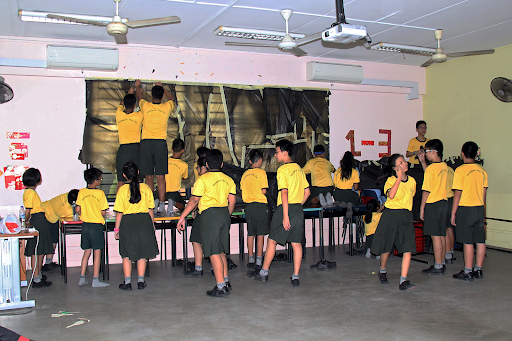
Psychological Defence: Psychological defence refers to the Singapore Government’s programme to strengthen “resolve and resilience” amongst its citizens to face unexpected crises; it is also cited as necessary to combat fake news. Psychological Defence instils in Singaporeans a sense of national pride, identity, and purpose—a steadfast commitment to upholding Singapore’s core values and principles. Through education, awareness, and civic engagement, Singapore nurtures a resilient mindset capable of withstanding the psychological challenges of an uncertain world. The government views psychological resilience as the bedrock of a “social compact” and seeks to emulate Finland’s example. Efforts to improve mental health in Singapore are also placed under psychological defence.
Digital Defence: Digital defence refers to efforts to increase awareness of online security threats, including misinformation, cyberattacks and phishing scams. The threat is seen as particularly acute due to the country’s “open and connected” nature and governmental plans to orient the country around a digital economy and the Smart Nation concept. All civil servants are mandated to undergo cybersecurity training, with the government also increasing audits of state infrastructure.

Total Defence Day is a national observance, a time for reflection, remembrance, and reaffirmation of Singapore’s commitment to resilience. Total Defence Day was added to the list of dates for schools to commemorate in 1997 and was commemorated in schools in 1998. On this day, the Singapore Civil Defence Force sounds the Important Message Signal through the island-wide Public Warning System sirens and local radio stations for a minute. At its inception, the siren was sounded at 12:05 pm Singapore Standard Time; this was changed to 6:20 pm in 2015 to mark the actual time of the surrender in 1942. Schools conduct emergency preparedness drills, food and electricity rationing, and may organise tours to government exhibitions. A memorial service has been held annually at the War Memorial Park since 1967 to recognise civilians who lost their lives during the Japanese occupation. 2024 will mark 40 years of commemorating Total Defence Day.
Today, the principles of Total Defence remain as relevant as ever. In an era defined by rapid technological advancement, geopolitical shifts, and global pandemics, the need for resilience, unity, and preparedness has never been greater. Total Defence calls for agility and adaptability in the face of evolving threats and challenges. In an interconnected world, partnerships and alliances are essential in safeguarding the country’s interests and promoting regional stability. Total Defence encourages a culture of innovation, entrepreneurship, and creativity to address emerging threats and opportunities.
Total Defence is more than a strategy; it is a mindset, a way of life, and a testament to the indomitable spirit of a nation united in purpose and resolve. As Singapore navigates the complexities of the 21st century, the principles of Total Defence will continue to guide its journey—a steadfast commitment to safeguarding its sovereignty, prosperity, and future generations.
 Memories and Such