
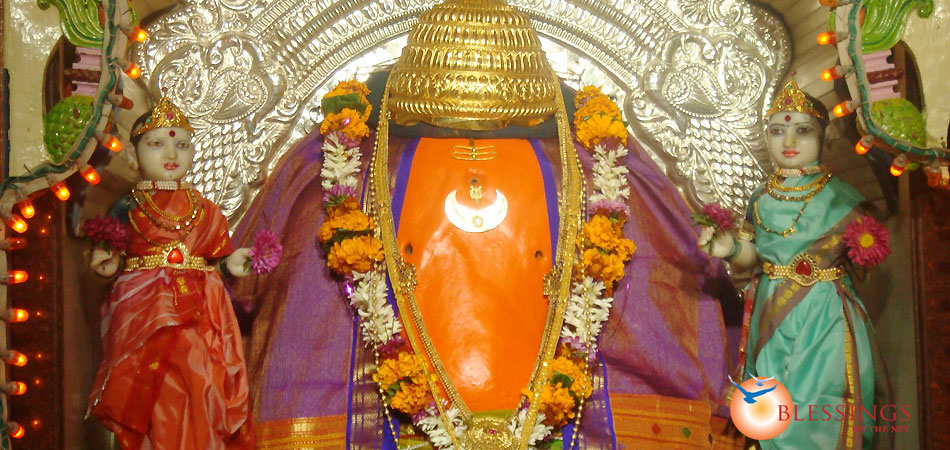
Renowned as the “Remover of Obstacles,” the Vighneshwar Temple at Ozar lies on the banks of the Kukadi River. Here, Lord Ganesha is worshipped as Vighneshwar or Vighnahar, the vanquisher of Vighnasura, the demon of obstacles, making Ozar a beacon for those seeking the removal of life’s impediments and the fulfilment of their aspirations.
Ozar is a small town in the Pune district, about 85 km from Pune city and near the famed Lenyadri caves. The temple’s riverside location, close to the Yedagaon dam, and its proximity to the Lenyadri shrine and Shivneri Fort imbue the site with a sense of history and natural beauty. The approach to the temple is marked by a fortified stone gateway, flanked by deep malas, or lamp towers, and meditation rooms.
The lore of Vighneshwar Temple is rooted in ancient scriptures such as the Mudgala Purana, Skanda Purana, and Vinayaka Purana and is central to its spiritual identity. Once, King Abhinandana performed a grand sacrifice but neglected to offer due respect to Indra, the king of gods. Feeling slighted, Indra commanded Kala (time/death) to disrupt the sacrifice. Kala assumed the form of the demon Vighnasura, “the demon of obstacles,” and not only destroyed the ritual but unleashed havoc across the universe, creating impediments in the virtuous deeds and sacrifices of sages and mortals alike.
Distressed by the chaos, the sages sought help from Brahma, or Shiva in some versions, who advised them to worship Lord Ganesha. Responding to their prayers, Ganesha confronted Vighnasura. Realising he could not defeat the divine child, Vighnasura surrendered and promised to desist from troubling those who invoked Ganesha’s name. In some retellings, Vighnasura became Ganesha’s attendant, tasked with testing the devotion of those who neglected his worship.
To commemorate this cosmic victory, the sages consecrated an idol of Ganesha as Vighneshwar at Ozar. From that day, it was decreed that obstacles, or Vighnas, would only trouble those who failed to honour Ganesha, cementing his role as the universal remover of obstacles.
The Vighneshwar Temple’s historical prominence is closely linked to the Maratha Peshwas. After the victorious Battle of Vasai or Bacaim in 1739, Chimaji Appa, the younger brother and military commander of Peshwa Baji Rao I, renovated the temple and adorned its shikhara, or spire, with gold as an offering of gratitude for his triumph. The temple underwent further restoration in 1967 under the guidance of Appa Shastri Joshi, a devoted follower of Ganesha.
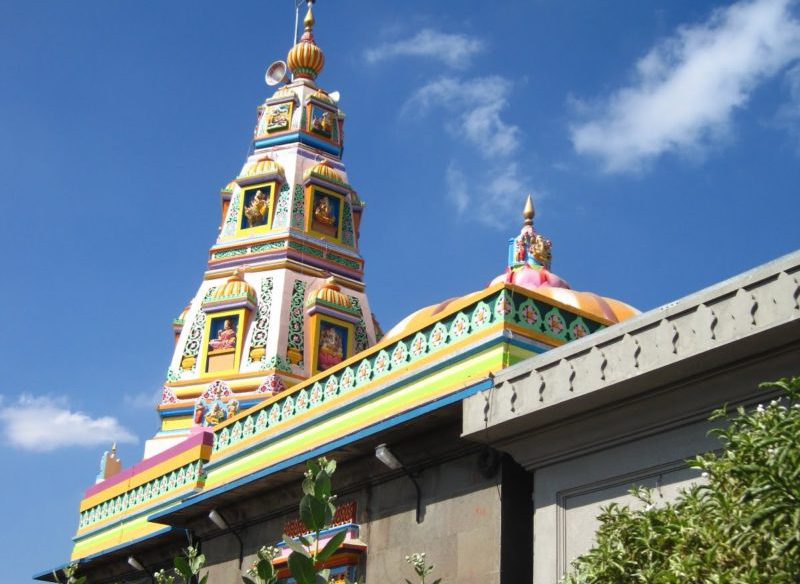
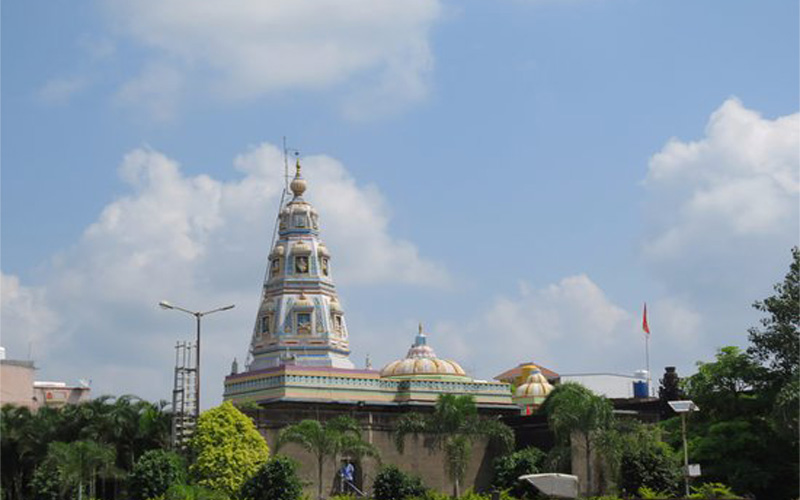
The Vighneshwar Temple exemplifies classic Hindu temple architecture, blending grandeur with spiritual symbolism. The temple faces east, welcoming the rising sun and symbolising new beginnings. It is set within a large, walled courtyard with a prominent gateway, flanked by two massive stone Dwarapalas, or gatekeepers, and adorned with bas-reliefs of musicians. Two large deepmalas, or lamp towers, stand near the entrance, and small meditation rooms on either side offer spaces for contemplation. The temple features three intricately carved entrances, with the eastern gate serving as the main access point. The first hall houses an image of Dhundiraj Ganesha, while the second contains a white marble statue of Mushika, Ganesha’s mouse vehicle. The temple walls are decorated with vibrant murals and sculptures depicting scenes from Ganesha’s legends and the Ashtavinayak pilgrimage. The sanctum’s shikhara is covered in gold foil, a legacy of Chimaji Appa’s offering.
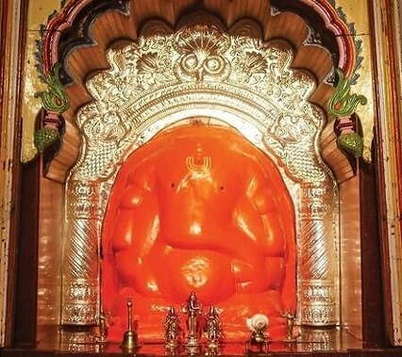
The presiding deity is a swayambhu, or self-manifested idol, naturally formed as an elephant-faced stone. The idol faces east, with its trunk turned to the left, and is covered in indoor, or vermilion. The eyes are set with emeralds, and diamonds adorn the forehead and navel. Brass images of Ganesha’s consorts, Riddhi and Siddhi, flank the main idol, symbolising prosperity and spiritual power.
The temple opens early, and devotees offer flowers, durva grass, and modaks to the deity. Ritual bathing of the idol is performed, especially on auspicious days. Morning and evening aartis are conducted with great devotion, accompanied by the ringing of bells and the chanting of hymns. Circumambulation, or pradakshina, of the sanctum is a common practice, with devotees seeking the removal of obstacles from their lives. On Sankashti Chaturthi, the fourth day after the full moon, special pujas and offerings are made, drawing large crowds of devotees.
The deepmalas are lit during festivals, creating a mesmerising spectacle of light that symbolises the victory of knowledge over ignorance. The marble statue of Mushika is also worshipped, as he is considered Ganesha’s loyal vehicle and a symbol of humility and service.
Ganesh Chaturthi or Bhadrapada Shuddha Chaturthi, is the most important festival at Ozar. The temple is adorned with flowers and lights, and thousands of devotees gather for special abhisheks, aartis, and processions. The atmosphere is charged with devotion, music, and communal harmony.
Other major festivals include Tripuri Pournima, the full moon in the month of Kartik and Magh Chaturthi in January or February, when fairs are organised and the temple becomes a hub of religious and cultural activities.
Vighneshwar’s legend is a powerful reminder that obstacles are an inevitable part of life, but with faith and devotion, they can be overcome. The temple’s rituals, architecture, and festivals all reinforce the message that invoking Ganesha brings clarity, strength, and the removal of impediments.

Ozar is traditionally the seventh temple visited on the Ashtavinayak pilgrimage, though many pilgrims visit it fifth for convenience. The temple’s association with the defeat of Vighnasura makes it a crucial stop for those seeking to complete the spiritual circuit and receive Ganesha’s blessings.
The temple stands as a radiant beacon of faith, resilience, and triumph over adversity. Its legends speak of cosmic battles and divine grace; its architecture embodies the grandeur and serenity of Hindu sacred spaces; its rituals and festivals unite communities in celebration and prayer.
 Memories and Such