Weaponised Incompetence: The Art of Avoidance

Incompetence, at its core, refers to the inability to perform tasks effectively due to a lack of skill, knowledge, or aptitude. While genuine incompetence stems from legitimate shortcomings, weaponised incompetence is a manipulative behavior where individuals feign inability to avoid responsibility or shift burdens onto others. This tactic can lead to frustration, resentment, and imbalances in relationships and workplaces.

Incompetence is broadly defined as the inability to perform tasks or fulfill responsibilities effectively. It manifests in various forms across different domains: Administrative incompetence refers to dysfunctional behaviours that hinder organisational goals, while legal incompetence is the inability of individuals to make decisions due to mental impairment, and military incompetence is the failures in judgment or execution within military operations. Social ineptitude is the struggle with interpersonal skills or social interactions. Incompetence may arise from a lack of training, experience, or aptitude. However, when incompetence is intentionally feigned for personal gain or avoidance of responsibility, it becomes weaponised.

What is weaponised incompetence? Weaponised incompetence, also known as strategic incompetence, involves pretending to be incapable of performing tasks or intentionally doing them poorly to evade responsibility. This behavior often results in others taking over the task to ensure it is completed properly.

Key characteristics of weaponised incompetence include intentional underperformance, where one deliberately does tasks poorly or claims ignorance; manipulation, which is the shifting of responsibilities onto others through feigned inability; and imbalance, which creates unequal dynamics where one person bears an unfair workload.

Examples of weaponised incompetence include a partner consistently claiming they are “bad” at household chores like laundry or cooking, forcing the other person to take over, or a coworker who avoids group responsibilities by showing up unprepared or delegating their tasks under the guise of incompetence.

Why do people weaponise incompetence? Weaponised incompetence is often driven by psychological motives and personal dynamics. Understanding these underlying factors can help address the behaviour effectively.

Psychological motives include a desire for control whereby by feigning incompetence, individuals manipulate others into taking over tasks, maintaining control over how responsibilities are distributed. There is also a fear of failure where some people avoid tasks due to anxiety about performing poorly or being exposed as inadequate. Some individuals also need validation by creating dependency through perceived incompetence that ensures others seek their assistance, feeding their need for attention and affirmation.

In situational factors, when responsibility is avoided, weaponised incompetence allows individuals to shirk unpleasant tasks while ensuring they are completed by someone else. Power dynamics also play a role, as weaponised incompetence can reinforce existing imbalances in relationships or workplaces with unequal power structures.

Weaponised incompetence can have far-reaching consequences in personal relationships and professional settings. In relationships, romantic partnerships, or family dynamics, weaponised incompetence leads to emotional distress and resentment. Over time, it undermines trust and respect between partners. For example, one partner consistently avoids shared responsibilities like childcare or household chores, and the other partner feels burdened by the disproportionate workload.

Weaponised incompetence disrupts teamwork and productivity in workplaces and professional environments. It often manifests as poor contributions to group projects, delegating tasks under pretenses, and consistently underperforming while expecting others to compensate. These behaviours create frustration among colleagues and may hinder career growth for those forced to pick up the slack.

So, what are the strategies for addressing weaponised incompetence? When faced with weaponised incompetence, individuals can employ various strategies tailored to their specific situations. General approaches include recognising the manipulation by identifying patterns of feigned incompetence and acknowledging its impact on workload or emotional well-being. They also include setting boundaries, clearly defining expectations, and refusing to take over responsibilities unnecessarily. Finally, they can communicate effectively by using “I” statements to express feelings and encourage constructive dialogues about sharing tasks equitably.

In personal relationships, addressing weaponised incompetence in relationships requires patience and open communication. Frame conversations around teamwork, and instead of blaming your partner, discuss how both parties can contribute equally and highlight the importance of shared responsibilities for a healthy relationship. Offer support without enabling, and if your partner genuinely struggles with certain tasks, offer guidance or teach them how to improve. Avoid stepping in every time they underperform; let them face the consequences of their actions. If weaponised incompetence persists despite efforts to address it, consider counseling or therapy as a neutral space for resolving conflicts.

In workplaces, dealing with weaponised incompetence at work requires assertiveness and collaboration. Document patterns and keep records of instances where coworkers feign inability or fail to contribute effectively. Use this documentation when addressing the issue with supervisors or HR. Delegate tasks strategically and assign responsibilities clearly, and ensure accountability for completion. Avoid taking over tasks unless necessary. Foster a culture of accountability by encouraging teamwork by emphasising shared goals and mutual respect and advocating for policies that reward effort and penalise consistent underperformance.

When dealing with weaponized incompetence, prioritise your mental health. Practice mindfulness to manage frustration, seek support from friends or colleagues who understand your situation, and focus on maintaining balance in your own responsibilities without overextending yourself.

Weaponised incompetence is a subtle yet impactful form of manipulation that can strain relationships and hinder productivity in workplaces. By understanding its motivations and effects, individuals can develop strategies to address this behaviour effectively. Tackling weaponised incompetence requires patience and assertiveness, whether through boundary-setting, communication, or professional intervention. Ultimately, fostering personal and professional environments that value accountability and teamwork can mitigate the prevalence of this manipulative tactic. Recognising the signs early on empowers individuals to protect their well-being while promoting fairness in shared responsibilities.

Adulting 101: How to Become More Visible at Work

In the modern workplace, visibility is key to career advancement. Being noticed for your contributions, ideas, and efforts can open doors to new opportunities, promotions, and recognition. However, many young adults entering the workforce struggle with making themselves visible, especially in environments where competition is high or where they feel overshadowed by more experienced colleagues.

Why is workplace visibility important? Visibility ensures that your efforts are acknowledged. When you’re visible at work, managers and colleagues recognise your value to the team. This recognition can lead to rewards such as promotions, bonuses, or leadership opportunities. Being visible can fast-track your career growth. Employers are more likely to consider individuals who consistently demonstrate their skills and make an impact when assigning high-profile projects or leadership roles. Visibility fosters stronger relationships with colleagues and supervisors. When people know who you are and what you contribute, they’re more likely to collaborate with you and advocate for your success. Visibility helps establish your credibility and expertise in your field. By showcasing your knowledge and skills, you position yourself as a reliable and valuable team member. Lastly, when you’re visible at work, opportunities often come your way organically, whether it’s being invited to join important projects, representing the company at events, or taking on new responsibilities.

What challenges do young adults face on the way to becoming visible?

  • Lack of confidence: Entering the workforce can be intimidating, especially when surrounded by more experienced colleagues. Young professionals may doubt their abilities or hesitate to speak up.
  • Fear of rejection: The fear of being judged or rejected can prevent young adults from sharing ideas or seeking recognition.
  • Workplace hierarchies: In hierarchical workplaces, junior employees may feel overshadowed by senior staff or believe their contributions are less valued.
  • Introversion: Introverted individuals may find it challenging to assert themselves in group settings or actively seek visibility.
  • Unclear goals: Without clear career goals, young adults may struggle to identify how they want to be seen or recognised at work.

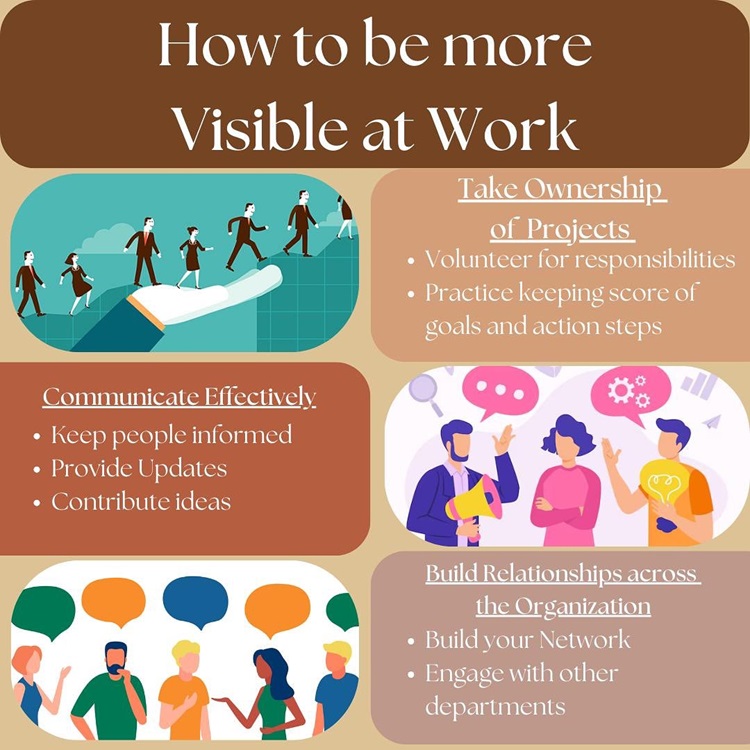
So how can you become more visible at work? Becoming visible at work doesn’t mean being loud or attention-seeking; it’s about demonstrating value and building meaningful connections within your organisation. Here are strategies young professionals can use:

Excel in your role: The foundation of workplace visibility is performing well in your job. Consistently delivering high-quality work ensures that people notice your contributions. Meet deadlines and always complete tasks on time, and exceed expectations when possible. Take the initiative and volunteer for projects or responsibilities that align with your skills and interests. Pay attention to detail and ensure accuracy and thoroughness in everything you do, whether it’s crafting a report or organising a presentation.

Communicate effectively: Effective communication is crucial for making yourself known at work. Speak up in meetings and share ideas confidently during discussions or brainstorming sessions. Ask questions, show curiosity, and be engaged by asking thoughtful questions about projects or company goals. Provide updates and keep supervisors informed about your progress on tasks or projects without waiting for them to ask.

Build relationships: Networking within your organisation is essential for visibility. Connect with colleagues by building rapport with coworkers across departments. Engage with supervisors and schedule one-on-one meetings with your manager to discuss goals, feedback, and career development. Participate in social events by attending company gatherings or team-building activities to strengthen relationships outside work tasks.

Showcase your expertise: Demonstrating your knowledge and skills helps establish credibility. Share knowledge and offer insights during meetings or discussions based on your expertise. Volunteer for training sessions by leading workshops or training sessions on topics you’re skilled in. Contribute ideas by suggesting innovative solutions or improvements that add value to the organisation.

Take ownership: Taking ownership of tasks shows initiative and accountability. Lead projects and volunteer to take charge of small projects or assignments. Solve problems by identifying challenges within the workplace and propose actionable solutions. Follow through and ensure that any task you take is completed successfully and professionally.

Develop a personal brand: Creating a personal brand helps distinguish yourself from others in the workplace. Identify your strengths and reflect on what makes you unique, whether it’s creativity, technical skills, or problem-solving abilities. Be consistent and ensure that your actions align with the values and strengths you want to be known for. Leverage social media by using professional platforms like LinkedIn to share achievements, articles, or insights related to your field.

Seek feedback: Feedback provides valuable insights into how others perceive you and where you can improve. Ask for constructive criticism by regularly seeking feedback from supervisors about your performance. Implement suggestions and show that you value feedback by acting on recommendations for improvement. Request recognition and if appropriate, ask managers for public acknowledgment of successful projects or contributions.

Network beyond your team: Visibility isn’t limited to your immediate team; building connections across the organisation broadens your reach. Collaborate across departments and volunteer for cross-departmental projects that expose you to new teams. Attend company-wide meetings and participate actively in meetings involving multiple teams or divisions. Introduce yourself, and don’t hesitate to introduce yourself to senior leaders during events or casual interactions.

Stay positive: A positive attitude contributes significantly to workplace visibility. Be approachable and maintain an optimistic demeanor that encourages colleagues to engage with you. Support others and celebrate coworkers’ successes, and offer help when needed. Handle criticism gracefully and accept constructive criticism with humility, using it as an opportunity for growth.

Document your achievements: Keeping track of accomplishments ensures that they don’t go unnoticed during performance reviews or promotions discussions. Maintain a portfolio by creating a portfolio showcasing successful projects, reports, presentations, or other contributions. Highlight results and quantify achievements where possible (e.g., “Increased sales by 20%”). Share success stories so you can discuss accomplishments during one-on-one meetings with supervisors.

Introverted individuals often face unique challenges in becoming visible at work but can leverage their strengths effectively. Focus on one-on-one interactions and build relationships through individual conversations rather than large group settings. Prepare ahead of time and plan talking points before meetings so you feel confident sharing ideas when opportunities arise. Leverage written communication by using emails or reports as tools for showcasing ideas clearly without needing verbal presentations. Play to your strengths and highlight qualities like active listening, thoughtfulness, and analytical thinking during discussions or problem-solving sessions. Choose strategic opportunities and participate selectively in activities where visibility aligns with comfort levels such as leading small projects rather than public speaking engagements.

While striving for visibility is important, certain behaviours can undermine efforts. Don’t overpromise with delivering, and avoid taking on too many tasks if it compromises quality; focus on delivering consistent results instead of spreading yourself thin. Don’t seek attention excessively because visibility should stem from genuine contributions rather than attention-seeking behavior that detracts from professionalism. Don’t ignore feedback by dismissing constructive criticism, as your growth can be hindered; embrace feedback as an opportunity for improvement instead. Don’t neglect relationships by focusing solely on tasks while ignoring interpersonal connections limits long-term visibility potential within organisations.

Becoming more visible at work is not about shouting louder than everyone else: it’s about consistently demonstrating value while building meaningful relationships! By excelling in their roles, communicating effectively, showcasing their expertise, and developing personal brands, young adults will position themselves favorably within competitive workplaces. Remember, it’s not merely about being seen; it’s about ensuring that what others see reflects authenticity and professionalism. Embrace these strategies today and watch as new opportunities unfold tomorrow!

Four-Day Work Week: A Bane or a Boon?

An idea that’s been around for a while, but has gained traction in the last few years, the four-day workweek is an arrangement where a workplace or place of education has its employees or students work or attend school, college, or university over four days per week rather than the more customary five. This arrangement can be a part of flexible working hours and is sometimes used to cut costs. Typically, employees work longer hours during those four days to compensate for the lost day.

The idea behind the four-day workweek is to provide employees with more time for personal pursuits, such as family, hobbies, or other interests, while still completing the same amount of work. It is believed that a shorter workweek can increase productivity, reduce stress, and improve work-life balance.

The five-day workweek is a cultural norm; the result of early 1900s union advocacy to reduce the six-day workweek, which led to the invention of the weekend. In the early 20th century, when the average work week in developed nations was reduced from around 60 to 40 hours, it was expected that further decreases would occur over time. In 1930, economist John Maynard Keynes estimated that technological change and productivity improvements would make a 15-hour work week possible within a couple of generations. Other In 1956, then US Vice President Richard Nixon promised Americans they would only have to work four days in the not-too-distant future.

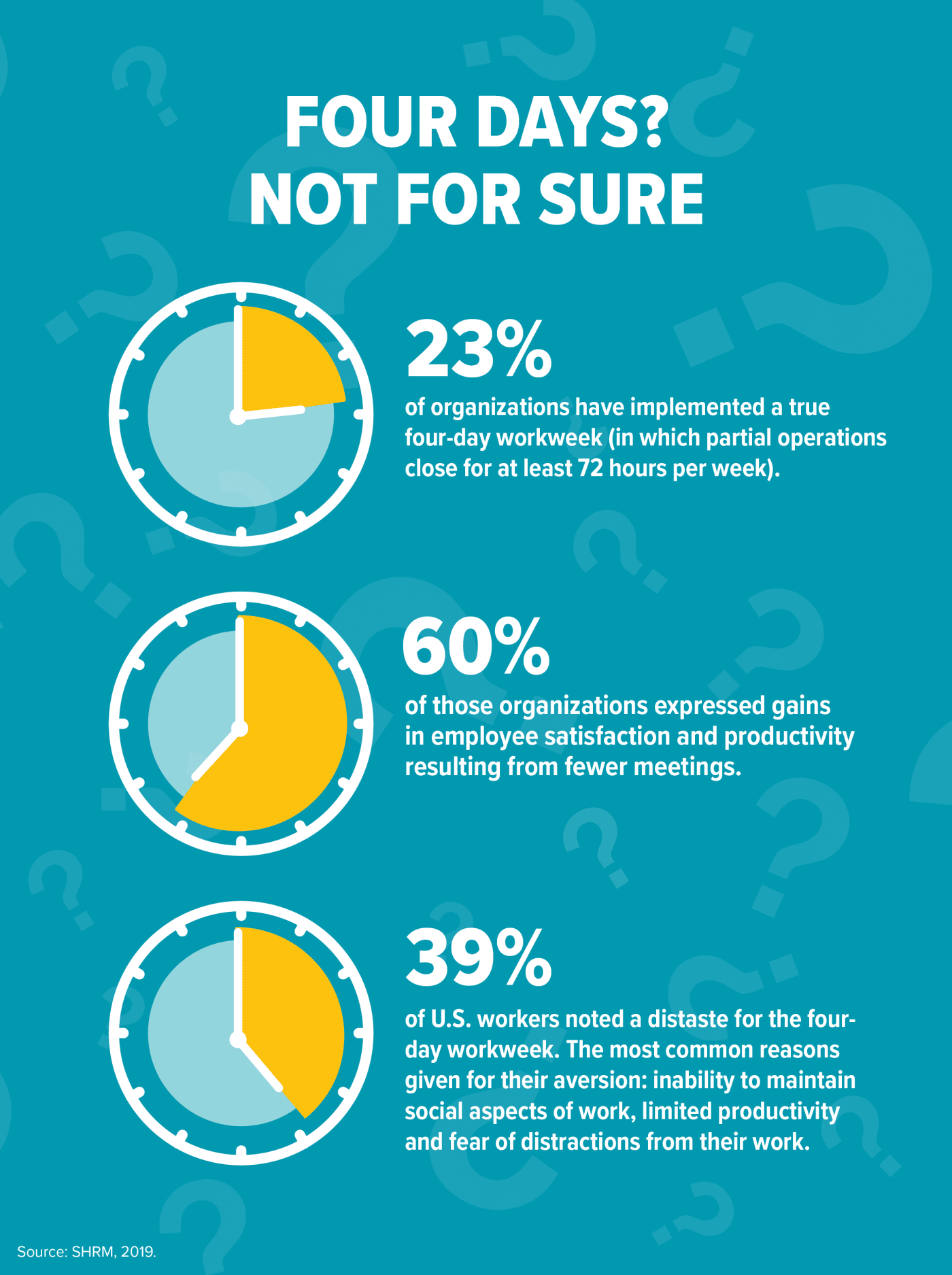
While the idea of a four-day workweek has been around for many years, it has gained more attention in recent years as some companies and governments have experimented with it as a way to increase employee well-being and productivity. Some companies have reported positive results, such as reduced absenteeism, improved employee morale, and even increased profits. However, it is important to note that the implementation and success of a four-day workweek can vary depending on the company, industry, and specific circumstances.

Most advocates for a four-day working week argue for a fixed work schedule, resulting in shorter weeks like four 8-hour workdays for a total of 32 hours. This follows the 100-80-100 model: 100% pay for 80% of the time, in exchange for a commitment to maintaining at least 100% productivity. However, some companies have introduced a four-day week based on a compressed work schedule: in the so-called 4/10 work week, the widely-used 40 weekly work hours are distributed across four days instead of five, resulting in 10-hour-long workdays, hence four-ten.

The resulting schedule may look different depending on the way the four-day week is implemented: in some variants Friday becomes the permanent non-working day, giving employees three consecutive days off over the weekend; some workplaces split the day off among the staff, with half taking Monday off and the other half taking Friday off; sometimes the day off is added in the middle of the week such as a Wednesday, allowing for a mid-week break; and, in some cases, the day off changes from week to week, depending on the company’s current goals and workload.

The push towards implementing the four-day week has remained loosely relevant within the contemporary workplace due to the various possible benefits it may yield. Although mostly untested, these benefits mainly lie within increased cost-cutting, productivity, and work-life balance. The theory behind this is, employees or students who work or attend school one less day a week will have additional time to pursue hobbies, spend time with family, get more sleep, and increase overall morale. Consequently, these employees or students will be more productive and refreshed for working or learning, which will make up for the lost day when they would otherwise be overworked and/or overtired. In addition, by having the workplace or school open one less day a week, the operating costs and environmental costs will decrease for businesses and society alike.

Where four-day weeks have been instituted so far, workers gain a better work-life balance that enables them to live happier and more fulfilled lives, and employers can recruit and retain high-quality and well-rested workers who deliver greater productivity and creativity. More broadly, a four-day week provides opportunities to rebalance employment, decreasing the number of overworked and unemployed or underemployed people and allows for greater gender equality through a more equal share of paid and unpaid work, too, including the caring roles that disproportionately fall on women, and better health and wellbeing for workers and their loved ones.

The four-day week movement has grown considerably in recent years, with increasing numbers of businesses and organisations around the world trialling and moving permanently to a four-day working week of around 32 hours, with no less pay for workers. Most of these businesses and organisations have found that a four-day week is a win-win for employees and employers, as trials have indicated that it leads to a better work-life balance, lower stress levels, and increased productivity. An overwhelming majority of studies report that a four-day week leads to increased productivity and decreased stress.

Other benefits include improved work-life balance as with an additional day off, employees can use the extra time to pursue personal interests, spend time with family and friends, or simply relax and recharge. This can help reduce stress and improve overall well-being. Research has shown that shorter workweeks can increase productivity, as employees may feel more motivated and focused during their work hours. Additionally, having longer weekends can provide employees with more time to rest and recharge, leading to better performance during the workweek. A four-day workweek can result in cost savings for both employees and employers. Employees may save money on transportation, meals, and other work-related expenses. For employers, there may be cost savings on utilities, rent, and other overhead expenses. A four-day workweek can help reduce absenteeism and turnover rates, as employees are often more satisfied with their work-life balance and feel more valued by their employer. Providing employees with a more flexible and balanced work schedule can lead to increased morale and engagement, as employees feel that their employer cares about their well-being and work-life balance. Evidence shows that cutting working hours isn’t only good for people: it’s good for the planet. It lowers energy use, meaning less pollution and an opportunity for us to live more sustainably and tackle the climate crisis. A four-day workweek can lead to a more satisfied, productive, and engaged workforce, which can ultimately benefit both employees and employers. An increase in remote work during the COVID-19 pandemic led to an increase in the desire for flexible work arrangements.

While a four-day workweek can have many benefits, there are also potential disadvantages to consider. Some of the possible drawbacks include longer workdays because to accommodate a four-day workweek, employees may have to work longer hours during those four days. This can lead to fatigue, burnout, and reduced productivity, especially if the work is physically or mentally demanding. Implementing a four-day workweek may reduce the number of days that employees are available to clients, customers, or colleagues. This can lead to delays in communication or project completion, which could be frustrating for stakeholders. With employees working different schedules, it can be more challenging to coordinate meetings, training sessions, or other group activities. This can lead to decreased collaboration and teamwork, which could impact productivity and morale. If employees are working fewer hours, they may receive reduced pay or benefits. This could be a disadvantage for employees who rely on a full-time salary to meet their financial needs. For some businesses, a four-day workweek may result in a loss of income, especially if they are not able to maintain the same level of productivity or customer service during the shorter workweek.

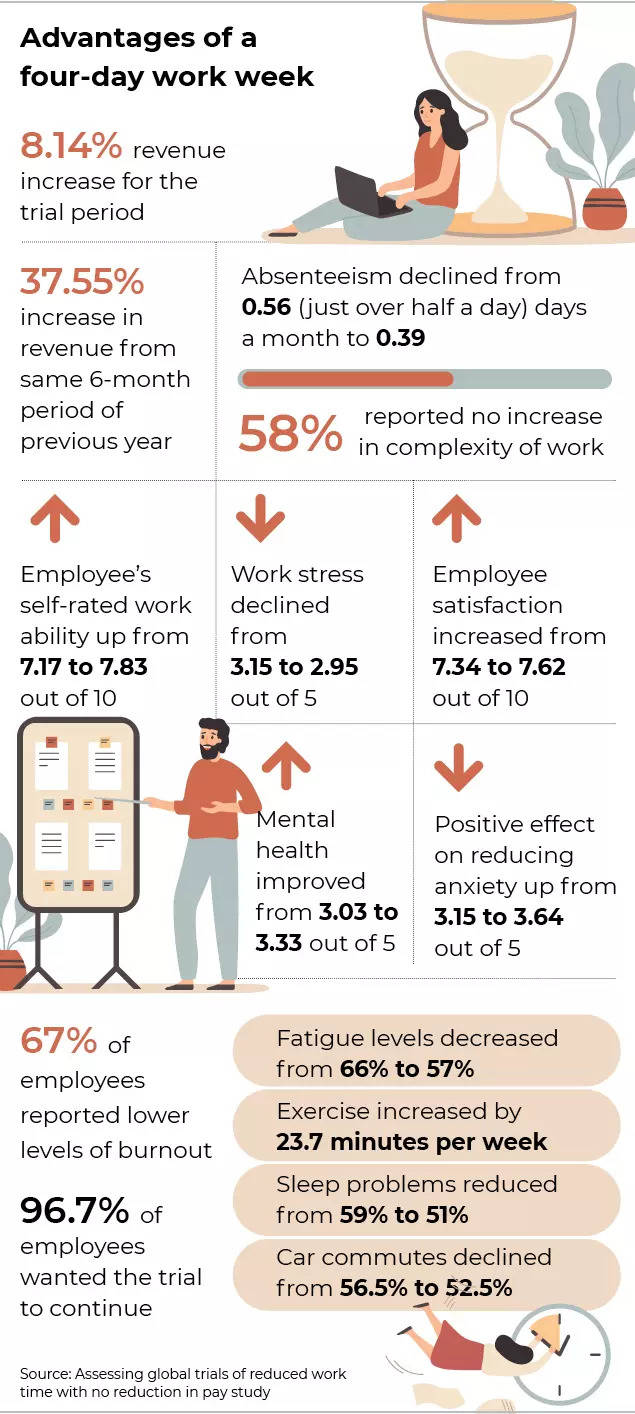
The first large-scale study of a four-day workweek ended recently and not one of the 33 participating companies is returning to a standard five-day schedule. Data released showed that the organisations involved registered gains in revenue and employee productivity, as well as drops in absenteeism and turnover. Workers on a four-day schedule were also more inclined to work from the office than home. The study is the first from a series of pilots coordinated by the New Zealand-based non-profit advocacy group 4 Day Week Global and involving dozens of companies in ongoing six-month pilots. A US and Canadian trial began in October, and a pilot of mostly European and South African organisations begins in February. With each iteration, researchers will adjust their data collection, including long-term tracking of how organisations fare with lighter schedules.

Dozens of indicators, ranging from productivity to well-being and fatigue, all improved as the companies transitioned. One weakness of the study is that all of the participating organisations opted in, meaning leadership was already biased toward four-day weeks. But employees, who did not necessarily opt-in, were won over. Ninety-seven per cent wanted to continue with four-day schedules, with workers reporting less work stress, burnout, anxiety, and fatigue, along with fewer sleep problems. Exercise also increased by 24 minutes a week, putting workers in line with World Health Organisation-recommended exercise targets. Employees also reported fewer conflicts between work and family, and fewer instances of coming home from work too tired to do necessary household tasks. Notably, the extra time off was not used for secondary employment, but for hobbies, housework, and self-care instead.

The four-day workweek is a big step today, especially when the majority of work can be done anywhere. What do you think, is this something you would be willing to do while working full-time? Please let me know in the comments.

Multitasking: Is that even possible?

Multitasking refers to the ability of a person or a computer to perform multiple tasks or processes simultaneously. In the context of human behaviour, multitasking typically refers to the practice of doing several things at once, such as working on a computer while talking on the phone or watching television. In the context of computing, multitasking refers to the capability of an operating system to run multiple programs or processes at the same time and switch between them, providing the illusion that they are all running simultaneously.

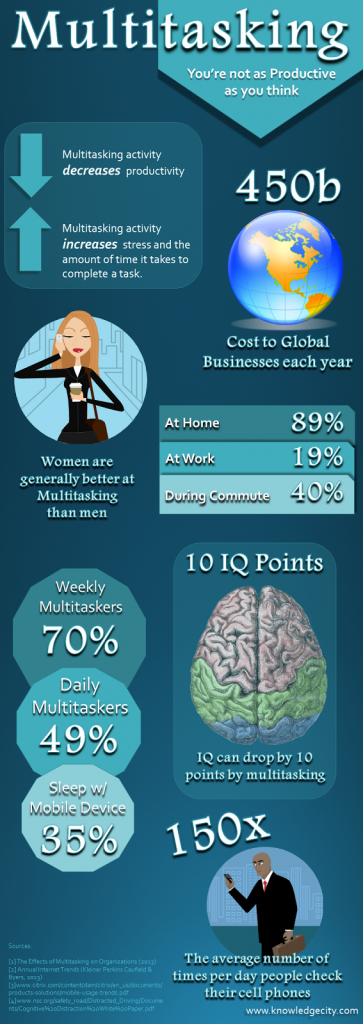
While multitasking can increase efficiency and productivity in some situations, it can also lead to decreased productivity and cognitive overload when trying to perform too many tasks simultaneously, as it can be difficult to give each task the attention it deserves.

Today, multitasking is common because of the fast-paced world we live in as people try to balance multiple tasks and responsibilities at once. While multitasking can have some benefits, it also has several drawbacks that need to be considered. Below are some of the pros and cons of multitasking which can help determine whether it is the right approach.

Multitasking can be good in certain situations where the tasks being performed are relatively simple, require little cognitive effort, and can be performed simultaneously without interfering with each other. Like listening to music while exercising or working on a simple task, as the music provides background stimulation that can help boost motivation and energy levels. Or even cooking and cleaning at the same time, as they are both physical tasks that can be performed simultaneously without much cognitive effort.

It’s important to note that multitasking should be approached with caution, as it can also be detrimental to performance and productivity when tasks are too complex or demand too much attention. In such situations, it’s better to focus on one task at a time and give it the full attention, to avoid mistakes and increase efficiency.

There are several benefits to multitasking, including:

Increased efficiency and productivity: When done effectively, multitasking can help increase overall productivity by allowing one to tackle multiple tasks at once. By performing multiple tasks simultaneously, one can save time and increase overall productivity. This can be especially useful for individuals who are juggling multiple projects or responsibilities.

Improved time management: Multitasking allows one to complete multiple tasks in a shorter period, prioritise tasks and manage time more effectively, enabling one to complete more tasks in a given amount of time. By switching between tasks, one can keep their brain active and focused, allowing them to get more done in less time.

Better decision-making: Multitasking can also help people to make better decisions by allowing them to consider multiple options and viewpoints at once. When one is constantly shifting their focus between tasks, they are forced to weigh the pros and cons of each option, leading to more informed and well-rounded decisions.

Better utilisation of downtime: Multitasking can help one to make better use of downtime that may occur during the day, such as waiting in line or commuting.

Reduced boredom: Multitasking can help keep one engaged and reduce boredom, especially when performing monotonous tasks.

Improved mental stimulation: Multitasking can provide mental stimulation and help keep one alert and focused, especially when switching between tasks that require different skills and abilities.

Multitasking has several drawbacks, including:

Decreased focus and attention: When multitasking, it can be difficult to give each task the attention it deserves, leading to decreased focus and attention, and an increased likelihood of making mistakes. Multitasking can also decrease the overall focus and attention, as one is constantly shifting their attention from one task to another. This can make it difficult to concentrate on any one task for an extended period, leading to decreased efficiency and effectiveness.

Decreased quality: While multitasking may help one to complete more tasks in a shorter period, it can also result in a decrease in the quality of their work. When one is constantly switching between tasks, it can be difficult to give each task the attention and focus it deserves, leading to mistakes and subpar results.

Increased stress and anxiety: Multitasking can also be stressful, as it requires one to constantly be on the go and make quick decisions. This can lead to burnout and decreased mental health, as the brain becomes overwhelmed by the constant demands of multitasking. Multitasking can lead to feelings of stress and anxiety, especially when tasks pile up and become overwhelming.

Decreased creativity: Multitasking can also stifle creativity, as it requires one to constantly be in a state of “doing” rather than allowing one to take the time to reflect and think. When one is constantly multitasking, one may be missing out on opportunities for creative problem-solving and innovation because it requires one to divide their attention and switch between tasks frequently.

Decreased overall productivity: Despite the perception that multitasking saves time, research has shown that it can decrease overall productivity, as switching between tasks takes time and energy, and can lead to decreased focus and attention.

Impairment of memory: Multitasking can lead to an impairment of short-term memory, as information may not be encoded or retained as effectively when divided attention is required.

It’s worth noting that while multitasking can have these benefits, it can also lead to decreased productivity and cognitive overload when tasks are too complex or demand too much attention. It’s important to approach multitasking with caution and to be mindful of your limitations to maximize its benefits. A rule of thumb should be that multitasking should be approached with caution, and it’s important to be mindful of limitations and to prioritise tasks to ensure that one is focusing on the most important and time-sensitive tasks first.

In conclusion, multitasking can be a useful tool for managing time and increasing productivity, but it also has its drawbacks. By weighing the pros and cons of multitasking, one can determine whether it is the right approach to take. If one finds that multitasking is causing stress or decreasing the quality of work, it may be time to reassess the approach and find a more balanced and sustainable way of working.

Are you a Fox or a Hedgehog?

The ancient Greek poet Archilochus wrote a now-lost parable with the following moral: “The fox knows many things, but the hedgehog knows one big thing.” The general gist of the line is this: Some people see the details in everything they do, like the fox, while others are great at having one singular vision, like the hedgehog. This animal-centric adage is at the heart of a lesson in “On Grand Strategy,” an instruction manual for would-be leaders based on popular seminars by Yale professor John Lewis Gaddis. Taking a cue from a 1953 essay by British-American philosopher Isaiah Berlin, Gaddis discusses how great leaders and thinkers can be categorized as either hedgehogs or foxes. Berlin went so far as to say that this split is “one of the deepest differences [that] divide writers and thinkers, and, it may be, human beings in general.”

Source

Typically, a generalist is someone who has a broad range of knowledge and skills across multiple fields, while a specialist is someone who has deep knowledge and expertise in a specific field or area. Generalists tend to have a wider range of job opportunities and can adapt to new situations and changing circumstances more easily than specialists. They also tend to have a better understanding of how different fields and disciplines are interconnected and can often see connections and opportunities that specialists might miss. Specialists, on the other hand, tend to have a more in-depth understanding of their field of expertise and can contribute more to projects and teams that require specialized knowledge and skills. They also tend to be more sought after and command higher salaries in their field of expertise. Generalists can understand and see connections between different subjects, while specialists can focus on and solve complex problems within their area of expertise. Generalists are often more adaptable and can work on a wider range of tasks, while specialists have a deeper understanding of their field and can contribute significantly to its advancement.

While a specialist systematically hones skills related to their domain, a generalist seeks to sharpen a wide range of related skills that will prove useful in multiple domains. The proliferation of startups and small businesses has surged the demand for generalists who come with a vast spectrum of knowledge and experience. However, when the requirement is for deep technical knowledge in critical fields, the skills of a specialist are much more marketable. When a company is looking at upscaling operations within its domain, the specialist is more progressive when it comes to creative ideas. Generalists are progressive when it comes to accepting a varied number of clients with different needs and expectations. Owing to their interpersonal skills and a broad-based learning curve, generalists can handle uncertainties efficiently. In terms of transferability, generalists fare better than specialists as their wide range of specialities is easily transferable to different domains. Specialists aren’t able to transfer their domain-related expertise to another field or even to another discipline within the same domain.

Both generalists and specialists have their own advantages and disadvantages, depending on the particular situation and the needs of the employer or organization. It’s also worth mentioning that, while some people may naturally lean towards being a generalist or a specialist, it is also possible to develop skills in both areas through continuous learning and development.

Specialists have expertise in their area of specialisation because they are focused on one domain, which attracts high-paying clients since subject-specific expertise gaps are more difficult to fill. The ability to undertake extensive targeted research and a quality understanding of the domain earn specialists attractive remuneration. Specialists are also more equipped to handle any new technological complexity in the field as they dedicate years to exploring the different facets of the domain. On the other hand, because they are focused on one area of expertise, the lack of diversity within the job profile hinders growth. A specialized portfolio has limited scope for independent expansion. With rapid technological advancements, specialists risk falling behind if they don’t update their skill sets frequently. Specialists usually perform within a narrower domain than generalists. As they dive deeper into their domain, the relevant working fields surrounding them gradually shrink.

Generalists cover several domains and envision the bigger picture as they combine multiple perspectives from different departments. A direct result of being open to a lot of unique challenges is acquiring strong critical thinking skills and this enables generalists to offer actionable insights into their areas of expertise. Their ability to explore various domains and a high multitasking quotient make generalists excel in leadership roles. A large number of skills arm generalists with the capacity to diversify their services which helps them swap career paths easily and give their clients a lot of alternatives to work with. But a lack of specific expertise in any domain puts them on a back foot as they aren’t that competent in niche projects. A high percentage of generalists work across multiple teams and tackle a host of responsibilities, especially if they are in leadership roles. This often leads to psychological burnout. Generalists are also easier to replace owing to their overlapping or vaguely defined work responsibilities and so these positions are prone to lower pay scales as compared to a specialist.

Whether it is better to be a generalist or a specialist depends on the individual’s goals, interests, and circumstances. For some careers, such as medicine or law, specialisation is required to achieve a high level of expertise and be successful in the field. In other fields, a generalist approach can be beneficial, as it allows individuals to have a wider range of skills and knowledge, making them more versatile and adaptable in the face of changing circumstances. In many cases, a combination of both generalist and specialist skills can be advantageous, allowing individuals to understand the broader context of their area of expertise and effectively communicate and apply their knowledge. Ultimately, the choice between being a generalist or a specialist is a personal one and should be based on individual strengths, interests, and career goals.

Some of the questions one needs to ask themselves are if one seeks a diverse breadth of knowledge or if one prefers deep research on any specific topic. Do they change their career perspective often and prefer taking time to find the niche they are interested in? Or have they already determined their career trajectory? One also needs to work out what kind of work ignites their interests and passions and if it requires them to hone different skills or demands specific subject-matter expertise. The ideal workforce of today is a carefully balanced group of specialised generalists who recognise their varied strengths but rely on others’ domain-specific expertise, and generalised specialists who are people with core competencies who also delve into other related areas.

So would you rather be a fox or a hedgehog? I am going to ask BB and GG this question after making them read this article.