World Population Day

Every year on 11 July, the world observes World Population Day, a pivotal occasion that shines a spotlight on the complex dynamics of global population trends and their far-reaching implications. As humanity continues to grow, this day serves as a poignant reminder of the delicate balance we must strike between accommodating our burgeoning numbers and preserving the planet’s finite resources.

The origins of World Population Day can be traced back to 1989, when the United Nations Development Programme, UNDP, proposed the idea of commemorating the day. This initiative was born out of the recognition that the world’s population had reached a staggering five billion people on July 11, 1987, a milestone that underscored the urgency of addressing population-related challenges. The first official observance of World Population Day took place on July 11, 1990, with over 90 countries participating. Since then, it has become an annual event, providing a platform for governments, non-governmental organisations, and civil society to raise awareness, promote advocacy, and foster dialogue on critical issues related to population growth, reproductive health, and sustainable development.
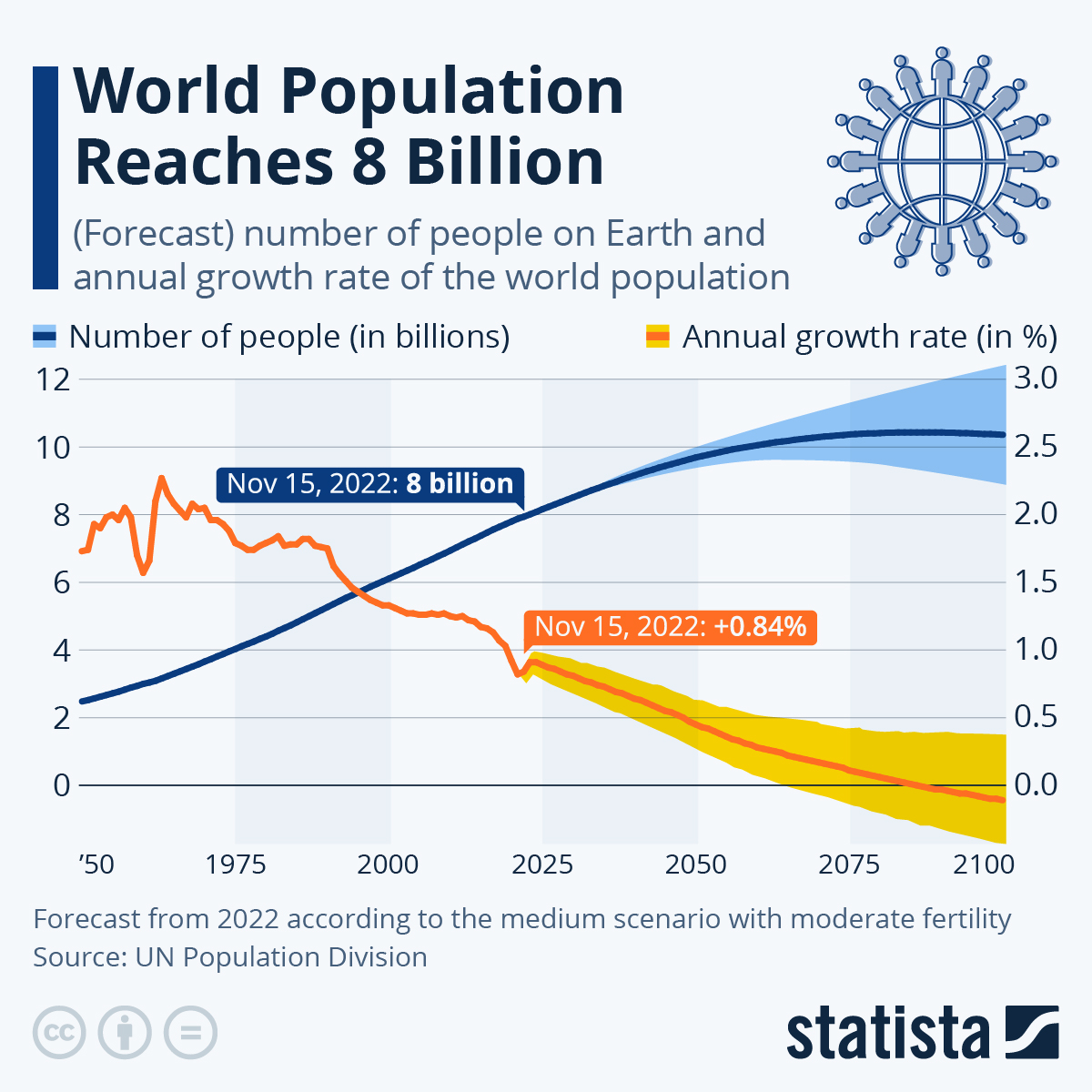
Population growth is a complex phenomenon with both positive and negative implications. On the one hand, a growing population can drive economic growth, innovation, and cultural diversity. A larger workforce can contribute to increased productivity, while a diverse population can foster creativity and new perspectives.

However, unchecked population growth can also strain finite resources, exacerbate environmental degradation, and intensify social and economic inequalities. Rapid population growth can lead to overcrowding, inadequate access to healthcare, education, and housing, and increased competition for limited resources such as food, water, and energy.

It is crucial to strike a balance between accommodating population growth and ensuring sustainable development. This requires a multifaceted approach that addresses issues such as access to family planning services, women’s empowerment, education, and economic opportunities, as well as responsible resource management and environmental conservation.
World Population Day serves as a powerful reminder of the interconnectedness of population dynamics and global development challenges. It highlights the importance of investing in reproductive health services, promoting gender equality, and empowering women and girls to make informed choices about their lives and families. By raising awareness and fostering dialogue, World Population Day aims to mobilise efforts towards achieving the United Nations’ Sustainable Development Goals (SDGs), particularly those related to health, education, gender equality, and sustainable cities and communities.

Each year, the United Nations sets a specific theme for World Population Day, providing a focal point for discussions and initiatives. For 2024, the theme is “Empowering Women, Transforming Societies.” This theme recognises the pivotal role that women play in shaping population dynamics and driving sustainable development. When women are empowered with access to education, healthcare, and economic opportunities, they are better equipped to make informed decisions about their reproductive health and family planning. This, in turn, can lead to improved maternal and child health outcomes, reduced poverty, and greater gender equality. Empowering women has a ripple effect on society as a whole. When women can participate fully in social, economic, and political spheres, they can contribute to the development of more inclusive, equitable, and sustainable communities.
Women’s empowerment through education and reproductive health services allows them to make informed family planning choices, which can help manage population growth rates. Gender discrimination and a lack of opportunities for women hinder their ability to fully participate in and contribute to economic and social progress. Promoting women’s rights, ending gender-based discrimination, and ensuring access to sexual and reproductive health services are crucial for achieving many of the Sustainable Development Goals related to health, education, and inclusive development.
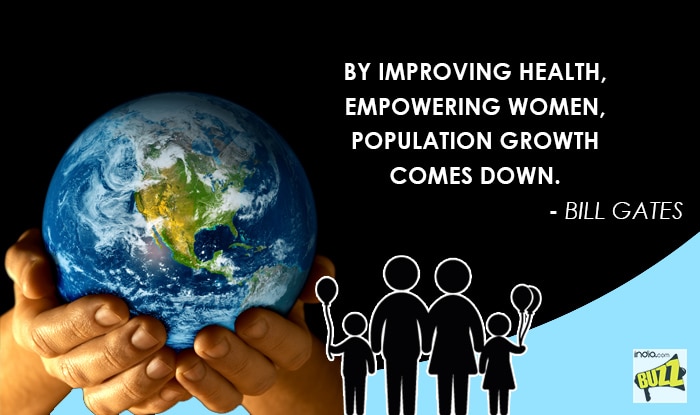
World Population Day serves as a vital reminder of the intricate relationship between population dynamics, sustainable development, and the empowerment of women and girls. As we celebrate this day in 2024, let us renew our commitment to creating a world where every individual has access to quality education, healthcare, and economic opportunities, regardless of gender. By empowering women and promoting gender equality, we can unlock the transformative potential of societies and pave the way for a more sustainable and equitable future for all. It is through collective action, advocacy, and a shared vision that we can address the challenges posed by population growth and ensure a prosperous and thriving world for generations to come.
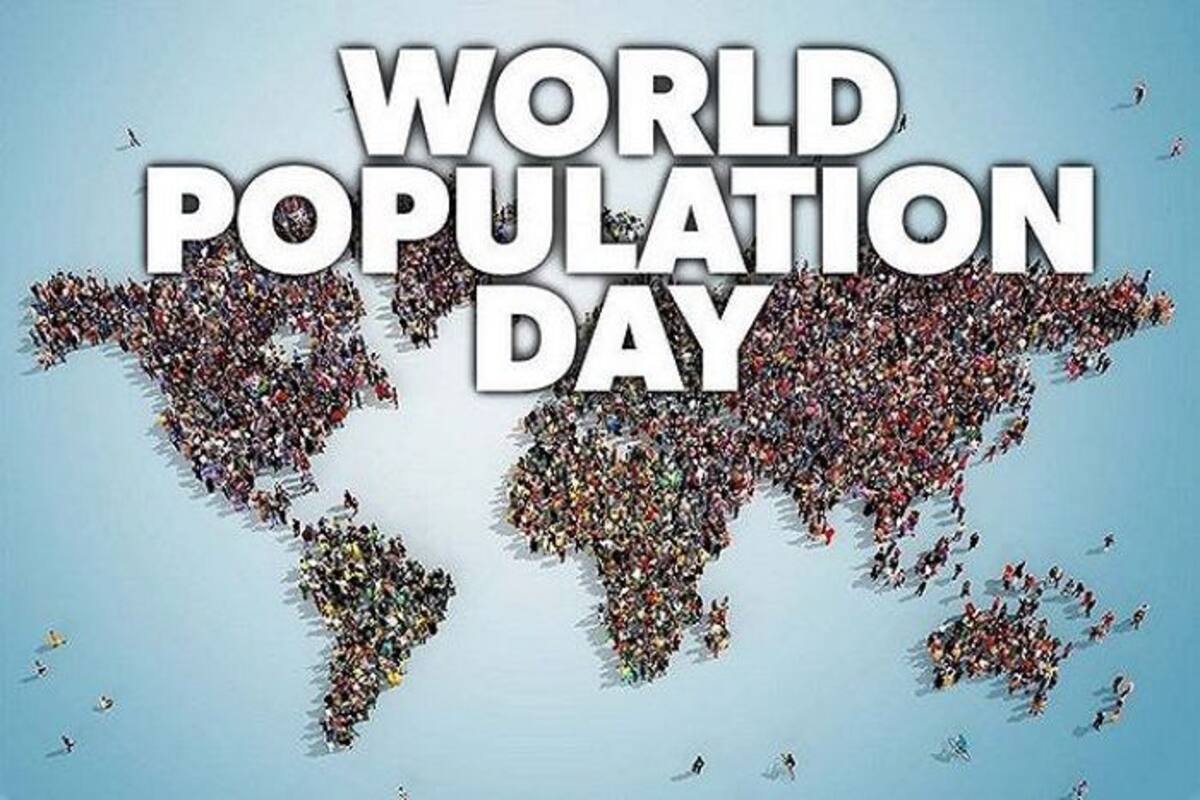
World Population Day

Source

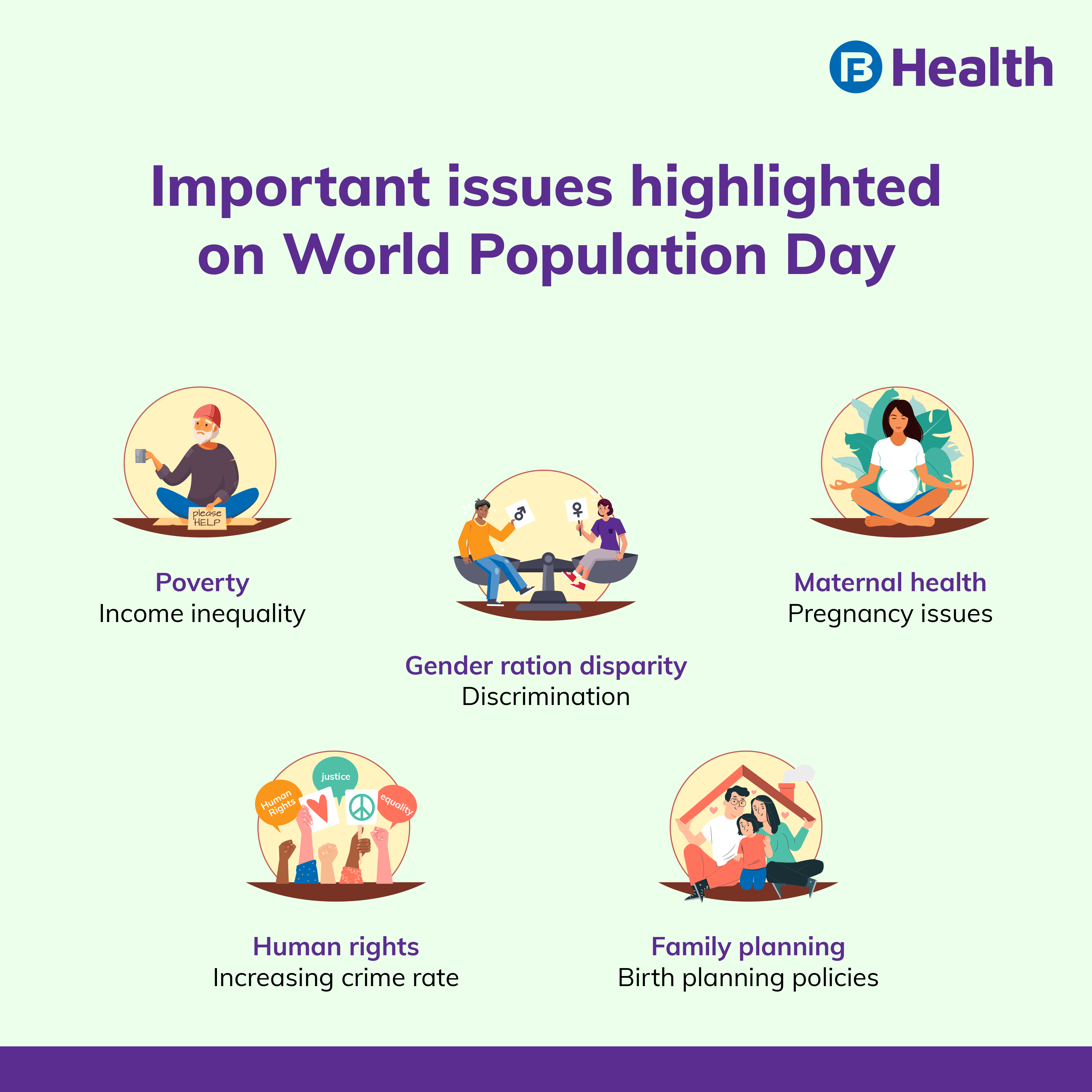
On Sunday the world celebrated the World Population Day. This day, which is observed annually on July 11 to raise awareness of global population issues. Established in 1989, the event was inspired by the public interest in Five Billion Day on July 11, 1987, the approximate date on which the world’s population reached five billion people. The World Population Day aims to increase people’s awareness on various population issues such as the importance of family planning, gender equality, poverty, maternal health and human rights. The suggestion of the day came from Dr. K. C. Zachariah, a senior demographer at the World Bank.

While press interest and general awareness in the global population surges only at the increments of whole billions of people, the world population increases annually by 100 million approximately every 14 months. The world population today is close to 7.9 billion and we add about 220,000 people to our world every single day! So on World Population Day, advocates from around the world call on leaders, policymakers, grassroots organisers, institutions and others to help make reproductive health and rights a reality for all.

It took hundreds of thousands of years for the world population to grow to 1 billion, then in just another 200 years or so, it grew sevenfold. In 2011, the global population reached the 7 billion mark, and today, it stands at about 7.8 billion, and it’s expected to grow to around 8.5 billion in 2030, 9.7 billion in 2050, and 10.9 billion in 2100. This dramatic growth has been driven largely by increasing numbers of people surviving to reproductive age, and has been accompanied by major changes in fertility rates, increasing urbanization and accelerating migration. These trends will have far-reaching implications for generations to come. In addition, the world is seeing high levels of urbanization and accelerating migration. 2007 was the first year in which more people lived in urban areas than in rural areas, and by 2050 about 66 per cent of the world population will be living in cities.

So why is population an important topic? The human race has an enormous impact on this planet. We control and modify the Earth more than any other species. How do we meet the needs of human beings and also preserve Earth’s finite resources, biodiversity, and natural beauty? This is the fundamental question of our time, and the challenge is becoming more critical as we continue to add more people. The world is vastly overpopulated and research conducted by the Global Footprint Network suggests that about 2 to 3 billion people is the number the planet can sustainably support, if everyone consumes the same amount of resources as the average European, which is about 60% the amount of the average American. U.N. experts predict that, unless we change course, world population will continue increasing until after 2100, with a most likely prediction of 10.9 billion people by the year 2100.

Worldwide, the average number of children per family has come down over the last 50 years, from more than 5 per woman to around 2.3, but the current average is still above replacement level, which would be 2.1 children per woman, and the number of women having children is about twice what it was in 1960. There is also huge demographic momentum since over 2/5 of the world’s population is 24 years or younger, either having children now, or poised to have them in the next 10 to 15 years and any changes we make today may not have a visible effect until a generation has passed.

Finally, people are living longer all over the world and will continue to do so, with a resultant slowdown in death rates. Thus, there’s a big imbalance in the birth to death ratio: currently more than 2 births for every 1 death worldwide.

These megatrends have far-reaching implications. They affect economic development, employment, income distribution, poverty and social protections. They also affect efforts to ensure universal access to health care, education, housing, sanitation, water, food and energy. To more sustainably address the needs of individuals, policymakers must understand how many people are living on the planet, where they are, how old they are, and how many people will come after them.

The theme for 2021 is focussed on COVID-19 and its impact specifically on safeguarding the health and rights of women and girls. The COVID-19 crisis has taken a staggering toll on people, communities and economies everywhere. But not everyone is affected equally. Women, who account for the largest share of front-line health workers, for example, are disproportionately exposed to the coronavirus. Supply chains around the world are being disrupted, impacting the availability of contraceptives and heightening the risk of unintended pregnancy. As countries are on lockdown and health systems struggle to cope, sexual and reproductive health services are being sidelined and gender-based violence is on the rise. Recent UNFPA research highlighted that if the lockdown continues for 6 months with major disruptions to health services, then 47 million women in low- and middle-income countries may not be able to access modern contraceptives resulting in 7 million unintended pregnancies. 31 million additional cases of gender-based violence can also be expected. The disruption of UNFPA’s programmes on the ground could result in 2 million cases of female genital mutilation and 13 million child marriages between 2020 and 2030 that could have been averted. Moreover, women disproportionately work in insecure labour markets and are harder hit by the economic impacts of COVID-19. Nearly 60 percent of women worldwide work in the informal economy, at greater risk of falling into poverty. Women’s unpaid care work has increased as a result of school closures and the increased needs of older people. The pandemic is hitting marginalised communities particularly hard, deepening inequalities and threatening to set us back in efforts to leave no one behind. Country responses to COVID-19 everywhere is critical and will determine how fast the world recovers.

So in honour of this day, spread the word anout the dangers of overpopulation and it’s impact on our world. This world, which we will leave to our children and grandchildren should be one that can sustain them and their desendents.