

Last week was the Varalakshmi Vratam, also called Varalakshmi Puja, an observance to propitiate the goddess of prosperity, Goddess Lakshmi. Varalakshmi is the manifestation of Goddess Lakshmi who grants boons or varams and is the embodiment of wealth, prosperity, and auspiciousness.
It is a puja primarily performed by married Hindu women in South India, particularly in the states of Tamil Nadu, Karnataka, Andhra Pradesh, and Telangana on the Friday before the day of the full moon in the Hindu month of Shravana, which corresponds to the Gregorian months of July – August. The vratam or fast is performed by sumangalis or married women for their well-being, and to ask the Goddess to bless their husbands with health and longevity. Many believe that worshipping the aspect of Varalakshmi on this day is equivalent to worshipping the Ashtalakshmi or the eight aspects of Lakshmi, all of whom represent different forms of wealth.

On this occasion, women worship the goddess Lakshmi by offering fruits, sweets and flowers and a kalasham which represents the deity is decorated with a sari, flowers and gold jewellery, with offerings placed in front of it. The puja begins with the formal welcome of Goddess Lakshmi into one’s house. A wooden tray or a stand is placed outside the house’s threshold. Rangoli is drawn in the puja room. A kalasham which is usually made of brass or silver is placed on the tray outside the house. The pot is decorated with mango leaves as well as flowers. Auspicious items such as rice, betel leaves, turmeric sticks, bananas, and coins are placed inside the pot. A thread dipped in turmeric is tied around the neck of the pot. A coconut scrubbed with turmeric is placed on top of it. In some traditions, the face of the goddess may be drawn on the coconut, or a brass or silver face may be kept on the pot and decorated with kumkum, turmeric, and sandalwood powder. During an auspicious hour, the women sing a song of greeting to Goddess Lakshmi and carry the tray and kalasham into the puja room. After lighting the lamp and performing the arati, shlokas, songs dedicated to the goddess are sung. The yellow thread is untied, and a piece is given to each girl or woman to tie around her right wrist. This is symbolic of the conclusion of the auspicious puja, as well as receiving the blessings of the deity. This is also worn to signify protection and piety, and several articles are given as gifts and charity in good faith.
In Tamil Nadu, as offerings, four varieties of kozhakattai, payasam, and vadai are prepared as naivedyam or offerings. The next day, the Lakshmi puja is performed. Cooked rice, chickpeas, fruit, and betel leaves are offered to all the women who participated. The face of the goddess is turned towards the west, and the kalasham with its contents is placed inside a drum of rice, symbolically keeping the goddess safely inside the house until the next year. The festivities of this occasion often end with the recitation of the vrata katha, the story of the vow that offers it its religious significance.
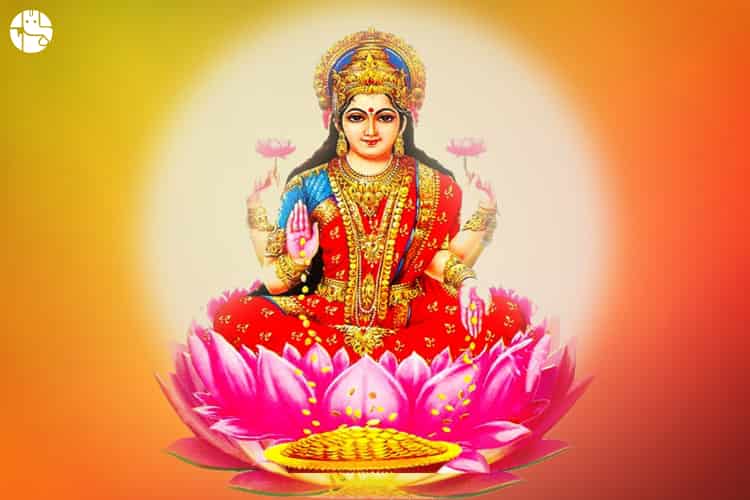
According to one story, a Brahmin woman named Padmavati, known to be pious and dutiful to her husband, as well as reputed to assist the sick, poor, and the needy, was observed by Goddess Lakshmi in the kingdom of Kosala. Greatly pleased, the goddess instructed her to perform the festival on the given date in the month of Shravana so that she could achieve salvation. In a similar story, a virtuous and honest woman named Charumati, devoted to her husband and in-laws, receives a dream from Lord Vishnu. The deity tells her to worship the Goddess Lakshmi every year during the month of Shravana, which would give her blessings of his consort, as well as wealth.
Some of the rituals that are performed on this occasion are regarded by some scholars to be significant. The essence of the goddess, in fact, of all females, is said to be turmeric and vermillion, and then during this festival, goddess and woman overlap, periodically, momentarily.
Varalakshmi Vrat is not just an individual observance but also a festival that fosters a sense of community and togetherness. The festival celebrates the divine feminine energy where women come together to perform the puja, share their experiences, and seek the blessings of the Goddess. It is a time when friendships are strengthened, and bonds are renewed. In a country that is diverse with multiple cultures and traditions, festivals hold a special place in the hearts of its people. And I believe that it is these festivals that keep us rooted in our traditions and as custodians of traditions, we should celebrate them so that the next generation also knows the beauty of their culture.
 Memories and Such