
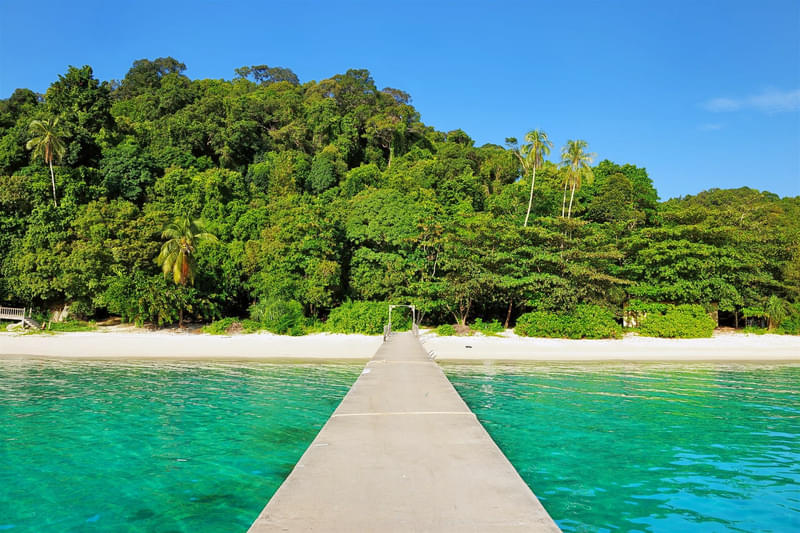
Located on the western part of Langkawi, the pristine Pulau Beras Basah Island is just 25 km southwest of Kuah, offering a crystal-clear sea and an amazing sea-diving experience. One of Langkawi’s most popular tourist spots, Pulau Beras Basah, is covered by lush greenery, giving a panoramic view of the island amidst the sparkling water. It can be reached by speedboats, boats, or cars. Washroom facilities and small food carts are available in the island.
It is believed that a ship sailing towards the Straits of Makassar carrying food and rice toppled in the sea, spilling off all the food carried. In the shallow water, the food, especially the rice, did not sink into the water but stayed afloat, forming a large rice mound. It is said that, with time, this white mound got transferred into the white sand of the island. In Malay, the word beras means rice and basah implies wet. Hence the name of the island.

Rebak Island is a beautiful and isolated island that houses a luxury resort. Sprawling across 390 acres, this island is one of the most secluded islands of Langkawi which makes it the perfect spot for a romantic getaway. One can relax and rejuvenate on the golden sandbanks.

Pantai Cenang is the most popular beach on the island, with operators offering visitors watersport opportunities like jet skiing, parasailing, kayaking, water skiing, and speed boat rides. Located on the western shoreline of Langkawi, Pantai Cenang offers a vibrant nightlife with its splendid beachfront bars and classy lounges. Pantai Cenang is a popular family tourist destination offering various children – friendly attractions such as Underwater World and Kiki Club. With duty-free outlets and souvenir shops offering a wide range of imported goods, one can also enjoy strolling along the Pantai Cenang road.
Located at the southern end of Pantai Cenang is Malaysia’s biggest aquarium and one of the island’s best-known attractions. The Underwater World houses more than 200 species of marine and freshwater fish and is built to create awareness about the need to conserve aquatic life forms. Visitors walk through a 15-meter-long tunnel that is full of different fish and look at the different marine creatures.
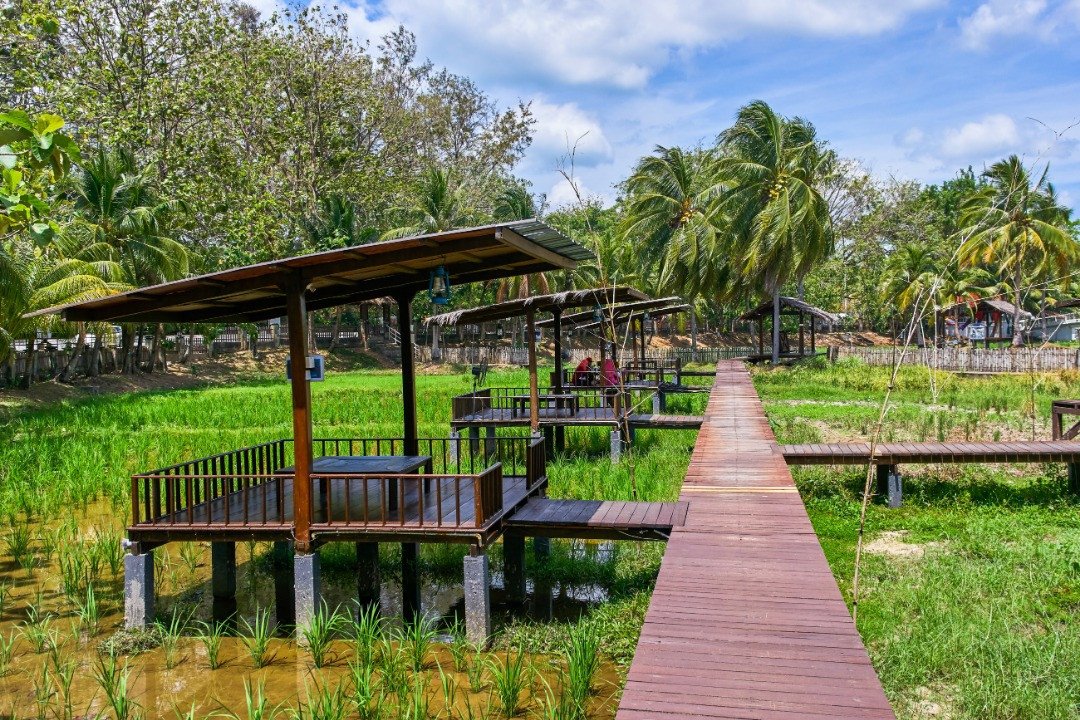
Laman Padi, which means a rice field, is a vast complex that explains the process and evolution of rice cultivation and harvesting and consists of rice fields, herb gardens and galleries. The museum showcases different tools used in rice farming. The other attractions include a floating rice garden and cottages built in the traditional themes.
The Temoyong Night Market is a weekly market that takes place every Thursday in Pantai Cenang. The market offers a variety of clothes, accessories, and bags, as well as street food, at decent prices. One can also experience go-karting at the Morac Adventure Park.
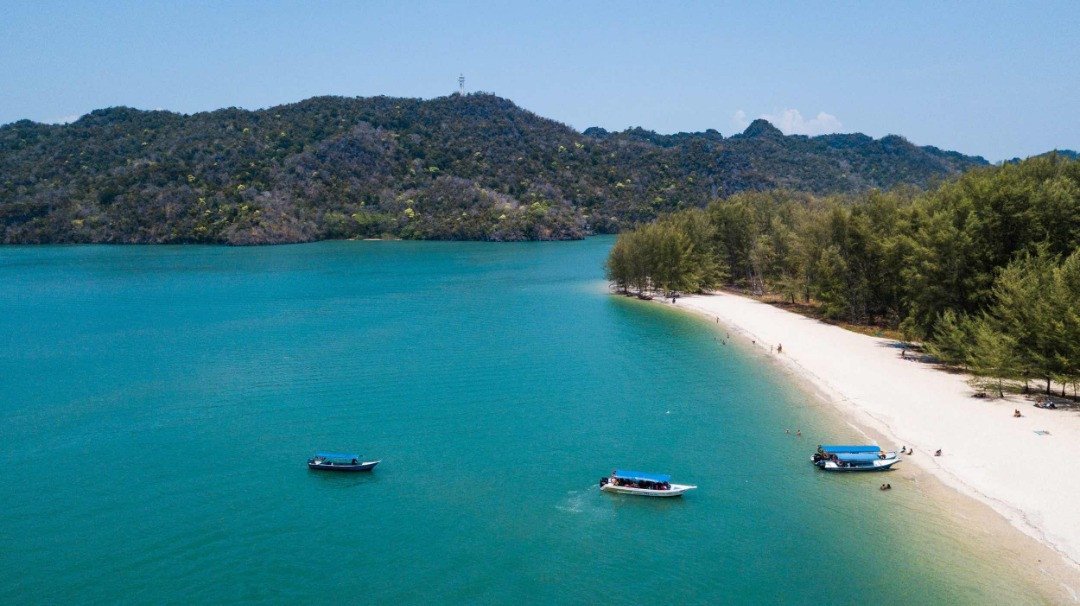
Situated along Pantai Pasir Hatim at the northern end of Langkawi, Tanjung Rhu is one of Malaysia’s best beaches. Secluded from the heavy crowd and buzz of the city, the 50-metre-wide beach is popular for its cleanliness, calming atmosphere and bewitching sunset views. In Malay, Tanjung means Cape and Rhu is from the species of evergreen trees, known as Sea Pine Tree. So, on the way to the beach, one can spot jungles of evergreen trees with green cliffs and a small lake with campers and few cafes. The public beach is separated from the privately-owned beach of Tanjung Rhu Resort by a fence.
Boating is one of the most popular activities at this pristine beach, with mangrove boats being the most preferred. Behind the stalls at the beach is a small river jetty from where boats can be rented for the Kilim Geopark and Mangroves boat tour. The sea at Tanjung Rhu is not too deep, making it ideal for swimming. In cases of low tides, a walk to the nearest island is very easily manageable and snorkelling close to the island can help one get a mind-blowing view of vibrant marine life. Along with the boating tours, there are jet ski tours mostly provided by the resorts, along with a tour to explore the beautiful limestone caves, mangroves, and catamaran sailing. The calm and clear water of the sea, fine and pure white sand, mini-islands, limestone rocks and wide area with no crowds create the perfect environment to shoot and get clicked. There are many couples and solo travellers enjoying the air and waiting for the sun to go down for the magical view of the sky.
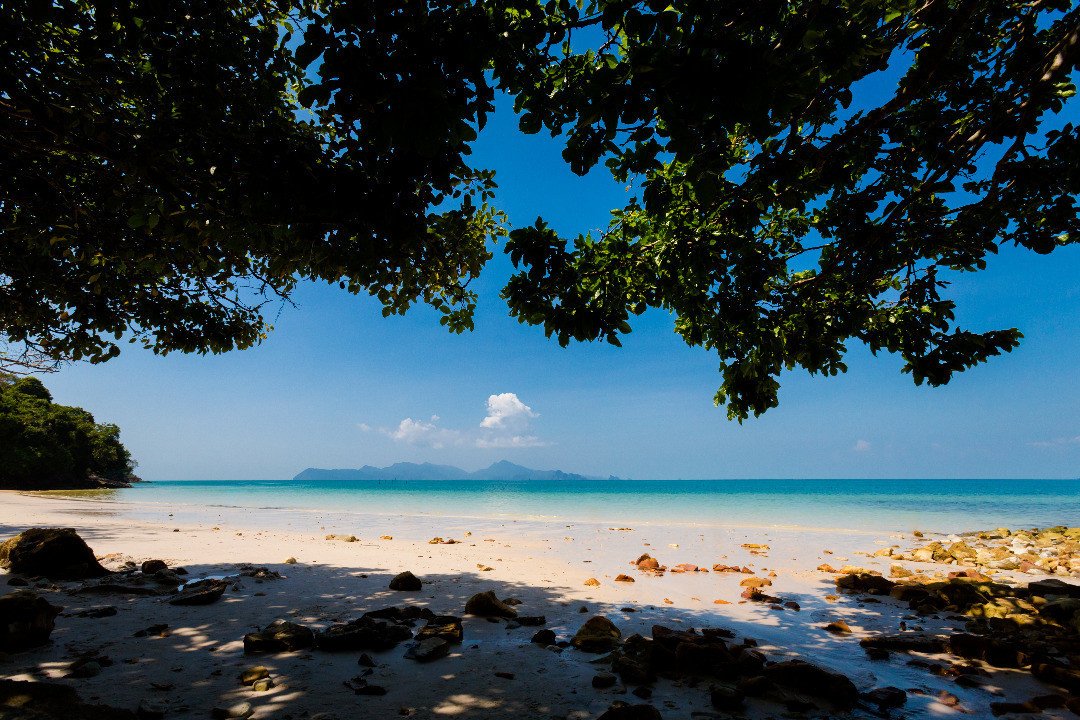
Located 4 km away from Datai Bay, the secluded Pasir Tengkorak Beach is a hidden spot for locals. The white sandy beach is covered by shady rainforest and 500-million-year-old rock formations found on the ends of the beach. While the blue water is good for swimming, travellers can also trek down to the woods of Pantai Pasir Tengkorak and explore the three-tier Temurun waterfalls. Apart from camping, trekking, and sunbathing, the Pasir Tengkorak beach has its own picnic tables, prayer halls, toilets, and an adjacent small snack cart, too. Also known as Sandy Skulls Beach, this beach is home to troops of monkeys and thousands of jellyfish.
Some believed that after a destructive hailstorm in the Strait of Malacca, the washed-off bodies of sailors crowded up on the coastline of the beach. From there, signifying the dead sailors or the dead skulls, the name has been derived. Some believed that the dead skulls belonged to the escaping prisoners from the Ku Taruto Island prison, in the far north of Langku Islands. Many still believe that the sandy skulls were the consequences of some sea-monster.
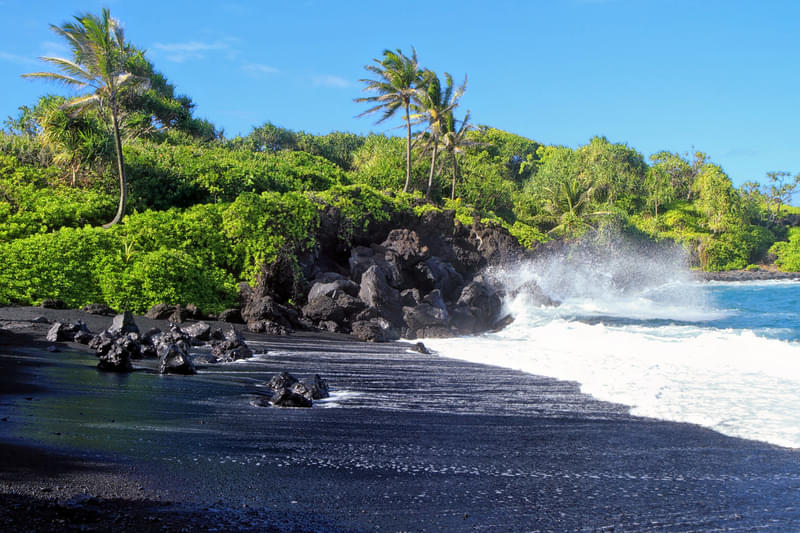
The Black Sand Beach, which is fully covered with black sand and clear water, is a popular leisure spot during the weekends. The black colour of the sand comes due to the mineral content of the Mount Raya granites deposited on the golden sand. Also known as Pantai Pasir Hitam because of the black sand, the beach is famous for an ancient wooden jetty and a fishing village. Though the beach is not suitable for swimming, it is still one of the most prominent beaches in the southwest area of Tanjung Rhu. The beach houses many small huts, which can be used as picnic spots. Kids can enjoy the playground filled with ample thrilling swings and slides. For a shopping spree, visitors can explore the souvenir shop and handicraft emporiums situated just 3 minutes away from the beach. You may also enjoy some delicacies and street food dishes from the stalls set up on the beachside.
The black sand beach is a mystical beach that is extremely popular. Locals believe that the black sand is the residue of the fight that happened between Garuda and a Roman prince. The Garuda, a crossbreed between an eagle and a human, kidnapped a beautiful princess whose fiancée was a Roman prince. To rescue the princess, the prince fought with Garuda on this beach, which resulted in the beach’s black colour, the residue from the battle. Another myth attached to the black sand is of a mermaid princess who came to the land to marry a prince. Due to this, sea creatures and the kingdom got furious and came to the land for a fight with the land kingdom. The land ruler then lit a fire on the land of Langkawi to take revenge on the sea creatures. The fire turned the sand into ash, giving it its black colour. The best time to visit the black sand beach is in January and March. The beach sees heavy rainfall and high tides during other months of the year, making it unsuitable in terms of safety and weather conditions.
Datai Bay is a calm and secluded beach in the foothills of north-west Langkawi. Home to various exclusive resorts, the beach is surrounded by tropical rainforest and rich flora fauna habitat. Apart from enjoying the clear Andaman Seawater and relaxing amidst the graceful beaches, Datai Bay also offers ample of adventurous activities. One can hike towards the Mat mountainside area, play a round of golf in the Datai Bay Golf Course or plan a tour in the tropical jungle and explore exquisite animal habitats like peacocks, hornbills, monkeys, and iguanas.

Also known as Teluk Yu, Shark Bay Beach is a small and beautiful beach in Langkawi. The beach is quite popular for its tranquility and clear sea and it gets its name from the stone sharks engraved on the beachside. Spread over an area of 200 meters, the beach is an extension of the Black Sand Beach; however, it is filled with golden and white sand. No actual sharks can be spotted in the nearby sea that surrounds the island. The beautiful landscape and clear water, along with some rock formations, make the place perfect for a photoshoot.

Situated on Langkawi’s western headlands, the Telaga Tujuh Waterfalls, also referred to as Seven Wells Waterfalls, are the island’s most appealing natural attraction. The name signifies a series of seven intertwined natural pools that are fed by seven distinct waterfalls on Mount Mat Cincang. The Seven Wells Waterfalls are famed for the adventurous hike to the top, through a series of steps. The view from the top is awe-inspiring and full of flora like unique lime plants and Sintuk, which is used in traditional Malay ceremonies. A wide range of fauna can also be found here, including long-tailed macaque monkeys, hornbills, and giant cream-colored squirrels. The lower section of the pool can be reached with a little effort and extends swimming facilities. For a more intrepid experience, one can go higher up to the upper section of the waterfall, which rewards with the breathtaking view and the natural wonder. From the top of the Seven Waterfalls, a hiking trail leads to Mount Mat Cincang, which is perfect for those who wish to trek. Water flow at the Seven Wells Waterfalls is variable and can be close to empty during dry times. The best time to visit Telaga Tujuh Waterfalls is during the monsoon season, which is generally between September and October. The waterfalls are at their roaring best and the weather is cooler then.
According to legend, the Seven Wells Waterfall was home to the fairies, whom they transformed into in their bathing place. One day, a mountain prince tried to capture one of them and all the fairies left the waterfall forever, leaving behind only their healing properties. It is, therefore, believed that the waterfall has some medicinal value and healing powers.

Located in the Mat Cincang Nature Park at Datai, the Temurun Waterfall is the tallest waterfall in Langkawi. Also referred to as Air Terjun Temurun, the three-tier waterfall provides a refreshing calm in the humid tropical weather. The breathtaking Temurun Waterfall originates from a black rock. The first tier is a short walk from the car park, which forms a shallow pool for children to play, swim and do family activities. After climbing 10 meters of steps to reach the topmost tier with a drop of 30 meters and a pool with a 100-foot waterfall, the visitors can be rewarded with a splendid view of the waterfall, which forms a natural pool at the base. The gazebos at the site also make it a notable picnic spot for the locals and a chilling venue for visitors. It is recommended to visit the Temurun Waterfall during the monsoon season, which falls between September and October, to be able to enjoy an adequate gush of water as the waterfall is seasonal. During July and August, there is heavy rainfall, and it can get very slippery. The rest of the dry months reduce the waterfall to a thin stream.
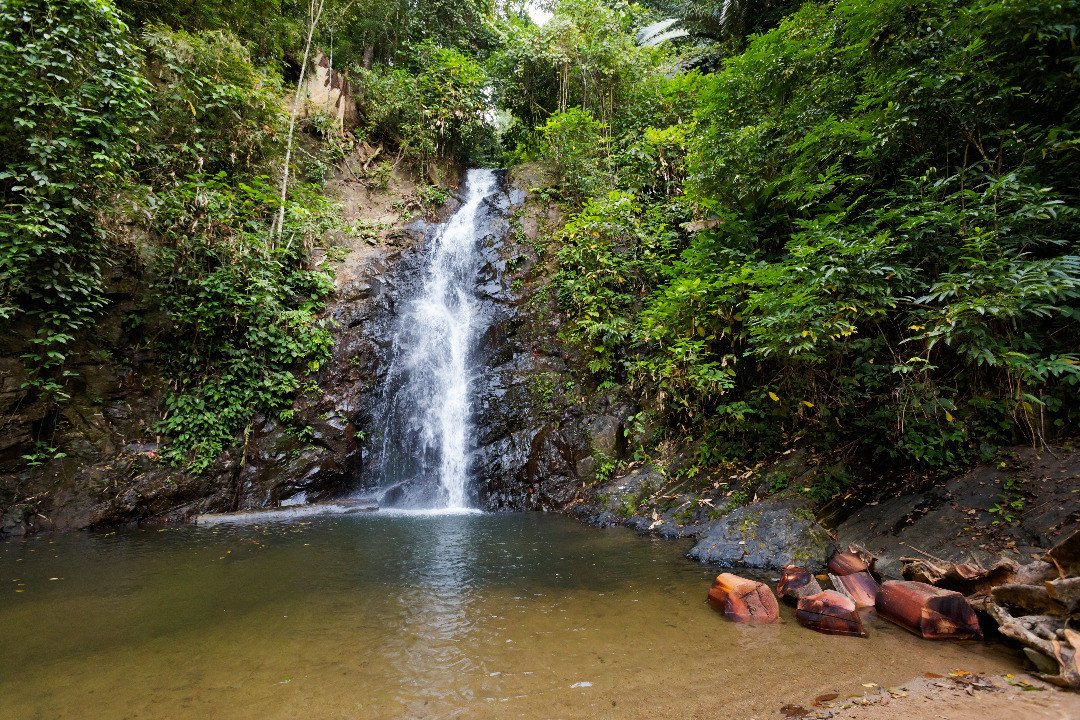
The Durian Perangin Waterfall is a 14-tier topographical magnificence set in a tropical rainforest in northeast Langkawi. The waterfall descends from the northern slope of the highest mountain on the island – Gunung Raya. The waterfall gets its name from the durian trees, sprawling in the area, that bear thorny fruits. It is a popular spot for canyoning. Access to the Durian Perangin Waterfall is free, making it a popular getaway for the locals from the scorching heat of Langkawi. Being a 14-tier waterfall, it offers views from different levels. A 200-meter climb from the entrance takes one to the top section of the waterfall. Along the steps, there are several small waterfalls and pools, which are different sections of the Durian Perangin Waterfall itself. This is a local favourite picnic spot, with many picnics happening in the hut-like structures called gazebos that surround the steps towards the waterfall. The landscaped pool on the grounds of the waterfall is perfect to cool off the heat. The waterfall is also a much-loved destination for adrenaline-seekers for it offers amazing canyoning tours. There are professional tourist outfits that offer these guided tours. The best time to visit the waterfall is during the monsoon season, i.e., September and October, as it is not a promising destination during the summer season.

Located at Jalan Air Hangat, Gunung Raya is the highest mountain in Langkawi, with an altitude of 881 metres. The mountain peak is a granite formation and is located at the centre of Langkawi, which provides an amazing panoramic view of the island and the surrounding seas. Gunung Raya is believed to be a cursed form of Mat Raya, a giant who once lived on the island. The D’Coconut Hill Resort at the top of the mountain houses an observation tower with the best of the views of the Andaman Sea, the mainland of Thailand and Langkawi at a cost of RM 10. A total of 4287 steps must be climbed to reach the top.
It is believed by the locals that there were two giants, Mat Cincang and Mat Raya, who were great friends, and their children were deeply in love. During the wedding ceremony, Mat Raya observed Mat Cincang’s son looking at another woman and a fight was initiated between the two giants. They threw pans and pots at each other. The place where the broken pot fell came to be known as the village of Belanga Pecah, which means broken pot in Malay, the place where the hot water fell came to be known as Air Hangat, which means hot water, the place where the wedding ring was dropped came to be known as Tanjung Cincin, or the cape of the ring; and the place where the gravy fell came to be known as Kuah or gravy. While the two giants were fighting, a third peaceful giant, Mat Sawar, tried to control them and settle the matter when a thunderbolt struck and froze all three giants as mountains. Mat Gunung and Mat Cincang are the two mountains and Bakit Sawar stands between the two as if trying to separate them. The peak also has a MEASAT Satellite Control Tower, a park and a museum.
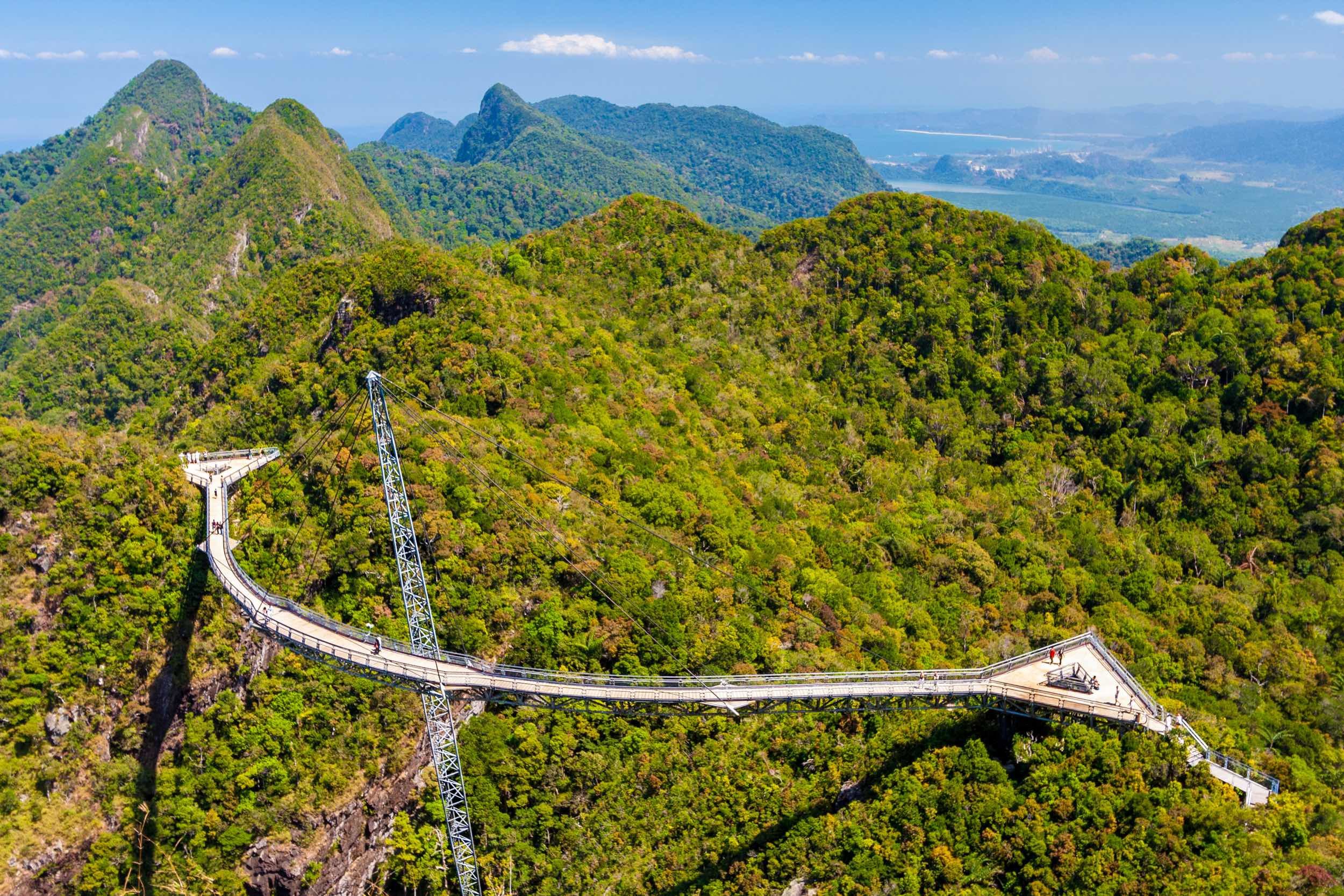
Mount Machinchang is the oldest mountain range in Southeast Asia that was formed 550 million years ago, and provides a panoramic view of Burau Bay and Pantai Kok from the top. Covered by dense rainforest, Gunung Mat Cinang, as it is also named, is the second-highest peak of Langkawi, with a steep trail path guided by ropes. As high as 850 m, travellers can witness the Seven Wells waterfall at the beginning of their hike to the peak after climbing a few hundred staircases. Being one of the three UNESCO World Heritage Geoparks in Langkawi, Mount Machinchang exhibits a wide change in the flora structure from downwards to the peak, possessing dense giant trees at the base and small bushier trees and orchids at the top. Also known as Mount Mat Cincang, snack carts are available for trekkers at the base of Cincang. Visitors also crowd up on Mount Mat Cincang to experience the famous cable car ride, which moves passengers up to 709 m above sea level to the apex for a clear and astounding 360-degree unhindered view. Try to visit Mount Mat Cincang between November and March, as that is the best time to experience an adventurous trek. While the rainy season makes the entire trail slippery and dangerous, the hot summer sun makes it difficult for trekkers due to the temperature rise inside the dense rainforest. The cable car is open from 10 am to 7 pm, Monday to Thursday, from noon to 7 pm on Wednesday and from 9:30 am to 7 pm on the weekend.
 Memories and Such