
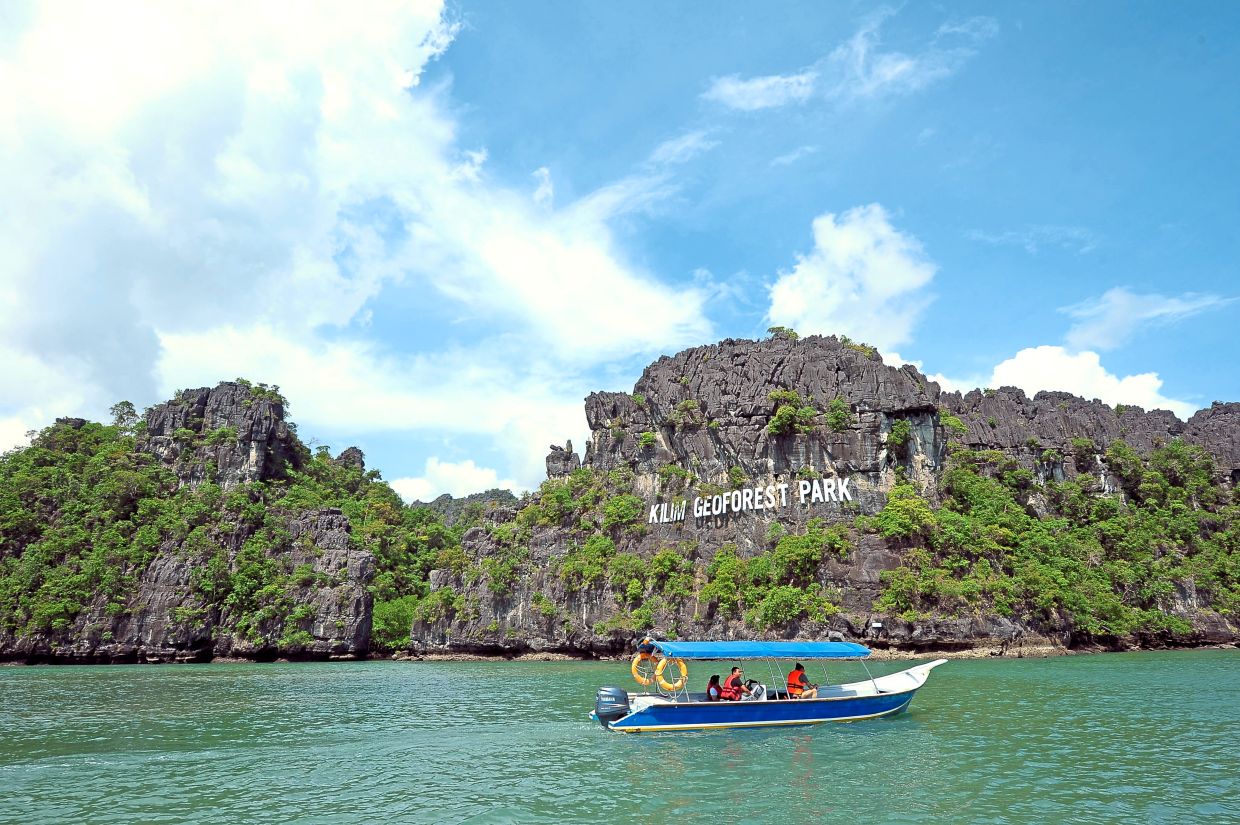
The Kilim Karst Geoforest Park is a mangrove forest park that consists of limestone caves and interconnected three river estuaries that stretch from Kisap village approximately 10 km to Tanjung Rhu. Bats, crocodiles, eagles, kingfishers, monitor lizards, macaques, otters, snakes, and tree crabs are some of the wildlife in the park. A stunning landscape around three interconnected estuaries, Kilim Geoforest Park is best explored by riverboat or mangrove tour. Kilim Karst is home to Gua Kelwar, a popular well-maintained bat cave. The mangrove tour starts off with pick-up from the hotel and heading off to the northern part of the mangroves island in a long-tailed covered boat. While in the boat, one can view a rich variety of wildlife like the monitor lizard, monkeys, and mud-crab as well as an amazing variety of birds. The first stop in the tour is the Floating Fish Farm where feeding the stingrays is altogether a different experience. Next is the Eagle Feeding Spot which is the highlight of the tour. Further is Fossil Island which is a tiny island housing 480 million years old fossils on the rocks. Next is the Gua Langsir cave. The cave is hidden under the mangrove roots, and hence, is also known as the Hidden Cave. Climbing a flight of stairs here and crossing a footbridge takes one to a beautiful lake called the hidden lake. Next, the high-speed boat takes one to the open sea to view the Shoe Island, named so because of its resemblance to the shape of a shoe. The next part of the tour is a visit to the soft white sands of the Tanjung Rhu Beach. Lunch at the Hole in the Wall floating restaurant also forms a part of the tour. After lunch, one is taken to the Crocodile Cave followed by the Bat Cave which is the final stop. Apart from the spectacular sight of bats and unique limestone formations, the Living Fossil, a centuries-old plant, is the highlight of the cave. Although Kilim Geoforest is open throughout the year, the best time to visit it is during the migratory season from September to March. The Geoforest is open fro 9 am to 5 pm every day and has fees between RM 200 to RM 500 which includes a boat and tour guide.
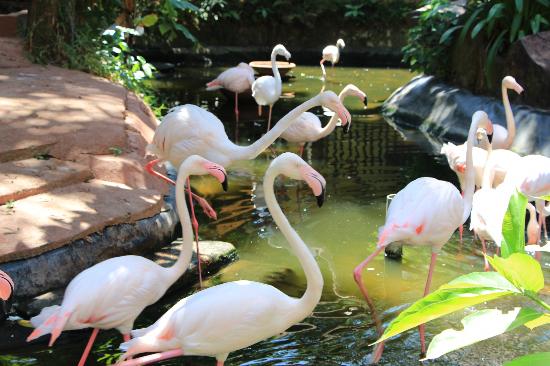
Langkawi Wildlife Park & Bird Paradise is an alluring wildlife and bird sanctuary situated in Jalan Ayer Hangat. Established in 2002, this beautiful garden and spacious arena is home to various exotic wildlife animals and 2500 bird species. Visitors can catch a glimpse of canaries, owls, eagles, toucans, hornbills, macaws, flamingos, peacocks, mandarin ducks, ostrich, and cranes, among many others. Apart from this, explore some fascinating animals like alligators, turtles, lizards, porcupines, monkeys, meerkat, mouse deer, Iguana, deer, etc. inside the wildlife section of the park. A one-way path is made around the sanctuary with caged boundaries for a comfortable sprawl. Feed the animals with the assistance of the guides or shop a souvenir or gift from a crystal shop having some fine crafted Chinese and Brazilian jewellery, duty-free outlets, and souvenirs outlet located inside. Langkawi Wildlife Park & Bird Paradise is also extremely famous for a 15 feet human-made waterfall that let the visitors capture some mesmerizing and picturesque sights. Tickets are sold till 6 pm and Malaysians pay RM 30 for adults and RM 22 for children and senior citizens while foreigners pay RM 45 for adults and RM 28 for children and senior citizens. The bird park is open daily from 8:30 am to 7:30 pm.
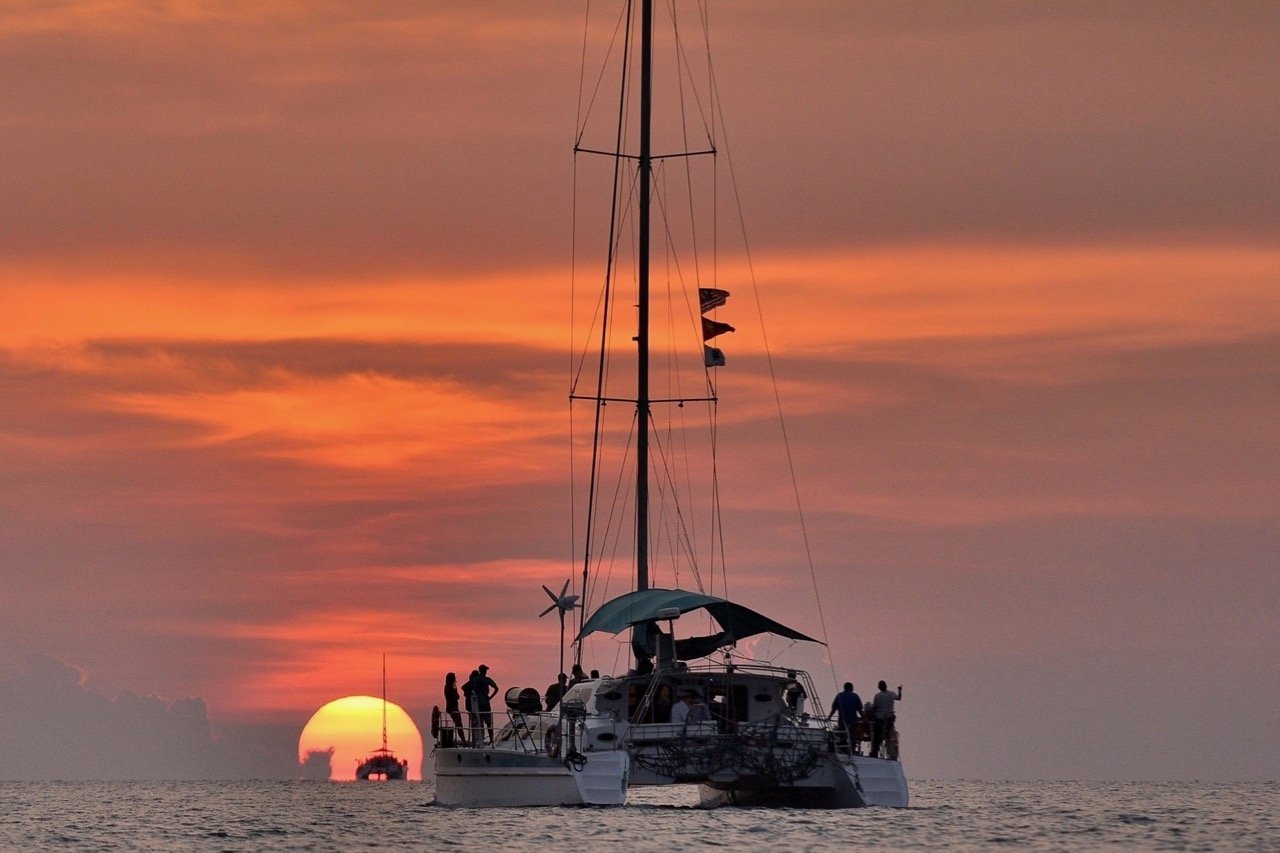
A sunset cruise is one of the best experiences for tourists visiting Langkawi. Cruises also offer a saltwater jacuzzi, where you can float on a seat protected by a net and enjoy being massaged by the yacht’s trail. In addition, the cruises provide seafood barbecues for dinner, as well as unlimited drinks, included with the ticket price.

The Langkawi Cable Car takes visitors up to the peak of Gunung Mat Chinchang, where the Langkawi Sky Bridge is located. An inclined lift called SkyGlide that would take visitors from the top station to the Sky Bridge was completed in late 2015. The start of the cable car ride is located in the Oriental Village where there are several attractions, including a 3-Dimensional art museum known as Art in Paradise.
Located at The Oriental Village in the upper northwest of Langkawi Island, the Langkawi Cable Car takes the riders to the top of Mount Mat Cincang. Also referred to as Langkawi SkyCab, it is popular for the panoramic view of the surrounding islands and the Andaman Sea. Officially opened on November 1, 2002, Langkawi Cable Car is the world’s steepest SkyCab and has the longest free span for a monocable. The cable comprises three stations: the base station, the middle station, and the top station. The total length of the cable is 4400 metres from the base station to the top station, which is covered in approximately 15 minutes and a round trip takes about 28 minutes. The viewing points at the stations offer a fascinating view of the mountains, caves, cliffs, blue waters, beautiful skyline and the tiny islands scattered in the Andaman Sea. At the base station and the top station, there are a plethora of activities and facilities.
Base Station is located at the foothills of the Machincang Mountain in the Oriental Village and offers different facilities for shopping and eating. From here, the visitors are taken to MachincangRangee, Middle Station via the Langkawi Cable Car. The visitors can either alight at the station and walk up to the viewing platforms or continue travelling to the Top Station. The journey from the base station to the middle station covers 1700 metres and provides access to the eastern ridges. The Middle Station is at an elevation of 650 metres above sea level, where you can get a 360-degree view of the main island and the surrounding islands.
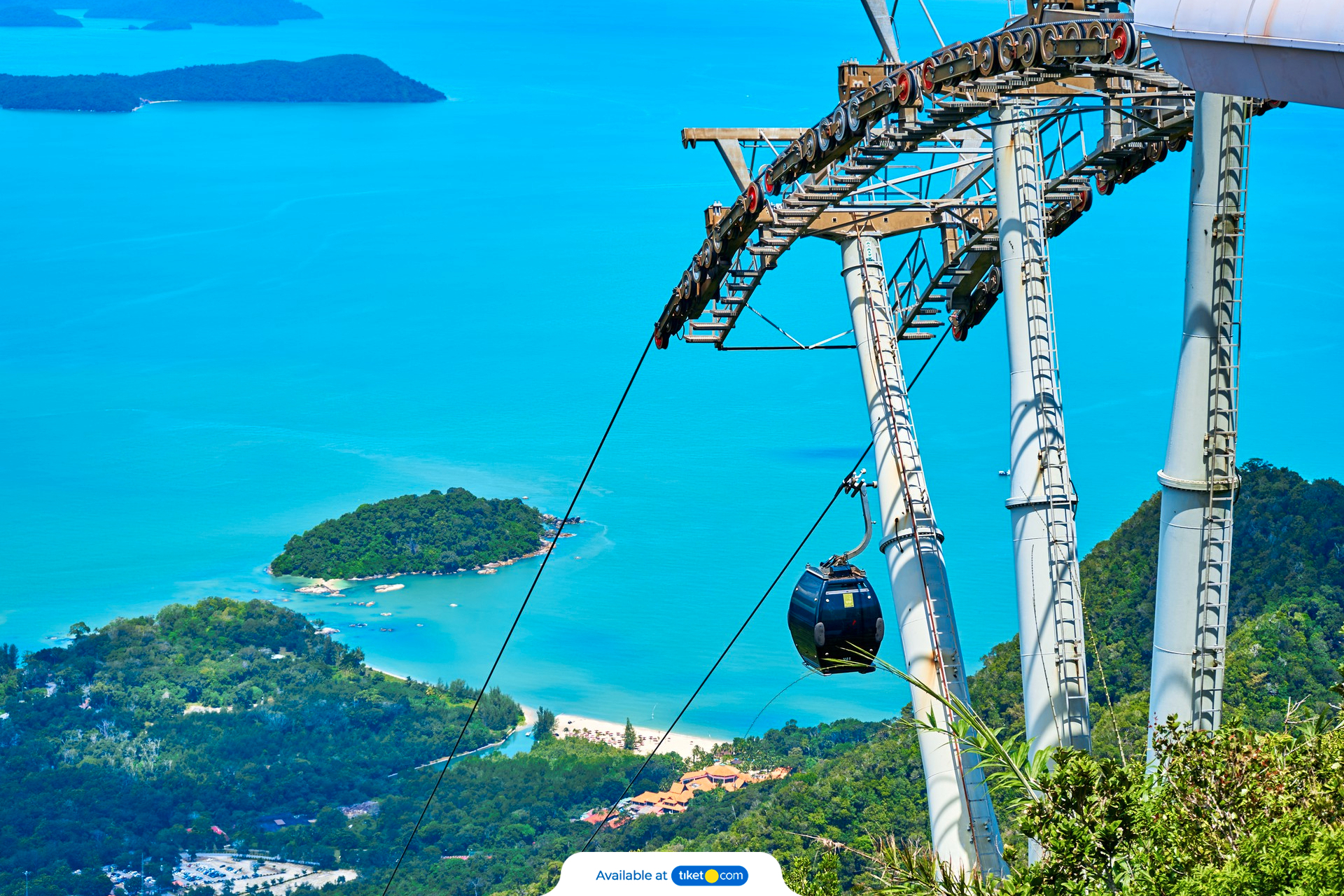
On the journey to the Top Station, visitors can spot the flora and fauna that surrounds the area at a close range. The Top Station is at an elevation of 708 metres from the sea and has at its disposal two circular viewing platforms at the top of Machincang Mountain which are both a short walk up the stairs. This sight beholds an awe-inspiring view of Southern Thailand, Langkawi, isolated pinnacles, and cliff walls. There is a 2.5-km walking trail referred to as the Sky Trail through the forest that goes down to the Middle Station and Seven Wells Waterfalls.
A normal gondola can accommodate six people and takes 15 minutes to reach the top station. It’s priced at RM 40 for an adult and RM 30 for a child who is Malaysian. For non Malaysians, adults pay RM 55 for an adult and RM 40 for a child. For express lane privileges, it can cost between RM 90 and RM 105 per person, reducing the waiting time to not more than 10 minutes. The Bottom Glass Gondola has a transparent glass bottom and provides dazzling views of the mountains and forests underneath. It costs RM 105 per person and takes 15 minutes to reach the top station. The price is inclusive of Express Lane privileges. A private gondola can accommodate up to 6 people and uses the Glass Bottom Gondola. The price is RM 550 per gondola, inclusive of express lane privileges. To experience a private ride, one should opt for a VIP Gondola, which can accommodate up to 3 people in a VIP Gondola for RM 550 per gondola, inclusive of the Express Lane privilege and a complimentary meal. The cable car is open from 9:30 am to 7 pm daily.
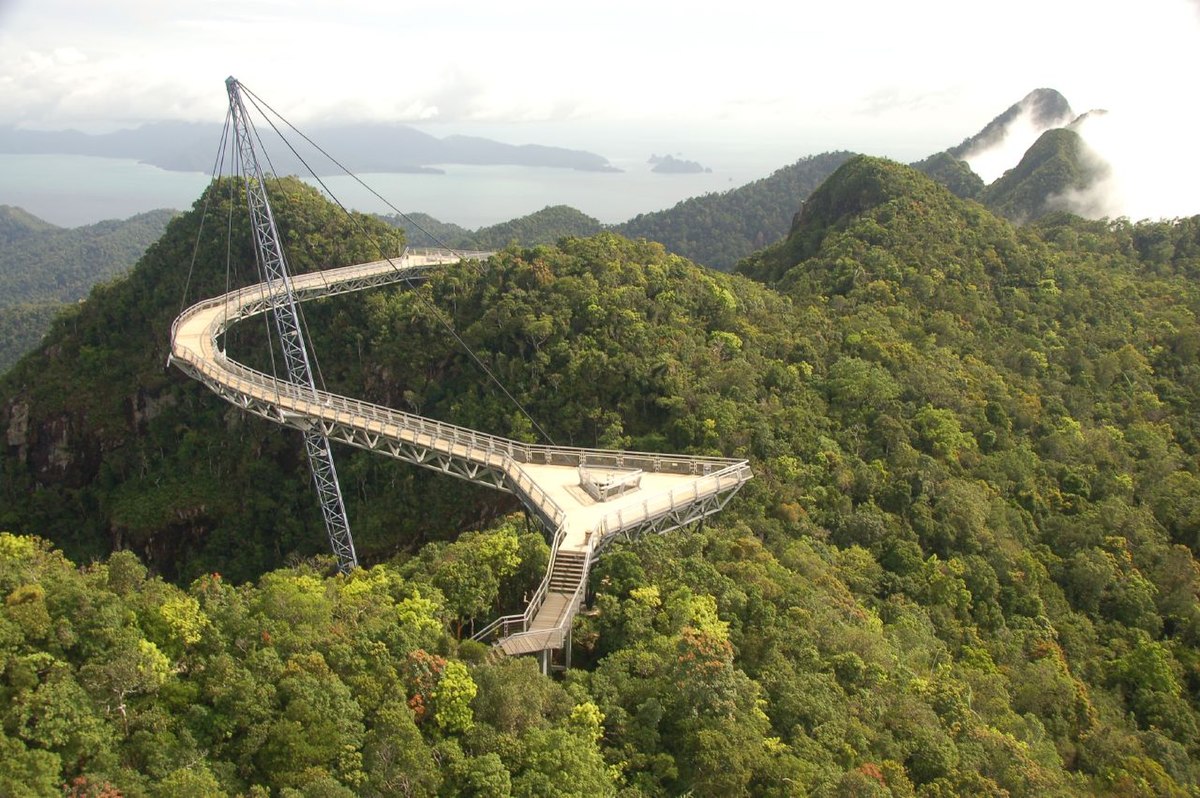
The Langkawi Sky Bridge is a 125-metre curved suspension bridge, located at the end of the Langkawi Cable Car ride. Touted to be one of the world’s longest curve suspension bridges, it overlooks Mount Mat Cinchang and offers mind-stirring panoramic views. Suspended at an altitude of 100 meters from sea level, the view from the Langkawi Sky Bridge includes the Telaga Tujuh Waterfalls and a rainforest, both of which make the walk worthwhile. The sky bridge is accessible from the Top Station of Langkawi Cable Car.
The Sky Bridge is supported by 8 cables from a single pylon of 82 meters, which is the only supporting structure of the Sky Bridge. The bridge is supported by double steel railings and has an enclosed steel wire mesh below, which makes it safe to travel. The bridge also has two triangular platforms where people can rest their feet while admiring the view. Since the stunning Langkawi Sky Bridge is a curved walkway, it allows visitors to maximize their viewing experience. The maximum capacity of the bridge is 250 visitors at a time and is spread over an area of 500 square meters. The bridge is considered an architectural marvel and rightly so, as it was constructed with precise details and planning. In fact, a helicopter lifted the entire bridge on top of the mountain and was then attached to the pylon.
The Sky Glide is a cabin type of transport that takes passengers to the Sky Bridge located below the Top Station of the Langkawi Cable Car. The sky glide is essentially like an elevator that can drop visitors to the foot of the sky bridge. With a track length of 94 meters, it reaches the sky bridge in two minutes. However, visitors must pay extra for the Sky Glide and tickets must be purchased at the counter in the top station. The price for the Sky Glide is RM 10 for an adult and RM 7 for a child. For a cheaper and more adventurous visit to the Sky Bridge, one can take a 10-minute-walk through a small jungle trail to arrive at the foot of the bridge.

The fare for the sky bridge is not inclusive of the cost of the cable ride. The cable ride has its own set of charges. It is recommended to visit the Sky Bridge after 2:00 PM, as it is crowded in the morning. It is also recommended to visit the bridge when the sky is clear, as cloud formations may prevent visitors from enjoying the view. Entry fees are RM 6 for an adult and RM 4 for a child. Tickets can be purchased at the Sky Bridge Ticketing Counter at Top Station
A helicopter ride is the best way to see all the sights of Langkawi from 10,000 feet above the ground. Tourists can experience panoramic views of the island and the surrounding Andaman Sea, as well as the charming harbours across Langkawi. The tour also takes passengers above Cenang Beach, Tengah Beach, and Dayang Bunting Lake.

The MAHA Tower in Kuah, part of the Langkawi City project, is the latest addition to the attractions on the island. The tower is approximately 1.40 km from Dataran Lang. Formerly known as Langkawi City Tower, the MAHA Tower is a 2-story, 138-meter-tall tower, and Malaysia’s second-tallest tower. It serves as the landmark of the Langkawi City development, which is set to be completed in 2024/2025.

Mahsuri’s Tomb, located 12 km from Kuah, is the tomb of the legendary Princess Mahsuri. Also called Makam Mahsuri, it is known for its beautiful architecture and peaceful gardens. The legend of Mahsuri is from about 200 years ago, when a beautiful and charming village maiden named Mahsuri, who lived in Langkawi, was wrongfully executed to death on grounds of adultery. Mahsuri’s Tomb entails a crypt of Princess Mahsuri, along with an outmoded Malay house with a diorama museum, a theatre and a handicraft shop at the monument compound.
It is to be believed that Mahsuri, who was a delightful young woman craved by many suitors, married the chief minister of the village. When her husband went away to defend the village from attackers, she was accused of adultery by a jealous member of the royal family for her alleged affair with a trader from another town whom she allowed to stay at her house. Despite her vehement pleas of innocence, Mahsuri was convicted and stabbed to death by her own family’s keris, the traditional Malay sword. It is to be believed that Mahsuri bled white blood, symbolising her purity and innocence and with her dying breath, laid a curse on the inhabitants of Langkawi to have no peace or prosperity on the island for the next seven generations. Soon after her execution, Langkawi Island was attacked by Siamese.

To protest, the inhabitants of Langkawi burst the rice fields and poisoned the wells of the village to impede the attackers, but all these attempts fell in vain. Langkawi remained a barren piece of land for a long period of time, until the 20th century. It is believed that the curse ended in 2000, when the Kedah government located the descendants of Mahsuri on the island of Phuket and invited them to Langkawi to make it their new home.
The structure of the Mahsuri Tomb is established as a cultural and historical compound consisting of the crypt of Mahsuri. The entrance is marked by a small lobby that leads to a ticket counter, followed by an indoor passage leading to a musical room that consists of a theatre and a diorama museum. The museum keeps various pieces of jewellery from Mahsuri and the weapons used to execute her to death, along with a section of souvenirs and gifts to take home. The theatre is an audio-visual room that narrates the story of Mahsuri in the form of a video presentation, along with written narratives of the folklore of Mahsuri’s legend. The famous tomb of Mahsuri is secluded in a traditional Malay house, laid down in Muslim style on a flat, plain white marble slab, fenced by a lawn. It is surrounded by a tomb garden, with trees and benches scattered around the complex. The tomb is open from 8 am to 6 pm every day and costs for Malaysians are RM 5 for adults and RM 2.5 for children between 3 and 12. Non-Malaysians pay RM 10 for an adult and RM 5 for children.
The Relic of Mahsuri in Wings by Croske Resort Langkawi at Padang Matsirat, which recorded the ancient history and story of Langkawi, is part of the State Government of Kedah’s Safe Langkawi project. The hand-crafted stone wall is 200 meters from Langkawi International Airport.

The main highlight of Dataran Lang, Malay for Eagle Square, is a 12-meter-high sculpture in the shape of a sea-eagle perched on rocks in pre-flight pose. It is located on the waterfront of Kuah, near the jetty. The eagle is the emblem of Langkawi Island, as its name is thought by some to have been derived from the Malay word for eagle. The square is a landscaped area with ponds, terraces, and bridges. A favourite photo spot, the square is beautifully bordered with picturesque ponds, bridges and fountains. This giant eagle statue is positioned in such a way that it overlooks the Kuah Jetty. There are some stalls at Dataran Lang, selling local traditional pottery and handicrafts. The sunset point nearby offers a glorious, warm view of the sun sinking.

The Al-Hana Mosque is one of Langkawi’s oldest, largest, and most popular mosques. Located in Kuah, the whitewashed peach and gold mosque incorporates Moorish architecture and motifs and carvings from Uzbekistan, along with traditional Malay elements. The mosque was opened by the first Prime Minister of Malaysia, Tunku Abdul Rahman, in 1959. This whitewashed peach and gold structure exquisitely features Moorish architecture by amalgamating the Islamic motifs and carvings from Uzbekistan into the Malaysian style of architecture. Visitors are required to maintain silence and remove their shoes outside the mosque. Female congregants are expected to be dressed modestly.

The Sri Maha Mariamman Devasthanam is one of the biggest Hindu temples in Langkawi. The temple houses several statues and sculptures of various Hindu Gods and Goddesses. The temple is categorised into several sections where devotees can offer prayers and offerings to the deities. The temple is adorned with vibrant colours and accentuated with a grand and elaborate style of architecture. A long fence has also been built around the premises, and is an ideal place for meditation.
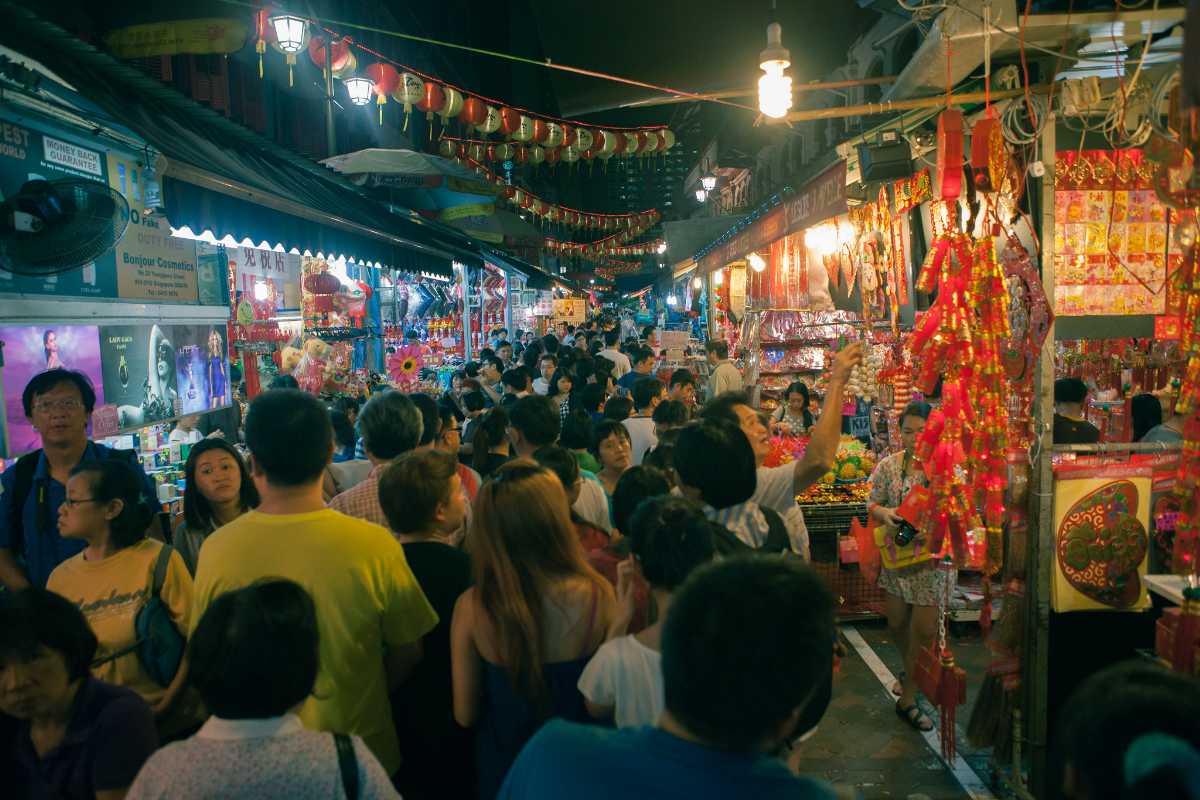
The Ayer Hangat market is a must-visit Friday night market which is set up close to the Tanjung Rhu Beach, on Jalan Tanjung Rhu. A local landmark, the market starts in the afternoon or early evening and is replete with Malaysian and Thai fast food. The market is open from 5 to 10 pm every Friday.
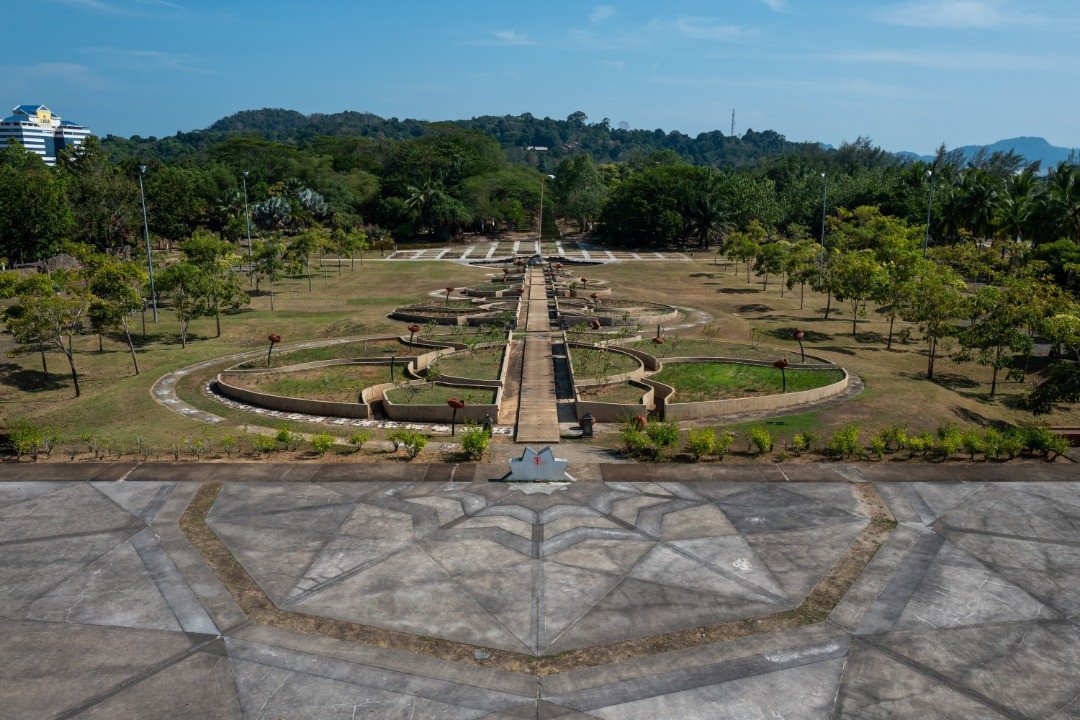
Langkawi Legend Park is a recreational area opened on 27 April 1996 dedicated to Langkawi’s heritage of myths and fables. The park covers an area of 50 hectares of reclaimed land and is more of an open-air garden museum featuring sculptures, scenic gardens, ponds and fountains, and fruit trees growing around pathways and along the ponds. Along with the flowering vegetation, the park has 17 sculptures that depict the many legends found in Langkawi, such as the duel between two giants that led to the formation of Mounts Mat Cincang and Raya, mythical birds, and fairy tales of princesses. In addition, there are 4 artificial lakes and a man-made beach to complement the picturesque scenery. The park is open from morning till late at night and is within walking distance from the jetty.
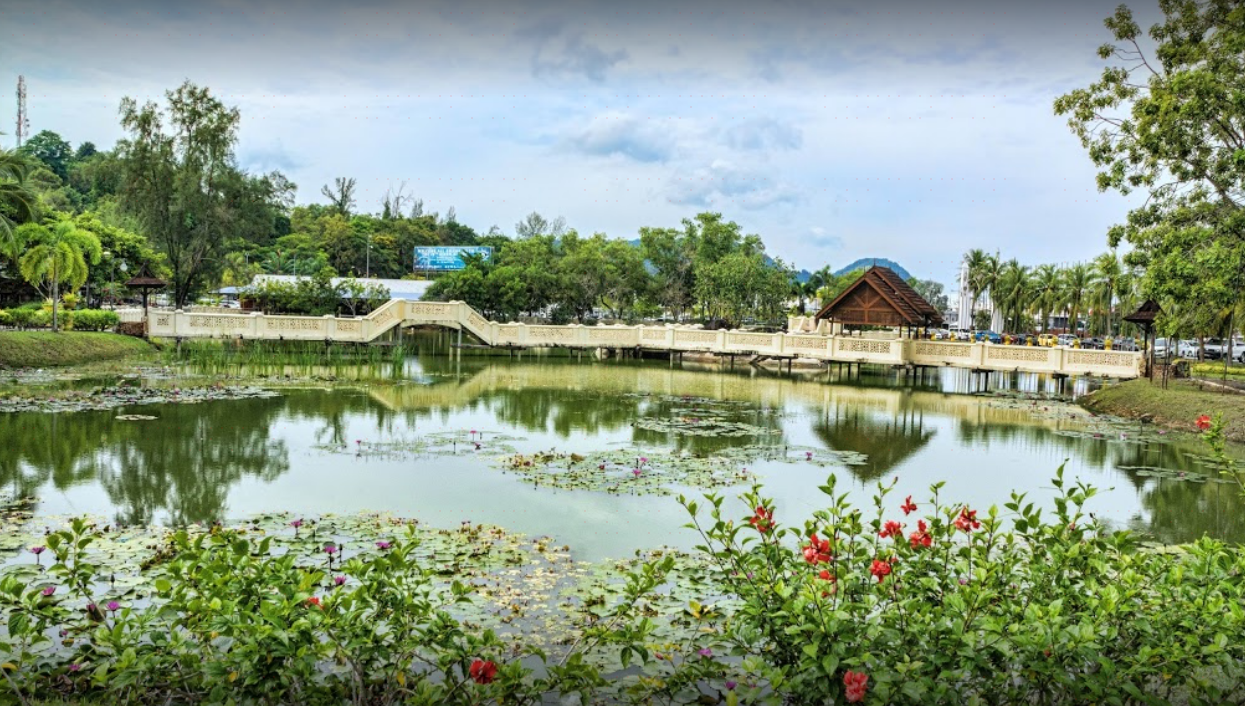
Adjoining Taman Lagenda is the CHOGM Park, built to commemorate the 1989 Commonwealth Heads of Government Meeting or CHOGM, in Langkawi. Until recently, the park carried the flags of all the Commonwealth nations that participated. The park has a man-made beach next to it and a children’s play area.
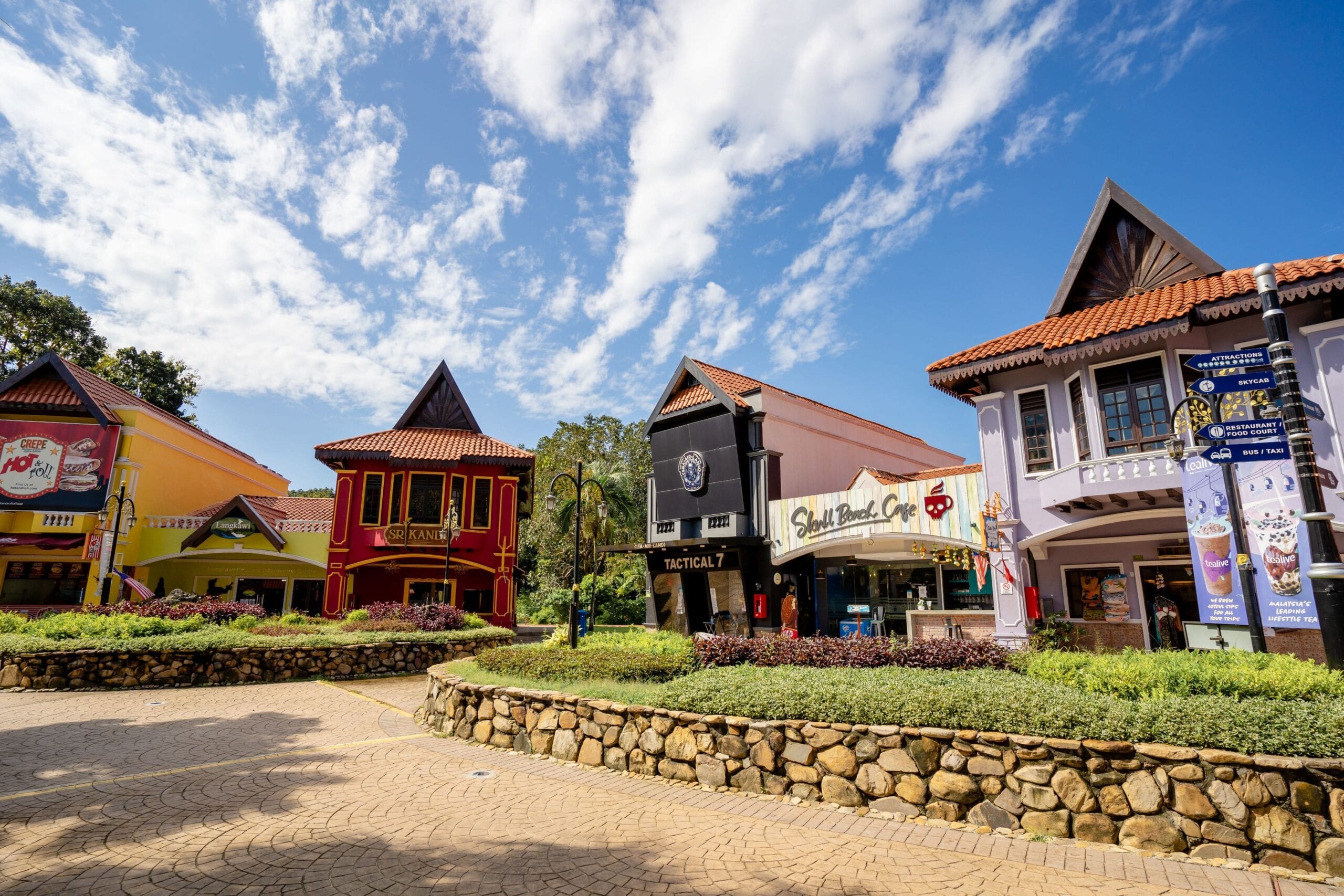
Oriental Village is an open-air lifestyle complex at the base of Mount Mat Cincang. The open-air attraction is famed for the marvellous Sky Cab and the Sky Bridge. The signature attraction of Oriental Village is the exhilarating cable-car ride to the top of Mount Chinchang. It is Malaysia’s longest cable car ride. During the 15-minute ride, one gets dramatic views of Seven Wells Waterfall, the slopes of the magnificent mountain and Langkawi Island. The ticket price is inclusive of return fare and passes to the SkyRex, SkyDome and 3D museums. Tickets can be purchased either from the ticket kiosk or online. The Sky Cab takes one to the 125-metre-long Sky-Bridge. Standing at a height of 700 metres, the curved suspended bridge is a great point to click some amazing pictures. Spread over an area of 21,000 square feet, the 3D Art Museum has over 100 interactive artworks, making it a favourite among kids. Set in the lap of nature, the Animal Farm houses small animals and costs RM1 to enter.

The biggest aquarium in Malaysia, Underwater World Langkawi, is home to more than 4000 marine life forms, spanning over 60,000 square feet. Located at the southern end of Pantai Cenang, the main attraction of the huge, white-washed structure is the Jurassic Arapaima, the biggest freshwater fish in the world. The Underwater World Complex is divided into three separate sections: Sub Antarctic, Tropical and Temperate. The major highlight of these three is the Sub Antarctic section, which is home to the popular penguinarium featuring rockhopper penguins. In the tropical sections, visitors will find themselves in a tropical rainforest with birds and animals endemic to this region. The highlight of this section is the Marmoset, the smallest monkey in the world. The temperate section features fur seals from South America and Africa, with a daily show at 2:30 pm where a trainer feeds them in front of an audience. The world’s biggest freshwater fish, Arapaima, sits at the entrance of the aquarium and is a prominent attraction in the building. The River Ecosystem features fish species from various parts of the world and houses unique marine life creatures. Visitors can walk through a 15-meter tunnel while being surrounded by fish and other marine creatures. The Coral Reef Section, which is the last section of the aquarium, shows the relationship between coral reefs and other marine life forms. Other highlights of Underwater World include a 3D theatre, an educational resource center, and a cafeteria. The 3D Theatre is where one can watch the story of a prehistoric fish and how it became a fossil. Underwater World is open from 10 am to 6 pm during the week and on weekends and public holidays, it is open from 9:30 am to 6:30 pm. Entry fees for Malaysians are RM 33 for adults and RM 23 for children, while for non-Malaysians, it is RM 43 for adults and RM 33 for children.

The Pulau Payar Marine Park, located about 30 km from the main island of Langkawi, is a popular scuba diving and snorkelling destination. Here, one can observe the natural habitat of various species of fish and baby sharks and feed them. This island comprises four smaller islands, all of which are uninhabited and are highly monitored to prevent any degradation of the virginal marine life. The stunning island also has jade green rainforests forming a natural border around it, which is not open to all tourists but can be accessed only with special permission from the authorities. The marine park can be accessed only as part of some tour packages affiliated with the Fisheries Department of Kedah to promote the conservation of marine life and raise awareness against coral bleaching and degradation. There are about 15 diving sites located at different points around the island, with separate provisions for beginners and more experienced drivers.

The Coral Garden is the most popular diving and snorkelling point on this island, as this region absolutely teems with coral reefs and newly formed corals. The special snorkelling points allow one to immerse themselves amongst the friendly aquatic creatures and easily spot a school of eels, pufferfish, snappers or even batfish and the Titan triggerfish. There is a special coral park that has a huge variety of rare, colourful corals that are highly monitored and protected from visitors. Special permission from the authorities has to be obtained to visit the coral park. Admission to Coral Park is RM 180 for an adult, RM 150 for a child between 3 and 11 and RM 100 for an infant. There are certain marked areas located in the offshore areas of the Coral Gardens where one can feed the school of fish. Also, there is a special point where one can feed baby sharks, either from the jetty itself or in the shallow water, once the shark caller calls them for their next meal. Entry fees for the feeding area is RM !50 for an adult and EM 130 for a child.
And with this, we end our visit to the state of Kedah. Our next state, the state of Perlis, is one of the smallest and the last of the states on Peninsular Malaysia. That will come to you next week, so watch this space!
 Memories and Such