

Located in the historic town of Verul near Aurangabad, Maharashtra, the Grishneshwar Temple is one of the twelve revered Jyotirlingas dedicated to Lord Shiva. Despite being the smallest among the Jyotirlingas, it holds immense spiritual significance as the last shrine in the ancient Jyotirlinga circuit, near the stunning Ellora Caves. The temple is famed for its compassionate deity and timeless legends of faith, reinforcing Shiva’s boundless mercy and the intimate relationships between devotees and the divine. Its rich history, intricate artistry, and vital place in pilgrimage traditions make it a must-visit for seekers of divine light and cultural heritage.
The legends of the Grishneshwar Temple reflect divine compassion intertwined with human devotion and forgiveness. One prominent legend, recounted in the Shiva Purana and Padma Purana, tells of Kusuma, a devoted Brahmin woman living near a sacred lake in Shivalaya village. Each day, Kusuma carved 101 small Shivalingas and immersed them in the lake while singing prayers to Lord Shiva, hoping to be blessed with a child. Eventually, Kusuma gave birth to a healthy son, which incited jealousy in her sister, leading to the tragic death of Kusuma’s son at her sister’s hand. Despite unbearable grief, Kusuma’s faith remained unshaken. Moved by her unwavering devotion, Shiva resurrected her son and manifested here as Grishneshwar, the Jyotirlinga born from the friction (Grishna meaning friction) of Parvati’s hands.
Another tale speaks of Parvati mixing vermillion, or kumkum, in water at the sacred lake. The friction caused by her hands led to the emergence of a bright light, which turned into a Shiva lingam. The name Grishneshwar derives from this friction-born linga, symbolising the dynamic energy between creation and devotion. The temple also highlights themes of compassion and forgiveness, where divine grace overcomes human failings, inspiring devotees to persevere in faith despite adversity.
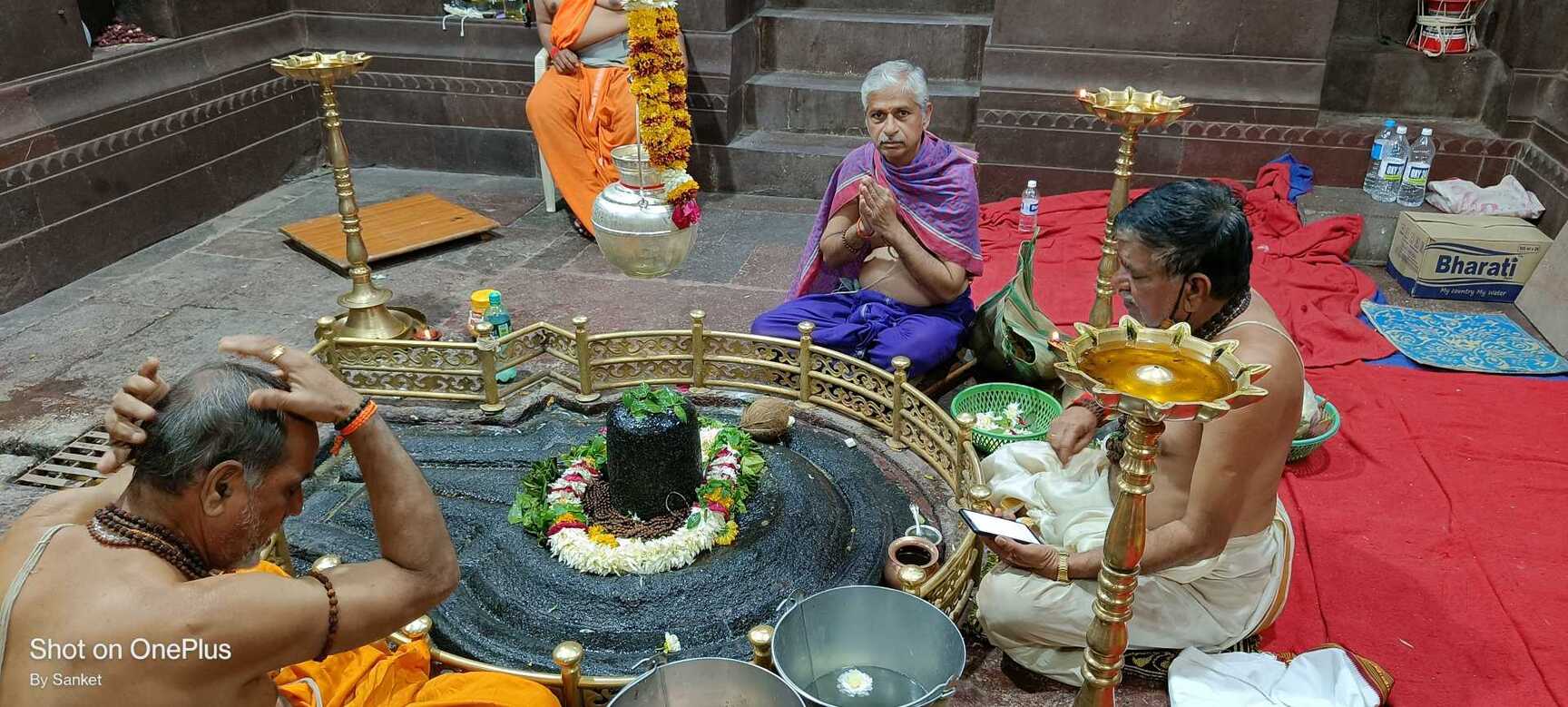
Grishneshwar Temple has endured cycles of destruction and rebirth, mirroring Maharashtra’s rich and turbulent past. Mentioned in ancient texts such as the Skanda Purana and Ramayana, Grishneshwar’s spiritual significance has been acknowledged for over a millennium. The original temple was destroyed multiple times during invasions by the Delhi Sultanate and later Mughal incursions in the 13th and 14th centuries. The temple was first restored by Maloji Bhosale, grandfather of the famed Maratha king Shivaji, in the 16th century. Later, in the 18th century, Queen Ahilyabai Holkar of Indore, renowned for her devotion and patronage of Hindu temples, rebuilt the temple in its present form, ensuring its architectural and cultural heritage endured.
Grishneshwar Temple is a marvellous example of medieval Indian temple architecture, blending aesthetics with spirituality. Constructed predominantly from red sandstone, the temple exudes warmth and invites spiritual contemplation. The temple boasts a five-tiered shikhara that rises above the sanctum sanctorum. The mandapa or assembly hall is supported by 24 intricately carved pillars, each depicting mythological scenes and floral motifs. Exterior and interior walls display reliefs of Shiva’s life, the Dashavatars of Vishnu, and various Hindu mythological stories. The richly carved pillars and walls display exquisite motifs from Hindu scriptures, including yoga postures and cosmic depictions that connect worshipers with divine symbolism. The temple complex also houses smaller shrines dedicated to Vishnu, Ganesha, and Durga, showcasing the inclusive nature of the site.
Worship at Grishneshwar Temple is animated by deep ritual and community participation. Daily worship practices include devotional abhisheka of the Jyotirlinga with milk, ghee, honey, and water, regular aarti ceremonies involving music, lamps, and chanting, and the offerings of bilva leaves, flowers, and fruits by devotees seeking Lord Shiva’s blessings. Mahashivaratri is celebrated with grand rituals, midnight vigils, and community feasts. Local temple events draw pilgrims from Maharashtra and neighbouring states, especially during the winter months. The temple’s festivals emphasise forgiveness, compassion, and renewal, echoing its founding legends. The local Brahmin priests and devotee groups maintain the temple’s traditions and hospitality, extending warmth and guidance to visitors.

Pilgrims find both spiritual renewal and cultural richness at Grishneshwar. The temple is located about 30 km from Aurangabad and is accessible by road and public transport. Several dharmashalas, guesthouses, and eateries support pilgrims’ needs in nearby Aurangabad and Verul village. The site is often combined with visits to the famous Ellora Caves, making for a rich cultural and spiritual itinerary. Pilgrims often describe a sense of serene compassion here, a place where devotion bridges pain and hope. Stories of answered prayers and visions reinforce the temple’s spiritual aura.
The Grishneshwar Temple influences regional culture, literature, and aesthetics. Temple legends feature in Marathi folklore and religious texts, while devotional poetry and songs celebrating Shiva’s compassion proliferate during festivals and pilgrim gatherings. Local artisans produce sculptures, icons, and paintings derived from temple iconography. The architectural and artistic styles influence nearby sacred sites and community rituals. Grishneshwar is an emblem of religious perseverance and cultural pride in Aurangabad, anchoring both spiritual and artistic traditions.
Grishneshwar Temple continues as a vibrant locus of faith and heritage. The temple trust oversees day-to-day operations, festivals, and pilgrim services. Conservation efforts preserve the temple’s structure and art against weathering. Pilgrim numbers rise annually, especially during festivals like Mahashivaratri. Tourism linked to the Ellora Caves supports the temple’s upkeep and regional economy. Challenges include maintaining ancient structures amid modern visitor pressures, requiring ongoing care and funding, while efforts focus on blending preservation with accessibility for future generations.

Grishneshwar Temple stands as a testament to divine compassion and timeless devotion, the last Jyotirlinga in the sacred circuit, yet among the most intimate and profound. Its legends show that faith transcends cruelty and loss, offering a sanctuary of hope and renewal. For pilgrims and tourists alike, Grishneshwar offers a unique spiritual retreat at the crossroads of history, mythology, and art, reaffirming Lord Shiva’s boundless grace and the enduring power of divine light.
The 12 Jyotirlinga temples represent the radiant and infinite manifestations of Lord Shiva across India, each with its unique mythology, history, and spiritual significance. They stand not only as architectural wonders but also as profound centres of devotion, reflection, and transformation, symbolising Shiva’s omnipresence and boundless energy. Pilgrimages to these sacred shrines offer seekers a journey beyond the physical—to touch the eternal light within themselves and connect deeply with the cosmic source. The Jyotirlingas continue to inspire faith, resilience, and spiritual awakening, illuminating the hearts of millions across generations and geographies, holding an enduring place at the core of Hindu spirituality and cultural heritage.
Keep watching this space for the next series on Divya Desams.
 Memories and Such