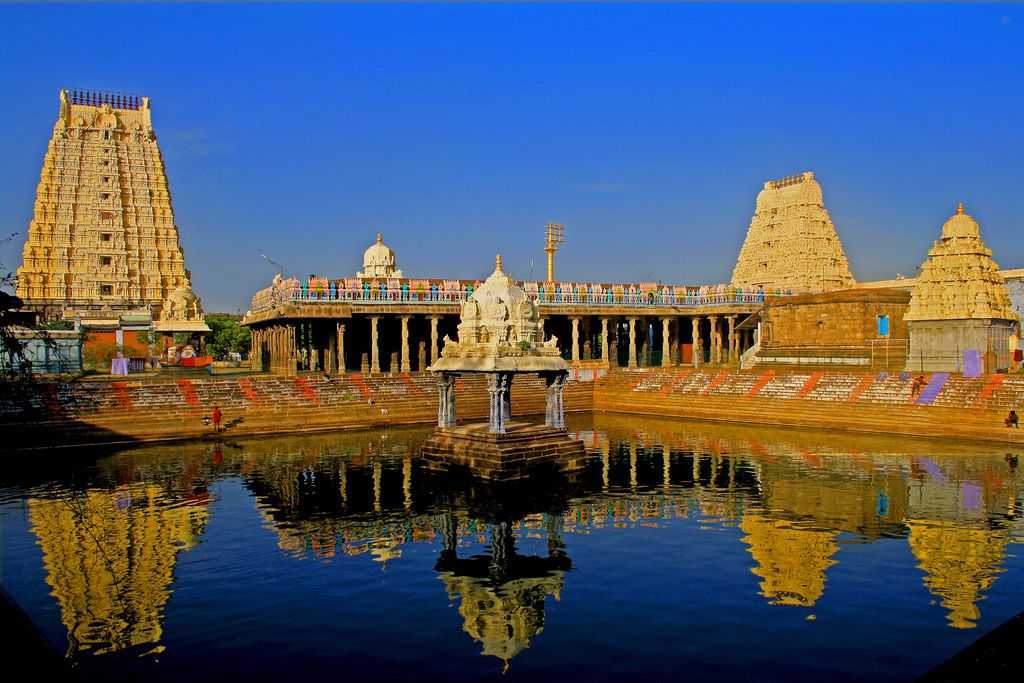
Sri Kanchi Kamakshi Amman Temple, Kanchipuram, Tamil Nadu
Located in the ancient city of Kanchipuram in Tamil Nadu, the origins of the Kanchi Kamakoti Temple are as complex as they are controversial. Traditional accounts, passed down through generations of devotees, attribute its founding to the revered philosopher Adi Shankara in 482 BC.
Scholarly research suggests a more recent establishment, dating back to the early 19th century. In 1821, the Maratha king of Tanjore, Serfoji II Bhonsle, established what was initially known as the Kumbakonam Mutt as a branch of the Sringeri Mutt. This institution would later evolve into what we now know as the Kanchi Kamakoti Temple.
In 1842 when the East India Company, in a controversial move, appointed the head of the mutt as the sole trustee of the Kamakshi temple in Kanchipuram, marked a significant turning point in the temple’s history and set the stage for its rise to prominence, despite protests from the traditional priests.
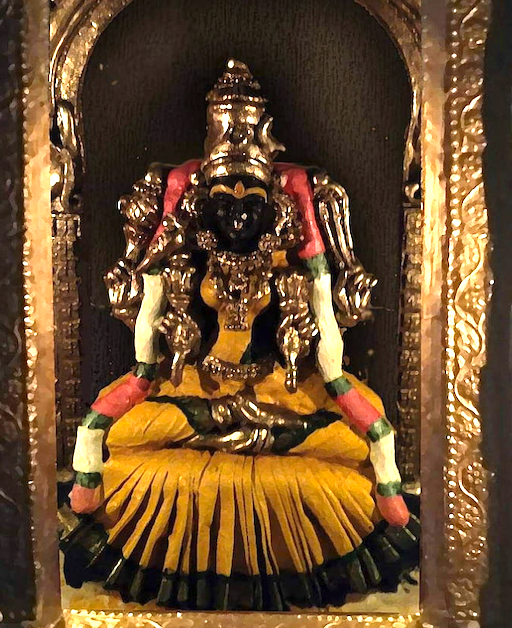
The temple is dedicated to Goddess Kamakshi, a form of the divine feminine often associated with Parvati. The temple is said to be where Shakti’s spine fell down on earth.
As one steps into the main sanctum, their gaze is immediately drawn to the mesmerising idol of Goddess Kamakshi. Unlike many other temples where the deity stands or reclines, here Kamakshi sits in the Padmasana or lotus pose, her four arms holding symbolic items: a noose, a goad, a sugarcane bow, and a flower arrow.
The temple’s architecture is a harmonious blend of styles, reflecting the various influences it has absorbed over time. The towering gopuram or temple tower reaches towards the sky, its intricate carvings telling stories of divine exploits and cosmic battles. Inside, the Gayatri Mandapa houses the main idol, its 24 pillars said to represent the 24 syllables of the Gayatri Mantra. One of the most intriguing features of the temple is the Sri Yantra placed in front of the main idol. Legend has it that this powerful geometric symbol was installed by Adi Shankara himself.
The prayers and rituals at the Kanchi Kamakoti Temple begins with the Gau Pooja and Gaja Pooja, honouring the sacred cow and elephant respectively. Throughout the day, four main worship services are offered, each accompanied by its own set of rituals and offerings. Devotees queue patiently, waiting for their chance to receive darshan of the goddess and offer their prayers. One of the most unique aspects of worship here is the presence of multiple forms of the goddess within the same temple complex. To the right of the main idol, one’ll find Tapa Kamakshi, depicted as a yogini in a balancing pose. To the left is Anjana Kamakshi, also known as Arupa Lakshmi, representing the formless aspect of the goddess.
The annual Brahmotsavam, held in the Tamil month of Masi, February-March according to the Gregorian calendar, is a grand affair lasting ten days. The highlight of this festival is the Maasi Pooram, considered the manifestation day of Lalitha Maha Tripura Sundari in Kanchipuram. During Navaratri, the temple becomes a hub of activity, with special pujas performed each day to honor the nine forms of the goddess. The air is filled with the heady aroma of flowers and incense, and the sound of devotional music echoes through the halls.
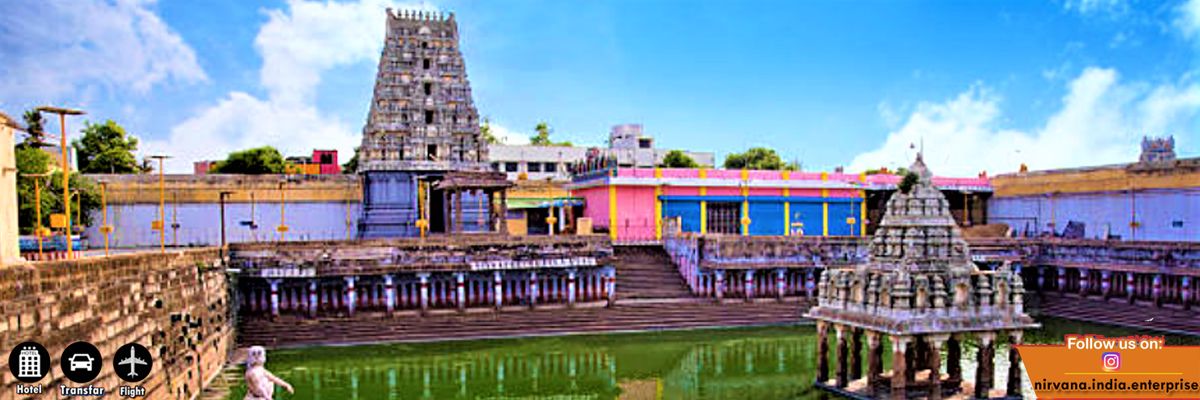
Adi Kamakshi Amman Temple, Kanchipuram, Tamil Nadu
Nestled in the ancient city of Kanchipuram in Tamil Nadu, the Adi Kamakshi Amman Temple stands as a testament to centuries of devotion and spiritual significance. This sacred shrine, dedicated to Goddess Kamakshi, is not just a place of worship but a powerful symbol of divine feminine energy that has drawn pilgrims for millennia.
While the exact date of the Adi Kamakshi Amman Temple is not certain, historical records and legends suggest that the temple’s roots may reach back to the 7th century. The temple is believed to have been founded by the Pallava kings, who ruled Kanchipuram as their capital from the 5th to 8th centuries. Over the centuries, the temple has undergone numerous renovations and expansions by various ruling dynasties. The Cholas are credited with modifications in the 14th century, while the Vijayanagara rulers made further enhancements in the 17th century. Some legends even suggest a more recent construction date of 1783 for certain elements of the temple.
The temple’s history is deeply intertwined with the life of Adi Shankaracharya, the revered 8th-century philosopher and theologian. It is believed that Adi Shankaracharya consecrated the Sri Chakra, a mystical diagram representing the cosmos, in this temple, enhancing its spiritual significance.
According to tradition, it is believed that the navel or nabhi of Goddess Sati fell at this sacred spot. The Shakti Peetha here is known as Kanchi Kamakshi, and the temple is often referred to as the Kanchi Kamakshi Amman Temple. The name Kamakshi means she whose eyes awaken desire in Sanskrit. The goddess is worshipped here as Kamakshi, a benign form of Parvati. She is depicted in a unique seated posture called padmasana, with four hands holding a rope or pasa, an elephant goad or ankusa, sugarcane bow or bana, and a bunch of five flowers as arrows or pushpa bana.
In front of the sanctum is the Sri Chakra installed by Adi Sankaracharya. It is said that after the consecration of the Sri Chakra, the fierce form of the goddess became benign or sowmya. The main sanctum houses a sacred space called Bilaakasha, from which Goddess Kamakshi is believed to have emerged to slay demons. The temple complex includes a shrine to Adi Varaha Perumal or Lord Vishnu, also known as Kalvar, which is one of the 108 Divya Desams. The Gayatri Mandapam houses the idols of Goddesses Varahi, Rupalakshmi, Arupalakshmi, and Ardhanarishwara. A pillar near the Kamakshi Amman shrine is worshipped as Santhana-stambham, connected to the story of King Dasaratha praying for progeny. The temple complex houses several other shrines dedicated to various deities including Utsava-Kamakshi, Bangaru-Kamakshi, and Kasi Vishwanatha.
The temple follows a strict schedule of four daily pujas. Brahmotsavam, the temple’s annual festival, typically held in the Tamil month of Maasi in February-March, is a grand celebration. The Silver Chariot Festival on the 7th day is particularly spectacular. Navaratri is celebrated with great grandeur, featuring special pujas and cultural performances. Every Friday at 7 pm, the Golden Chariot is taken in a procession around the temple, creating a deeply spiritual atmosphere. Other festivals, including Aadi, Aippasi Pooram, Sankara Jayanthi, and Vaikasi Vasanta Utsavam are also celebrated with enthusiasm at the temple. Special rituals are performed on the full moon day or Pournami of every month.
It is believed that Goddess Kamakshi was originally a fierce deity. After Adi Sankaracharya installed the Sri Chakra, she transformed into a benign and compassionate form. The Santhana-stambham in the temple is associated with the story of King Dasaratha of Ayodhya, who is said to have prayed here for progeny. A legend speaks of a golden statue of Kamakshi that was carried throughout South India after the fall of the Vijayanagar Empire in 1565. It was finally enshrined in this temple in 1783. According to local lore, Goddess Kamakshi created a mud idol of Lord Shiva in Kanchi to worship him. To test her devotion, Lord Shiva incarnated as the Kamba River with high tides. The Goddess protected the idol by grasping it closely, leading to the establishment of Kanchipuram. Another legend tells of Kamakshi performing a penance on a needle tip surrounded by five fires or Panchakagni to free herself from worldly desires. Pleased with her devotion, Lord Shiva married her.
As you stand in the temple courtyard, surrounded by centuries of devotion and the echoes of ancient rituals, you can’t help but feel a connection to the spiritual heritage that has shaped this land for millennia. The Adi Kamakshi Amman Temple, with its blend of myth, history, and living faith invites all who visit to partake in its timeless spiritual journey.
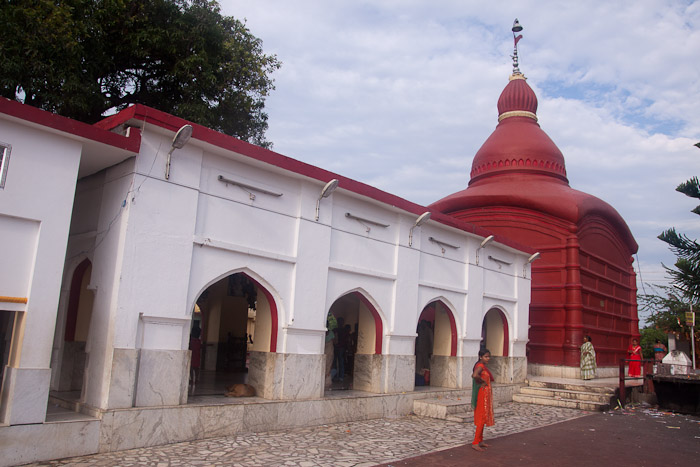
Tripura Sundari temple, Radhakishorepur Village, Udaipur, Tripura
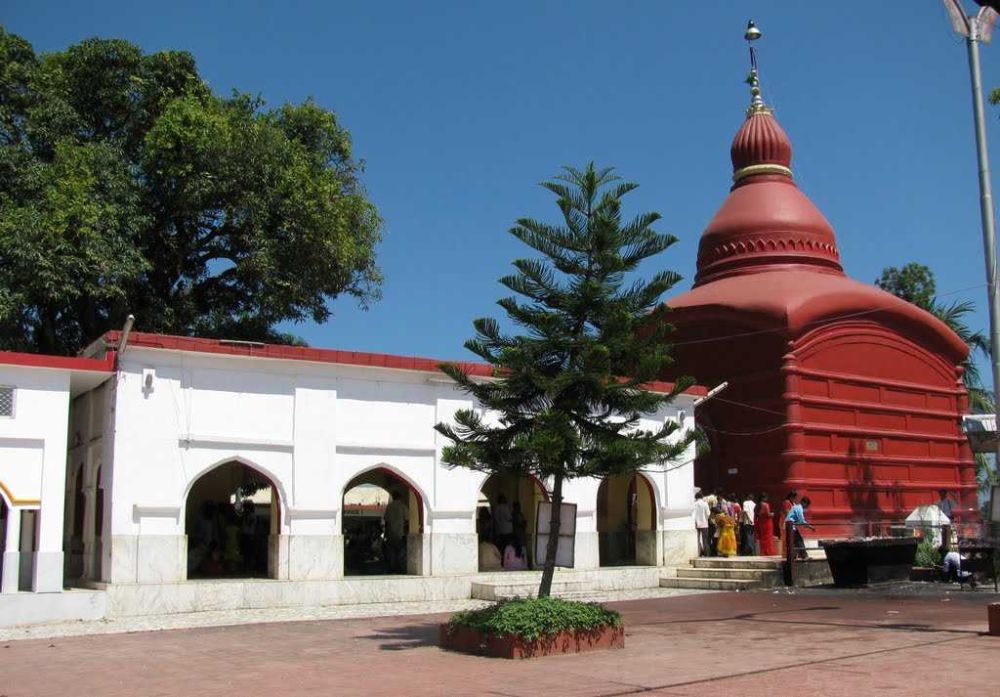
The Tripura Sundari Temple, which is located about 55 km from Agartala, near the village of Radhakishore, in the city of Udaipur is dedicated to Goddess Tripura Sundari. The goddess lends her name to the state of Tripura.
The origins of the Tripura Sundari Temple stretch back to the late 15th century. According to historical records, the temple was founded by Maharaja Dhanya Manikya, who ruled over Tripura in the closing years of the 15th century. The king had a divine vision in which Goddess Tripura Sundari instructed him to initiate her worship on the hilltop near the town of Udaipur, the then capital of the kingdom. The temple came into being around the year 1501 CE, making it over 500 years old.
Interestingly, the king initially found that a temple dedicated to Lord Vishnu already existed on the hillock. This presented a dilemma, as he was unsure how to reconcile the worship of Vishnu with the installation of a Shakti idol. However, a second divine vision resolved this conflict, revealing to the king that Vishnu and Shakti were different forms of the same Supreme Deity or Brahman. This resolution exemplifies the syncretic nature of Hinduism, bridging the gap between Vaishnava and Shakta traditions.
According to tradition, it is believed that a part of the right foot or the Dakshin Charan of Sati, including the big toe, fell at this sacred spot. At the Tripura Sundari Temple, the goddess is worshipped as Tripurasundari, also known locally as Devi Tripureshwari. She is considered the third mahavidya and a main form of Parvati. The accompanying Bhairava, the fierce manifestation of Lord Shiva who is present at each Shakti Peetha, is known here as Tripuresh.
The main shrine houses two similar but different-sized black stone idols of the Goddess. The larger and more prominent idol, standing at 5 feet in height, represents Goddess Tripura Sundari. The smaller idol, affectionately called Chhoto-Ma or Little Mother, is 2 feet tall and represents Goddess Chandi.
The temple is set upon a small hillock that resembles the hump of a tortoise or Kurma. This shape, called Kurmaprsthakrti, is considered the holiest possible site for a Shakti temple. The main shrine is a cubical edifice with a three-tier roof and a finial, constructed in the Bengali Ek-ratna style. The smaller idol of Goddess Chandi was said to have been carried by the kings of Tripura to the battlefield as well as on hunting expeditions, linking the temple to the royal history of Tripura. On the eastern side of the temple lies the famous Kalyan Sagar lake, home to fishes and tortoises of enormous size. Devotees feed these creatures with puffed rice and biscuits, and fishing is strictly prohibited in this sacred water body.
The temple remains open from 6 am to 10 pm. The day begins with a morning aarti, setting the spiritual tone for the day. A special puja is performed at midday, marking the sun’s zenith. The day’s worship concludes with an evening aarti. A unique aspect of the temple is the Panchamrit Abhishekam, a sacred bath of the deity with five different nectars.
Every year on Diwali, a famous Mela or fair takes place near the temple, attracting more than 200,000 pilgrims. Navaratri is celebrated with great fervour with mantras recited daily by learned Brahmins, and women performing a havan on Ashtami, the eighth day. Durga Puja and Kali Puja are among the most celebrated at the temple, drawing large crowds of devotees. The Purnima Fair is held every full moon day, attracting pilgrims from various regions. Sindoor Utsav is a unique celebration that marks the culmination of Navaratri, where devotees smear each other with vermilion, symbolising the victory of good over evil.
The temple’s origin is linked to the divine vision of Maharaja Dhanya Manikya, who was instructed by the goddess to establish her worship at this site. The story of how the temple transitioned from a Vishnu shrine to a Shakti Peetha illustrates the fluid nature of Hindu worship and the underlying unity of different divine manifestations. The smaller idol of Goddess Chandi, carried by Tripura’s kings into battle and on hunts, speaks to the deep connection between royal power and divine protection in the region’s history. The prohibition of fishing in the Kalyan Sagar and the practice of feeding the aquatic life there reflects the Hindu principle of respect for all forms of life.
As you stand in the temple courtyard, surrounded by centuries of devotion and the echoes of ancient rituals, you can’t help but feel a connection to the spiritual heritage that has shaped this land. The Tripura Sundari Temple, with its blend of myth, history, and living faith, continues to be a powerful force in Tripura, inviting all who visit to partake in its timeless spiritual journey.










 Memories and Such