Festivals of India: International Sand Art Festival

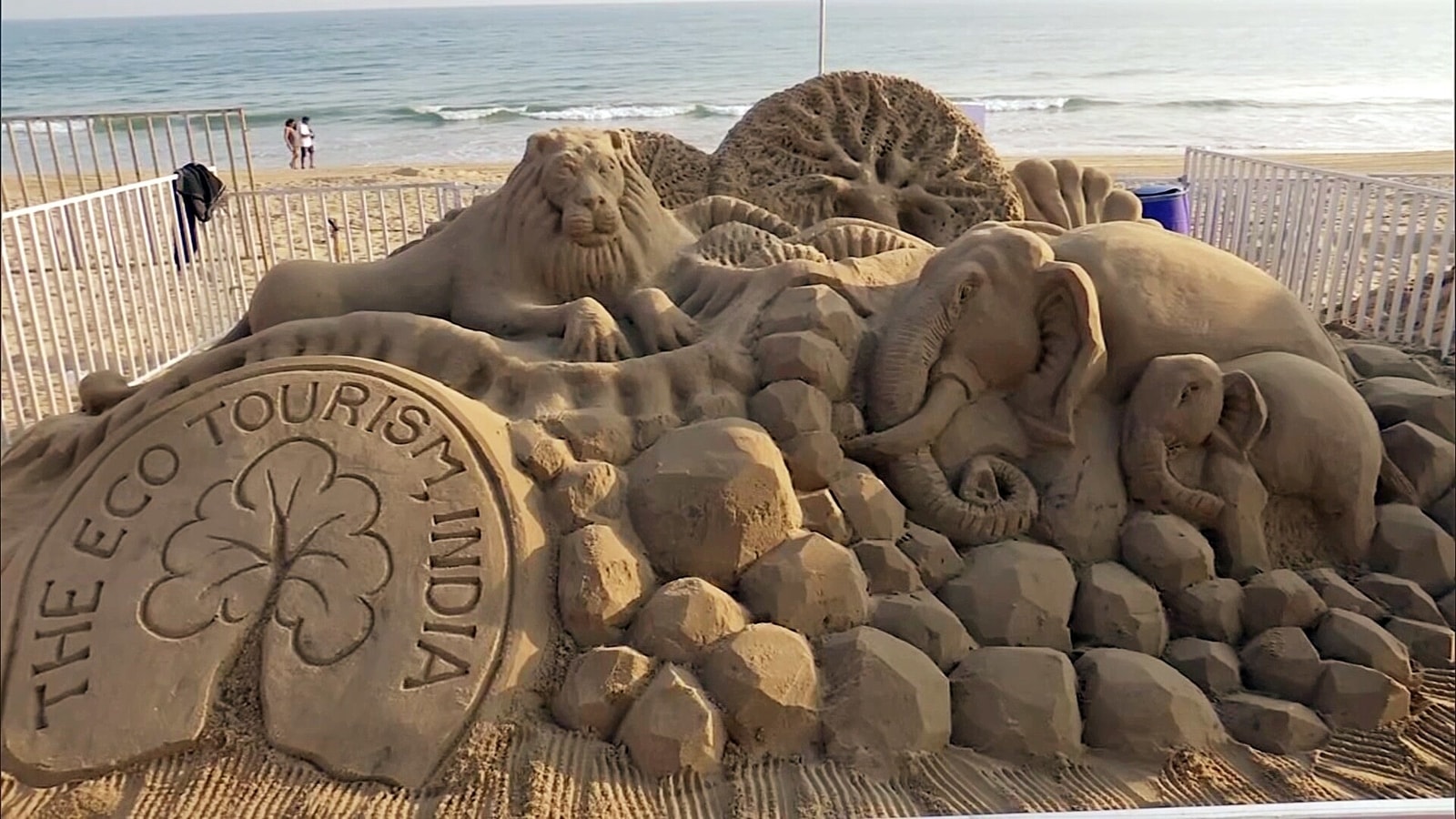
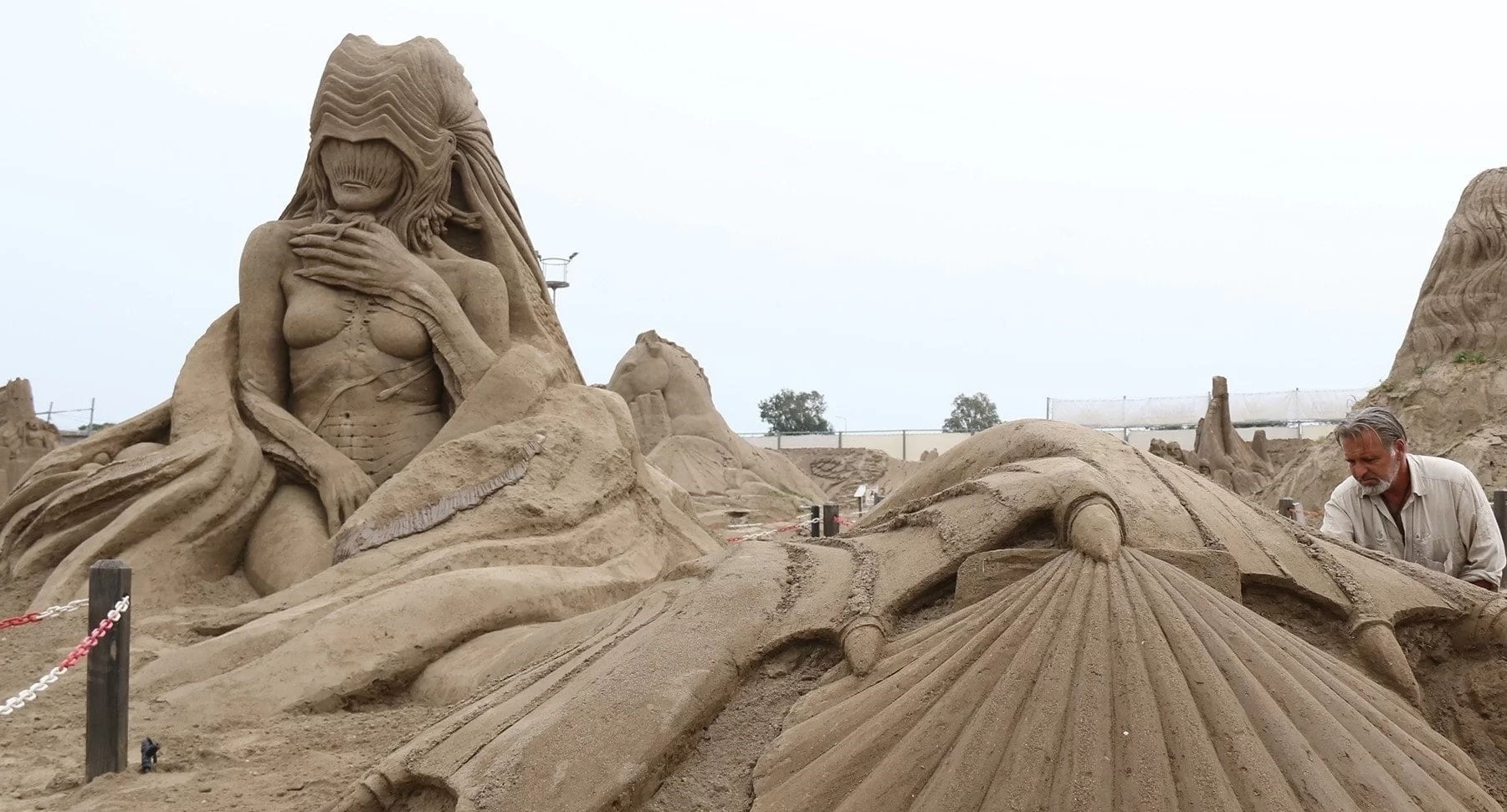
The International Sand Art Festival, held annually from November 24 to December 1, in Odisha, is a testament to the boundless creativity of artists who craft delicate sculptures from the most humble of materials—sand. This unique festival, which takes place on the shores of Chandrabhaga Beach in Konark, has been captivating the hearts of visitors and art enthusiasts from around the world since its inception. This annual event transforms ordinary grains of sand into magnificent masterpieces of creativity and imagination.

The festival is set against a stunning backdrop—Chandrabhaga Beach. Known for its pristine beauty and tranquil ambience, this beach, nestled in the coastal town of Konark with its golden sands, provides the perfect canvas for the artists’ sand sculptures to come to life.

At the heart of the International Sand Art Festival lies the legacy of one man, Sudarsan Pattnaik. A renowned sand artist hailing from Odisha, Pattnaik has not only earned international acclaim for his sand sculptures but has also been a driving force behind the festival’s inception and continued success.

The International Sand Art Festival began as a modest local event in Puri, Odisha, in the early 1990s, primarily showcasing the talents of Sudarsan Pattnaik and his students. Over the years, it grew in stature, attracting sand artists from India and beyond. In 2011, the festival found its current home on Chandrabhaga Beach, offering artists a larger canvas and a stunning coastal backdrop.

Each year, the festival adopts a specific theme, guiding artists to create sculptures that resonate with the chosen motif. Themes have ranged from environmental conservation to cultural heritage, and artists draw inspiration from a wide array of sources.

Artists begin with an empty patch of sand, meticulously sculpting their visions using only sand and water. The delicate nature of the medium demands precision and patience, as sculptors must work quickly before the sand dries. The festival showcases a diverse range of sculptures, from intricate figurines and lifelike portraits to towering structures that seem to defy gravity. The level of detail that artists achieve with grains of sand is nothing short of awe-inspiring. Alongside local talents like Sudarsan Pattnaik, the festival often attracts renowned sand artists from around the world. Their participation adds an international flair to the event, fostering cross-cultural exchange and artistic collaboration.

In 2023, the International Sand Art Festival will embrace the theme of “Celebrating Cultural Heritage.” This theme invites artists to explore and depict the rich tapestry of cultural diversity that defines India and the world. Through their sand sculptures, artists pay homage to the traditions, rituals, and artistic expressions that have shaped our collective heritage.

The theme highlights the importance of preserving and celebrating cultural heritage in a rapidly changing world. It serves as a reminder that our past informs our present and shapes our future. By showcasing the cultural heritage of different regions and communities, the festival encourages dialogue and understanding among people from diverse backgrounds. It fosters an appreciation for the beauty of our shared human heritage. Sand art transcends language barriers, allowing artists to communicate complex cultural narratives through their sculptures. It demonstrates the power of art to convey messages and emotions across cultures. The theme inspires artists and visitors alike to reflect on the significance of their cultural backgrounds and the contributions of diverse cultures to our global society.

The festival plays a pivotal role in promoting art and culture, not only in Odisha but on a global scale. It showcases the immense artistic talent of sand sculptors and fosters an appreciation for the arts. The festival draws tourists from all over the world, benefiting the local economy and supporting tourism-related businesses in Odisha. It serves as a platform for cultural exchange, allowing artists from different parts of India and the world to come together, share their perspectives, and learn from one another. The festival engages the local community in various ways, from providing opportunities for local artisans to showcase their crafts to offering art workshops for children.

The International Sand Art Festival, with its mesmerizing sculptures and cultural celebrations, reminds us of the power of art to bridge divides, celebrate diversity, and inspire generations. In the delicate grains of sand sculpted into intricate forms, we find not only beauty but also a profound message – that creativity knows no bounds and that cultural heritage is a treasure to be cherished and shared.

Festivals of India: Chemrey Wangchok Festival

Over the weekend, enchanting Ladakh celebrated the festival of Chemrey Wangchok. Often referred to as “Little Tibet”, Ladakh is renowned for its stark yet mesmerizing landscapes, monasteries perched atop rugged mountains, and a culture that seamlessly blends Tibetan Buddhism with the natural beauty of the region.

Also known as the Chemrey Angchok Festival, the Chemrey Wangchok Festival is one of Ladakh’s most cherished cultural events. Held at the Chemrey Monastery, which is perched dramatically on a hilltop overlooking the Indus Valley, this festival offers a window into the spiritual and cultural heart of Ladakh.

The Chemrey Wangchok Festival is celebrated on the 28th and 29th day of the ninth month of the Tibetan lunar calendar, which this year was this weekend, 11 and 12 November. Typically falling in November or December in the Gregorian calendar, the festival marks the victory of good over evil and the ultimate triumph of the Buddhist teachings. Chemrey Monastery’s white-washed walls glisten brilliantly against the clear blue Ladakhi skies, and the aura of serenity envelops this sacred site. It’s a place where time seems to stand still, and every stone whispers stories of devotion.

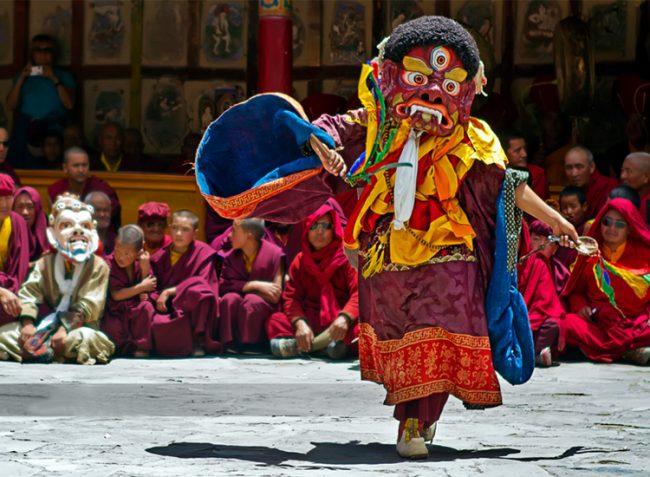
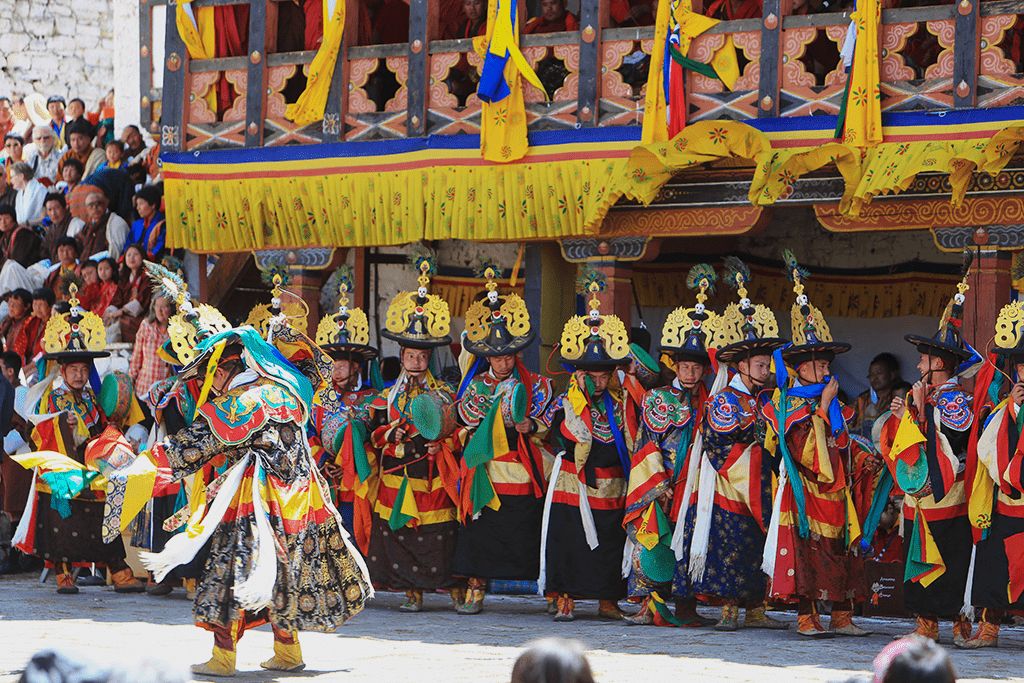
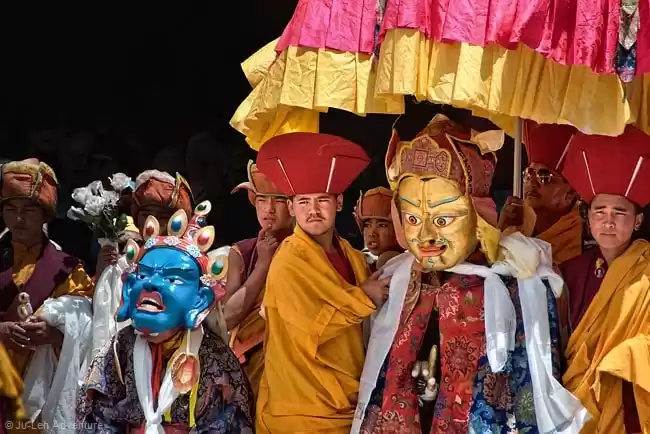
The festival kicks off with the Cham dance, a traditional masked dance performed by the resident monks. This intricate and colourful performance reenacts ancient Buddhist stories and teachings, inviting the audience to contemplate their deep meanings. Beyond the visual spectacle of the Cham dance, the Chemrey Wangchok Festival provides an opportunity for spiritual teachings and reflections. Monks share wisdom and insights, guiding attendees on a journey of self-discovery and enlightenment.

The air reverberates with the soothing sounds of traditional Ladakhi music and chants. The melodies played on traditional instruments like Tibetan horns and cymbals, add a mystical and enchanting ambience to the festival. The masked performers, adorned in elaborate costumes representing various deities and supernatural beings, are a sight to behold. Each mask tells a story and adds depth to the festival’s spiritual narratives.

Throughout the Chemrey Wangchok Festival, offerings are made to deities, symbolising the reverence and gratitude of the people of Ladakh. These rituals serve as a reminder of the deep connection between the spiritual and everyday lives of the locals.

Chemrey Wangchok is a testament to Ladakh’s commitment to preserving its rich cultural heritage. It serves as a reminder of the importance of passing down traditions and rituals from one generation to the next. The festival offers a moment of pause in our busy lives, inviting us to reflect on the deeper aspects of existence. It encourages introspection, mindfulness, and a connection with the spiritual dimensions of life. For visitors to Ladakh, the Chemrey Wangchok Festival provides a unique opportunity to engage with the local culture and forge meaningful connections with the Ladakhi people. In a world often divided by differences, this festival reminds us of the power of unity and shared values. It transcends barriers of nationality, language, and background, fostering a sense of oneness among those who attend. The colourful Cham dance and the profound spiritual teachings inspire attendees to seek inner peace, wisdom, and enlightenment in their own lives. It serves as a source of motivation and a reminder of life’s deeper purpose.

In a rapidly changing world, festivals like Chemrey Wangchok play an essential role in preserving cultural heritage, fostering spirituality, and celebrating unity. They remind us of the beauty that lies in tradition and the profound wisdom contained within ancient rituals. Festivals like these offer a respite from our often-hectic lives, inviting us to slow down and reflect on the deeper aspects of our existence. In an era of constant distractions, they serve as a sanctuary for inner peace and self-discovery.

This festival, with its Cham dance, spiritual teachings, and cultural richness, is a radiant celebration of Ladakh’s soul. It reminds us that amid the hustle and bustle of modern life, there are places where tradition thrives, where spirituality is woven into the fabric of daily existence, and where unity is celebrated. The Chemrey Wangchok Festival is a testament to the enduring beauty of Ladakh and the timeless wisdom of its people—a legacy that continues to shine brightly against the backdrop of the Himalayas.

Festivals of India: Mysuru Dasara

Karnataka’s state festival or Nadahabba, the Dasara festival in Mysore is a 10-day festival, starting with the nine nights of Navaratri and the last day being Vijayadashami or Dasara. The festival is observed on the tenth day in the Hindu calendar month of Ashvina, which typically falls in the Gregorian months of September and October. The 10-day extravaganza marks the triumph of good over evil and pays homage to the goddess Chamundeshwari, the presiding deity of Mysuru.

Dasara, Navratri and Vijayadashami was the day in Hindu mythology when Goddess Chamundeshwari or Goddess Durga killed the demon Mahishasura, whose slaying by the Goddess gave the city its name of Mysuru. The Mysuru tradition celebrates the warriors and the state fighting for the good during this festival, ritually worshipping and displaying the state sword, weapons, elephants, and horses along with the Hindu Devi goddess in her warrior form, predominantly as well as the Vishnu avatar of Lord Rama. The origins of the Dasara festival can be traced back to ancient Hindu mythology, specifically the great epic, Ramayana. It is believed that Lord Rama, the seventh avatar of Lord Vishnu, worshipped the goddess Durga before embarking on his journey to rescue his wife, Sita, from the demon king Ravana. In commemoration of the divine blessings bestowed upon him, Lord Rama emerged victorious on the day of Vijayadashami, the tenth day of the festival. The ceremonies and a major procession are traditionally presided by the king of Mysuru.

The Dasara festivities began with the Vijayanagar kings as early as the 14th or 15th century and played a historical role in the 14th-century Vijayanagara Empire, where it was called Mahanavami and the festivities are shown in the relief artwork of the outer wall of the Hazara Rama temple of Hampi. The Italian traveller Niccolò de’ Conti described the festival’s intensity and importance as a grandeur religious and martial event with royal support. The event revered Durga as the warrior goddess or Chamundeshwari and hosted athletic competitions, singing and dancing, fireworks, a pageantry military parade and charitable giving to the public.

After the fall of the Vijayanagar to the Deccan Sultanates, these Hindu celebrations came to an end under Muslim rulers. The Wodeyars of Mysore formed a kingdom in Southern parts of the Vijayanagara Empire and continued the Mahanavami or Dasara festival celebration, a tradition started initially by Raja Wodeyar I in mid-September 1610 at Srirangapatna. The city of Mysuru has a long tradition of celebrating the Dasara festival with grandeur and pomp. The Dasara festival in Mysuru completed its 409th anniversary in 2019. Over the centuries, the Dasara festival evolved and assimilated various regional customs and traditions, ultimately becoming an essential part of Mysuru’s cultural identity. The festival showcases the city’s rich heritage and its reverence for its ruling family, the Wadiyars, who have played a pivotal role in preserving and promoting the festival’s grandeur.

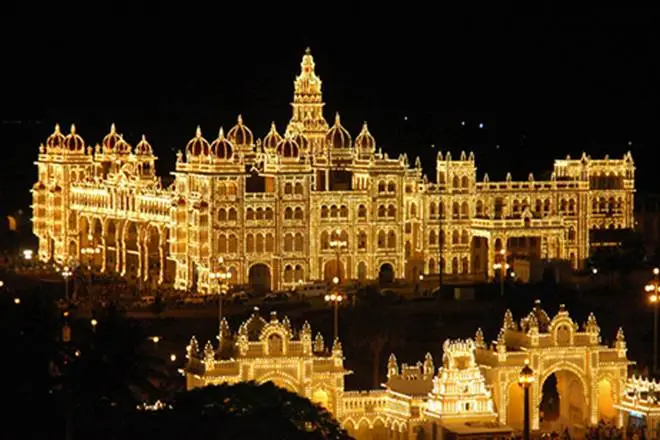
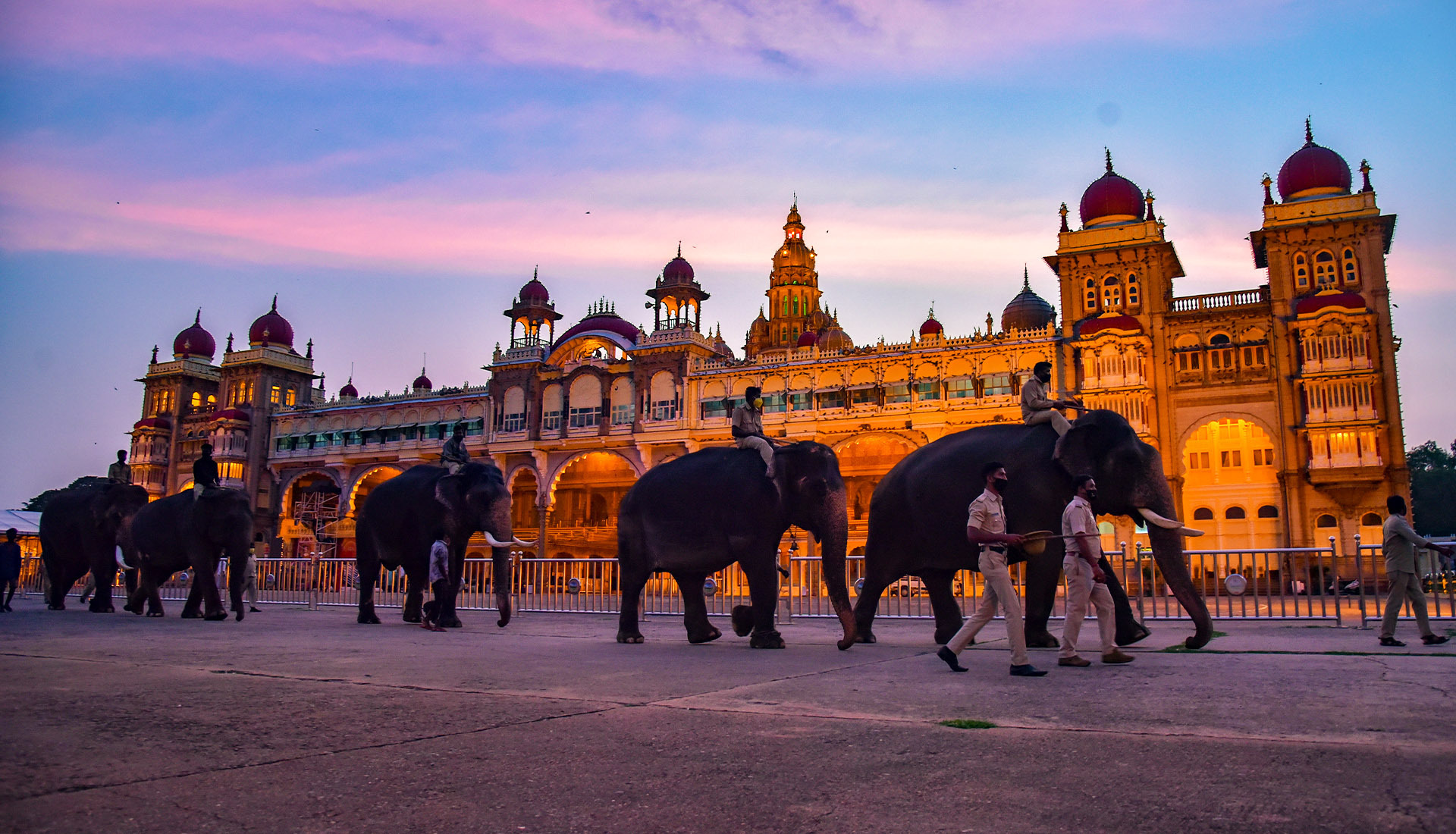
The festival is the jewel in the city’s crown and the entire city springs into action. Adorned with colourful lights and decorations, the iconic Mysuru Palace, a masterpiece of Indo-Saracenic architecture, takes centre stage as it is beautifully illuminated with nearly 100,000 light bulbs from 7 to 10 pm on all days of the festival, presenting a breathtaking sight. The Nadahabba is inaugurated with great fanfare at the Mysuru Palace by the current scion of the royal family. Dressed in traditional regal attire, the Wadiyars carry the golden idol of the goddess Chamundeshwari in a magnificent procession, accompanied by traditional music, dance, and the beats of ceremonial drums. The spirit of the festival is infectious as locals and visitors alike gather to witness this majestic spectacle. The intricate floral rangoli, known as Rangoli Patha, adorn the palace grounds, and the aromatic fragrance of flowers fills the air, adding to the festive ambience. Various cultural and religious programs highlighting the dance, music and culture of the State of Karnataka are performed in front of the illuminated Palace.

The heart of Dasara lies in the nine nights of Navaratri, a time to celebrate the various forms of the divine goddess. Mysuru becomes a cultural haven during this period, with vibrant performances of classical music, dance, and folk arts taking place at various venues across the city.

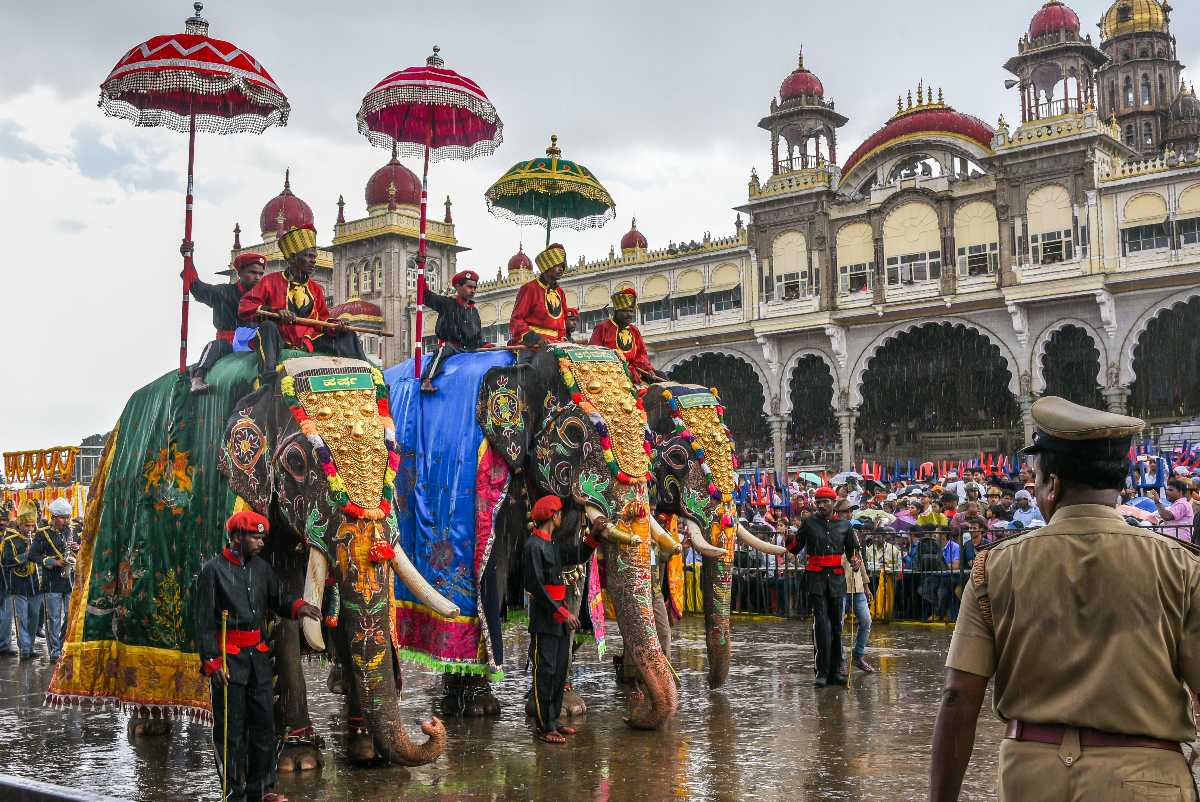
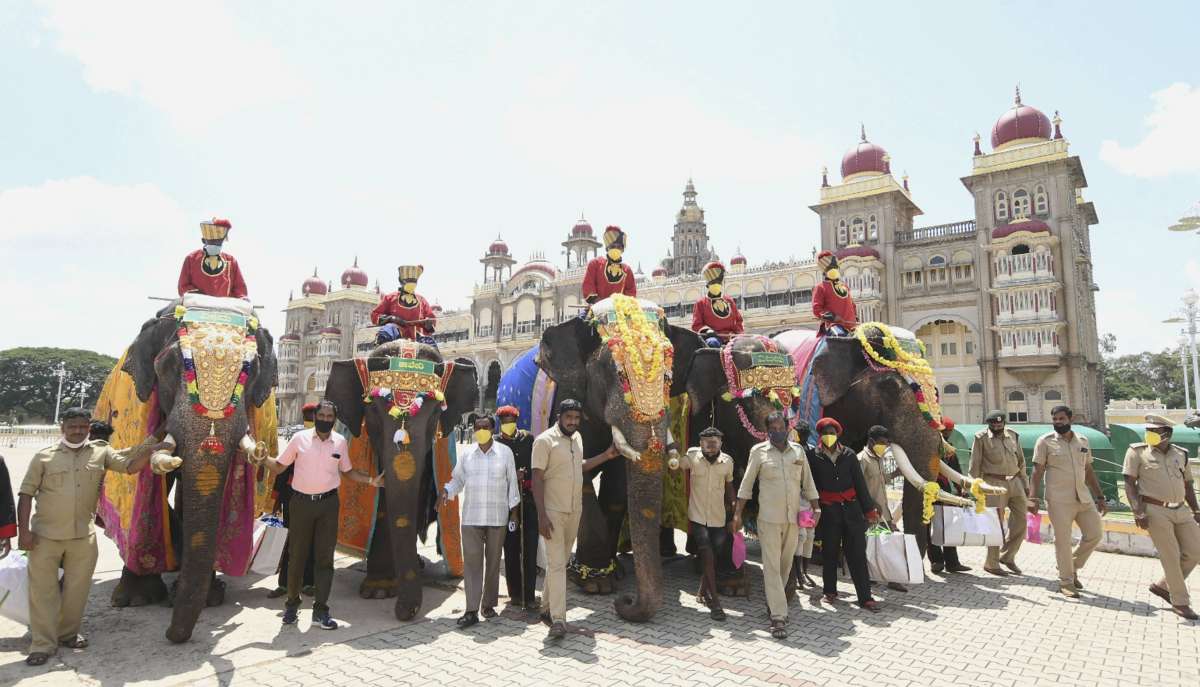
The grand finale of the Dasara festival is the Vijayadashami procession, a regal pageantry that captivates all. The streets of Mysuru come alive with an unending sea of spectators, eagerly awaiting the arrival of the adorned elephant carrying the idol of goddess Chamundeshwari. The traditional Dasara procession, locally known as Jumboo Savari is held on the streets of Mysuru. The main attraction of this procession is the idol of the Goddess Chamundeshwari which is placed on a golden mantapa, made out of 750 kg of gold on the top of a decorated elephant. This idol is worshipped by the royal couple and other invitees before it is taken around in the procession. Colourful tableaux, dance groups, music bands, decorated elephants, horses and camels form a part of the procession which starts from the Mysore Palace and culminates at a place called Bannimantap where the Banni tree or Prosopis spicigera is worshipped.

According to a legend from the Mahabharata, the banni tree was used by the Pandavas to hide their weapons during their one-year period of Agnatavasa where they had to live incognito. Before undertaking any warfare, the kings traditionally worshipped this tree to help them emerge victorious in war. The Dasara festivities would culminate on the night of Vijayadashami with an event held on the grounds at Bannimantap called Panjina Kavayatthu or the torch-light parade.

The procession features beautifully decorated tableaux showcasing the city’s rich history and mythological stories. Folk dancers, performers, and cultural troupes from across the state add a vibrant touch to the procession, reiterating Karnataka’s diverse cultural heritage. The procession culminates with a breathtaking display of traditional music and fireworks, illuminating the night sky and leaving spectators in awe. After the Jamboo Savari, a torchlight parade takes place in the evening at the Bannimantap Parade Grounds.

The famous Mysuru Dasara Exhibition, held in the exhibition grounds opposite the Mysore Palace is a major highlight, where a carnival-like atmosphere enthrals visitors with thrilling rides, games, and mouthwatering street food. Local artisans and craftsmen showcase their talents in the exhibition, adding a touch of traditional artistry to the festivities. The exhibition was started by the Maharaja of Mysore, Chamaraja Wodeyar X in 1880 with the sole aim of introducing timely developments to the people of Mysore. The task of holding the exhibition is now entrusted to the Karnataka Exhibition Authority or KEA. This exhibition starts during Dasara and goes on till December. A play area containing attractions like a Ferris wheel is also present to provide entertainment and various Governmental agencies set up stalls to signify the achievements and projects that they have undertaken.

The Dasara Sports Meet, reminiscent of the days of the Maharajas, draws enthusiastic participants and spectators alike. The traditional sport of Kusti or wrestling and other indigenous games and races bring back the nostalgic charm of a bygone era and attract wrestlers from all around India. On all the 10 days of Dasara, various music and dance concerts are held in auditoriums around Mysore city. Musicians and dance groups from all over India are invited to perform on this occasion.

The Dasara procession has faced increasing pressure from activists and campaigners to end its controversial use of elephants. Procession elephants, as well as their handlers known as mahouts, have died from several shocking incidents over the years. In 2018, leaked footage from the elephants’ training ground showed an elephant swaying in distress. International press labelled the video heartbreaking and reported on how the elephants must undergo two months of rigorous training to perform in the procession.

Dasara in Mysuru is not just a festival; it is a testament to the city’s deep-rooted heritage and the enduring spirit of its people. It is festivals like this, that help us to cherish and preserve our cultural legacies for generations to come.

Festivals of India: Sri Krishna Jayanti

India, a land known for its rich cultural heritage and diverse traditions, is home to a multitude of festivals. One such auspicious occasion is Sri Krishna Jayanti, also known as Janmashtami, which marks the birth anniversary of Lord Krishna, the eighth avatar of Lord Vishnu. Sri Krishna Jayanthi celebrations take place on the eighth day or Ashtami of the lunar month of Shravana, which falls between August and early September. This year will be celebrated today and tomorrow.

Janmashtami and Sri Krishna Jayanti are essentially the same festival. In South India, the festival is known as Sri Krishna Jayanthi, while it is known as Janmashtami, north of the Vindhyas. However, both terms refer to the same festival—the birth of Lord Krishna. The words are used interchangeably, and there is no difference in the meaning or the significance of the two.

The story of Krishna Jayanthi goes back to when Lord Krishna was born. His mother, Devaki, was imprisoned by her brother, King Kansa. A prophecy had told Kansa that one of Devaki’s sons would kill him, so he kept her locked up to prevent this from happening. Despite the precautions taken by Kansa, Krishna was born, and he was smuggled out of prison by his father, Vasudeva. Nanda and Yashoda then raised Krishna in Gokul. Krishna began to perform miracles as he grew up and exhibited superhuman strength. He eventually killed King Kansa, fulfilling the prophecy.

One of my favourite stories about Lord Krishna is this one. When Lord Krishna was young, he used to sit and watch the Gopis clean all the pots. He noted that the Gopis would use dirt to clean the containers after they had been emptied of butter. After eating butter to clear his stomach, he began to worry whether even he would need to eat mud. Thus, after filling up on butter, he shoved mud in his mouth. He had crammed his mouth, and his buddies and brother Balram asked him what it was. They took him to Yashoda because he would not open his mouth. He was also urged to speak by Yashoda, but he remained silent and did not do anything. Then, in a fit of rage, Yashoda seized a stick and threatened to beat him if he didn’t immediately open his mouth. Yashoda was shocked to see that when Krishna opened his lips, the entire cosmos was visible. She closed her eyes to gather her thoughts in shock. She opened her eyes to see Krishna beaming sweetly at her. Even though Yashoda noticed this miracle, she decided to keep it a secret because Krishna didn’t seem affected.

In many temples, a beautifully adorned Urchava Murthy or a procession of the idol of Lord Krishna is taken out in a grand procession through the streets. Devotees gather in large numbers to witness this procession, singing devotional songs and chanting the Lord’s name. The vibrant atmosphere, accompanied by the rhythmic beats of drums and cymbals, fills the air with a sense of joy and devotion.

The city of Mathura has a large number of temples; therefore, Krishna Janmashtami festivities begin more than a month before the actual birthday of Lord Krishna. The two most important parts of the Janmashtami celebration in Mathura are Jhulanotsav and Ghatas. Jhulanotsov is a tradition in which people welcome Lord Krishna into their homes and demonstrate how he was held as a baby. Swings are set up in the courtyards of their homes, and flowers and rangolis are put on the temples. Ghatas are another unique part of the celebrations in Mathura. Every temple in the city is decorated in the colour of the chosen theme, including the outfit that the idol of Krishna is wearing. They follow this tradition for the whole month.  Rasleela are dance dramas that Krishna used to perform frequently. They are performed by many groups in the days before the Janma Diwas, especially by children between the ages of 10 and 13. Moreover, Jankis, clay sculpted figurines on display, are created, and episodes from Krishna’s life are shown on them all across Mathura.

In Vrindavan, the festivities begin ten days before the actual birthday. On Janmashtami, the place where Lord Krishna was born and where he grew up, professional artists put on rasleelas, which are plays about his life, as well as scenes from the epic Mahabharata, in which Lord Krishna played a key role.  Most devotees go to the celebrations and activities in Vrindavan during the day and then go to Mathura in the evening to celebrate the birth of Lord Krishna.

In Udupi, Shree Krishna Leelotsava is a significant part of Janmashtami. As part of the Janmashtami celebrations, there is the Puli Vesha, or Tiger Dance, where people are dressed as tigers. One of the most thrilling parts of the festivities is a dance called Huli Vesha. During the celebrations, the idol is put on a chariot and pulled in a parade. In Udupi, Raas Leela is a significant part of Janmashtami. The Udupi Krishna temple has a unique window for worship. It is the area from which worshippers may see the idol within the temple. It is embellished with a filigree pattern, which contributes to the temple’s distinctiveness.

Hindu astrology says that Lord Krishna was born when the moon entered the house of Vrishabha or Taurus at the Rohini Nakshatra or star on the eighth day or Ashtami of the second half of the month of Shravana. This is the month of Bhadrapada Krishna Paksha in North India. Shri Krishna Jayanti requires all four parameters to be met, although Hindu sect calendars rarely do. As a result, several Hindu sects celebrate Lord Krishna’s birthday differently. Certain sects value Ashtami, whereas some sects worship the star Rohini. The lunar and solar calendars also complicate things. Hence, Shri Krishna Jayanthi is observed on different days. Hindu tradition says that Lord Krishna was born at midnight, which is why Shri Krishna Janmashtami is celebrated at midnight.

In most Tamil Brahmin homes, tiny footprints are drawn from outside the home to where the home altar is kept, symbolising Lord Krishna’s journey into their homes. Butter is offered to little Lord Krishna as an offering, and milk-based sweets are made and offered to the Lord and later shared with children. Additionally, milk and curd-based preparations, which are Krishna’s favourites, are also offered as prasad in temples.

Here is some information about Lord Krishna:

  • Lord Krishna, an incarnation of Lord Vishnu, is a central figure in Hindu mythology and is revered as a divine deity. He is considered the eight avatar of Lord Vishnu.
  • He was born 5252 years ago, on 18 July 3228 BC at midnight. He lived for 125 years, 08 months & 07 days and died on 18 February 3102 BC, 36 years after the Kurukshetra War.
  • Lord Krishna was 89 years old when the Kurukshetra, or Great War, took place.
  • He died 36 years after the Kurukshetra war, which began on 8 December 3139 BC and ended on 25 December 3239 BC.
  • Lord Krishna is worshipped as Krishna Kanhaiya in Uttar Pradesh, as Jagannath in Odisha, as Vithoba in Maharashtra, as Srinath in Rajasthan, as Dwarakadheesh and Ranchhod in Gujarat, as Guruvayurappan in Kerala and as Krishna in Karnataka.
  • Krishna is reported to have killed only 4 people in his lifetime — Chanoora, the Wrestler; Kamsa, his maternal uncle; and Shishupala and Dantavakra, his cousins.
  • Krishna is often depicted as a mischievous and playful child, known for stealing butter and playing pranks on the Gopis (cowherd girls).
  • As a young boy, Krishna was known for his love for his devotees and his flute playing, which mesmerized everyone who heard it.
  • He was born dark-skinned and not named throughout his life. The whole village of Gokul started calling him the black one or Kanha. He was ridiculed and teased for being black, short and adopted. His childhood was wrought with life-threatening situations. Drought and the threat of wild wolves made them shift from Gokul to Vrindavan when he was 9. He stayed in Vrindavan until he was around 14 or 16, when he killed his maternal uncle Kansa at Mathura and then released his biological parents from the dungeon his uncle had imprisoned in. He never returned to Vrindavan. He then had to migrate to Dwarka from Mathura due to the threat of a Sindhu King, Kala Yaavana. He defeated Jarasandha with the help of the Vainatheya tribes on Gomantaka Hill, now Goa. After rebuilding Dwaraka, he left for Sandipani’s Ashram in Ujjain to start his schooling around the age of 16 and 18.
  • Lord Krishna played a pivotal role in the Mahabharata as a strategist and charioteer for Arjuna. He delivered the Bhagavad Gita, a sacred Hindu scripture, to Arjuna on the battlefield of Kurukshetra, imparting wisdom and guidance.
  • After his education, he came to know about his cousins, the Pandavas’ fate of exile. He rescued them from the Wax House, and his cousins got married to Draupadi. He then helped his cousins establish Indraprastha and their Kingdom. He saved Draupadi from embarrassment and stood by his cousins during their exile, and also made them win the Kurukshetra War.
  • The love between Krishna and Radha is celebrated as the epitome of divine love in Hinduism. He is often depicted with a peacock feather on his head and his body covered in blue colour, symbolising his divine nature.
  • He saw his cherished city, Dwaraka, wash away and was killed by a hunter known as Jara in a nearby forest.
  • The celebration of Krishna Jayanti involves fasting, singing devotional songs, performing plays depicting episodes from Krishna’s life, and engaging in prayer and meditation.
  • Devotees often observe a day-long fast on Krishna Jayanti and break it after midnight, the time of Krishna’s birth.
  • Temples dedicated to Lord Krishna, such as the famous Krishna Janmabhoomi in Mathura and ISKCON temples worldwide, attract millions of devotees during Krishna Jayanti.
  • Dahi Handi is a popular tradition associated with Krishna Jayanti, where people form human pyramids to break a pot filled with curd and butter, symbolizing Krishna’s love for butter. The festival also includes Rasleela performances, which depict Krishna’s divine dance with the Gopis.
  • The story of Krishna’s life and teachings continue to inspire people around the world, promoting values such as love, righteousness, and devotion. As an incarnation of Lord Vishnu, Lord Krishna was the only person who knew the past and probably the future; yet he lived in the present moment always.
  • Lord Krishna is considered a supreme deity who embodies various qualities, including compassion, wisdom, love, and divine playfulness. His life and teachings hold great significance in Hindu philosophy and spirituality.

Festivals of India: Varalakshmi Vratam

Last week was the Varalakshmi Vratam, also called Varalakshmi Puja, an observance to propitiate the goddess of prosperity, Goddess Lakshmi. Varalakshmi is the manifestation of Goddess Lakshmi who grants boons or varams and is the embodiment of wealth, prosperity, and auspiciousness.

It is a puja primarily performed by married Hindu women in South India, particularly in the states of Tamil Nadu, Karnataka, Andhra Pradesh, and Telangana on the Friday before the day of the full moon in the Hindu month of Shravana, which corresponds to the Gregorian months of July – August. The vratam or fast is performed by sumangalis or married women for their well-being, and to ask the Goddess to bless their husbands with health and longevity. Many believe that worshipping the aspect of Varalakshmi on this day is equivalent to worshipping the Ashtalakshmi or the eight aspects of Lakshmi, all of whom represent different forms of wealth.

On this occasion, women worship the goddess Lakshmi by offering fruits, sweets and flowers and a kalasham which represents the deity is decorated with a sari, flowers and gold jewellery, with offerings placed in front of it. The puja begins with the formal welcome of Goddess Lakshmi into one’s house. A wooden tray or a stand is placed outside the house’s threshold. Rangoli is drawn in the puja room. A kalasham which is usually made of brass or silver is placed on the tray outside the house. The pot is decorated with mango leaves as well as flowers. Auspicious items such as rice, betel leaves, turmeric sticks, bananas, and coins are placed inside the pot. A thread dipped in turmeric is tied around the neck of the pot. A coconut scrubbed with turmeric is placed on top of it. In some traditions, the face of the goddess may be drawn on the coconut, or a brass or silver face may be kept on the pot and decorated with kumkum, turmeric, and sandalwood powder. During an auspicious hour, the women sing a song of greeting to Goddess Lakshmi and carry the tray and kalasham into the puja room. After lighting the lamp and performing the arati, shlokas, songs dedicated to the goddess are sung. The yellow thread is untied, and a piece is given to each girl or woman to tie around her right wrist. This is symbolic of the conclusion of the auspicious puja, as well as receiving the blessings of the deity. This is also worn to signify protection and piety, and several articles are given as gifts and charity in good faith.

In Tamil Nadu, as offerings, four varieties of kozhakattai, payasam, and vadai are prepared as naivedyam or offerings. The next day, the Lakshmi puja is performed. Cooked rice, chickpeas, fruit, and betel leaves are offered to all the women who participated. The face of the goddess is turned towards the west, and the kalasham with its contents is placed inside a drum of rice, symbolically keeping the goddess safely inside the house until the next year. The festivities of this occasion often end with the recitation of the vrata katha, the story of the vow that offers it its religious significance.

According to one story, a Brahmin woman named Padmavati, known to be pious and dutiful to her husband, as well as reputed to assist the sick, poor, and the needy, was observed by Goddess Lakshmi in the kingdom of Kosala. Greatly pleased, the goddess instructed her to perform the festival on the given date in the month of Shravana so that she could achieve salvation. In a similar story, a virtuous and honest woman named Charumati, devoted to her husband and in-laws, receives a dream from Lord Vishnu. The deity tells her to worship the Goddess Lakshmi every year during the month of Shravana, which would give her blessings of his consort, as well as wealth.

Some of the rituals that are performed on this occasion are regarded by some scholars to be significant. The essence of the goddess, in fact, of all females, is said to be turmeric and vermillion, and then during this festival, goddess and woman overlap, periodically, momentarily.

Varalakshmi Vrat is not just an individual observance but also a festival that fosters a sense of community and togetherness. The festival celebrates the divine feminine energy where women come together to perform the puja, share their experiences, and seek the blessings of the Goddess. It is a time when friendships are strengthened, and bonds are renewed. In a country that is diverse with multiple cultures and traditions, festivals hold a special place in the hearts of its people. And I believe that it is these festivals that keep us rooted in our traditions and as custodians of traditions, we should celebrate them so that the next generation also knows the beauty of their culture.