Recipes: Apple Halwa

Happy New Year! Here’s wishing every one of you a year that’s filled with love, hope, happiness and positivity!

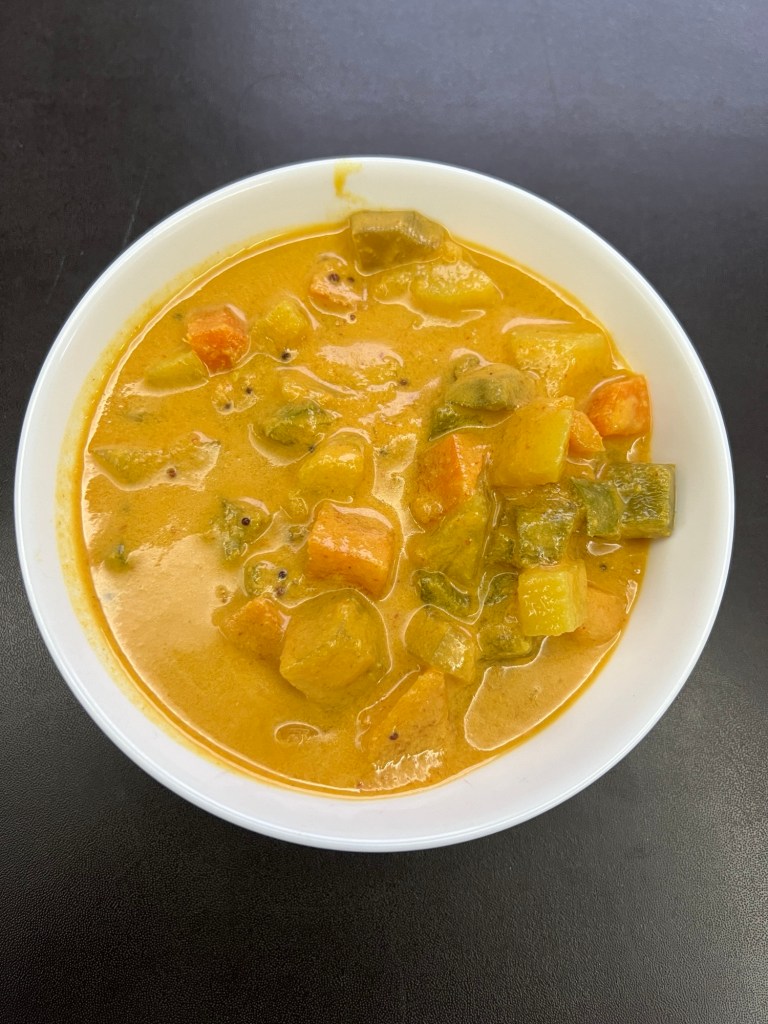
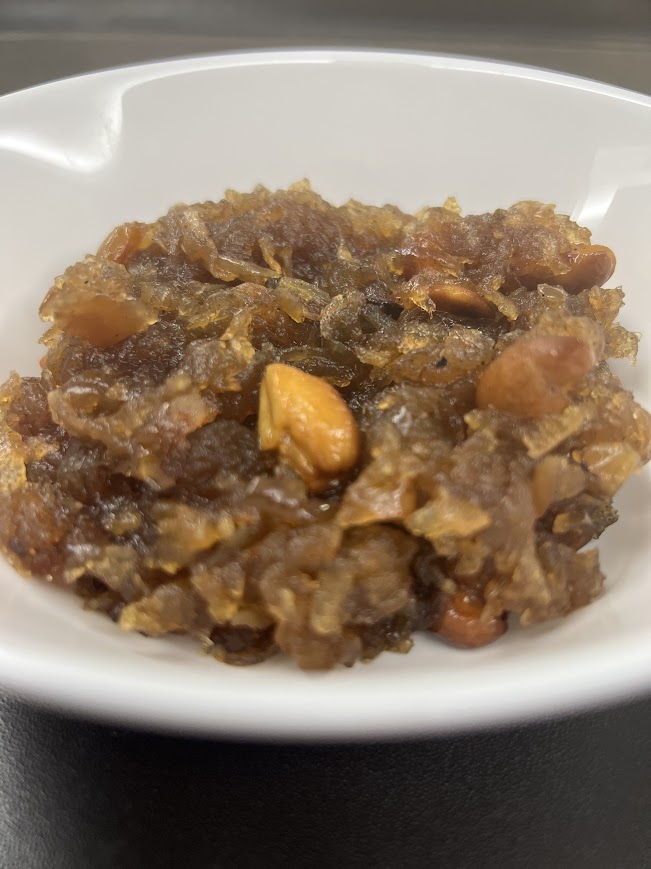
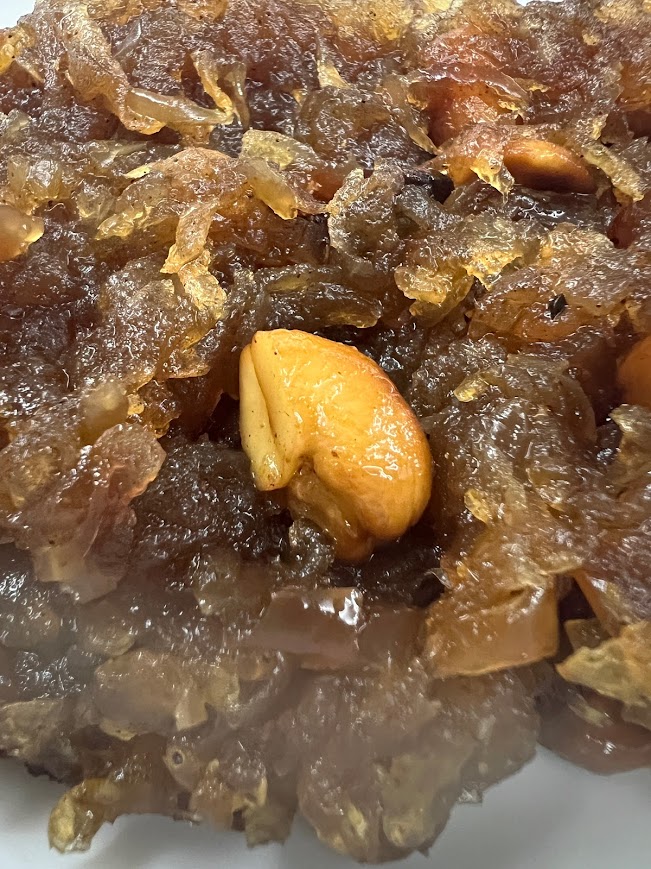
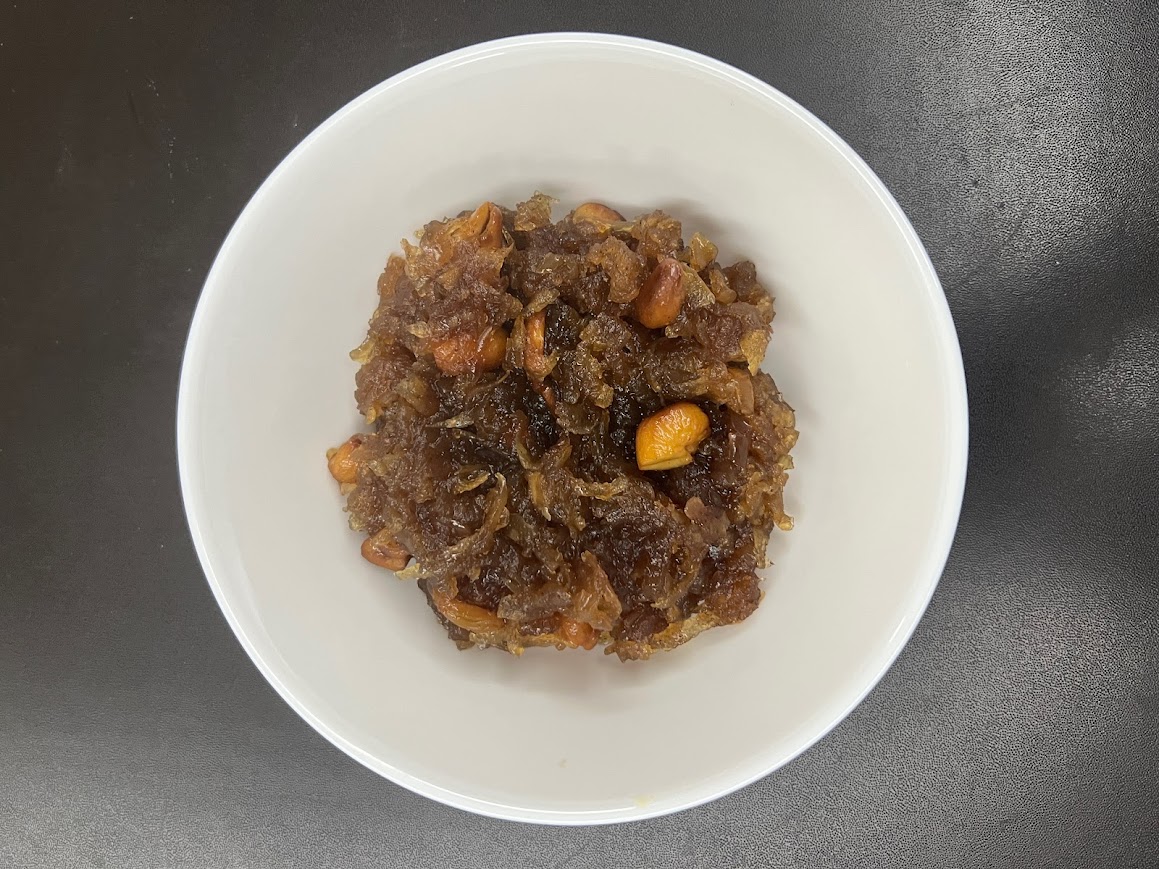
And to start the new year, here’s a sweet dish that I made some time ago. I had many apples at home, which would all start to go bad at the same time. So instead of requesting everyone to eat them, I decided to make apple halwa with some of them. It was delicious and is something I will make again when I am craving something sweet.

Apple Halwa

Ingredients:

  • 3 medium-sized red apples
  • 1.5 tbsp ghee
  • ¼ cup + 2 tbsp sugar, brown sugar, or jaggery
  • ½ tsp ground cinnamon
  • 2 tbsp raisins
  • 10–12 almonds and cashew nuts

Method:

  • Peel and grate the apples and set them aside.
  • Finely chop the almonds and cashew nuts.
  • Heat the ghee in a pan over medium heat.
  • Add the chopped nuts and once they are brown, remove them from the pan with a slotted spoon and keep them in a kitchen towel until later.
  • Add the grated apples and cook, stirring occasionally, until softened and most of the liquid has evaporated. This should take about 7 to 8 minutes.
  • Add the sugar or jaggery and mix well.
  • Once the sugar or jaggery has melted into the apple, add the cinnamon and continue cooking, stirring constantly, until the mixture thickens and pulls away from the sides of the pan, which should take about 5–7 minutes more.
  • If the apples are sour, you may need to add more sweetener to taste and adjust the sweetness if needed.
  • Add the raisins, almonds and cashew nuts, keeping some aside to garnish and mix well.
  • Serve warm, garnished with chopped nuts.

Notes:

  • Use any variety of red apples you like, but sweet and crisp apples will work best.
  • For a smoother texture, the apples can be blended after cooking before adding them back to the pan.
  • This halwa can be stored in an airtight container in the refrigerator for up to 3 days.

Recipes: Methi Malai Mattar Paneer

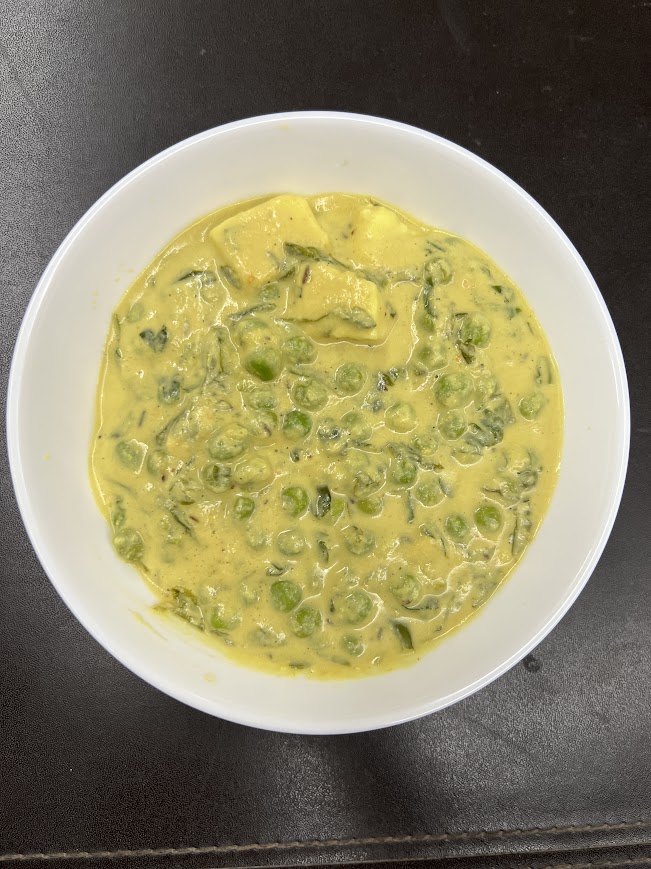
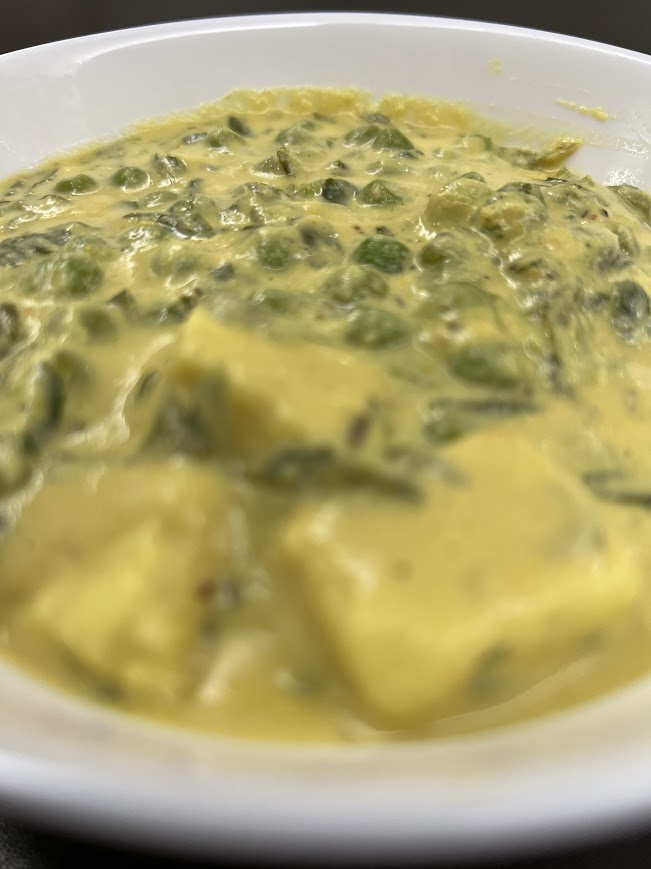
A restaurant staple, Methi Malai Matar is a popular North Indian dish known for its creamy texture and delightful combination of fenugreek leaves, or methi, green peas, or mattar, Indian cottage cheese, or paneer and a rich cream-based gravy. Its origin can be traced back to the Indian state of Punjab, where rich and indulgent dishes are prevalent due to the region’s farming and dairy culture. The dish gained popularity over time due to its exquisite flavor profile, combining the slight bitterness of methi with the sweetness of green peas and the richness of cream. I had made this sometime earlier in the year and forgot about it until I chanced upon the photo while clearing my phone’s photo gallery.

Methi Malai Mattar Paneer

Ingredients:

  • 2 cups fresh fenugreek leaves or methi, washed and finely chopped
  • 1 cup green peas, fresh or frozen
  • 200 gm paneer, cubed
  • 2 large onions, finely chopped
  • 2 tomatoes, finely chopped
  • ½ cup fresh cream or yoghurt.
  • 2 tbsp oil or ghee
  • 1 tsp cumin seeds
  • 1 tsp ginger-garlic paste
  • ½ tsp turmeric powder
  • 1 tsp red chilli powder (more or less according to your spice preference)
  • 1 tsp coriander powder
  • ½ tsp garam masala
  • 2 tbsp kasuri methi
  • Salt to taste
  • Water, as needed
  • Finely chopped fresh coriander leaves to garnish

Method:

  • Heat oil or ghee in a pan or kadai over medium heat. Add cumin seeds and let them splutter.
  • Add finely chopped onions and sauté until they turn translucent and golden brown.
  • Stir in ginger-garlic paste and sauté for a couple of minutes until the raw aroma disappears.
  • Add the finely chopped tomatoes and cook until they become soft and the oil starts to separate from the mixture.
  • Add the turmeric powder, red chilli powder, coriander powder, and salt. Mix well and cook for a few more minutes to blend the spices.
  • Add the chopped methi or fenugreek leaves to the pan and sauté for 5-7 minutes until they wilt and become tender. Stir occasionally.
  • Once the methi leaves are cooked, add green peas and paneer cubes to the mixture. Mix gently to combine the ingredients.
  • Pour in the fresh cream or yoghurt and stir well. If you prefer a creamier consistency, you can adjust the quantity of cream or yoghurt to your liking.
  • Add water as needed to achieve your desired gravy consistency. Cover the pan and let the curry simmer for 5-7 minutes to allow the flavours to meld together.
  • Sprinkle garam masala over the curry and give it a final stir.
  • Garnish with finely chopped chopped coriander leaves.

Serve hot with rice or rotis.

Note: You can use cashew paste as a dairy-free alternative and even in the recipe above to make it creamier or for a special occasion.

Recipes: Chana Dal Sundal

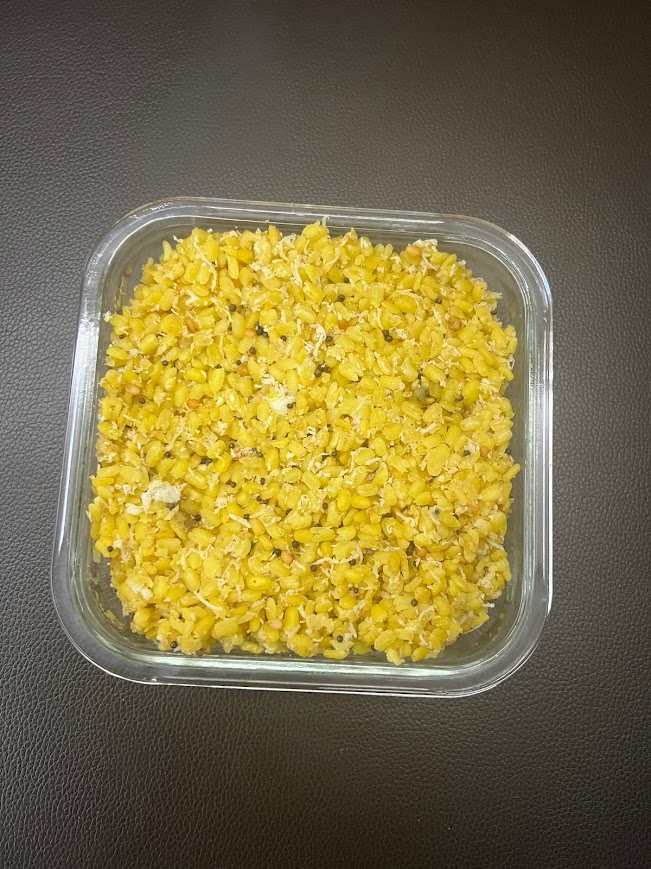
During the festival of Navaratri, I usually make something as an offering or prasadam to the goddess every day. In previous years, I have also made a sweet to go along with the sundal, but this year, because I have to go to work in the morning, I have been making only sundals as an offering.

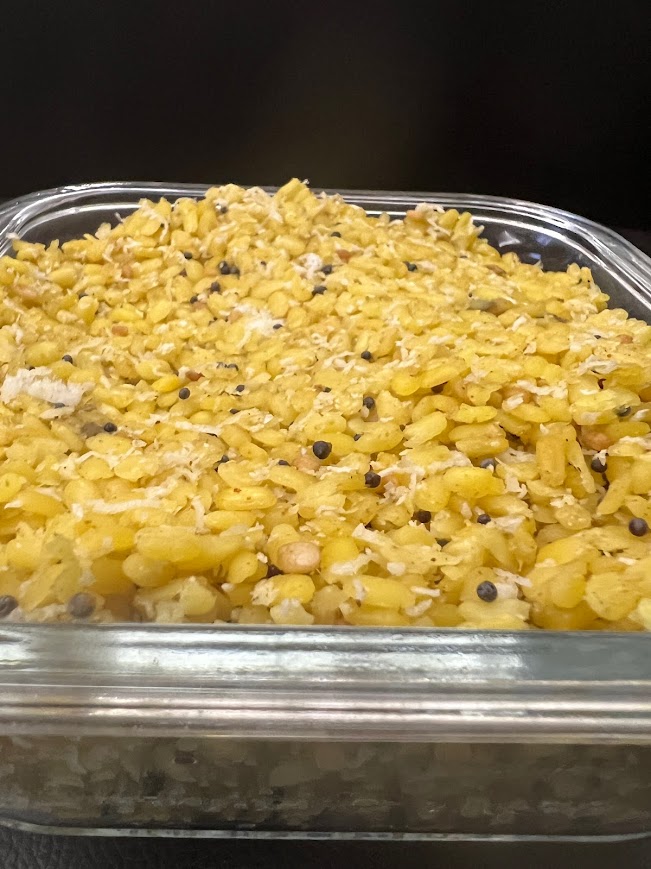
Chana Dal Sundal is made from split chickpeas or chana dal which is healthy and protein-rich. And the best part about sundals is that you can make it in under 10 minutes, which is such a time saver when you are rushing in the morning!

Chana Dal Sundal

Ingredients:

  • 1 cup chana dal or split chickpeas
  • 2 tbsp oil or ghee
  • ½ tsp mustard seeds
  • ½ tsp split urad dal
  • ¼ tsp asafoetida
  • 2-3 dried red chillies, broken into pieces
  • 10-12 curry leaves, torn
  • 2 tbsp grated coconut, fresh or desiccated
  • Lemon juice to taste
  • Salt to taste
  • Coriander leaves to garnish

Method:

  • Wash the chana dal thoroughly under running water, and then soak it in 2 cups of water for 2-3 hours. After soaking, drain the water and set the chana dal aside.
  • Cook the chana dal with fresh water and a pinch of salt until it is just cooked. We don’t want it cooked like a dal, just until a piece can get crushed between your thumb and index finger.
  • Heat oil in a pan or kadai over medium heat.
  • Add mustard seeds and let them splutter. Then add urad dal, asafoetida, dried red chillies, and curry leaves. Sauté for a minute until the spices release their aroma.
  • Add the cooked chana dal and salt to the pan. Stir well to coat the dal with the tempered spices.
  • Reduce the heat to low and cook the chana dal, stirring frequently, for about 5 minutes.
  • Add the grated coconut and stir well.
  • Turn off the heat, drizzle with lemon juice and stir well.
  • Garnish with coriander leaves and serve hot or cold.

Other Navaratri Sundal recipes: Green Moong Sundal, Green Peas Sundal, Peanut Sundal, Sweet Corn Sundal, Chickpea Sundal

Recipes: Sev Tamatar ki Sabzi or Sev Tameta nu Shaak

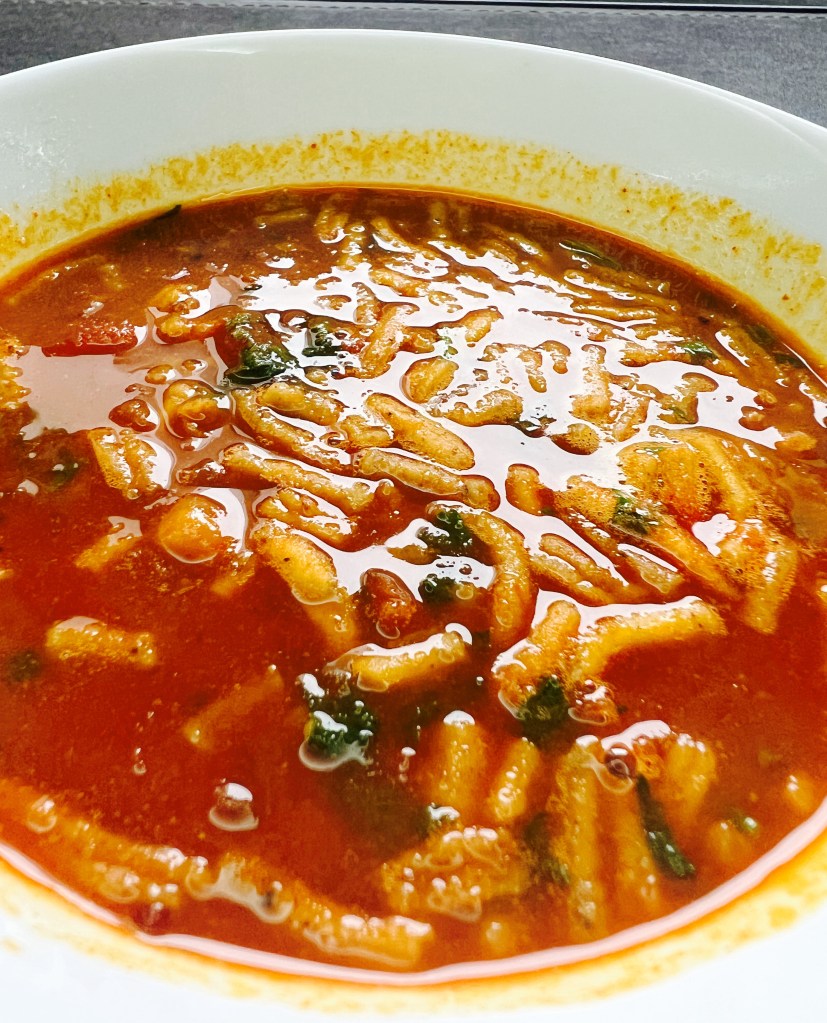
For viewers of Tarak Mehta ka Ulta Chashmah, this recipe will be a familiar one. I ate this a long time ago when I was in school and then used to hear about it in shows and online. I was chatting with a friend the other day and she mentioned she had recently made the dish and I had cravings to make it. This is a fairly easy dish to make and from start to end, will not take more than 20-30 minutes, depending on the quantity you are making.

From the heartlands of Gujarat, this sabzi blends the sweetness and tartness of tomatoes with the crunch of savoury sev. Legend has it that the recipe originated in the kitchen of a Gujarati household, where the homemaker sought to create a delightful dish using the bounty of tomatoes from her garden. Faced with an abundant harvest, she combined tomatoes, spices, and a handful of sev to fashion a dish that was an instant hit with her family and the recipe soon spread like wildfire across the state. Today, this dish is a staple in Gujarati households, for its taste and ease of making from ingredients commonly found in an Indian kitchen. And because this does not use onions or garlic, this can be made even on festive days when you won’t use these ingredients. So let’s start making this yummy dish.

Sev Tameta nu Shaak or Sev Tamatar ki Sabzi

Ingredients:

  • 3 large ripe tomatoes, finely chopped
  • 1 cup sev or fried gram flour vermicelli
  • 2 tbsp oil
  • 1 tsp mustard seeds
  • 1 tsp cumin seeds
  • ¼ tsp asafoetida
  • 1 tbsp ginger and green chilli paste
  • ½ tsp turmeric powder
  • 1 tsp red chilli powder (adjust to taste)
  • 1 tsp coriander powder
  • 1 tsp cumin powder
  • Salt to taste
  • 2 tbsp jaggery or sugar
  • 1 cup water
  • Fresh coriander leaves to garnish

Method:

  • Heat oil in a pan over medium heat. Add mustard seeds, cumin seeds and asafoetida, letting them sizzle for a few seconds.
  • Then add the ginger and chilli paste and let it cook for a few seconds.
  • Add the finely chopped tomatoes to the pan and cook until they turn soft and mushy, stirring occasionally.
  • Reduce the heat to low and add turmeric powder, red chilli powder, coriander powder, cumin powder, and salt. Mix well and cook for 2-3 minutes.
  • Pour in the water and add jaggery or sugar. Stir until the jaggery dissolves completely.
  • Allow the curry to simmer on low heat for 5-7 minutes, allowing the flavours to meld together.
  • Add half the sev to the tomatoes and gently mix to coat the sev with the sauce.
  • Turn off the heat and garnish with fresh coriander leaves.
  • Just before serving, add the balance sev, so that there is still a crunch to the dish and serve hot with roti.

Notes: Don’t use the nylon sev used for bhelpuri and other chaat, instead use the thicker ones. This will mean that the sev does not dissolve in the sabzi and there is a bite. I also like to keep some sev separate so that as you dish it up, you add it as a garnish.

Recipes: Kada Prasad

Today’s recipe brings back lots of memories from my childhood. The aunty opposite my house used to make this as a prasad or offering every full moon day. Aunty would share some with us and I would eat the lion’s share. The last few days, I suddenly started craving this sweet. So I made some and thought I would share it with everyone since it was so yummy.

Kada Prasad is the offering served in the Sikh temple or Gurudwara. Seva, or service, lies at the heart of Sikhism. It is no surprise then that the act of serving kada prasad in gurudwaras also takes from this belief. Gurudwara translates to “the door to the guru”, and it is believed that a guru never sends back a devotee empty-handed or hungry. So, a sweet and divine blessing is offered in the form of kada prasad, which you accept by cupping your hands. Since the prasad is considered a sacred sweetmeat, it is rude to turn it down. Both the offering and receiving of this sweet signifies community service and hospitality—two virtues that are very close to the heart of Sikhs. The ones performing seva by serving food usually dole out equal quantities from a large bowl.

It’s a very simple recipe with ghee, wheat flour and sugar used in equal proportions and water double the amount of ghee, wheat flour or sugar. The resulting halwa becomes kada prasad after it is offered to the Lord, otherwise, it is plain wheat halwa. On to the recipe.

Kada Prasad or Atte ka Hakwa or Wheat Flour Halwa

Ingredients:

  • 1 cup wheat flour
  • 1 cup sugar
  • 1 cup ghee
  • 2 cups water

Method:

  • Heat the ghee in a pan and let the ghee melt.
  • Once the ghee has melted and is hot, add the wheat flour and stir constantly, making sure there are no lumps.
  • Cook until the wheat flour is golden and aromatic.
  • Now add in the sugar and mix well. Once the sugar has melted and the paste becomes slightly running, you can start adding the water.
  • Add water bit by bit and mix well.
  • Continue cooking, stirring constantly until everything comes together and the halwa starts to ooze the ghee.
  • Switch off the flame and let it cool a bit before serving warm.

Notes: After making it, here are my thoughts. The amount of sugar was just enough for us who prefer sweets to be less sweet than usual. But if you are someone who likes things to be sweeter, then you can increase the amount of sweet to probably 1.25 cups. When frying the wheat flour with the ghee, do not worry if you do not get the dark brown colour of the halwa. It was the same for me too, only after I added the water, did the sugar and atta caramelise and become darker. Also when adding water, add hot water and add one cup at a time. Let the first cup of water get absorbed into the flour and then add the second cup. I also found the amount of ghee to be slightly too much, so the next time I would make it, I would reduce it to about 0.75 cup.