Travel Bucket List: Malaysia Part 31 – Terengganu Part 3

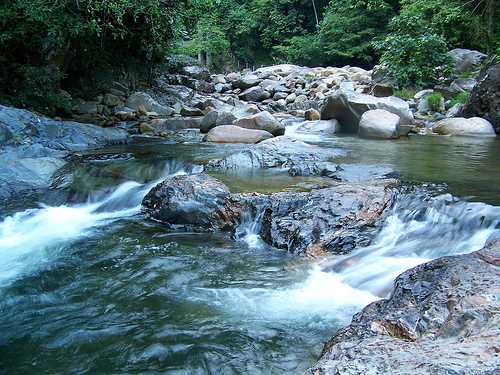
Situated in the Sekayu Recreational Forest, the Sekayu Waterfall is a hiking haven for beginners, sitting 55 metres above sea level. Mature trees looming over the falls provide ever-refreshing shade. Rounded boulders strewn alongside its banks, at some places, form clear pools for swimming and colourful fish ponds. The falls are open between 8 am and 6 pm and have an entry fee of RM 1 per person.

A short boat ride away from Pengkalan Gawi, Lasir Waterfall is the most popular picnic spot in Tasik Kenyir. With a majestic fall of almost 153 metres, Lasir drops gracefully onto a multi-tiered boulder, forming showers of foaming white water. You can walk to the waterfall along trails past fruit orchards and enjoy picnics in the rainforest by the waterfall.

Merang is a dainty port town that is famous for its diving spots. The town acts as the gateway to the beautiful islands of Pulau Lang Tengah and Pulau Redang. One can spot many speedboats ferrying people to and fro from the town to the islands. This fishing village has little but is beautiful. One can take a quick stroll on the white-sand beaches that are encompassed by tall and elegant palm trees.

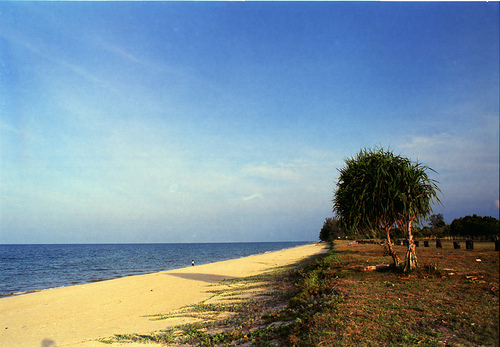
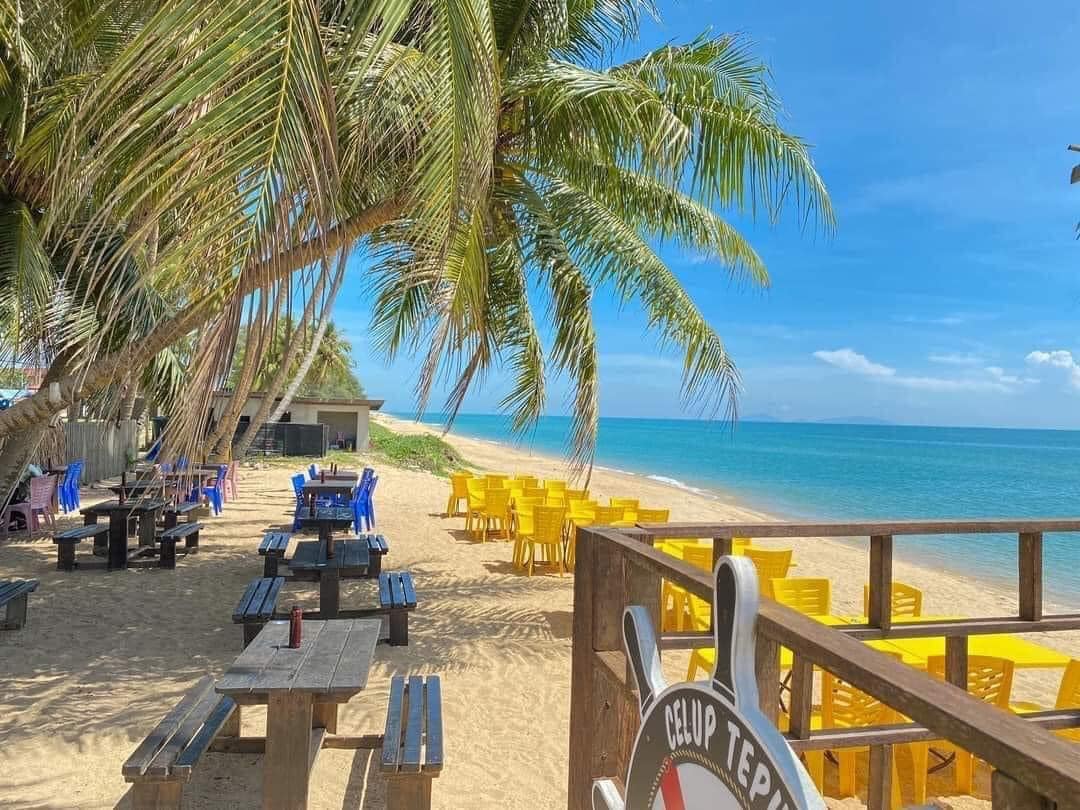
Penarik is a fishing village town, ideal for a taste of the local Malaysian culture. Being close to the Perhentian Islands, this coastal village has a pretty windswept beach that is perfect for a relaxing rest stop away from the daily hassles of life for a couple of days. One can stroll down the soft sands while it is breezy in this less crowded town and one shouldn’t forget to try the local seafood here while they’re here.

Penarik is famous for its awe-striking firefly sanctuary. One should take an evening or night ride on a boat by the swampy mangrove forests and the Sonneratia caseolaris trees, which are locally known as the Berembang, to see thousands of fireflies in an unusually harmonious synchronisation as they dance among the tall, dark trees, waving eerily. This lesser-seen view has been linked to the mating behaviour of the fireflies.

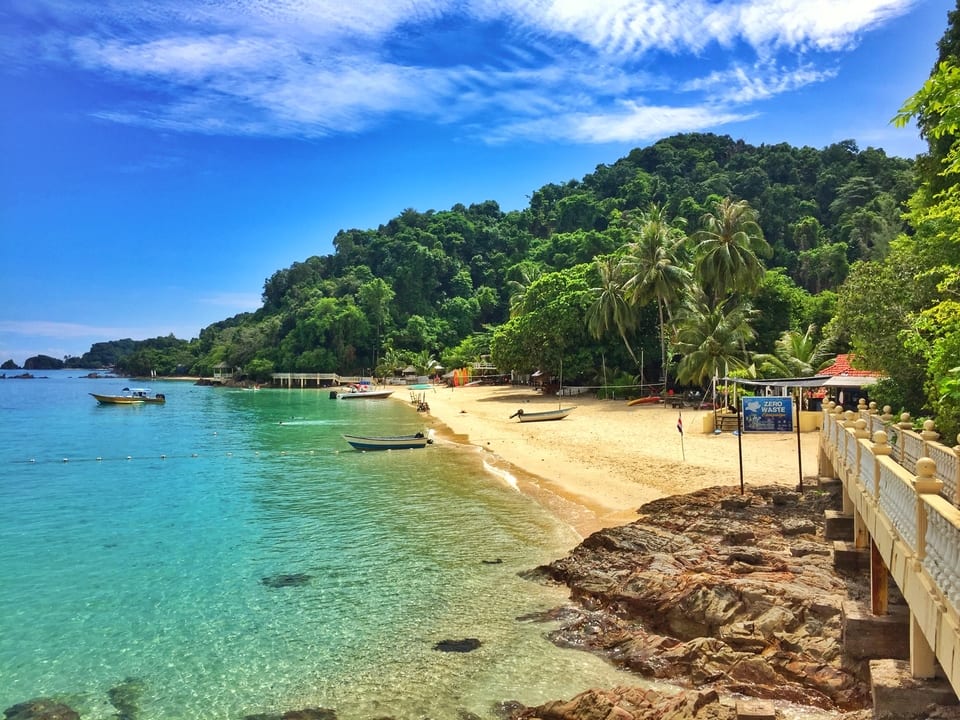
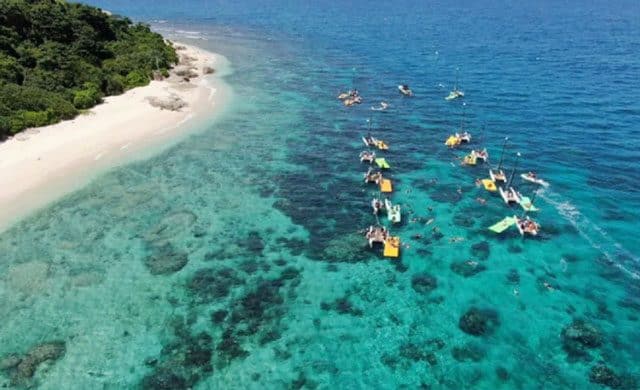
Kapas Island is a tranquil island located 6 km from Marang. The island’s name translates to Cotton Island in Malay, referring to its white, sandy beaches. It is the most accessible of the East Coast islands and is widely known as a paradise for kayaking, diving and snorkelling. This tranquil, scenic island boasts clear seawater, jungles, coral reefs and white sand beaches. The island itself isn’t too big and can be explored in a day or two. However, the ambience is extremely peaceful and refreshing from the daily hassles. It is an ideal place for a romantic getaway or to spend a weekend with friends or family. Adventure lovers can hike in Gem Island and Bukit Singa and trek in the jungle. One can also bask in the sun and the splendid views. Places to stay range from camping on the beach to booking a hotel or resort, as Kapas Island has some of the cheapest island resorts in Malaysia. The island shuts down during the monsoon season from November to March.

Snorkeling is the most famous and key activity on the island. Tourists can also rent snorkels for about RM 10 or invest in a snorkelling tour for about RM 40. Diving is also an enjoyable experience here, with many dive shops available that offer gear. Underwater diving is pretty popular on the island’s western shore and shallow coral reefs. An annual swimathon event is held here that attracts a lot of swimmers and competitors. One can also race in kayaks across the beaches to tour the island if they don’t want to walk for RM 20 an hour. Hiking at Bukit Singa can be done on the jungle trek that goes across the island. It takes about 45 minutes to an hour to complete the trek. There is a substantial amount of climbing and crossing dried river beds along the way. Gem Island is a must-visit and one shouldn’t forget to wear proper shoes and bring water and sun protection along with them! The famous white-sand beaches and palm trees give the island its recognition. They are kept mostly clean throughout the year. There is a pier on the island from which one can spot black-tipped sharks by the reef. The island also has breathtaking sunsets and early sunrises and the soft and hard corals are a sight to behold. Research about Amphidromus snails is conducted extensively in this area.

Tenggol Island, traditionally called Pulau Tenggol, is the most extreme island in the chain of the Pulau Islands. It is a pleasant vacation spot to rewire and relax, as there is little cell reception. Activities like clear-water diving, snorkelling and drift diving are popular. The island is filled with corals to gape at. This little paradise provides a scenic destination. Whale sharks can also be seen and though previously uninhabited, today it has hotels for tourists. The end of summer, mainly from July to August, is the best time to visit Tenggol Island because of the soothing climate. One should avoid the months of October to February, as the weather is unpredictable and being on the beach makes the island mostly closed to visitors. Diving and snorkeling are the most popular and enjoyable activities. There are around 20 sites for diving available, like Batu Chanang and Coral Garden. Day and night diving is also available, along with clear-water diving and drift diving. The dive equipment that is provided is mostly in good condition. Non-divers can leisurely snorkel.

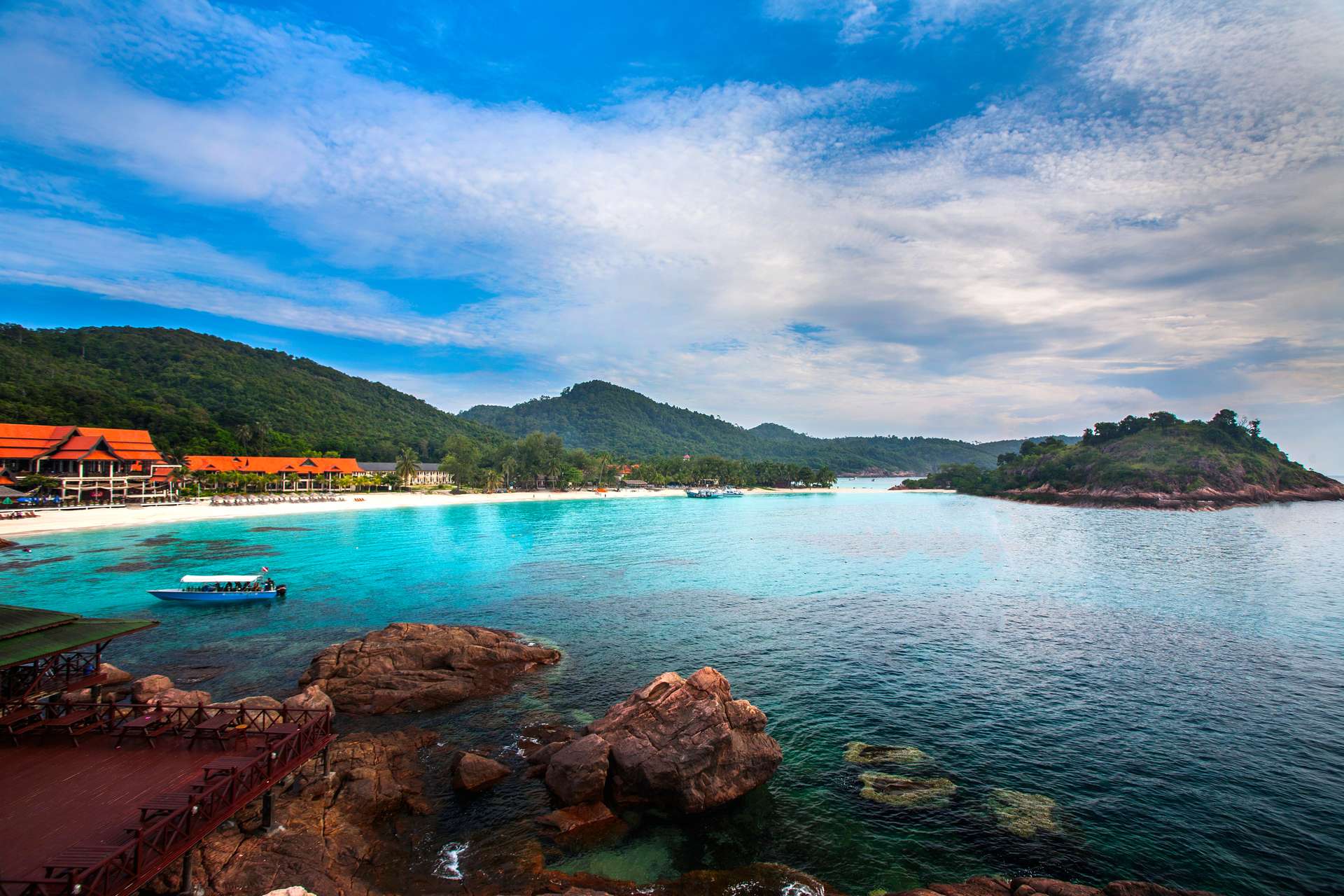
Redang Island is one of the largest islands on Malaysia’s East Coast. Located in the South China Sea, it is a part of the Kuala Nerus District. It is a group of islands well-known for their crystal-clear water, picturesque diving, pristine coral reefs and underwater life. A beautiful group of unexplored islands off Terengganu’s coast, Redang Island is packed with cosy resorts, spas, restaurants and cafés. Tourists can also enjoy the thrills of water sports and beach sports, with some lazing around under the sun to make the trip memorable. From the beautiful scenic view at the beaches around the island to variants of undiscovered and untouched flora and fauna, Redang Island is surely a perfect place to enjoy nature. Pulau Redang is just a 53-kilometer ferry ride from Kuala Terengganu and is famous for its scuba diving. From sea diving in clean water to experiencing underwater beauty to snorkelling, tourists can enjoy the various water sports available.

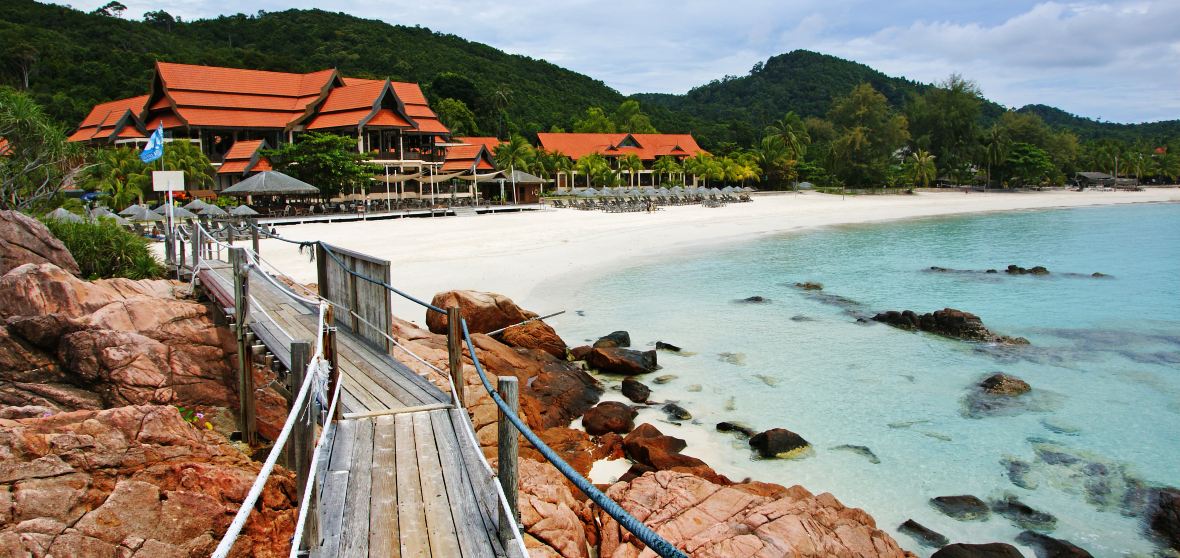
Tourists can also explore various small islands near Redang. Redang should be avoided between November and February, as it is the monsoon season and resorts and hotels are closed during this time. One should keep cash and credit cards handy, as the island doesn’t have many ATM services. As Redang lies under the protected area of a marine park, there is an entry fee of RM 30 for adults and RM 15 for children. The most famous beach is Taaras Beach. Long Beach, Teluk Dalam Beach and Mutiara Beach are among the other popular beaches. Among these, most of the resorts and hotels are located at Long Beach, also known as Pasir Panjang. All year round, except during monsoons, the water is so lucid that one can spot several marine animals. Each resort has its own diving school, with the most famous being Redang Bay Divers and Redang Divers. These diving schools teach how to dive and even provide licences called open water licenses or PADI. Diving costs about RM100 per dive. It is cheaper if one includes it with their stay package at the resort. Though Redang Island is well-known for diving, snorkelling is also an option. The equipment is provided by the resorts and schools for rent and even for purchase. A walk in the lush green forests of Redang is a must. Long Beach is a 45-minute walk through the jungles from Kampung Baru. Pasir Chagar Hutang, located in the northeast part of Redang, is also very well-known for turtle watching. Since Redang Island consists of nine small islands, one can also pay a visit to these islands during their stay. Also, try to avoid Redang during Malaysian public holidays.

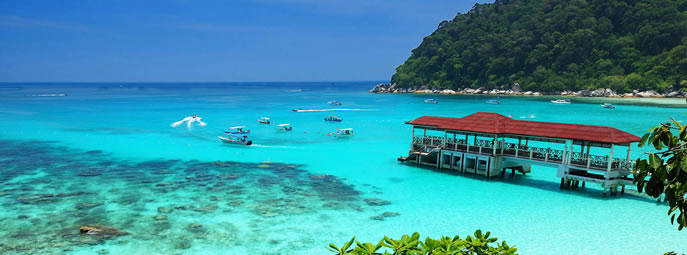
The Perhentian Islands are a group of islands in the Besut District. The islands are beautifully packed with clear turquoise water, lush green forests, white grainy sand and untouched coral reefs. They are part of Pulau Redang National Marine Park. The Perhentian Islands also fall under the Marine Park, which aims at preserving the rich flora and fauna of the area. Therefore, fishing is not allowed on or near the island. The corals and marine life of the Perhentian Islands are rich and mesmerising and are popular for water activities like diving and snorkelling. Several diving schools on the island provide tourists with diving training and an open-sea license called PADI. These schools charge approximately RM 100 per dive per person. Snorkeling is also very popular among tourists. Snorkeling equipment can be rented for RM 13 per day per equipment set. Adam and Eve Beach and Turtle Bay Beach on Besar are ideal for snorkelling. While on Kecil, D’Lagoon is perfect. One can also visit and explore the Turtle Sanctuary at Turtle Bay.

Perhentian Island consists of seven islands, of which two main islands are Perhentian Besar and Perhentian Kecil. Perhentian Kecil is the smaller and busier of the two. The remaining five are uninhabited. Perhentian Kecil has two main beaches: Long Beach and Coral Bay. Perhentian Besar is also referred to as the bigger island and attracts families and couples. Perhentian Besar is more expensive, luxurious and peaceful than Perhentian Kecil, while Perhentian Kecil is known as a backpacker’s go-to beach. The conservation fee for entering the Perhentian Islands is payable at the Kuala Besut jetty, which is the only way to reach the island and costs RM 30 for an adult and RM 15 for a child.

The Perhentian Islands are a great spot for diving as well as snorkeling, with coral reefs off both islands and nearby. The most popular snorkelling is off Long Beach on Kecil and in front of the Coral View Island Resort in Besar. Snorkeling is organised by most resorts and costs around RM 40 for two people. There are multiple options for scuba divers, with dive centres spread across the island. A PADI open-water course costs around RM 1000. Perhentian Island is a great place for hiking, offering several hiking trails that offer magnificent views. While hiking, one may come across dense forests, lush green peaks, beautiful beaches, resorts and snorkeling spots. One can take the trail from Long Beach to Fisherman Village, Long Beach to Coral Bay or Long Beach to the Wind Mills.

Nestled on the Perhentian Islands, the Main Beach stretches from the western tip up until the southern tip of the island. This beach houses rocky headlands and ivory-white sand. Further, it is as long as the Long Beach on Kecil. You can also indulge in activities like swimming and snorkelling at the Main Beach. Teluk Dalam is a beautiful beach that is nestled in the southern part of the island. One can find ivory-white sand on this beach, which is a true treat to the eye. Several snorkelling spots can also be found on the western edge of Teluk Dalam. Further, many hotels and restaurants are also found here. Love Beach is a beautiful beach nestled on the southern tip of the Perhentian Islands. One needs to cross rugged and steep terrain to reach Love Beach. This beach is a great spot for a romantic getaway since it is not crowded and is secluded from the main island.

Long Beach is a pristine beach nestled on the Perhentian Kecil Island of Terengganu. This beach is a great spot for those who wish to relax and rejuvenate. One can dip their feet in crystal-clear water or just enjoy the beauty of the elegant palm and coconut trees nearby. One can even rent an umbrella on the beach if they wish to relax on the ivory-white sandbanks. Long Beach is also a great spot for diving. One might come across beautiful corals and other marine creatures during their dive at Long Beach. Coral Bay offers a great sunset view to visitors. The reef close to the shore is ideal for snorkelling. Several restaurants, cafes and resorts can also be found at Coral Bay. Teluk Kerma
is a beautiful bay situated on the Perhentian Islands. While this bay is small in size, it is quite peaceful and quiet, which makes it a great place to escape from the hustle and bustle of city life. Several diving and snorkelling options are also available in Teluk Kerma. One can also visit the nearby beaches, which are located within walking distance.

A jungle trek is a must while visiting the Perhentian Islands. The most popular trekking trails are from Flora Bay to PIR Beach and from Flora Bay to Tuna Bay. The jungle trails of the Perhentian Islands mainly pass through tropical rainforests, where one will come across several species of flora and fauna. To explore the islands on their own, one can opt for a kayak. Several kayaks are available for rent. While paddling through the waters, one might come across several isolated beaches. If one has their snorkel gear handy, they can dive into the beautiful waters.

All the monetary transactions on the island take place in cash. There are no banks or ATMs on the island. Perhentian Island is secluded, further away and has a very weak network. WiFi is only available in a very few spots. Most of the restaurants and cafes charge separately for WiFi. Fishing, collecting shells, touching corals and littering are strictly prohibited on the island. One should keep an eye out for monitor lizards and monkeys. Petty theft is common on the island. Since tourists will carry cash on the island, they are targeted. Tap water is not safe and is usually salty. It is recommended that one purchase their water bottles throughout the stay.

That’s all about Terengganu. It is lovely and, as of yet, mostly undiscovered, so there are a lot of hidden gems in the state. The next state we will be exploring will be the state of Penang, so keep watching this space!


In My Hands Today…

The Six: The Untold Story of America’s First Women Astronauts – Loren Grush

When NASA sent astronauts to the moon in the 1960s and 1970s, the agency excluded women from the corps, arguing that only military test pilots—a group then made up exclusively of men—had the right stuff. It was an era in which women were steered away from jobs in science and deemed unqualified for space flight. Eventually, though, NASA recognized its blunder and opened the application process to a wider array of hopefuls, regardless of race or gender. From a candidate pool of 8,000, six elite women were selected in 1978: Sally Ride, Judy Resnik, Anna Fisher, Kathy Sullivan, Shannon Lucid, and Rhea Seddon.

In The Six , acclaimed journalist Loren Grush shows these brilliant and courageous women enduring claustrophobic—and sometimes deeply sexist—media attention, undergoing rigorous survival training, and preparing for years to take multi-million-dollar payloads into orbit. Together, the Six helped build the tools that made the space program run. One of the group, Judy Resnik, sacrificed her life when the Space Shuttle Challenger exploded at 46,000 feet. Everyone knows of Sally Ride’s history-making first space ride, but each of the Six would make their mark.

In My Hands Today…

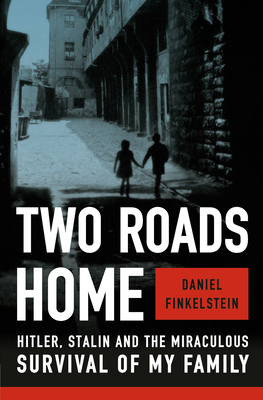
Two Roads Home: Hitler, Stalin, and the Miraculous Survival of My Family – Daniel Finkelstein

Daniel Finkelstein’s grandfather Alfred Wiener was a German Jewish intellectual leader who tolled an early warning of the impending Holocaust and became anarchivist of Nazi crimes.

He relocated his family to safety in Amsterdam, where they became close with Anne Frank’s family. But they were eventually separated, and Daniel’s mother Mirjam was sent to Bergen-Belsen with her mother and sisters while Alfred worked feverishly to free them. Finkelstein’s father, Ludwik, grew up in a prosperous Jewish family in Poland where his father was a patriotic hero of the Great War.

But when Stalin took control, Finkelstein’s grandfather was deported to Siberia, while Ludwik and his mother were sent to face freezing winters and harrowing forced labourm conditions in Kazahkstan.

Love and Murder is a page-turning account of ingenuity, bravery and the incredible coincidences that brought Daniel’s parents together as refugees in Britain. The story features secret archives, forgery and theft, and sweeps across Europe to show the expanse of the war. Moving, engrossing and inspiring, Love and Murder will profoundly touch all who read.

In My Hands Today…

Outlive: The Science and Art of Longevity – Peter Attia with Bill Gifford

Wouldn’t you like to live longer? And better? In this operating manual for longevity, Dr. Peter Attia draws on the latest science to deliver innovative nutritional interventions, techniques for optimizing exercise and sleep, and tools for addressing emotional and mental health.

For all its successes, mainstream medicine has failed to make much progress against the diseases of aging that kill most people: heart disease, cancer, Alzheimer’s disease, and type 2 diabetes. Too often, it intervenes with treatments too late to help, prolonging lifespan at the expense of healthspan, or quality of life. Dr. Attia believes we must replace this outdated framework with a personalized, proactive strategy for longevity, one where we take action now, rather than waiting.

This is not “biohacking,” it’s science: a well-founded strategic and tactical approach to extending lifespan while also improving our physical, cognitive, and emotional health. Dr. Attia’s aim is less to tell you what to do and more to help you learn how to think about long-term health, in order to create the best plan for you as an individual. In Outlive , readers will discover:

  • Why the cholesterol test at your annual physical doesn’t tell you enough about your actual risk of dying from a heart attack.
  • That you may already suffer from an extremely common yet underdiagnosed liver condition that could be a precursor to the chronic diseases of aging.
  • Why exercise is the most potent pro-longevity “drug”—and how to begin training for the “Centenarian Decathlon.”
  • Why you should forget about diets, and focus instead on nutritional biochemistry, using technology and data to personalize your eating pattern.
  • Why striving for physical health and longevity, but ignoring emotional health, could be the ultimate curse of all.

Aging and longevity are far more malleable than we think; our fate is not set in stone. With the right roadmap, you can plot a different path for your life, one that lets you outlive your genes to make each decade better than the one before.

Travel Bucket List: Malaysia Part 5 – Malacca Part 1

The state of Malacca or Melaka is the next state we will explore. Located in the southern region of the Malay Peninsula, facing the Strait of Malacca, it has Malacca City, also known as the Historic City, which has been listed as a UNESCO World Heritage Site since 2008. The state is bordered by Negeri Sembilan to the north and west and Johor to the south. The exclave of Tanjung Tuan also borders Negeri Sembilan to the north.

Although it was the location of one of the earliest Malay sultanates, namely the Malacca Sultanate, the local monarchy was abolished when the Portuguese conquered it in 1511. The head of state is the Yang di-Pertua Negeri or Governor, rather than a Sultan. Malacca is noted for its unique history and it is one of the major tourist destinations in Malaysia. With a highly strategic state position for international trade routes, Malacca was once a well-known international trade centre in the East. Many traders anchored in Malacca, especially traders from Arabia, China and India, traded at the port of Malacca and from there were born many of the descendants and tribes that exist in Malacca to this day. Malacca is filled with a great diversity of races and ethnicities reflecting its history. Malays, Chinese, Indians, Baba Nyonya, Kristang, Chitty and Eurasians are significant ethnic groups living in the state today.

The state’s name dates to a popular legend surrounding the founding of the sultanate preceding it by Parameswara who sought to find a new spot to establish his new kingdom after fleeing Singapura which fell to the Majapahit army. As the story goes, Parameswara was resting under a tree near a river during a hunt, when one of his dogs cornered a mouse deer. In self-defence, the mouse deer pushed the dog into the river. Impressed by the courage of the deer, and taking it as a propitious omen of the weak overcoming the powerful, Parameswara decided then and there to found an empire on that very spot. He named it Malacca after the tree where he had just taken shelter, the Malacca tree or Pokok Melaka in Malay. However, some historians argue that the story shows remarkable similarities with and was probably adapted from folk tales from Kandy, Sri Lanka, and Pasai, Sumatra, both of which pre-date Malacca.

Another account about the origin of Malacca’s name says that during the reign of Muhammad Shah who ruled between 1424 and 1444, the Arab merchants called the kingdom Malakat which is Arabic for a congregation of merchants because it was home to many trading communities. One theory suggests, as mentioned in Suma Oriental by Tomé Pires, that it is derived from the Javanese terms melayu or mlayu which means to steadily accelerate or to run, to describe the strong current of a river in Sumatra that today bears the name Sungai Melayu or the Melayu River, which was later possibly adopted as Melaka denoting a place for the fleeing prince.

Before the arrival of the first Sultan, Malacca was a fishing village. The kingdom was founded by Parameswara, also known as Iskandar Shah. He found his way to Malacca around 1402 where he found a good port, one that was accessible in all seasons and on the strategically located narrowest point of the Malacca Straits. In collaboration with allies from wandering proto-Malay privateers of the Straits called the orang laut or the sea-people, he established Malacca as an international port by compelling passing ships to call there, and establishing fair and reliable facilities for warehousing and trade. In 1403, the first official Chinese trade envoy led by Admiral Yin Qing arrived in Malacca. Malacca’s relationships with Ming China granted it protection from attacks by Siam and Majapahit and the kingdom submitted to Ming China as a protectorate. This encouraged the development of Malacca into a major trade settlement on the trade route between China and India, the Middle East, Africa and Europe.

During the early 15th century, Ming China actively sought to develop a commercial hub and a base of operation for their treasure voyages into the Indian Ocean. In 1405, the Ming court dispatched Admiral Zheng He with an imperial order elevating the status of the port to a country. The Chinese also established a government depot as a fortified cantonment for their soldiers. The rulers of Malacca would pay tribute to the Chinese emperor in person. The early kings of Malacca understood that they could gain Ming China’s protection through skilful diplomacy and thereby could establish a strong foundation for their kingdom against Siam and other potential enemies. The Chinese involvement was crucial for Malacca to grow into a key alternative to other important and established ports. Hang Li Po, according to local folklore, a daughter of the Ming Emperor of China, arrived in Malacca, accompanied by 500 attendants, to marry Sultan Mansur Shah who reigned from 1456 until 1477. Her attendants married locals and settled mostly in Bukit Cina.

In April 1511, Alfonso de Albuquerque set sail from Goa to Malacca with a force of about 1200 men and 18 ships and conquered the city on 24 August 1511. After seizing the city, Afonso de Albuquerque spared the Hindu, Chinese and Burmese inhabitants but had the Muslim inhabitants massacred or sold into slavery. It soon became clear that Portuguese control of Malacca did not also mean that they controlled the Asian trade centred there. The Malaccan rule was severely hampered by administrative and economic difficulties. Rather than achieving their ambition of dominating Asian trade, the Portuguese disrupted the organisation of the network. The centralised port of exchange of Asian wealth had now gone, as was a Malay state to police the Straits of Malacca that made it safe for commercial traffic. Trade was now scattered over several ports among bitter warfare in the Straits.

The Jesuit missionary Francis Xavier spent several months in Malacca in 1545, 1546, and 1549. The Dutch launched several attacks on the Portuguese colony during the first four decades of the 17th century with the first attack taking place in 1606. On 14 January 1641, the Dutch defeated the Portuguese and captured Malacca, with the help of the Sultan of Johor and ruled Malacca from 1641 to 1798. But they were not interested in developing it as a trading centre, placing greater importance on Batavia or Jakarta and Java as their administrative centre. However, they still built their landmark, better known as the Stadthuys. In the Dutch era the building was white, today’s red paint is of a later date.

Malacca was ceded to the British in the Anglo-Dutch Treaty of 1824 in exchange for Bencoolen on Sumatra. From 1824 to 1942, Malacca was under the British East India Company and then a crown colony. It formed part of the Straits Settlements, together with Singapore and Penang. Malacca went briefly under the rule of the Empire of Japan between 1942 and 1945 during World War II.

After the dissolution of the crown colony, Malacca and Penang became part of the Malayan Union on 1 April 1946, which later became the Federation of Malaya on 1 February 1948. On 16 September 1963, Malaysia was formed with the merger of Malaya with Sabah, Sarawak and Singapore, and Malacca became part of the new country. On 15 April 1989, Malacca was declared a historical city and listed as UNESCO World Heritage Site on 7 July 2008.

Malacca sits upon the southwestern coast of the Malay Peninsula opposite Sumatra, with Negeri Sembilan to the north and west and Johor to the east. Malacca is located roughly two-thirds of the way down the west coast and commands a central position on the Straits of Malacca. Except for some small hills, Malacca is generally a lowland area with an average elevation below 50 meters above sea level. The peninsula of Tanjung Tuan, formerly known as Cape Rachado is an exclave of the state, situated on the coast of Negeri Sembilan. The Malacca River or Sungai Melaka roughly runs through the centre line of the state from north to south, while the Linggi River acts as the western border of Malacca with Negeri Sembilan, and the Kesang River acts as the eastern border of Malacca with Johor. Malacca has thirteen islands off its coast, with Besar Island being the biggest of all.

Malacca is one of only four Malaysian states without hereditary monarchies, despite being the location of one of the earliest Malay sultanates, as the local monarchy was abolished when the Portuguese conquered it in 1511. The head of the state is the Governor, appointed by the King of Malaysia. In practice, the Governor is a figurehead whose functions are chiefly symbolic and ceremonial. Despite being located in a land without any significant natural resources, the economy of Malacca dates back more than 500 years, due to its strategic location. Located at the centre of the all-important spice trade, Malacca attracted many colonial powers to engage in wars to control it.

The Malay community in Malacca is generally divided into two, one of which follows the Temenggong custom and the other follows the Perpatih custom. The remaining traditional Malay village in Malacca City is the Morten Village. Indians in Malacca are predominantly Tamils, many of whom used to work at the rubber plantation. There is also Chitty Village for the minority Chitty people which houses the Chitty Museum. Among the unique Malacca culture is Dondang Sayang recognised by UNESCO. Dondang Sayang is a traditional Malay art still practised in Malacca by four communities: the Malay, Baba Nyonya, Chitty and Portuguese communities. The practice combines elements of music like violins, gongs and tambourines or the tambour, songs and chants, and features melodious strains of poetry. Also known as love ballads, the songs are used by communities to convey feelings of love and give advice on special topics.

Tourism is a booming industry in Malacca as it is a popular travel destination for Singaporeans during the weekends. In 2017, the state recorded 16.79 million tourist arrivals, the highest number to date. It has also been listed by many publications as one of Asia’s and the world’s top travel destinations. Malacca’s River Art Project which began in 2012 has street art in the buildings beside the port. Nine artists came together to paint on the walls of historical shophouses along the river in Jalan Kampung Hulu. Known as ProjectARM, these murals depict the artist’s representation of Malacca and include a colourful mosaic painted on the walls of Kiehl’s store.

Now that we have learned a bit about Melaka’s history, let’s learn a bit more about the state capital, also known as Malacca or Malacca City.

Malacca City
Malacca City or Bandaraya Melaka or Kota Melaka as it is known in Malay is the capital city of the state. It is one of the cleanest cities in South East Asia, being awarded the National Winner of the ASEAN Clean Tourist City Standard Award for 2018 to 2020. It is the oldest Malaysian city on the Straits of Malacca, having become a successful entrepot during the Malacca Sultanate. The present-day city was founded by Parameswara, a Sumatran prince who escaped to the Malay Peninsula when Srivijaya fell to the Majapahit. Following the establishment of the Malacca Sultanate, the city drew the attention of traders from the Middle East, South Asia, and East Asia, as well as the Portuguese, who intended to dominate the trade route in Asia. After Malacca was conquered by Portugal, the city became an area of conflict when the sultanates of Aceh and Johor attempted to take control from the Portuguese.

When the British succeeded in extending their influence over the Malay Peninsula, the city came under the Straits Settlements as part of the British Empire and the city soon prospered. The development and burgeoning prosperity were, however, halted when the Japanese arrived in World War II and occupied the area from 1942 to 1945. During the occupation, many of the city’s residents were taken and forced to construct the Death Railway in Burma, today’s Myanmar. After the war, the city was returned to the British and remained the capital of Malacca. The status as a capital remained until the formation of Malaysia in 1963, and in 2008 it was listed, together with George Town of Penang, as a UNESCO World Heritage Site. Malacca City’s economy is largely based on tourism. As the economic centre of the state, it also hosts several international conferences and trade fairs. The city is located along the Maritime Silk Road, proposed by China in 2013.

Due to the large influence of Arab, Persian, and Indian traders, Malacca soon turned into an Islamic sultanate, and Parameswara converted to Islam when he married a princess from Pasai, changing his name to Sultan Iskandar Shah. Malacca continued to prosper until the eighth Sultanate of Malacca, Mahmud Shah, with the various races who came to trade becoming associated with particular trade specialities. Like other traders, the Chinese established their area in the city, occupying the southeast side of the port around a hill called Bukit Cina, where they constructed temples and a well called Hang Li Poh’s Well, named after Hang Li Po, the fifth wife of the sixth Sultan of Malacca, Mansur Shah, who was a Chinese princess from the Ming dynasty.

During the first stage of World War II, the city’s residents continued to live normally until the news of the Sinking of Prince of Wales and Repulse on 10 December 1941 reached the city and struck panic. British colonial officials began to flee and thousands of the city’s residents hid in rubber estates and jungles. The Japanese Army arrived in the city on 14 January 1942 in a convoy of bicycles, but as they focused on ensuring the retreat of the British to the south of the Malay Peninsula and Singapore, there was no major battle in the city or other parts of Malacca. During their occupation, a kempeitai headquarters was established in the formerly British Government Rest House which served as a place for arrests, torture and executions. Those who still lived in the city were given low rice rations with a tapioca supplement and a number of them were taken to Thailand and forced to construct the Burma–Siam Railway. After Malaya achieved its independence on 31 August 1957, the Malacca Club was built by the British in the city as the social centre. The building was then turned into a memorial after 38 years to commemorate the Malayan independence. After the Federation of Malaya, together with North Borneo, Sarawak and Singapore formed the Federation of Malaysia in 1963, Malacca was extensively developed and in 2003 it was granted city status. On 7 July 2008, Malacca City was listed as one of the historical cities in Malaysia, together with George Town in the northern Malay Peninsula.

The city is located on both sides of the Malacca River near its mouth on the Straits of Malacca. Due to large-scale land reclamation, it has grown in size, especially in the south and its physical features are characterised by flat and gently undulating land stretching from its coast. The historic central area of the city is located near the old coastline and includes St Paul’s Hill with the ruins of the Portuguese fortress and the Dutch Square on the right or eastern bank of the river, and the old Chinatown on the left or western bank. The Chinese Hill or Bukit Cina, where a large old Chinese cemetery is located, was formerly located to the northeast of the city but is now surrounded by new buildings on all sides.