Festivals of India: Jagannath Rath Yatra

Yesterday, June 23, was the most important festival in the state of Odisha. It was the chariot festival or the rath yatra of its most famous dieties, the Jagannath of Puri.

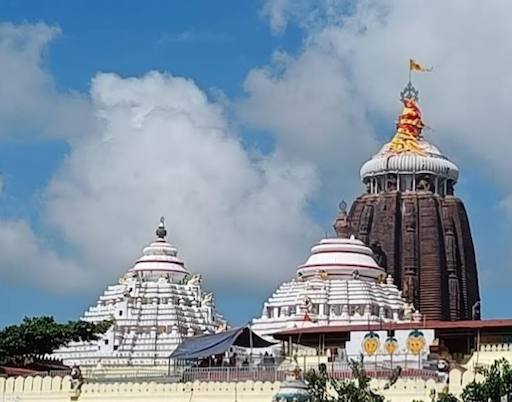
The term Rath Yatra particularly refers to the annual Rathajatra in Odisha, Jharkhand, West Bengal and other East Indian states, particularly the chariot festival fof Puri that involves a public procession with a chariot with deities Jagannath, an avatar of Lord Vishhnu, his brother Balabhadra and his sister Subhadra, along with his weapon, the Sudarshana Chakra on a ratha, a wooden deula-shaped chariot. The rath yatra attracts over a million Hindu pilgrims who join the procession each year.

According to Knut Jacobsen, a Rathayatra has religious origins and meaning, but the events have a major community heritage, social sharing and cultural significance to the organisers and participants. Ratha Yatra processions have been historically common in Vishnu-related traditions in Hinduism across India, as well as in Shiva-related traditions, and amongst the Thirtankars in Jainism and the saints and goddesses in Nepal plus the tribal folk religions found in the eastern states of India.

Derived from two Sanskrit words, Ratha meaning chariot or carriage and yatra which means a journey or pilgrimage, the word Ratha Yatra means a pilgrimage which the deity will undertake in a chariot, accompanied by the public. The term appears in the medieval texts of India as the Puranas, which mention the Rathayatra of Surya or the Sun god, of Devi or the Mother Goddess, and of Vishnu. These chariot journeys have elaborate celebrations where the individuals or the deities come out of a temple accompanied by the public journeying with them through the Kshetra which refers to the region, city or even the local streets to another temple or to the river or the sea. Sometimes the festivities include returning to the sacrosanctum of the temple.

The Jagannath Ratha Yatra also called the Car or Chariot Festival is the oldest Ratha Yatra descriptions can be found in Brahma Purana, Padma Purana, Skanda Purana and Kapila Samhita. This annual festival is celebrated on Ashadha Shukla Paksha Dwitiya or the second day in bright fortnight of Ashadha month. This year it was on 23 June 2020. The festival commemorates Lord Jagannath’s annual visit to the Gundicha Temple via the Mausi Maa or the maternal aunt’s Temple near Saradha Bali in Puri.

As part of the Ratha Yatra, the deities Lord Jagannath, his elder brother Lord Balabhadra and younger sister Devi Subhadra, along with the Sudarshan Chakra, are taken out in a procession out of the main shrine of Jagannath Temple and placed in the Ratha or Chariot which are ready in front of the Temple in a process called ‘Pahandi’. The procession starts with ‘Madan Mohan’ then ‘Sudarshana’ Balabhadra, Subhadra, and Jagannath Deva.

After that, Gajapati Maharaja, the king of Puri, who is also known as the first servitor of the Lords, does the ‘Chhera Pahanra’ ritual or the holy cleaning of the chariots in which the king wears the outfit of a sweeper and sweeps all around the deities and the chariots. The Gajapati King cleanses the road before the chariots with a gold-handled broom and sprinkles sandalwood water and powder with utmost devotion. This ritual signified that under the lordship of Jagannath, there is no distinction between the powerful sovereign Gajapati King and the most humble devotee. After this ritual, finally the devotees pull the chariots up to the Gundicha Temple, which is also known as the birthplace of the Lords.

Once the deities reach the Gundicha temple, in the onward car festival, they are taken in the Pahandi and installed on the holy platform, called the Ratna Simhasan. The Lords remain at the Gundicha Temple for nine days. After that, the process of taking back the deities to the Main temple is observed. The return journey or return car festival of Puri Jagannath Ratha Jatra is known as Bahuda Yatra or Punar Yatra.

Three richly decorated chariots, resembling temple structures, are pulled through the streets of Puri called Badadanda. This commemorates the annual journey of Lord Jagannath, Lord Balabhadra, and their sister Devi Subhadra to their aunt’s temple, the Gundicha Temple which is situated at a distance of over 3 km from the main temple. The chariots are richly decorated with painted flower petals and other designs on the wheels, the wood-carved charioteer and horses, and the inverted lotuses on the wall behind the throne by local artists and painters. The huge chariots of Jagannath pulled during Rath Jatra is the etymological origin of the English word Juggernaut. The Ratha-Jatra is also termed as the Shri Gundicha jatra.This is the only time when devotees who are not allowed in the temple premises, such as non-Hindus and foreigners, get a glimpse of the deities.

The three chariots of Balabhadra, Subhadra and Jagannatha are newly constructed every year with wood of specified trees. They are customarily brought from the ex-princely state of Dasapalla by a specialist team of carpenters who have hereditary rights and privileges for the same. The logs are traditionally set afloat as rafts in the river Mahanadi. These are collected near Puri and then transported by road. The three chariots are decorated as per the unique scheme prescribed and followed for centuries. Covered with bright canopies made of stripes of red cloth and combined with those of black, yellow and green colours, the huge chariots are lined across the wide avenue in front of the majestic temple close to its eastern entrance, which is also known as the Sinhadwara or the Lion’s Gate.

Lord Jagannatha’s chariot is called Nandighosa. It is forty-five feet high and forty-five feet square at the wheel level. It has sixteen wheels, each of seven-foot diameter, and is decked with a cover made of red and yellow cloth. Lord Jagannatha is identified with Krishna, who is also known as Pitambara, the one attired in golden yellow robes and hence the distinguishing yellow stripes on the canopy of this chariot. The chariot of Lord Balarama, called the Taladhwaja, is the one with the Palm Tree on its flag. It has fourteen wheels, each of seven-foot diameter and is covered with red and green cloth. Its height is forty-four feet. The chariot of Subhadra, known as Dwarpadalana, literally “trampler of pride,” is forty-three feet high with twelve wheels, each of seven-foot diameter. This chariot is decked with a covering of red and black cloth – black being traditionally associated with Shakti and the Mother Goddess.

Around each of the chariots are nine Parsva devatas, painted wooden images representing different deities on the chariots’ sides. Each of the chariots is attached to four horses. These are of different colours – dark ones for Balarama, white ones for Jagannatha, and red ones for Subhadra. Each chariot has a charioteer called Sarathi. The three charioteers attached to the chariots of Jagannatha, Balarama and Subhadra respectively are Daruka, Matali and Arjuna.

During the annual event, devotees from all over the world throng to Puri with an earnest desire to help pulling the Lords’ chariots. They consider this as an auspicious act. The huge processions accompanying the chariots play devotional songs with drums, sounding plates of bell metal, cymbals, etc. The Ratha carts themselves are approximately 45 feet high and 35 feet square and it takes about 2 months to construct the chariots which are pulled by the thousands of pilgrims who turn up for the event; the chariots are built anew each year only from the Neem tree and the wood of no other tree is used.

There are 6 events which are considered as the key activities of this annual spectacular event:

  1. The ‘Snana Yatra’ is the one where the Deities take bath and then fall sick for almost 2 weeks. They are thus treated with ayurvedic medicines and a set of traditional practices.
  2. On ‘Sri Gundicha’, the Deities are taken in the onward car festival from the main shrine to the Gundicha Temple.
  3. On the Bahuda Yatra, the return car festival, the Lords are brought back to the main Temple.
  4. The Suna Besha or Golden Attire is the event when the Deities wear golden ornaments and give darshan from the chariots, to the devotees.
  5. The ‘Adhara Pana’ is an important event during Ratha Yatra. On this day sweet drink is offered to the invisible spirits and souls, who would have visited the celestial event of the Lords, as believed by the Hindu tradition.
  6. And finally the Deities are taken back inside the main shrine i.e. the Jagannath Temple and installed on the Ratna Simhasan, on the last day of the Ratha Yatra activity which is called as ‘Niladri Bije’.

This year, because of the coronavirus panademic and the Covid-19 situation in India and especially in the state of Odisha, with many states under lockdown, uncertainty looms large over the conduct of the annual Rath Yatra for the first time in 284 years. The festival even took place during the great famine of 1766 which was believed to have killed millions and during the cholera epidemic. The festival which took place in Puri this year, was just a token festival which was shorn of all the guander and pomp and pageantry it usually has. The rituals leading to the festival which usually takes place outside took place inside the temple and the festival was short of its usual pomp and splendor without devotes in a historic first, a day after the Supreme Court of India allowed the state to hold the seven-day chariot festival in a restricted fashion amid the coronavirus.

I hope in the near future, when things are more normal, I can make it to Puri to witness this grand spectacle. If you want to read more about the state of Odisha, which I have written in detail, please read Part 1, Part 2, Part 3, Part 4 and Part 5.

Festivals of India: Adi Shankaracharya Jayanti

Today’s topic is not exactly a festival which is celebrated in India, but given that it is the birth anniversary of the man who is credited with consolidating the Advaita Vedanta doctrine and reviving it at a time when Sanatana Dharma or Hindusim and the Hindu culture was on a decline, I thought it is something we all, but especially practicing Hindus should celebrate, even if it is as a small private prayer.

Yesterday was the 1232nd birth anniversary of Adi Shankaracharya, who is credited with consolidating the doctrine of Advaita Vedanta and with unifying and establishing the main currents of thought in Hinduism. You could call him the founder of the religion, but that’s not entirely right as Hinduism is more a way of life rather than an organised religion and has been around for centuries before him. Adi Shankaracharya Jayanti is observed on Panchami Tithi during Shukla Paksha of Vaishakha month which falls between April and May each year.

While there is no really consensus on where and when he was born, most scholars and historians agree as do the oldest biographies written about him, that he was born in what is today the southern Indian state of Kerala, in a village named Kaladi which is sometimes spelt as Kalady, Kalati or Karati to Nambudiri Brahmin parents in 788. His parents, Shivaguru and Aryamba, were an aged, childless, couple who led a devout life of service to the poor. They named their child Shankara, meaning “giver of prosperity”. A legend associated with Adi Shankaracharya considers him an incarnation of Lord Shiva himself, who had appeared in Aryamba’s dream and promised to take birth as her child. This could also be the reason for his name, which is one of the names of Lord Shiva. His father died while Shankara was very young and so his upanayanam or thread ceremony, the initiation into student-life, had to be delayed due to the death of his father, and was then performed by his mother. He was someone who was attracted to the life of Sannyasa or being a hermit from early childhood which his mother naturally disapproved.

A story, found in all biographies, describe Shankara at age eight going to a river with his mother, Sivataraka, to bathe, and where he is caught by a crocodile. Shankara called out to his mother to give him permission to become a Sannyasin or else the crocodile will kill him. The mother agrees, Shankara is freed and leaves his home for education. He reaches a Saivite sanctuary along a river in a north-central state of India, and becomes the disciple of a teacher named Govinda Bhagavatpada. The various stories about him then diverge in the details about the first meeting between Shankara and his Guru, where they met, as well as what happened later. Several texts suggest Shankara’s schooling with Govindapada happened along the river Narmada in Omkareshwar, in present day Madhya Pradesh, which a few place it along river Ganges in Kashi or Varanasi as well as Badari which is now Badrinath up in the Himalayas in present day Uttarakhand. It is said that Lord Vishnu visited Shankara at Badrinath and asked him to make a statue of the deity on the Alaknanda River. Today, this temple is popular as the Badrinarayan Temple.

The biographies vary in their description of where he went, who he met and debated and many other details of his life. Most mention Shankara studying the Vedas, Upanishads and Brahmasutra with Govindapada, and Shankara authoring several key works in his youth, while he was studying with his teacher. It is with his teacher Govinda, that Shankara studied Gaudapadiya Karika, as Govinda was himself taught by Gaudapada. Most also mention a meeting with scholars of the Mimamsa school of Hinduism namely Kumarila and Prabhakara, as well as Mandana and various Buddhists, in Shastrarth which is an Indian tradition of public philosophical debates attended by large number of people and sometimes with royalty. After this, the biographies about Shankara vary significantly. Different and widely inconsistent accounts of his life include diverse journeys, pilgrimages, public debates, installation of yantras and lingas, as well as the founding of monastic centers in north, east, west and south India. Most biographies mention that Shankara traveled widely within India, from Gujarat to Bengal and from Tamil Nadu to Kashmir and participating in public philosophical debates with different orthodox schools of Hindu philosophy, as well as heterodox traditions such as Buddhists, Jains, Arhatas, Saugatas, and Carvakas. During his tours, he is credited with starting several Matha or monasteries and ten monastic orders in different parts of India are generally attributed to Shankara’s travel-inspired Sannyasin schools, each with Advaita notions, of which four have continued in his tradition: Bharati in Sringeri, Karnataka, Saraswati in Kanchipuram, Tamil Nadu and Tirtha and Asramin in Dwarka, Gujarat. Other monasteries that record Shankara’s visit include Giri, Puri, Vana, Aranya, Parvata and Sagara – all names traceable to Ashrama system in Hinduism and Vedic literature.

Adi Shankara’s works are the foundation of Advaita Vedanta school of Hinduism and his masterpiece of commentary is the Brahmasutrabhasya which is literally, the commentary on the Brahma Sutra, a fundamental text of the Vedanta school of Hinduism. The term Advaita refers to its idea that the true self, Atman, is the same as the highest metaphysical reality of the universe, Brahman. Advaita Vedanta is the oldest extant sub-school of Vedanta, which is one of the six orthodox or astika Hindu philosophies or darsanas tracing its roots back to the first century BC.

The word Advaita is a composite of two Sanskrit words – the prefix “A” which has similar meaning of english prefix “Non” and “Dvaita” which means ‘Duality’ or ‘Dualism’. The word Vedanta is a compostion of the two Sanskrit words, the word Veda referring to the whole corpus of vedic texts, and the other word “Anta” meaning ‘End’. The meaning of Vedanta can be summed up as “the end of the vedas” or “the ultimate knowledge of the vedas”.

Adi Shankarachrya has an unparallelled status in the tradition of Advaita Vedanta. He travelled all over India to help restore the study of the Vedas. His teachings and tradition form the basis of Smartism and have influenced Sant Mat lineages. He introduced the Pancayatana form of worship, which is the simultaneous worship of five deities – Ganesha, Surya, Vishnu, Shiva and Devi. Adi Shankaracharya explained that all deities were but different forms of the one Brahman, the invisible Supreme Being.

Adi Shankara is regarded as the founder of the Dasanami Sampradaya of Hindu monasticism and Ṣaṇmata of the Smarta tradition. He unified the theistic sects into a common framework of Shanmata system. Advaita Vedanta is, at least in the west, primarily known as a philosophical system. But it is also a tradition of renunciation.

Adi Sankarachatya organised the Hindu monks of these ten sects or Dasanami Sampradaya under four Maṭhas or monasteries, one in each direction in India with the headquarters at Dwaraka. Gujarat west, Jagannatha Puri in Odisha in the east, Sringeri in Karnataka in the south and Badrikashrama or as it’s called today, Badrinath in Uttarakhand in the north. Each math was headed by one of his four main disciples, who each continue the Vedanta Sampradaya. The mathas which he built exist until today, and preserve the teachings and influence of Shankara. My family is follows the advaita form of Hindusim and I have written about the Sringeri Sarada Peetham Matha which we follow. We also follow the Yajur veda philosophy, which I think a majority of at least Tamil Brahmins follow (there are exceptions) which is falls under the Sringeri Sarada Peetham.

Despite historical links with Shaivism, advaita is not a Shaiva sect, instead advaitins are non-sectarian, and they advocate worship of the Lords Shiva and Vishnu equally with that of the other deities of Hinduism, like Shakti, Ganapati and others.

Adi Sankara is commonly believed to have died aged 32, at Kedarnath in the northern Indian state of Uttarakhand, in the foothills of the Himalayas in 820. Texts say that he was last seen by his disciples behind the Kedarnath temple, walking in the Himalayas until he was not traced. Some texts locate his death in alternate locations such as Kanchipuram in Tamil Nadu and somewhere in his home state of Kerala.

Sringeri Saradha Peetham

sharadamba

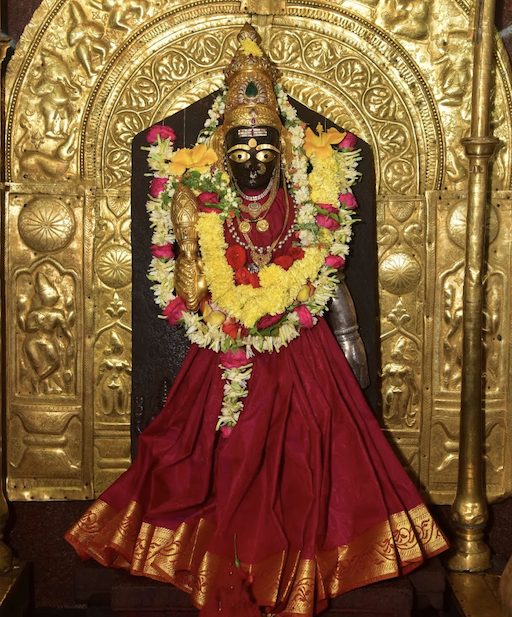
Sharadamba, the reigning deity in Sringeri

Since today is Vijaya Dashami or Dushera, I thought it was appropriate to post this long overdue post today.

My family (both paternal and maternal) have long been followers of the Sharadha Peetham which is based in Sringeri, in the southern state of Karnataka.

1200px-vidyashankara_temple_at_shringeri

The main Sharada temple in Sringeri

Before I say more about this Peetham, let me backtrack about its existence. This Peetham was established by the founder of what we know as Hinduism or what we call the Santana Dharma (or a code of ethics, a way of living through which one may achieve moksha which is enlightenment or liberation) Jagadguru Sri Adi Shankara Bhagavatpada. The Sringeri Peetham is the first of the four Amnaya Peethams established at Sringeri more than twelve centuries ago, around 800 AD to foster the sacred tradition of Sanatana Dharma. The other peethams are located in Dwaraka (Gujarat), Govardhana (Odisha) and Jyotirmath (Uttarakhand).

Tradition has it that after the Acharya had dispersed all the non-Vedic creeds prevailing in the country, He was on the look-out for a convenient and holy place where he could establish an institution to spread the truths of Advaita Vedanta. When the Acharya came to Sringeri, he saw an unusual sight on the banks of the Tunga. A cobra was seen spreading out its hood over a frog in labour pains, to give it a shadow from the scorching mid-day sun. Struck with the sanctity of the place, which could infuse love between natural adversaries, the Acharya chose this very location to establish His first Math.

guruparampara_wallpaper

The unbroken guru parampara with the current and next Shankaracharyas

The Acharya came across many virtuous people at Sringeri and taught them the doctrine of Advaita. He then invoked the Divinity of Knowledge, Goddess Sharada and consecrated an icon of the Goddess. Thus the Peetham He founded at Sringeri in South India for fostering the Vedas and the sacred tradition of Sanatana Dharma came to be known as the Dakshinamnaya Sri Sharada Peetham.

The Acharya appointed his prime disciple, Sri Sureshwaracharya as the first Acharya of the Peetham. Since then, the Peetham has been blessed with an unbroken Guru Parampara, a garland of spiritual masters and Jivanmuktas representing Sri Adi Shankaracharya. The succeeding Acharyas have led a life of such austere penance that it has led disciples to adore in them the radiance of Sri Adi Shankara Himself.

Besides being a centre of spiritual power, Sringeri also came to be known as a great place of traditional learning owing to the presence of Goddess Sharada and the erudition of the Acharyas of the Peetham. The Acharyas were instrumental in bringing forth commentaries on the Vedas and in further expounding the Bhashyas of Sri Adi Shankaracharya. The Acharyas also wrote a number of independent works related to Advaita besides producing a number of hymns underlining their ardent devotion to the non-dual Supreme worshipped in multifarious forms. The Peetham thus came to be regarded as the Vyakhyana Simhasana, The Throne of Transcendental Wisdom. Many regard Goddess Sharada Herself to be moving in the form of the presiding Acharya of the Peetham.

In the 14th century, royal patronage to the Peetham began with the founding of the famous Vijayanagar empire under the divine guidance of the 12th Acharya, Jagadguru Sri Vidyaranya. The austerity of the Acharya influenced the rulers to such an extent that they began ruling in the name of the Acharya and granted the Peetham the rights over the secular administration of the land. At the rulers’ request, the Acharya began conducting a Durbar during the Navaratri festival – an occasion deemed by the rulers to honour their Guru. This durbar is conducted even today and many members of my extended maternal family still visit Sringeri to take part in the Durbar.

chandramouleeswara-pooja

The current pontiff Jagadguru Sri Sri Bharati Tirtha Mahaswamiji worshipping Lord Chandramoulishwara

Subsequently, the Acharya came to be known as the Karnataka Simhasana Prathisthapanacharya and the Peetham became a mighty institution – a Samsthanam and is known to this day as the Jagadguru Shankaracharya Mahasamsthanam, Dakshinamnaya Sri Sharada Peetham at Sringeri. Over the succeeding centuries, a number of empires and rulers including the Mysore Maharajahs Hyder Ali and Tipu Sultan, the Nizam of Hyderabad, the Peshwas and the Keladi rulers and Travancore Rajas were drawn towards the Peetham and respected the Acharya as their Guru.

In the recent past, the Sharada Peetham has shone through the lives of the Acharyas – Jagadguru Sri Sacchidananda Shivabhinava Nrisimha Bharati Mahaswamigal, the re-discoverer of Sri Adi Shankara’s birthplace at Kalady and the founder of the famous Pathashala at Sringeri; followed by the renowned Jivanmukta, Jagadguru Sri Chandrasekhara Bharati Mahaswamigal; succeeded by the crest jewel of Yogis, Jagadguru Sri Abhinava Vidyatirtha Mahaswamigal. They have all left indelible impressions in the hearts of the disciples.

With such a rich history associated with Sri Adi Shankaracharya’s first and foremost Peetham, many wonder at the aptness of the Acharya’s choice of locating the Peetham at Sringeri, a spot replete with a hoary past, and bountiful with natural splendour and serenity.

Today, the Sringeri Sharada Peetham bedecked with an unbroken chain of Acharyas continues to uphold the principles of Sanatana Dharma with the 36th Acharya Jagadguru Shankaracharya Sri Sri Bharati Tirtha Mahaswamiji acting as a treasure of spiritual wisdom and peace for all seekers.

03-jagadgurus-sharada-prathishta-puja-on-the-commencement-of-navaratri

The current pontiff Jagadguru Sri Sri Bharati Tirtha Mahaswamiji worshipping 

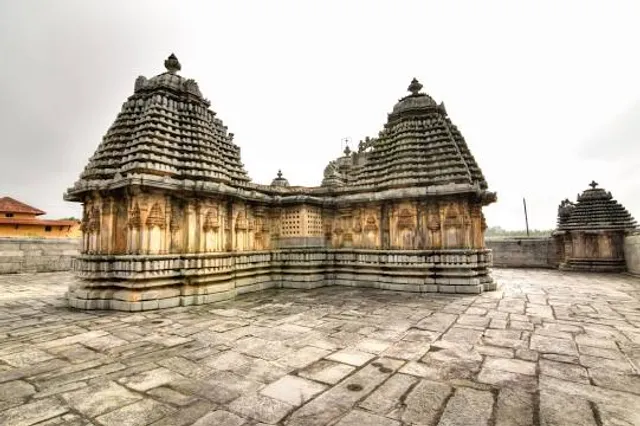
The Sringeri Sharada Peetham site includes two major temples, one dedicated to Shiva (Vidyashankara Linga, tenth Shankara memorial) and the other to Saraswati (Sharada Amba). The Vidyashankara temple was built during the Vijayanagara Empire era (1338 CE) on a square plan set inside circles in the Tuluvas and Hoysala apsidal style. It includes shrines and relief carving in reverence of major Hindu gods and goddesses such as Brahma, Vishnu (all Dasavatara, with Buddha), Shiva, Saraswati, Parvati, Lakshmi, Ganesha, Shanmukha (Kartikeya, Murugan), Durga, Kali and others. The stone reliefs also include a large variety of Hindu legends from the epics and the Puranas.

The Sringeri Peetham is one of the major Hindu monastic institutions that has historically coordinated Smarta tradition and monastic activities through satellite institutions in South India, preserved Sanskrit literature and pursued Advaita studies. The Sringeri Peetham has been a library and a source of historic Sanskrit manuscripts. Along with other Hindu monasteries such as the Kanchi Kamakoti Peetham, the contemporary Sringeri matha has been active in preserving the Vedas, sponsoring students and recitals, Sanskrit scholarship, and celebrating annual Adishankaracharya Jayanti (gurupurnima).

sringeri

The sacred fish in the banks of the Tunga river at Sringeri

I have been to Sringeri twice so far, once for a cousin’s sacred thread ceremony and the second time in 2000, with my parents and grandfather just before he passed away. I want to make a trip there once more, this time with S, BB & GG as well as my parents so that before they get too old to make the trip, we can do this as a family trip together. Sringeri is a beautiful place and unfortunately, I don’t have the photos I took during my last trip there (pre-digital camera days).

If you ever get a chance to make a trip there, please do go there and enjoy the sereneness that is Sringeri along with getting immersed into the essence and core of the Sanathana Dharma.

Diwali Recipes: Coconut Barfi

IMG_5052

Another typical recipe, this one also needs a good bit of stirring so a good arms workout with this one!

IMG_5053
Ingredients:

  • 2 cups grated coconut
  • 1.5 cups Sugar
  • ½ tsp Cardamom Powder
  • 1 cup Water

Method:

  • Take a big plate or cake tin and grease it slightly. Or, you could lightly spray it with oil and then put baking paper over to completely cover it, this reduces the amount of ghee used in the recipe slightly.
  • For this recipe, you need only the white part of the grated coconut. If you plan to grate your own, stop at the point when the brown part starts getting grated. Or you could do what I did, which was to buy freshly grated coconut from your local Indian store.
  • In a pan, saute the grated coconut till you get a nice aroma from it. Do not let it brown. Remove it from the pan and add the sugar and water and let it come to a rolling boil. You can also add a couple of teaspoons of milk to the mixture so that any dirt in the sugar comes up and you can remove it. This trick also makes the barfi more white which is aesthetically more pleasing. At this point, reduce the flame and let it boil till it thickens to a single string consistency.
  • This means that when you take a drop of the mixture from the flame and touch it with your thumb and index finger, it will stick to both fingers and form a kind of string.
  • When the sugar mixture reaches this point, add the grated coconut and stir for a couple of minutes. Add the cardamom powder and continue to stir at a low to medium flame. When the coconut completely absorbs the sugar water mixture and starts to leave the sides, it’s time to take it off the flame. You can also test it by putting a couple of drops in the greased tray. If it stays in shape, it’s time to remove it from the flame, otherwise continue stirring and repeating this step till you get to this point.
  • Switch off the gas and pour it into your prepared greased plate. Using a clean spatula, level the mixture and make it smooth. Let it cool for a while and when still slightly warm, lightly score lines in the mixture with a knife or pizza cutter. You could cut squares or diamonds in any size. Let it cool completely before transferring to an airtight container. This should be good for a week or so outside and slightly more inside the fridge.

IMG_5056

The Power of Prayers

I usually start the morning with prayers to the Lord and am trying to inculcate the same with BB & GG too!

As you probably know from my posts, I am a Hindu and am also bringing up BB & GG in the same way. I am weird in the sense, though I have rock solid belief in God, I am not a very big beliver in going to temples. I firmly believe that if you believe in God and don’t go out of your way to harm someone, then even a heartfelt two minute prayer in your heart to God will give you the same results as going to the temple. You do not need the outward manifestation of your belief to God. I posted about religion some time back, but this post is more about the power of prayers.

GaneshaLike I’ve said before, I have a very personal relationship with God and my personal God is the Lord Ganesh.

My daily routine is do a string of prayers in front of my altar at home. Hindus usually light the lamp in front of God twice a day and I do this in the morning after bath and in the evening after I am home. Once I light the lamp, I say my prayers. After this, I try to meditate for a couple of minutes and then have my conversation with him. The evening prayer is a much shorter one with a quick prayer after lighting the lamp. But I do have my conversation in the evening too, especially if the day has gone well for me, or I see his hand in something that happened during the say!

So does praying to God worth your while? My answer is an equivocal YES! Prayer is the vehicle with which you reach out to God or the higher divinity. It allows you to focus on the divine and helps a human being to become one with that one Universal Divine Being who can be called by various religions as their Gods!

Prayers also allow you to push your stress and desires on to your preferred God. This releases a lot of tensions in your lives when you move your stress to God! I remember there are days when my mind is full of things and I can’t sleep. Those days when I say a short prayer to Ganpati Bappa (Lord Ganesh) and tell him now it’s his responsibility to ensure that my problems are solved; I am able to sleep quite fast!

Do you believe in the divine and pray?