Travel Bucket List: Malaysia Part 16 – Selangor Part 2

Klang

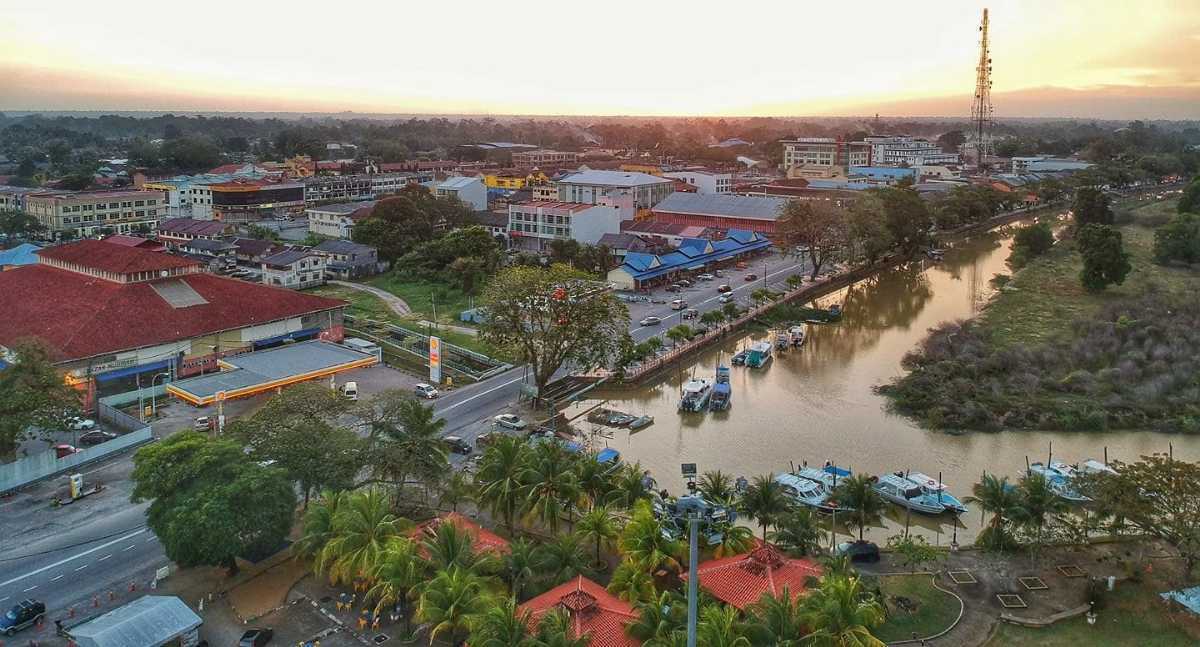
Officially known as Selangor’s Royal Town, Klang is the former capital of the state. With a unique old-world charm, Klang is known for its rich heritage sites and colonial architecture. Located 45 km from Kuala Lumpur, Klang is a popular day trip for most tourists. The colourful town is split between the town and port and is small enough to explore on foot. The Klang River flows through the town and divides it into South Klang and North Klang. Port Klang is the 12th busiest transhipment port and the 12th busiest container port in the world.

Klang has been a site of human settlement since prehistoric times. Bronze Age drums, axes and other artefacts have been found in the vicinity of the town and within the town itself. Commanding the approaches to the tin-rich Klang Valley, Klang has always been of key strategic importance. It was mentioned as a dependency of other states as early as the 11th century. Klang was also mentioned in the 14th century literary work Nagarakretagama dated to the Majapahit Empire, and the Klang River was marked and named on the earliest maritime charts of Chinese Admiral Cheng Ho who visited Malacca from 1409 to 1433.

Klang was under the control of the Malacca Sultanate in the 15th century. Klang was known as a producer of tin, it produced one hundred bares of tin a year when the Portuguese occupied Malacca. Klang however remained in Malay hands after the fall of Melaka to the Portuguese in 1511 and was controlled by the Sultan of Johor-Riau. In the 17th century, the Bugis began to settle in the coastal region of Selangor including Klang, and the Selangor sultanate was created in 1766, which then controlled Klang.

In the 19th century, the importance of Klang was greatly increased by the rapid expansion of tin mining as a result of the increased demand for tin from the West. The desire to control the Klang Valley led directly to the Klang War, also called the Selangor Civil War of 1867–1874 when Raja Mahdi fought to regain what he considered his birthright as territorial chief against Raja Abdullah. During the Klang War, in 1868, the seat of power was moved to Bandar Temasya, Kuala Langat, and then to Jugra which became the royal capital of Selangor. In 1874, Selangor accepted a British Resident who would advise the Sultan, and Klang became the capital of British colonial administration for Selangor from 1875 until 1880 when the capital city was moved to Kuala Lumpur due to the growth of Kuala Lumpur.

Until the construction of Port Swettenham, now known as Port Klang in 1901, Klang remained the chief outlet for Selangor’s tin, and its position was enhanced by the completion of the Klang Valley railway to Bukit Kuda in 1886, which was then connected to Klang itself via a rail bridge, the Connaught Bridge, completed in 1890. In the 1890s its growth was further stimulated by the development of the district into the state’s leading producer of coffee, and later rubber. In 1903, the royal seat was moved back to Klang when it became the official seat of Sultan Alauddin Sulaiman Shah. The official boundary of Klang was first defined in 1895. The first road bridge over the Klang River connecting the two parts of the town, the Belfield Bridge, was constructed in 1908.

Klang may have taken its name from the Klang River which runs through the town. The entire geographical area near the river, which begins at Kuala Lumpur and runs west to Port Klang, is known as the Klang Valley. One popular theory on the origin of the name is that it is derived from the Mon–Khmer word Klong, which may mean a canal or waterway. Alternatively, it has also been argued that it means warehouses, from the Malay word Kilang as in the old days, it was full of warehouses. Today kilang means factory. Klang was also once known as Pengkalan Batu which means stone jetty. Unlike most other place names in Malaysia, the Chinese name for Klang is neither a direct transcription nor translation, but likely a transcription of another Malay word Pasang, referring to the rising tides around the Klang Valley.

The economy of Klang is closely linked with that of the greater Klang Valley conurbation which is the most densely populated, urbanised and industrialised region of Malaysia. Rubber used to be an important part of the economy of the region, but from the 1970s onwards, many rubber plantations switched to palm oil and were then converted again for urban development and infrastructure use. Port Klang forms an important part of the economy of Klang. It handled almost 50% of Malaysia’s sea-borne container trade in 2013. The Port Klang Free Zone was established in 2004 to transform Port Klang into a regional distribution hub as well as a trade and logistics centre. The port is part of the 21st century Maritime Silk Road that runs from the Chinese coast to Singapore, towards the southern tip of India to Mombasa, from there through the Red Sea via the Suez Canal to the Mediterranean, there to the Upper Adriatic region to the northern Italian hub of Trieste with its connections to Central Europe and the North Sea.

Established in 1932, the Sultan Sulaiman Royal Mosque houses the royal mausoleum. The building reflects an excellent blend of neo-classical, Western, and Mughal architecture. It was the state mosque until the opening of the Sultan Salahuddin Abdul Aziz Mosque in the new capital city of Shah Alam. Standing at the foot of a hill. The Royal Palace is located right next to the mosque but is not open to visitors. The mosque has a beautiful central hall, and it serves free food during Ramadan. Some of its interesting features include the Tangga Diraja, or royal stairs, from Istana Alam Shah and a royal mausoleum. The late Sultan Salahuddin was buried on the mosque’s grounds.

The semicircular-shaped dome of the mosque is painted egg yellow, not gold. The large dome of the main prayer space is surrounded by four smaller domes. The main dome represents the Sultan of Selangor, while the smaller domes refer to Dato’ Besar Empat Suku Selangor. Five domes at the main entrance of the mosque symbolise the Five Pillars of Islam and the five Daeng Brothers, while two umbrella-shaped domes are symbolic of the royal umbrella. There are eight smaller towers around the mosque and a large tower in the middle, with a higher entrance from the main porch. The tower is also decorated with a yellow dome at the summit. The original design of the mosque was like a crossbar when viewed from above, as is so often used in church plans in Europe, but after renovations by the Selangor Islamic Religious Department, the mosque now has a square footprint. The main prayer room is octagonal at the bottom, but it slowly smooths into a circle at a height of 10 meters. The upper floors can be accessed with a cat ladder, and there are decorative iron frames under the dome that support the multi-coloured patterned glass. The mosque was designed to accommodate about 1,000 pilgrims at a time.

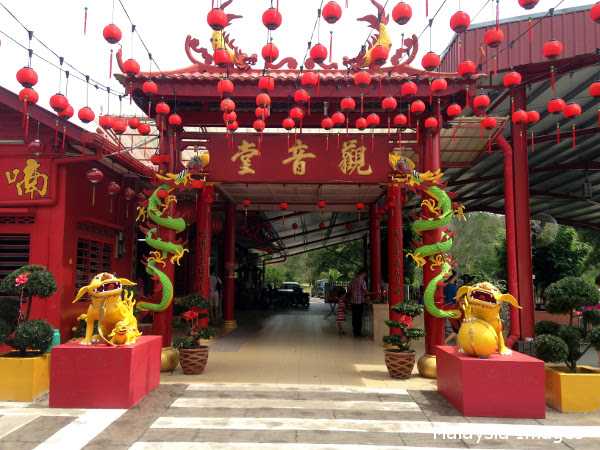
Kuan Yin Teng or the Goddess of Mercy Temple, is the oldest Chinese temple in Malaysia dedicated to the Goddess Guan Yin. The temple building is a heritage structure often visited by Buddhists and a local attraction for Chinese visitors during Chinese New Year or any festive season. The temple was established in 1892 and bustles with devotees during the first day and the fifteenth day of the lunar calendar. On the eve of Chinese New Year, the temple is open all night, and the street is often packed with devotees queuing shoulder to shoulder to enter the temple hall to offer their incense to the Kwan Yin in the hope of an auspicious start to the New Year. It has marvellous exteriors with beautiful archways and carvings, along with a peaceful interior setting. The temple is open daily between 7 am and 5 pm.

The Church of Our Lady of Lourdes is a catholic church that lies in the Little India area with a lovely chapel outside and marvellously designed interiors with glass panels and dome structures housing artefacts, statues and other memorabilia describing the history of Klang.

Locally known as the Klang Perumal Temple, the Sri Sundararaja Perumal Temple is the oldest Vishnu temple in Malaysia. The 127-year-old temple was built in 1892 and reconstructed in 2015. Often referred to as the Tirupati of Southeast Asia after its famous namesake in India, it is the first granite temple in Malaysia. The gopuram, or spire, of this temple is a Klang landmark. Inside the temple, there are several complexes dedicated to different deities. At the centre of the temple is the Perumal Sannathi, where Lord Perumal and His consort, Goddess Mahalakshmi, are situated. The centre complex of Lord Perumal Sannathi contains a small gopuram with the statues of all of Lord Vishnu’s avatars surrounding it. On the right of the Perumal Sannathi is the Shivan Sannathi, which consists of Lord Shiva, Lord Parvathi, Lord Ganesh, Lord Muruga, and Lord Ayyappan. On the left side of Perumal Sannathi is Saneshwara Sannathi, where Lord Shani and the Navagrahas are situated. Adjacent to the center complex is Lord Anjaneya Sannathi and just at the corner outside the temple is Lord Nagaraja Sannathi. The temple also has a multi-purpose hall which is used by the Indian community for weddings. The temple is home to a large Navalar Mandapam and a historic Palmyra tree, which is a cultural symbol to Tamils. The temple is open from 6 to 9:30 am and then between 4 and 9:30 pm.

Built on the top of a hill, Kota Raja Mahadi is a historic site that witnessed two civil wars in the 19th century. It was built in 1866 by King Raja Mahdi to gain a power edge over his enemy Raja Abdullah. Once built as a spy fort, today, it houses Klang’s Municipality Council.

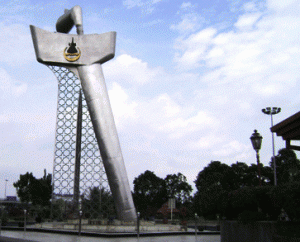
Also known as the Tugu Keris, the silver-coloured kris-shaped monument was constructed by then emperor Almarhum Sultan Salahuddin Abdul Aziz Shah to celebrate his 25th anniversary as the Sultan of Selangor. The kris is a wavy dagger and the locals believe it to be an epitome of strength and unity. Located in the Klang Royal Gardens, the monument stands tall and is visible while travelling from Kuala Lumpur. There is a playground next to the monument and is close to the Church of Our Lady of Lourdes. It was originally located along the Federal Highway near Taman Kris and the Sungai Rasau toll plaza. In September 2014, the monument was relocated to its present site because the original monument was blocked by a flyover being built just after the Sungai Rasau toll plaza.

Source

Tanjung Harapan, loosely translated to Cape of Good Hope, is located in the Northport area of Klang. The sunset views from the cape are breathtaking. A calming walk along the coastline of the well-built industrial area of Bandar Sultan Suleiman is a fantastic way to explore the area. Fronting the Straits of Malacca, the Esplanade is a seaside family recreation spot near Northport that houses several seafood restaurants. It’s a nice place to view the sunset and also for anglers to fish.

The official residence of the Sultan of Selangor is Istana Alam Shah. It is built of wood and marble and incorporates 15 iconic rooms. Between 1903 and 1957, there existed an older palace on the same site, known as Istana Mahkota Puri. It was built in 1903 during the rule of Sultan Sulaiman Shah, the fifth Sultan of Selangor, and the design closely resembles the Sultan Abdul Samad Building in Kuala Lumpur. The Sultan lived there for 35 years until he died in 1938. In the 1950s it was briefly used as a student dorm and was demolished in October 1957, soon replaced by the present-day structure. Most royal ceremonies, like the coronation of a new Sultan, involving the Selangor royal family are held in Istana Alam Shah. The palace has 15 rooms and was built using wood and marble. In early 2000, extensive renovations were carried out by Sultan Salahuddin Shah.

One of the oldest bridges in Malaysia’s Klang Valley region, the Connaught Bridge, was built in 1948 by the British. At one time, the Connaught Bridge could only be crossed by one vehicle at a time, and heavy vehicles were banned from the bridge. The wooden bridge closed in 1993–1994, and in 1995, the wooden bridge was replaced by a concrete box girder bridge. Kota Bridge is the first and only double-decker bridge in Malaysia and Southeast Asia. The bottom deck is a pedestrian walkway bridge, while the top deck is a motor vehicle bridge. The bridge was closed to car traffic in the 1990s due to high demand, which necessitated the construction of a new bridge. The new Jambatan Kota is located beside the old bridge. The old bridge was constructed between 1957 and 1960 and was officially opened in 1961 by the late Sultan of Selangor, Almarhum Sultan Salahuddin Abdul Aziz Shah, as part of the celebration of his coronation as the ninth Sultan of Selangor.

The Sultan Abdul Aziz Royal Gallery is all about the former Selangor Sultan Salahuddin Abdul Aziz Shah. The museum building was initially constructed as the Sultan Sulaeman Building in 1909. During British Malaya, the British government used the building as the land and administration office. During the Japanese rule of Malaya, it was used as a war headquarters. After independence in 1957, it was used as the Klang District office. The museum was initially opened in 1988 as the Memorial Museum and was officiated on 19 October 2007 by Sultan Sharafuddin. The gallery displays the history and heritage of the Sultanate of Selangor since 1766 with more than 2,000 artifacts.

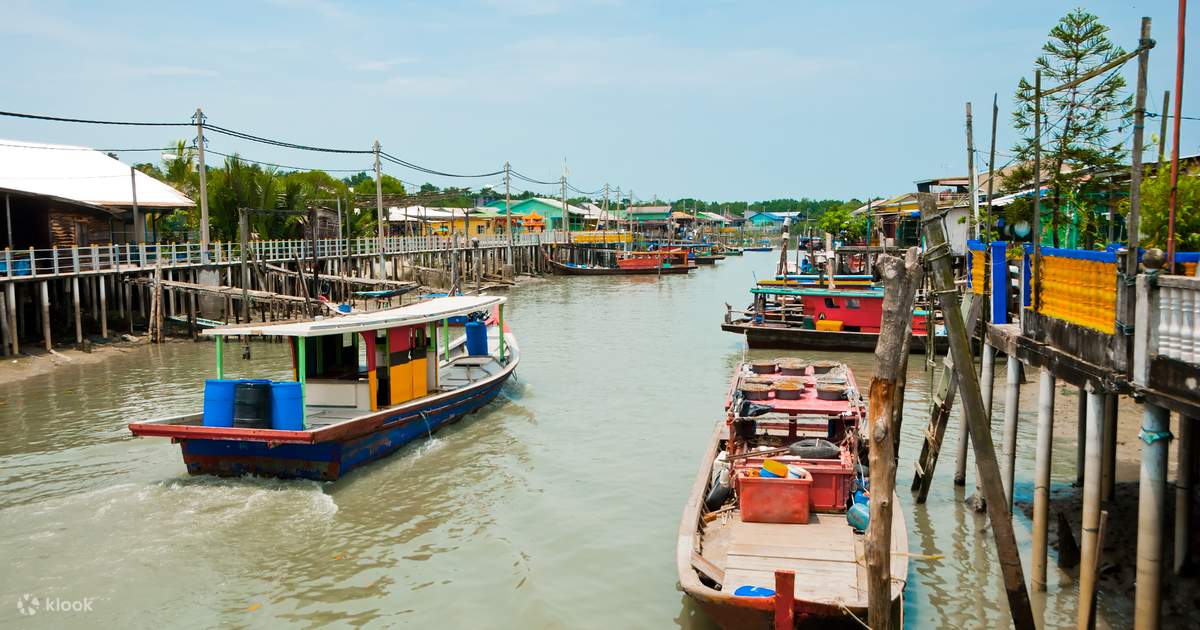
Pulau Ketam, or Crab Island, is an island located off the coast of Port Klang in the intertidal zone, and the chief vegetation is mangrove. The island is home to two predominantly Chinese fishing villages founded in 1880. The main village on the southern side of the island is also known as Pulau Ketam. The other village on the northeastern side is called Sungai Lima or the Fifth River, its location being at the fifth inlet from the main village. The villagers are mainly Teochew and Hokkien Chinese, with Teochew, Hokkien, and Mandarin Chinese as the main dialects spoken. There is also a small, recently relocated Orang Asli community at the second inlet. The rest of the island consists of mangrove swamps. As the island is submerged during high tide, housing on the island consists of floating houses perched on wooden stilts 1 to 10 m above sea level. The main thoroughfares are narrow concrete pavements, while in the residential areas, the older, rickety wooden plank bridges can still be seen. There are no cars on the island; bicycles, some of which are motorized, are the main means of transportation within the villages. No pavement links the villages, with boats being the only means of transportation between villages. Daily ferry services link the island to Port Klang jetty on the mainland. The main economic activity on the island is fishing. The island is also a tourist spot.

The One Fathom Bank Lighthouse, Rumah Api One Fathom Bank or Rumah Api Permatang Sedepa refers to two offshore lighthouses in the Strait of Malacca, specifically, on a shoal within Malaysian waters, dubbed One Fathom Bank or Permatang Sedepa, off the coast of Selangor. The One Fathom Bank station was originally served by a lightship stationed in 1852 before a permanent screw-pile lighthouse was built in 1874; the lighthouse has since been replaced twice throughout its service, in 1907 with a concrete pile lighthouse, and 1999 when a larger modern counterpart was built parallel to the 1907 lighthouse, superseding its predecessor’s duties. The lighthouses have since been referred to as the old One Fathom Bank Lighthouse and the new One Fathom Bank Lighthouse. Due to being well out to sea, both lighthouses are only accessible by boat. While both sites of the lighthouses are open, their towers remain off-limits.

Travel Bucket List: Malaysia Part 15 – Selangor Part 1

Our next state is the state of Selangor which is also known by its Arabic honorific Darul Ehsan, or the Abode of Sincerity. Located on the west coast of Peninsular Malaysia, Selangor is bordered by Perak to the north, Pahang to the east, Negeri Sembilan to the south, and the Strait of Malacca to the west. Selangor surrounds the federal territories of Kuala Lumpur and Putrajaya, both of which were previously part of it. The state has diverse tropical rainforests and an equatorial climate and the mountain ranges in the state belong to the Titiwangsa Mountains, part of the Tenasserim Hills that cover southern Myanmar, southern Thailand and Peninsular Malaysia, with Mount Semangkok as the highest point in the state.

The state capital is Shah Alam, and its royal capital is Klang, while Kajang is the largest city. Petaling Jaya and Subang Jaya received city status in 2006 and 2019, respectively. Selangor is one of four Malaysian states that contain more than one city with official city status; the others are Sarawak, Johor, and Penang. Selangor has the largest economy in Malaysia in terms of gross domestic product or GDP, with RM 239.968 billion, equivalent to roughly $55.5 billion in 2015, comprising 22.60% of the country’s GDP. Malaysia’s most developed state, Selangor has good infrastructure, such as highways and transport, and has the largest population. It also has a high standard of living and the lowest poverty rate in the country.

Selangor is located on the west of Peninsular Malaysia, overlooking the Straits of Malacca. The state is level on the west and hilly to the east. The hill and mountain, surrounding the western edge of the state effectively form a valley and a basin area for the Klang River. This valley is called Klang Valley and this is where most of the population is centred. It is located at the heart of Peninsular Malaysia on the west coast and surrounds the Federal Territory of Kuala Lumpur and Putrajaya. Malaysia’s capital, Kuala Lumpur is located in the heart of Selangor and was once part of Selangor territory before it was ceded to the federal government to form a Federal Territory.

The origin of the name Selangor is uncertain. A common suggestion is that the name refers to the Malay word langau, which is a large fly or blowfly that is found in the marshes along the Selangor River in the state’s northwest. According to local lore, a warrior who escaped from Malacca after the Portuguese conquest took a break from his journey north and rested under a tree here. However, he was disturbed by a persistent fly, whereupon he decided to explore the area. When he found the place to his liking and chose to settle there, he named the place “satu (se) langau” meaning “a large blowfly”. Another theory is that the name may have originated from a kind of tree found in Kuala Selangor and along the Selangor River named Mentangau. And yet another theory claims the state’s name is derived from the term Salang Ur where ur means town or village in Tamil, meaning the village of the Salang people. It has also been proposed that the name is derived from a combination of salang which means stabbing, and jemur, which means to dry in the sun, indicating that it was once a place where traitors were stabbed and then left to roast in the sun.

The most important settlement in the area in the ancient period may have been Klang. Ancient artifacts, including Bronze Age axes and bronze bells dating from the 2nd century, and iron tools called tulang mawas, or ape bones, have been found in or near Klang. The Mao Kun map, dating to the Ming dynasty and used by Admiral Zheng He during his expeditions between 1405 and 1433, refers to places in Selangor such as the Klang River estuary and perhaps a hilly area. The Malay Annals indicate that the Selangor area was under the control of the Sultanate of Malacca in the 15th century; however, Selangor at that time was not a unified domain—separate river states such as Klang and Jeram existed in the region.

After the fall of Malacca to the Portuguese in 1511, the area came under the control of the Johor Sultanate. In the 17th century, Johor was involved in a war against Jambi, and the Sultan of Johor engaged the help of Bugis mercenaries from Sulawesi to fight against Jambi. After Johor won in 1679, the Bugis decided to stay and started to gain power in the region. Many Bugis began to migrate and settled along the coast of Selangor. Some Minangkabaus may have also settled in Selangor by the 17th century, perhaps earlier. The Bugis and the Minangkabaus from Sumatra struggled for control of Johor and to establish a power base, the Bugis led by Raja Salehuddin founded the present hereditary Selangor Sultanate with its capital at Kuala Selangor in 1766. Selangor is unique as the only state on the Malay Peninsula that was founded by the Bugis.

In the 19th century, Selangor’s economy boomed due to the exploitation of its tin reserves. The Selangor Civil War was fought between 1867 and 1874, which was also partly a struggle for control of the revenues from tin which had attracted a large influx of Chinese migrant labourers, and Chinese clans allied with Selangor chiefs also joined the civil war. The conflicts between Malay and Chinese factions in Perak and Selangor, as well as concerns over piracy that affected coastal trade, led to increasing British involvement in the affairs of the Malay states.

In 1874, Sultan Abdul Samad of Selangor accepted a British Resident in a system that allowed the British to govern while the Sultan remained the apparent ruler. Klang was the capital of the British colonial administration for Selangor from 1875 until 1880 when it was moved to Kuala Lumpur. Under the stability imposed by the British, Selangor again prospered. In 1896, largely through the coordination of Resident Frank Swettenham, Selangor united with Negeri Sembilan, Perak and Pahang to form the Federated Malay States, with Kuala Lumpur as its capital.

The Federated Malay States evolved into the Federation of Malaya in 1948, which became independent in 1957. The federation became known as Malaysia in 1963 when its existing states federated with the other British colonies of Sarawak, North Borneo and Singapore. The city of Kuala Lumpur functioned as the national capital of Malaysia and as the state capital of Selangor. In 1974, Selangor relinquished Kuala Lumpur to the federal government. The Sultan of Selangor commemorated the city’s transfer by building an archway on the borders of the new Federal Territory and Selangor; known as the Kota Darul Ehsan that straddles a section of the Federal Highway between Bangsar and Petaling Jaya. The state capital was moved to Shah Alam after the cession. Putrajaya, a new city designed to be the new administrative capital of Malaysia, was built by the federal government in Selangor; Sultan Salahuddin was asked again to cede land to the federal government. Putrajaya became a federal territory in 2001.

Selangor is Malaysia’s most populous state; it has the nation’s biggest conurbation, the Klang Valley. Selangor’s geographical position in the centre of Peninsular Malaysia contributed to the state’s rapid development as Malaysia’s transportation and industrial hub, creating jobs and attracting migrants from other states and Other Asian countries.

The traditional culture of Selangor’s Malay majority is also influenced by those of Bugis, Minangkabau, Mandailing, Javanese, and Banjarese ancestry; most of whom are Muslims. Javanese ancestry is dominant in west coast districts while Minangkabau descent is dominant in Gombak and Hulu Selangor. The 3,000 Mah Meri people, part of the Orang Asli—the indigenous peoples of the Peninsula—can be found on Carey Island. The economy of Selangor is a progressive market economy whose core sectors are commerce and agriculture. It is the richest state in Malaysia in terms of gross domestic product (GDP) per capita (PPP).

Shah Alam

Selangor’s capital Shah Alam is situated within the Petaling District and a small portion of the neighbouring Klang District. Shah Alam replaced Kuala Lumpur as the capital city of the state in 1978 after Kuala Lumpur was incorporated into a Federal Territory in 1974. Shah Alam was the first planned city in Malaysia after independence in 1957.

Shah Alam was once known as Sungai Renggam and was noted for its rubber and oil palm estates. Later, the same area was identified as Batu Tiga before Malaysian independence and has been a centre of rubber and palm oil trade for centuries. The Sungai Renggam Plantation was earmarked for the development of a township by the Selangor government in 1963, and under the recommendations of Vlado Antolic, a town planning advisor from the United Nations, chose the present site strategically located between Kuala Lumpur and Port Klang.

Its current name was chosen by the then-state Sultan of Selangor, Sultan Salahuddin Abdul Aziz Shah, after his late father Sultan Alam Shah. Many other monuments, buildings and even a street are named after the late Sultan. Shah Alam was opened in 1963 to make it the new administrative centre of Selangor, replacing Kuala Lumpur which was made a Federal Territory on 1 February 1974. With the consent of the Sultan, Shah Alam was proclaimed the capital of Selangor on 7 December 1978 with an initial area of 41.68 sq km, and administrated by a municipal council. Shah Alam was enlarged several times between 1983 and 1997, with the last annexation on 1 January 1997. Shah Alam was granted city status on 10 October 2000.

The Taman Botani Negara Shah Alam or the National Botanic Garden is a glorious nature park, home to plenty of vegetation, gardens, lakes, a petting zoo, a seasonal temperature house, and a public pool. The garden hosts activities from lightweight to extreme adventurous sports like hiking, horse riding, rock climbing or fox flying among other things. One is free to walk or rent a bike to explore the gardens and stop at the watchtowers to bask in the scenic views or relax and take a break at the gazebo. The garden is closed on Mondays and other days, it is open between 9 am and 5 pm

The 43-hectare Shah Alam Lake Garden is a favourite retreat of residents, with its beautiful landscape and scenic pathways. Some sections of the lake are elevated so visitors can walk over and watch the aquatic life. One may even catch a glimpse of an occasional peacock, goose, or stork. Some other popular things to do at the park include taking a splash at the waterpark, Wet World, indulging in Malaysian cuisine at the floating seafood restaurant, or going kayaking. The lake garden is open from 11 am to 7 pm on Mondays, Tuesdays, Thursdays and Fridays and between 10 am to 7 pm on Saturdays and Sundays. It is closed on Wednesdays. Entry charges are between MYR 8 to 10 per person.

Overlooking the Garden of Islamic Arts is the magnificent Sultan Salahuddin Abdul Aziz Shah Mosque, the state mosque of Selangor. It is the second-largest mosque in Southeast Asia and the largest in Malaysia. Named after Selangor’s late Sultan who commissioned it in 1982, the mosque is also known as the Blue Mosque. Four 142-meter-high minarets standing tall at each of its corners are the world’s tallest group of minarets. The mosque can accommodate around 24,000 devotees at a time. Its distinguishing feature is its large blue and silver dome, which measures 51.2 m in diameter and reaches 106.7 m above ground level. The blue stained glass of the mosque fills the ornate building with glimmering blue light. The nine galleries display an artistic blend of Islamic arts such as fine decorative calligraphy, painting and sculptures. Short clothes are not allowed inside the mosque. Blue-coloured robes are available at the mosque to wear over your clothing. The mosque is open only to Muslims on Fridays. On Mondays to Thursdays, it is open from 9 am to noon and then again between 2 to 4 pm. On Saturdays, Sundays and Public Holidays, it is open from 9 am to noon, then between 2 to 4 pm and again between 5 to 6:30 pm.

The Blue Mosque overlooks the Selangor Arts Garden Complex, a landscaped park inspired by the Quranic Garden of Paradise. This 14-hectare spiritual sanctuary houses nine galleries, including three permanent galleries exhibiting a rich array of Islamic arts such as calligraphy, sculptures, paintings and architecture. It also houses a private educational institute for higher learning of fine arts. The site is occasionally used for traditional Islamic performances and is closed on Mondays and other days, it is open from 9:30 am to 5:30 pm.

The Selangor State Museum or the Sultan Alam Shah Museum displays many treasures and artefacts related to the history of Selangor. Adjacent to the museum is the former Selangor State Library or Perpustakaan Raja Tun Uda. The Selangor Islamic Arts Complex or Kompleks Kesenian Islam Selangor or Riyadh Fannil Islam is situated nearby, housing many Islamic masterpieces and creativities. An Islamic Art College is located within the Complex. At the banks of the Lake Gardens, an art gallery and performance centre called Laman Budaya is located, where exhibitions and shows regularly take place.

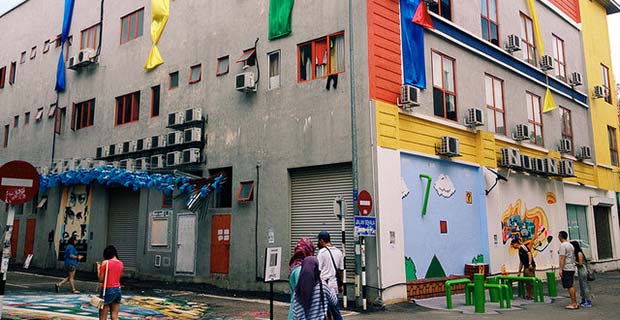
Laman Seni 7 is an undiscovered gem in Shah Alam. A section of wide and narrow alleyways in the city, it features some of Malaysia’s prominent street artist creations on the concrete and building walls. The art gallery on display in Laman Seni 7 spans two blocks and is fashioned like a U. Here, each mural tells a tale, accompanied by a plaque giving a brief insight about the art and the artist.

The Setia Alam Community Trail is a 10.3 km loop trail considered a moderately challenging hike but is fairly suitable for hikers of all types of fitness levels. The locals have set up signage, so it’s highly unlikely to get lost, but you can download the Komoot App to navigate. There are two routes: Route A which is less steep and has a nice view of the Peak Garden. Route B is less crowded and has a beautiful lake on its way. It will take between 4.5 to 5 hours to complete the loop.

Subang Jaya

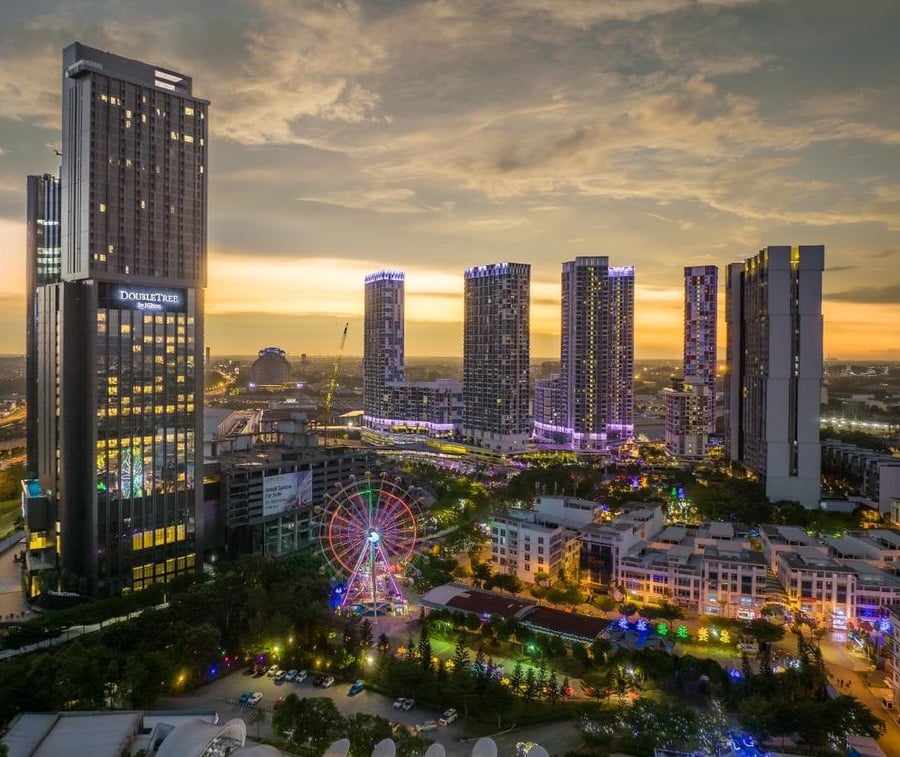
The third district in Petaling, Subang Jaya is the sixth largest city in Malaysia by population. Before 1974, what is today Subang Jaya was part of Klang District. Development on Subang Jaya began on 21 February 1976 by Sime UEP Properties Berhad, the property development arm of the Malaysian conglomerate Sime Darby. The site was formerly a rubber plantation called Seafield Estate. In 1997, Subang Jaya received the status of a municipality. In Dec 2019, it was officially announced that Subang Jaya’s municipality would be upgraded to a city council after a long 5-year wait since the application in 2014. Located 20 km from Kuala Lumpur, it is well-known for education and has many universities and colleges. It is most known for Sunway Lagoon Resort and Sunway Pyramid Mall. The city is very well connected by trains, buses and taxis and travelling is not an issue. Subang Jaya has a number-precinct system, so it is advised that tourists go through the system once to better understand the city while travelling and don’t face any issues while commuting.

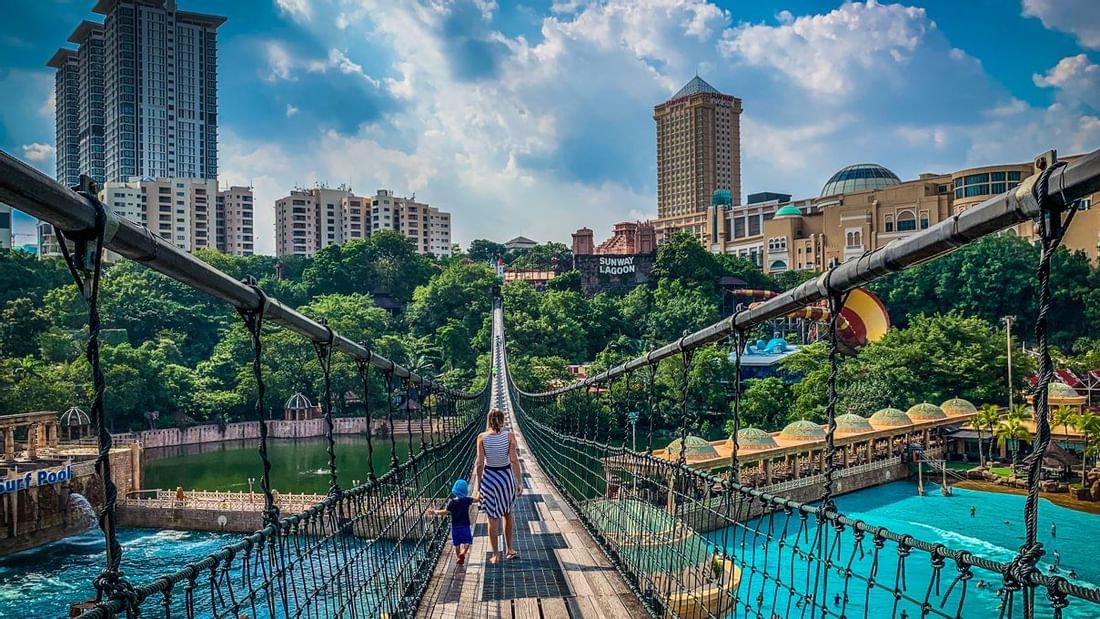
Sunway Lagoon is a famous theme park located in Sunway City. It is popular for the Water Park, Scream Park, Wildlife Park, Amusement Park and Asia’s first-ever Nickelodeon Theme Park located on its premises. The park began operations in 1992 and was officially opened on 29 April 1993. Since its opening, the theme park has added Malaysia’s first surf simulator, the FlowRider in 2010; Malaysia’s first 5D Waterplexx in 2012 and a very large water ride, Vuvuzela, in 2013. The 88-acre park is built 150 feet below ground level on a tin mining wasteland and currently has 90 attractions spread across six parks. It has also hosted many international lifestyle, music and sporting events. The park is open from 10 am to 6 pm daily and has an entry fee of RM 202 for an adult, RM 170 for a child or a senior citizen.

Darul Ehsan Mosque is the first mosque of Subang Jaya. Adorned with beautiful interiors, marble and carpet flooring, it was built in the 1980s and was inaugurated by Almarhum Sultan Salahuddin Abdul Aziz Shah of Selangor during the silver jubilee celebrations of his reign. It is open 24 hours during the week, between 9 am to 1 pm on Saturdays and between 5 am and 9:30 pm on Sundays. Situated in the UEP Industrial Park, the Church of St Thomas More is a Roman Catholic parish. The church is open for mass at 6:15 am on Mondays to Fridays and at 5 pm on Saturdays for Novena and at 6 pm for sunset mass. On Sunday it is open for mass at 6:45 am, 8:30 am and 11:30 am. Gurdwara Sahib Subang was established in 2018 and houses a prayer hall, a langar hall, a community kitchen as well a conference rooms. It is open between 5 am and 8 pm daily.

Travel Bucket List: Malaysia Part 14 – Pahang Part 4

Fraser’s Hill
A hill resort located on the Titiwangsa Ridge, Fraser’s Hill lies about 100 km north of Kuala Lumpur. In 1890, Louis James Fraser, a Scottish trader and accountant, established the area as a tin mining community known as Pamah Lebar when he discovered rich tin deposits and opened a tin mining facility. Mining activity there was short-lived, as the tin ore was depleted in 1913. This led many miners and farmers to abandon the area. Fraser reportedly disappeared in 1910, but research in 2019 concluded that he retired from his position and returned to Great Britain in 1910. He died in 1916 while travelling in Austria-Hungary.

An attempt by J. Ferguson-Davie to locate Fraser in the area failed. While he searched for Fraser, Ferguson-Davie recognised the area’s potential as a suitable location to set up a hill station. Its cool climate made Pamah Lebar an ideal retreat to escape from the usually hot climate in Malaysia. Construction of Fraser’s Hill began in October 1919 when F.W. Mager, Pahang state engineer, surveyed the site for building construction and cleared the land around Fraser’s former bungalow to build a road from The Gap to provide access to the hill station. The place was renamed Fraser’s Hill and opened to visitors in 1922. Subsequent development occurred in the 1970s in response to increased tourism activity. While this provided room for more visitors, it had an impact on the environment, including deforestation and water pollution prompting a halt to further developments in April 2010. Fraser’s Hill is known for its vast biodiversity, attracting scientists and researchers. In recent years, Fraser’s Hill has increased tourist activities, including hiking, cycling, golfing, archery, paddle boat, horseback riding, tennis, swimming and squash. However, the expansion for tourist development has negatively impacted the environment with deforestation, more species facing extinction and water pollution affecting the lives of the Orang Asli and residents in other villages. These issues led to the Pahang state government ruling out further development in the virgin forest at Fraser’s Hill on 13 April 2010. It was not until May 2015 when The Star reported that some resorts had fallen into disrepair because of a lack of maintenance coupled with infrequent collection of rubbish and some abandoned bungalows had been taken over by squatters. In response, the state government of Pahang proposed renovation of the hill resorts for ten years at the cost of between RM 100 million to RM 200 million. The hill resort’s renovation had to be meticulous to not turn Fraser’s Hill into a tourist-focused hill station like Genting Highlands and Cameron Highlands. Instead, it focused on improving existing facilities and preserving the colonial legacy of the hill station. On 28 April 2019, Fraser’s Hill celebrated its 100th anniversary as a hill station resort. Since further development was halted in 2010, only 10 per cent of Fraser’s Hill’s overall land has been developed.

Fraser’s Hill lies at an altitude between 320 m and 1,460 m above sea level. Around 44% of the terrain area is ranked as steep, while flat areas make up 8% of the overall land area. The town’s virgin forest coverage is around 92% of the overall land area, with only 1.5% of the area used for a town and 6.5% of the forest area cleared for secondary vegetation. Ten river systems in Malaysia originate in Fraser’s Hill, including Sungai Selangor, a major water source for Selangor, and Sungai Teranum, which forms a major river system in eastern Pahang.

Fraser’s Hill is located in one of Malaysia’s few pristine forests. The high level of biodiversity has become an area of great interest to scientists and researchers. Over 10% of all plant species discovered in Peninsular Malaysia are located in Fraser’s Hill, which is home to 952 indigenous species and 36 endemic species. Thirteen of these were considered extinct and had not been found again for more than 60 years. It is also one of the three available places in the world where the rare Trig Oak or Trigonobalanops verticillata was discovered. The most dominant group of animals found on Fraser’s Hill are invertebrates which play an important role in sustaining a healthy ecosystem in the region. Fraser’s Hill hosts 250 migratory and residential bird species. Birdlife International has designated this area as an important bird area because of its large number of species. The popularity of birdwatching has led to the creation of an annual event, Fraser’s Hill Bird Race, first organised in 1988. Usually held in June, the objective is to spot, identify and record species in an official list within the given time limit. A museum dedicated to birds known as the Bird Interpretive Centre was opened to the public in June 2010. The museum provides information and guided tours on seven trails in Fraser’s Hill, and an interactive facility where visitors can learn more about the area’s flora and fauna and understand the importance of forest conservation and the beauty of viewing nature.

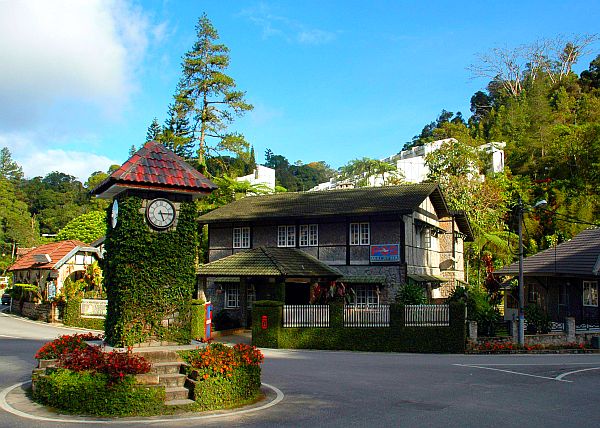
Fraser’s Hill’s architecture largely sports a mock Tudor design, reflecting colonial designs and architecture used in the colonial era. This design was used for the Fraser’s Hill clock tower as the amenities building and bungalows. As of 2019, 46 of the 79 buildings at Fraser’s Hill were listed as heritage buildings built from 1919 to 1957.

The road to Fraser’s Hill is a one-way road, hence only one side drive is allowed for 40 minutes each with particular timings. The upside drive is permitted in the odd hours and the downside drive is permitted in the even hours of the day. The best time to visit Fraser’s Hill is between June and August.

Allan’s Water is a lake surrounded by a recreational park. Open from 9 am to 4:30 pm, tourists visit here to do paddle boating and explore the nature, flora, and fauna. Visitors should visit the Tamam Awam Park to see various gardens and enjoy time with friends and family. One can indulge in horse riding and archery along with many adventure sports at the Paddock. Located along Valley Road, it remains open from 9 am to 4 pm every day. Located along Pine Tree Road, Taman Awam Bukit Fraser is a hilltop forest park on Fraser’s Hill. Landscaped beautifully with coniferous trees, this public park has a playground, a scenic tarmac walking circuit, and a mini golf course. Benches and gazebos line the neat flower garden. The food court sits in a shady nook, offering a wide range of local dining with sundry and souvenir shops.

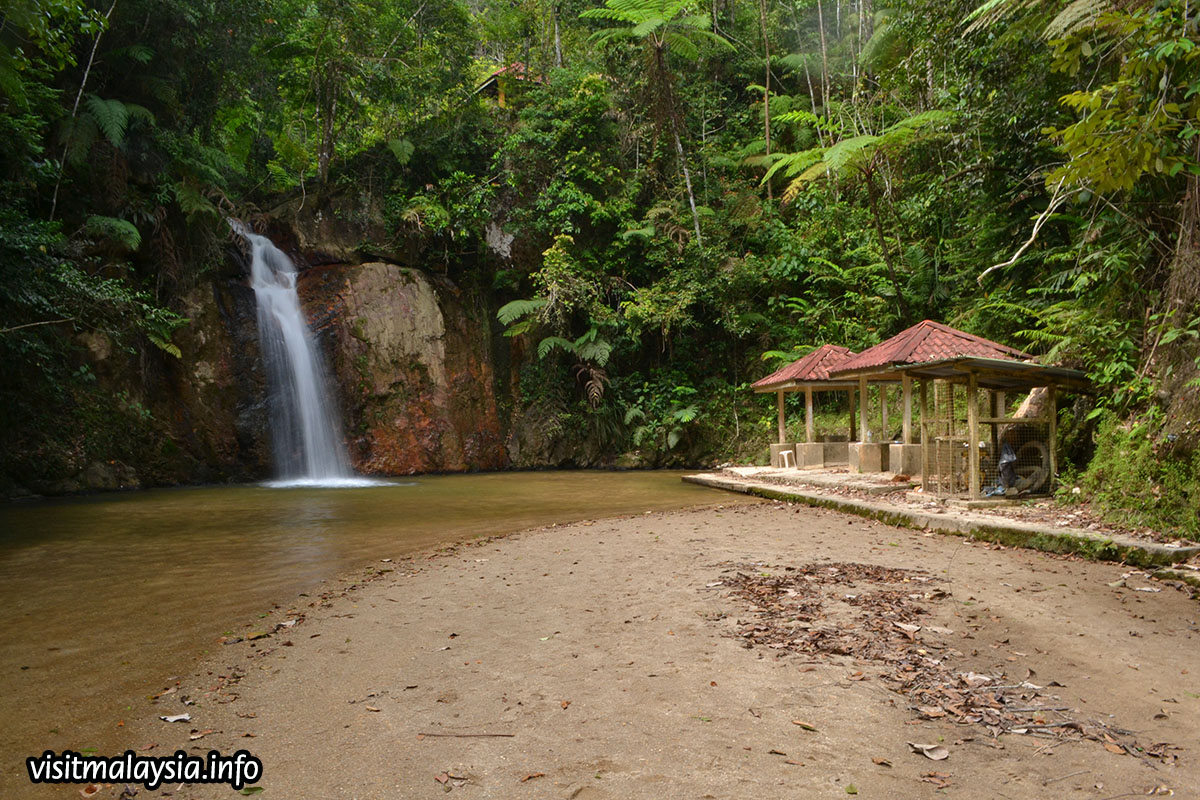
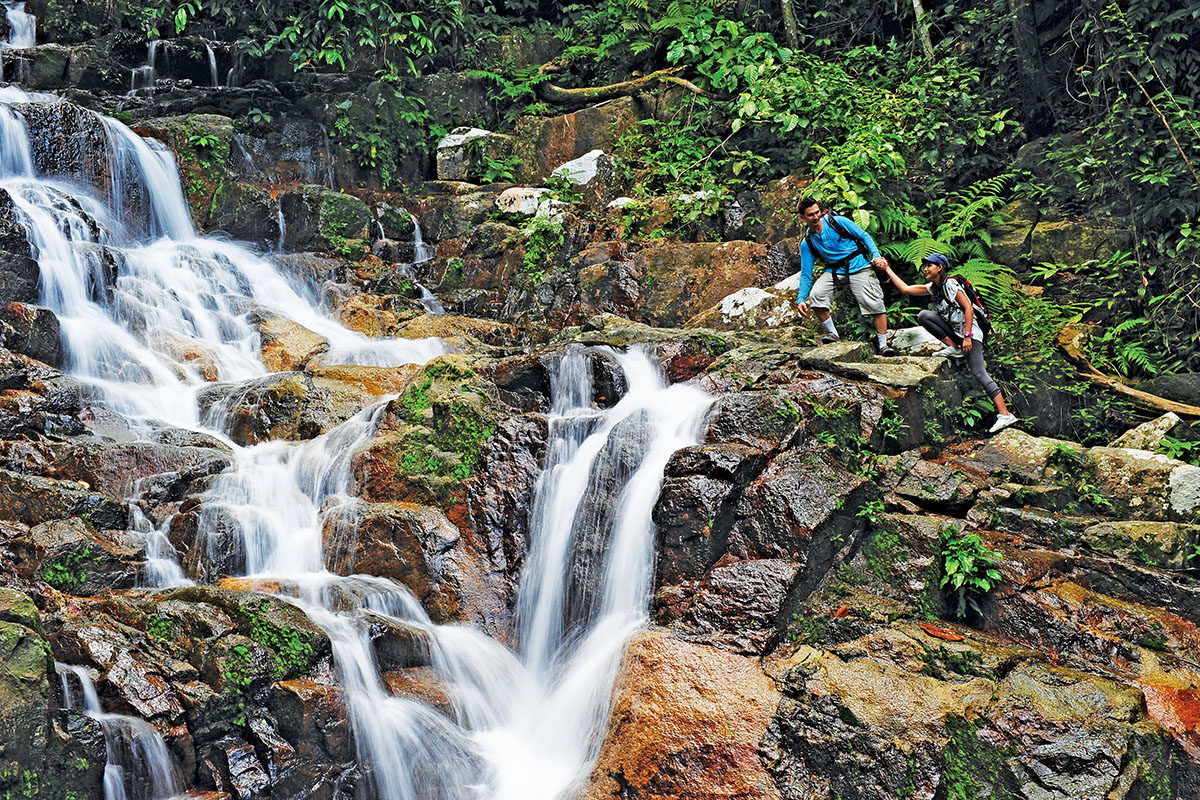
One of the most beautiful places around Fraser’s Hill is the Jeriau Waterfall, located close to the landmark hotel of Ye Olde Smokehouse. It is a 15-minute short steep trek through the jungle along a water stream to get to the gigantic falls. The waterfall cascades and forms a pool at its base, allowing visitors to go for a dip and relax in the surrounding nature. The place has clean toilets, changing rooms, and some BBQ pits to enjoy an outdoor picnic. One can find some dogs along the way and plenty of alluring butterflies on the spot.

At the Bird Interpretive Centre one can spot birds like hornbills, doves, pheasants, eagles, endemic species, and some exclusive migratory birds. The Bird Interceptive Centre is located within the sports complex. The Fraser’s clock tower is a historical landmark with colonial architecture and a must-visit if one is exploring Fraser’s Hill.

Leading to the famous Twin Peaks viewpoint, Pine Tree Hill is the longest and most challenging trekking trail on Fraser’s Hill. It was paved up the mountain during the British era to gain access to the 1,505-metre-tall summit. Following the Selangor-Pahang border, this trail is 5.5 kilometres long and commands spectacular views of Bukit Fraser. Knotted ropes are available to help trekkers climb. Suited for hikers of all skill levels, Hemmant Trail is a mostly flat and wide 1-kilometre-long trail on Bukit Fraser. It begins from a grass clearing behind the Genting Road mosque area and village square, skirts above Fraser’s Hill Golf Course and past the Abu Suradi trailhead, and passes through unspoiled native and exotic rain trees, ferns and shrubs.

The Glasshouse on Fraser’s Hill is a cosy private complex with a greenhouse and an annexe wing bar counter. Tucked between Jalan Lady Guillemard and Jalan Valley, the greenhouse showcases a wide range of colourful cacti and succulents. Patrons can sit by the greenhouse and admire the plants, purchase them on the spot, and enjoy a selection of drinks, coffee and cake indoors. The Greenhouse is open on weekends between 10 am and 6 pm.

Cameroon Highlands
A gorgeous hill station, Cameron Highlands is home to eight different settlements that boast stunning views, expansive plantations, nurseries, colonial bungalows, and hidden waterfalls. Occupying an area of 712.18 sq km, it shares a boundary with Kelantan to the north, and Perak to the west. Situated at the northwestern tip of Pahang, Cameron Highlands is approximately 200 km north of Kuala Lumpur and about 355 km west of the state capital of Kuantan.

Surveyed by British government geologist and explorer William Cameron in 1885, Cameron Highlands consists of three mukims or subdistricts, Ringlet, Tanah Rata and Ulu Telom, all of which are nestled at elevations ranging from 800 m to 1,603 m above sea level. Developed in the 1930s, the tableland is one of the oldest tourist spots in Malaysia. Apart from its tea estates, the plateau is noted for its cool weather, orchards, nurseries, farmlands, waterfalls, rivers, lakes, wildlife, mossy forest, golf course, hotels, places of worship, bungalows, Land Rovers, museum and native inhabitants or the Orang Asli. Forty years later, the tableland was given another review when Sir George Maxwell visited the locale to see if it could be turned into a resort. He spent about nine days surveying the territory. After comparing it with Nuwara Eliya in Sri Lanka and Baguio in the Philippines, he decreed that the site should be developed into a hill station.

In mid-1925, an Agricultural Experiment Station was set up to confirm if cinchona, tea, coffee, fruits and vegetables could be grown in the district. While research at the station was being carried out, the colonial office assigned Captain C.C. Best, a surveyor from the Federated Malay States to trace the Telom River. In 1926, a development committee was formed to zone off the moorlands for agriculture, defense, administration, housing, and recreation. Later, a three-million-dollar road was constructed from Tapah to the highlands. It started from the 19th mile Tapah-Pahang Road and ended at Ginting B or Tanah Rata. When the road was opened in 1931, the British and the locals moved in to settle on the slopes of the mountain. They were soon followed by tea planters and vegetable growers who found the climate to be suitable for the growth of their crops. By the mid-1930s, there was a notable improvement in the constituency: it now had a six-hole golf course, several cottages, three inns, a police post, two boarding schools, a military camp, a dairy, a horse spelling ranch, nurseries, vegetable farms, tea plantations, a Government Rest House and an Agricultural Experiment Station. The domain continued to grow until the outbreak of the Second World War. During the Japanese Occupation of the Malay Peninsula between 1942 and 1945, there was hardly any development in the area. When the Japanese withdrew in August 1945, the place transformed but came to a halt during the Malayan Emergency between 1948 and 1960. Today, Cameron Highlands is not only the biggest and best known of Malaysia’s hill stations; it is also the highest point in Peninsular Malaysia accessible by car.

Cameron Highlands is one of the few places in Malaysia that serves as a habitat for a wide variety of flora and fauna. There are more than 700 species of plants that grow here. The vegetation changes as one ascends the mountain. Of the fauna, the Sumatran serow, mountain peacock-pheasant and Malayan whistling-thrush are listed in the 2004 IUCN Red List of Threatened Species.

Geographically, the resort is located on the highland spine of Peninsular Malaysia. It owes its present standing to its location at a high altitude. At the top of Mount Batu Brinchang is a radio and television station, constructed by the British in the early 1950s. Cameron Highlands is unique compared to the other hill stations in Malaysia — three river systems drain it with numerous tributaries. Their high points serve as the water catchment for the Pahang and Perak rivers.

Overall, much of the highland is still forested, estimated at 71%. Jungle trails lead visitors to tranquil spots, waterfalls, and aboriginal villages. Most of the tracks begin at Tanah Rata. There are more than ten paths to pick and choose from. Depending on its distance, some routes can take as long as five hours to cover.

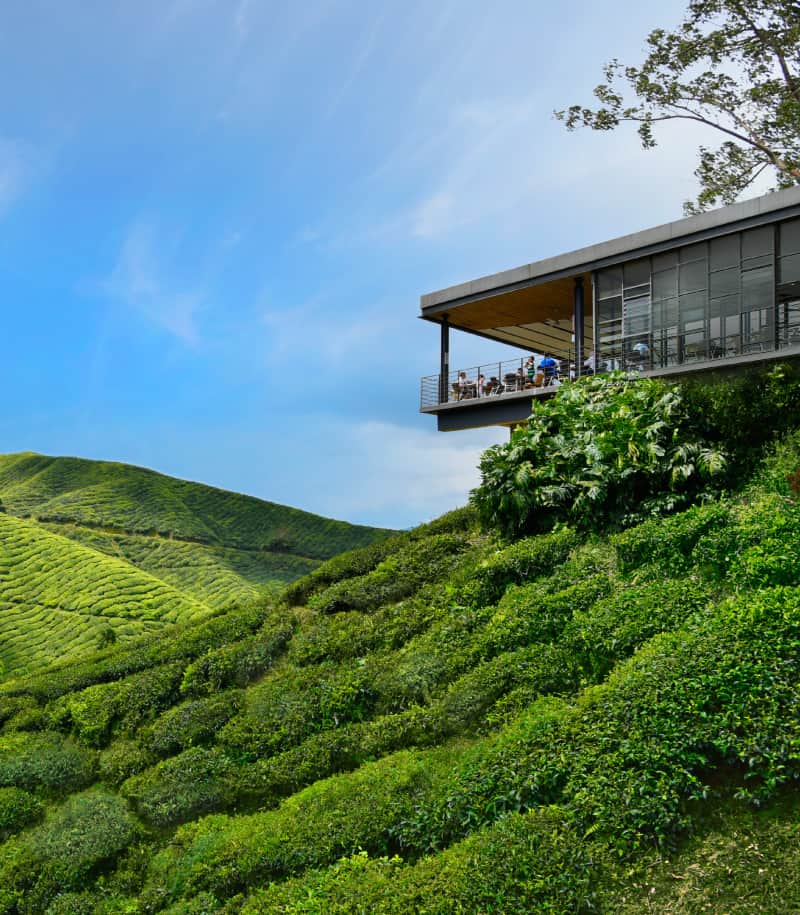
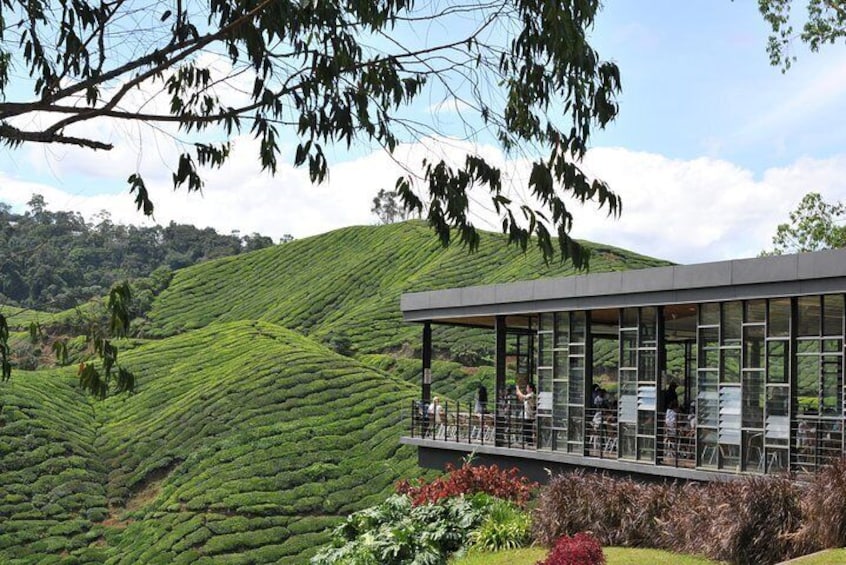
The largest tea manufacturer in Malaysia and the largest tea plantation in Southeast Asia, Boh Tea Plantation is often visited for its scenic views and visitor centre. Founded in 1929 by J. A. Russell, Boh Plantations now own three tea gardens – the first garden in Habu, Fairlie Tea Garden and Sungai Palas Tea Garden. There is also a packaging factory near its main garden. Guided tours are available to show visitors how tea is made. The tours start at 8:45 am and are conducted every half hour from there on. No reservation is needed and the tour is free. The Sungai Palas Boh Tea Centre is new, consisting of a tea plantation, cafe, gallery, tea factory, and souvenir shop. It has an exhibition hall to help in tea education as well as a souvenir and tea shop to take back some memories. There is a big outdoor terrace blowing a great view of the valley. The open balcony gives a chance to lay back and enjoy the view after walking through the estate fields and serves to welcome guests casually and informally. The plantation is open from 9 am to 4:30 pm and is closed on Mondays.

Popular for its scenic viewpoint, the Cameron Bharat Tea Estate is among the most visited tea plantations in Cameron Highlands. The picturesque tea plantation, a variety of exquisite teas, and delicious cakes and scones are some of the primary reasons that this tea plantation is an ideal destination for tea lovers and nature enthusiasts. Nestled among hills and lush greenery, the Cameron Bharat Tea Estate offers tours to visitors where one can take beautiful photographs, enjoy the view of nature at its best and relish the flavour of the finest teas like cardamom tea and its uniquely blended masala chai. One can also buy jam and other products from the tea shop. The tea estate is open between 8:30 am and 6 pm on weekdays and between 8 am and 7 pm on weekends. Entry fees are RM 2 for adults while children need not pay anything.

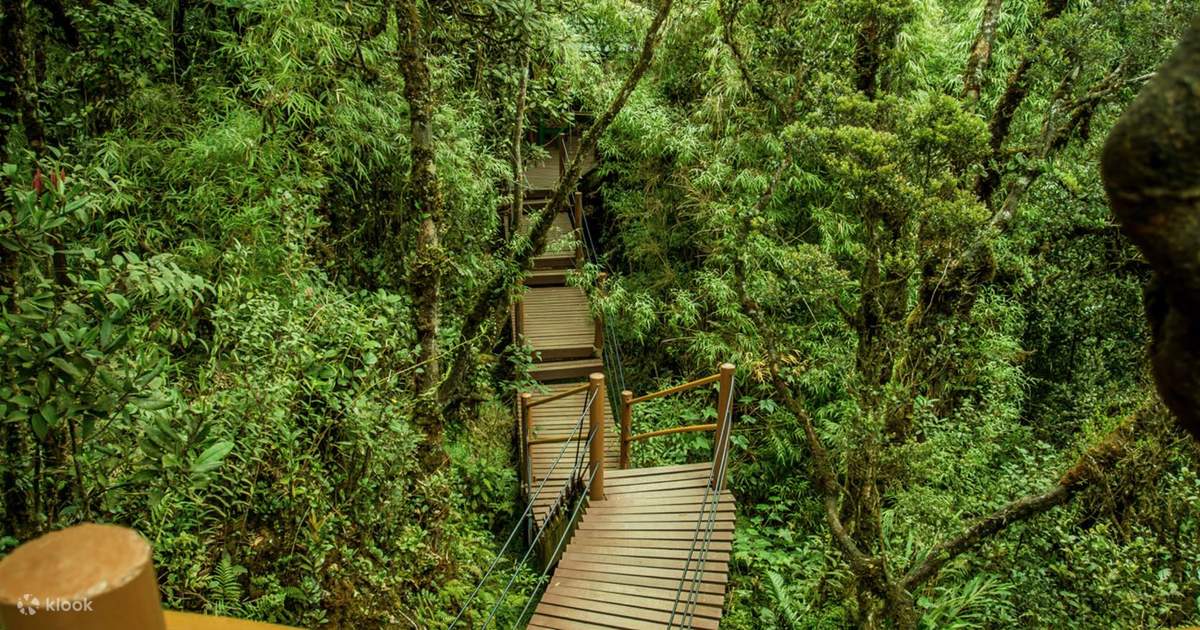
Mossy Forest is a moist tropical evergreen forest flourishing on top of Gunung Brinchang. The swirling and twisted barks of trees are all draped in moss and ferns, hence the name, Mossy Forest. Visitors can explore the forest preferably with experienced tour guides. The boardwalk is another safer option to wander in the forest. This 2,00,000-year-old lush spread is abode to exotic flora like the carnivorous pitcher plant, spices, medicinal plants, orchids and primitive ferns. The weather is mostly very cloudy here and the misty conditions lend an air of creepiness to the forest. The high elevation of 2032 metres ensures regular rainfall and the cover of mist leads to a thick curtain of moss and ferns. The Mossy Forest Boardwalk is a 150 metres long wooden walkway through the forest. Once one reaches the ending point of the boardwalk, a muddy trail will start through the forest. Entry fees are RM 30 for adults and RM 15 for children below 12.

Cameron Lavender Garden is a floral garden located in Brinchang. A visual treat for the eyes, the garden blooms with different types and colours of lavender, including purple, red and yellow. The 3D mural art is one of the must-see sections here. The love-lock bridge in the garden is popular among those in love. The garden also houses a vegetable and strawberry farm. Flower-plucking and strawberry-picking are allowed by paying some fees. The garden also has a cafe on the top serving cheesecakes, ice creams, jams, juices and other lavender-inspired delicacies. There’s a small market inside the garden selling gift items and souvenirs. The garden is open between 9 am and 6 pm on Mondays to Thursdays and between 9 am and 7 pm on Fridays, Saturdays and Sundays. Entry fees are RM 18 for adults and RM 8 for children.

The small yet beautiful farm at the Kea Farm, the Cameron Highlands Butterfly Farm houses a plethora of butterflies, reptiles, insects and amphibians. Vibrant butterflies of varied types and sizes along with various other animals and insects are on display here. It is open between 9 am to 6 pm from Monday to Friday and from 8 am to 7 pm on weekends. Entry fees are RM 7 for an adult and RM 4 for a child.

A beautiful natural farm, with budding fresh and juicy strawberries, the Raju Hill Strawberry Farm is situated in the Kea Farm. Visitors can easily roam about to experience the delightful sights of plantations and enjoy their fresh preparations, checking out a few interesting local products at the gift shop inside the farm. For its high-quality strawberries in the lush green farms, Raju Hill Strawberry Farm has become a popular site for everyone who visits Cameron Highlands. The farm, which has free entry fees is open from 8 am to 6:30 pm daily.

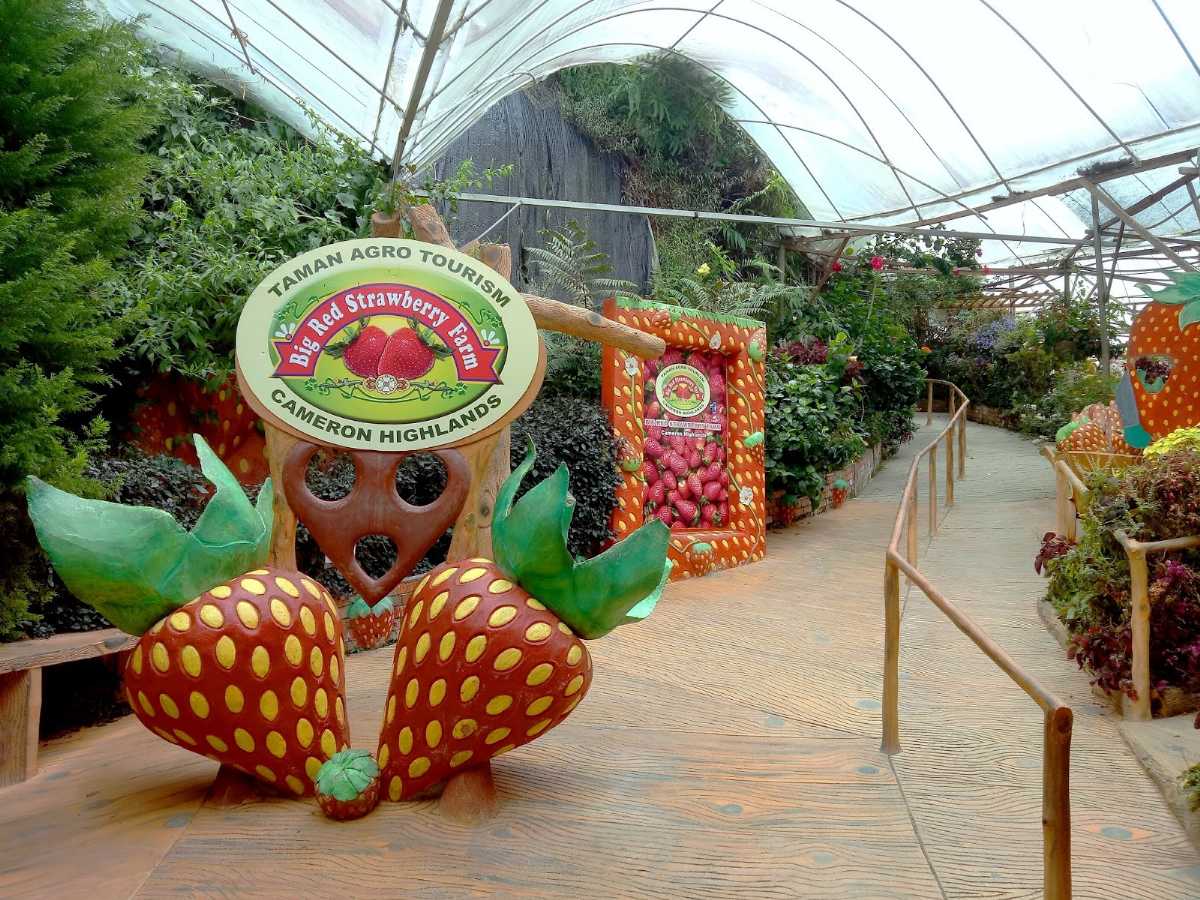
Also known as Taman Agro Tourism, the Big Red Strawberry Farm is located within walking distance from Brinchang town right beside Cactus Valley. One can enjoy potted plants along with relishing healthy snacks and drinks here. The strawberry farm was started in 2005 by Kumar Sinnathamby who changed his agricultural land into an agro-tourism nursery farm. The farm is open from 8:30 am to 5:30 pm daily and there is no entry fee to the farm.

Located in Tringkap, the Cameron Tringkap Bee Farm is an apiary with a mini-bee museum where one can learn a lot about different types of bees, honey production, honey harvesting and its benefits. The Bee Farm also has a cute little strawberry farm and an exhibition corner. One can buy a wide variety of fine honey products under the brand name Giant B and beeswax, bee venom balm, bee pupa, royal jelly, and bee pollen, among other products at the Tringkap Bee Farm. The farm is open from 9 am to 6:30 pm.

Nestled on a hill in Brinchang, Cactus Valley is an ornamental garden boasting a diverse variety of cacti of varied colours, sizes and shapes. Not only cacti, but the garden also houses many other fruits and vegetables. Specimens found here include glori bush, roses, peaches, passion fruit, apple trees, fuchsia, and hibiscus among others with many of them also available for sale in pots. It is open from 8 am to 6 pm and costs RM 5 for an adult and RM 3 for a child to enter.

Mrs Robertson’s Rose Garden is a lovely floral terrace garden situated in Sungai Palas. Set on a hilltop, the garden and its ten-levelled terrace offer amazing views of the scenic surroundings. It boasts a variety of more than 100 different species of roses along with other highland flora and flowers like carnations, camelia, sunflowers and salmon hibiscus trees. There are also vegetable patches and cactus pots.

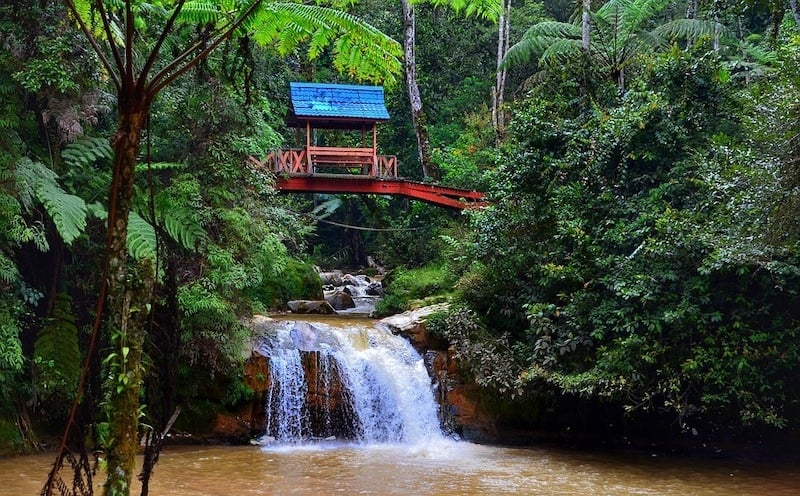
Located near Tanah Rata, Thompson Falls is a very popular waterfall that is surrounded by lush greenery. The base of the waterfall is ideal for swimming and serves as a picnic spot. To get the best view of the cascading water, one should reach the vantage point of Thompson Waterfall by climbing up a flight of stairs on the mountainside. The area also has some shops selling snacks, fruits, souvenirs and handicrafts.

The indigenous people of Malaysia, the Orang Asli have settlements that are often visited by tourists who hope to understand their culture. Guided tours are available. The most authentic locales can be found to the east of Tanah Rata with the people referring to themselves as Batek. They are nomadic but friendly towards the visitors, often welcoming them with smiles and showing off their skills. Some of the tourists are intrigued to try their hand at using the blowpipe. The village is also included in Rafflesi tours.

Gunung Brinchang stands tall as the second-highest peak in Cameron Highlands. The mountain was classified as the highest one in Peninsular Malaysia, accessible by road. However, the authorities have shut down the tarmac road leading to the summit of the mountain just 50 meters from Mossy Forest. The several hikes to reach the summit of the mountain en route to the Mossy Forest are quite popular among trek groups and hikers. A watchtower on the summit offers amazing views of the Titiwangsa Mountains, towns and valleys there. The views are perfect for those who love sunsets.

Hiking is a great way to explore the natural beauty of the Mossy Forest and reach the summit of Gunung Brinchang. Best of all the trails leading to the summit starts close to Raju’s Hill. The comparatively wide muddy road will narrow down to a jungle path just a few minutes after walking. One will also find a change in weather from cool to humid. The hike is quite easy for novice hikers and families although it gets a bit steep, slippery and muddy at times. Otherwise, guides can also be hired for the hike.

The Agro Technology Park in MARDI is a government-owned agro research centre and institute which also doubles up as a tourist destination. Located at Tanah Rata, it is famous for its cultivation of tropical fruits and is a very interesting place for those who want to try something new in terms of food and also learn about Malaysian agriculture. Spread over 42 hectares, it was first opened in 1990 and is run and managed by the government. It is famous for its more than 4000 varieties of flowers and fruits like strawberries some of which are indigenous to the place itself. The Agro Technology Park offers tourists a Fruit Farm Tour which is fully guided by experts. Tourists can experience a bumpy truck drive to the farms where they are offered fresh, tropical fruits to taste and are also explained about how they were grown and cultivated. Established in 1925, the Agricultural Experiment Station was set up to determine the types of crops that could be grown on the tableland. In 1971, the station became a part of the Malaysian Agricultural Research and Development Institute (MARDI). Today, it still researches a wide variety of crops that are grown in the district. It is open between 8 am and 12:45 pm and again between 2 to 5 pm on Mondays to Thursdays and between 8 am and 12:30 pm and again between 2:30 to 5 pm on Fridays. On weekends, it is open between 8 am and 5 pm. It is closed on school and public holidays. Entry fees are RM 5 for adults and RM 3 for children.

Located in Taman Sedia, the plateau’s little Church of England or All Souls’ Church was once acknowledged by the early members of its congregation as The Cameron Highlands Church. The history of this establishment can be traced back to the 1950s and in 1958, the church was offered a piece of land that used to adjoin the previous school. The construction of the church commenced in 1958 and was completed in the same year and was named All Souls’ Church.

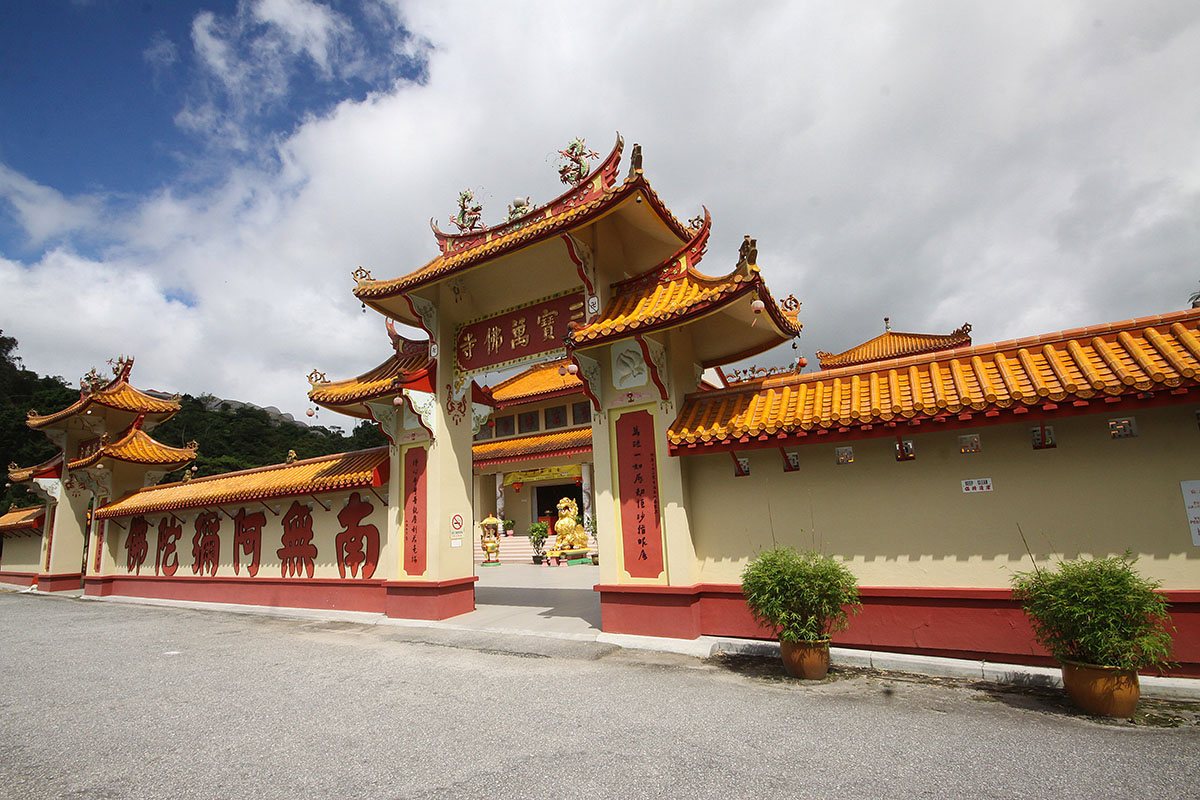
Overlooking the houses that dot Brinchang town, the Sam Poh Tong Temple is the fourth largest Buddhist temple in Malaysia. The temple’s location makes it an exciting spot to click some stunning shots in the backdrop of the picturesque Oriental artefacts and a gorgeous hill view. Featuring beautiful ornamental architecture and a marble-tiled floor, Sam Poh Tong also has plenty of stunning Buddhist and Chinese brass statues. The temple is open from 7 am to 7 pm daily.

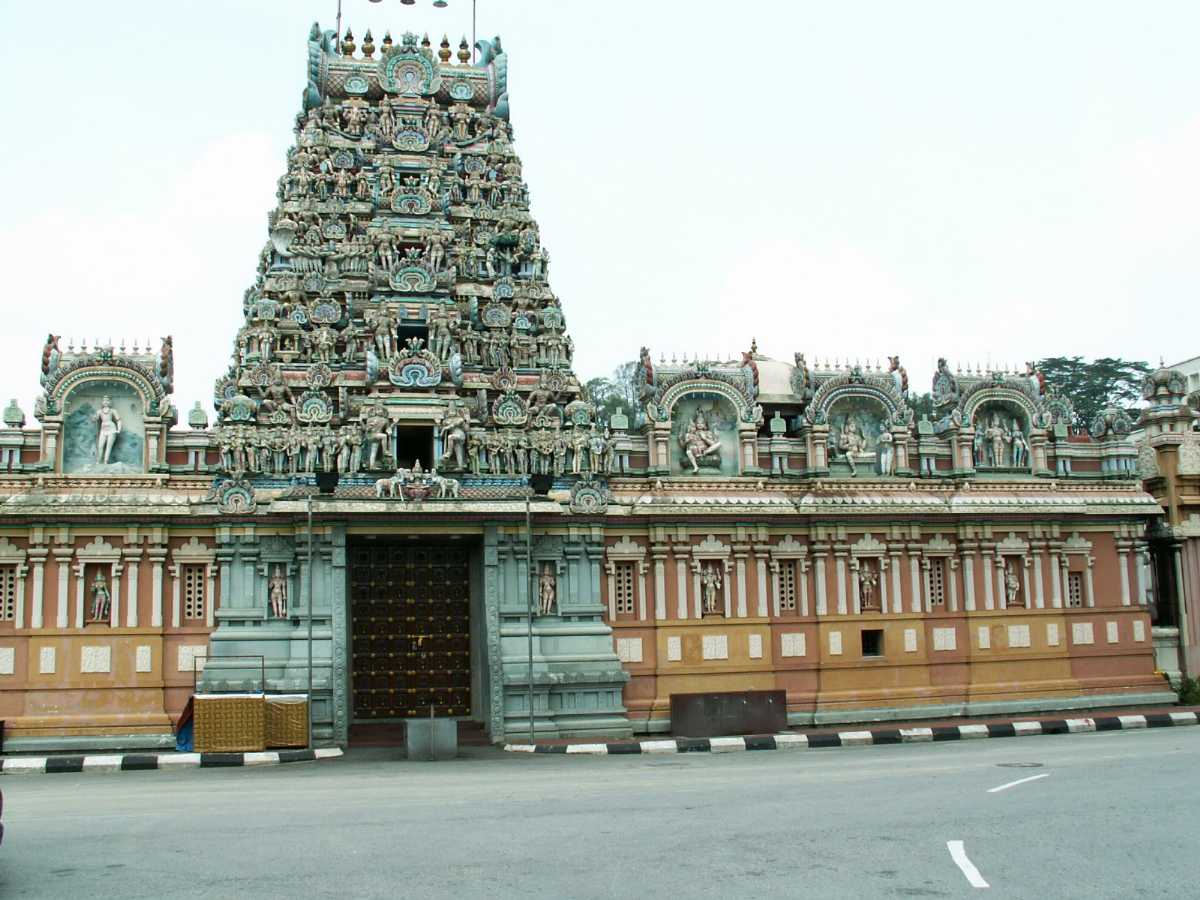
The Sri Thendayuthapani Swami Temple is the largest Hindu temple in Cameron Highlands. Located in Brinchang at a height of 1600 metres, the temple is very popular among tourists due to its luxuriously styled colourful building. Chithra Powrnami is a 3-day Tamil ceremony celebrated on a grand scale in the temple. On special occasions, the temple organises free community meals. It also holds rituals for traditional weddings. The temple is mostly visited by the strawberry and tea-picking community of Cameron Highlands. A magnificent new building of the temple was completed recently which houses a grand staircase that leads to the mandapa. Here one will find colourful and intricate Tamil-Nadu-style figurines sculpted by Indian artisans. The temple is open from 6 am to 10:30 pm daily.

The Mah Meri Art Gallery is an interesting art collection located at the Tanah Rata. The art gallery pays homage to the now-dying art of carving masks out of wood. Mah Meri originally translates to jungle man but also has another meaning, which means masked men. This art of carving wood is very intricate and is often considered one of the finest in the world and has received the UNESCO Seal of Excellence. Below the art gallery, there is also a gift shop from where one can buy Mah Meri wood carvings and masks.

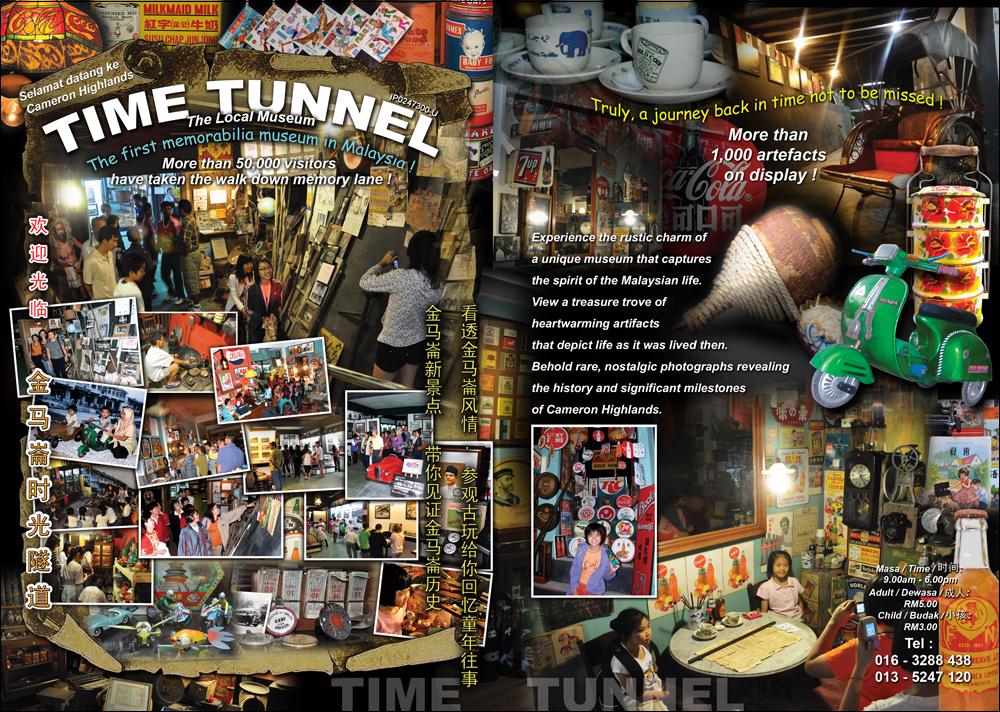
Located in Brinchang, Time Tunnel Museum is Malaysia’s first memorabilia museum. Also known as the local museum, it is filled with collectables and memorabilia showcasing what life was like in Malaysia during the pre-war years. The museum has more than 4,000 objects and photographs on display showcased in eight galleries covering an area of about 14,000 sq m. In June 2008, the museum opened a second space in Ipoh’s old town. There are no restrictions to photography at this place. There are two exhibition levels in Time Tunnel Museum. The Aborigine Section compares the lifestyle of the local natives who lived in Cameron Highlands before the arrival of outsiders. Their tools, traps, and handicrafts are displayed on the floor and the walls. The Barber Shop is equipped with items such as mirrors, straight razors, scissors, hair sprays, shavers, hair dryers, clippers, curlers and a broad range of combs, it is a model of a traditional barbershop back in the early days. The Children’s Corner has items that children in those days used. The Jim Thompsom Corner is dedicated to Jim Thompson, the silk king of Thailand. Located in the middle of the museum, this section exhibits the story of Jim Thompson and his baffling disappearance in Cameron Highlands. The Cameron Highlands Chronology showcases how Cameron Highlands has transformed from being a laid-back village to a famous tourist hotspot now after being discovered in 1885 by William Cameron. The Old Kopitiam shows the interior of a traditional old style coffee shop including old but artistic wares used during that time such as chopsticks, ashtrays, coffee cups and many more. The museum is open from 9 am to 6 pm daily and entry fees are RM 5 for adults and RM 3 for children.

Genting Highlands
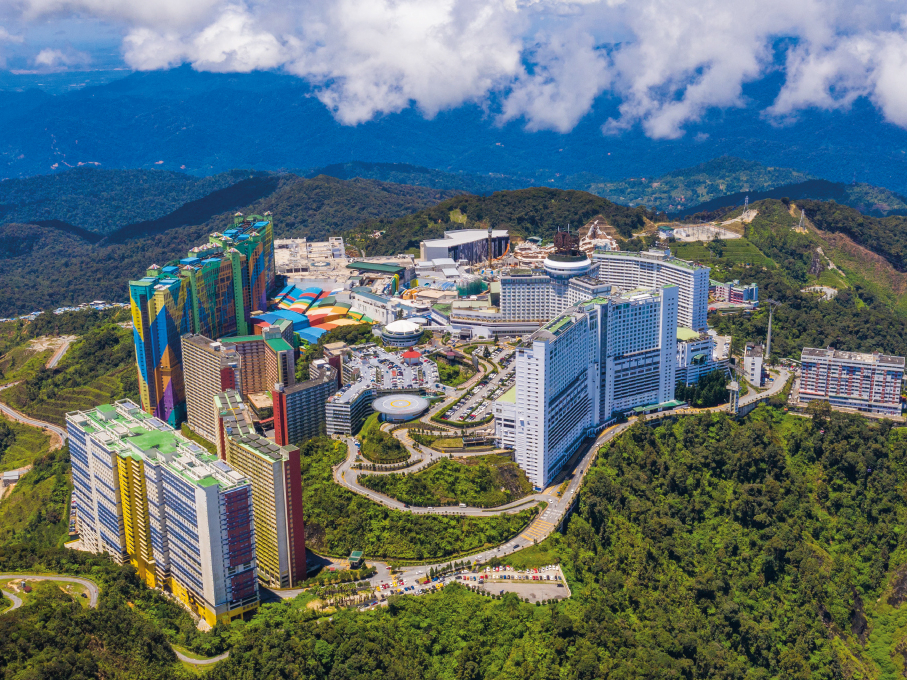
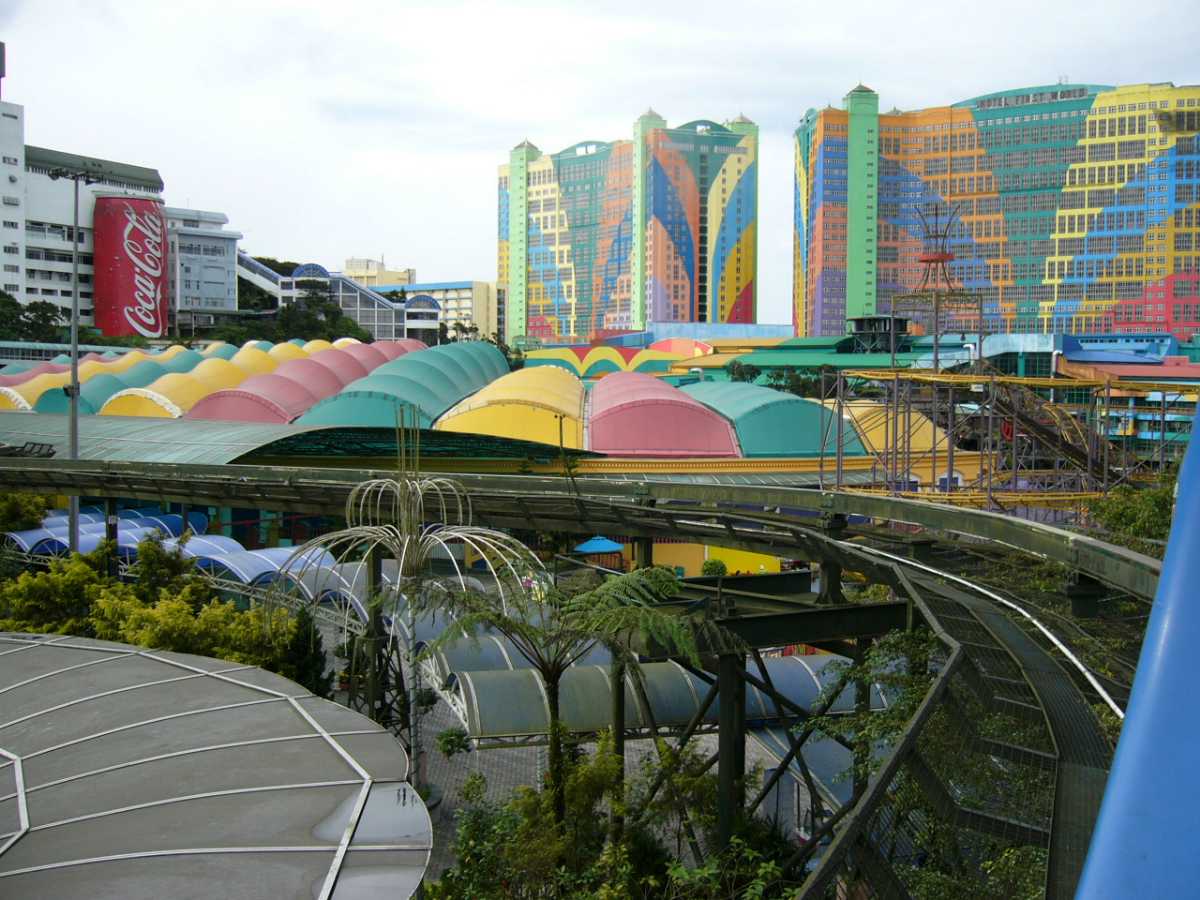
Only an hour’s drive away from Kuala Lumpur, Genting Highlands is often dubbed the City of Entertainment and is known for its nightlife, luxury hotels, huge shopping complexes and world-class casinos. Resting on the peak of Gunung Ulu Kali, in the Titiwangsa Mountains at an elevation of 1800 meters, Genting Highlands incorporates the First World Hotel which was listed in the Guinness World Book of Records as being the largest hotel in 2006. The only place in Malaysia that offers legal gambling, Genting also has cave temples, amusement parks and a water park. Awana SkyWay and Genting SkyWay are the two accessible cable car services for reaching Genting Highlands.

Genting was established in 1965 by the late Chinese businessman Lim Goh Tong who was inspired by the fresh air in Cameron Highlands during his business trip there in 1963 for a hydroelectric power project. The rationale was that Cameron Highlands was too far away from Kuala Lumpur, and therefore building a mountain resort nearer to Kuala Lumpur would have excellent business potential. After researching Kuala Lumpur’s maps and surrounding areas, Lim identified Mount Ulu Kali in Genting Sempah, 58 km from Kuala Lumpur, to be ideal for his plan.

The primary tourist attraction is Resorts World Genting, a hill resort where casinos and theme parks are situated and where gambling is permitted. Many of Pahang’s skyscrapers can be found in this city. On 18 August 1965, a technical and construction team began to construct the access road from Genting Sempah to the peak of Mount Ulu Kali. On 31 March 1969, the late Tunku Abdul Rahman, Malaysia’s first prime minister, laid the foundation stone for the company’s pioneer hotel, marking the completion of the access road to Genting Highlands Resort. The resort was also granted a casino license the same year by the Malaysian government to develop its gambling industry. An area midway to the peak was turned into the Gohtong Jaya township. In 1971, the first hotel at Genting Highlands was completed and was named Highlands Hotel, now renamed Theme Park Hotel.

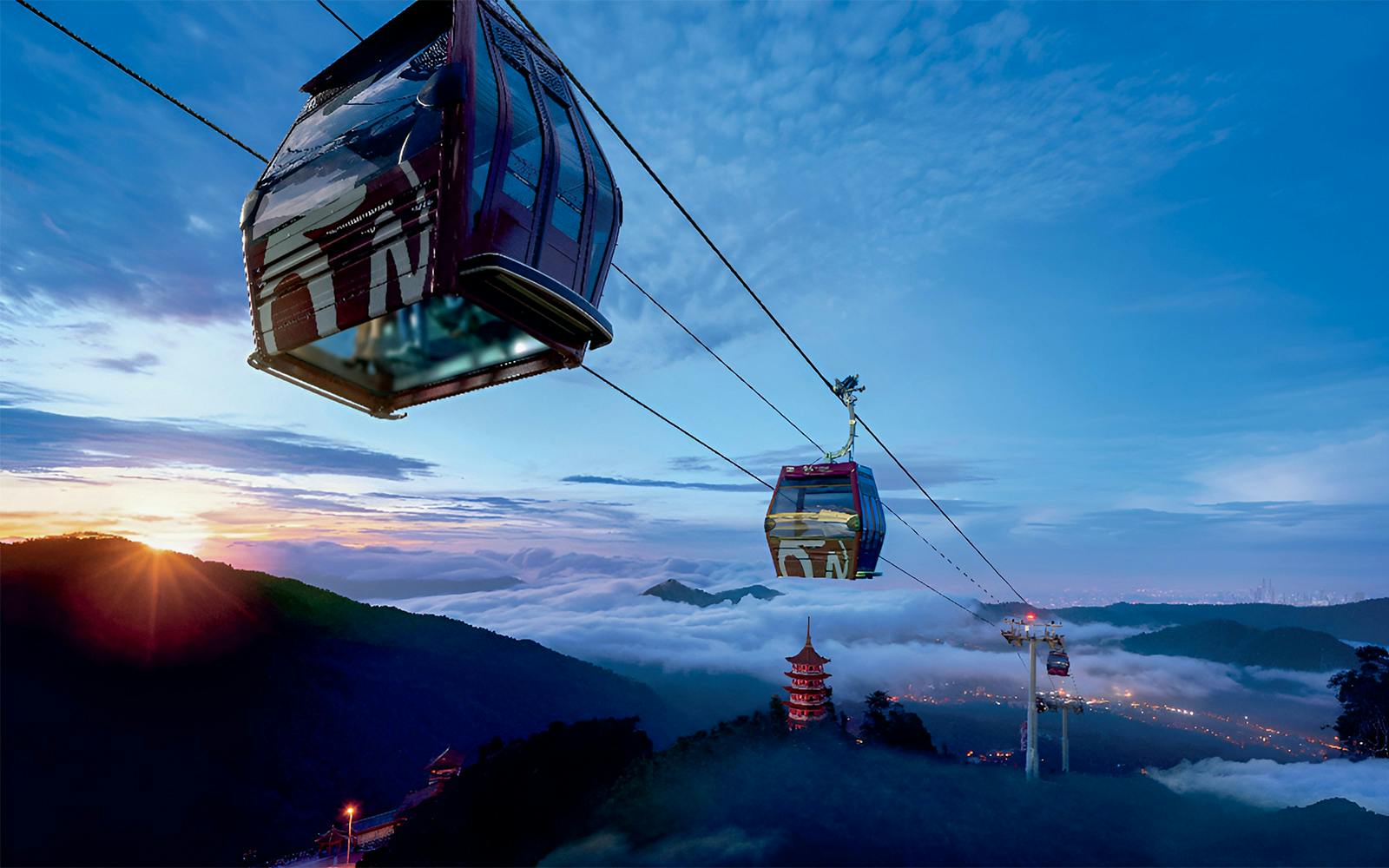
Since then, Genting Highlands Resort has expanded, with six more hotels being built by 2017. Two cable car systems were built to provide transport to the hilltop – the Awana Skyway built in 1977 with a length of 2.8 km and the Genting Skyway cable car system built in 1997 with a length of 3.38 km.

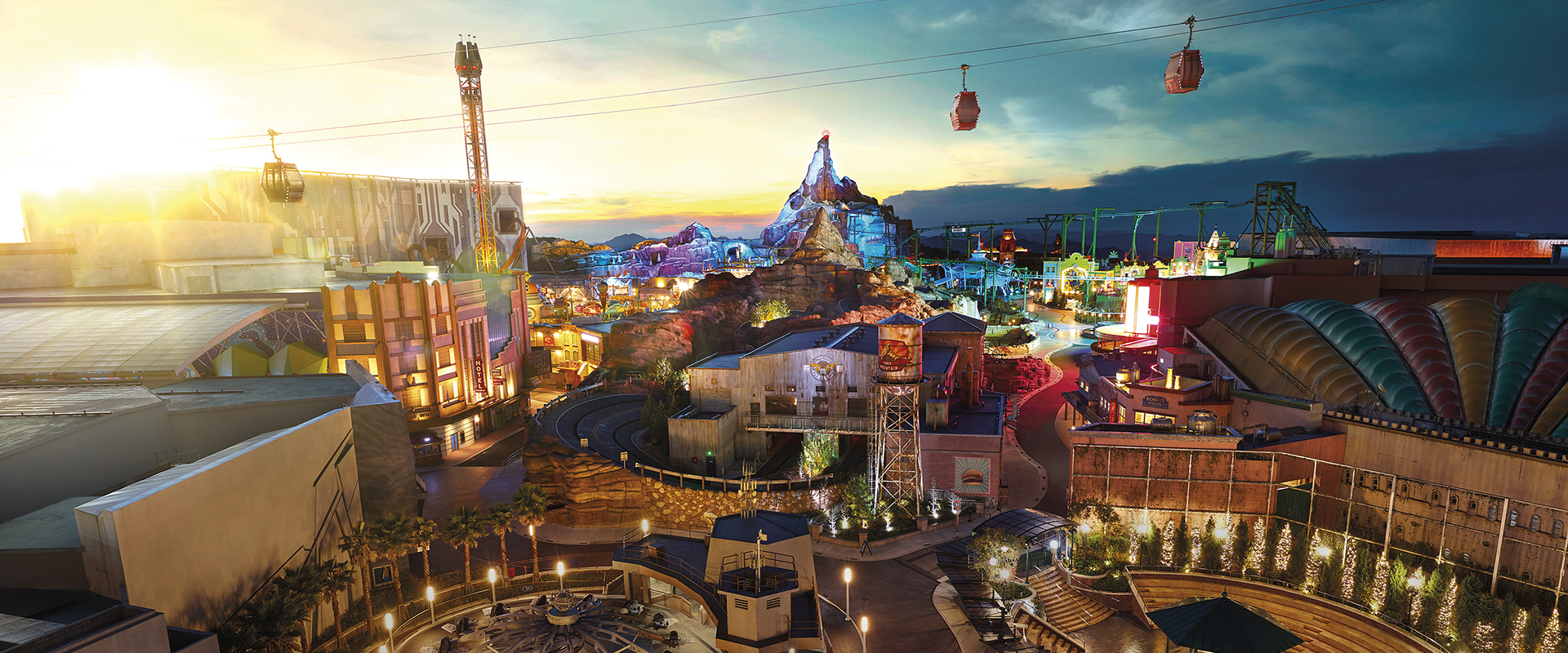
There are currently three theme parks at Resort World Genting, Genting SkyWorlds, formerly Genting Outdoor Theme Park, Skytropolis Funland, formerly First World Plaza Indoor Theme Park and Genting Grand Indoor Theme Park. Genting Outdoor Theme Park was opened in 1994 with 31 rides at its peak, including a monorail service, but was closed on 1 September 2013 to make way for the construction of the world’s first 20th Century Fox World. However, due to disputes between Genting Malaysia Berhad, Fox Entertainment Group and The Walt Disney Company over the theme park after the purchase of 20th Century Fox by The Walt Disney Company, Genting and Walt Disney filed civil suits over each other. On the 26 of July 2019, following an agreement between Disney and Fox which granted Genting Malaysia Berhad a license to utilise certain Fox intellectual properties, the theme park was eventually rebranded as Genting SkyWorlds. First World Plaza Indoor Theme Park was opened in 2001 with 12 rides at its peak and was closed from June 2017 to February 2018 for refurbishment. On 8 December 2018, it was opened to the public and rebranded as Skytropolis Indoor Theme Park, with some attractions mimicking older attractions of the former indoor and outdoor theme parks. The theme park also included the first Asian branch of VOID, a US-based operator of unique fully immersive virtual reality attraction, which officially opened on 6 December 2018 on a 7,000 sq ft section of Skytropolis Indoor Theme Park. The Genting Grand Indoor Theme Park was opened in 1992, located on the lower floor of Genting Grand Hotel and consists of two children’s rides and one amusement arcade – Vision City Video Games Park.

Resorts World Genting is the only legal land-based casino area in the country. There are two main casino outlets in the resort, Genting Casino in Genting Grand Complex and Sky Casino in SkyAvenue Mall. Also known as Casino De Genting, the Sky Casino is the largest casino in Genting Highlands. Spread over two levels, the casino is the first land-based casino in Malaysia. The casino house 400 electronic tables, 3000 slot machines and many other games like Blackjack and Roulette. Divided into different themed sections, it offers 24-hour dining services. The Skyline Casino is open to the public, however, entry to foreigners is allowed only if they show their original passports, a photocopy is not accepted. Entry to the third level known as the Silver Club, is allowed only to Silver Card and above Members. It is reserved, more spacious and private. However, first-time international guests of the resort can enter the Silver Club through a Classic Card. Entry is denied to Muslims and people below 21 years and patrons must wear shoes and wear smart casuals or formal attire. The casino is open 24 hours a day.

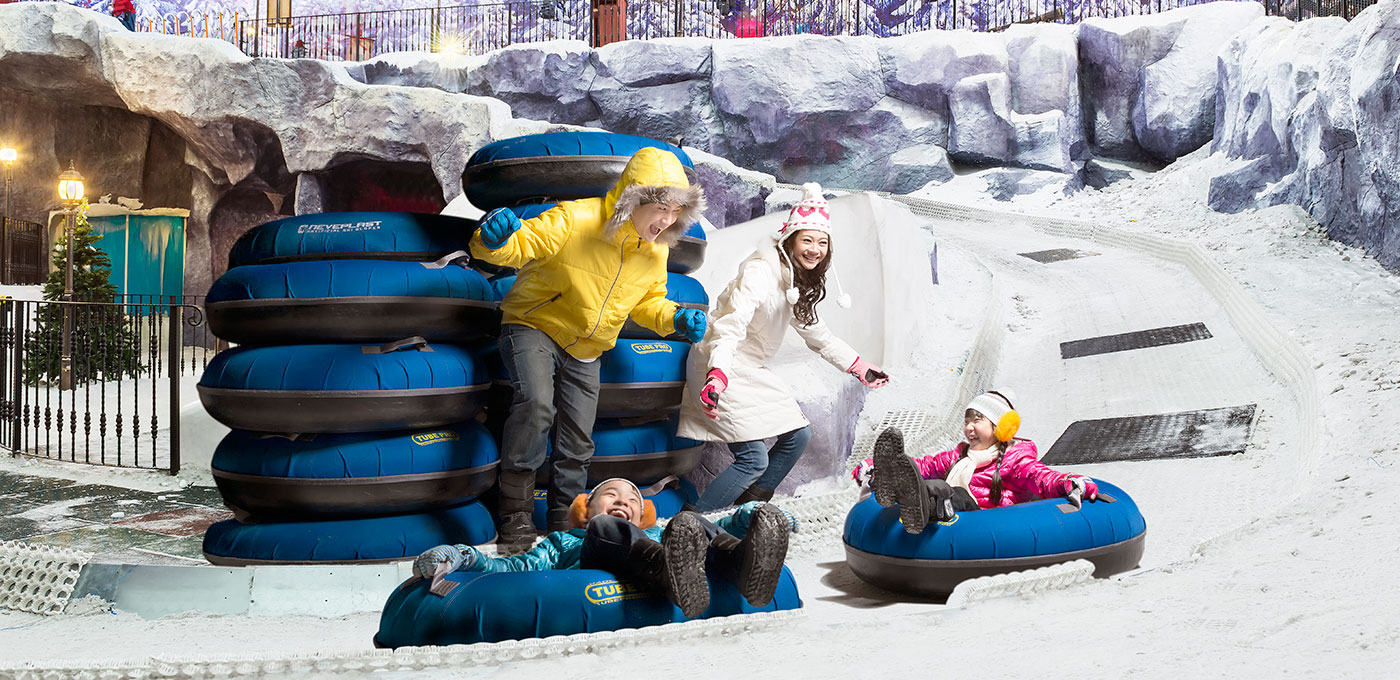
Genting Snow World is a recreational artificial indoor snow village on Level 2A of First World Plaza. Styled like a winter European village, there’s the setup of an English tea shop, ancient Roman castles, a telephone booth, a pizzeria and a bakery to give the perfect vibe. The most fun thing at Genting Snow World is sliding down on a tube on the Cresta Run Toboggan Slide and the 3D Art attractions. Genting Snow World has locker facilities available to store belongings as well as drying facilities and restrooms. Eatables, slippers, high heels, shorts, baby strollers and wheelchairs are not allowed inside. It is open between 10 am and 10 pm daily and entry fees are RM 45 per person.

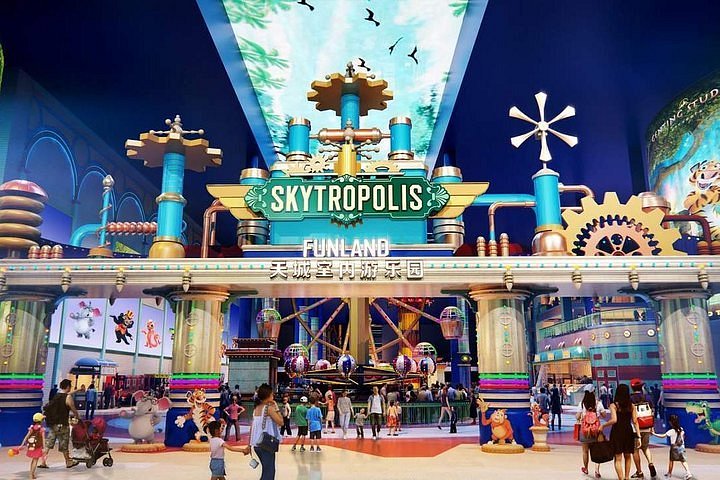
Skytropolis Funland is an indoor theme park located at Resort World Genting. Also known as First World Indoor Theme Park, it is popular for the virtual reality centre built by The Void. The park also has about 8 food booths selling snacks and desserts. The ambience at Skytropolis Funland is carnival-like with lit-up colourful neon lights, vibrant music and people walking all around. Skytropolis Funland has more than 20 rides that range from thrilling to family-friendly.

Spin Crazy is the most intense ride in the park. It includes a huge spinning pendulum that takes the rider on a 360 spin up in the air and even stops mid-air for a few seconds to make them scream. Power Surge is another ride for the thrill seeker, similar to Spin Crazy, except that it spins the riders in the air while turning them in alternating clockwise and anti-clockwise motions. An exhilarating ride that one must not miss out on is Disco. It is named Disco because it has a huge spinning disc that swings back and forth along a curved track while rotating rapidly at the same time. The ride may look like a simple one, but it is pretty intense as the speed of the disc keeps increasing. Sky Towers is a classic ride in the form of a drop tower that takes the riders high up before plummeting down suddenly. Space Cadets is yet another ride where one can achieve a flying adventure. The riders are seated on futuristic-looking spaceships and they can control it themselves to go high or low. The ride is ideal for parents as well as kids. Royal Carousel features a double-storey carousel decorated with ornamented horses and chariots that take the riders round and round. The ride is an absolute favourite among the kids. Adult supervision must be ensured for this. Copper Express is a vintage train that gives one a tour of the Skytropolis Funland whizzing on its 61 metres track. Other rides include Balloon Race, Bumper Boss, Boo Boo Bump, Loop de Loop, Ride ‘Em Round and Whirly Bugs.

Along with the fun-filled rides, there is a virtual reality entertainment center within the park, known as The Void. This is where one can experience fighting virtual enemies with their weapons wearing a VR headset and vest. There is a large virtual space that one can roam about. Secrets of the Empire is a VR experience that plunges one into the world of Star Wars Rogue One movie and requires the person to complete the mission by roaming around the molten planet of Mustafa. Disguised as stormtroopers, one can use blaster rifles to fend off giant lava monsters and other stormtroopers, solve puzzles, interact with K-2SO and battle the sinister Darth Vader. The cost of the ride is RM 130. Ralph Breaks VR is inspired by the cartoon movie Wreck It Ralph. There are missions such as saving Ralph by fending off large groups of rabbits and other creatures by shooting them with guns and costs RM 130. Nicodemus: Demon of Evanishment takes one back to 1894 to the site of the decaying Chicago World Fair and costs RM 9p to play. The iconic Ghostbusters VR lets one strap up as a Ghostbusters and fight off the supernatural foes in a New York apartment complex and costs RM 90. Tickets for Star Wars: Secrets of the Empire are available online, while for all others, tickets are available at the counter. It is recommended to visit during the non-peak hours, that is early morning or late at night when it is less crowded. Once provided with the wristbands, they must not be taken off. Wristbands are necessary for accessing the attractions. Removing or tampering them will render them void. It is open from 10 am to 10 pm and entry fees from Monday to Friday are RM 10 while on weekends, public holidays, the eve of public holidays and school holidays, entry fees are RM 15.

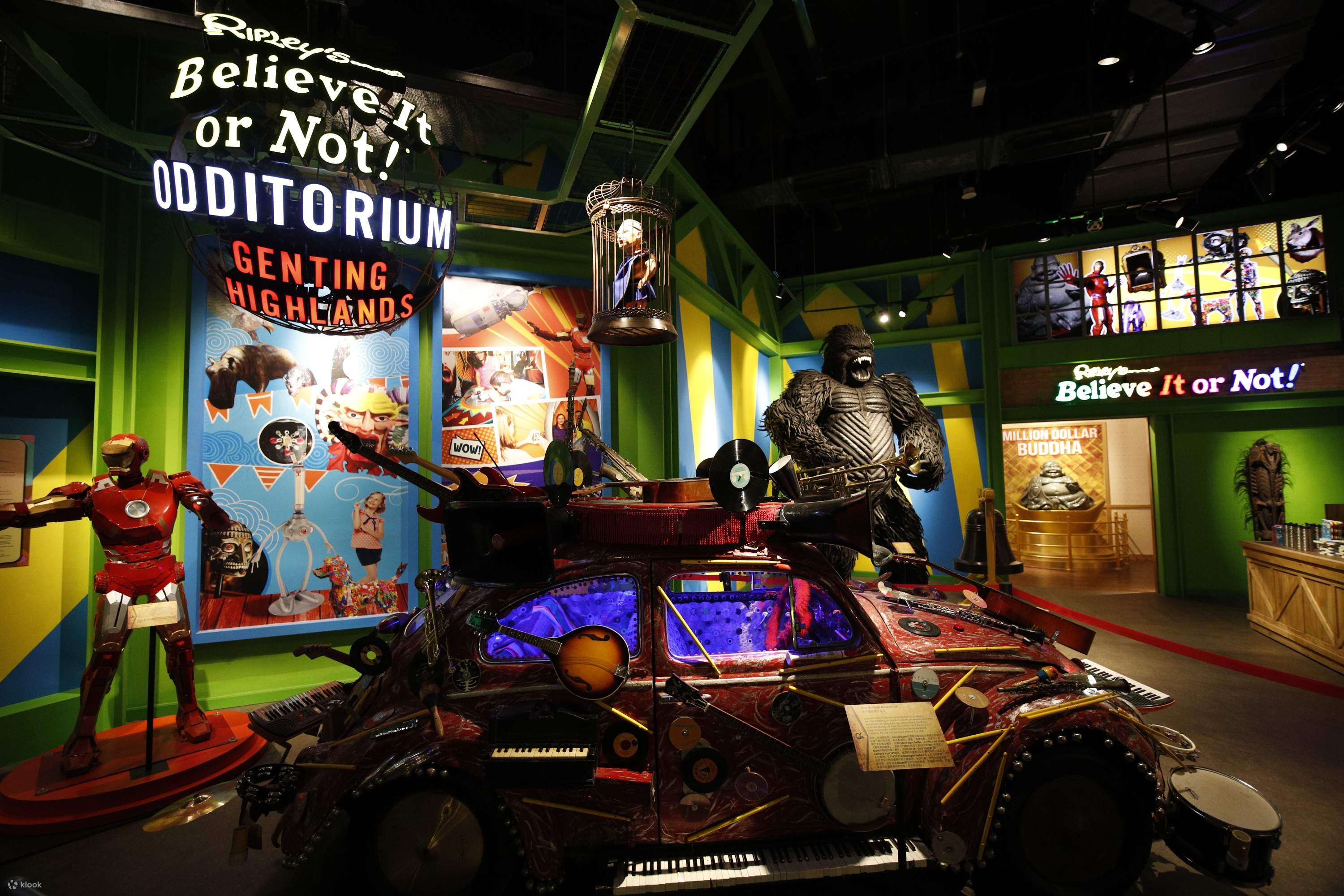
Situated in the Sky Avenue of Genting Highlands, the Ripley’s Believe It or Not Museum is an interactive museum dedicated to all things bizarre. It is home to some of the oddest collectables, weird art and artefacts. There are several kid-friendly activities and rides that young children can enjoy. Lifesize dinosaurs, zombies, replicas of structures and popular cars in a dramatic setting make Ripley’s Believe It or Not Museum a must-visit destination. The museum boasts more than 400 mind-boggling exhibits. Set in the Odditorium and other parts of the museum, the bizarre exhibits range from rare artefacts to age-old coins and other collectables from all over the world. The 4D Trick Art Museum is a must-visit as is the Jurassic Research Centre and the Zombie Outbreak. The museum is open between Sunday to Thursday from 10 am to 10 pm and between Friday to Sunday from 10 am to 11 pm. Entry fees are RM 22 for adults and RM 8 for children. The entry fee does not include the cost of individual attractions. The 4D Trick Art Museum is priced at RM 38 for an adult and RM 33 for a child while the Jurassic Research Center costs RM 51 for an adult and RM 40 for a child. The Zombie Outbreak entry fees are RM 38 for adults and RM 33 for children.

The Arena of Stars, located in the vicinity of Resorts World Genting, is one of the largest musical amphitheatres in Malaysia. Accommodating almost 6000 audiences at a given time, this is where all the major musical events in Genting Highlands take place. The high-roofed amphitheatre is fully equipped with technological light and sound systems as well as a newly installed automated stage. The Arena of Stars also conducts special shows during the festive season and the holiday seasons. It is open from 6 am to 11 pm every day.

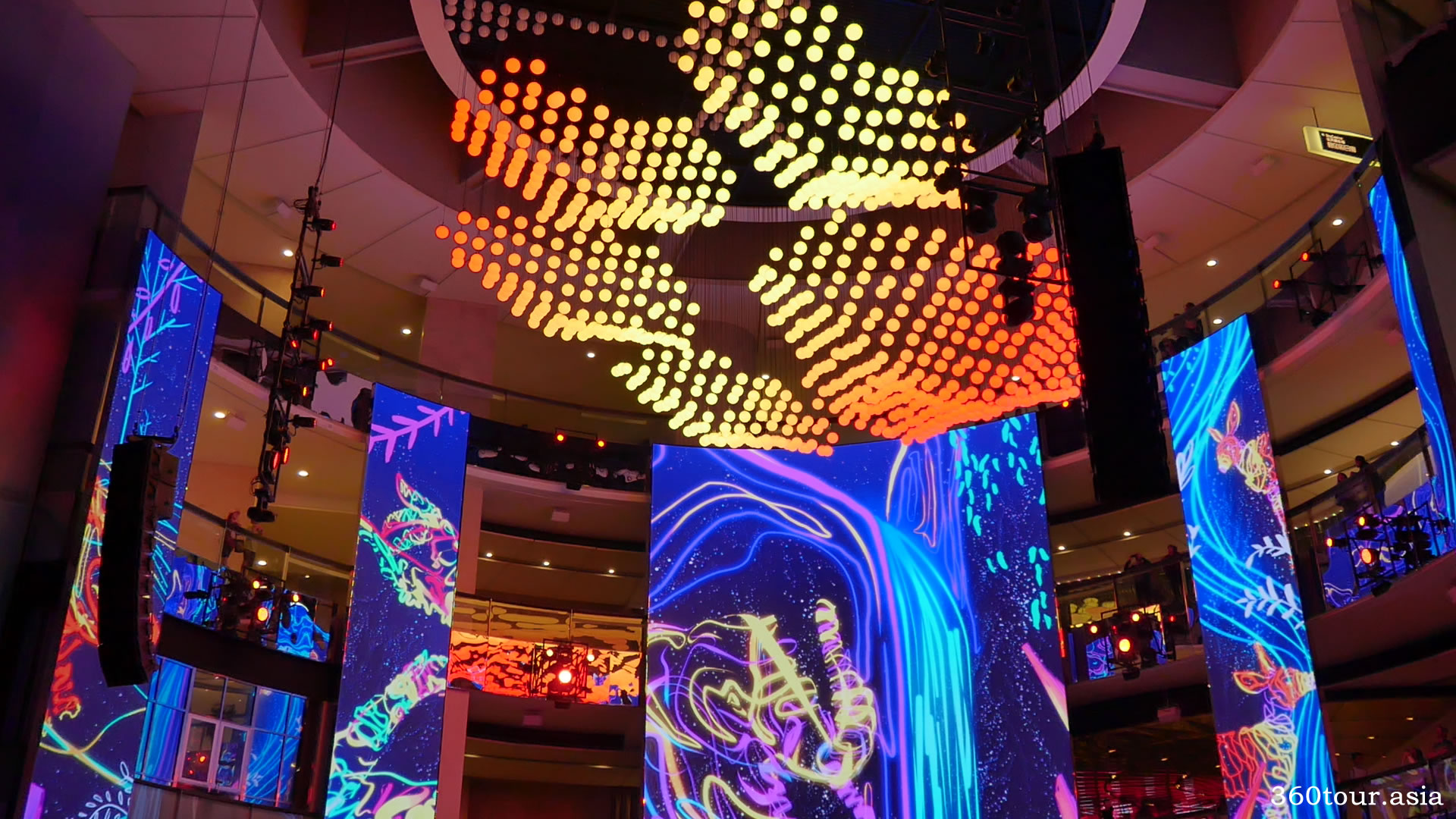
The SkySymphony Theatre of Light and Sound is a kinetic light performance installation in SkyAvenue Mall. It is Asia’s largest performance display, with a thousand winch balls suspended from a four-storey-high ceiling. Built in 2006, this display is a part of the free attractions at Resort World Genting. The multi-coloured balls create floating models of flowers, animals and a variety of other interesting shapes. The LED screens around the atrium provide an outstanding visual experience, combined with brilliant music and animation. With an engaging mix of music, motion graphics and visuals, this spectacle is perfect for families with children and shoppers. Shows run every hour, from 10 am to midnight.

Awana SkyWay is a state-of-the-art cable system located at the peak of Genting Highlands. The 2.8 km gondola ride offers amazing views of the 130 million-year-old rainforest and the 20th Century Fox World Malaysia. The gondolas connect 3 stations – Awana, Chin Wee and SkyAvenue, and take just 10 minutes to reach the SkyAvenue from Awana. There are 2 types of gondolas available. The standard gondola has a capacity of up to 10 persons and the glass-floored gondola can accommodate 6 persons. The SkyWay runs from 7 am to midnight. The standard gondola costs RM per person one way and RM 16 for a return trip. The express standard gondola costs RM 40 one way, while the chartered standard gondola costs RM 300 one way. The glass floor gondola costs RM 50 one way and the chartered glass floor gondola costs RM 500 one way. Children below the height of 90 cm are provided free entry.

The Genting SkyWay is Asia’s longest gondola lift connecting the two terminals located at Gohtong Jaya and Resort Hotel. The 3.38-km-long cabled route uphill takes about 15 minutes to cover which allows the visitors to get a magnificent view of the city beneath them. With the use of high-quality electronic equipment, the newest safety-approved structure and design and multiple safety trial runs, the Genting SkyWay proudly stands as the safest gondola lifts in the nation. Operating from 7 am to midnight, the gondola costs RM 8 for a one-way ride.

Located in Bandar Gohtong Jaya, the Genting Strawberry Leisure Farm is the biggest in Malaysia comprising several fruit farms and flower gardens. It offers a wide range of organically produced fresh fruits and vegetables with over 10,000 plants. Visitors can get their hands on fresh strawberries from the farm, pluck them from the orchards or purchase strawberries from the farm’s marketplace. One of the major attractions at Genting Strawberry Leisure Farm is the Lavender Garden fitted with a unique fountain and rows of blooming lavender. Boxes of strawberries, strawberry candies, tins of strawberry juice and strawberry jam, all made of fresh strawberries can be purchased at the farm store. The Farm also houses a small section of abalone mushrooms, also referred to as King Oysters, in its Mushroom Farm for observation as well as purchase. In the adjoining nurseries, herbs, flowers, hydroponic vegetables and mushrooms are also planted for commercial use. The vegetables, mushrooms and flowers grown here are exported to different cities throughout the country. The farm is open from 9 am to 6:30 pm during the week from Monday to Saturday while on Sunday, it is open from 9 am to 7 pm. Entry fees are RM 10 for adults and RM 7 for children below 12.

The World of Phalaenopsis is the largest grower of Phalaenopsis orchid, a tropical plant, in Malaysia. This farm is located in Ulu Yam, Batang Kali near Genting Highlands and has over 390 varieties of exotic orchids. It is known for growing over 390 varieties of orchids, in different hues of yellow, purple, white and pink. Apart from exporting the flowers to high-end restaurants and hotels around the globe, the farm is open to the public. The farm is open from 8 am to 5 pm daily.

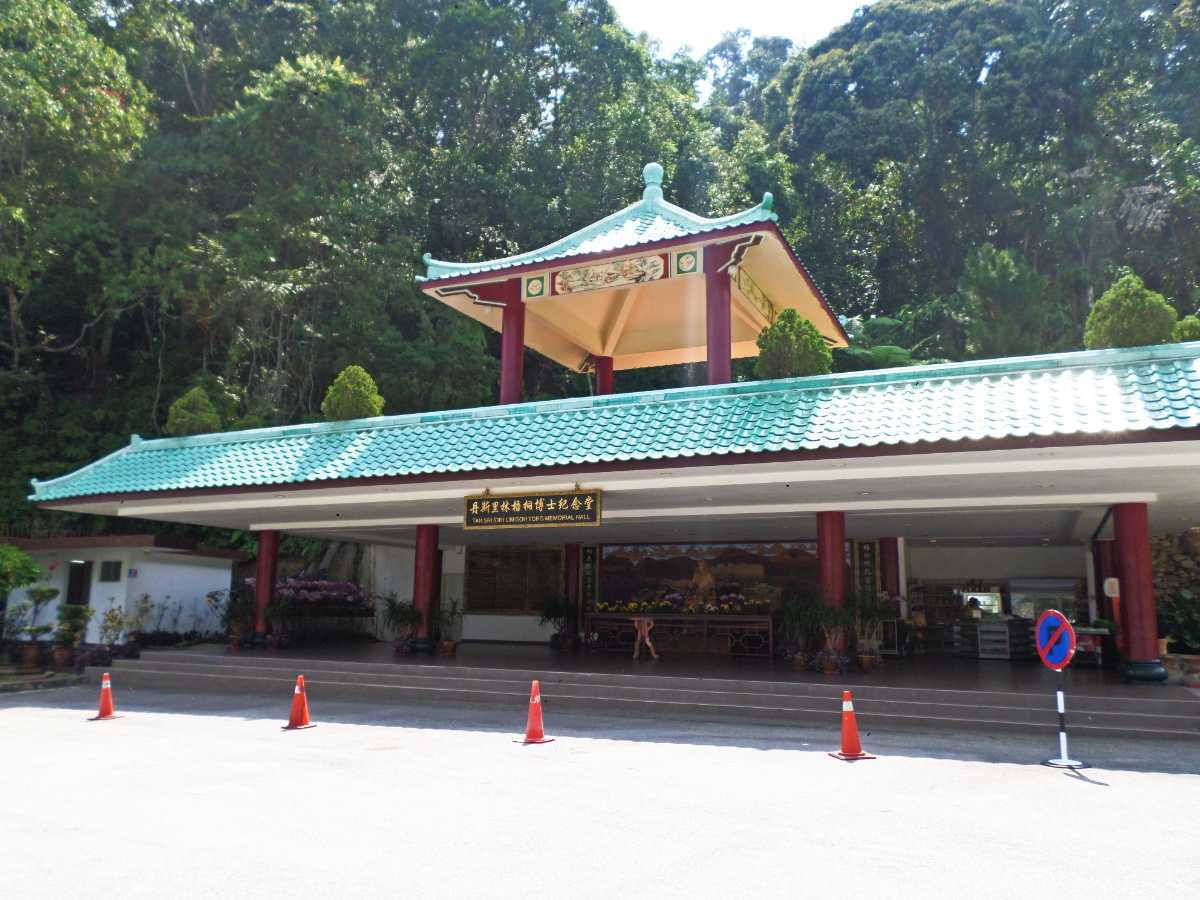
The Lim Goh Tong Memorial Hall is a monument built to honour Tan Sri Dato Seri Lim Goh Tong, the late founder of Genting Highlands and a prominent Malaysian entrepreneur. It is set in a private park. A wooden sculpture of Goh Tong sits atop brilliantly coloured flowers near his tomb, with a beautiful panelled backdrop depicting the landscape of Genting Highlands. A gurgling fountain and stunning views of the valley make this an ideal photo op. A store nearby sells quick snacks and souvenirs as well. One gets to learn about the history of the world-renowned resorts, theme parks, and casinos located within this cool highland area. The hall is open between 8 am to 10 pm and has no entry fees.

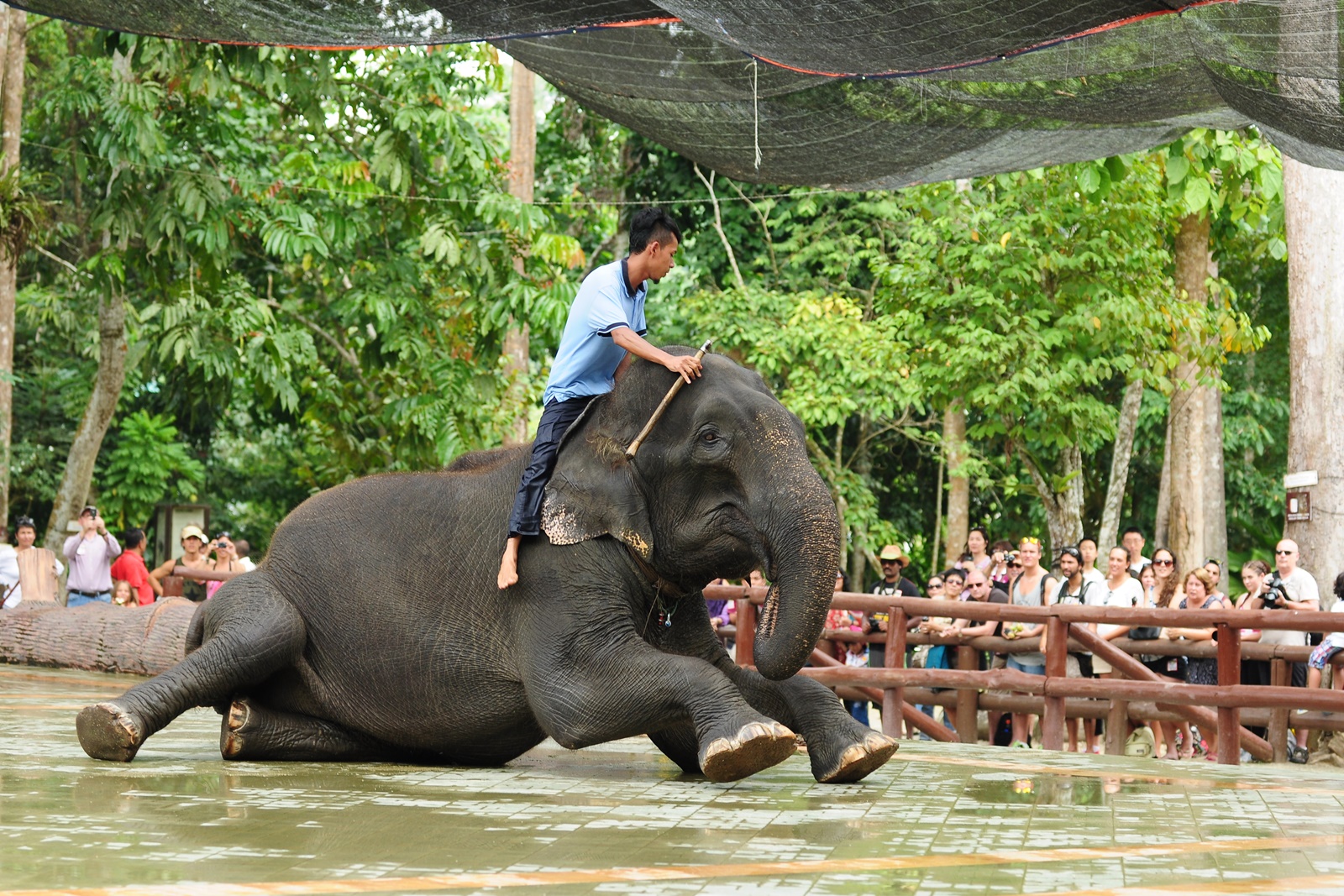
The Kuala Gandah Elephant Conservation Centre is a conservation facility located in Lanchang town, about 90 km from Genting Highlands. Home to Asiatic elephants from Thailand, Myanmar, Malaysia, and Indonesia, the centre provides a fascinating insight into the world of elephant conservation. Opened to the public in 1989, the Centre helps rehabilitate elephants from the nearby rainforests. One can join these gentle giants on their daily routine, and get a chance to bathe and feed them too. They can learn about how they were rescued and adopted from different areas, understand the nuances of protection programs for these endangered species and interact with the mahouts and visit the museum and learn all there is to know about these tuskers. Functioning as a resort and training facility for orphaned and relocated elephants, the centre is perfect for families with children and nature lovers. Arguably the most exciting activity at the Centre, one can wash, scrub and bathe young elephants under supervision. This is ideal for older children and young adults. Note that elephant bathing is subject to water flow in the river, and may be suspended without notice. One should bring along a change of clothes if one wants to bathe the elephants. There is a changing facility available nearby. The half-hour presentation is a collaboration with National Geographic, to showcase the perils faced by these pachyderms and the conservation efforts in place. At the elephant crossing, one can watch the elephants parade with their mahouts as they get their daily dose of exercise and is a great photo-op. One can opt for an authorised guide to be shown around the Centre for a price of MYR 50. The Nature Guides give a local perspective on the conservation and care of elephants. If getting up close and personal with the elephants doesn’t seem too appealing, one can stay at the observation deck and watch them from a distance. This is recommended for small children who may be too afraid of these animals. Elephant feeding is perfect for children eager to interact with the pachyderms. Supervised by mahouts, feed elephants sugarcane, coconuts, papayas, and hay. This is the perfect time to get some photos with these gentle giants as well. The museum at Kuala Gandah Elephant Conservation Centre has great displays on elephant anatomy, conservation efforts and the history of the region. There is a charming exhibit about the story of how elephants evolved and their interaction with humankind.

It is recommended to reach the Centre early morning, around 10:00 AM, to take part in all the activities offered. It is best to visit the Centre during the weekdays as it tends to get crowded Fridays, Saturdays, Sundays and public holidays. The centre is open from 8 am to 12:30 pm and again between 2:30 and 4:30 pm on Fridays while it is open from 8 am to 1 pm and then from 2:30 to 4:30 pm between Saturday to Thursday. Elephant observation is from 10:30 am to noon and then between 3:15 to 4:30 pm. The video presentation runs between 1 to 2 pm while the elephant crossing is between 3 to 3:15 pm. To interact with mahouts, one needs to be there between 2:30 and 3 pm while the elephants bathe between 3:15 to 4:30 pm. Entry fees are RM 10 for adults and RM 5 for children.

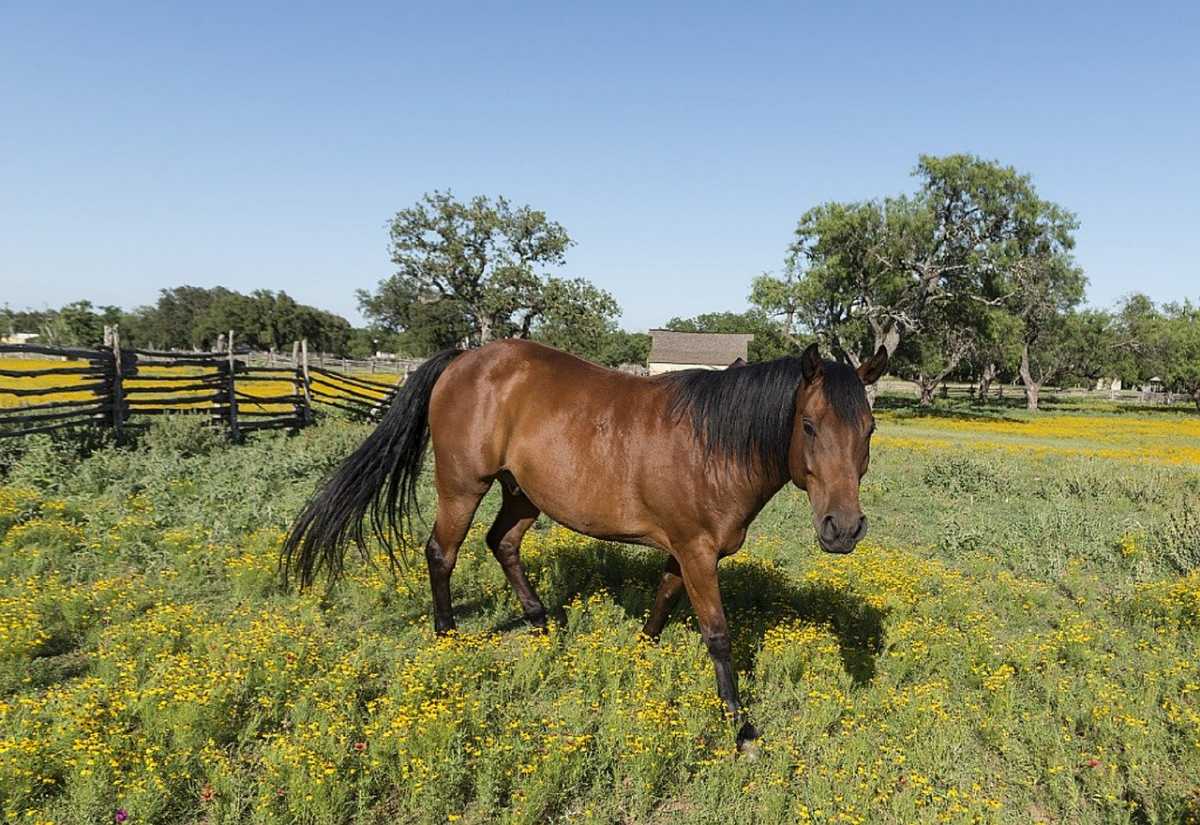
The Awana Horse Ranch is ideal for a weekend getaway with friends and family and is part of the Awana Golf and Country Club. Visitors can choose a horse from a large collection and take a thrilling ride across Genting Highlands. Awana Horse Ranch also organises horse races where tourists can enjoy and feel the thumping sound of running horses in the picturesque landscape.

The Chin Swee Caves Temple is a Taoist temple constructed to pay respects to the Reverend Chin Swee who is believed to muster rain and protect his devotees from evil spirits. The location of the temple on top of a rocky hill affords a sweeping panoramic view. Sitting 4600 feet above sea level, the temple complex houses huge statues of Lord Buddha and Goddess Kuan Yin along with intricate animal sculptures and Chinese inscriptions. The main highlight of Chin Swee Cave Temple is the depiction of 10 chambers of hell. The temple is also the location for the only vegetarian restaurant in Genting Highlands serving authentic Chin Swee Vegetarian Cuisine complemented by picturesque views. Adorned with the figures of the Buddha, a nine-storey Pagoda stands right next to the entrance of the temple. It consists of 10,000 blessing lamps which can be dedicated to the people that the devotees wish to be blessed by Buddha. An integral part of the expansion project, the Sky Terrace, also referred to as Place for Heavenly Offering, provides visitors with a mesmerising experience of walking among the clouds of heaven. The statue of Guan Yin with the base square of the statue extending to the enormous statue of Buddha next to a small Buddhist Temple, known as Buddha Hall. The 10 Chambers of Hell is a series of 10 chambers present on the hill upwards that work towards putting a stop to bad conduct. A journey through these chambers is believed to be a journey of enlightenment showcasing the pain and inconvenience that an evil person would have to come across in hell. Each chamber deals with a type of evil deeds and punishments. As one moves up the hill, there is an incarnation of Seven Fairies which are supposed to have descended from heaven to bless the devotees. In line with the fairies are Wang-mo-liang-liang or Mother Goddess and the three Gods of Fook-Lok-Sou which mean Luck, Wisdom and Longevity in a chariot. At the entrance of the temple, the Nine Color Dragon Wall of Luck acknowledges the visitors with all the different dragons representing a different type of luck. The exterior walls of the temple are inscribed with craft portraying the life journey of Reverend Chin Swee and his supernatural works. The Dragon Mineral Water present in the temple is trusted to have holy water which has the power to heal sick people. A statue of Tan Sri Lim Goh Tong erected by Chin Swee Caves Temple Building Society is present behind the Buddhist Temple in honour of the exemplary contribution of Tan Sri Lim Goh Tong to the temple.
The inscriptions behind the statue describe the intensive role of the man as a leader of the Anxi Clan and the greatest contributor to the construction of the temple. The temple is open from 9 am to 7 pm daily.

The Mohamed Noah Foundation Mosque is the only mosque in Genting Highlands and was opened in 1981. This mosque also acts as the rest area for Muslims to perform their prayers during, before or after vacation to Genting Highlands. It was named after Tan Sri Mohammad Noah, a Malaysian politician, and one of the founders of Genting Highlands with Tan Sri Lim Goh Tong.

Bukit Tinggi
Bukit Tinggi is a small town located along the Kuala Lumpur–Karak Expressway, notable for its famous restaurants that lure visitors coming from Genting Highlands. The town features a French-themed village, Colmar Tropicale. Lying about 800 metres above sea level, the temperature in the town is between 22 and 26 degrees Celsius.

Colmar Tropicale is a French-themed village and hotel located in Berjaya Hills Resort. It is located 2,600 feet above sea level on 80 acres of natural forestland. The development is inspired by the original town of Colmar in Alsace, France, with elements taken from ancient surrounding villages like Riquewihr, Turckheim and Kaysersberg as well. There are many activities to do at Colmar Tropicale. The little French buildings and houses are clusters of hotel rooms. Outside, there is the village, a buffet, other French food restaurants, a swimming pool, shops and other activities. There is a free shuttle service to the Animal House, Adventure Park, Horse Riding Zone, Japanese Garden and the Botanical Garden.

Our journey in Pahang comes to an end. The next state to explore will be the state of Selangor, so watch this space.

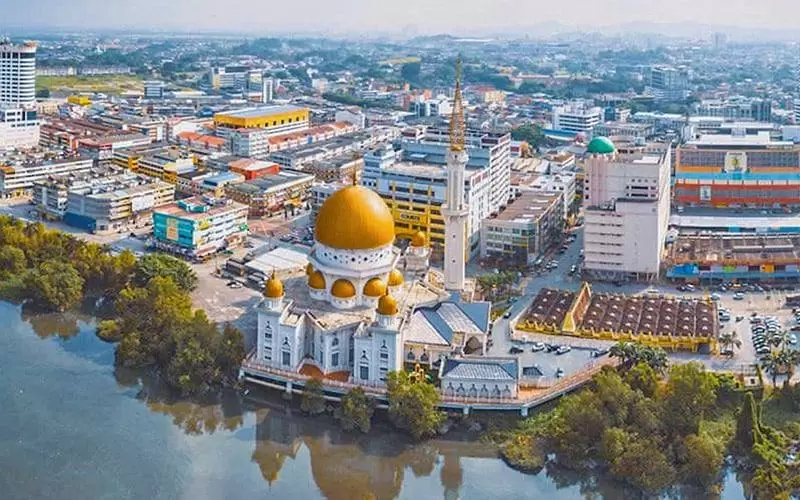
Travel Bucket List: Malaysia Part 13 – Pahang Part 3

Cherating
A coastal town, which is one of the wettest places in Malaysia, Cherating is famous for its beach resorts. Cherating also has the distinction of being the location of Asia’s first Club Med. This town is a Malaysian seasonal destination famous for white-sand beaches, surfing and windsurfing. Cherating’s Bay is an ideal spot for swimming most of the year, while surfing is popular during the monsoon months. Outside of the surf season, Cherating is quite empty which only adds to the appeal. The best time to visit Cherating would be the dry season, between April to October as there are heavy monsoons here that might end up disrupting the trip.

The major attraction of Cherating is the giant leatherback turtles which migrate yearly to reside on the beaches here. The showstoppers, however, are the mystical fireflies which reside on the trees along the banks of the rivers. Cherating has a cultural village which sells traditional textiles and handicrafts. There is a turtle sanctuary located on Cherating’s beaches. The turtles lay their eggs in July and August.

The Fireflies Tour is an hour-and-a-half-long boat tour which takes one through the waters of Cherating and explores the beauty of this popular beach town. The river cruise begins at 8 pm and has a fee of RM 35 per adult and RM 25 per child. The Malaysian Peninsula has only two natural lakes, both of which flow through Pahang and Lake Chini is one of them. It is Malaysia’s second-largest lake and is made up of a series of 12 smaller lakes. A tour of the lake takes one on a calm, serene ride through the lake with the tour guide reminiscing about the stories of the mythical dragon who lives in the lake and is the guardian of the lost city of gold which was once located underwater. The tour takes around 6.5 hours starting from any time between 8 am and 9:30 pm. The tour fee is 270 RM to 355 RM per child; and RM 520 to RM 757 per adult. An ATV ride lets one jump into one of the all-terrain vehicles and breeze through the beautiful sand beaches of Cherating. The ride fee is about RM 90 per person. At Cherating, one must not miss the opportunity to surf on the beautifully crested waves. There are many beachside surf clubs open for all which rent out surfing boards and surfing safety minikits.

At the Cherating Turtle Sanctuary, one is allowed to watch the nesting turtles and also witness the return of the ones who migrate to the east-coast every year, but only under the expert supervision of the turtle rangers of the Cherating Turtle Sanctuary. There are special areas on the shore where these giant turtles come to lay their eggs and then head back towards the sea. This process can be observed more frequently during the months from May through September ideally when the tide is hidden. Visitors can take a tour which takes between 3.5 and 4 hours to complete and is free, but if one wants to set up a tent to observe their daily behaviour, the fee is RM 30 per person. The Mangrove Cruise on the Cherating River is an hour-and-a-half-long cruise that gives one the chance to learn about the importance of mangroves in the ecosystem and the ways to protect them. Taking 90 minutes to complete, it costs RM 35 per adult and RM 25 per child.

Chendor Beach is a white sand beach with shallow and clear waters that provide a beautiful picturesque destination. The well-maintained beach is just the perfect place to unwind leisurely and hang out with your friends and family, especially during the mesmerizing sunrise and sundown. The beach is well known for surfing.

Tioman Island
Lying about 32 km off the east coast of Malaysia, Tioman Island is 39 km long and 12 km wide and has seven villages, the largest and most populous being Kampung Tekek on the central western coast. The densely forested island is sparsely inhabited and is surrounded by numerous coral reefs, making it a popular scuba diving, snorkelling, and surfing spot. There are many resorts and chalets for tourists around the island, which has duty-free status. The island is accessed via ferry service from the coastal town of Mersing.

Tioman has been used for thousands of years by Austronesian fishermen as an essential navigation point and a source of fresh water and wood. During the past thousand years, it has played host to Chinese, Arab, and European trading ships, and often Chinese porcelain shards can be found on beaches around the island. In more recent history, Tioman played host to both the British and the Japanese navies during the Second World War. As a result, the waters around the island are littered with war remains, including HMS Repulse and HMS Prince of Wales. The island does not allow buildings to have more than three stories.

The marine area around Tioman Island and eight other nearby islands have been declared as marine parks and marine reserves. Apart from its diverse marine life, the inland rainforest area was protected in 1972 as the Pulau Tioman Wildlife Reserve. However, a large part of the original reserve was sacrificed for agricultural and touristic development in 1984; the remaining area is approximately 8,296 hectares. There are several protected species of mammals on the island, including the binturong, long-tailed macaque, slow loris, black giant squirrel, red giant flying squirrel, mouse deer, brush-tailed porcupine, and common palm civet, from a total of 45 species of mammals and 138 species of birds, including the majestic frigatebird. Tioman also has species that are endemic to its shores. The Tioman walking catfish Clarias batu can be seen on rainforest walks. The Kajang slender litter frog is only known to be found in Mount Kajang.

Tioman’s corals have been affected by a mass bleaching event in 2010 whereby the island lost a significant portion of its live coral cover. That resulted in many corals turning a dull white colour and some even fragmenting into pieces of dead coral skeleton. The 2016 bleaching event only touched on Tioman’s coral reefs, and as such, the coral has remained in good and healthy condition.

According to legend, Tioman Island is the resting place of a beautiful dragon princess. Whilst flying to visit her prince in Singapore, this beautiful maiden stopped to seek solace in the crystal-clear waters of the South China Sea. Enraptured by the charms of the place, she decided to discontinue her journey. By taking the form of an island, she pledged to offer shelter and comfort to passing travellers. Local mythology claims that the island is the embodiment of the mighty dragon Sri Gumom. The dragon was on his way to visit his sister Gunung Linga or Lingin Peak. Still, the great Sri Rama forbade the meeting, and Sri Gumom was turned into a stone and fell into the deep sea where he now remains, frozen in eternity as this beautiful island with its distinctive topography.

Like mainland Malaysia, Tioman Island has a hot and humid climate, with sunny afternoons and warm evenings but cool nights. Temperatures are usually consistent and the calm weather peppered with occasional showers and storms. The tourist season peaks between May and August, when the weather generally displays the least rainfall. The monsoon winds begin to blow in October, bringing heavy rain and strong waves till January which is the start of the surfing season. During this time, ferries run once a day, while only a few hotels will open at discounted rates. Still sparsely populated, most villages are connected by sea taxi or speedboat or jungle trail, which means visitors usually stay at their first ferry stop for the entire trip.

Among the seven villages, Air Batang Village, more commonly referred to as ABC Village, Juara and Kampung Tekek are the prime destinations. Kampung Telek is the administrative centre and the largest village of Tioman Island. It is the major spot connecting the island to Mersing and Tanjung Gemok through ferries. Tioman Airport is also located in Kampung Tekek. Sunbathing at Paya beach, rustic relaxation at Genting Village, surfing at Juara Beach, hiking to Asah Waterfall, snorkelling at Salang and a visit to a Marine Park Information Center is a must.

Overseas visitors to Tioman Island, are required to pay the Marine Park Fee which is RM 30. The most common way of getting to Tioman Island is by ferry from Mersing. Note that an entry fee of RM 10 known as Tioaman Toll has to be paid here. Ferries from Tanjung Gemok to Tioman Island need not pay a toll.

Paya is a small village with a beach on Tioman’s west coast. It’s a popular tourist spot, especially for Singaporean visitors and families, with two major resorts and a small-budget hotel providing chalet accommodation. The beach area stretches slightly more than half a km and is a beautiful expanse of fine white sand fringed by gentle seas. The deeper waters off the jetty and neighbouring Tomok Island are where living coral reefs reside for snorkelling activities, while cooling mountain streams, spectacular boulder formations and lush rainforest views occupy Paya’s hilly backyard, with a dramatic view of Gunung Kajang. The village is named after its abundance of mangrove swamps or paya in the local language. Behind the tatty wooden huts and homes along the beach, a shallow river feeds through a rich mangrove landscape, with boats parked at deeper sections under the shade of a thick forest canopy. Nature lovers will appreciate the rich rainforest scenery, with a jungle trail from Tioman Paya Resort that leads to Rock Falls, a rocky stream with small pools for swimming. At the northern end of the village, visitors can follow another trail across a moderate slope that ends at a beach, Teluk Sri Intan and then continue their journey on a gravel road to the TAT Turtle Sanctuary, before exiting out to Tekek town through Berjaya Tioman Resort. Finally, at the southern end of Paya, a partly paved jungle trail leads to Genting Village.

Genting is a large village along the west coast of Pulau Tioman, located between Paya and Nipah Village. It occupies a 1.5 km stretch of beach with a hilly backyard of lush rainforest. A favourite spot for mainland locals and Singaporean tourists, Genting has a sizeable collection of budget hotels and local restaurants clumped tightly along the beachfront. Weekends usually bustling with activity, people and karaoke music throughout the night. The sea here is moderately rocky, but the waters are clear while the large boulders give the landscape some aesthetic character. Most of the resorts offer chalet-based accommodations that spill along hill slopes from the beach.

Tekek is the largest village of Pulau Tioman, located along a 3 km coastal stretch at the island’s central west between Paya and Ayer Batang. Essentially its capital and progressively being developed into a proper town, Tekek has basic modern infrastructure. It is also the gateway to Juara by overland transfer and a hub for duty-free shopping. Tekek also has the largest concentration of dive centres, with most offering full board accommodation. Tourist attractions in the area include the Marine Park while restaurants and hawker stalls are widely available.

Salang is a popular beach destination north of Pulau Tioman, located along the west coast in a secluded bay. It attracts large crowds of global backpackers and is a great place for meeting people across the world over beer or two, with a good range of budget hotels along the beach and countryside. Salang is also a diver’s den, being the closest village to many reef sites and wrecks around Tioman, including Coral Island, Chebeh, Batu Malang and Fan Canyon. The last stop on the Mersing ferry route, Salang offers a good range of tourist facilities, activities and conveniences, backed by lush rainforest surroundings. The sea waters within this peaceful bay have great visibility, with warm stretches of sand along the shore and vibrant coral reefs under the ocean.

Air Batang, or ABC Village as it’s popularly known, is a rural village along the west coast of Pulau Tioman, immediately north of Tekek. Located south of Panuba Bay and 3 km before Salang via the jungle trail, the village is a traditional backpacker hideout, with a high concentration of budget hotels offering basic accommodation, though quite a few resorts have upgraded their chalets in recent years. The beach is a linear 1.5 km stretch of sand, with emerald clear waters and lush landscapes. At low tide, the seabed reveals a pretty carpet of boulders, pebbles and rocks of various sizes. A few dive centres operate within the vicinity while local and western food is easy to be found. A quick boardwalk connects the west end of Air Batang to the Marine Park directly.

Pulau Tulai is a small island off the coast of Tioman, more popularly known as Coral Island. Located about eight nautical miles north of Tioman’s west coast, the island can be seen clearly from the beachfront of Salang Village, the closest access point by speedboat. It is almost always included in any round-island snorkelling trip offered by tour operators and hotels. A favourite snorkelling spot, the sea waters around the island are rich with coral reefs and marine life while some famous dive sites can be found within its vicinity, such as Chebeh. Tour boats will land first at Pasir Panjang, the longest beach stretch on the island with relatively shallow waters. A second or third snorkelling session later will lead to Genting Bay and Batu Malang Rocks for deep water coral viewing.

Pulau Renggis is a small island that sits off the coast of Tekek Village. A popular snorkelling spot included in most round-island tour packages, Renggis offers great visibility in relatively shallow sea waters, approximately 20 meters, abundant coral reefs, colourful marine fish and the opportunity to swim with resident harmless black-tip baby sharks. Sometimes, visitors can also spot sea turtles resting along the sea bed.

Monkey Bay is a beautiful beach tucked behind Salang Village, accessible by a speedboat or a jungle trail. This sweeping bay has a beautiful beach with a calm pool of seawater and lush rainforest surroundings. It’s also an optional snorkelling spot on round-island tours by speedboat from any village, but visitors can also hike there in an hour from Salang. Conversely, the trail connects to Air Batang or ABC Village. Starting from there, it is an undulating two-hour trail through Panuba Bay and Monkey Beach before it hits the bay. As the trail is sometimes obscure, one should always follow the path that winds closest to the electric poles. Visitors who make the hike are rewarded by a sweeping beachfront that is secluded and tranquil.

Marine Park is a coral sanctuary at Tekek located at its east edge, with an information centre opposite the beachfront that highlights Pulau Tioman’s underwater heritage. A popular snorkelling spot for tourists on round-island tours, the marine park has a limited number of coral reefs in the deeper waters, though there is a great amount of marine fish. A jetty extends from the small beach area, allowing visitors to walk out to the reefs and feed the fish without getting wet if they so desire; most will be snorkelling. Entrance to the marine park and the information centre is free; both are open from 9:30 am to 6 pm daily. During the monsoon months, the information centre is closed but the marine park remains open.

One of the finest waterfalls on Tioman Island, the Asah waterfall is located at the semi-abandoned village of Kampung Asah off Mukut village and offers breathtaking views from the top. A beautiful cascade drops into a pool hemmed in by granite slabs, the waterfall is nestled within the lush greenery of Tioman’s rainforest. Often included in the itinerary of tour packages from speedboat operators and hotels, visitors can access the waterfall park via the jungle trail from Mukut.

The famous Dragon Horns or Twin Peaks of Gunung Semukut, a mountain at Mukut Village, is Pulau Tioman’s most striking natural landmark. These two giant monoliths tower over the south coast of Tioman at approximately 700 meters high, with sharp pinnacles that resemble the horns of a dragon. One of Malaysia’s most sought-after rock climbing destinations, a trail begins from the base at Mukut Village and splits into different routes to attack different points of the mountain.

The Juara Turtle Project or JTP is a sea turtle conservation centre at Juara Village, providing education to locals and visitors on the eco-management of this endangered marine species. The centre also runs a volunteer programme complete with half-board accommodation to help with patrols, research, repairs, cleaning, tour guiding, and turtle egg collection, incubation and release of hatchlings. Turtle nesting season lies between March and October; during this time, JTP volunteers roam around the island for wild nests, collect the eggs and transfer them to a hatchery for incubation. The babies are released to sea when hatched successfully. During the day between 10 am and 5 pm, the centre organises a guided conservation talk at a donation fee of MYR10 per pax.

TAT or the Tengku Arif Temenggung Turtle Sanctuary is a turtle hatchery and conservation centre at Tekek Village, located along the gravel trail to Paya Village after the Berjaya Tioman Resort. Hidden on a beautiful secluded beachfront at Teluk Sri Intan Bay, the sanctuary comes under the royal patronage of Pahang together with the Department of Fisheries Malaysia. Currently, volunteers from the Juara Turtle Project collect the eggs laid during nesting season between March and October, transport them to their incubation site at Juara, and then release them back here once hatched. Visitors are free to visit and enjoy the beach at all hours but should be mindful to keep it clean.

Travel Bucket List: Malaysia Part 12 – Pahang Part 2

Pekan
Pahang’s royal capital, Pekan’s name comes from a flower, the Bunga Pekan. It is the home of the state’s royal family headed by Sultan Abdullah of Pahang and also the hometown of Malaysia’s second Prime Minister of Malaysia, Tun Abdul Razak Hussein, and his son, the sixth Prime Minister, Datuk Seri Najib Razak, both of whom were Members of Parliament from Pekan.

According to local lore, a flowering plant named Bunga Pekan used to grow wild along the banks of the Pahang River, and the town was named after it. The flower is said to be white like jasmine, though this particular plant species is also said to have become extinct. The river at Pekan town is also called Pekan River, however, there is no evidence that Pekan derived its name from this river. Other sources say the name Pekan came from Pekan Sehari or Sunday Market which still exists today, and the word Sehari was eventually omitted and the locals simply called it Pekan.

Pekan is thought to have been in existence since the time of the old Pahang Kingdom. The old name was Inderapura, although it was also commonly known by the short form Pura, which some Malays called Pekan. The old capital was located on both the left and right banks of the Sungai Pahang and the Sungai Pahang Tua up to Tanjung Langgar. The town was divided into Pekan Baharu and Pekan Lama, New and Old Pekan respectively, and the old name for Pekan Baharu used to be Kampung Cina. During the late 19th century, relations between the sultan and local villagers were close. The villagers at Kampong Mengkasar, about one km from Pekan in the direction of Kuantan, are said to be direct descendants of Tok Tuan from Makassar in Sulawesi, Indonesia.

Pekan Lama which means Old Pekan is situated on the banks of Sungai Parit which flows to Sungai Pekan. Early settlement of shops first started here and the original wooden structure of these shops can still be seen today around Pekan Lama. Istana Pantai was once located here, but it is no longer around and the site is now occupied by the Majlis Agama Islam Daerah Pekan building. Bangunan UMNO Pekan Lama is situated nearby and had been on that site since the 1960s.

The Sultan Abu Bakar Museum displays many artefacts which are important in the state’s history and the local Malay culture. The museum was officially opened by Sultan Ahmad Shah in October 1976 and is located in the former residence of the British Resident, built in 1929. It was acquired by the Sultan of Pahang in 1948 and renamed Kota Beram Palace. In 1965, the Sultan moved his residence to a new palace, the Abu Bakar Palace, where the current Royal Palace is situated.
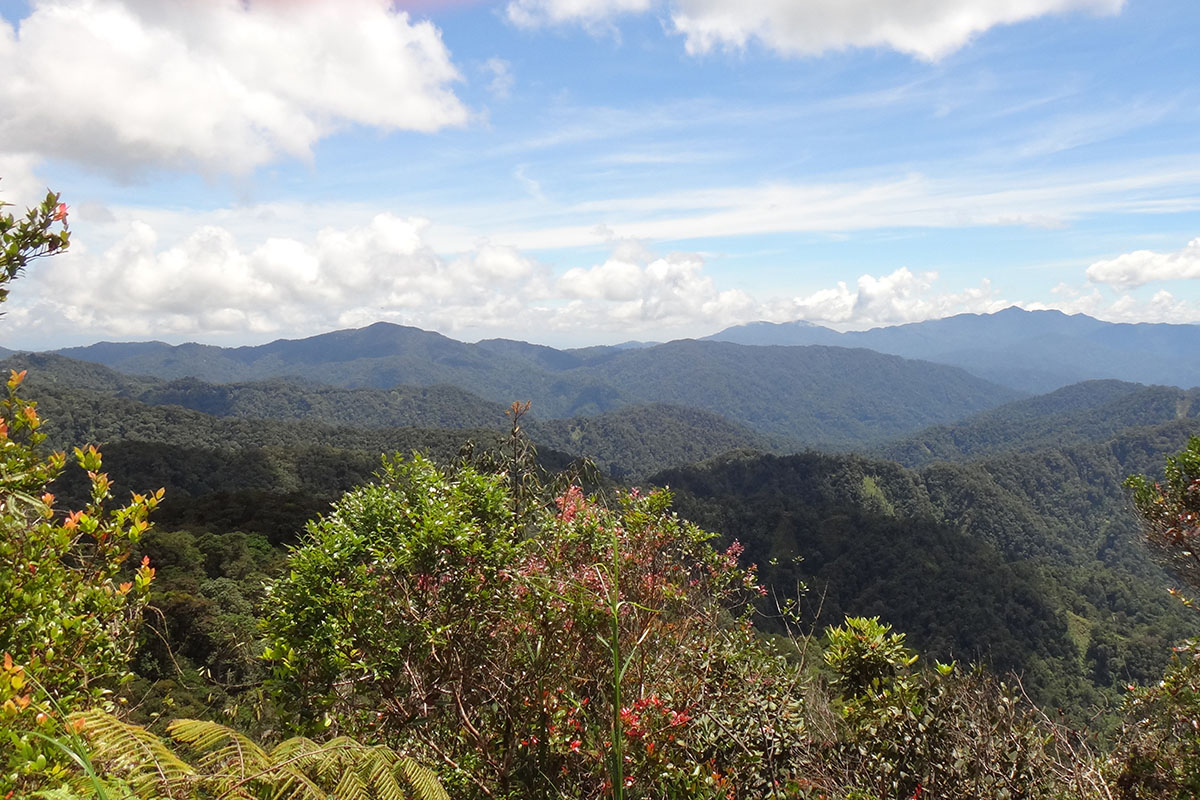
The museum was officially opened to the public in October 1976, in conjunction with the birthday celebrations of the Sultan of Pahang. The museum expanded its collections of artefacts very actively up to 1997 and the locals surrendered and provided as gifts certain unique artefacts to the museum. One example is a keris, a type of Malay dagger, which was found by a young man in a river about 20 km from Pekan. This particular keris drew a lot of attention, coupled with strange stories of its mystical prowess and is still on display at the museum. The museum has dedicated galleries focusing on water transportation, and the personal belongings of the late Sultan Abu Bakar and the late Tengku Ampuan Pahang Tengku Afzan. The museum is open from Tuesday to Sunday between 9 am and 5 pm.

An old mosque from the 1930s, now renovated into a museum, the Muzium Masjid Sultan Abdullah is located by the Pahang River and is the country’s first mosque turned museum. The museum is divided into three thematic zones and is popular for its stunning Moorish architecture. The museum showcases symmetry and repetition in architecture with a long rectangular pool in the museum at the front making the ambience even more serene. Visitors can experience Malaysian heritage through the displayed artefacts, graphics and illustrations, calligraphy, and floor tiles pattern. The museum is open from 9:30 am to 5 pm.

Pekan is home to the Chiefs’ Rest House. This wooden structure was completed in 1926 and is a must-visit site in Pekan. It was originally built by the British as a guest house for the Chieftains in Pahang who visited Pekan to attend meetings and events at the Istana. Today, the Chiefs’ Rest House offers good, clean and reasonable accommodations to travellers. Most of the furniture in this building was brought over from the Istana. It is advisable to reserve the room in advance, as it can be packed during school holidays, weekends and whenever there are functions in the Istana. The Chiefs’ Rest House is located along Jalan Istana Abu Bakar in Pekan along the road approaching the Istana area.

The Royal Pahang Silk Weaving Centre is located in Palau Keladi village and visitors can witness the process of weaving silk and understand the art of weaving silk here. A perfect destination to understand Malaysian fabric, the Royal Pahang Silk Weaving Centre has a large collection of fabrics suitable for both formal and informal events. Existing for more than two centuries, only the cultural village of Palu Keladi practices the traditional weaving methods of silk, passed from one generation to the other.

The Pekan Riverfront is a beautiful public park that faces the Pekan River. Situated close to Jalan Sultan Ahmad, the public park also houses food stalls and gazebos and is dotted with rows of coconut trees. While the park surroundings and the blissful Pekan River are a true treat to the eye, the beautiful arch-shaped structure that is constructed at the entrance further accentuates its beauty. Short cruises also occasionally operate here. One can also indulge in fishing at the Pekan Riverfront. The stretch by the river bank from the Abu Bakar Royal Mosque heading towards the Sultan Abu Bakar Museum is Pekan’s Heritage Route.

Lake Chini, better known locally as Tasik Chini is a series of 12 freshwater lakes and is Malaysia’s second-biggest natural freshwater lake. Home to hundreds of species of flora and fauna, Lake Chini sprawls over an area of 12,565 acres and is inhabited by the Jakun branch of the Orang Asli tribe of Malaysia. It is also one of the UNESCO Biosphere Reserve sites in Peninsular Malaysia. The lake is about 70 km from Pekan. Chini River, which drains from the lake, flows into the Pahang River. The river is dammed to maintain the lake’s depth during the dry season. However, this has disrupted the natural ecology of the lake and caused the death of trees on its shores due to elevated water levels.

The lake is endowed with a rich bio-diversified lush tropical wilderness that is home to 138 species of flora, 300 species of non-aquatic life and 144 species of freshwater fish. Between August and September, the lake is transformed into a floating garden with thousands of white and pink lotus flowers covering the surface. The lake is steeped in myths and legends that have remained unexplained to this day. According to an Orang Asli legend, the lake is inhabited by a dragon called the Naga Seri Gumum, sometimes referred to as Malaysia’s Loch Ness Monster. It is believed that there is an ancient sunken Khmer city at the bottom of the lake.
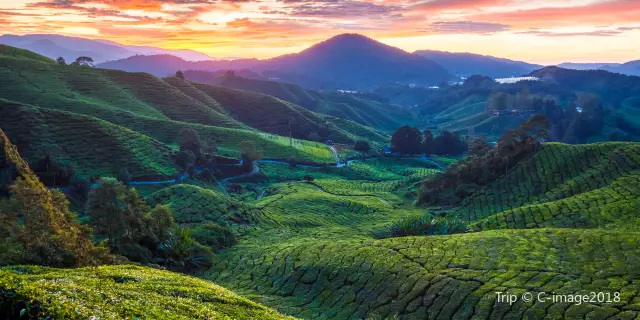
Bukit Ketaya, a hill next to the lake is the site of iron ore mining. The Orang Asli who live on the banks of Tasik Chini complain that the lake has become polluted. Fish caught in the lake have become unfit to eat and the Orang Asli people cannot go to areas to collect roots used in traditional medicine because the areas have been closed for mining. In 2021, the government announced an end to mining around the lake. Lake Chini also features a resort with a restaurant, jungle trekking paths and a boat station. Boat trips are available by various routes around the lake. Prices differ according to the chosen routes which are between 45 minutes to 3 hours.
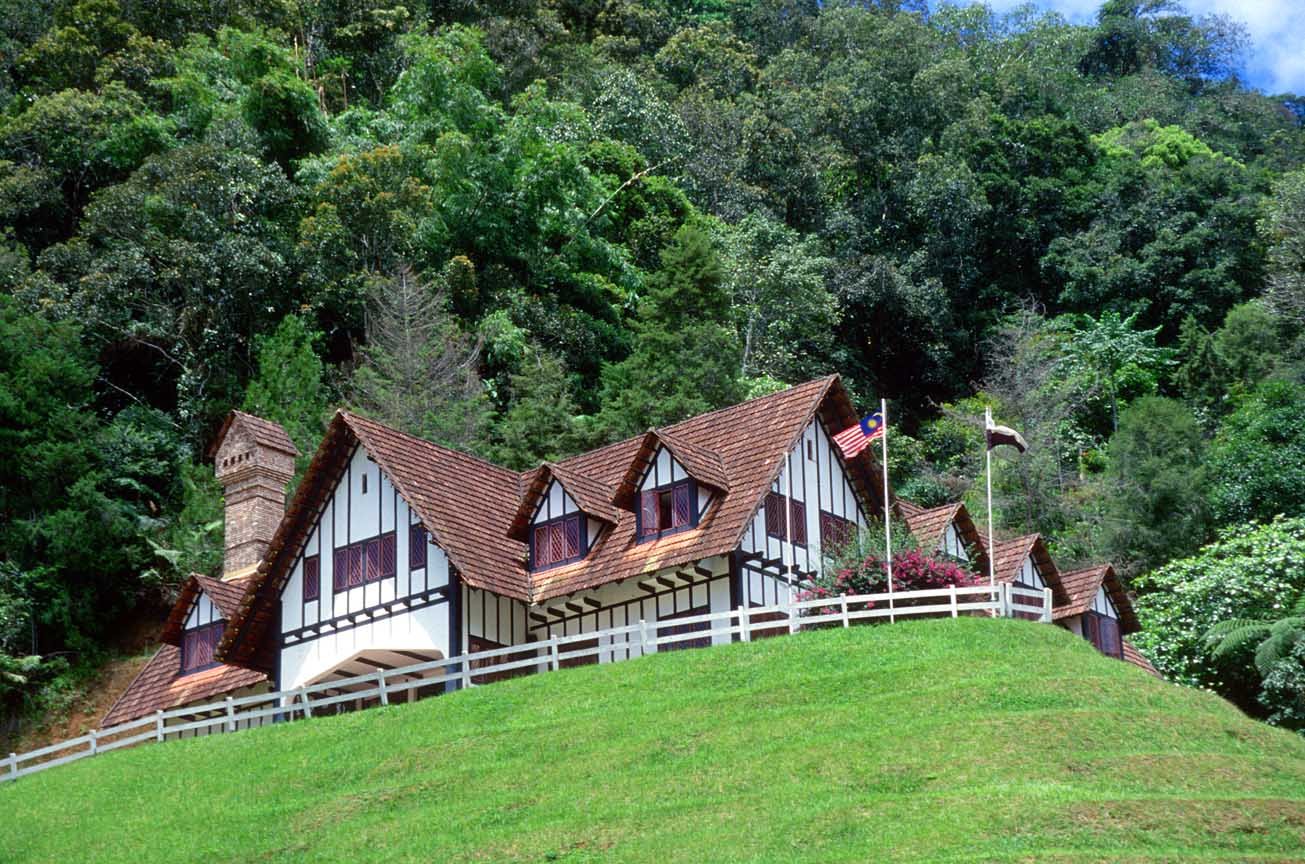
Nearby the Royal Pahang Polo Field is a long-established Islamic college, known as Kuliah Sultan Abu Bakar or the Sultan Abu Bakar Kulliyyah. It has produced eminent scholars all over the state and Malaysia. Its students consistently further their studies at the Al-Azhar University in Cairo, Egypt. Other places of interest include the Royal Palace or the Sultan Abu Bakar Palace, the Sultan Haji Ahmad Shah Mosque, the Royal Mausoleum, the Royal Pahang Polo Field close to the Palace, the Royal Pekan Golf Club, the birthplace of late Tun Abdul Razak at Kampung Pulau Keladi and the Pahang Royal Silk Weaving Centre.

Sungai Lembing
Located about 26 km northwest of Kuantan, Sungai Lembing used to contain the world’s deepest underground tin mines. There is an interesting Tin Museum in the former mining town and just north of the Tin Museum is a hanging bridge, known as Jambatan Bergantung. Access to the bridge is via a narrow, winding road at the base of the entrance to the Tin Museum. There is another hanging bridge on the outskirts of the town that is visible from the main road. Panorama Hill which provides an impressive pre-dawn view is also close-by. On the Kuantan-Sungai Lembing road at the hamlet of Pancing, there is a limestone mountain which houses a large reclining Buddha in one of its caves, known as Charah Cave. The highest peak, Gunung Tapis, also can be accessed from here. In Malay, Sungai means river and Lembing means spear.

Source

Rainbow Waterfall is a dreamy spray-like 30-meter fall offering a lovely view of a rainbow in the morning hours. Accessible via an easy 45-minute hike, at the fall, the water flows at a very low speed and the sunlight hitting the waterfall leads to the formation of the rainbow. It is visible usually between 9 and 11 am. Known as the largest multi-tiered waterfall in Peninsular Malaysia, the Sungai Pandan Waterfall is located in Hutan Lipur Sungai Pandan, a forest reservation area. It is considered the most beautiful fall in Malaysia with a suspension bridge over the natural pool offering amazing views of the falls cascading down the rocks. The Berkelah Falls is a magnificent 7-tiered waterfall. While it’s advised to be extra careful on the hike to the upper falls, those wishing for adventure can always try and get to all the tiers, swim at all the base pools and conquer the falls with a picture at each tier. The water is quite cold and the current can get strong.

Offering spectacular views of Sungai Lembing and the distant hills, Bukit Panorama makes for a hill worth climbing. Around 1100 steps on cemented staircases and hand railings in between and one is on top of the 271 meters high hill with a gorgeous view of a blanket of clouds shielding the town. It will take around 15-60 minutes depending on the stamina to climb the hill. The Mount Tapis Nature Park promises an adventurous visit here with its jungle treks, camping sites and hot springs with the rivers perfect for fishing.

Deerland Park is a privately owned deer park housing over 30 Indonesian deer, rabbits, peacocks, ostriches, Bengal cats and a Burmese python. The park is a good place to visit with kids. Open between 10:30 am and 5:30 pm, entry fees to the park is RM 5 for adults and RM 3 for children under 12 years.

The Sungai Lembing Tin Mine is the biggest underground tin mine in the world measuring as long as 322 km. The tour through the mines will give visitors a chance to experience a time when tin mining was in full swing. Starting with a ride on a tram, similar to the ones used by miners, the tour involves exploring the mines on foot after the ride.

Muzium Sungai Lembing is a museum that throws light on the illustrious tin mining era of Sungai Lembing. Overlooking the Kenai River, the colonial architectural building houses more than 100 tin-related mining equipment. The museum is open daily from 9 am to 5 pm and the ticket is RM 5 and RM 2 for Non-Malaysian adults and children respectively. Crystal House displays a collection of over 3000 crystalline stone pieces. These pieces have been collected by an ex-tin miner, Mr Lee Yon, from the Sungai Lembing Tin Mine and Panching over 19 years. It is open daily between 11 am and 6 pm and tickets are priced at RM 2 for adults and RM 1 for children.

Raub
One of Pahang’s oldest towns, Raub is historically a gold mining settlement and was founded in the 18th century. The mining town was named Raub after a group of miners found a handful of gold in every tray of sand they dug. According to one account, for every dulang of sand, there was a handful or raub of gold. Thus, the town and the district derived their name from the Malay word raub which means a scoop.

Raub became famous in the early 20th century for its gold. At that time, gold mining in Raub was operated by the Raub Australian Gold Mine, a company registered in 1889 in Queensland, Australia. The company was initially known as Australian Syndicate Ltd and later as Australian Gold Mining Co. Ltd in 1892 and operated until 1961.

The mining method used in Raub is shaft mining which started at the Raub Hole and the area is now known as Bukit Koman. A new company, Peninsular Gold, has restarted gold mining at the Raub mine. Initially, the company recovered gold from the tailings dumps from the old mine, but started mining fresh ore again in 2011. A major drilling campaign is in progress, exploring additional resources adjacent to and below the old mine.

There are a lot of British-style buildings in Raub, especially along Mason Road, now known as Jalan Tengku Abdullah. Most of the buildings in Raub were built during the pre-World War II era. Some examples of the pre-war buildings in Raub are the old Police Station of Raub built in 1906 and the Raub District Council Building.

After the gold mines were depleted, the main economic activity of Raub is agriculture. The durians grown in Raub are probably the best in Malaysia and the town is styled as the durian capital of Malaysia attracting a steady stream of visitors, especially tourists from Singapore and China.

The Lata Jarum Waterfalls is a perfect spot for family outings offering a small trek in the forest reaching the cascading waterfalls while one can hear the forest creatures. Pulau Chekas is an ideal place for a recreational weekend and stands as an island when the river gets divided into two loaded with slides for kids and relaxing activities for adults. It is also a home to Fraser’s Hill which is well-known for its extensive birdlife and deserves a visit.

One can also plan a visit to Lata Lembik Recreational Park for adventurous and exciting activities. The stunning recreational park is home to the popular magnificent waterfalls of the same name that have pristine blue waters. It offers several adventure and water sports like white water rafting, jungle trekking, etc and one can relax and take a swim in the pool that forms at the base of the waterfall.

The Lata Jarum Forest Eco Park is a traveller-friendly forest located close to the village of Dong. It is a spectacular waterfall that avalanches the rocks and forms an unstained pool in a pristine river and is a popular attraction among tourists. One can find bridges to get across small water streams and chalets inside this forest park. The toilets are close to the ranger’s office.
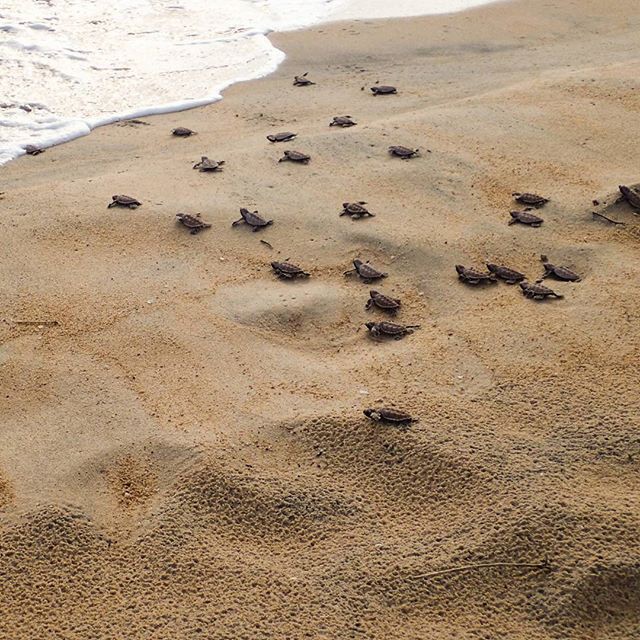
Taman Tasik Raub, also known as Raub Lake Park, is a gorgeous lake park located on the outskirts of Raub. The lake is surrounded by lush green landscapes and open spaces to relax, enjoy a day picnic or go fishing. Rental boats are available on site to go around the lake sightseeing and soaking in the glorious nature and calm waters.
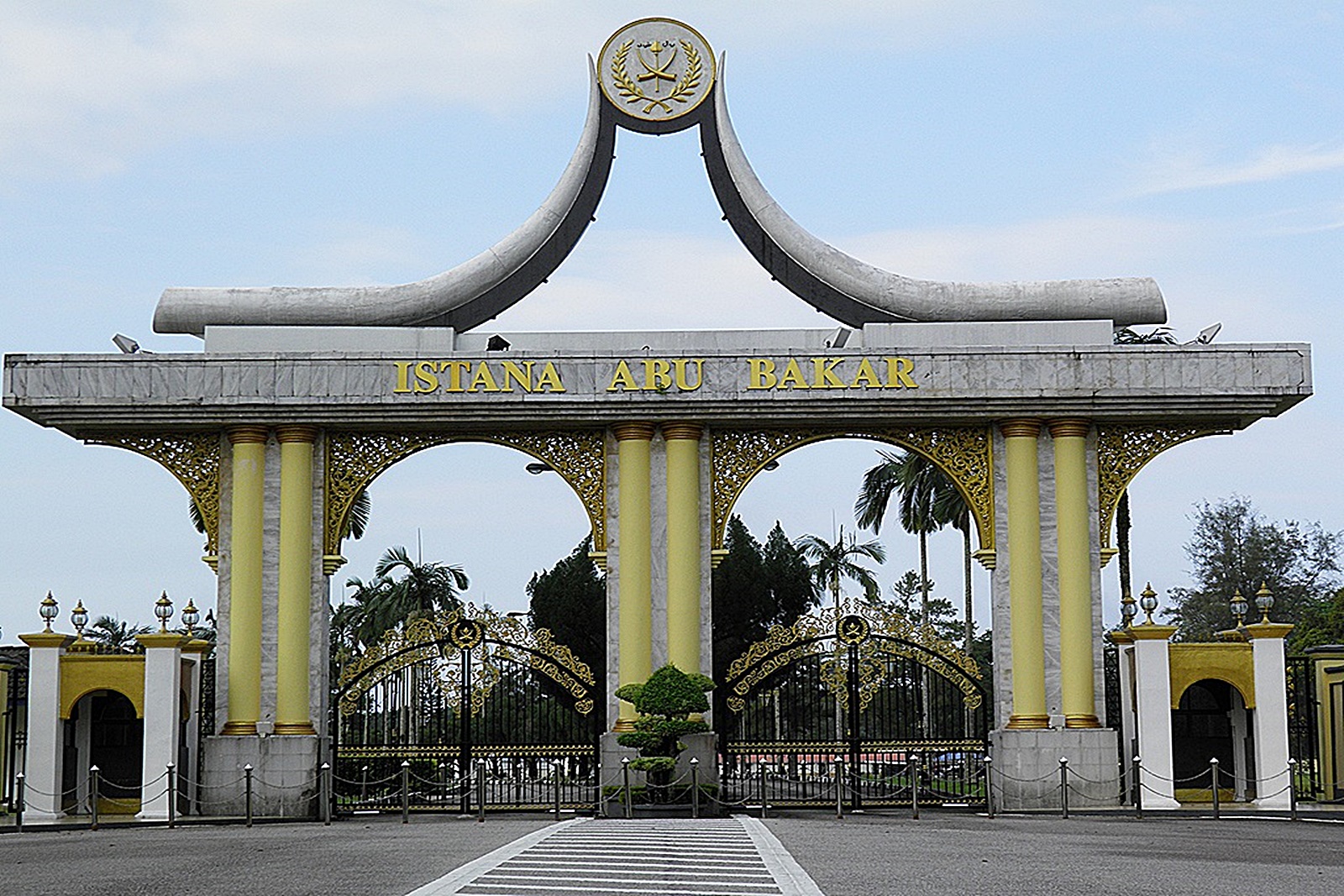
The Tras Road Chinese Temple lies on the Raub-Bentong Road and is dedicated to Guan Yin Tang. The temple is often visited by tourists driving by Tras Road. The large red structure of this temple has 12 Chinese zodiacs, a beautiful play area for children, and a fish pond with some statues and figures. The garden area is very windy and well-designed to blend in with the temple building. It frequently hosts community events and is therefore often visited by locals. One can find souvenirs, shops and some food stalls nearby.