International Day of Nowruz

Tomorrow is the International Day of Nowroz, a celebration of the first day of spring and the new year in the Solar Hijri calendar, which is based on the astronomical vernal equinox. It is observed by more than 300 million people around the world, especially in Iran and the Persian diaspora, as well as in Central Asia, the Caucasus, the Balkans, and South Asia. It has been celebrated for over 3,000 years and has its roots in the ancient Iranian religion of Zoroastrianism, which viewed the arrival of spring as a victory of light over darkness.

The Solar Hijri calendar is a solar calendar that is used in Iran and Afghanistan. It is based on the astronomical observation of the March equinox, which marks the beginning of the new year, called Nowruz. The calendar has 12 months, with the first six months having 31 days, the next five having 30 days, and the last month having 29 or 30 days depending on the leap year. The calendar counts the years from the migration of the Islamic prophet Muhammad in 622 CE, but it is not related to the Islamic Hijri calendar, which is a lunar calendar. The Solar Hijri calendar is also known as the Persian calendar, the Iranian calendar, and the SH calendar.
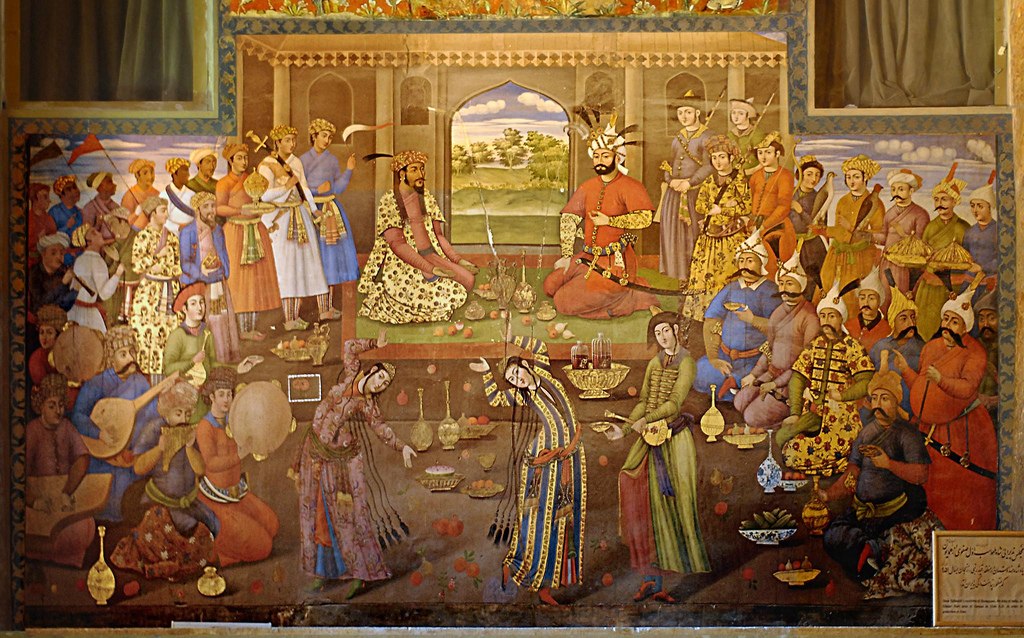
The history of Nowruz is very ancient and rich. Nowruz which means a new day in Persian, is the celebration of the first day of spring and the new year in the Solar Hijri calendar, which is based on the astronomical vernal equinox. Nowruz survived the Islamic conquest of Persia in the seventh century and the decline of Zoroastrianism’s popularity, and it spread across the globe through the diaspora of Persian people throughout history. It is also a holy day for Zoroastrians, Baháʼís, and some Muslim communities.

The International Day of Nowroz was proclaimed by the United Nations General Assembly in 2010, at the initiative of several countries that share this holiday, to promote the values of peace, solidarity, reconciliation, neighbourliness, and mutual respect among peoples and communities. It is also inscribed on the UNESCO Representative List of the Intangible Cultural Heritage of Humanity, as a cultural tradition observed by numerous peoples.

The 2024 theme of the International Day of Nowroz is “To protect the planet and live in harmony with nature”. This theme reflects the message of the UN Secretary-General António Guterres, who urged the world to choose hope and compassion, embrace the opportunities that lie ahead, and work together to build a more peaceful, more sustainable and more inclusive world for all. He also highlighted the importance of celebrating humanity’s rich cultural heritage and diversity and being guided by the values of peace, dialogue and solidarity.
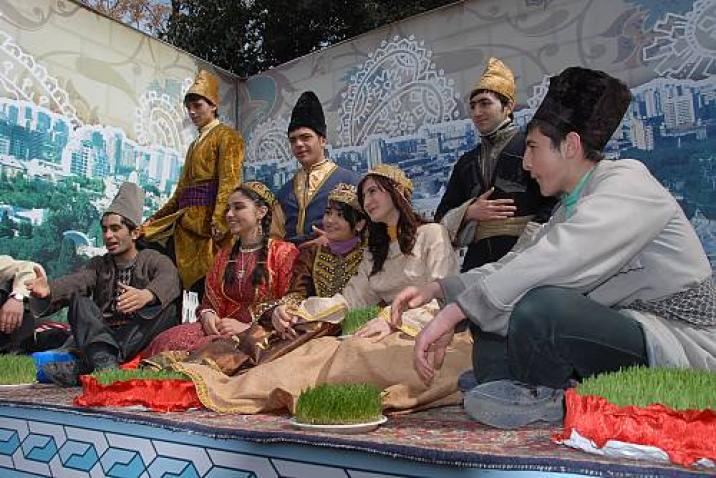
The theme also resonates with the spirit of Nowruz, which means “new day” in Persian and symbolises the renewal of nature and life. Celebrating Nowruz means the affirmation of life in harmony with nature, awareness of the inseparable link between constructive labour and natural cycles of renewal, and a solicitous and respectful attitude towards natural sources of life.

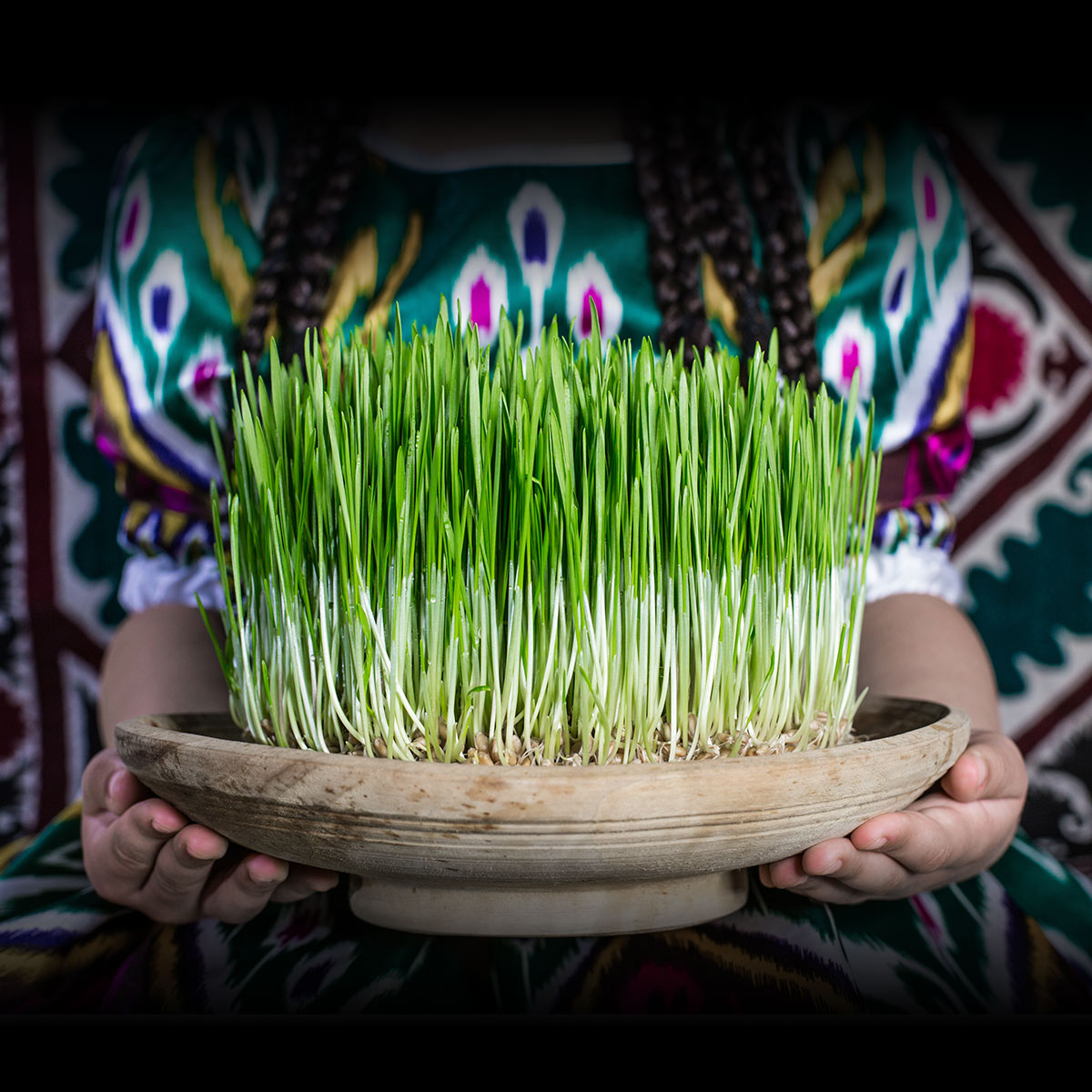
Some of the traditions and rituals of Nowruz include preparing for the holiday by cleaning the house, buying new clothes, and visiting family and friends. The haft-seen table is also set up. This is a display of seven symbolic items that start with the letter “s” in Farsi, such as seed sprouts, garlic, apple, vinegar, sumac, and a pudding made of sprouted wheat. The table may also include other items, such as a mirror, eggs, coins, candles, a book of poetry, and a Koran. Charshanbe Suri, which is the last Wednesday before Nowruz, is celebrated by jumping over fire, banging spoons on doors, and visiting cemeteries. These activities are meant to scare away bad luck, bring happiness, and honour the dead. Gifts are exchanged, especially for children, and charity is given to the poor and needy. Celebrants enjoy a special meal with loved ones, usually consisting of rice, fish, herbs, and other dishes and participate in various festivities, such as music, dance, sports, games, and nature outings. The 13th of Nowruz, known as Sizdah Bedar is celebrated by spending the day outdoors, picnicking, and throwing away the seed sprouts from the haft-seen table. This is believed to ward off evil and bring good fortune.

Different countries celebrate Nowruz in their way. In Iran, people light up the streets and skies for Chaharshanbe Suri, or Red Celebration, in honour of fire, an element Zoroastrians believe to be a symbol of purity. They also set up a haft-seen table, which is a display of seven symbolic items that start with the letter “s” in Farsi, such as seed sprouts, garlic, apple, vinegar, sumac, and a pudding made of sprouted wheat. In Azerbaijan, people celebrate Novruz by making bonfires and jumping over them, which is believed to burn away the troubles of the past year. They also visit the graves of their ancestors, plant trees, and cook special dishes, such as samani halva, a sweet paste made from wheat germ and nuts. In Afghanistan, people celebrate Nowroz by flying kites, playing games, and watching buzkashi, a traditional sport involving horsemen competing for a goat carcass. They also prepare a special dish called haft mewa, which is a mixture of seven dried fruits and nuts soaked in water. In Central Asia, people celebrate Nawruz by wearing new clothes, visiting relatives and friends, and exchanging gifts. They also enjoy various festivities, such as music, dance, sports, and nature outings. Some of the traditional foods include sumalak, a porridge made from wheat sprouts and flour, and naan, a flatbread baked in a clay oven. In Kurdish regions, people celebrate Newroz by wearing colourful clothes, dancing in circles, and singing folk songs. They also light bonfires and jump over them, symbolising the resistance and freedom of the Kurdish people. Some of the traditional foods include dolma, stuffed grape leaves, and kofta, minced meatballs.

Nowruz is a celebration of life, hope, and renewal that transcends borders, religions, and cultures. It is a reminder of our common humanity and our shared responsibility to care for our planet and each other. As the world faces unprecedented challenges and uncertainties, Nowruz offers us a message of hope and resilience. It invites us to appreciate the beauty of nature, the diversity of cultures, and the bonds of friendship. It also urges us to reflect on our actions, our values, and our goals. It is a time to express our love and gratitude to our families and friends and to extend our generosity and compassion to those in need. Let us join the millions of people around the world who celebrate Nowruz, and let us share the blessings of this new day.

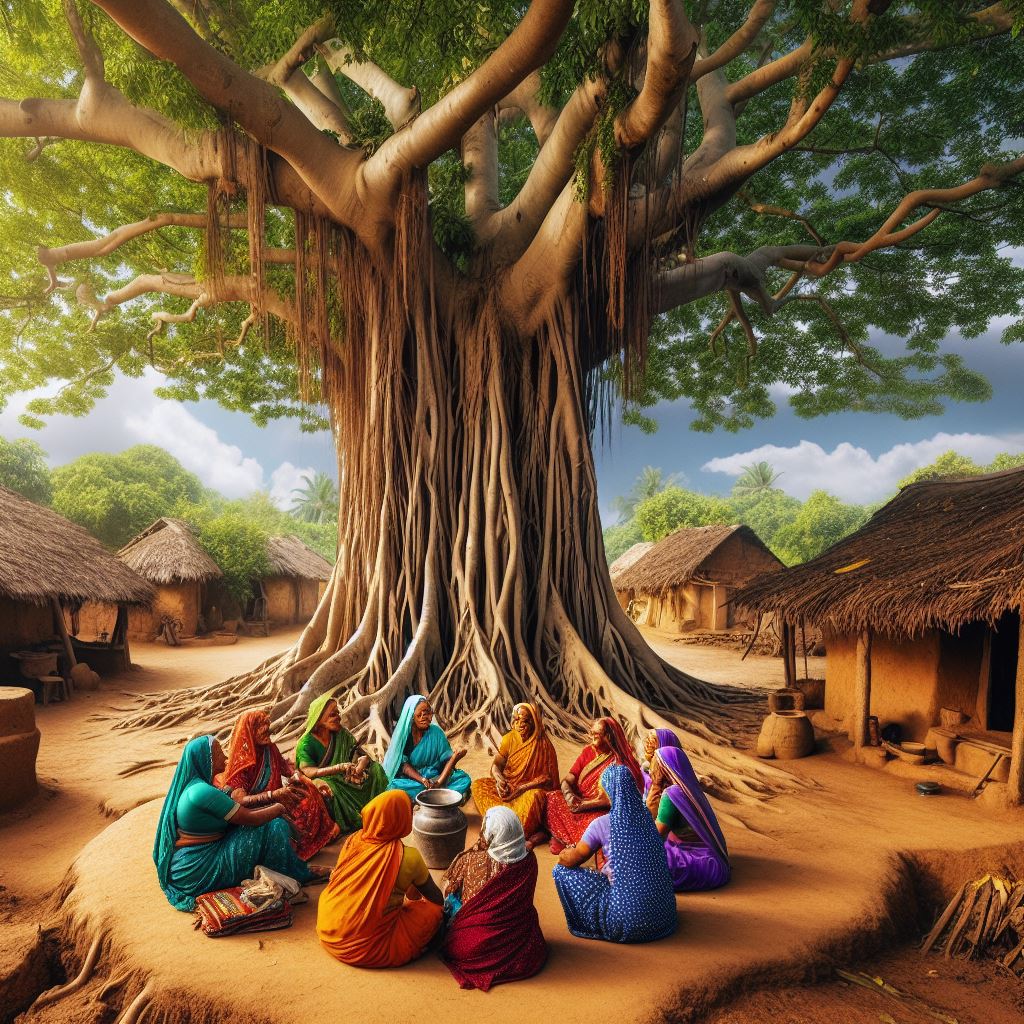
Short Story: Celebrating Women – The Circle of Life

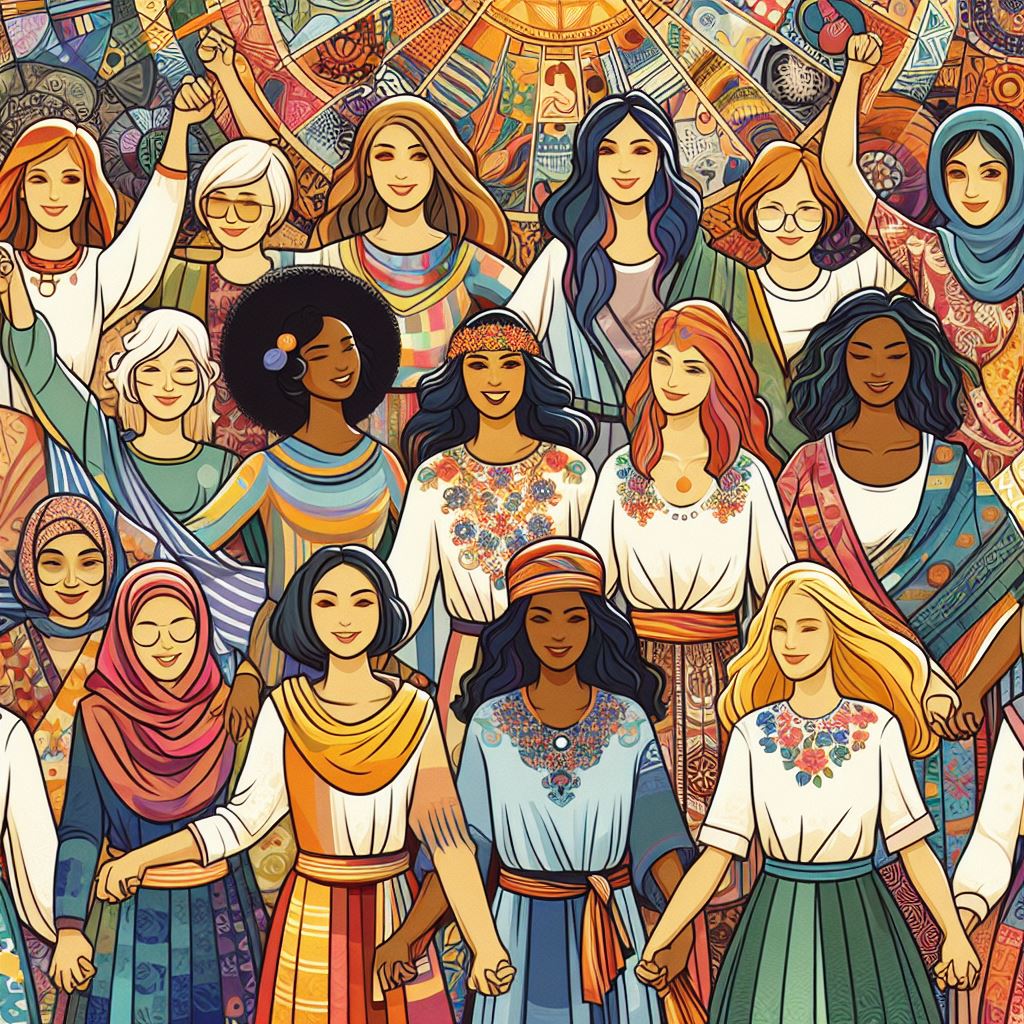
In a quaint village nestled between rolling hills and whispering forests, the rhythm of life flowed gently, like the melody of a timeless lullaby. Here, amid the cobblestone streets and rustic cottages, lived women whose stories wove together to create a tapestry of resilience, strength, and sisterhood.

In the heart of the village, beneath the sprawling branches of an ancient banyan tree, sat young Lila, her eyes alight with wonder as she listened to her grandmother’s tales. Sitamma, with her silver hair and twinkling eyes, spoke of a time long past, when women were the keepers of tradition and wisdom.

Lila hung on her grandmother’s every word, her imagination ignited by stories of brave heroines and fierce warriors who had defied the odds and changed the course of history. As the sun dipped below the horizon, casting a golden glow upon the village, Sitamma whispered words of encouragement to her granddaughter.

“Remember, my dear,” she said, her voice a gentle breeze that stirred the air, “you carry within you the strength of generations past. Let your heart be your guide, and never forget the power of your voice.”

With those words echoing in her heart, Lila embarked on her journey, her spirit ablaze with the fire of possibility. She knew that she was but a bud, waiting to bloom into the fullness of her potential. And so, with each passing day, she embraced the challenges and triumphs that awaited her, knowing that her story was just beginning.

In a cottage nestled on the edge of the village, lived Kaveri, a mother whose love knew no bounds. With her gentle touch and nurturing spirit, she tended to the needs of her children, weaving a tapestry of love and warmth that enveloped their home like a cosy blanket.

Kaveri’s days were filled with laughter and chaos, the music of her children’s laughter a melody that danced through the halls. From dawn until dusk, she juggled the demands of motherhood with grace and poise, her heart overflowing with the joy of watching her children grow. But amidst the laughter, Sarah carried with her the weight of responsibility, the knowledge that she was the guiding light in her children’s lives. Through sleepless nights and tear-stained cheeks, she held their hands and whispered words of comfort, knowing that her love would carry them through even the darkest of days.

As she watched her children grow, Kaveri marvelled at the beauty of motherhood – the highs and lows, the triumphs and challenges, all woven together in a tapestry of love. She knew that her role was sacred, a privilege bestowed upon her by the universe, and she embraced it with open arms, knowing that she was fulfilling her purpose with every beat of her heart.

In the heart of the village square, beneath the shade of a blossoming cherry tree, sat Gowri Patti, an elderly woman whose wisdom was as deep as the ocean and as vast as the sky. With her weathered hands and kind eyes, she watched over the village like a guardian angel, her presence a source of comfort and guidance to all who sought her counsel.

Gowri Patti had lived a life rich with experience, her journey marked by triumphs and tribulations, victories and defeats. But through it all, she had remained steadfast in her belief in the power of sisterhood, the unbreakable bond that connected women of all ages and walks of life.

As the village gathered around her, eager to hear her tales of wisdom, Gowri Patti spoke of the importance of embracing one’s true self, of standing tall in the face of adversity, and of cherishing the bonds of friendship and sisterhood that bound them together. Her words were like poetry, weaving a tapestry of hope and inspiration that enveloped the village like a warm embrace. For in the wisdom of age, she found the courage to speak her truth, knowing that her voice held the power to ignite the flames of change and transformation.

And so, as the sun set on another day in the village, the women gathered beneath the banyan tree, their hearts intertwined like the branches above. They knew that their stories were but threads in the tapestry of sisterhood, each one unique and precious, yet connected by the unbreakable bonds of love and solidarity.

As the seasons turned and time marched onward, the women of the village continued to weave the threads of their lives together, creating a tapestry of strength, resilience, and sisterhood. From the blossoming innocence of youth to the quiet wisdom of age, each stage of life brought with it its joys and challenges, its triumphs and tribulations.

But through it all, the women remained united in their shared journey, their stories intertwined like the branches of the banyan tree, rooted deep in the soil of tradition and love. For in the heart of the village, amid the laughter and tears, the triumphs and defeats, there beat the timeless rhythm of sisterhood, a melody that echoed through the ages, celebrating the resilience and beauty of women everywhere.

The Power of Introverts: Unleashing Quiet Brilliance

In a world that often celebrates extroversion, the quiet strength of introverts often goes unnoticed. But beneath the calm and sometimes unassuming demeanour lie many unique talents and abilities that shape our society in profound ways.

Introversion refers to a personality trait characterised by a preference for solitude, introspection, and quiet reflection. Introverts tend to feel more energised and fulfilled when they spend time alone or engage in activities that allow for deep thinking and self-exploration. Introversion is not simply about shyness or reticence in social situations, but rather a preference for solitude, reflection, and deep introspection. Introverts draw energy from within, finding solace and renewal in moments of quiet contemplation and solitude.

Introverts possess a remarkable capacity for reflection and self-awareness, often delving deep into their inner thoughts and emotions to gain insights and perspective on themselves and the world around them. This introspective nature fuels creativity, innovation, and personal growth. Introverts thrive in the quiet corners of life. They find solace in solitude, introspection, and deep thought. While extroverts draw energy from social interactions, introverts recharge their mental and emotional batteries by retreating to their inner sanctums. They often seek out quiet environments where they can focus their thoughts and feelings. But this preference for quietude doesn’t equate to weakness; rather, it’s a wellspring of strength waiting to be tapped.

Introverts may have a smaller circle of friends but maintain meaningful connections. They value quality over quantity in relationships and prefer deeper conversations. They are deep thinkers, often excelling at contemplating complex ideas and exploring their inner worlds. Their ability to listen to and understand others makes them empathetic and supportive. Introverts are also very creative, with many artists, writers, and thinkers identifying as introverts and channeling their creativity into their work.

Introverts are exceptional listeners. Their ability to absorb information, empathize, and truly understand others is unparalleled. In a world where noise often drowns out nuance, introverts provide a vital counterbalance. They listen not just with their ears but with their hearts, fostering genuine connections and bridging gaps between people.

Introverts possess a unique set of strengths that contribute to their success and well-being. Introverts tend to listen more than they speak, allowing them to absorb information about other people. Their empathetic nature enables them to understand others deeply and offer meaningful support. Solitude provides fertile ground for creativity. Introverts often tap into their rich inner world to generate innovative ideas, artistic expressions, and unique solutions. Their preference for focused, solitary work allows introverts to excel in academic pursuits. They thrive when given the opportunity to delve into complex subjects and explore ideas deeply. They prioritise self-care and introspection. Their ability to recharge through alone time contributes to better mental and physical health. Introverts possess qualities like thoughtful preparation, calm focus, and grounded energy. These attributes make them effective leaders and entrepreneurs. Introverts thrive when working independently. Their ability to concentrate without distractions leads to increased productivity. Introverts value quality over quantity in relationships. Their small circle of close friends allows for deeper connections and meaningful interactions.

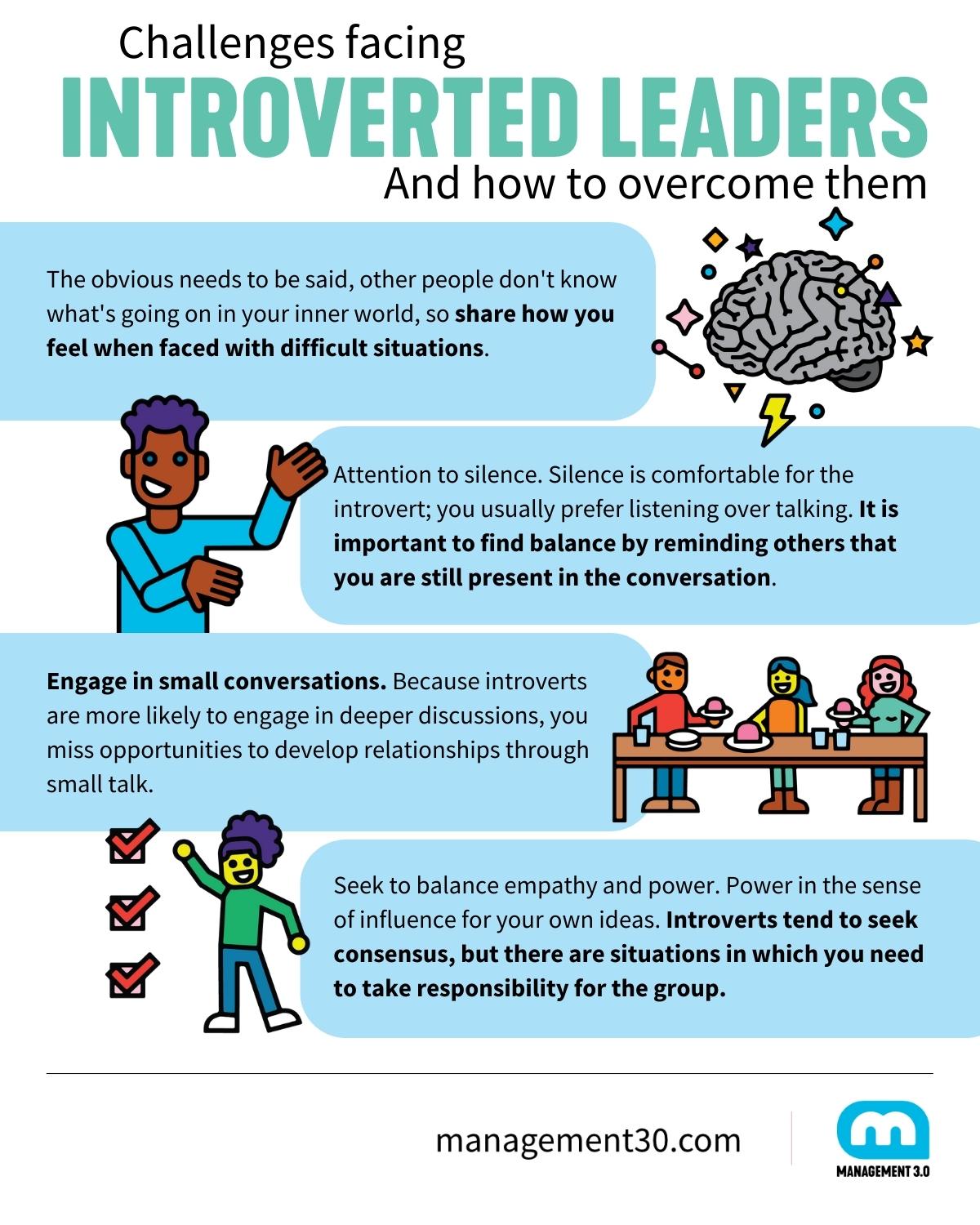
Leadership isn’t synonymous with extroversion. Contrary to stereotypes, introverts can be effective leaders. Introverted leaders lead by example, inspire through their actions, and create spaces where everyone’s voice is heard. Consider Rosa Parks, whose quiet defiance sparked a civil rights movement, or Mahatma Gandhi, whose inner strength transformed nations. Introverted leaders lead not with bravado or charisma, but with authenticity, humility, and integrity. Their quiet strength inspires trust, loyalty, and commitment, empowering others to embrace their own unique gifts and talents. In a world that often values extroversion over introversion, introverted leaders serve as catalysts for change, challenging conventional wisdom and championing inclusivity, diversity, and authenticity. Their quiet revolution sparks innovation, empathy, and social change. Introverted leaders often exhibit qualities such as not dominating conversations, synthesising information, and reassuring others during challenging times.

Introverts are catalysts for change. Their thoughtful contributions—whether in art, science, or social justice—shape the world. Susan Cain, author of “Quiet: The Power of Introverts in a World That Can’t Stop Talking,” ignited a quiet revolution by championing introverts’ value. TED Talks like hers remind us that introverts are not outliers; they are essential threads in our societal fabric.

Despite their strengths, introverts often face challenges. Society tends to favour the gregarious, the charismatic, and the outspoken. But introverts have much to offer, and it’s time to recognise their quiet brilliance. Introversion is not a flaw or a weakness. It is a unique way of being. Remember, introversion is not a limitation, it’s a strength that contributes to the rich diversity of human personalities.

As we celebrate extroversion, let’s also honour the introverts—the poets, the thinkers, and the dreamers. Let’s recognize that their quiet brilliance fuels progress, innovation, and compassion. So, the next time you encounter an introvert, listen closely. Under their soft-spoken words lies a symphony of wisdom waiting to be heard. In a world that often shouts, let’s lean in and listen to the whispers of introverts. Their power lies not in volume but in depth, not in noise but in nuance. Let’s celebrate the introvert within us all.

International Women’s Day 2024

Celebrated annually on March 8, International Women’s Day, or IWD, recognises the social, economic, cultural, and political achievements of women. It also serves as a powerful reminder of the ongoing fight for gender equality.

The roots of International Women’s Day can be traced back to the early 20th century. In 1908, 15,000 women marched through the streets of New York City, demanding shorter hours, better pay, and voting rights — a testament to the growing momentum of the women’s suffrage movement in the United States. The idea of an international day to honour women’s achievements gained traction at the second International Conference of Working Women in Copenhagen in 1910. Inspired by the courage and resolve of their American counterparts, delegates from across the globe unanimously agreed to establish a day dedicated to advancing women’s rights and promoting gender equality. In 1911, International Women’s Day was officially celebrated for the first time in Austria, Denmark, Germany, and Switzerland, with rallies, marches, and public gatherings calling for women’s suffrage, improved working conditions, and an end to discrimination and inequality. Over the years, International Women’s Day has evolved into a global phenomenon, celebrated in countries and communities around the world. From grassroots initiatives to high-profile events, the day serves as a platform to recognize and celebrate the achievements, contributions, and resilience of women from all walks of life.

At its core, International Women’s Day is a rallying cry for gender equality and women’s empowerment. It serves as a reminder of the progress made in advancing women’s rights, while also shining a spotlight on the persistent barriers and challenges that women continue to face in achieving full equality and justice. International Women’s Day is a catalyst for change—a call to action for individuals, communities, and governments to redouble their efforts in promoting gender equality and women’s rights. It sparks conversations, ignites movements, and fosters solidarity among women and allies worldwide.

The theme for IWD 2024 is Inspire Inclusion. But what does it truly entail? When we inspire others to understand and value women’s inclusion, we forge a better world. When women themselves are inspired to be included, there’s a sense of belonging, relevance, and empowerment. As world-renowned feminist, journalist, and activist Gloria Steinem once said, “The story of women’s struggle for equality belongs to no single feminist nor to any one organization but to the collective efforts of all who care about human rights.” IWD transcends borders, organisations, and groups—it’s a day of collective global activism and celebration. To inspire inclusion, we must act consistently. When women aren’t present, we must question why. When discrimination occurs, we must call it out. When treatment isn’t equitable, we must act. This commitment applies each and every time.

So how can we inspire inclusion? On an individual basis, we should understand, value, and seek out the inclusion of women and girls; share knowledge, support, and encouragement with others; and embrace diversity, be it race, age, ability, faith, body image, and identity. As a group or on an organisational level, we must forge women’s economic empowerment; recruit, retain, and develop female talent; support women and girls in leadership, decision-making, business, and STEM; design and build infrastructure that meets women’s needs; help women and girls make informed decisions about their health; provide access to quality education and training; elevate women and girls’ participation and achievement in sports; and promote the creative and artistic talents of women and girls.

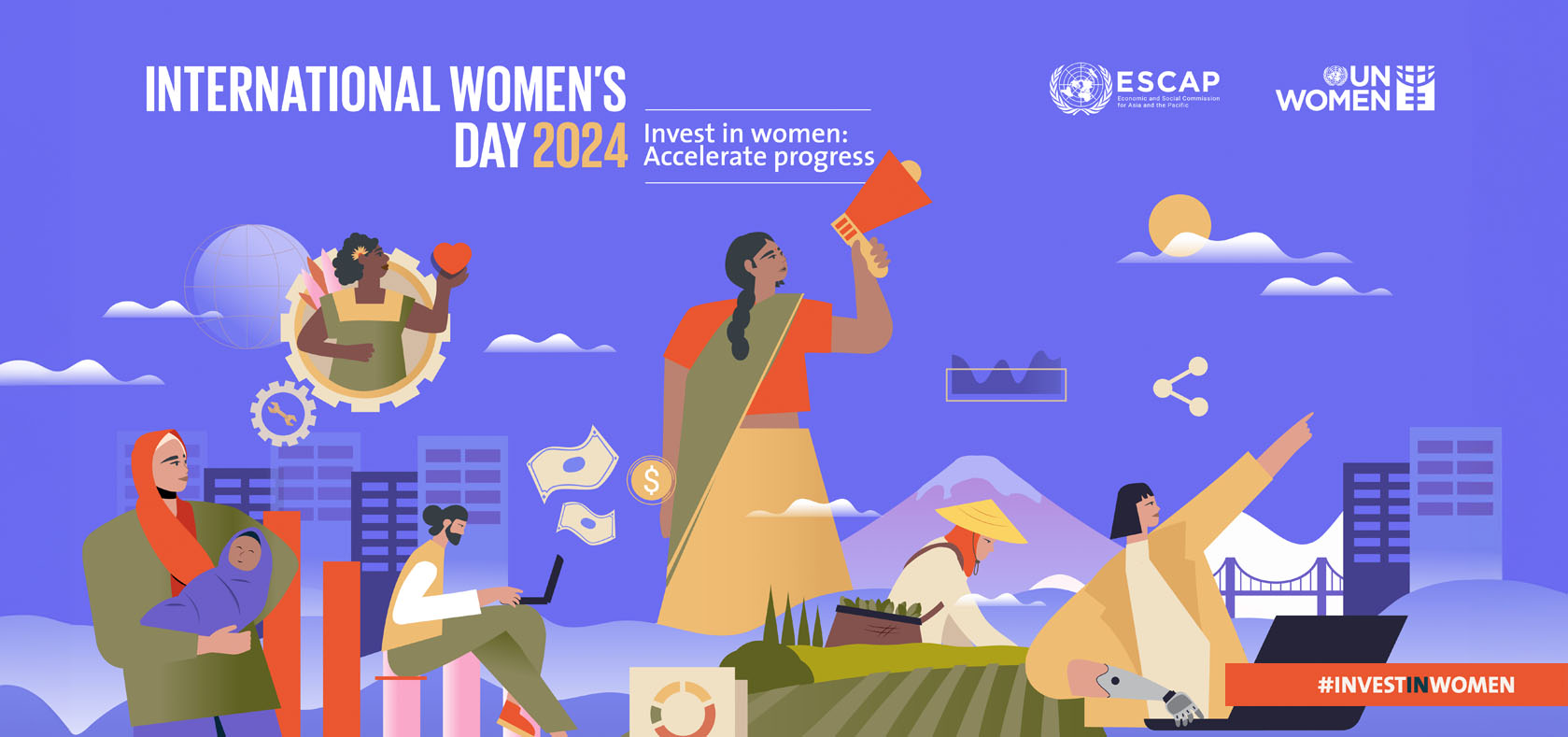
Over at the United Nations, the theme for IWD 2024 is Invest in Women: Accelerate Progress. In a world grappling with geopolitical conflicts, poverty, and climate change, empowering women becomes paramount. We can invest in women through:

  • Economic Empowerment: By economically empowering women, we advance women’s rights and gender equality globally. Financial independence opens doors to education, healthcare, and self-determination.
  • Technology and Education: Leverage technology and education in the digital age to empower women and girls. Bridging the digital divide ensures equal access to opportunities.
  • Collective Solutions: These crises demand collective solutions. When we invest in women, we invest in progress for all.

As we celebrate International Women’s Day, let us commit to inspiring inclusion, championing economic empowerment, and investing in women. Together, we can create a world where every woman’s voice is heard, every dream is achievable, and every barrier is dismantled.

Festivals of India: Chapchar Kut Festival

Deeply rooted in Mizo culture, the Chapchar Kut Festival has an origin story dating back centuries. Rooted in centuries-old customs and folklore, this annual extravaganza captivates the senses with its colourful pageantry, lively performances, and spirit of camaraderie.

The festival traces its origins to ancient times when the Mizo tribespeople celebrated the arrival of spring and the onset of the agricultural season. As the winter frost receded and the land bloomed with new life, communities gathered to give thanks for the bountiful harvest and seek blessings for the year ahead.

The festival began around 1450–1700 in the village of Suaipui. The festival apparently originated when the hunters came back to the village empty-handed. To make up for the disappointment, the village chief proposed an impromptu feast with rice, beer and meat. Since then, every year, the festival has been repeated in the village of Suaipui and gradually spread to other villages. Thus, the Chapchar Kut was born—a celebration of resilience and community spirit. The festival originally served as a thanksgiving to the gods because during the clearing of forests on hill slopes for jhum cultivation or the shifting of agriculture, the people needed divine protection. Chapchar Kut marked the end of this arduous process, and the Mizo community expressed gratitude for their safety.

Chapchar Kut was first revived in 1962 on a grand scale in Aizawl; however, it was discouraged when it was felt that it did not adhere to Christian values and rekindled pre-Christian cultural practices like the drinking of rice beer. However, it was revived once again in 1973 on a mass scale, sans animistic practice and the Cheraw dance. Even the church, which had been critical of the festival, no longer objected to the festival as it felt that traditional culture was disappearing. Chapchar Kut is now held annually in the month of March. People dance, perform skits, and play musical instruments to celebrate their beloved festival, with the aim of fostering camaraderie among the people.

In the early days, Chapchar Kut was a lively affair with plenty of drinking and eating. Young men and women danced through the night, celebrating life and unity, with women adorning themselves in traditional attire, including the Vakiria, a traditional Mizo shawl. The Chai dance traces its origins to this festival. Today, Chapchar Kut aligns with the drying period for trees and bamboo felled during jhum cultivation. The festival provides a well-deserved break for shifting cultivators.

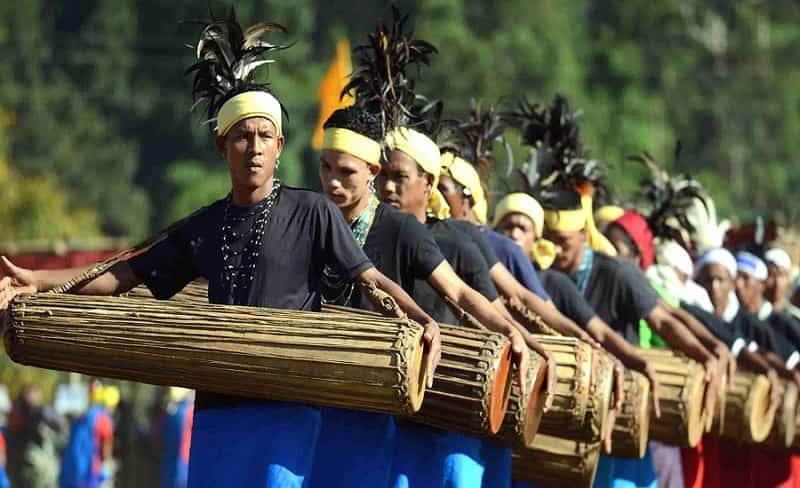
The Chapchar Kut Festival is marked by meticulous preparations and elaborate rituals that reflect the rich cultural tapestry of Mizoram. Weeks in advance, communities come together to clean and decorate their villages, weaving intricate patterns of bamboo and banana leaves to adorn their homes and public spaces. The festival provides an opportunity for Mizo men and women to showcase their traditional attire and finery, with vibrant costumes and elaborate headdresses adding to the spectacle of the occasion. From intricately woven shawls to ornate jewellery adorned with semi-precious stones, every garment tells a story of craftsmanship and cultural pride. Central to the Chapchar Kut Festival is the pulsating rhythm of music and dance, as performers take to the stage to showcase their talent and skill. Traditional instruments such as the khuang or the drum, the tuium or the flute, and the dawte or the gong set the beat for energetic performances that captivate audiences and evoke the spirit of celebration and joy.

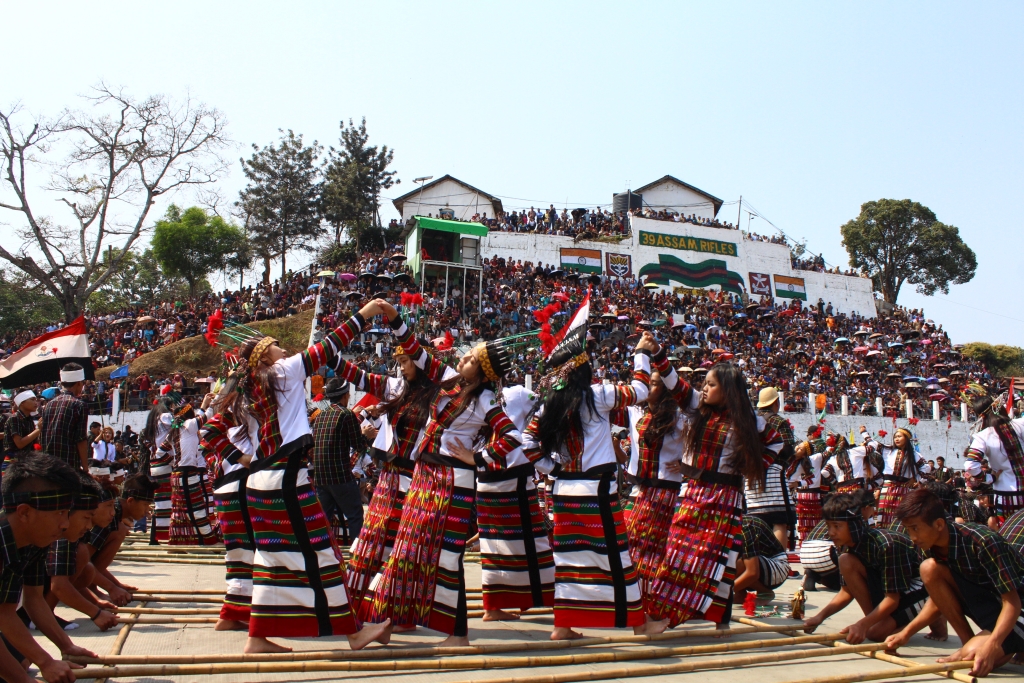
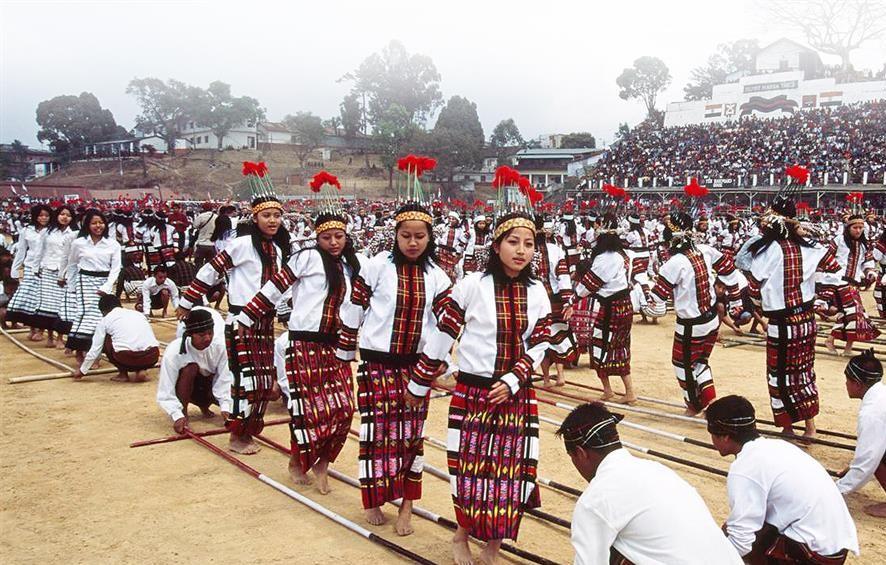
Key activities of the festival include the Chhawnghnawh, a pre-Christian custom where boiled eggs are playfully stuffed into each other’s mouths. The Cheraw dance takes centre stage, accompanied by other traditional dances like the Khuallam, the Chheihlam, and the Chai. The Chapchar Kut Run, a spirited race celebrating physical fitness, is also held during the festival. As a nod to the Mizo heritage, traditional games and a costume parade is the highlights of the festival.

A highlight of the Chapchar Kut Festival is the Thangchhuah or traditional bamboo dance, where men and women form intricate patterns and formations as they dance to the rhythmic beat of drums and gongs. The dance symbolizes unity, harmony, and collective endeavour—a reflection of the communal spirit that defines Mizo culture. Food plays a central role in Chapchar Kut celebrations, with elaborate feasts and communal meals bringing families and communities together in a spirit of camaraderie and conviviality. Traditional delicacies such as bai, a rice-based dish, vawksa rep, smoked meat, and sa-um, fermented bamboo shoot, are prepared with love and shared with neighbours and guests.

As part of the festival festivities, cultural exhibitions, and competitions are organized to showcase the diverse traditions and talents of the Mizo people. From traditional crafts and artwork to indigenous games and sports, these events provide a platform for artisans, performers, and athletes to showcase their skills and creativity.

While the Chapchar Kut Festival remains deeply rooted in tradition, it also reflects the evolving dynamics of contemporary Mizoram. Today, the festival serves as a catalyst for community engagement, social cohesion, and intergenerational dialogue, fostering a sense of belonging and pride among Mizo youth and elders alike.

In recent years, the Chapchar Kut Festival has emerged as a major tourist attraction, drawing visitors from across India and around the world to experience the vibrant colours, sights, and sounds of Mizoram’s cultural extravaganza. The festival offers a unique opportunity for cultural exchange and mutual understanding, as visitors immerse themselves in the customs and traditions of the Mizo people.

As Mizoram grapples with environmental challenges such as deforestation and climate change, efforts are underway to integrate principles of sustainability and conservation into the Chapchar Kut Festival. Initiatives such as tree planting drives, waste management programs, and eco-friendly practices aim to minimize the festival’s ecological footprint while preserving the natural beauty and biodiversity of the region.