Festivals of India: Tyagaraja Aradhana

Though technically not a festival in the way we have come to associate festivals with, the Tyagaraja Aradhana is an annual music festival that glorifies the Telugu saint composer Tyagaraja. The music festival is observed in the states of Andhra Pradesh and Tamil Nadu, primarily in Tiruvaiyaru in the Thanjavur district, where Tyagaraja attained Samadhi. The Aaradhana is observed on Pushya Bahula Panchami day when the saint attained samadhi when musicians render the saint’s Pancharatna Kritis.

A composer and Carnatic music vocalist, Thyagaraja or Kakarla Thyagabrahmam was born on the 4 May 1767, to a Telugu Vaidiki Mulakanadu Brahmin family in Tiruvarur in present-day Tiruvarur District of Tamil Nadu. Tyagaraja and his contemporaries, Shyama Shastri and Muthuswami Dikshitar are regarded as the Trinity of Carnatic music. Thyagaraja composed thousands of devotional compositions, most in Telugu and in praise of Lord Rama, many of which remain popular today, the most popular being Nagumomu. Of special mention are five of his compositions called the Pancharatna Kritis or the five gems, which are often sung in programs in his honour, and Utsava Sampradaya Krithis or festive ritual compositions, which are often sung to accompany temple rituals.

Tyagaraja hero-worshipped the celestial sage Narada, a reference to this is Tyagaraja’s krithi Vara Nārada in Vijayaarī raga and in Adi taḷam. Legend has it that a hermit taught him a mantra invoking Narada, and Tyagaraja, meditating on this mantra, received a vision of Narada and was blessed with the book Svarārnavam by the sage. During his last days, Tyagaraja took vows of Sannyasa. Tyagaraja died on a Pushya Bahula Panchami day, or 6 January 1847, at the age of 79. His last composition before his death was Giripai Nelakonna in rāga Sahāna, Ādi tāḷam and was cremated on the banks of the Kaveri river at Thiruvaiyaru.

The Aradhana or ceremony of adoration is held every year on the anniversary of his death which is the fifth day of the waning moon in the Hindu lunar month of Pushya. The Aradhana is conducted by the Sri Thyagabrahma Mahotsava Sabha and is held in the precincts of the samadhi or memorial of the saint located at Thiruvaiyaru village in Thanjavur district. The Aradhana in its present format is less than a century old. A few days before his death in 1847, he formally renounced everything and become a sanyasi. When he passed on, his mortal remains were buried on the banks of the river Kaveri and a small memorial was built at the site. His disciples returned to their respective villages and observed his death anniversary at their own homes. The memorial soon fell into neglect and became quite dilapidated by 1903, when two of the last surviving students to have been taught by Tyagaraja happened to make a nostalgic visit to the site. These were the elderly and eminent musicians Umayalpuram Krishna Bhagavatar and Sundara Bhagavatar who were dismayed by the neglect and dilapidation and had to search for the memorial in the wild foliage of the riverbank. They arranged for the renovation of the samadhi and decided to commemorate the tithi or death anniversary of their guru every year at the Samadhi itself.
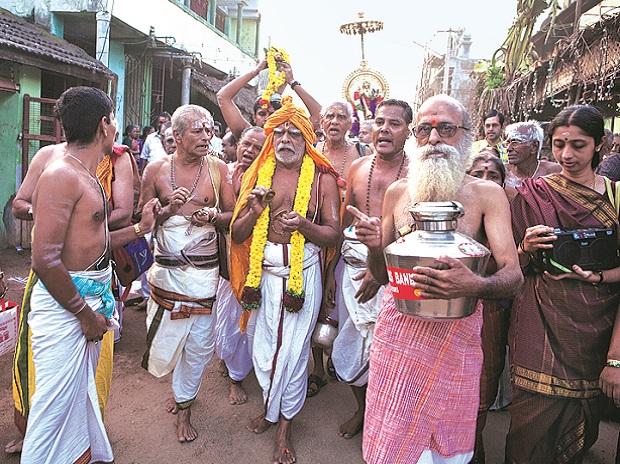
In the next year, efforts were made by musical stalwarts to observe the death anniversary regularly at Tiruvayyaru, and to use the occasion as an opportunity for his followers to converge and interact with each other. In 1905, a lavish ceremony, complete with the feeding of the poor and worship at the memorial as per Vedic tenets, was celebrated. Brothers Tillaisthanam Narasimha Bhagavatar and Tillaisthanam Panju Bhagavatar were the main financiers and organisers of the aaradhana. By the next year, the brothers had fallen out with each other and from 1906, each began conducting a parallel Aradhana. Various musicians also aligned themselves with one or the other and two rival factions came into being. The group and Aradhana celebration conducted by Narasimha Bhagavatar came to be called the Periya Katchi or the senior party since he was the elder, and that of Panju Bhat became known as the Chinna Katchi. Gradually, a convention emerged whereby the Chinna Katchi’s celebrations began five days before the Aradhana and concluded on the Aradhana day, while the Periya Katchi’s celebration began on Aradhana day and continued for four days after that. Both groups organised music performances and the feeding of the poor and so the public was the real beneficiary during the nine days. At one point, both groups were united and did not allow women to perform during the Aradhana as in those days, the only women who sang or danced in public were the devadasi or temple performers. Another point in common between the two groups was that they did not permit nadaswaram performances.

In 1921, the aged and childless Bangalore Nagarathnamma, an ardent devotee of Tyaharaja decided to dedicate her life’s earnings to preserving Tyagaraja’s legacy and perpetuating his memory. In 1925, she began the construction of a temple enclosing the memorial and according to some sources, she purchased the land on which the grave stood, whereas according to other sources, her construction was illegal, but tolerated by local residents due to its pious intentions. Nagarathnamma also had an idol of Tyagaraja sculpted and installed in front of the memorial. The consecration of the temple took place in early 1926. The two rival groups, while not interfering with all this, refused to let Nagarathnamma perform her music, or even Harikatha, within the temple which she herself had had constructed. Undeterred, Nagarathnammal began a third front which conducted its music programs at the rear of the shrine. This third event featured many women artists, and perhaps for that very reason, it began eating into the public popularity of the events hosted by the two Katchis. She also filed suits in the local courts demanding the prevention of the Katchis from entering the temple, claiming that it belonged to her by right. She lost the case, but the hours of worship were laid down by the courts, dividing the Aradhana day equally between the two Katchis and her group. Matters continued this way till 1940 when the groups united and it was in 1941 that the Aradhana as we know was first conducted and the choral rendition of the five songs was made an integral feature of the Aradhana. A huge complex is now under construction at Thiruvaiyaru at this site to accommodate the large audience that comes to the concert in ever-increasing numbers every year.

World Cancer Day

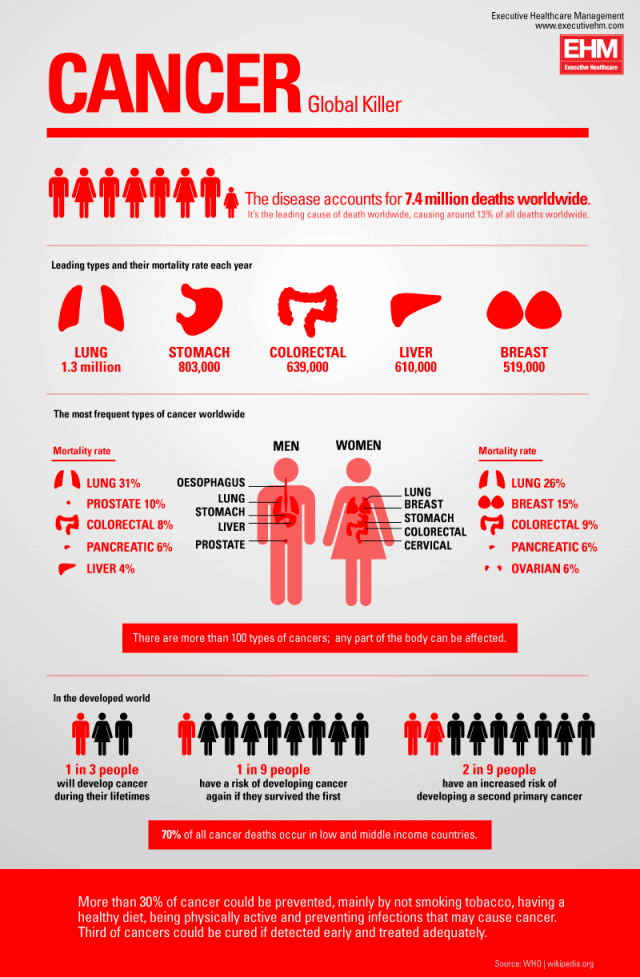
Tomorrow is World Cancer Day, an international observance that takes place every year. The day is observed to raise awareness of cancer and to encourage its prevention, detection, and treatment. The day is organised by the Union for International Cancer Control or UICC to support the goals of the World Cancer Declaration, written in 2008. The primary goal of World Cancer Day is to increase awareness about the disease and significantly reduce illness and death caused by cancer as well as an opportunity to rally the international community to end the injustice of preventable suffering from cancer. This can include things like promoting healthy lifestyles, increasing access to cancer screenings and treatments, and investing in cancer research. The day is observed by the United Nations.

World Cancer Day was established on 4 February 2000 at the World Cancer Summit Against Cancer for the New Millennium, held in Paris. The Charter of Paris Against Cancer, which was created to promote research, prevent cancer, and improve patient services, also included an article establishing the anniversary of the document’s official signing as World Cancer Day. This was signed at the Summit by the then General Director of UNESCO, Kōichirō Matsuura, and then French President Jacques Chirac. World Cancer Day targets misinformation, raises awareness and reduces stigma.

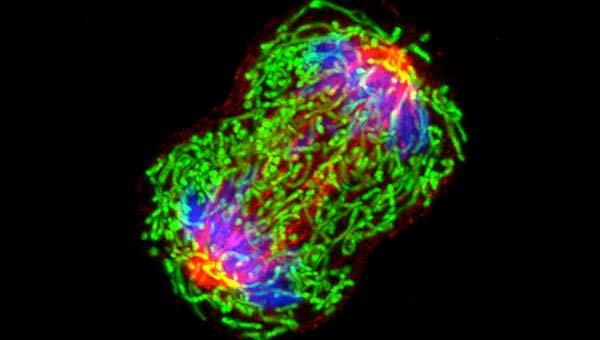
Cancer is a disease which occurs when changes in a group of normal cells within the body lead to uncontrolled, abnormal growth forming a lump called a tumour; this is true of all cancers except leukaemia which is cancer of the blood. If left untreated, tumours can grow and spread into the surrounding normal tissue, or to other parts of the body via the bloodstream and lymphatic systems, and can affect the digestive, nervous and circulatory systems or release hormones that may affect body function.

Cancer tumours can be divided into three groups: benign, malignant or precancerous. Benign tumours are not cancerous and rarely threaten life. They tend to grow quite slowly, do not spread to other parts of the body and are usually made up of cells quite similar to normal or healthy cells. They will only cause a problem if they grow very large, become uncomfortable or press on other organs. Malignant tumours are faster growing than benign tumours and can spread and destroy neighbouring tissue. Cells of malignant tumours can break off from the primary tumour and spread to other parts of the body through a process known as metastasis. Upon invading healthy tissue at the new site they continue to divide and grow. These secondary sites are known as metastases and the condition is referred to as metastatic cancer. Precancerous or premalignant describes the condition involving abnormal cells which may or are likely to develop into cancer.

There are five main types of cancer. Carcinoma cancers arise from the epithelial cells which are the lining of cells that help protect or enclose organs. Carcinomas may invade the surrounding tissues and organs and metastasise to the lymph nodes and other areas of the body. The most common forms of cancer in this group are breast, prostate, lung and colon cancer. A type of malignant tumour of the bone or soft tissue like fat, muscle, blood vessels, nerves and other connective tissues that support and surround organs, the most common forms of sarcoma are leiomyosarcoma, liposarcoma and osteosarcoma. Lymphoma and Myeloma are cancers that begin in the cells of the immune system. Lymphoma is a cancer of the lymphatic system, which runs all through the body, and can therefore occur anywhere. Myeloma or multiple myeloma starts in the plasma cells, a type of white blood cell that produces antibodies to help fight infection. This cancer can affect the cell’s ability to produce antibodies effectively. Leukaemia is a cancer of the white blood cells and bone marrow, the tissue that forms blood cells. There are several subtypes; common are lymphocytic leukaemia and chronic lymphocytic leukaemia. Brain and spinal cord cancers are known as central nervous system cancers. Some are benign while others can grow and spread.

Cancers can be caused by many different factors and, as with many other illnesses, most cancers are the result of exposure to several different causal factors. Around one-third of cancer cases can be prevented by reducing behavioural and dietary risks. Modifiable risk factors include the drinking of alcohol, being overweight or obese, diet and nutrition, physical activity, tobacco, ionising radiation, workplace hazards and infection. Non-modifiable risk factors include age, cancer-causing substances or carcinogens in the body, genetics, and one’s immune system.

With so many different types of cancers, the symptoms are varied and depend on where the disease is located. However, there are some key signs and symptoms to look out for, including unusual lumps or swelling, coughing, breathlessness or difficulty swallowing, changes in bowel habits, unexpected bleeding, unexplained weight loss, fatigue, pain or aches, new moles or changes to a mole, complications with urinating, unusual breast changes, appetite loss, a sore or ulcer that won’t heal, heartburn or indigestion and heavy night sweats.

Cancer is the second-leading cause of death worldwide with 10 million people dying from it every year, which is more than the deaths because of HIV/AIDS, malaria and tuberculosis combined. By 2030, experts project cancer deaths to rise to 13 million. More than 40% of cancer-related death could be preventable as they are linked to modifiable risk factors. At least one-third of all deaths related to cancer could be prevented through routine screening, and early detection and treatment. 70% of cancer deaths occur in low-to-middle-income countries and millions of lives could be saved each year by implementing resource-appropriate strategies for prevention, early detection and treatment. The total annual economic cost of cancer is estimated at US$1.16 trillion.

The theme for the years 2022-2024 is Close the care gap which focuses on eliminating the difference in access to cancer care services faced by populations of various groups of country income, age, gender, ethnicity etc. The World Cancer Day theme is a multi-year campaign that means more exposure and engagement, more opportunities to build global awareness and ultimately more impact. In 2022, the first year of the Close the Care Gap campaign was all about understanding and recognising the inequities in cancer care around the globe. This was the year to question the status quo and help reduce stigma; to listen to the perspectives of the people living with cancer and their communities and let those lived experiences guide our thoughts and actions. This year is all about uniting voices and taking action. These actions can take countless forms, from motivating neighbours to provide transport to cancer treatment for a fellow resident or ensuring that healthy and affordable food options are offered at the local school. In 2024, the last year of the campaign will bring attention to a higher level by raising voices to engage leaders and become lifelong advocates fully equipped to push for lasting change.

In recent years, cities have begun to support the day by lighting up important landmarks in orange and blue. In 2019, 55 landmarks in 37 cities participated in the landmark lighting initiative and at least 60 governments officially observe World Cancer Day. The event invites everyone to take action, make a pledge and support the cancer movement. By doing this, it aims to reduce the number of premature deaths from cancer and improve the quality of life for cancer patients around the world.

Short Story: Home is Where the Heart is

Vatsala took one last look around the house. Every room, every corner had loads of memories and she wanted to savour each one of them before she left. She knew she will not return to this house and wanted to fill her head, heart and soul with the very essence of the house. She had entered this home as a blushing bride more than half a century back and now, it was time to leave the place where she had given birth to her children, brought them up and gotten them married. She could see her children as babies and then as adults and then her children’s children, her grandchildren laughing and playing in the house.

Hurry up Amma, otherwise we will miss the flight” This was from her son Arun, her firstborn who had come down from his important job in London to help her and Vasu, her husband move to a retirement community. Vasu’s fall a few months back had cemented the arguments the couple had with their children, Arun and daughter, Aruna who lived in Houston in the United States of America.

Giving one last look at the nook that housed her Gods and Goddesses, Vatsala shook her head and left, locking the door. She passed the keys to her neighbour and best friend, Shilpa and after asking her to look after her house left without a backward glance.

By the end of a tiring day, Vatsala and Vasu, helped by Arun, finally reached Rose Garden, their new home in the southern city of Coimbatore. Too tired to do anything or even look around, Vatsala soon got into bed and fell into a deep, but tired sleep.

The next morning was busy. Their things from their home were to arrive and aided by her husband and son, Vatsala tried to make this flat as welcoming as her own home. The couple also completed all formalities and medical procedures required to stay in the retirement community.

A couple of days later, Arun left for London, after ensuring his parents were settled in their new home. Slowly, Vatsala and Vasu started integrating themselves into the complex and their residents. Every once in a while, Vatsala would look back and think of her house and start to feel sad again. But she would pull herself up for Vasu. The retirement community was not too big, it had around 100 couples like them and most importantly most of the residents were similar to them so that made things easier in getting adjusted to the community and make friends.

Over the next year, Vatsala and Vasu started enjoying life at Rose Garden. They made friends, started taking classes that were offered including group exercise classes, and meditation classes and most importantly started spending more time with each other. Now that they were free from the tasks that take up daily mundane activities, they had time to sit down with each other, really talk and learn about the other that they had not known even after being together for more than 50 years.

Soon, it was the first anniversary at Rose Garden and during a party at the community to celebrate this, Vatsala and Vasu were surrounded by new friends, who in a year became as close as her friends back home. Their children, Arun and Aruna were also there with their families, their grandchildren cheering at this new version of paati and tatha, who were so much more fun to be around. A surprise was Vatsala’s best friend from back home, Shilpa who was pleasantly surprised to see the change in her friend and also bummed that Vatsala now had new best friends. “I am going to buy a flat here soon, Vatsu”, Shilpa explained. “I am going to work on Sumeet and we will join you within the next six months, you just wait and watch!

Surrounded by family and friends, both old and new, Vatsala was suddenly reminded of the old saying, “Home is where the heart is”. She realised she had not thought of her old home for months now and when she did, it was tinted with the soft glow of nostalgia and not with the profound sadness she had in the initial months.

Yes, definitely, this is home now and this is where my heart is in the golden years of my life, surrounded by family and dear friends”, mused Vatsala as she was pulled forward by her grandchildren to cut the cake brought specially for the occasion.

Quiet Quitting: Good or Bad?

In 2022, we all heard millennials speak of quiet quitting. So what exactly is this phenomenon sweeping the world? A phenomenon that spread on TikTok, quiet quitting refers to doing the minimum requirements of one’s job and putting in no more time, effort, or enthusiasm than is necessary. As such, it is something of a misnomer, since the worker doesn’t leave their position and continues to collect a salary. In some places, soft quitting is used interchangeably with quiet quitting.

A 2022 Gallup survey suggested that at least half of the U.S. workforce, particularly those under 35, where this percentage is higher consists of quiet quitters, but these numbers are questioned and even if quiet quitting is a new trend or simply a trendy new name for worker dissatisfaction. In September 2022, a Harvard Business Review article observed that quiet quitters continue to fulfil their primary responsibilities, but they’re less willing to engage in activities known as citizenship behaviours like not staying late, showing up early, or attending non-mandatory meetings.

Beyond the workplace, the term quiet quitting is now being applied to nonwork aspects of people’s lives, such as marriages and relationships. The hashtag #QuietQuitting has now racked up more than 17 million views on TikTok and articles in print and online media worldwide have used the term and the noise has spread to Twitter, LinkedIn and other social media sites.

Adult Gen Zers are big influencers on social media and about 60% say they post content they hope will change the world, according to the 2022 Edelman Trust Barometer. Those aged 18-26 are the most worried about security, health, finances, social connections and keeping up with change, the Edelman survey of 36,000 people found. But workforce studies on the changing world of work support the rise of quiet quitting – and suggest it’s more than just a social media hashtag.

Quiet quitting is a way of dealing with burnout according to organisational behaviour experts. Burnout is a big risk in the workplace, especially amongst younger Gen Z professionals aged in their 20s, research shows. A survey of 30,000 workers by Microsoft showed 54% of Gen Z workers are considering quitting their job. In its 2021 Global Risks Report, the World Economic Forum ranks youth disillusionment as eighth of 10 immediate risks. Findings include deteriorating mental health since the start of the pandemic, leaving 80% of young people worldwide vulnerable to depression, anxiety and disappointment.

COVID-19 has changed the world of work – and how seriously we take it. Twenty-something Gen Z workers, in particular, may have joined the world of work during the pandemic with all of its dislocating effects – especially remote working. This generation has also come of age amidst rising activism. More people are quitting 9 to 5 jobs to start their businesses or try non-traditional work like temporary work, gig or part-time roles. It also shows some are quitting to take a break or care for family, as remote working has removed boundaries for working or living overseas. Gen Z workers aged 18-24 years most value flexibility and meaningful work, while Millennials and Gen Xers aged between about 25 and 45 years are largely the ones trying self-employment and new types of work. Experts say the passion economy where people do more of what they love has heralded a new era of side hustles, in everything from craft to campaigning.

Does quiet quitting just affect young people? Workforce data from major organizations including McKinsey & Company suggests 40% of the global workforce is looking to quit their jobs in the next three to six months. The average person will spend 90,000 hours at work over a lifetime, so it’s no surprise that job satisfaction, or dissatisfaction, can significantly affect your life according to McKinsey. The 2022 State of the Global Workplace report from Gallup shows only 21% of employees are engaged at work. Living for the weekend, watching the clock tick and work is just a paycheck are the mantras of most global workers, according to Gallup. People are realising that work is not life and that one’s worth as a person is not defined by their job.

The reaction of managers to the phenomenon has been mixed. Some have been tolerant, in part because the tight labour market of recent years makes replacing quiet quitters difficult, at least for the time being. Others have responded to quiet quitting by quietly, or loudly, firing employees whom they see as slacking off. Quiet firing has become a buzz phrase in its own right, generally defined as making a job so unrewarding that the employee will feel compelled to resign.

Some experts have suggested that bosses should get tough on quiet quitting while others say they need to lighten up. Some experts advise managers to first examine their behaviour and check if this trend is a reflection of their leadership abilities rather than the person quiet quitting.

Quiet quitting may or may not be a bona fide trend or recent phenomenon. But it has called attention to what appears to be fairly widespread dissatisfaction that employers might need to address. Quiet quitting is not a life philosophy or policy proposal that needs logical scrutiny. It’s also not a political weapon to be wielded to prove how much more woke or conservative one is than everyone else. It’s both more incoherent and essential than all of that. Figuring out how work fits into a life well lived is hard, but it’s an evolution that has to happen. Quiet quitting is the messy starting gun of a new generation embarking on this challenge.

So what are your views on quiet quitting? I know it’s been around and many of us are also guilty of quiet quitting at some point or the other.

Festivals of India – Rongker

A major spring and harvest festival in northeast India, Rongker is celebrated by the Karbis who were earlier known as the Mikir and are indigenous to the state. The Karbis are a major important ethnic group of Assam in Northeast India, especially in the hill areas of Assam. The Karbis are the primary inhabitants of the Karbi Anglong district. They are also found in the North Kachar district, Kamrup, Nagaon, and Sonitpur districts of Assam. The Karbis are found in the states of Meghalaya, Arunachal, Manipur, and Nagaland.

The festival does have a specific time although it is usually observed at the beginning of the Karbi New year, Thang thang on February 5. Different villages may observe it at different times depending on their convenience. Rongker is celebrated as a Thanksgiving to God for peace, prosperity and a good harvest as well as asking for their assistance to protect them from any evil harm that may happen to the village. It is a post-harvest festival where the community comes together and celebrates with much pomp and gaiety.

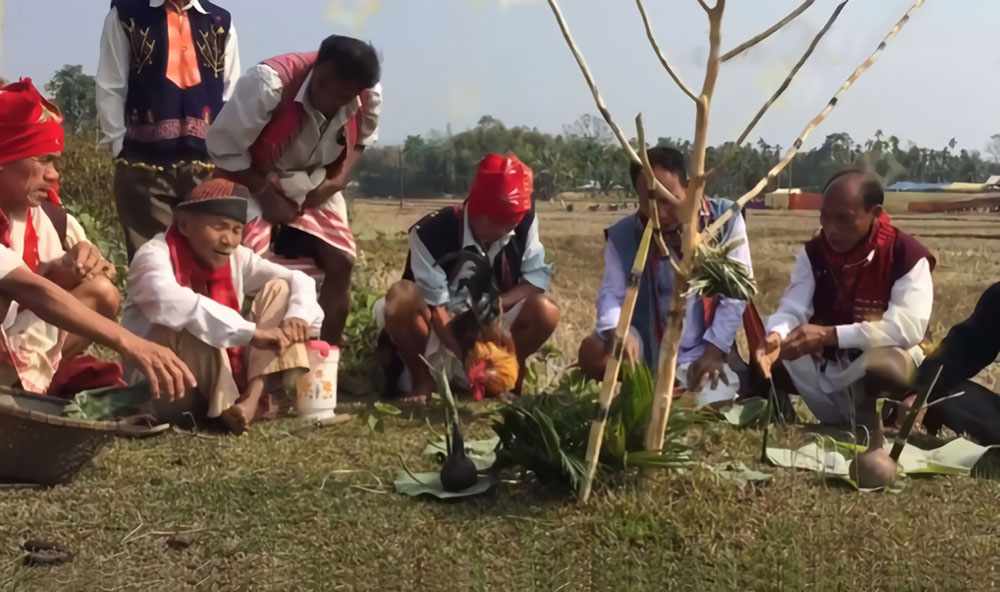
The Kurusar or the priest performs prayers and offers animal sacrifices to appease the Karbi deities and seek their blessings for the welfare of the village and its protection from evil entities and natural calamities. The community believes that non-observance of the ritual will invite misfortune upon the village and its inhabitants. It is a yearly religious festival of the Karbis which is performed by every village. Every Karbi village has an allotted place for performing Rongker and every year, villagers across the entire district form a committee to overlook the preparation for Rongker puja. The festival lasts for three days with all villagers contributing in cash and kind as well as donations collected from neighbouring villages to meet the expenses of the rituals.

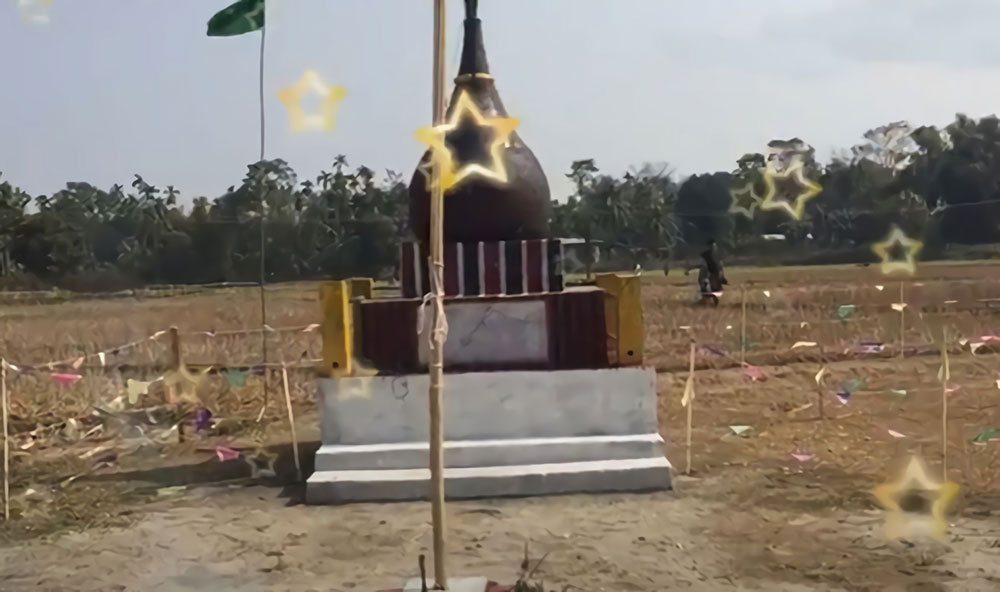
10 earthen altars against all the deities are installed on the eastern side of the site where the festival is to be held. They are constructed in a row heading in the south-north direction and named after the deities. The shape of altars is made in such a manner that the respective Gods can rest there comfortably. Although 12 deities are worshipped, only 10 altars are set up. A gourd with a tapering mouth full of the first-made rice beer is placed on the altars in the name of the respective deities and other than that, nothing else is placed on the altars. However, two small branches of bamboo are erected on the altar of Ningding Sarpo, a few branches of Basil and a few bamboo sticks are erected on the altar of Murti and a branch of Fongrong, a kind of tree used for worshipping is placed on the altar of Arlok.

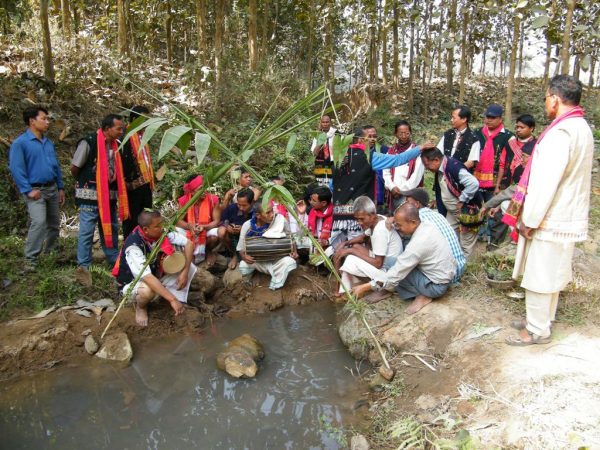
The festival is divided into four major parts. During Sadi, all the deities are invited. In Karkli, the deities are worshipped in two ways – Kibo-Kaba, offering meals to the deities and Koia-abida, which is the offering of areca-nut and betel leaves to the deities. All the menfolk take part in the festival and gather in the particular site in the morning with all items required to worship. The main task is performed by the Kurusar, the main priest, assisted by some other religious specialists, the village headman, an official of the Karbi Kingdom, the youth leader of the village, and a few elderly villagers well-versed in worshipping the deities. It is not mandatory to take bath before performing the rituals but they must be purified by sprinkling water with the leaves of the sacred basil. All the sacrifices are made in the names of the deities except for the deity Bamun, who is vegetarian. Then the thek-kere, the religious specialists predict the future of the village at the heart and intestine of the sacrificed animals. At the end of the ritual, a feast is organised. Rongphu-Rongling-Kangthin is also called the Ajo-Rongker and is performed on the night of the second day. Here, the evil spirits are driven out from the lower to the upper part of the village through dancing. An altar is made at the end of the village road and a chicken is sacrificed in the name of Ajo-Angtarpi. Langhe Rongker is the concluding part of the festival observed on the third day of the festival. It is performed near a ghat by making an altar and sacrificing a cock in the name of Arnam-teke, the tiger god, to prevent tigers from attacking.

During this festival, some taboos are observed. The taboos include things like prohibiting husking, not allowing females to participate in the festival, no one is allowed to take part in any agricultural activities during the festival and none of the villagers is allowed to leave the village.

Traditional Dance performance like Ritnong chingdi, Nimso kerung, Hacha kekan, Chong kedam take place as well as displays of Indigenous games.

There is another kind of Rongker performed on a greater scale which is celebrated every five years and is called Wofong Rongker. Wofong Rongker is performed for the well-being of all the people of the villages that fall within a larger jurisdiction and each village is represented by the village headman and several male village elders and is celebrated for two days.