Sleep is often spoken about in absolutes. Eight hours. Early nights. No screens. Fixed routines. These rules circulate with the confidence of settled truth, yet they rarely account for the inconvenient reality that people are not built on identical internal clocks. What feels restorative for one person can feel punishing for another, even when both are following the same advice with equal sincerity.
Sleep chronotypes offer a more precise language for this mismatch. They describe the timing of our internal rhythms rather than the quantity of our sleep. They explain why some people think clearly at dawn while others only warm up after sunset, and why discipline alone cannot flatten these differences without cost.
This article does not argue for radical lifestyle redesign, nor does it romanticise any chronotype. Instead, it asks what the science reasonably supports, where popular narratives overreach, and how a better understanding of chronotypes can reduce friction between biological reality and daily expectation. The aim is not optimisation, but alignment.
What is a Chronotype?
A chronotype reflects how an individual’s circadian rhythm aligns with the 24-hour day. Circadian rhythms are internally generated cycles that regulate sleep and wakefulness, hormone release, body temperature, appetite, and aspects of mood and cognition. They are influenced by genetics, light exposure, age, and environment.
Chronotype is about timing, not virtue. It does not measure willpower, ambition, or seriousness. It does not predict success or failure. Nor does it remain fixed across a lifetime. Adolescents tend to shift later, older adults earlier. Illness, caregiving, travel, and work schedules can temporarily distort natural patterns.
What tends to remain stable is preference. Given freedom from alarms and obligations, most people gravitate back towards a familiar rhythm. That pull is the chronotype at work.
The persistent error is assuming that strong habits can permanently override this pull. Habits can compensate, sometimes impressively, but compensation is not the same as alignment. Over time, the body usually keeps score.
The Common Chronotypes
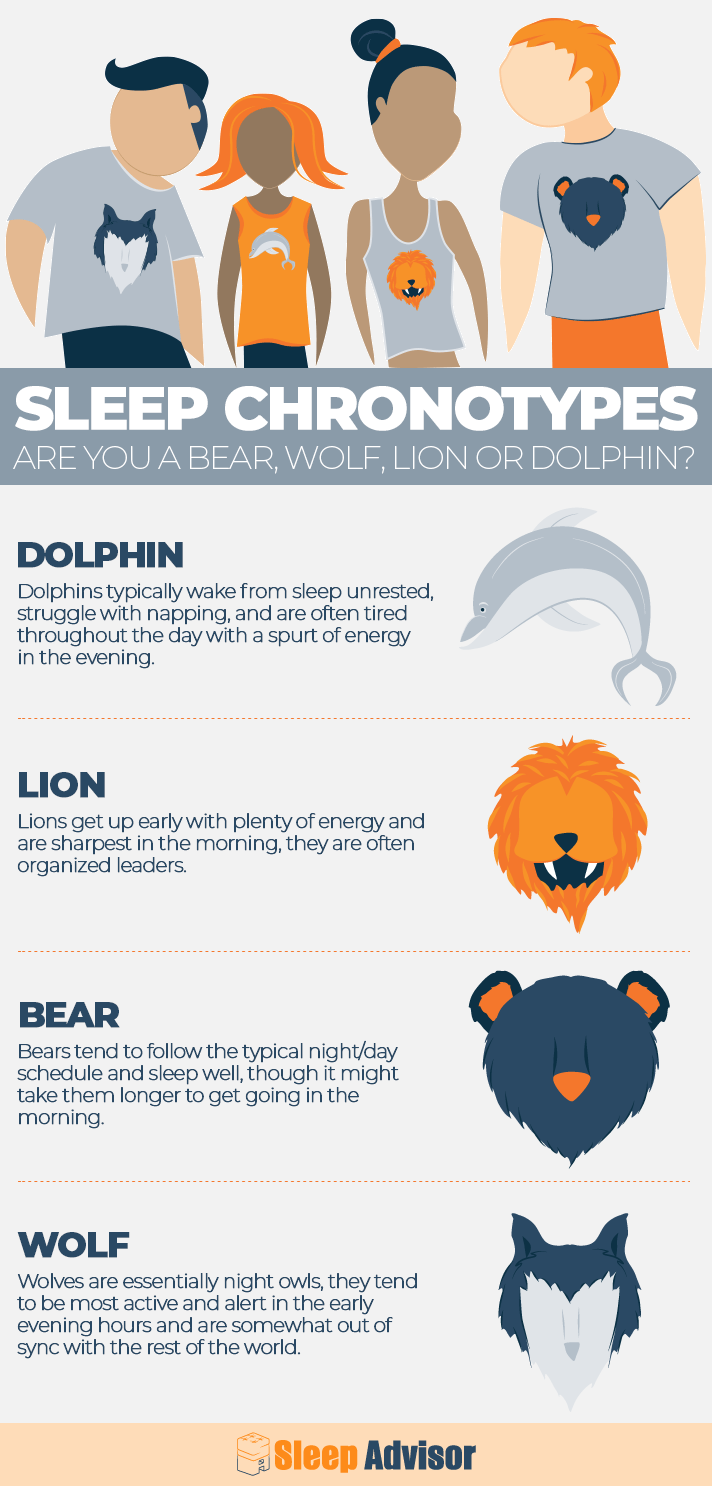
Popular writing often groups chronotypes into animal categories. These labels are simplifications, but they are useful as long as they are held lightly.
Morning Types
Morning-leaning individuals tend to wake easily, often before alarms. Mental clarity appears early, sometimes sharply. Energy declines steadily across the day, with evenings feeling quieter and less cognitively rewarding. Research often links morning preference with conscientiousness and emotional stability. This association is real but easily misinterpreted. When institutions reward early alertness, morning-oriented people receive positive feedback sooner and more consistently. Behaviour that is socially reinforced tends to consolidate. Morning types can underestimate the cost of this advantage. Because their rhythm aligns with dominant schedules, fatigue is often interpreted as a personal lapse rather than a biological limit. There is also a tendency to assume universality, to mistake one’s own rhythm for a reasonable baseline.
Evening Types
Evening-leaning individuals experience delayed alertness. Mornings are slow, sometimes cognitively dull, even after adequate sleep. Focus, creativity, and emotional fluency often peak later in the day. Later chronotypes are frequently associated with openness to experience and creative thinking. Again, correlation needs care. When peak functioning occurs outside standard hours, people often work alone or against the grain, which shapes thinking style and self-reliance. The structural disadvantage faced by evening types is well documented. Early school start times and fixed office hours create chronic sleep debt. This debt is often mistaken for poor self-management rather than misalignment. Over time, it can affect mood, metabolic health, and risk-taking behaviour, not because of personality, but because of sustained circadian strain.
Intermediate Types
Most people fall between the extremes. Their rhythms broadly track daylight, with alertness rising in the morning, peaking around midday, and declining in the evening. This apparent normality can obscure vulnerability. Because intermediate types can usually cope, they are less likely to interrogate sleep quality until something breaks. Their challenge is not misalignment but neglect.
Flexible or Variable Patterns
Some individuals show genuine adaptability. Their energy responds strongly to routine, light exposure, and context. Flexibility can be protective, but it can also mask gradual depletion. When internal signals are muted, external demands tend to fill the space.
Chronotype and Personality
Chronotypes do not create personality traits in isolation. They shape when traits are expressed and how they are perceived.
A person whose peak cognitive window occurs at 6 am is likely to appear decisive and organised in conventional settings. Another whose clarity emerges at 9 pm may appear disengaged in the morning and insightful in the evening. The same individual, placed in different temporal conditions, can be read in radically different ways.
Chronotype shapes exposure. Exposure shapes behaviour. Behaviour, repeated under reinforcement or constraint, begins to look like personality. This is not determinism, but adaptation.
The danger lies at both extremes. On one side is moral judgment, reading punctuality or lateness as character. On the other is identity rigidity, using chronotype as a fixed label that limits experimentation. Chronotype explains tendencies. It does not absolve effort, nor does it justify inflexibility.

Identifying your Chronotype without reducing it to a Quiz Result
Formal questionnaires exist, but careful observation is often more revealing. The most reliable approach begins with removing constraints rather than adding rules. Over a period of ten to fourteen days, prioritise sleep duration over sleep timing where possible. Go to bed when genuine sleepiness appears. Wake without an alarm if circumstances allow.
Track three elements daily:
- Natural wake time
- Periods of mental clarity and cognitive ease
- Points of sharp or persistent fatigue
Patterns tend to surface quickly when the body is not being forced into compliance. The hours that consistently resist adjustment often reveal more than those that cooperate. It is important to distinguish chronotype from exhaustion. Chronic sleep deprivation flattens rhythms and distorts perception. Rest first, observe second. Context matters. Caregivers, shift workers, and those managing illness may be operating far from their natural rhythm. Chronotype still exists, but it may be partially obscured by necessity.

Working with Chronotype without turning it into another Discipline
The value of understanding chronotype lies in reducing unnecessary friction, not in perfect alignment. Few people can design their lives around sleep. Most can make small, strategic adjustments.
Morning-Leaning Patterns
Early clarity can be protected by reserving cognitively demanding work for the first part of the day. This does not require starting work at dawn. It requires recognising when the mind is most responsive. Evening fatigue should be interpreted as information, not failure. Consistently pushing past it often erodes the very clarity that mornings provide. Short afternoon rest periods, when culturally acceptable, can restore a narrow secondary window of alertness without undermining night sleep, provided they remain brief and early.
Evening-Leaning Patterns
For later chronotypes, sleep length matters more than sleep timing. A well-rested late sleeper is cognitively different from a sleep-deprived early riser. Where schedules are fixed, mornings can be reframed. Low-stakes tasks, movement, or administrative work can act as a warm-up rather than proof of inefficiency. High-stakes or creative work, when possible, can be batched into later windows instead of being spread thinly across the day. Stimulants deserve scrutiny. They can mask misalignment without correcting it, prolonging strain.
Intermediate and Flexible Patterns
Regularity is protective. Small daily shifts accumulate quietly. Seasonal changes often affect energy more than expected. Adjusting consciously to daylight changes tends to be gentler than reacting after fatigue sets in. Assumed resilience should be questioned periodically. Ease is not immunity.

Common Misuses of Chronotype Thinking
One misuse is avoidance. Biology explains limits, but it does not remove responsibility. Growth often requires temporary discomfort. Another is overcorrection. Forcing alignment where it creates conflict can be as damaging as ignoring chronotype entirely.
There is also a social dimension rarely addressed. The ability to adjust work hours, protect sleep, or nap assumes a degree of autonomy. Advice that ignores these risks sounds abstract. The most meaningful implication of chronotype research may not be personal optimisation, but structural empathy in how institutions are designed.
What Chronotypes Ask Us to Notice
Chronotypes do not ask for reverence. They ask for acknowledgement. They remind us that bodies are patterned, not programmable. That uniform schedules reward some rhythms while taxing others. That much of what we label as discipline or laziness is often timing.
The more useful question is not which chronotype one belongs to, but where daily life demands constant override, and whether that cost is being honestly counted. Sleep is not a tool for productivity. It is a biological negotiation. Paying attention to it is not indulgence. It is simply accurate.