Muktinath Temple, Thorong La Pass, Nepal
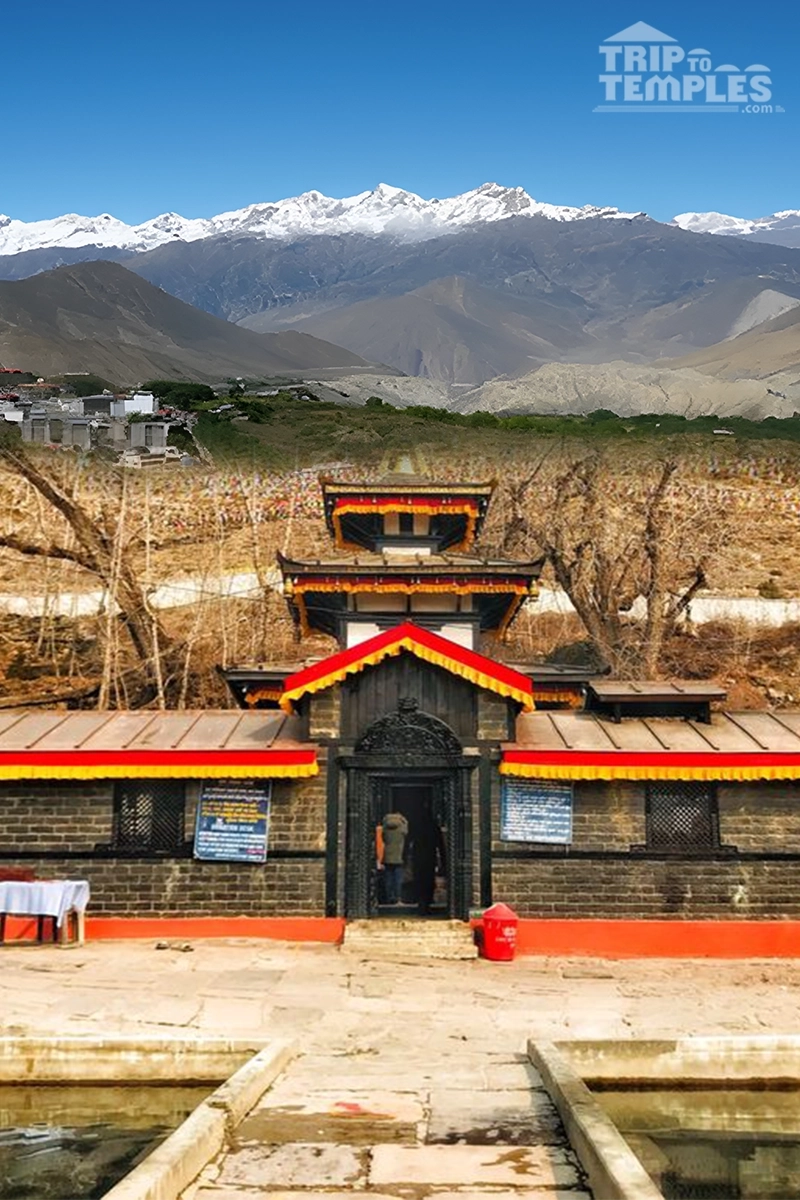
The Muktinath Temple, located in the Mustang District near the base of the Thorong La Pass, is one of the most sacred pilgrimage sites for Hindus and Buddhists alike. Known as a Mukti Kshetra or a place of liberation, this temple is revered as one of the 51 Shakti Peethas, where parts of Goddess Sati’s body are believed to have fallen.
At Muktinath, it is said that the forehead or Mukha of Sati fell. The temple is dedicated to Maa Gandaki Chandi, a form of Goddess Shakti, and Chakrapani Bhairava, a manifestation of Lord Shiva. Nestled at an altitude of 3,710 metres or 12,172 feet in the Himalayas, this sacred site blends natural beauty with profound spiritual significance.
The origins of Muktinath Temple are steeped in Hindu and Buddhist traditions. While its exact history is uncertain, records trace its existence back to the 1st century AD, making it one of the oldest religious sites in Nepal. The temple has been mentioned in various ancient scriptures and epics, including the Devi Bhagavata Purana and Skanda Purana. The great Indian philosopher Adi Shankaracharya is believed to have visited Muktinath in the 8th century and established it as an important pilgrimage site for Hindus. Over centuries, local rulers and devotees contributed to its preservation and prominence.
For Hindus, Muktinath is one of the eight Svayam Vyakta Kshetras or self-manifested shrines dedicated to Lord Vishnu and one of the 108 Divya Desams revered by Vaishnavites. For Buddhists, it is known as Chumig Gyatsa or a Hundred Waters and is considered a tantric site associated with Avalokitesvara or the Buddha. This dual religious significance makes Muktinath a unique symbol of harmony between two major faiths.
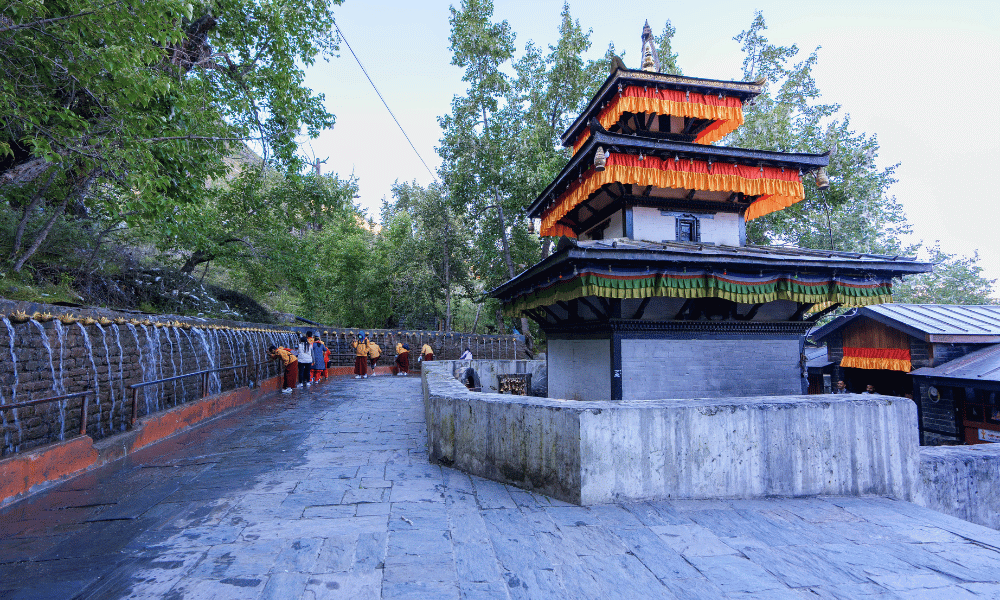
The central shrine houses a golden idol of Lord Vishnu in his self-manifested form, Svayam Vyakta. The idol exudes an aura of serenity and divinity. A separate shrine within the complex is dedicated to Maa Gandaki Chandi. Her presence symbolises the feminine cosmic energy that sanctifies this Shakti Peetha. Surrounding the temple are 108 bull-faced water spouts known as Mukti Dhara. Pilgrims believe that bathing under these icy streams washes away sins and grants liberation or moksha. A natural flame burns continuously near the temple over a water spring. Known as Jwala Mai, this flame symbolises Brahma, the creator and represents the eternal nature of life.
For Hindus, Muktinath represents salvation through Vishnu’s grace. For Buddhists, it is associated with Avalokitesvara or the Buddha and revered as one of their 24 tantric sites. Tibetan Buddhists believe that Muktinath houses 21 Taras or female deities and Dakinis or sky dancers, making it a sacred tantric site. Located along the Annapurna Circuit trekking route, the temple offers breathtaking views of snow-capped peaks, lush valleys, and serene landscapes.
Pilgrims take a ritualistic bath under the 108 water spouts surrounding the temple. This act symbolises purification from sins and spiritual renewal. Despite freezing temperatures, devotees believe that enduring this hardship brings them closer to liberation. Pilgrims perform circumambulation or parikrama around both the temple complex and nearby Lake Gandaki as an act of devotion. Special fire rituals or hawan are conducted near Jwala Mai during auspicious occasions. Devotees offer ghee, rice, and herbs into the sacred fire while chanting Vedic mantras.
Daily pujas are performed by priests who offer flowers, especially lotus, fruits, incense sticks, and Tulsi leaves. Morning Aarti begins at sunrise with hymns like Vishnu Sahasranama, while evening Aarti concludes with lighting oil lamps around the shrine. Maha Shivratri is celebrated with devotees observing fasts and performing night-long prayers dedicated to Chakrapani Bhairava aka Lord Shiva.
According to legend, Lord Vishnu sought refuge at Muktinath after being cursed by Sage Vrinda for deceiving her husband Jalandhar during battle. To atone for his actions, Vishnu turned into a Shaligram stone at this site until he attained liberation or moksha. The black ammonite fossils found in the Kali Gandaki River are considered sacred manifestations of Vishnu. Another legend states that Tulasi Devi’s body transformed into the Gandaki River after she cursed Vishnu for his deception. Her divine presence sanctifies both the river and Muktinath Temple. Local lore suggests that Jwala Mai represents Brahma’s creative energy that sustains life on Earth. Pilgrims believe that meditating near this flame grants wisdom and enlightenment.
Muktinath Temple offers visitors a unique spiritual experience rooted in mythology and devotion. Whether one seeks salvation or wishes to explore Nepal’s rich cultural heritage intertwined with natural beauty, visiting this ancient shrine will leave one feeling connected to the divine.
Mithila Temple, Mithila, Nepal
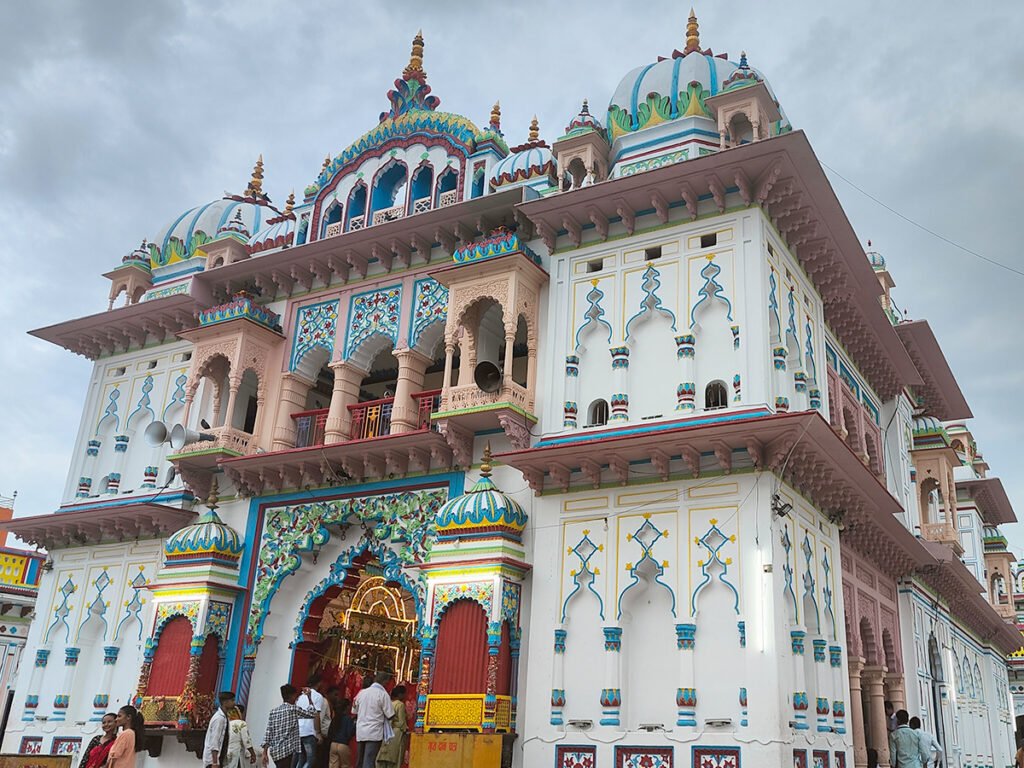
Believed to be where Sati’s left shoulder is said to have fallen, the Mithila Shaktipeeth is located in Janakpur in Nepal’s Mithila region. The temple is dedicated to Uma Devi, a form of Goddess Durga, and Lord Shiva is worshipped here as Lord Mahodar Bhairava.
The temple is located in Janakpur, the ancient capital of Mithila and the birthplace of Goddess Sita, the consort of Lord Rama. This connection to the Ramayana adds another layer of sanctity to the site. The temple has existed for centuries and has been mentioned in various scriptures such as the Devi Bhagavata Purana and Skanda Purana. Over time, it became an important centre for Shaktism and a significant pilgrimage destination for devotees from India and Nepal. The name Mithila is derived from King Mithi, who established this region as a kingdom during ancient times.
The main sanctum houses an idol of Maa Uma Devi made from black stone. She is depicted standing gracefully with multiple arms holding weapons, symbolising her power to protect devotees. Mahodar Bhairava’s idol is also present within the complex, signifying his role as the guardian deity. The temple features traditional Indian architecture with intricate carvings depicting scenes from Hindu mythology. Its walls are adorned with vibrant frescoes showcasing various aspects of Goddess Durga and other deities. The temple structure resembles a fort with four minaret-like towers and a grand entrance gate. Within the temple complex lies an ancient shrine known as Sona Mai Mandir, dedicated to an older form of Devi worshipped in Mithilachal, the larger Mithila region.
A sacred pond near the temple is believed to have purifying powers. Devotees often take ritualistic baths here before entering the temple premises. Janakpur’s association with Sita Devi adds another dimension to its sanctity. Many pilgrims visit both Mithila Shaktipeeth and Janaki Mandir, dedicated to Goddess Sita during their pilgrimage.
Daily pujas are performed by priests. Morning Aarti begins at sunrise with chanting of hymns like Durga Saptashati, while evening Aarti concludes with lighting oil lamps around the shrine. Navratri is celebrated twice a year with grand rituals and devotees observe fasting during these nine days to seek blessings for prosperity and protection. Durga Puja is also celebrated at Mithila Shaktipeeth with elaborate rituals conducted over nine days. The temple is adorned with flowers and lights during this festival.
An elaborate Abhishekam ritual involves bathing the idol with milk, honey, ghee, curd, and holy water while chanting Vedic mantras. Janaki Navami, celebrated in May, marks Sita Devi’s birth anniversary and attracts thousands of devotees who visit both Mithila Shaktipeeth and Janaki Mandir.
According to legend, King Janaka discovered an idol of Maa Uma Devi while plowing a field as part of a yajna ritual. This discovery marked the beginning of Devi worship in Mithila and established it as a sacred region. It is believed that the great Sanskrit poet Kalidasa received divine blessings at Mithila Shaktipeeth before composing his masterpieces such as Meghadoota and Raghuvamsha. Devotees believe that praying at Mithila Shaktipeeth cures ailments and grants peace of mind. Many pilgrims visit specifically seeking Maa Uma Devi’s intervention in resolving personal or familial issues.
The location of Mithila Shaktipeeth at Janakpur, which is the birthplace of Goddess Sita is a starting point to explore Nepal’s rich cultural heritage intertwined with Hindu mythology.
Guhyeshwari Temple, Kathmandu, Nepal
The Guhyeshwari Temple is located on the southern bank of the Bagmati River in Kathmandu. It is believed that the knees of Goddess Sati fell at this site, sanctifying it as a Shakti Peetha. The temple is dedicated to Guhyekali, a form of Goddess Shakti, and Lord Kapali Bhairava, a manifestation of Lord Shiva. Nestled amidst the vibrant Kathmandu Valley and just a kilometre away from the famous Pashupatinath Temple, Guhyeshwari Temple is both a spiritual sanctuary and an architectural marvel.
The temple’s name is derived from two Sanskrit words: Guhya which means secret or hidden, and Ishwari which means a goddess, symbolising the goddess’s mystical and esoteric nature. The temple has been a centre for Tantric practices since ancient times and is mentioned in sacred texts like the Kali Tantra, Chandi Tantra, and Shiva Tantra Rahasya. These scriptures highlight its importance as a place for attaining spiritual enlightenment through Tantric rituals.
Historically, the temple was constructed during the rule of King Shanker Dev of the Lichhavi period with assistance from Narasingha Thakur, a noted Tantric practitioner. It was later renovated in 1654 by King Pratap Malla under the guidance of Lambakarna Bhatta, another renowned Tantric scholar. The temple has since been preserved as a vital site for Hindu worship.
The central sanctum houses a sacred water jar or kalasha that represents Maa Guhyekali instead of a traditional idol. The kalasha is adorned with silver and gold coatings and rests on a stone foundation that covers an underground natural water spring. Vapours emanating from the edges of this foundation are believed to symbolise divine energy. The temple features traditional Newari architecture with a four-tiered pagoda-style roof adorned with gilded nagas or serpents that protect the finial. Intricate wood carvings and metalwork embellish the structure, reflecting Nepalese craftsmanship.
The temple is considered one of the most powerful centres for Tantric practices. It is believed that practitioners can gain mastery over esoteric knowledge and spiritual powers by performing rituals here. Located just one kilometre from the Pashupatinath Temple, Guhyeshwari is often visited by pilgrims as part of their journey to honour both Lord Shiva and Goddess Shakti. Unlike other temples where deities are depicted in upright forms, Maa Guhyekali’s representation here is flat-headed and parallel to the ground, symbolising humility and hidden power.
Special Tantric rituals are conducted during auspicious nights like Amavasya to invoke Maa Guhyekali’s blessings for spiritual growth or supernatural powers. These rites involve offerings such as red cloth, vermilion, liquor, and meat—symbolic elements in Tantric worship. Navratri is celebrated with great fervour at Guhyeshwari Temple. Devotees observe fasting and participate in special prayers to honor Maa Guhyekali’s nurturing aspect. The temple becomes crowded during these nine days as pilgrims seek blessings for prosperity and protection. An annual fair, the Guhyeshwari Jatra held in November attracts thousands of devotees who gather for rituals, cultural performances, and community feasts. It is believed that couples who marry at Guhyeshwari Temple will remain soulmates for seven lifetimes. Special marriage ceremonies are conducted here upon request.
According to legend, Maa Guhyekali chose to manifest herself in a hidden form beneath the ground at this site to protect her devotees from negative forces. This explains why her representation here is flat-headed rather than upright. Ancient texts describe how sages like Narasingha Thakur attained mastery over Tantra by meditating at Guhyeshwari Temple. It is said that even today, practitioners experience heightened spiritual energy while performing rituals here. Devotees believe that praying at Guhyeshwari Temple cures ailments and grants peace of mind.
The Guhyeshwari Temple with its sacred kalash, tantric rituals and legends in the serene Kathmandu valley is a must-visit place for those who seek spiritual solace.













 Memories and Such