As young adults navigate the complexities of life, from university to the workplace, maintaining physical and mental fitness becomes increasingly important. The demands of academic responsibilities, job expectations, and social pressures can take a toll on both the body and mind.
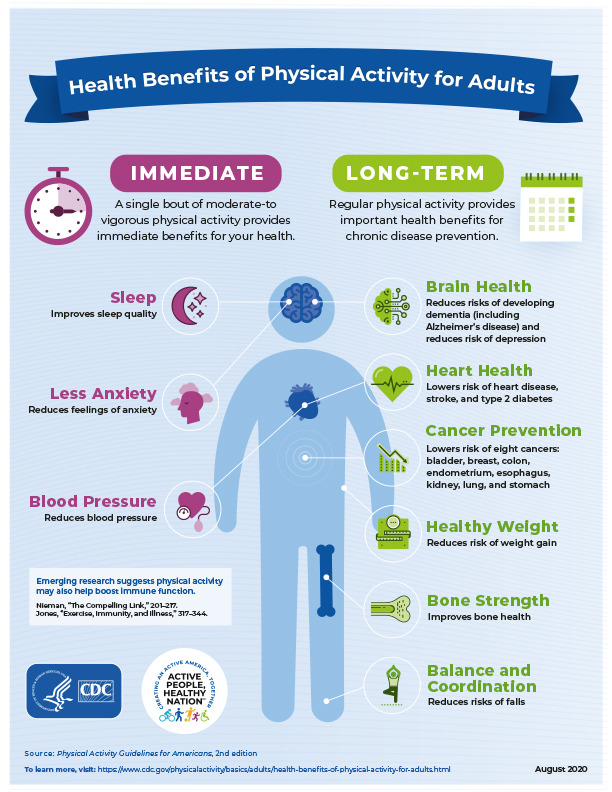
Before diving into specific strategies, it’s essential to understand why physical and mental fitness are crucial for young adults. Regular exercise helps prevent chronic diseases such as obesity, diabetes, and heart disease. It strengthens the cardiovascular system, boosts the immune system, and enhances overall health. Physical activity increases stamina and reduces fatigue, allowing you to tackle daily tasks with more vigour. Exercise releases endorphins, which are natural mood lifters. Regular physical activity can reduce symptoms of anxiety and depression. Regular exercise can help regulate sleep patterns, leading to more restful and restorative sleep. Achieving fitness goals, whether big or small, can enhance self-esteem and body image.
The benefits of mental fitness are many and varied. Practising self-care techniques help to manage stress levels, leading to a more balanced and peaceful life. Mental fitness practices, such as mindfulness and meditation, enhance cognitive function and improve attention span. Developing mental fitness helps individuals cope with challenges and setbacks more effectively, fostering a greater sense of control over life circumstances. A mentally fit individual is often more empathetic and better equipped to communicate effectively, leading to healthier relationships. Mental clarity and emotional well-being contribute to higher levels of productivity in both academic and professional settings.
By prioritising physical and mental fitness, young adults can cultivate a healthier, more fulfilling life.
So how can one stay physically fit? Creating a consistent exercise routine is essential for maintaining physical fitness. Some tips to help one get started include setting realistic goals like SMART goals, which stand for Specific, Measurable, Achievable, Relevant, and Time-bound goals. Finding activities one enjoys, whether it’s dancing, swimming, hiking, or playing a sport. This will make it easier to stick to the routine. Incorporating different types of workouts prevents boredom and works different muscle groups. One can consider combining cardio, strength training, and flexibility exercises. Make exercises a priority. One should treat workouts like appointments and schedule them into one’s calendar to ensure one makes time for them.
Staying active doesn’t have to mean hitting the gym for an hour every day. Some ways to incorporate movement into the daily routine include choosing walking or biking over driving for short trips. This not only adds physical activity but also reduces one’s carbon footprint. Opt for stairs instead of elevators whenever possible. It’s a simple way to get the heart rate up. If one has a desk job or studies for long periods, one should take short breaks to stand up, stretch, or walk around. \
What one eats significantly impacts one’s physical fitness. Aim for a diet rich in fruits, vegetables, whole grains, lean proteins, and healthy fats. This ensures one gets a wide range of nutrients. Aim for at least eight 8-ounce glasses of water a day. Staying hydrated is crucial for overall health and can improve energy levels and cognitive function. Pay attention to hunger and fullness cues. Eating mindfully can help prevent overeating and promote a healthier relationship with food.
Sleep is a vital component of physical fitness. One should go to bed and wake up at the same time every day, even on weekends. This helps regulate the body’s internal clock. Make the bedroom a quiet, dark, and comfortable space. Consider using blackout curtains and white noise machines if necessary. Avoid screens for at least an hour before bedtime. The blue light emitted by devices can interfere with the ability to fall asleep.
To stay mentally fit, here are some tips:
Practice Mindfulness and Meditation: Mindfulness and meditation are powerful tools for enhancing mental fitness. Start with just a few minutes of mindfulness or meditation each day. Gradually increase the duration as one becomes more comfortable. Use guided meditations using apps like Headspace, Insight Timer or Calm, which offer guided meditations for beginners. Incorporate mindfulness into daily activities and everyday tasks, such as eating or walking. Focus on the sensations and experiences in the moment.
Engage in Self-Care Activities: Self-care is essential for maintaining mental health. Create a self-care routine and schedule self-time by setting aside regular time for self-care activities, whether it’s reading, taking a bath, or engaging in a hobby. Explore new hobbies and try new creative activities, such as painting, writing, or playing a musical instrument that can provide a mental boost and help relieve stress.
Spend Time in Nature: Get outside as nature has a calming effect on the mind. Spend time outdoors, whether it’s hiking, gardening, or simply taking a walk in the park.
Build Strong Social Connections: Social support is vital for mental well-being. Make an effort to stay in touch with friends and family. Regular communication can help strengthen bonds and provide emotional support. Consider joining clubs, sports teams, or interest groups to meet new people and build connections. Volunteering not only helps others but also provides a sense of purpose and fulfilment. One can look for local organisations or causes that resonate with themselves.
Manage Stress Effectively: Stress management is crucial for maintaining mental fitness. Identify stressors by keeping a journal to identify situations or activities that cause stress. Understanding one’s triggers can help one develop coping strategies. Practice relaxation techniques and incorporate deep breathing exercises into one’s daily routine. Inhale deeply through the nose, hold for a few seconds, and exhale slowly through the mouth. Progressive muscle relaxation is a technique that involves the tensing and relaxing of different muscle groups to release tension and promote relaxation.
Set Boundaries: Learn to say no and avoid overcommitting oneself. Setting boundaries protects one’s time and energy, allowing for adequate rest and self-care.
Seek Professional Help When Needed: If one is struggling with mental health issues, don’t hesitate to seek help from a professional. Consider speaking with a therapist or counsellor who can provide support and guidance in navigating challenges. Look for support groups in the community or online. Sharing experiences with others who understand can be incredibly beneficial. If necessary, consult a healthcare professional about medication options for managing mental health conditions.
Staying physically and mentally fit is essential for young adults as they navigate the challenges of life. By prioritising exercise and self-care, one can cultivate a healthier, more balanced lifestyle. Remember that fitness is a journey, not a destination. It’s about finding what works and making gradual changes that lead to lasting habits.
Celebrate successes, no matter how small, and remember that taking care of the body and mind is one of the most important investments one can make for one’s future. By fostering both physical and mental fitness, one’ll be better equipped to handle life’s challenges, pursue their passions, and enjoy a fulfilling and vibrant life.
One of the most valuable skills a young adult can develop is effective time management. The ability to prioritise tasks, meet deadlines, and maintain a healthy work-life balance is crucial for success in both academic and professional settings. Time management is the process of organising and planning how to divide one’s time between different activities. Get it right, and one can end up working smarter, not harder, to get more done in less time – even when time is tight and pressures are high.
Why is time management so critical for young adults? In school, effective time management helps one balance coursework, exams, and extracurricular activities. In the workplace, strong time management skills can set one apart from peers and lead to more opportunities. When one has a clear plan and prioritises tasks, they’re less likely to feel overwhelmed by their workload.
Good time management skills help one make better decisions by allowing one to focus on what’s truly important. By managing time effectively, one can create more space for personal activities and relationships.
Here are some practical strategies and hacks to help a young adult master this essential skill.
One of the most crucial aspects of time management is learning how to prioritise tasks effectively. Here are some techniques to help one do just that:
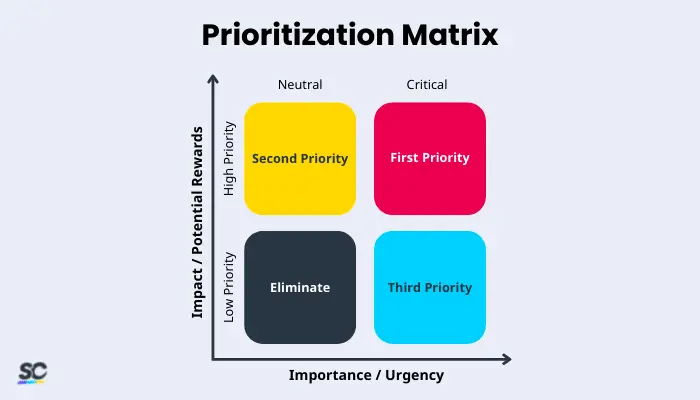
The Eisenhower Matrix: Named after President Dwight D. Eisenhower, this method helps categorise tasks based on their urgency and importance. For tasks that are urgent and important, they need to be done immediately. For the tasks that are important but not urgent, one should schedule them for later. For tasks that are urgent but not important, delegate these tasks if possible. And for those which are neither urgent nor important, they should be eliminated or done last. This technique is particularly useful for managing coursework deadlines and project milestones in both university and professional settings.
To implement this method, create a 2×2 grid with “Urgent” and “Not Urgent” on one axis, and “Important” and “Not Important” on the other. List all tasks and place them in the appropriate quadrant. Focus on the “Urgent and Important” tasks first, then move on to the “Important but Not Urgent” tasks.
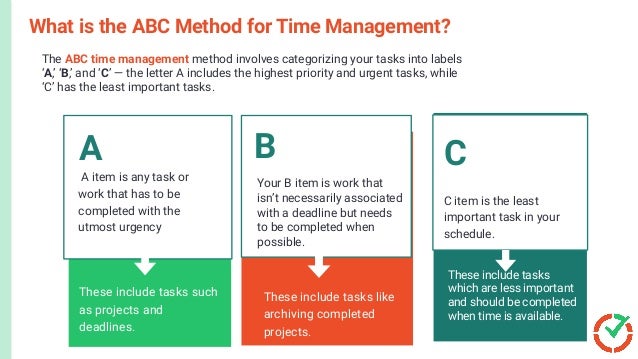
The ABC Method: This technique involves categorising tasks into three groups: A Tasks that are high-priority items that must be done today; B Tasks which are medium-priority items that should be done soon; and C Tasks that are low-priority items that can wait.
To use this method, make a list of all the tasks for the day or week. Assign each task an A, B, or C label. Tackle all A tasks before moving on to B tasks, and so on. This method can be particularly effective for managing daily to-do lists in a fast-paced work environment.
The 1-3-5 Rule: This simple rule helps to structure the daily to-do list. List out 1 big task, 3 medium tasks, and 5 small tasks. By following this rule, one ensures that one is making progress on significant projects while also completing smaller, necessary tasks. This can be especially helpful for balancing major assignments or work projects with smaller daily responsibilities.
Time blocking is a powerful technique that involves scheduling specific periods for different tasks or types of work. Here’s how to implement it effectively:
Review Tasks: Start by listing all the tasks that need to be completed.
Estimate Time Requirements: For each task, estimate how long it will take to complete.
Create Time Blocks: Divide the day into blocks of time, typically 30-90 minutes each.
Assign Tasks to Blocks: Schedule tasks into these time blocks, starting with the most important or challenging tasks during the peak productivity hours.
Include Buffer Time: Leave some space between blocks for unexpected tasks or breaks.
Stick to the Schedule: Try to adhere to the time blocks as much as possible, but be flexible when necessary.
Time blocking helps one focus on one task at a time, reducing the temptation to multitask and increasing overall productivity. This technique can be particularly useful for managing study time at university or structuring the workday in a professional setting.
In today’s digital age, numerous apps and tools can help one manage their time more effectively.
Project Management Tools: Apps like Trello, Asana, or Monday.com can help one organise tasks, collaborate with team members, and track deadlines. These tools are particularly useful for group projects in university or team-based work environments.
Time Tracking Apps: Tools like RescueTime or Toggl can help one understand how they’re spending their time and identify areas for improvement. This can be eye-opening for students trying to optimise their study habits or young professionals looking to boost their productivity.
Calendar and Reminder Apps: Google Calendar, Microsoft Outlook, or Apple Calendar are essential for scheduling classes, and meetings, as well as setting reminders for deadlines. Integrating these tools into one’s daily routine can help one stay on top of their commitments.
Note-Taking and Task Management Apps: Evernote, Notion, or Todoist can help one keep track of tasks, ideas, and important information. These tools can be invaluable for organising lecture notes or managing work-related tasks.
Focus and Productivity Apps: Apps like Forest or Freedom can help one stay focused by blocking distracting websites or apps during study or work hours. These can be particularly helpful when one needs to concentrate on a challenging assignment or important project.
When choosing productivity tools, one should remember that the best app is the one one will use consistently. Start with one or two that address the biggest pain points and gradually incorporate others as needed.
The Two-Minute Rule, popularized by productivity consultant David Allen, states that if a task will take less than two minutes to complete, one should do it immediately rather than putting it off. This rule helps prevent small tasks from piling up and becoming overwhelming. It also gives one a sense of accomplishment throughout the day as one quickly knocks out these minor tasks.
Examples of two-minute tasks might include responding to a quick email, filing a document, making a brief phone call, updating a to-do list etc. By addressing these small tasks immediately, one frees up mental space and reduces the risk of forgetting important details. This can be particularly helpful for managing the many small responsibilities that come with a new job.
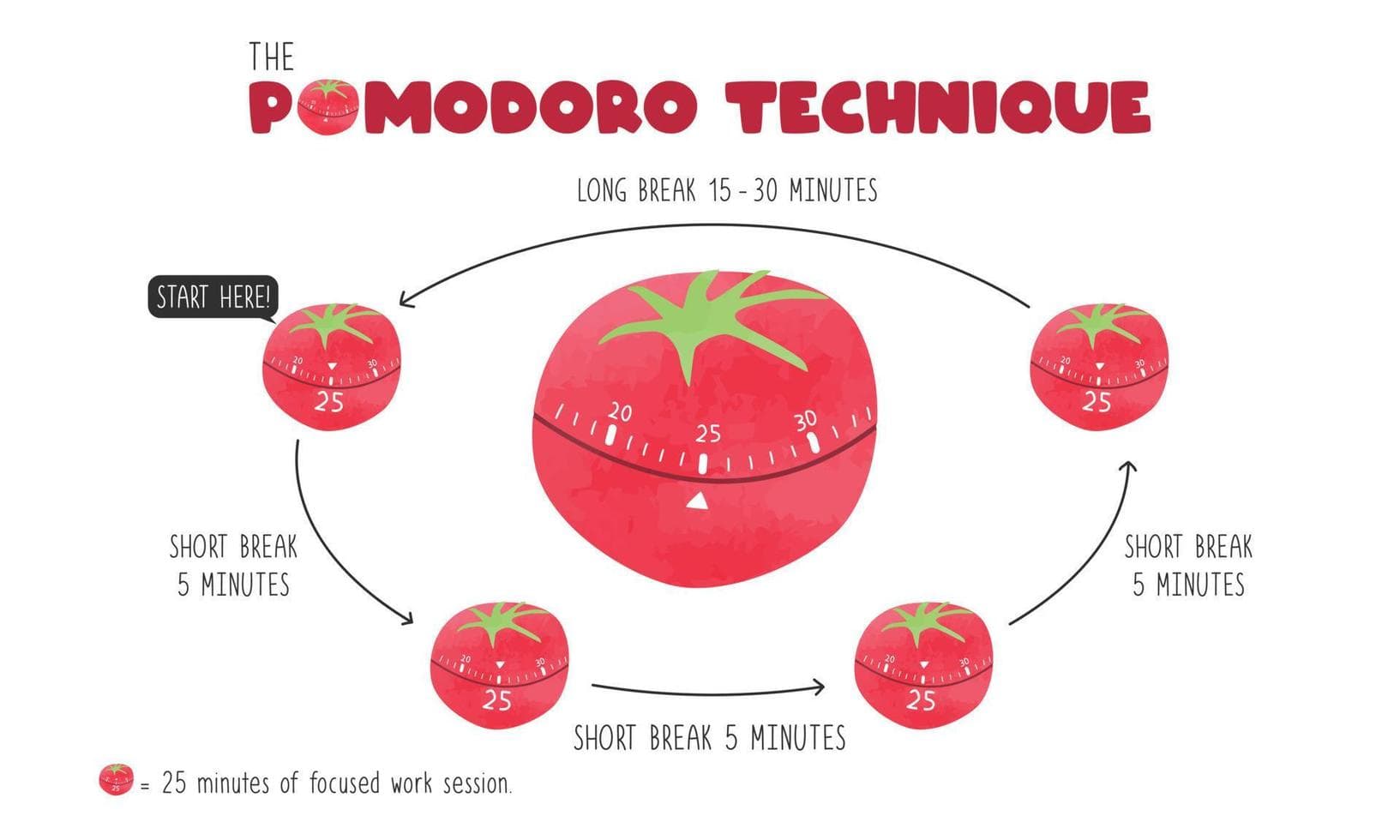
The Pomodoro Technique is a time management method developed by Francesco Cirillo in the late 1980s. It uses a timer to break work into intervals, traditionally 25 minutes in length, separated by short breaks. Here’s how it works – choose a task to work on, set a timer for 25 minutes or one Pomodoro and work on the task until the timer rings. Then take a short break of 5 minutes and after four Pomodoros, take a longer break of 15–30 minutes.
This technique helps one maintain focus and avoid burnout by incorporating regular breaks into their work routine. It’s particularly useful for tasks that require sustained concentration, such as studying for exams or working on complex projects.
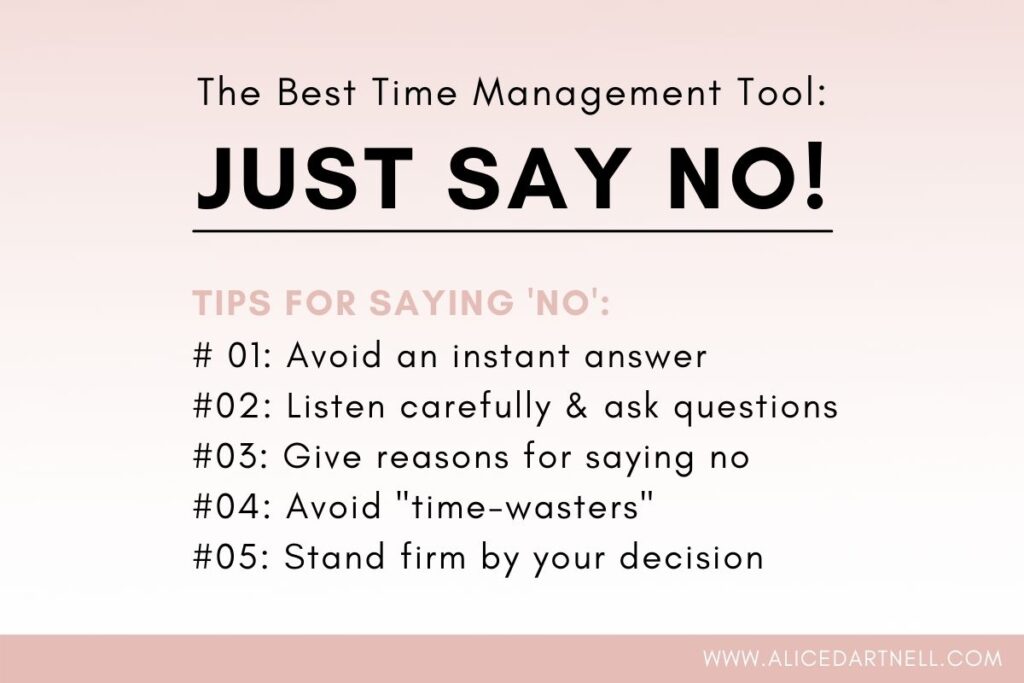
As a young adult, one may feel pressure to say “yes” to every opportunity or request that comes their way. However, learning to say “no” is crucial for effective time management. To do it gracefully, explain that you have a full workload and can’t take on additional tasks at the moment. If possible, suggest a later deadline or propose delegating the task to another team member. Thank the person for thinking of you, even as you decline. Once you’ve made your decision, stick to it. Avoid leaving the door open for negotiation if you truly can’t take on the task.
Remember, saying “no” to less important tasks allows one to say “yes” to opportunities that align with one’s goals and priorities. This skill is particularly important as one navigates the social aspects of university life or manages increasing responsibilities in one’s early career.
How one starts their day can significantly impact their productivity and time management. Developing a consistent morning routine can help one set a positive tone for the day, prioritise one’s most important tasks, and reduce decision fatigue.
As an example of an effective morning routine, wake up at a consistent time each day, engage in light exercise or stretching, practise mindfulness or meditation, review one’s goals and priorities for the day, and tackle one’s most important task first. This is often referred to as “eating the frog”.
One should experiment with different activities and timings to find a routine that works best for them. The key is consistency – stick with the routine for at least 30 days to make it a habit.
In today’s hyper-connected world, distractions are everywhere. Learning to minimise them is crucial for effective time management. Disable non-essential notifications on the phone and computer during study or work hours. Employ tools like StayFocusd or Cold Turkey to block distracting websites during focused work periods. If possible, designate a specific area for studying or working to help the brain associate that space with productivity. When working on a task, keep only the necessary tabs or applications open. Use noise-cancelling headphones as these can help block out ambient noise in busy university libraries or open office environments. Implement “Do Not Disturb” Hours and communicate to roommates or colleagues when one needs uninterrupted focus time.
Remember, it’s not about eliminating all distractions permanently, but rather creating periods of focused work throughout the day.
Hack #9: Utilise the 80/20 Rule aka the Pareto Principle
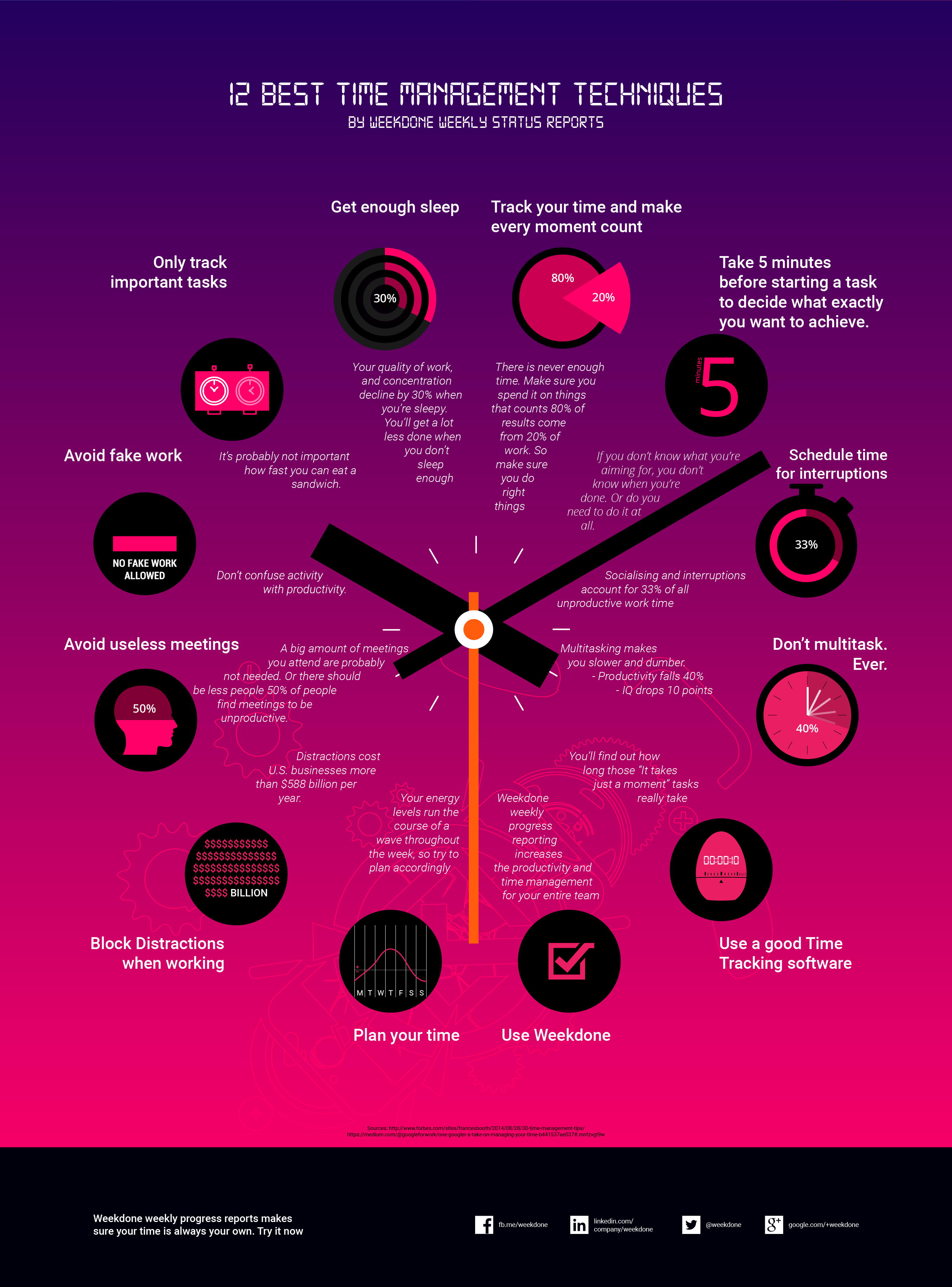
The Pareto Principle, also known as the 80/20 rule, suggests that roughly 80% of effects come from 20% of causes. In the context of time management, this means that 80% of one’s results likely come from 20% of their efforts.
To apply this principle, identify the tasks that contribute most significantly to the goals or results. Prioritise these high-impact tasks. Delegate or eliminate tasks that fall into the less productive 80% when possible.
By focusing on the most impactful tasks, one can achieve better results with less time and effort. This principle can be particularly useful for prioritising study topics before exams or focusing on key projects at work.
Effective time management is an ongoing process of refinement. One should set aside time regularly, weekly or monthly, to review one’s productivity and time management strategies.
Questions one should ask oneself include: what worked well this week/month? Where did one struggle with time management? Are there any tasks one can eliminate, delegate, or optimise? How can one improve one’s productivity in the coming week/month? This practice of regular reflection allows one to continually improve their time management skills and adapt to changing circumstances.
As one progresses in their studies or career, learning to delegate becomes increasingly important. Effective delegation not only frees up one’s time for higher-priority tasks but also helps develop one’s team members’ skills.
To delegate effectively, delegate tasks that others can do or learn from, not just the tasks one doesn’t want to do. Match tasks with team members’ skills and development goals. Communicate expectations, deadlines, and available resources. Empower the person to make decisions related to the task. Offer support without micromanaging. After the task is complete, offer constructive feedback to help the person improve.
Remember, effective delegation is a skill that takes practice. Start small and gradually increase the complexity of tasks one delegated as one and their team members become more comfortable with the process.
Task batching involves grouping similar tasks and completing them in one focused session. This technique can significantly boost one’s productivity by reducing the mental energy required to switch between different types of tasks. Some examples of batch tasks are responding to emails, making phone calls, writing reports or creating presentations, social media updates, or data entry or administrative tasks.
To implement batching, identify similar tasks. Schedule specific time blocks for these batched tasks. Focus solely on that type of task during the designated time block. Take a short break before moving on to a different type of task.
Batching can help one enter a state of flow more easily, leading to increased productivity and higher-quality work. This technique can be particularly useful for managing multiple course assignments or juggling various responsibilities in one’s early career.
This technique, inspired by a quote often attributed to Mark Twain, suggests tackling the most challenging or important task first thing in the morning. The idea is that if one “eats a live frog” first thing in the morning, they’ll have the satisfaction of knowing that it’s probably the worst thing they will do all day.
In practice, this means the task one is most likely to procrastinate on, but that will have the biggest positive impact on their day or week. One should tackle this task first thing in the morning when their energy and willpower are at their highest. Once one has completed their “frog,” the rest of the day will feel more manageable and productive.
This technique helps build momentum for the rest of the day and ensures that the most important work gets done, even if unexpected issues arise later. It can be particularly effective for tackling challenging coursework or important work projects.
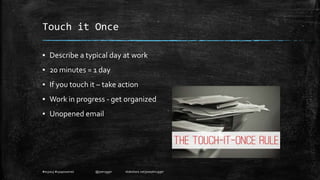
Hack #14: Implement the “Touch It Once” Rule
The “Touch It Once” rule is a simple but effective way to prevent small tasks from piling up and becoming overwhelming. The principle is straightforward: whenever one encounters a task that can be completed in five minutes or less, one should do it immediately rather than putting it off.
This rule can be applied to various situations, including responding to quick emails, filing documents, making short phone calls, or scheduling appointments. By addressing these small tasks immediately, one can prevent them from accumulating and taking up mental space. This approach can help one feel more organised and in control of their workload, whether they’re managing multiple course assignments or juggling various responsibilities in their early career.
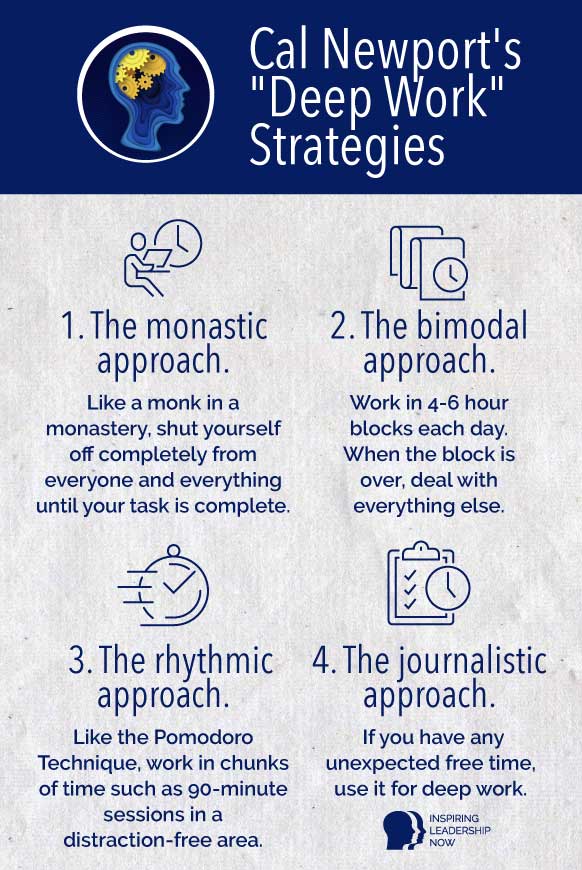
“Deep Work,” a term coined by author Cal Newport, refers to the ability to focus without distraction on a cognitively demanding task. In our increasingly distracted world, the ability to engage in deep work can set one apart and lead to higher-quality outputs.
To cultivate deep work, schedule deep work sessions by blocking out specific times in the calendar for focused, uninterrupted work. Create a distraction-free environment by finding a quiet space, turning off notifications, and communicating unavailability to roommates or colleagues. Start Small and begin with 30-minute deep work sessions and gradually increase the duration as focus improves. Use rituals and develop a routine that signals to the brain it’s time for deep work. This could be putting on noise-cancelling headphones, or brewing a specific type of tea. Practice regularly as like any skill, the ability to engage in deep work improves with consistent practice.
By incorporating deep work into one’s routine, one can tackle complex problems more effectively and produce higher-quality work in less time. This skill is particularly valuable for tackling challenging coursework or making significant progress on important work projects.
Mastering time management is a lifelong journey, not a destination. As a young adult navigating university life or entering the workforce, one has the advantage of developing these crucial skills early, setting a strong foundation for future success. Remember that everyone’s optimal time management strategy is unique – what works for one person may not work for another. The key is to experiment with different techniques, reflect on what works best for an individual, and continually refine the approach.
As one implements these time management hacks, keep in mind that the goal is not to fill every moment of the day with work. Rather, effective time management should create space for both professional productivity and personal fulfilment. By managing time wisely, one will not only excel in academic and professional pursuits but also have the freedom to pursue passions, maintain relationships, and enjoy life outside of work.
One can start small by implementing one or two of these hacks at a time. As they become habits, one can gradually incorporate more strategies into their routine. With patience, persistence, and a willingness to learn, one can develop a personalised time management system that propels one towards one’s goals and helps them thrive.
Remember, time is one’s most valuable resource. By learning to manage it effectively now, one is investing in a future of increased productivity, reduced stress, and greater overall success.
The next edition of my Adulting 101 series is about workplace toxicity. For those reading this series for the first time, this series talks about how young adults can adjust to being adults. As young adults enter the workforce, they often face many challenges, from adapting to new responsibilities to navigating complex office dynamics. One of the most significant hurdles many encounter is dealing with toxic workplaces and colleagues.
So what constitutes a toxic workplace? A toxic workplace is characterised by an unhealthy and unproductive environment that negatively impacts the well-being and performance of its employees. This can manifest in various ways. Bullying and harassment, including verbal or physical abuse, intimidation, or humiliation by colleagues or supervisors, lack of communication and transparency because of poor communication, unclear expectations in decision-making processes or excessive workloads, unrealistic deadlines, and constant pressure to perform. Other ways may take the form of unsupportive management including managers who are unresponsive, unsupportive, or dismissive of employee concerns, a culture of gossip, rumours, and backstabbing that creates tension and mistrust or unfair treatment, favouritism, or bias towards certain employees based on personal relationships or demographics. Failure to recognise and appreciate employees’ efforts and contributions, an unhealthy and cutthroat competition that fosters a culture of aggression and sabotage, poor work-life balance with expectations of long working hours, constant availability, and neglect of personal life and a lack of or limited opportunities for professional development, training, and career advancement.
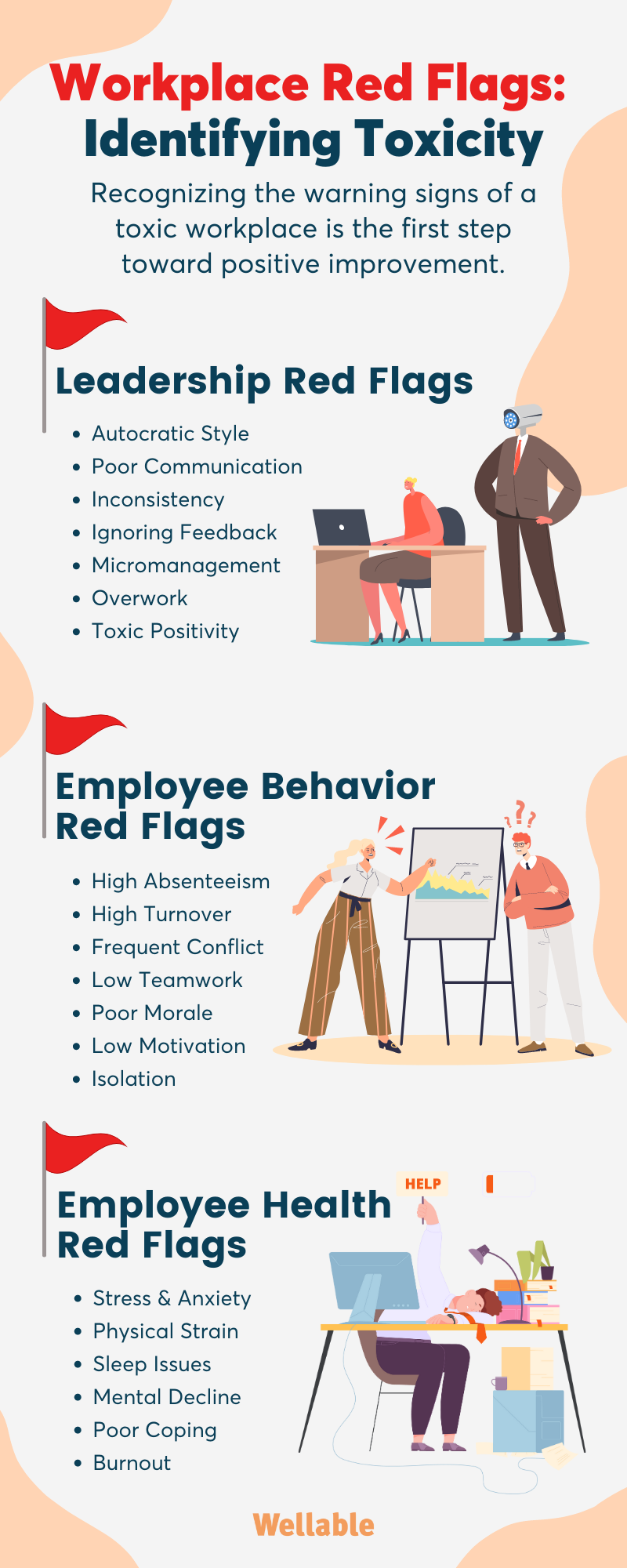
How does one read the signs and red flags of a toxic workplace? To identify a toxic workplace, it is essential to be aware of the signs and red flags.
High Turnover Rate: If there is a high rate of employee turnover, it may indicate underlying issues with the work environment.
Negative Office Gossip: If colleagues frequently discuss negative aspects of the workplace or each other, it can create a toxic atmosphere.
Unhappiness and Burnout: If employees appear unhappy, stressed, or burnt out, it may be a sign of a toxic work environment.
Lack of Open Communication: If management or colleagues are unresponsive or secretive, it can indicate a lack of transparency.
Unfair Treatment: If you witness or experience unfair treatment, such as favouritism or bias, it is a significant red flag.
So how does one go about protecting themselves if they find they are in a toxic work environment? If one finds oneself in a toxic workplace, it is crucial to take steps to protect their well-being and career. Here are some strategies to help one navigate these challenging environments.
Document Everything: Keep a record of incidents, including dates, times, and details of what happened. This can be useful in case one needs to report issues or seek support.
Set Boundaries: Establish clear boundaries with colleagues and management to maintain a healthy work-life balance and avoid over-committing.
Seek Support: Build a network of trusted colleagues, mentors, or friends who can offer emotional support and guidance.
Prioritise Self-Care: Make time for activities that promote physical and mental well-being, such as exercise, meditation, or hobbies.
Look for Resources: Familiarise oneself with company policies, HR procedures, and employee assistance programs that can provide support and guidance.
Consider Reporting Issues: If one experiences or witnesses harassment, bullying, or other serious issues, report them to HR or management.
Start Job Hunting: If the situation becomes unbearable, it may be time to explore new job opportunities.
Another aspect of a toxic workplace is having toxic colleagues. Dealing with toxic colleagues can be particularly challenging. So how can someone who is not very experienced recognise certain behaviours and characteristics? Here are some key indicators to look out for:
Negativity and Cynicism: Toxic colleagues often focus on problems rather than solutions and frequently badmouth their colleagues or the company.
Manipulation: They may make false statements, issue implicit threats, or exceed their competency limits.
Rudeness and Disrespect: Toxic colleagues can be confrontational, aggressive, and rude, creating an unbearable work environment.
Lack of Cooperation: They may resist collaboration and teamwork, making it difficult to work together effectively.
Self-Serving Behaviour: Toxic employees are often selfish, only willing to perform actions that benefit them directly, regardless of the impact on others.
Lack of Accountability: They rarely keep promises and refuse to take responsibility for their actions.
Gossiping and Trash-Talking: Spreading rumours and speaking negatively about others is a common trait of toxic colleagues.
Passive-Aggressive Behaviour: They may use sarcasm, ridicule, or negative body language to undermine others.
Micromanaging: Some toxic colleagues may be control freaks, constantly asserting control over others and imposing their opinions.
Unrealistic Expectations: They may set unrealistic goals or deadlines, leading to unnecessary stress and pressure on others.
Avoidance of Responsibility: Toxic colleagues often shift blame to others or make excuses for their own mistakes.
Negative Impact on Team Morale: If a colleague’s behaviour consistently affects the mood and productivity of the team, it may be a sign of toxicity.
By being aware of these signs, young adults can identify toxic colleagues early on and take steps to protect themselves and maintain a healthy work environment. Here are some tips to help one navigate these situations:
Stay Calm and Professional: Maintain a calm demeanour and professional attitude, even in the face of provocation.
Avoid Engaging: Refrain from engaging in gossip, arguments, or negative conversations that can escalate the situation.
Focus on One’s Work: One should concentrate on their tasks and responsibilities, and avoid getting distracted by toxic behaviour.
Set Clear Expectations: Communicate one’s expectations and boundaries clearly with colleagues to avoid misunderstandings.
Seek Mediation: If conflicts arise, consider seeking mediation from a supervisor or HR representative to resolve the issue.
Communication is key while handling toxic colleagues. Some effective communication strategies are:
Identify and Understand the Behaviour: Recognise the specific behaviours causing issues and keep track of incidents. This helps in addressing the root cause of the toxicity.
Private Discussion: Approach the toxic coworker in a private setting to discuss observations and concerns. Listen actively to their perspective without interruption, as it may uncover underlying personal or professional issues.
Set Clear Expectations and Boundaries: Communicate the expected behaviour and the consequences of not meeting those expectations. Ensure the coworker understands the impact of their actions on the team and the organisation. Set firm boundaries that define acceptable behaviour in the workplace.
Focus on Behaviour, not the Person: When addressing toxic behaviour, focus on specific actions rather than attacking the individual personally. This helps in maintaining a constructive and non-accusatory tone.
Use Specific Phrases to Defend Oneself: One should learn specific phrases to respond to toxic comments, such as acknowledging the comment without engaging or redirecting the conversation to a more productive topic.
Maintain Professionalism: Stay calm, patient, and professional in interactions with toxic coworkers. This helps in avoiding personal involvement in conflicts and maintaining a clear perspective on the situation.
Set Boundaries and Limit Interactions: Establish clear boundaries and limit interactions with toxic coworkers to professional matters. Avoid engaging in gossip or negative talk, and keep conversations brief and to the point.
Seek Support: If the situation becomes too challenging, seek help from supervisors, HR, or colleagues. This can provide additional guidance and support in managing the toxic coworker.
Young adults can build a support system at work to counteract toxic colleagues. They should build strong, positive relationships with colleagues and superiors who share their values and work ethic. This network can provide emotional support and help them navigate challenging situations. They should understand the motivations and behaviours of toxic colleagues. This can help them develop strategies to deal with them effectively and maintain a healthy work environment. They should also implement coping mechanisms such as focusing on their work, taking breaks, and practising self-care to maintain their mental well-being. They should minimise interactions with toxic colleagues and avoid engaging in gossip or conflicts. Instead, they should model a positive presence and maintain their integrity.
If necessary, one should involve their manager or HR in addressing toxic behaviour. They can help resolve issues and create a more positive work environment. One should also establish clear boundaries with colleagues and management to maintain a healthy work-life balance and avoid over-committing. Young adults should also practice self-care by taking care of their physical and mental health by eating well, exercising regularly, and getting enough sleep. This helps them stay resilient in the face of toxic behaviour. Lastly, one should always try and tap into a support network. Express gratitude to supportive colleagues and use them as a reality check to ensure one is not overreacting to toxic behaviour. They can also provide valuable advice and help one stay focused on one’s work. By building a strong support system, young adults can better navigate the challenges posed by toxic colleagues and maintain a healthy and productive work environment.
Navigating a toxic workplace and dealing with toxic colleagues can be a daunting task, especially for young adults entering the workforce. By recognising the signs and red flags of a toxic workplace, taking steps to protect yourself, and learning to navigate challenging situations, one can minimise the negative impact on their well-being and career. Remember, everyone deserves a healthy and supportive work environment, and it is essential to prioritise their well-being and take action to create a positive and productive workspace.
As GG & BB turn 21 later this year (where did all the time go?), I decided to start a new series aimed at young adults. This series will have articles on what adulting is all about. So what is adulting? Adulting is simply doing things that an adult does – work, make and save money, buy or rent a home, etc. Today’s topic, the first in the series, will talk about a very important, perhaps the most important, aspect of adulting – financial literacy.
Being financially literate means having the knowledge and skills to make informed decisions about managing money effectively. This critical life skill empowers one to achieve their financial goals, build wealth, and secure their future.
What is financial literacy? Financial literacy encompasses understanding concepts like budgeting, saving, investing, credit, debt management, and risk protection through insurance. It involves being able to read and analyse financial statements, calculate interest rates, and comprehend the time value of money. Ultimately, financial literacy equips one with the ability to make sound financial choices that align with their short-term and long-term objectives.
Developing financial literacy early in one’s career is crucial for several reasons. Understanding credit, interest rates, and the consequences of overspending can help one steer clear of accumulating unmanageable debt, which can hinder their financial progress. Unexpected expenses like medical bills or job loss can derail finances. Financial literacy teaches the importance of setting aside funds for emergencies and providing a safety net. Whether it’s buying a home, funding retirement, or achieving other financial milestones, financial literacy empowers an individual to make informed decisions about saving and investing for their future goals. Lastly, being financially literate means understanding the role of insurance in protecting assets and income from potential risks, such as accidents, illness, or natural disasters.
One of the fundamental principles of financial literacy is the importance of saving. Developing the habit of saving early can have a profound impact on long-term financial well-being. Here are some reasons why saving should be a priority:
Emergency fund: as mentioned earlier, an emergency fund can provide a financial cushion during unexpected events, preventing one from going into debt or depleting their long-term savings.
Retirement planning: compound interest is a powerful force that can help retirement savings grow exponentially over time. Starting to save for retirement early, even with small amounts, can make a significant difference in future financial security.
Achieving financial goals: Whether it’s buying a house, starting a business, or taking a dream vacation, saving consistently can help one achieve their financial goals more quickly.
Here are some tips for starting on a financial literacy journey:
Create a budget to track income and expenses to understand where the money is going. Budgeting is the foundation of effective money management.
Build an emergency fund and aim to save at least three to six months’ worth of living expenses for unexpected emergencies.
Educate oneself by reading books, attending workshops, or taking online courses to improve one’s financial knowledge. Understanding concepts like compound interest, credit scores, and investment strategies can empower one to make better financial decisions.
Automate savings by setting up automatic transfers from salary and other commonly used accounts to a dedicated savings account, making saving a habit and reducing the temptation to spend.
Seeking professional advice by working with a financial advisor, especially for more complex financial matters like retirement planning or investment strategies. One should look for fee-only advisors who act as fiduciaries, putting one’s interests first.
Once an emergency fund has been established and high-interest debts have been paid off, one should consider investing in diversified portfolios like mutual funds or exchange-traded funds (ETFs) to build long-term wealth.
The key things to focus on in building emergency funds are setting realistic goals, making saving automatic and consistent, cutting expenses where possible, and taking advantage of opportunities to direct extra money towards the emergency fund. Building the habit and making it a priority from a young age will pay off tremendously. To build an emergency fund, here are some effective ways to start:
Start small and set achievable goals: Begin by saving the first $1,000 (or an equivalent amount in your currency) as an initial emergency fund target. Set small, realistic goals like saving $20-$100 per month until that first $1,000 is reached. Having an achievable initial goal will help one stay motivated and build the habit of saving.
Set up automatic transfers: Automate savings by setting up recurring transfers from the main account to a dedicated high-yield savings account for the emergency fund. Treat these automatic transfers like a recurring bill that gets paid first before other expenses. Automating the process makes it easier to save consistently without having to think about it.
Cut back on unnecessary expenses: Identify and reduce discretionary spending on things like eating out, entertainment, subscriptions, etc. Cook at home, find free/low-cost hobbies, and cancel unused memberships. Redirect the money saved from cutting expenses into the emergency fund.
Use windfalls and pay raises: When one receives tax refunds, bonuses, gifted money or pay raises, allocate a portion towards the emergency fund. Don’t treat windfalls as extra spending money; instead, prioritise saving some of it.
Developing financial literacy is an ongoing journey, but the sooner you start, the better prepared you’ll be to navigate the financial challenges and opportunities that lie ahead. Embrace financial education, cultivate healthy money habits, and take control of your financial future from the very beginning of your career.


















 Memories and Such