In My Hands Today…

Excuse Me While I Disappear: Tales of Midlife Mayhem – Laurie Notaro

A laugh-out-loud spin on the realities, perks, opportunities, and inevitable courses of midlife.

Laurie Notaro has proved everyone she didn’t end up in rehab, prison, or cremated at a tender age. She just went gray.

At past fifty, every hair’s root is a symbol of knowledge (she knows how to use a landline), experience (she rode in a car with no seat belts), and superpowers (a gray-haired lady can get away with anything).

Though navigating midlife is initially upsetting―the cracking noises coming from her new old body, receiving regular junk mail from mortuaries―Laurie accepts it. And then some.

With unintentional abandon, she shoplifts a bag of russet potatoes. Heckles a rude driver from her beat-up Prius. And engages in epic trolling on Nextdoor.com. That, says Laurie, is the brilliance of growing older. With each passing day, you lose an equivalent amount of fear. And the #1 New York Times bestselling author has never been so fearlessly funny as she is in this empowering, candid, and enlightening memoir about living life on the other side of fifty.

In My Hands Today…

Code Dependent: Living in the Shadow of AI – Madhumita Murgia

A riveting story of what it means to be human in a world changed by artificial intelligence, revealing the perils and inequities of our growing reliance on automated decision-making

On the surface, a British poet, an UberEats courier in Pittsburgh, an Indian doctor, and a Chinese activist in exile have nothing in common. But they are in fact linked by a profound common experience—unexpected encounters with artificial intelligence. In Code Dependent , Murgia shows how automated systems are reshaping our lives all over the world, from technology that marks children as future criminals, to an app that is helping to give diagnoses to a remote tribal community.

AI has already infiltrated our day-to-day, through language-generating chatbots like ChatGPT and social media. But it’s also affecting us in more insidious ways. It touches everything from our interpersonal relationships, to our kids’ education, work, finances, public services, and even our human rights.

By highlighting the voices of ordinary people in places far removed from the cozy enclave of Silicon Valley, Code Dependent explores the impact of a set of powerful, flawed, and often-exploitative technologies on individuals, communities, and our wider society. Murgia exposes how AI can strip away our collective and individual sense of agency, and shatter our illusion of free will.

The ways in which algorithms and their effects are governed over the coming years will profoundly impact us all. Yet we can’t agree on a common path forward. We cannot decide what preferences and morals we want to encode in these entities or what controls we may want to impose on them. And thus, we are collectively relinquishing our moral authority to machines.

In Code Dependent , Murgia not only sheds light on this chilling phenomenon, but also charts a path of resistance. AI is already changing what it means to be human, in ways large and small, and Murgia reveals what could happen if we fail to reclaim our humanity.

In My Hands Today…

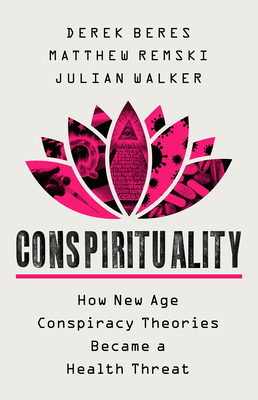
Conspirituality: How New Age Conspiracy Theories Became a Public Health Threat – Derek Beres, Matthew Remski, Julian Walker

Conspirituality takes a deep dive into the troubling phenomenon of influencers who have curdled New Age spirituality and wellness with the politics of paranoia—peddling vaccine misinformation, tales of child trafficking, and wild conspiracy theories.

In the early days of the COVID-19 pandemic, a disturbing social media trend a large number of yoga instructors and alt-health influencers were posting stories about a secretive global cabal bent on controlling the world’s population with a genocidal vaccine. Instagram feeds that had been serving up green smoothie recipes and Mary Oliver poems became firehoses of Fox News links, memes from 4chan, and prophecies of global transformation.

Since May 2020, Derek Beres, Matthew Remski and Julian Walker have used their Conspirituality podcast to expose countless facets of the intersection of alt-health practitioners with far-right conspiracy trolls. Now this expansive and revelatory book unpacks the follies, frauds, cons and cults that dominate the New Age and wellness spheres and betray the trust of people who seek genuine relief in this uncertain age.

Each of the three authors has witnessed firsthand the use of fear-based political agendas to manipulate the human desire for spiritual fulfillment. They throw a spotlight on the telltale signs of cult dynamics and expose how influencers have stoked suspicion of public health initiatives. And they show how charlatans and pseudo-doctors encourage their followers to oppose mainstream advice as a form of spiritual quest.

With analytical rigor and flashes of irreverent humor, Conspirituality offers an antidote to our times, helping readers recognize wellness grifts, engage with loved ones who’ve fallen under the influence, and counter lies and distortions with insight and empathy.

In My Hands Today…

The Age of Magical Overthinking: Notes on Modern Irrationality – Amanda Montell

Utilizing the linguistic insights of her “witty and brilliant” first book Wordslut and the sociological explorations of her breakout hit Cultish, Amanda Montell now turns her erudite eye to the inner workings of the human mind and its biases in her most personal and electrifying work yet.

“Magical thinking” can be broadly defined as the belief that one’s internal thoughts can affect unrelated events in the external Think of the conviction that one can manifest their way out of poverty, stave off cancer with positive vibes, thwart the apocalypse by learning to can their own peaches, or transform an unhealthy relationship to a glorious one with loyalty alone. In all its forms, magical thinking works in service of restoring agency amid chaos, but in The Age of Magical Overthinking, Montell argues that in the modern information age, our brain’s coping mechanisms have been overloaded, and our irrationality turned up to an eleven.

In a series of razor sharp, deeply funny chapters, Montell delves into a cornucopia of the cognitive biases that run rampant in our brains, from how the “Halo effect” cultivates worship (and hatred) of larger than life celebrities, to how the “Sunk Cost Fallacy” can keep us in detrimental relationships long after we’ve realized they’re not serving us. As she illuminates these concepts with her signature brilliance and wit, Montell’s prevailing message is one of hope, empathy, and ultimately forgiveness for our anxiety-addled human selves. If you have all but lost faith in our ability to reason, Montell aims to make some sense of the senseless. To crack open a window in our minds, and let a warm breeze in. To help quiet the cacophony for a while, or even hear a melody in it.

In My Hands Today…

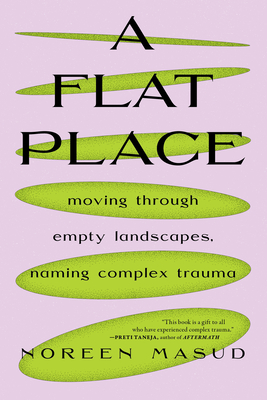
A Flat Place: Moving Through Empty Landscapes, Naming Complex Trauma – Noreen Masud

A surprising and lyrical journey—part memoir, part nature book—meditating on the meaning of “flatness” and its literary tradition to find ways to understand ourselves and our trauma in one of nature’s most undervalued wonders.

Does the concept of “flat” have an undeservedly bad rap? There are centuries’ worth of adoration for rolling hills and dramatic, mountainous landscapes. In contrast, flat landscapes are forgettable and seemingly unworthy of poetic or artistic attention.

Noreen Masud suffers from complex post-traumatic stress the product of a profoundly disrupted and unstable childhood. It flattens her emotions, blanks out parts of her memory, and colours her world with anxiety. Undertaking a pilgrimage around Britain’s flatlands, seeking solace and belonging, she weaves her impressions of the natural world with poetry, folklore and history, and with recollections of her own early life.

Masud’s British-Pakistani heritage makes her a partial outsider in these both coloniser and colonised, inheritor and dispossessed. Here violence lies beneath the fantasy of pastoral innocence, and histories of harm are interwoven with nature’s power to heal. Here, as in her own family history, are many stories that resist the telling. She pursues these paradoxes fearlessly across the flat, haunted spaces she loves, offering a startlingly strange, vivid and intimate account of the land beneath her feet.

Masud combines memoir, nature writing, and literary reflection to explore what can be drawn from these powerful places, and to understand her own experience of complex trauma and post-traumatic stress, as well as grief and loss. A Flat Place is a book that drives to the heart of what it means to experience place — bodily and psychologically — and the healing properties of literature and landscape.
Genres
Nonfiction
Memoir
Nature
Psychology
Mental Health
Biography