In My Hands Today…

Femina – Janina Ramírez

“I am the fiery life of divine substance, I blaze above the beauty of the fields, I shine in the waters, I burn in sun, moon and stars” – Hildegard of Bingen (1098 – 1179)

The middle ages are seen as a bloodthirsty time of Vikings, saints and kings: a patriarchal society which oppressed and excluded women. But when we dig a little deeper into the truth, we can see that the ‘dark’ ages were anything but.

Oxford and BBC historian Janina Ramirez has uncovered countless influential women’s names struck out of historical records, with the word FEMINA annotated beside them. As gatekeepers of the past ordered books to be burnt, artworks to be destroyed, and new versions of myths, legends and historical documents to be produced, our view of history has been manipulated.

Only now, through a careful examination of the artefacts, writings and possessions they left behind, are the influential and multifaceted lives of women emerging. Femina goes beyond the official records to uncover the true impact of women like Jadwiga, the only female King in Europe, Margery Kempe, who exploited her image and story to ensure her notoriety, and the Loftus Princess, whose existence gives us clues about the beginnings of Christianity in England. See the medieval world with fresh eyes and discover why these remarkable women were removed from our collective memories.
In My Hands Today…

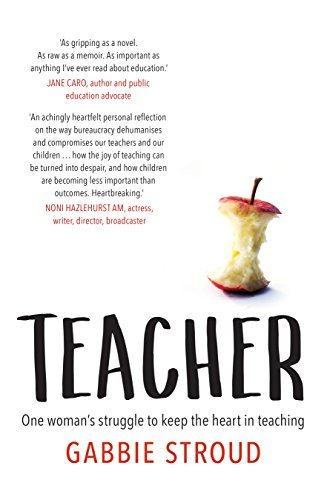
Teacher – Gabbie Stroud

Watching children learn is a beautiful and extraordinary experience. Their bodies transform, reflecting inner changes. Teeth fall out. Knees scab. Freckles multiply. Throughout the year they grow in endless ways and I can almost see their self-esteem rising, their confidence soaring, their small bodies now empowered. Given wings.

They fall in love with learning.

It is a kind of magic, a kind of loving, a kind of art.

It is teaching.

Just teaching.

Just what I do.

What I did.

Past tense.

In 2014, Gabrielle Stroud was a very dedicated teacher with over a decade of experience. Months later, she resigned in frustration and despair when she realised that the Naplan-test education model was stopping her from doing the very thing she was best teaching individual children according to their needs and talents. Her ground-breaking essay ‘Teaching Australia’ in the Feb 2016 Griffith Review outlined her experiences and provoked a huge response from former and current teachers around the world. That essay lifted the lid on a scandal that is yet to properly break – that our education system is unfair to our children and destroying their teachers.

In a powerful memoir inspired by her original essay, Gabrielle tells the full how she came to teaching, what makes a great teacher, what our kids need from their teachers, and what it was that finally broke her. A brilliant and heart-breaking memoir that cuts to the heart of a vital matter of national importance.

In My Hands Today…

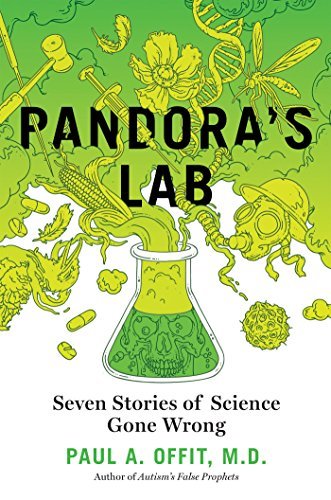
Pandora’s Lab: Seven Stories of Science Gone Wrong – Paul A. Offit


What happens when ideas presented as science lead us in the wrong direction?

History is filled with brilliant ideas that gave rise to disaster, and this book explores the most fascinating—and significant—missteps: from opium’s heyday as the pain reliever of choice to recognition of opioids as a major cause of death in the U.S.; from the rise of trans fats as the golden ingredient for tastier, cheaper food to the heart disease epidemic that followed; and from the cries to ban DDT for the sake of the environment to an epidemic-level rise in world malaria.

These are today’s sins of science—as deplorable as mistaken past ideas about advocating racial purity or using lobotomies as a cure for mental illness. These unwitting errors add up to seven lessons both cautionary and profound, narrated by renowned author and speaker Paul A. Offit. Offit uses these lessons to investigate how we can separate good science from bad, using some of today’s most controversial creations—e-cigarettes, GMOs, drug treatments for ADHD—as case studies. For every “Aha!” moment that should have been an “Oh no,” this book is an engrossing account of how science has been misused disastrously—and how we can learn to use its power for good.

In My Hands Today…

A Place For Everything: The Curious History of Alphabetical Order – Judith Flanders

In A Place for Everything, historian Judith Flanders draws our attention to both the neglected ubiquity of the alphabet and the long, complex history of its rise to prominence. For, while the order of the alphabet itself became fixed very soon after letters were first invented, their ability to sort and store and organize proved far less obvious.

To many of our forebears, the idea of of organising things by the random chance of the alphabet rather than by established systems of hierarchy or typology lay somewhere between unthinkable and disrespectful. The author fascinatingly lays out the gradual triumph of alphabetical order, from its possible earliest days as a sorting tool in the Great Library of Alexandria in the third century BCE, to its current decline in prominence in our digital age of Wikipedia and Google.

In My Hands Today…

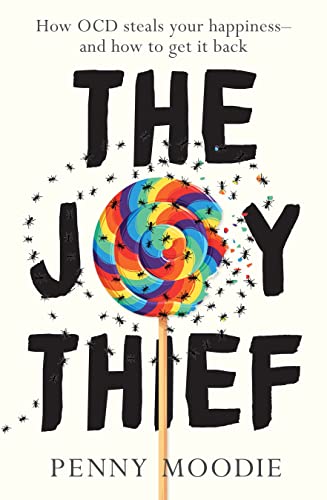
The Joy Thief: How OCD steals your happiness – and how to get it back – Penny Moodie

A personal and practical guide to navigating the complex world of obsessive-compulsive disorder (OCD).

When Penny Moodie hears people say that they’re ‘a bit OCD’ about cleaning or tidying, she can’t help but feel frustrated. It took her twenty-three years to be diagnosed with obsessive-compulsive disorder – a debilitating mental health condition involving intrusive thoughts and accompanying physical or mental compulsions – and the stigma and misunderstanding around OCD means this kind of delay is all too common.

Weaving her personal experience with the stories of other OCD sufferers, as well as the expertise of some of the world’s leading OCD doctors, psychologists and psychiatrists, Penny explores OCD’s symptoms, stigmas and treatments with raw honesty and zero judgement.

From childhood OCD, shame and medication to perinatal mental illness, relationship OCD and group therapy, this book provides an expansive and very personal insight into the complexities of the condition – and the life-changing impact that best-practice treatment can have.

An invaluable resource for those suffering from OCD, as well as for their families and loved ones, The Joy Thief shines some much-needed light and hope on a disorder that is too often minimised and misunderstood.’Generous, intimate and mind-opening. This book helps those living with OCD feel understood, and helps those who don’t to understand.