Travel Bucket List: Malaysia Part 23 – Perak Part 1

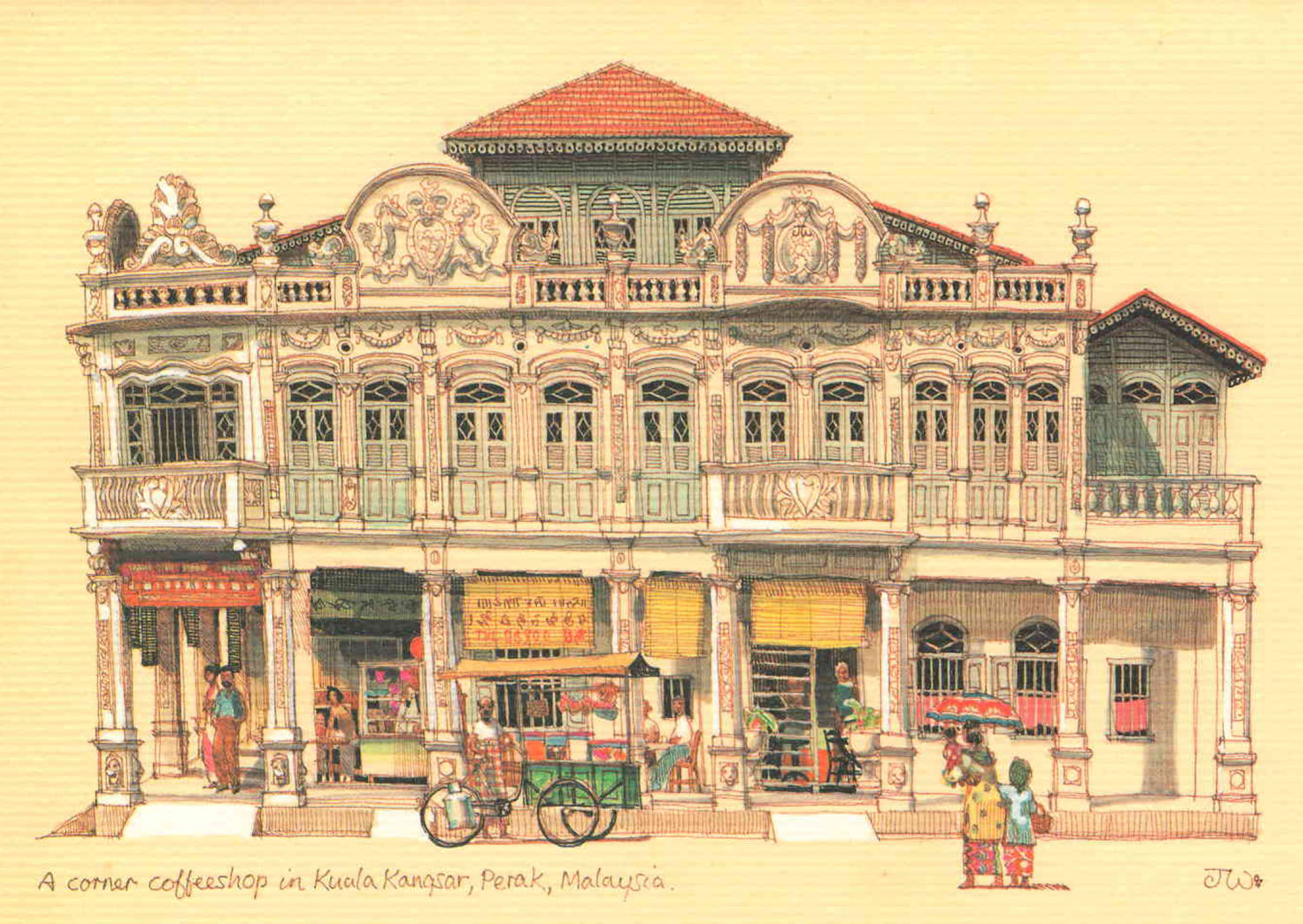
Located on Malaysia’s west coast, the state of Perak borders Kedah to the north, Penang to the northwest, Kelantan and Pahang to the east, and Selangor to the south. Thailand’s Yala and Narathiwat provinces both lie to the northeast. Perak’s capital city, Ipoh, was known historically for its tin-mining activities until the price of the metal dropped, severely affecting the state’s economy. The royal capital remains Kuala Kangsar, where the palace of the Sultan of Perak is located. The state has diverse tropical rainforests and an equatorial climate with the state’s mountain ranges belonging to the Titiwangsa Mountains, part of the larger Tenasserim Hills system that connects Myanmar, Thailand and Malaysia.

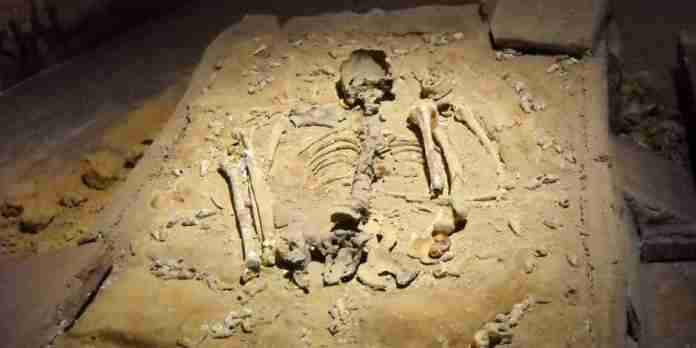
The discovery of an ancient skeleton in Perak supplied missing information on the migration of Homo sapiens from mainland Asia through Southeast Asia to the Australian continent. Known as Perak Man, the skeleton is dated at around 10,000 years old. An early Hindu or Buddhist kingdom, followed by several other minor kingdoms, existed before the arrival of Islam. By 1528, a Muslim sultanate began to emerge in Perak, out of the remnants of the Malaccan Sultanate. Although able to resist Siamese occupation for more than two hundred years, the Sultanate was partly controlled by the Sumatra-based Aceh Sultanate. With the arrival of the Dutch East India Company (VOC), and the VOC’s increasing conflicts with Aceh, Perak began to distance itself from Acehnese control. The presence of the English East India Company (EIC) in the nearby Straits Settlements of Penang provided additional protection for the state, with further Siamese attempts to conquer Perak thwarted by British expeditionary forces.
The Anglo-Dutch Treaty of 1824 was signed to prevent further conflict between the British and the Dutch which enabled the British to expand their control in the Malay Peninsula without interference from other foreign powers. The 1874 Pangkor Treaty provided for direct British intervention, with Perak appointing a British Resident. Following Perak’s subsequent absorption into the Federated Malay States (FMS), the British reformed administration of the sultanate through a new style of government, actively promoting a market-driven economy and maintaining law and order while combatting the slavery widely practised across Perak at the time.

The three-year Japanese occupation in World War II halted further progress. After the war, Perak became part of the temporary Malayan Union, before being absorbed into the Federation of Malaya. It gained full independence through the Federation, which subsequently became Malaysia on 16 September 1963.

Perak is ethnically, culturally, and linguistically diverse. The state is known for several traditional dances, including bubu, dabus, and labu sayong, the latter name also referring to Perak’s unique traditional pottery. The head of state is the Sultan of Perak, and the head of government is the Menteri Besar. Islam is the state religion, and Malay and English are recognised as the official languages of Perak. Perak’s economy is mainly based on services and manufacturing.

There are many theories about the origin of the name Perak. The most popular theory is silver, which is what Perak means in Malay and is associated with tin mining from the state’s large mineral deposits, reflecting Perak’s position as one of the world’s largest sources of tin. Some local historians have suggested that Perak was named after Malacca’s bendahara, Tun Perak. Other historians believe that the name Perak derives from the Malay phrase kilatan ikan dalam air or the glimmer of fish in water, which looks like silver. Perak has been translated into Arabic as Dār al-Riḍwān, or the abode of grace.

Bukit Bunuh and Kota Tampan are ancient lakeside sites, with the geology of Bukit Bunuh showing evidence of a meteoric impact. The 10,000-year-old skeleton known as Perak Man was found inside the Bukit Gunung Runtuh cave at Bukit Kepala Gajah. Ancient tools discovered in the area of Kota Tampan, including anvils, cores, debitage, and hammerstones, provide information on the migrations of Homo sapiens.

In 1959, a British artillery officer stationed at an inland army base during the Malayan Emergency discovered the Tambun rock art, identified by archaeologists as the largest rock art site in the Malay Peninsula. Most of the paintings are located high above the cave floor, at an elevation of 6–10 metres. Seashells and coral fragments scattered along the cave floor are evidence that the area was once underwater.

The significant numbers of statues of Hindu deities and of the Buddha found in Bidor, Kuala Selensing, Jalong, and Pengkalan Pegoh indicate that, before the arrival of Islam, the inhabitants of Perak were mainly Hindu or Buddhist. The influence of Indian culture and beliefs on society and values in the Malay Peninsula from early times is believed to have culminated in the semi-legendary Gangga Negara kingdom, which, according to the Malay Annals, fell under Siamese rule once upon a time before Raja Suran of Thailand sailed further south down the Malay Peninsula.

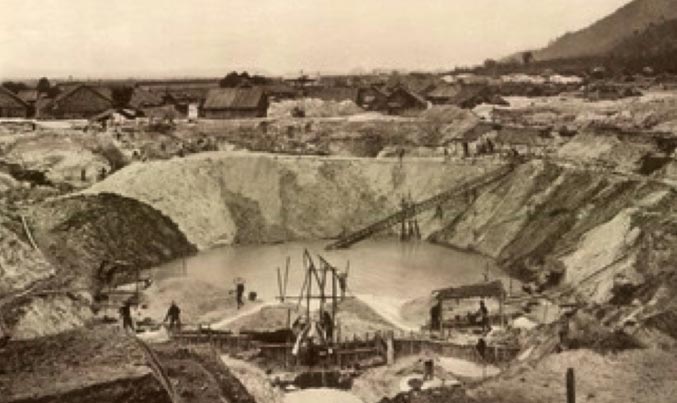
By the 15th century, a kingdom named Beruas had come into existence. Inscriptions found on early tombstones of the period show a clear Islamic influence, believed to have originated from the Sultanate of Malacca, the east coast of the Malay Peninsula, and the rural areas of the Perak River. With the spread of Islam, a sultanate subsequently emerged in Perak; the second-oldest Muslim kingdom in the Malay Peninsula after the neighbouring Kedah Sultanate. The Perak Sultanate was formed in the early 16th century on the banks of the Perak River by the eldest son of Mahmud Shah, the 8th Sultan of Malacca, who ascended to the throne as Muzaffar Shah I, the first sultan of Perak, after surviving the capture of Malacca by the Portuguese in 1511 and living quietly for a period in Siak on the island of Sumatra. Perak’s administration became more organised after the Sultanate was established. With the opening of Perak in the 16th century, the state became a source of tin ore and anyone was free to trade in the commodity, although the tin trade did not attract significant attention until the 1610s.

Throughout the 1570s, the Sultanate of Aceh subjected most parts of the Malay Peninsula to continual harassment. Sultan Mansur Shah I’s eldest son, Raja Alauddin Mansur Syah, married an Acehnese princess and subsequently became Sultan of Aceh. The Sultanate of Perak was left without a ruling monarch, and Perak nobles journeyed to Aceh in the same year to ask the new Sultan Alauddin for a successor, who sent his younger brother to become Perak’s third monarch. Sultan Ahmad Tajuddin Shah ruled Perak for seven years, maintaining the unbroken lineage of the Malacca dynasty. Although Perak did fall under the authority of the Acehnese Sultanate, it remained entirely independent of Siamese control for over two hundred years, from 1612. In 1620, the Acehnese sultanate invaded Perak and captured its sultan. After Sultan Sallehuddin Riayat Shah died without an heir in 1635, Aceh’s Sultan Iskandar Thani sent his relative, Raja Sulong, to become the new Perak Sultan Muzaffar Shah II. Aceh’s influence on Perak began to wane when the Dutch East India Company (VOC) arrived in the mid-17th century.

When Perak refused to enter into a contract with the VOC as its northern neighbours had done, a blockade of the Perak River halted the tin trade, causing suffering among Aceh’s merchants. In 1650, Aceh’s Sultana Taj ul-Alam ordered Perak to sign an agreement with the VOC, on condition that the tin trade would be conducted exclusively with Aceh’s merchants. By the following year, 1651, the VOC had secured a monopoly over the tin trade, setting up a store in Perak. Following long competition between Aceh and the VOC over Perak’s tin trade, on 15 December 1653, the two parties jointly signed a treaty with Perak granting the Dutch exclusive rights to tin extracted from mines located in the state.
The early 18th century started with 40 years of civil war where rival princes were bolstered by local chiefs, the Bugis and the Minang, all fighting for a share of tin revenues. The Bugis and several Perak chiefs were successful in ousting the Perak ruler, Sultan Muzaffar Riayat Shah III in 1743. The mid-18th century saw the rule of Sultan Muzaffar ruling inland Perak while the coastal region was ruled by Raja Iskandar, animosity grew between the two as Raja Iskandar was unable to reach the tin-bearing highlands while the sultan had restricted access to the strait. Reconciliation occurred later with Iskandar’s marriage to the sultan’s daughter. His accession in 1752 saw unprecedented peace in Perak, especially due to an alliance, which lasted until 1795 with the Dutch to protect Perak against external attacks. When repeated Burmese invasions resulted in the destruction and defeat of the Siamese Ayutthaya Kingdom in 1767 by the Burmese Konbaung dynasty, neighbouring Malay tributary states began to assert their independence from Siam. To further develop Perak’s tin mines, the Dutch administration suggested that its 17th Sultan, Alauddin Mansur Shah Iskandar Muda, should allow in Chinese miners.

The Fourth Anglo-Dutch War in 1780 adversely affected the tin trade in Perak, and many Chinese miners left. In a move which angered the Siamese court, neighbouring Kedah’s Sultan Abdullah Mukarram Shah then entered into an agreement with the English East India Company, ceding Penang Island to the British in 1786 in exchange for protection.

In 1818, the Dutch monopoly over the tin trade in Perak was renewed, with the signing of a new recognition treaty. The same year, when Perak refused to send a bunga mas tribute to the Siamese court, Rama II of Siam forced Kedah to attack Perak. Siam’s tributary Malay state, the Kingdom of Reman, then illegally operated tin mines in Klian Intan, angering the Sultan of Perak and provoking a dispute that escalated into civil war. Reman, aided by Siam, succeeded in controlling several inland districts. In 1821, Siam invaded and conquered the Sultanate of Kedah, angered by a breach of trust. Siam’s subsequent plan to extend its conquests to the southern territory of Perak[40][65][68] failed after Perak defeated the Siamese forces with the aid of mixed Bugis and Malay reinforcements from the Sultanate of Selangor. As an expression of gratitude to Selangor, Perak authorised Raja Hasan of Selangor to collect taxes and revenue in its territory. This power, however, was soon misused, causing conflict between the two sultanates.
In 1823, the Sultanates of Perak and Selangor signed a joint agreement to block the Dutch tin monopoly in their territories and the EIC policy shifted with the First Anglo-Burmese War in 1824, Siam then becoming an important ally.

In 1873, the ruler of one of Perak’s two local Malay factions, Raja Abdullah Muhammad Shah II, wrote to the Governor of the British Straits Settlements, Andrew Clarke, requesting British assistance, resulting in the Treaty of Pangkor, signed on Pangkor Island on 20 January 1874, under which the British recognised Abdullah as the legitimate Sultan of Perak. In return, the treaty provided for direct British intervention through the appointment of a Resident who would advise the sultan on all matters except religion and customs, and oversee revenue collection and general administration, including maintenance of peace and order. The treaty marked the introduction of a British residential system, with Perak going on to become part of the Federated Malay States (FMS) in 1895.

Under the Anglo-Siamese Treaty, Siam ceded to Great Britain its northern Malay tributary states of Kedah, Kelantan, Perlis, and Terengganu and nearby islands. Exceptions were the Patani region, which remained under Siamese rule, and Perak, which regained the previously lost inland territory that became the Hulu Perak District.
During World War II, the Japanese occupied all of Malaya and Singapore. Under a reform plan proposed by Tokugawa Yoshichika, the five kingdoms of Johor, Terengganu, Kelantan, Kedah-Penang, and Perlis would be restored and federated. Johor would control Perak, Selangor, Negeri Sembilan, and Malacca. An 800-square-mile area in southern Johor would be incorporated into Singapore for defence purposes.

In 1943 the Empire of Japan restored to Thailand the former Malay tributary states of Kedah, Kelantan, Perlis, and Terengganu, which had been ceded by the then-named Siam to the British under the 1909 treaty. The indigenous Orang Asli stayed in the interior during the occupation. Much of their community was befriended by Malayan Communist Party guerrillas, who protected them from outsiders in return for information on the Japanese and their food supplies. Strong resistance came mainly from the ethnic Chinese community, some Malays preferring to collaborate with the Japanese through the Kesatuan Melayu Muda (KMM) movement for Malayan independence.

In 1961, the Prime Minister of the Federation of Malaya, Tunku Abdul Rahman, sought to unite Malaya with the British colonies of North Borneo, Sarawak, and Singapore. Despite opposition from the governments of both Indonesia and the Philippines, the Federation came into being on 16 September 1963. With the end of British rule in Malaya and the subsequent formation of the Federation of Malaysia, new factories were built and many new suburbs developed in Perak.

Perak is the second largest Malaysian state on the Malay Peninsula, and the fourth largest in Malaysia. Mangrove forests grow along most of Perak’s coast, except for Pangkor Island, with its rich flora and fauna, where several of the country’s forest reserves are located. Perak’s geology is characterised by eruptive masses, which form its hills and mountain ranges. The state is divided by three mountain chains into the three plains of Kinta, Larut and Perak, running parallel to the coast. An extensive network of rivers originates from the inland mountain ranges and hills. The jungles of Perak are highly biodiverse.

The tertiary sector is Perak’s main economic sector. In 2018, the state was the second most popular destination for domestic tourists in Malaysia, after the state of Pahang. The state also contains several natural attractions, including bird sanctuaries, caves, forest reserves, islands, limestone cliffs, mountains, and white sandy beaches.

In the next part, let’s learn more about Perak’s capital, Ipoh.
Travel Bucket List: Malaysia Part 22 – Putrajaya

Putrajaya, officially the Federal Territory of Putrajaya or Wilayah Persekutuan Putrajaya in Malay, is the administrative and judicial capital of Malaysia. The seat of the federal government was moved in 1999 from Kuala Lumpur to Putrajaya because of overcrowding and congestion in the former, while the seat of the judiciary of Malaysia was later moved to Putrajaya in 2003. Kuala Lumpur remains Malaysia’s national capital city per the constitution and is still the seat of the head of state, the Yang di-Pertuan Agong, and the national legislature, the Parliament of Malaysia, as well as being the country’s commercial and financial centre.

The establishment of Putrajaya was the idea of then-Prime Minister Mahathir Mohamad. The development of Putrajaya began in August 1995 and it was completed at an estimated cost of US$8.1 billion. On February 1, 2001, Putrajaya became Malaysia’s third federal territory, after Kuala Lumpur in 1974 and Labuan in 1984. Putrajaya is also a part of MSC Malaysia, a special economic zone that covers the Klang Valley.

Putrajaya was named after the first Prime Minister of Malaysia, Tunku Abdul Rahman Putra Al-Haj; the territory is entirely enclaved within the Sepang District of the state of Selangor. The etymology of the city is derived from the Sanskrit language, which was then adopted into Malay; Putra means son and Jaya means success or victory; hence, Putrajaya means victorious men or people.

Prang Besar, or Perang Besar, which is Malay for Great War, was founded in 1921 on land that was jungle as a rubber plantation by British veterans of World War I, hence the name. Its land area of 800 acres expanded to 8,000 acres and it was merged with surrounding estates, including the Estet Raja Alang, Estet Galloway and Estet Bukit Prang. Until 1975, what is today Putrajaya, along with adjacent Cyberjaya, was under the administration of Hulu Langat in the Kajang district.

The vision of a new Federal Government Administrative Centre to replace Kuala Lumpur as the administrative capital emerged in the late 1980s, during the tenure of Malaysia’s fourth prime minister, Mahathir bin Mohamad. A new city adjacent to Kuala Lumpur was envisioned, where the government would systematically locate its government offices within an efficient administrative hub; as opposed to the past where government offices were previously scattered across the congested Kuala Lumpur. The new city was proposed to be located between Kuala Lumpur and the new Kuala Lumpur International Airport (KLIA). Two areas were proposed: Prang Besar and Janda Baik of Pahang. The new name Putrajaya was chosen for the site.

The federal government negotiated with the state of Selangor on the prospect of another federal territory. In the mid-1990s, the federal government paid a substantial amount of money to Selangor for approximately 45.8 sq km of land in Prang Besar, Selangor. As a result of this land purchase, Selangor now surrounds two federal territories within its borders: Kuala Lumpur and Putrajaya.

Planned as a garden city and intelligent city, 38% of the area is green space, in which the natural landscape is enhanced. The plan incorporated a network of open spaces and wide boulevards. Construction began in August 1995; it was Malaysia’s biggest project and one of Southeast Asia’s largest, with an estimated final cost of US$8.1 billion. The entire project was designed and constructed by Malaysian companies, with only 10% of imported materials.

The Asian Financial Crisis of 1997/1998 somewhat slowed the development of Putrajaya. 300 members of the Prime Minister’s office staff moved there in 1999, and the remaining government servants moved in 2005. On 1 February 2001, the city was formally transferred to the federal government and declared Malaysia’s third federal territory.

In 2002, a rail line called KLIA Transit was opened, linking Putrajaya to KLIA in Sepang. The construction of the Putrajaya Monorail, which was intended to be the city’s metro system, was suspended owing to high costs. One of the monorail suspension bridges in Putrajaya remains unused. In April 2013, the Putrajaya government signed a letter of intent or LOI with the government of Sejong City in South Korea to mark cooperation between the two cities. As of 2012, all of Malaysia’s governmental ministries had relocated to Putrajaya.

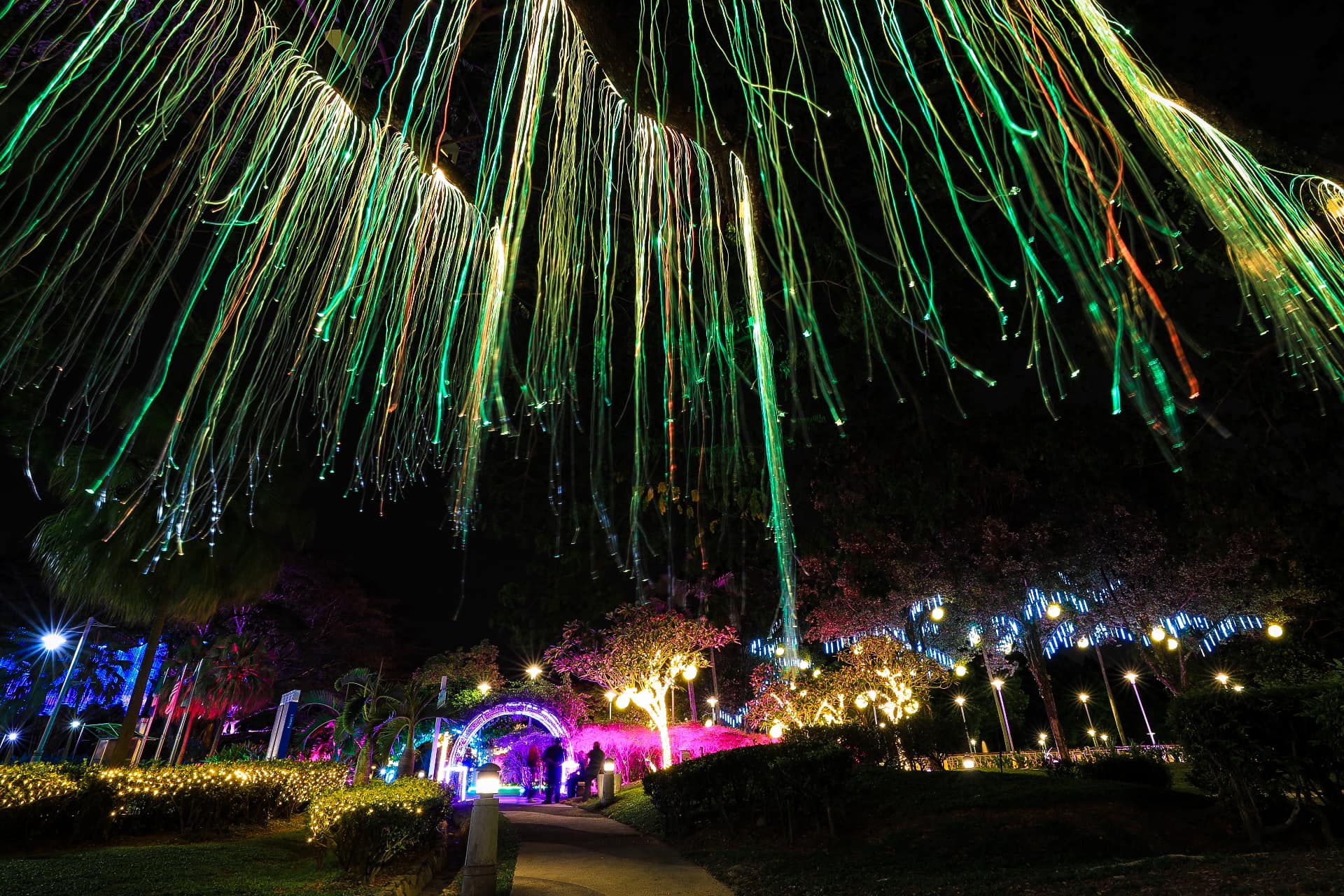
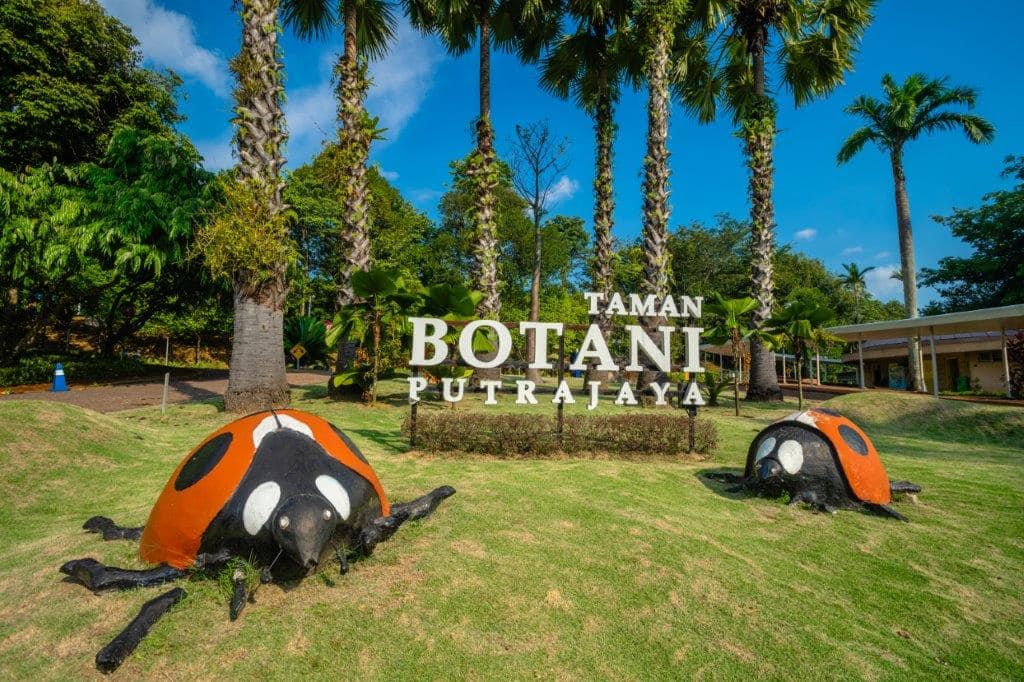
Referred to locally as Taman Botani, Putrajaya Botanical Garden is the biggest botanical garden in Malaysia, located in the northern section of Precinct 1. A haven for nature lovers and avid cyclists, it serves as a perfect picnic spot. The Botanical Garden is divided into 3 different sections: the flowers, ornamental plants, and the preservation and research centre. The garden features five landmarks: the Explorer’s Trail, Floral Gardens, Sun Garden, Palm Hill, and the Lakeside, which serve as the main points of attraction. There is also a seafood restaurant and gift shop onsite and bicycles and paddle boats are available on rent.

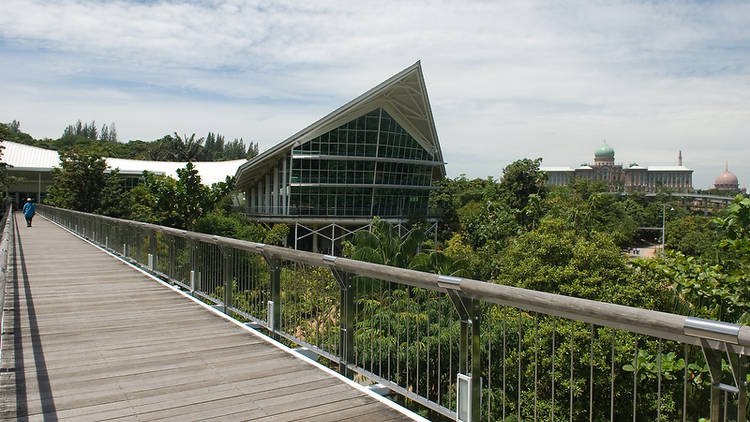
The Explorer’s Trail comprises three main attractions: Canopy Bridge, Heliconia Trail, and Vine Garden. The 170-meter-long Canopy Bridge runs over a valley featuring rainforest trees and tropical plants. The Heliconia Trail lets you explore a variety of species of Heliconia, the bright-coloured flowering plants. At the Vine Garden, one can explore a variety of climber plants, including Sandpiper Vine and King’s Mantle. Experience the unique landscaping of the Putrajaya Botanical Garden by visiting the Floral Garden, which features ficus shades, a rain shelter, and a Bougainvillea tunnel. Here, one can explore the flowering plants collected from different parts of the world like Africa and Tropical America. Head to the Sun Garden to enjoy a walk through the Orchid Path and learn the ancient art of time-telling using the sundial. Trek through Palm Hill at the Putrajaya Botanical Garden to explore more than 50 species of palm trees. Here you can learn about different species, like mangrove fan palm.

The Lakeside is where one can experience relaxation amidst a serene lake and beautiful landscape. Visitors can hire boats here, enjoy the Hibiscus walk, and relax in the Fern Garden. The garden is closed on Tuesdays and Fridays, it is open from 9 to 11 am and again between 2 to 5 pm. On other days it is open from 9 am to 12 noon and from 2 to 5 pm. Entry is free.

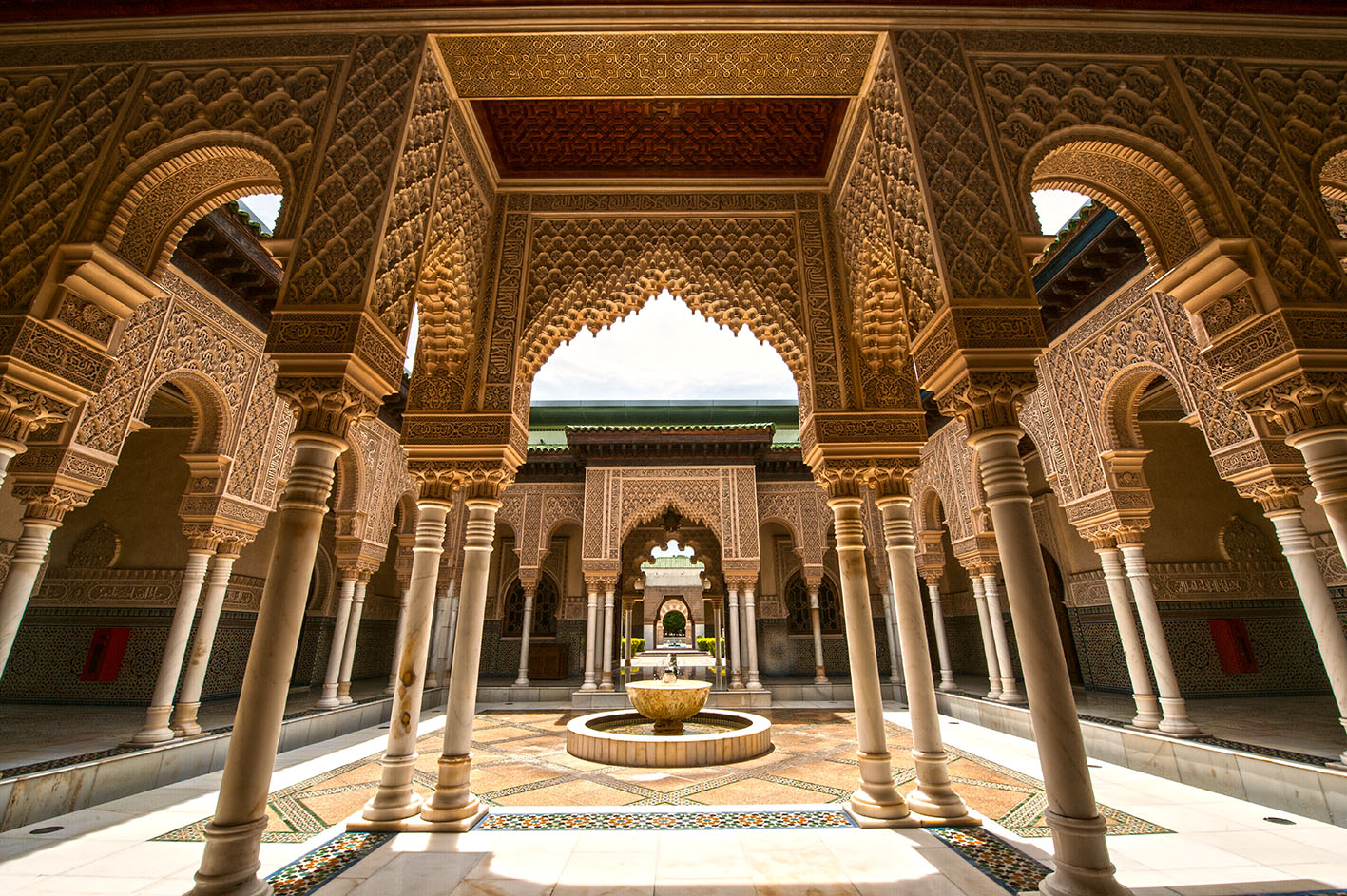
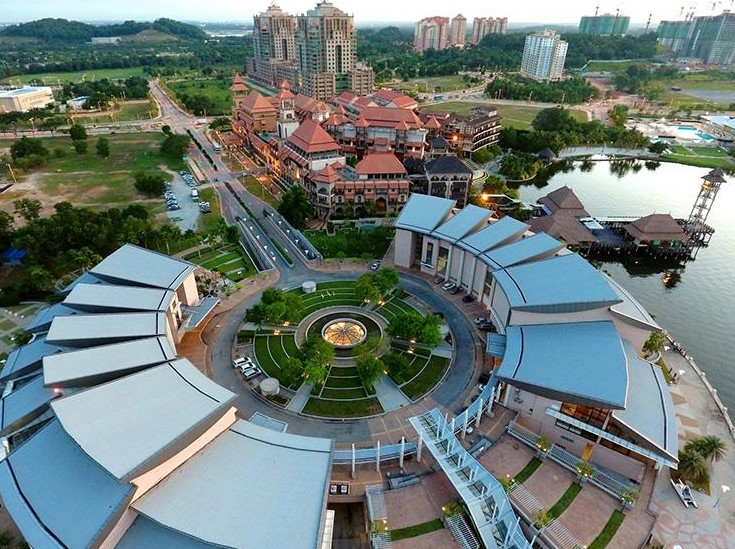
The Moroccan Pavilion is a fine replica of the palaces in Morocco, designed to showcase the cultural exchange between Malaysia and Morocco with the locals calling it Astaka Morocco. The uniqueness of the place is the Moorish architecture evident in the intricate craftsmanship depicted in the ceilings, pillars and walls of the pavilion. It is a must-visit for visitors and is a photographer’s delight. The design and construction of the Moroccan Pavilion is very detailed, with intricate carvings on the walls adorned with Islamic calligraphy, as well as, with four different galleries that provide an insight into four of Morocco’s oldest cities. The pavilion is surrounded by landscaped gardens and is tucked away in the corner of the botanical garden, alongside a lake. Photography is allowed only in the outer corridors, even though visitors can wander inside. The pavilion is open from 7 am to 7 pm and has an entry fee of RM 3 for adults and RM 1 for students.

The Putrajaya Wetlands Park, also known as Taman Wetlands, is well known as the largest artificially constructed freshwater wetlands. The park itself spreads across a large area of 138 hectares and houses some of the rarest indigenous species of regional flora and fauna. The lush green foliage and the rainforest act as the green lungs of the city. With more than 100 species of birds residing in Putrajaya Wetland Park, it also emerges as one of the most popular birdwatching sites in the city. The mini nature trails and the signature botanical garden cum nursery allow the more adventurous visitors to go around and explore the park freely and give them the perfect escape from the busy city life.

The mini nature trails enable the visitors to explore the wetlands through the pebbled pathways which are flanked by the rainforest on either side. The nature trails lead to the botanical garden cum nursery which lets visitors learn more about the different indigenous flowering plants and Japanese bonsai. At the nursery, visitors get a heavy discount on any of the seasonal plants they choose to buy along with a specially prepared packet of seeds and organic fertilizers. Bird-watching spots are scattered across a huge area and these spots are ideal to see the rarest of the bird species and learn more about their natural habitat. With the proper permission of the forest authorities, a limited number of visitors are allowed to feed the birds at the special feeding centres. The elderly and specially-abled visitors can also enjoy the natural beauty while relaxing in the smartly structured alcoves at the special care booths. The wetland park is open from 9 am to 5 pm on all days except Monday when it is closed.

Putrajaya Equestrian Park is a 70-acre equestrian centre located in Precinct 5. The park features a polo field, a grandstand, a paddock, and a dressage arena and is home to many ponies and horses. The park plays host to several international and national equestrian shows and competitions such as the FEI World Cup Qualifier and Premier Cup Series Horse Show. The centre also has a public horse riding school offering various coaching packages for different age groups and levels. One can even go on a fun ride on these beautiful ponies and horses. The park also offers personal photoshoots with these majestic animals. A group riding lesson with an instructor for a minimum of two riders for 45 minutes will cost RM 60 while a private lesson with an instructor for 45 minutes will cost RM 70. Renting a horse for 45 minutes will cost RM 50 while a 20-minute pony ride will set one back by RM 20. Escorted hacking for a minimum of two riders costs RM 60. The Riding School is open from 7:45 to 11:45 am and then from 4:15 to 7:15 pm. The riding school is closed every Monday.

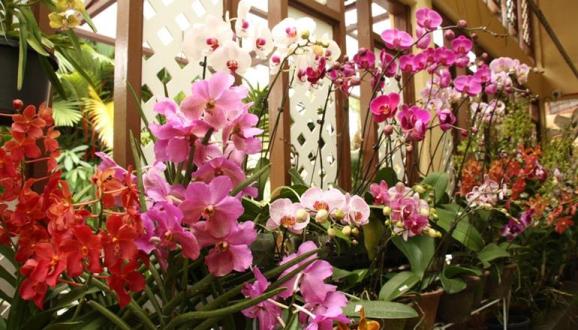
Anjung Floria located in Jalan Tuanku Abdul Rahman is a beautifully designed garden. Pebbled paths, mini bridges, and lush vegetation sprout throughout the garden alongside the incredibly vibrant range of flowers. What makes Anjung Floria unique is the countless flower festivals hosted throughout the year along with the numerous zones offered by it – starting with the Magical Gardens and The Magic of Bonsai and Suiseki Exhibition to the Musical Gardens, Tropical Magic ina Glass and the Secret Theme Garden, followed by the Royal Garden, the Designer Garden, the Tea Party Garden and the magnificent Annual International Orchid Competition which allows visitors to check out some of the rare, imported orchids from different parts of the world. Anjung Floria is open daily between 9 am and 11 pm.

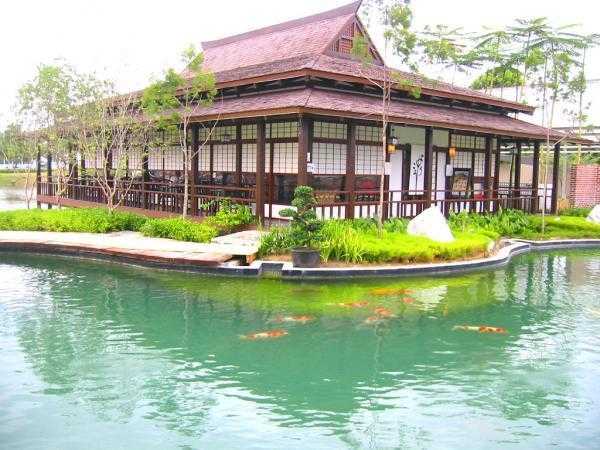
Within Anjung Floria, lies the China-Malaysia Friendship Garden stands as a symbol of the strong bilateral ties between Malaysia and China and was designed in the Lingnan architectural style. This style originates in the Guangdong province of China. The park was established in 2014 to mark the relationship between China and Malaysia on its 40th anniversary and is in proximity to the Seri Saujana Bridge in the core of Putrajaya. It is graced with bonsai trees, a pagoda, rocks, and ponds. There are also stones decorated all over the garden and some Chinese calligraphy and artwork. The China-Malaysia Friendship Garden is open daily from 6:30 am to 7 pm.

Source

Taman Warisan Pertanian, or the Agriculture Heritage Park, is an agricultural heritage park located at Precinct 16. With an eclectic range of tropical fruits and over 180 crops, the agricultural park is frequented by those interested in horticulture. The park is a haven of tropical fruits and is divided into different sections with different crops, commercial and otherwise. An Agro Bazaar is held every month on weekends where they sell items like fruits, potted plants, and pet rabbits. The popular cafe- Kajang Haji Samuri Sate located here attracts a lot of visitors to Taman Warison Pertanian. The Agriculture Square holds exhibitions frequently. Jom makan Buah is an event held every year in July where one can eat as much fruit as they want at just RM 10. A buggy can be hired to explore the garden for RM 4 per person. For multiple people, a six-seater can be hired for RM 20 and an eight-seater for RM 25. The main park is open from 8:30 am to 5:30 pm every day and is closed on Fridays from 12:15 to 2:45 pm for prayers. The food court is open daily from 7 am to 11 pm. Entry fee to the main park is RM 12 and free for children below 12.

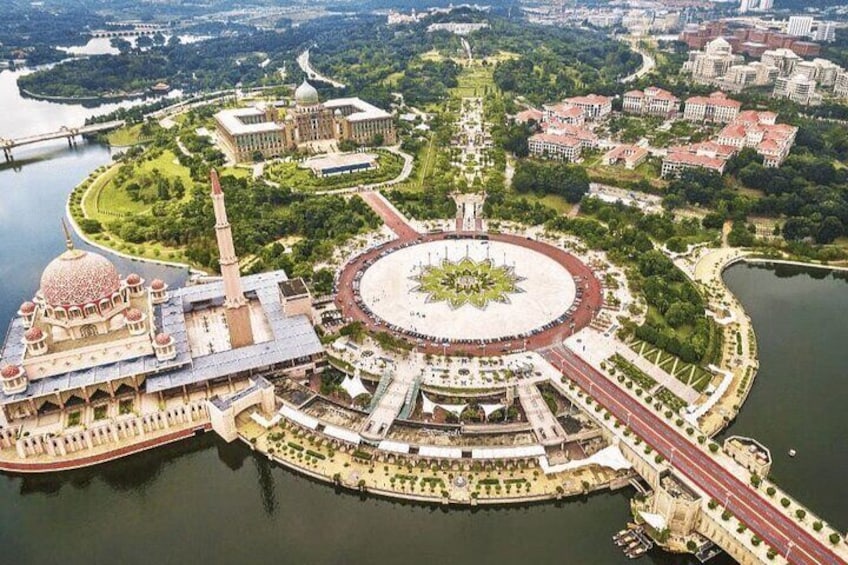
Putrajaya Lake, located right at the heart of the city, is one of the biggest man-made lakes in Malaysia. Spanning across an area of 650 hectares, it is popular for water sports and recreational activities. The main function of the lake is to act as a natural cooling system for this region, especially during the drier and more humid months of the year. It also enables a greater trade route by connecting various neighbouring cities to Putrajaya. The famous Putra Mosque and Millenium Monument are located on its shores.

Over the years, Putrajaya Lake has served as an important centre for many international water sporting activities starting from the F1 Powerboat World Championship in 2004, the 2005 Asian Canoeing Championship followed by the Red Bull Air Races in 2014, and the SEA Games – 29 in 2017.

Built across the Putrajaya Lake, Seri Wawasan Bridge is one of the most prominent bridges in Putrajaya, known for its futuristic style of architecture. It is marvellously designed as a sailing ship and looks stunning at night with a vibrant display of colours. Also known as Bridge No. 9. Seri Wawasan Bridge is a trademark of the city and represents the city. The bridge is visible even from afar and the ideal time to visit it is during the sunset or night hours. The bridge also makes for great photographs and offers a fantastic view of the lake with the city in the backdrop. The bridge is a cable-stayed bridge with a main span of 165m which is supported by 30 pairs of forwarding stay cables. It is 240 m long and connects Precincts 2 and 8 of the city. It carries dual three-lane carriage wages and has a total width of 37m. The bridge has been built using the latest technology and is an architectural marvel for visitors all over the world. It has a separate walkway for pedestrians as well as a cycling track for cyclists.

Seri Perdana, located in Precinct 10, is the official residence of the Prime Minister of Malaysia. This lavishly built structure covers an area of around 42.5 acres with the architecture and layout being heavily influenced by the traditional Malay, Muslim, and European styles. With multiple tours of the palatial residence conducted throughout the day and a special interactive session held once a day with the government officials at Seri Perdana, visitors get a highly insightful view of Malaysian society and their beliefs and practices. The flower garden just behind Seri Perdana displays a huge variety of roses and hibiscuses which leads into the mini children’s park. Attached to the residential block is the Prime Minister’s office which leaves the visitors filled with awe. Both local visitors as well as foreigners must carry some form of identity proof preferably the passports issued by their respective countries. Visitors are not allowed to carry any bags, cameras or phones inside the complex. Personal vehicles are not permitted inside the complex without a special permit from the Seri Perdana Management. Food, drinks, cigarettes, and lighters are not allowed inside the premises and a heavy fine is imposed.

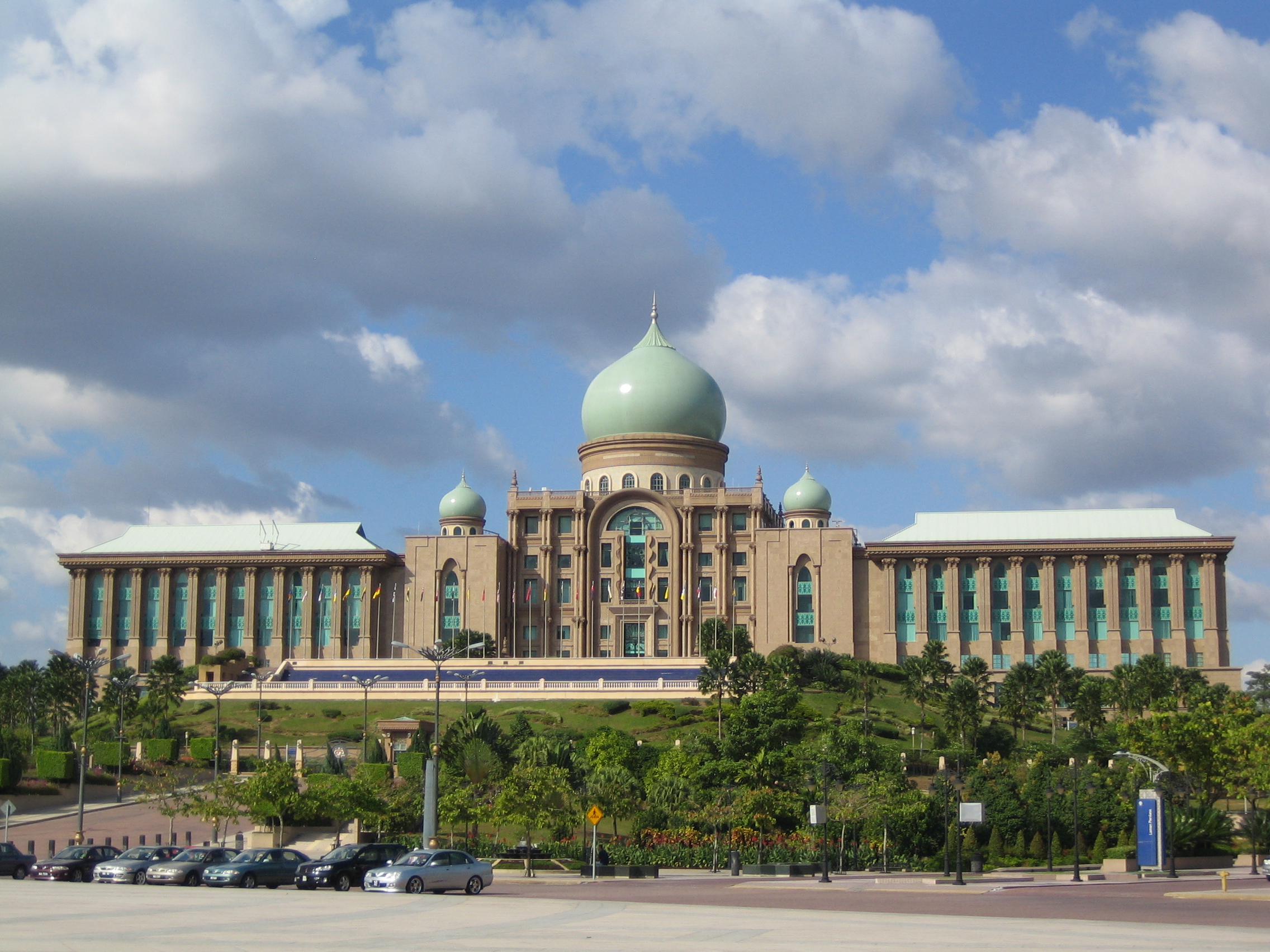
Perdana Putra is the office complex of the Prime Minister of Malaysia located on top of the main hillock of Putrajaya. This beautifully planned complex houses various sections of the government like the Prime Minister’s office, Deputy Prime Minister’s office, Small Meeting Hall, Large Meeting Hall, View Point, VIP room plus banquet hall, Delegation room, National Security as well as the National Economic cabinet. The magnificent exterior of Perdana Putra matches up with the grandiose of its interior. With multiple guided tours and interactive sessions, the visitors get to know more about the workings of the government and realize its ideals.

The design and structure of Perdana Putra have been heavily influenced by the traditional Malay, Muslim and European architectural styles and incorporates many Islamic and Mughal patterns and textures. It is built 50 meters above the ground level atop the main hillock. The onion-shaped main dome which is glazed with green mosaic tiles and surrounded by four smaller domes to celebrate the country’s Islamic influence, the stone water jet carvings and the wrought iron pillars combine to convey the strong beliefs, rich history and just nature of the nation. Visitors are expected to be dressed up appropriately for the visit. Malaysians are expected to produce any one form of identity proof while entering Perdana Puta and the non-Malaysians are expected to produce their passports.

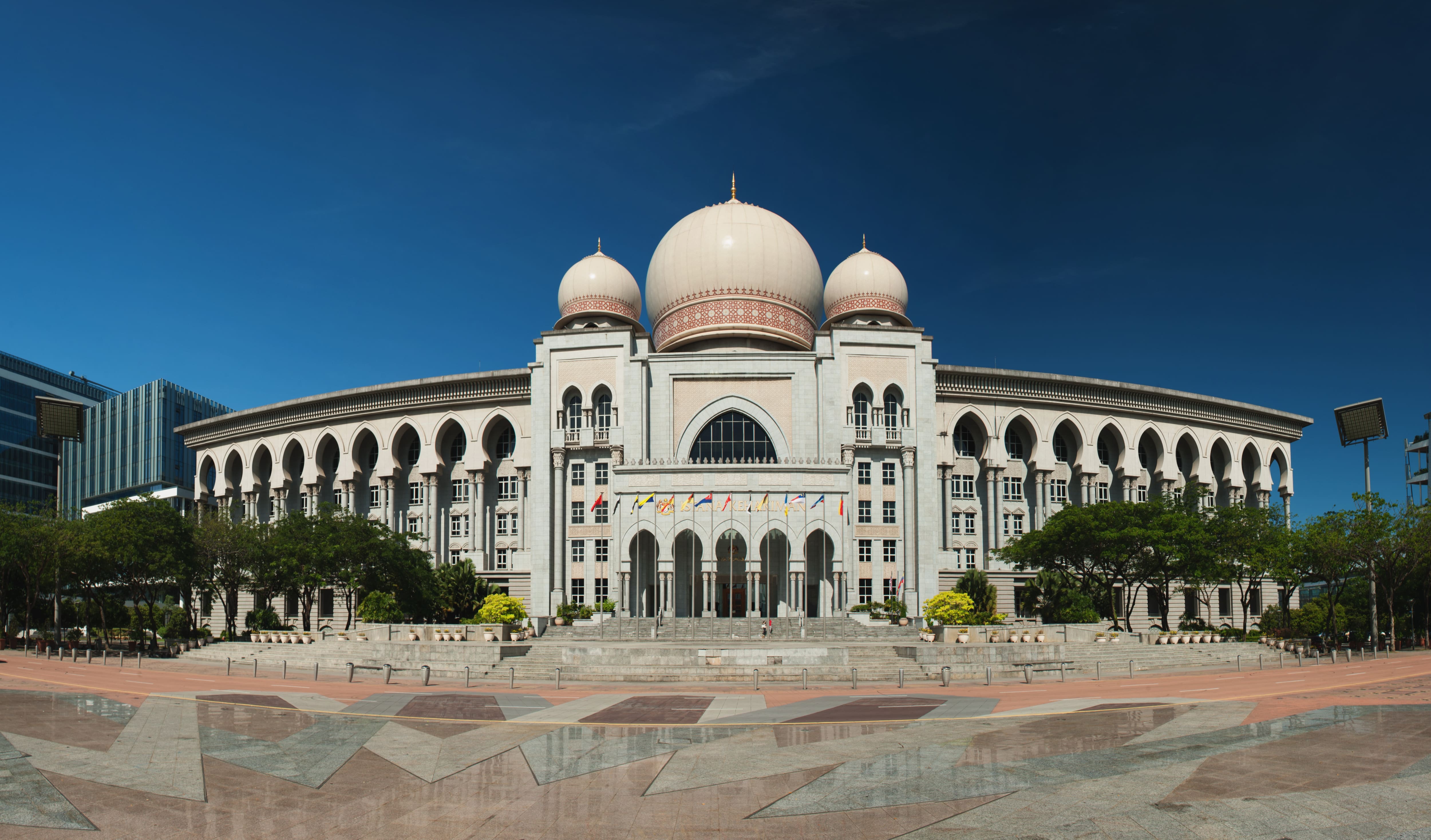
The Palace of Justice or Istana Kehakiman is a grand palace inaugurated in 2004. It is styled in Islamic, Moorish, Palladian, and Neoclassical styles of architecture. The Palace of Justice is a five-level building that houses courts, both federal and appeal, government offices, a library, and a museum depicting the judicial system of Malaysia. The interiors of the building have a massive cavity on the roof which is beautifully designed to depict the colours of Malaysia interestingly. A grand library full of books and a museum with judicial antiques are present on the ground floor of the building. The first floor houses Federal and appeal courts followed by judges’ chambers on the fourth and fifth floor. The major stunner located inside the Palace of Justice is a small yet vibrant museum named the Justice Museum. Among the beautiful masterpieces, visitors can spot Batu Bersurat which is a stone from 1303 with carved inscriptions in the Jawi script. There are ancient pillories and handcuffs along with wigs and robes used by the judges and a wall dedicated to the history of the Malaysian justice system with photos of erstwhile Chief Justices of Malaysia. The museum is open on weekdays from 9 am to 5 pm and has free admission.

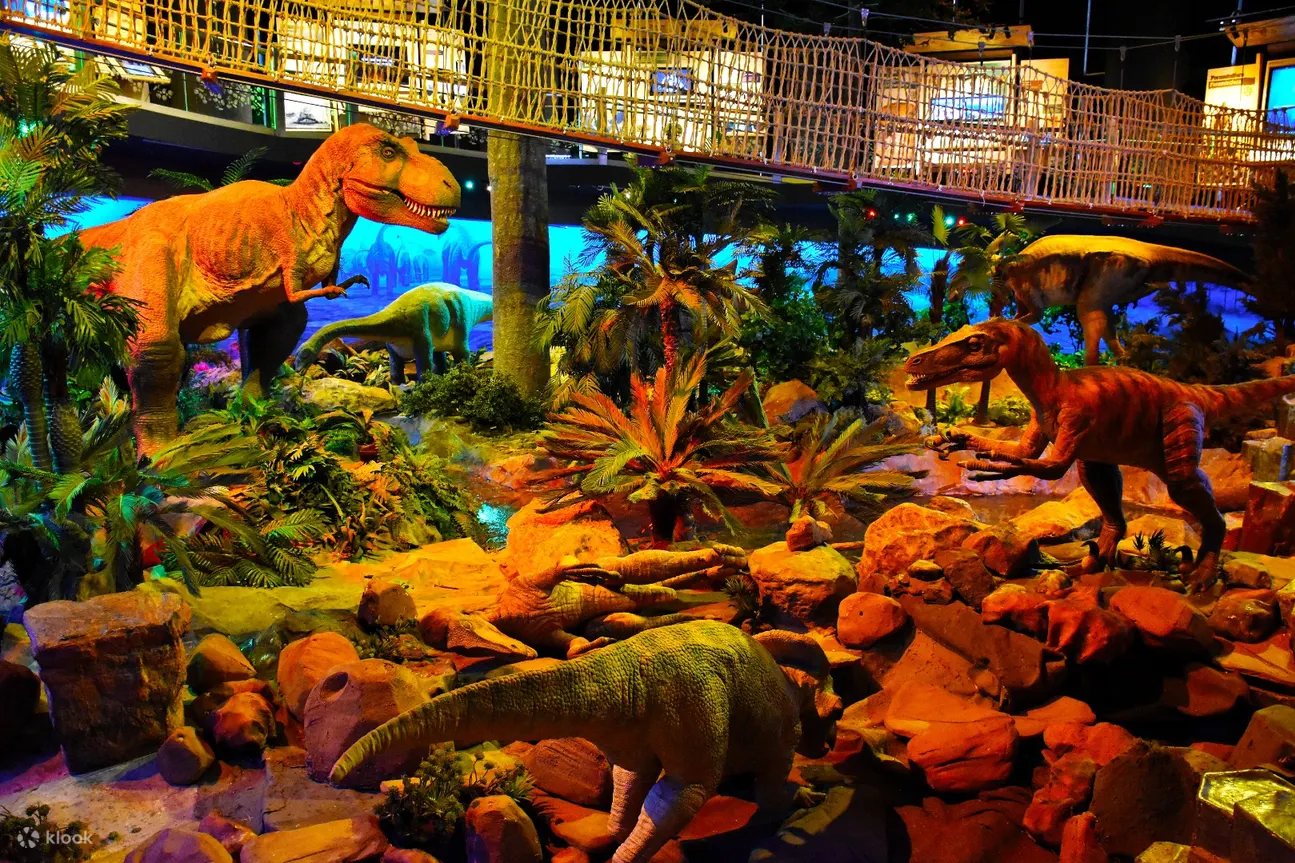
The Natural History Museum gives a deep insight into the natural Malaysian heritage. The museum houses a ginormous variety of plant, animal, rock, fossil as well as mineral specimens. Interesting facts and trivia about these species are also displayed inside the museum. It also houses specimens of endangered plants and animals, some of which are on the verge of extinction. The ground floor of the museum houses a huge collection of Malaysian mammals as well as a 40-foot-long skeleton of the Bryde’s Whale which is the main attraction of the museum. One can also visit the insect room which houses a plethora of specimen species. The museum is open daily from 9 am to 5 pm. It is closed on Eid Al Fitr and Eid Al Adha. Entry fees are RM 2 for Malaysians and RM 5 for foreigners.

The National Heroes Square is a war memorial also known as Dataran Pahlawan Negara in Malay. It comprises the main square, the Malaysian War Memorial Pavilion, and the Malaysian Armed Forces and Police Museum. Located in Precinct 1, every year Warriors Day in Malaysia is celebrated in National Heroes Square.

The second National Monument to be built in Putrajaya, the 68-meter tall Millennium Monument is located on a 25-hectare park in Precinct 2. It looks like a huge pencil from standing from a distance and on viewing it from above, it looks like a hibiscus flower. The monument which is similar in appearance to the Washington Monument in Washington DC, is shaped like an obelisk with engravings marking important milestones in the history of the nation and was opened in August 2005 to the public. There is a multi-level platform around the base of the column where tourists can walk up to enter the obelisk. One can go through the beautiful series of engraved glass panels on the way and learn some key events relevant to the history of Malaysia in chronological order. Another worth admiring feature about it is the time capsule on the base of the monument concealing a message from the former PM, Tun Dr Mahathi bin Mohammad.

Marina Putrajaya, formerly known as Maritime Centre, is a leisure and sports complex situated by the Putrajaya Lakeside at Precinct 5. The complex is a popular extreme water sports & training centre for sports enthusiasts. The marina has held various famous events like Magic of the Night and Putrajaya Red Bull International Air Race Championship. It also houses a gymnasium and aerobic hall which charges RM 20 per hour and personal coaching lessons are provided at RM 65 per session. It is also home to Putrajaya’s only public indoor swimming pool which charges RM 5 per session for adults and RM 3 per session for children. Training classes by certified instructors start from RM 180 per month. The Steam and sauna room can be accessed for RM 15 per 45 minutes. Two tables each for Snooker and Pool are available on the first floor of the east wing building which costs RM 12 per hour for Snooker and RM 10 per hour for the Pool table. Two squash courts are also available at RM 15 per hour. There is also a Karaoke Room that can accommodate 15 persons at a time and is available at RM 50 per hour. Marina services and facilities include wet berthing, slipway, jetties, boat, and equipment storage. The Dragon Boat Training program is quite popular among agencies and corporations and is open between 9 am and 6 pm. The Musical Fountain at Marina Putrajaya is an impressive water show with the fountains dancing in sync with the music beats along with colourful shining lights. The spectacular patterns that the fountains create are a treat to the eyes. This show is held every evening during the weekend. The marina is open from 9 am to 9:45 pm every day.
In Cruise Tasik one can cruise around Putrajaya Lake. Apart from the sightseeing tours on the day cruise or Perahu Boat, one can also hire a private charter boat, either a double-decker or a single-deck cruise. The day cruise costs RM 50 for adults and RM 35 for children and takes place at 1, 2:15, 3:30, 4:45, 6, and 7:15 pm. Early Bird Cruises cost RM 25 for adults and RM 18 for children and starts from 10 am for 30 minutes. Private Charter can be hired either as Kelah and Sebarau which are double-decker or Daun and Belimbing which are single-decker air conditioned cruises to tour around Putrajaya Lake. It costs RM 3000 for the Kelah and Sebarau for the 1st hour and then RM 1800 for every subsequent hour. Daun and Belimbing cost RM 2000 for 1st hour and RM 1200 for every subsequent hour. A dinner cruise costs between RM 130 to RM 170 per person.

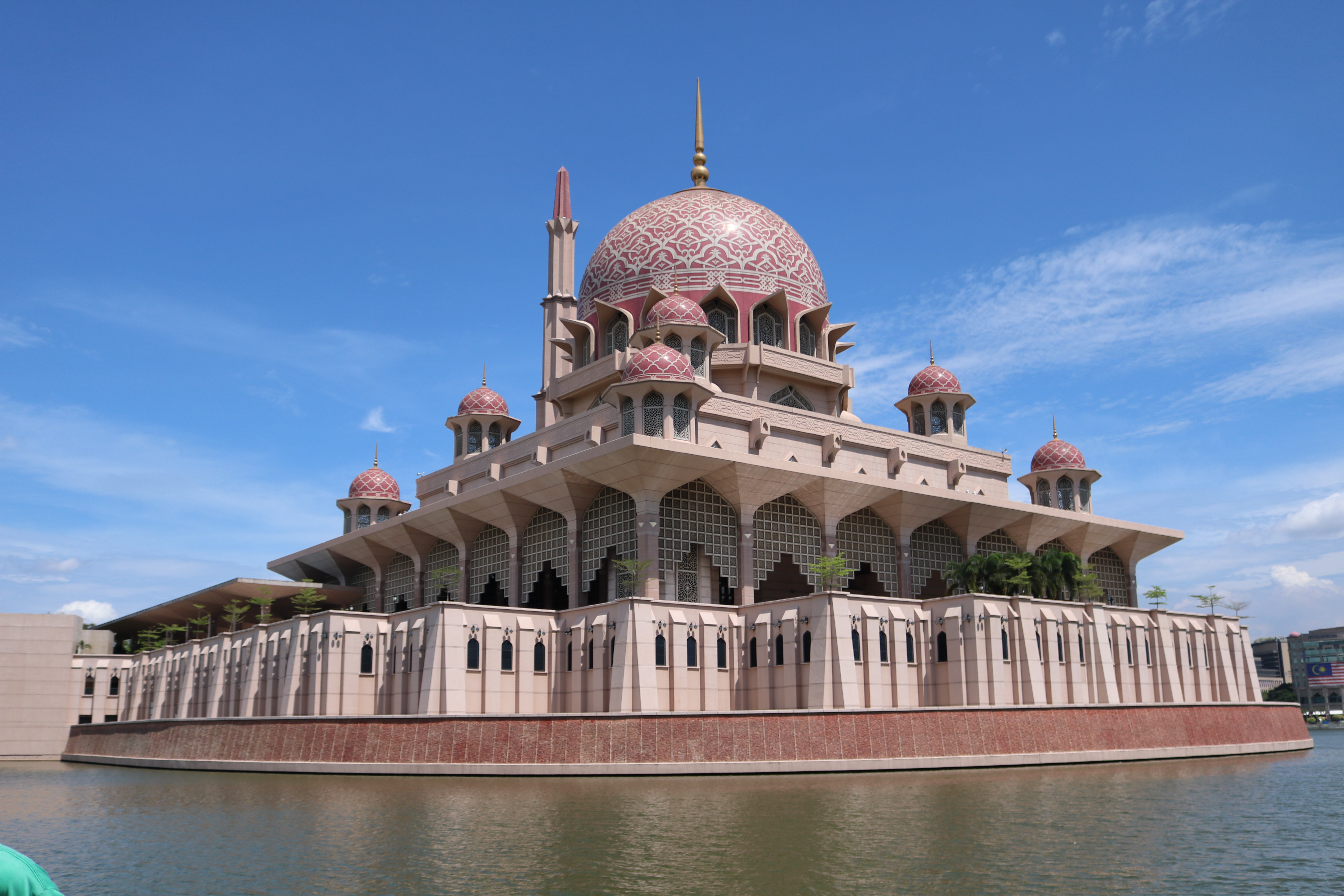
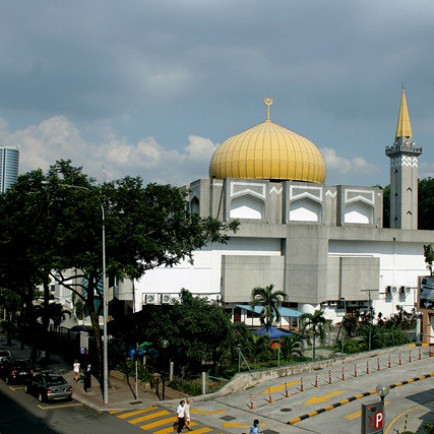
The principal mosque of Putrajaya, the Putra Mosque faces the Putrajaya Lake, and because of the rose-tinted colour of the building, it is also known as the Pink Mosque. The mosque’s architecture is an assortment of Malaysian, Persian, and Arabic-Islamic architectural designs. Made of rose-pink granite, the 116-meter tall minaret resembles that of the Sheikh Omar mosque in Baghdad. The design of the basement wall is inspired from the King Hassan mosque in Casablanca, Morocco. Consisting of a courtyard and a prayer hall, the Putra Mosque has a capacity of 15,000 people with up to 10,000 in the prayer hall and 5,000 in the courtyard. Other noteworthy features include cengal woodwork in the mosque and Islamic calligraphy on the mimba and the mehrab. On Fridays, the mosque is open from 3 to 4 pm and 5:30 to 6 pm while on other days, it is open from 9 am to 12:30 pm, 2 to 4 pm and 5:30 to 6 pm.

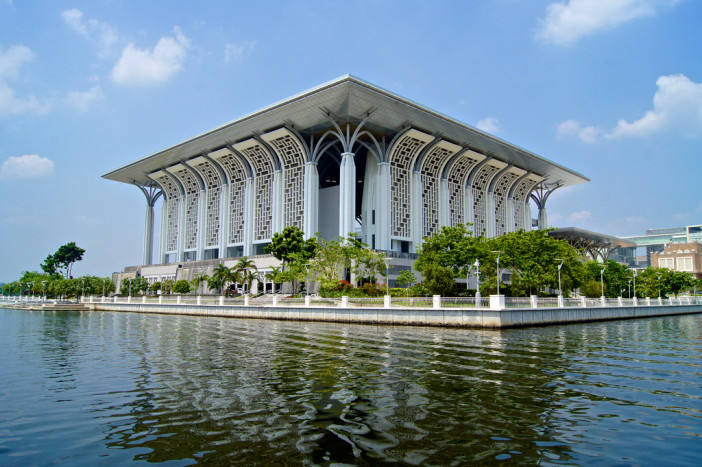
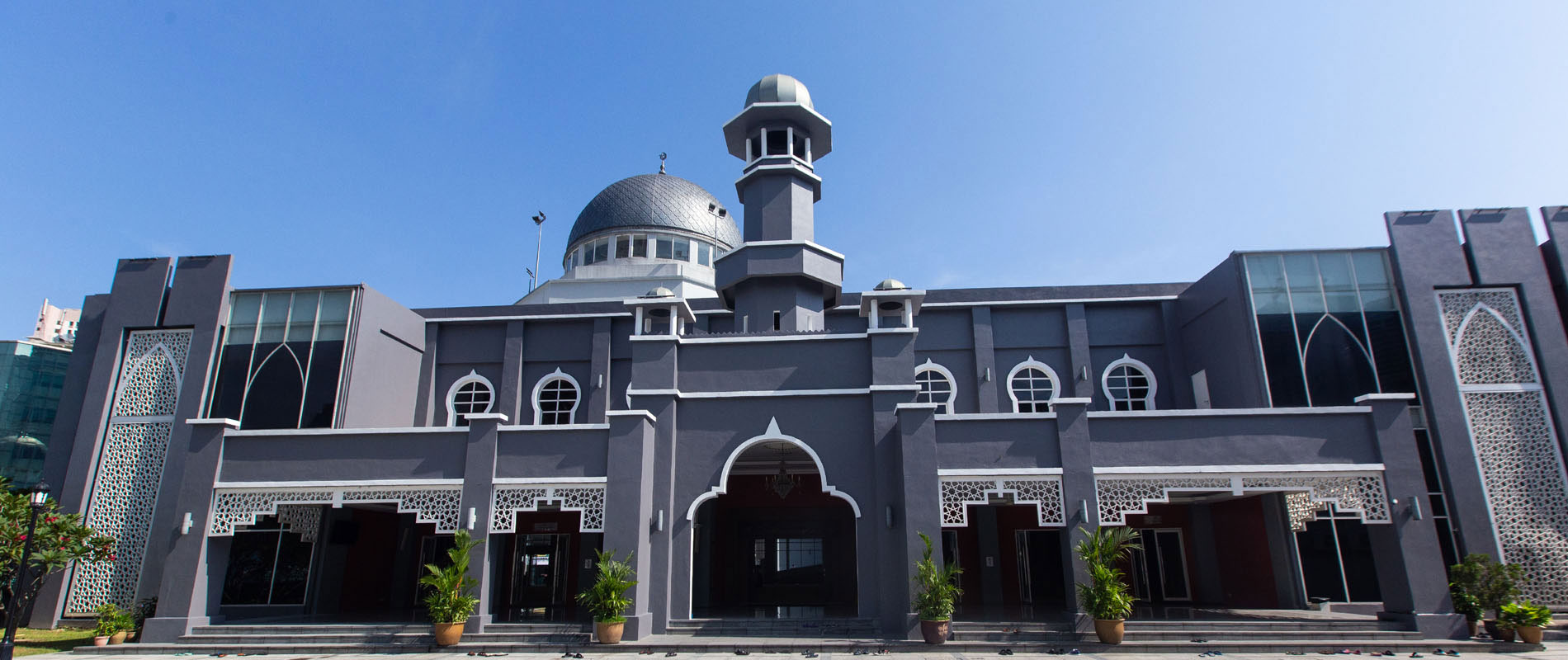
The Tuanku Mizan Zainal Abidin Mosque is the largest and the second principal mosque in Putrajaya. Also known as the Iron Mosque, the mosque is strikingly modern in terms of both aesthetics and complexity of design and technology used and looks beautiful at night when it is lit up. The stunning mosque reflects German and Chinese styles of architecture. Approximately 70% of the structure is made of steel giving it a sleek modern metallic look, hence the Iron Mosque name. Inside, the walls have a woven mesh design which looks spectacular. There are verses from the Quran engraved on German glass sheets which are placed in a way that light does not reflect on them. This gives the impression of the verses drifting in the air which looks splendid. There is natural air conditioning called Gas District Cooling in the mosque which keeps the building cool even without fans and air conditioners. Unlike other mosques, Tuanku Mizan Zainal Abidin Mosque does not have minarets. On Fridays, the mosque is open from 3 to 4 pm and then again between 5:30 to 6 pm. On other days, it is open from 9 am to 12:30 pm, 2 to 4 pm, and 5:30 to 6 pm.

That’s all for Putrajaya and look out for our next Malaysian state next week, the state of Perak.

Travel Bucket List: Malaysia Part 21 – Kuala Lumpur Part 3

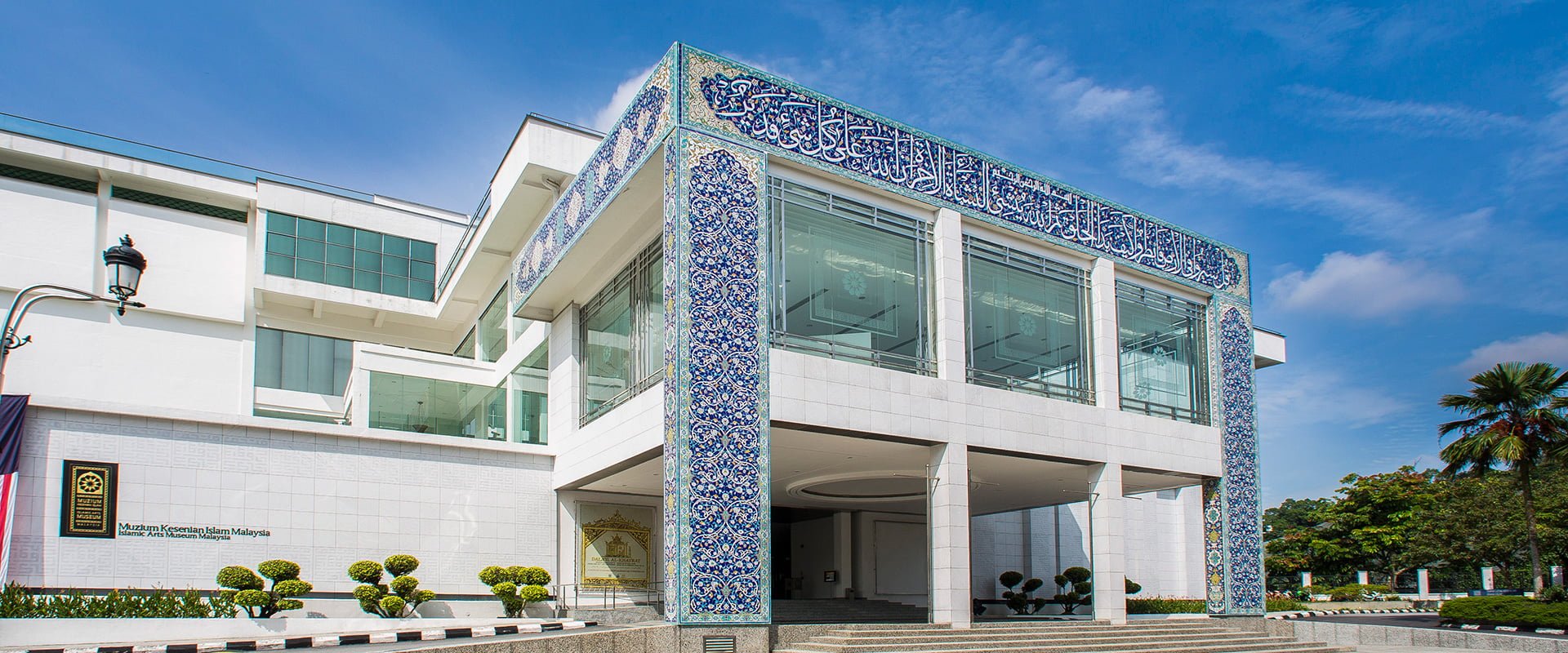
The Islamic Art Museum of Malaysia has an extensive collection of ancient Islamic artefacts and books from the Middle East. Located at the brink of Lake Gardens, this museum is the largest of its kind in Southeast Asia. Spanning 30,000 square meters, it is adorned with Islamic patterns and houses more than 7,000 artefacts. The gallery is divided into 12 themes and displays reflect that particular section’s theme. Visitors can also taste traditional Middle Eastern meals at the museum restaurant. The museum features models of Islamic architecture, prominently mosques, from Africa to the Far East and also houses the Quran and other ancient manuscripts that exhibit skills of fine workmanship. The museum is also known for its collection of ancient Islamic glassware. The museum also houses educational and research facilities and extensive conservation facilities. One of the most famous permanent exhibitions is a faithfully restored and complete early-nineteenth-century Ottoman Room dating back to the 19th century.

Located on the ground floor of the museum, the restaurant features delicacies from Middle Eastern cuisine. The auditorium has a seating capacity of 250 people. The Inverted Dome is one of the most breathtaking monuments at the Islamic Arts Museum. Its exceptional design and the precise details of the dome are a sight to behold. The opening verses of the Quran are inscribed on the rim with Gold. The museum is open daily from 10 am to 6 pm and has an entry fee of RM 14 for adults and RM 7 for students and senior citizens while citizens under 6 enter for free.

The old Istana Negara is the former residence and National Palace of Malaysia’s Agong or Supreme Leader, Yang di-Pertuan. Located on the green slopes of a Bukit Petaling hill overlooking the Klang River, it is now the Royal Museum or Muzium Diraja in Malay. The museum has two blocks – the National Palace Gallery and the Balairong Seri or the Throne Room. A tour of the National Palace Gallery includes the halls, bedrooms, dining rooms, offices of the King and the Queen, reading room and library, waiting rooms, and the clinic. Most rooms are cordoned off, but can be seen from the walkway. The Throne Room in the East Wing is where official ceremonies and customary functions such as coronations and welcoming dignitaries take place. The main gate is guarded by members of the royal cavalry in full Malay traditional attire. One should not miss the change of guard that takes place at noon. The palace complex also includes a six-hole golf course, tennis courts, and a beautiful lake. The palace is closed on the first two days of Raya Aidil Fitri and the first day of Raya Aidil Adha and is open daily, except the first Monday of each month from 9 am to 5 pm. Ticket prices are RM 5 for adult Malaysian Residents, RM 2 for Malaysian Residents who are children aged 6-12 years, RM 3 for Malaysian Senior Citizen Residents, RM 10 for Non-Malaysian Adult Residents, RM 5 for Non-Malaysian Residents who are children aged 6-12 years and children below 5 years of age enter free. Traditional costumes can be rented for RM 50 and include one set of traditional costumes of male and female and 1 A4 size photo

Located at the Petronas Towers, Petrosains is a science and technology museum. Visitors can go for a ride through Malaysia’s natural resources and technological advancements and then wander around multiple exhibits, including model F1 cars from Petronas-sponsored teams. In addition, the museum explains petroleum formations through interactive dioramas, and helicopter simulators and earthquake benches add to the interactive experience. The museum is open from 10 am to 9:30 pm daily.

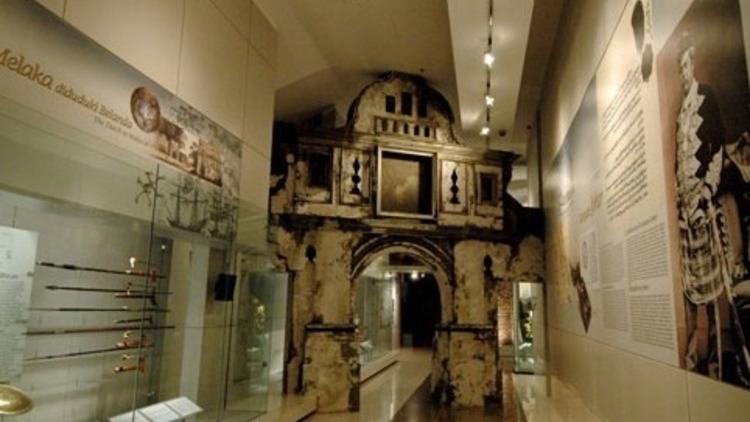
The National Museum of Malaysia, popularly called Muzium Negara, is located near the Southern tip of Lake Garden, past the National Art Gallery in Kuala Lumpur. It presents a combination of ethnology and natural history, unveiling Malaysia’s culture and history. The display at Muzium Negara is an amalgamation of crafts, weapons, currency, tradition and culture. The three-story museum comprises four exhibition galleries, each of which has a different theme. The two murals are renowned for their aesthetic appeal. Free guided tours are available in all languages at 10 am. The museum comprises four galleries namely A, B, C and D.

Gallery A traces the gradual development of the Earth’s crust and the origination of the primary community in Malaysia. One can also find on display the different types of Neolithic pottery and jewellery items which were used as trade items. The remains of the human skeleton which are displayed are the oldest discovered in Southeast Asia. Gallery B pays attention to the ancient proof of Malay civilization which existed in the Malay peninsula and Borneo. The central focus of the gallery is on the Melaka Sultanate which has emerged as a grand and glorious kingdom. In Gallery C, the history of the colonial era of the Malay states is showcased. The major factors which brought foreign attention to the Malay land were its strategic location and the wealth of natural resources. The gallery also includes the alterations brought by the power in the social, political and economic aspects. Gallery D pictures the independence struggle and the formation of the new nation. The National Museum compound exhibits illustrations of transportation, both modern and traditional. A cable car and a fire engine are also present. Besides this, one can also find three locomotives; a steam locomotive, a steam tank engine and a class 22 Diesel locomotive.

Muzium Negara showcases Malay architecture. The building holds up 26 concrete columns, 13 columns in the East and 13 columns in the West. They are a nod to the 13 states that form Malaysia. Two enormous murals ornament the building which was modelled by Cheong Lai Tong. The history and craft of Malaysia are depicted by them. The tiles gifted by the government of Pakistan have been used to adorn the central section floor. The design of the museum provides space for different foreign exhibitions. The ground floor displays the ancient Malay. The exhibition continues to portray different Malaysian states. The second floor brings to light the independence age. Istana Satu is one of the former royal residences and happens to be another attraction at Muzium Negara. It is a timber palace which was built by the Sultan Terengganu. Istana Satu sets forth a layout of Malay craftsmanship. Next to the Istana Satu are two keliriengs or burial poles. A kelirieng is made of a huge hardwood tree trunk, carved from the top to bottom. Niched up to its sides is a space for the bodies of slaves and followers and hollowed at the top to place the jar containing the chief’s bones. Istana Budaya or also known as the Palace of Culture, is Malaysia’s main venue for all types of theatre. It is located in the heart of Kuala Lumpur city, next to the National Art Gallery.

The museum is open every day from 9 am to 6 pm. Entry fees for adult Malaysians is RM 2, for the disabled, it is RM 1 and children under 12 enter free. For foreigners, adults pay RM 5, children aged 6 to 12 pay RM 2 and children under 6 get in free.

The Telekom Museum was originally constructed in 1928 and used as the office for the manual telephone exchange and upgraded to mechanical telephone exchange in 1938. In the early 1980s, Telekom Malaysia was searching for a space to house their offices and to store their telecommunication equipment in Kuala Lumpur. In 1984, they identified the building to be the appropriate site. The plan however was cancelled in 1985 when Prime Minister Mahathir Mohamad proposed the building to be conserved as a national heritage. Telekom Malaysia then decided to turn the building into a museum with a cost of MYR10 million. The construction of the museum was done in 1989–1992 and the museum material and collections were collected in 1993–1994. On 3 June 1994, the museum was officially opened to the public. The museum building utilizes the forms and aspects of Neoclassical Greek architecture.

Located in Jalan Perdana, the Royal Malaysian Police Museum houses invaluable artefacts ranging from handmade guns to automatic weapons about the Royal Malaysian Police since its inception. Originally established in 1958 in Jalan Semarak under the supervision of the Police Training Centre, this museum has now been shifted to the new building at Jalan Pardena in 1998. The museum is open from 10 am to 6 pm, Tuesdays to Sundays and is closed between 12:30 to 2:30 pm on Fridays. Entry on weekdays is free while RM 1 is charged on weekends and public holidays.

The Kuala Lumpur City Gallery, located at Merdeka Square, is a tourist information centre. It exhibits the history of Kuala Lumpur through its collection of photographs, paintings, and miniature models. Housed in a 115-year-old Government Printing Office, the main highlight is the Spectacular City Model Show and the iconic I Love KL structure. Built by the Founder of Arch in January 2012, this is the most photographed monument in the City Gallery. Standing at 12 ft and weighing more than a ton, this monument is a sight to behold. The centre also provides tours for visitors. The main highlight of the gallery is the 40ft x 50ft City Model Show, the World’s largest 3D Mapping Miniature. It is an ongoing city model show that utilises satellite imagery to ensure the accuracy of the model. The model boasts more than 5000 buildings which were all hand-assembled. It also makes effective use of light and sound as they showcase the past, present, and future of Kuala Lumpur. The KL Reflection is located on the second floor of the City Gallery and is a great way to have fun while discovering the city. Visitors can create their masterpieces by using various miniature models and pieces to create their souvenirs. However, DIY is subject to availability and visitors must contact them to ensure availability. The gallery is open from 9 am to 6:30 pm every day.

The National Textile Museum is situated in Merdeka Square and has some magnificent textile collections, accessories, and classic apparel. The museum also exhibits the methodology and technology of textile manufacturing. The two-storey building with four different galleries showcases elegant Mughal-Islamic heritage in architecture and textile artefacts.

The Pohon Budi Gallery is all about historical textile materials and products Colourful batik can be seen in the Pelangi Gallery. The Teluk Berntai Gallery is where one should go to view Indian textile patterns and the Ratna Sari Gallery is where one can find antique jewellery and accessories. The museum is open between 9 am to 6 pm daily except Mondays. Entrance fees are RM 2 for Malaysians and RM 5 for foreigners.

The Maybank Numismatic Museum is located in the Maybank Tower on Jalan Tun Perak and has a spectacular collection of ancient coins and notes used at the time of the Malacca Sultanate. The ceiling is decorated with a magnificent coin tree from Kelantan whose actual size coins are kept for display in various cases. The museum was established in 1988 and has currency specimens of various Malay states used at the time of British rule. The museum is open from 10 am to 6 pm, Mondays to Fridays and is closed over the weekends. Entry is free.

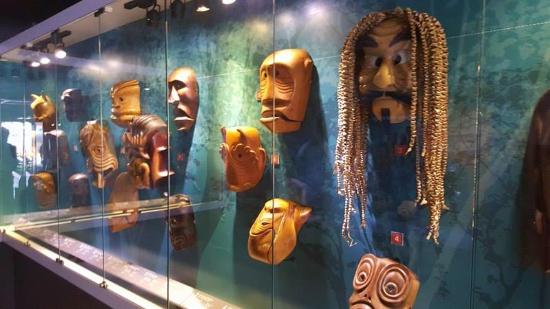
Based in Gombak, the Orang Asli Crafts Museum is a very informative repository that has cast light on the history and tradition of the Orang Asli people by preserving the arts and handicrafts made by this tribe. The Orang Asli were the original inhabitants of Peninsular Malaysia whose population accounted for a total of 200,000. The Orang Asli are well-recognized for their handicrafts, specifically the wood carvings which depict their ancient belief systems. The museum has a library and theatre hall and has information about the 18 different Orang Asli tribes and how they are segregated into 3 main groups – Negrito, Senai, and Proto-Malay. This compact museum houses some attention-grabbing statues and masks carved by the Mah-Meri and Jah Hut tribes. It also displays small Sepili figures, blowpipes and ornate bamboo containers for holding blowpipe darts, hunting and fishing equipment, and coffins made from bamboo. Other collections include native clothing, rattan baskets and trays, palm leaf ornaments and spiritual decorations. Closed on the first day of Hari Raya Puasa and Hari Raya Haji, the museum is open from 9 am to 6 pm daily. Entry fees are RM 2 for Malaysian adult citizens, RM 1 for Malaysians who are elderly and disabled and children below 12 enter free. For non-Malaysians, adults pay RM 5, children between 6 and 12 pay RM 2 and children below 6 enter for free.

The National Mosque of Malaysia, commonly known as Masjid Negara, is one of the largest Sunni-affiliated mosques in Malaysia. It is reminiscent of the Grand Mosque in Mecca, adorned with abstract shapes and intricate geometric lattices. Rising above the National Mosque is a 74m-high minaret that issues the call to prayer, which can be heard across Chinatown. Non-Muslims are welcome to visit outside prayer times. Able to accommodate 15,000 worshippers, the key feature of Masjid Negara is an umbrella-like blue-tile roof with 18 points symbolising the 13 states of Malaysia and the five pillars of Islam. The elegant design of this gigantic 1960s mosque is inspired by Mecca’s Masjid al-Haram. Officially opened up for the public in 1965, Masjid Negara was the brainchild of the UK-based architect Howard Ashley and Malaysian architects- Hisam Albakri and Baharuddin Kassim. ; robes are available for those who have not dressed appropriately.

The stunning mosque has a magnificent main prayer hall which is surrounded by 48 smaller intricate domes. Spread across an area of 13 acres, this masjid can accommodate up to 15,000 devotees. The mosque is adorned with abstract shapes and geometric lattices meant to embody the contemporary expressions of the traditional Islamic art of calligraphy and ornamentation. The previously pink concrete roof has now been turned into a roof clad with blue and green tiles giving it a sleek and stylish appearance. Masjid Negara is open from 9 to 11 am Saturday to Thursday and from 2:45 am to 6 pm on Friday.

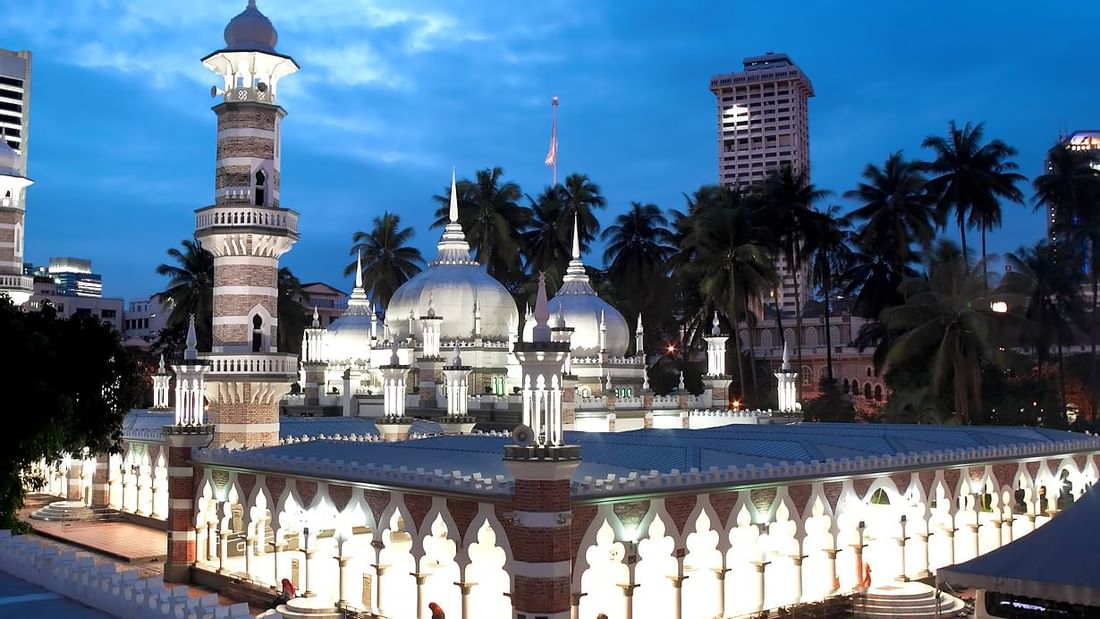
Also known as Sultan Abdul Samad Jamek Mosque, Masjid Jamek is the oldest place of Islamic worship in Kuala Lumpur. Also known as Friday Mosque, it is a melange of Mughal, Islam and Moorish styles of architecture. The word Jamek in Arabic refers to a place where people gather to worship, and Masjid Jamek encapsulates this. It was the main place of worship before Masjid Negara or the National Mosque was opened to the public in 1965.

The main prayer hall of the mosque is surrounded by three domes, the tallest of which measures 20 meters. On either side of the dome, lie the 25-meter tall brick minarets constructed in patterns of pink and white. The pink and white patterns are made up of brick and plaster and are known as blood and bandage. Sultan Abdul Samad Jamek Mosque was built by British Architect Arthur Benison Hubback in 1907. The mosque was officially opened in 1909 by the Sultan of Selangor. An interesting fact about the mosque is that it was built on the first burial ground in Malaysia. It was renamed Masjid Jamek Sultan Abdul Samad in 2017, in honour of Sultan Abdul Samad, the fourth Sultan of Selangor. Masjid Jamek is open daily from 10 am to 12:30 pm and then again between 2:30 and 4 pm.

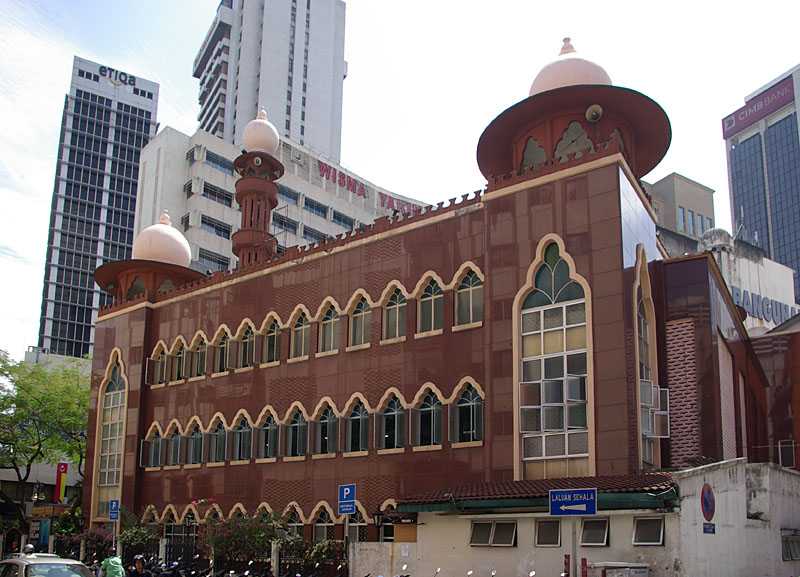
Also known as India Mosque or Masjid India, Jalan Masjid was established in 1883 as a small wooden mosque and later renovated with red bricks in 1963. Built in 1997, Sultan Haji Ahmad Shah Masjid rests inside the famous International Islamic University of Malaysia. With a capacity to accommodate 9000 devotees in the main prayer hall, Sultan Haji Ahmad Shah Masjid also acts as a centre of Ibadah. The mosque in the Garden of Knowledge and Virtue in IIUM has an exceptional design of the grand dome structure, floral art, and Moroccan visual art.

Named after Abu Bakr, Mohammad’s successor, Saidina Abu Bakar As Siddiq Mosque was built in 1982. With exceptional architectural excellence, this mosque is situated close to Bangsar with devotees crowding up the mosque every day. The Malay mosque architecture is divided into three levels – the ground floor with multipurpose halls, library, and classrooms, the first floor with the main praying hall accommodating up to 4,000 devotees and the second floor with an additional praying hall.

Established in the 1920s, Kampung Baru Jamek Mosque was built upon the land contributed by Bachik Abdullah in the 1880s. The mosque is famous for the Bubur Lambuk cooking event which takes place on the mosque premises.

The 6-tiered Thean Hou Temple is one of Southeast Asia’s largest temples. The temple is a fusion of Buddhism, Taoism, and Confucianism. Very colourful, the temple offers a spectacular view atop Robson Hill. Visitors should try and visit the temple during night hours as the glowing lanterns and lights make the temple a stunning sight.

The stunning edifice, also known as the Temple of the Goddess of Heaven, was built by the Hainanese and is now run by the Selangor and Federal Territory Hainan Association. Considered a shrine by many, the Thean Hou Temple is visited to worship the Goddess of Mercy, Guan Yin, the Chinese Sea Goddess, Mazu, and the Goddess of Waterfront, Shui Wei Sheng Niang. There are several paintings and sculptures in the temple premises that complement Chinese Legends and the 12 Zodiac Signs. The temple also holds more than 100 events every year and educates people about Malaysian Chinese culture.

The fountain of Kuan Yin, Goddess of Mercy greets visitors as they enter the temple grounds. The entrance gate showcases the Chinese style of architecture. The main entrance also features a multi-arched gateway supported by vibrant red pillars that stand for good fortune and prosperity. The main exterior of the temple showcases a fine display of traditional Chinese art forms. It also has the statutes of the zodiac sign, the most prominent being the huge dragon at the entrance. The prayer hall is huge and houses three altars of the three goddesses of the shrine. The altars have a sculpture of their respective goddess and visitors can pay their respect to them. There are two pairs of Kim Oracles in the middle of the prayer hall that can be used by visitors. There is also a smaller statue of Guan Yin, the Goddess of Mercy amidst the rock and falling water where visitors can kneel and receive blessings from the statue. There is a marriage registration office on the premises where young couples can tie the knot. This is also a very popular destination for young couples to click wedding photographs. January – February would be the ideal time to visit Thean Hou Temple as the Chinese New Year celebrations are in full swing during this time of the year. The temple is open from 8 am to 9 pm daily.

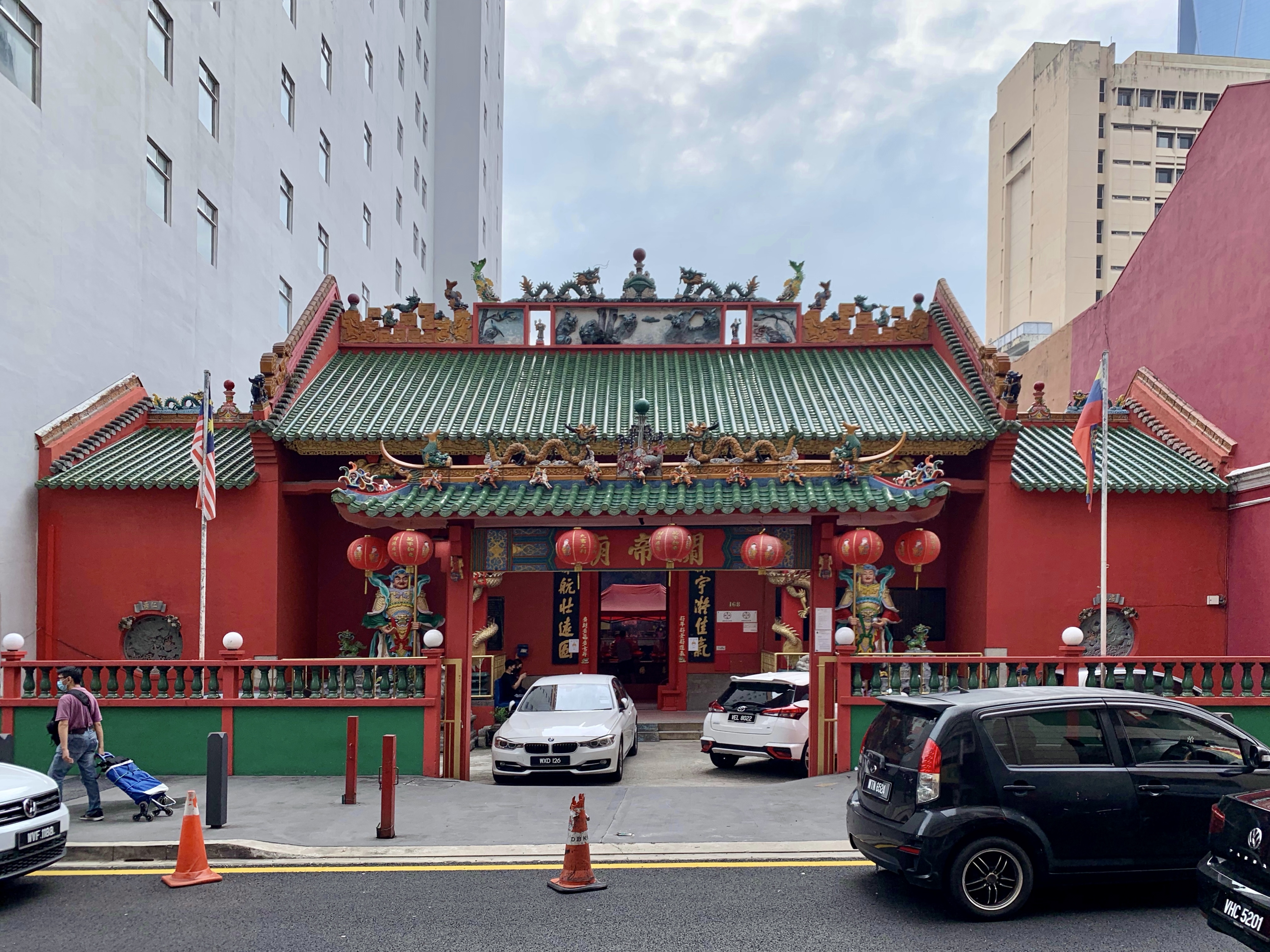
One of the oldest places of worship, the Kuan Ti or Guan Di temple is dedicated to Guandi- the Taoist God of war and literature. Incepted in 1888, this 124-year-old shrine is located along Jalan Tun H S Lee. Along with a statue of Kuan Ti on the main altar, this temple houses manifestations of Guan Yin or the Goddess of Mercy, Wei Chong or the God of Learning and Education, and Choy Sun the God of Prosperity.

Painted in gold, the altar of Guan Di includes the Guan Dao, the sword and Guan Jie or the spear of Guan Di. The devotees believe that these weapons have special powers that will bless them if they touch or try to raise them. Besides the altar, you will find two wooden statues each of Guan Ping and Zhou Cang who were Guandi’s attendants. This sacred shrine is guarded by two lions since the Chinese believe that lions keep off the negative energy and protect from viciousness. On the left side, you will find a male lion and on the right, a female lion is holding a baby lion. Dragons are attractively carved on the temple roof and they are beautifully coiled around the two main pillars constructed in the interior of the temple.

This temple is best visited early in the morning as it is very quiet and less crowded. The temple gets crowded during the Chinese New Year. The temple is open from 7 am to 7 pm Monday to Friday and from 9 am to 7 pm, Saturday and Sunday. Entry is free and parking is charged at RM 1 per hour.

Situated at Jalan Petaling’s southern end, the Chan See Shu Yuen Temple is regarded as one of the oldest and largest Buddhist temples. While the temple initially served the Chinese immigrants of the Chan clan, it is now open to all. The temple is popularly referred to as the Clan House of the Chan, Chen and Tan families since it houses the statues of the founding members of the clan. The Chan See Shu Yuen Temple is adorned with intricate carvings, vivid paintings and symmetrical pavilions. Further, it also depicts scenes and stories of Chinese legends through its carvings and paintings which further accentuate its beauty. You must plan a visit to the temple if you wish to get an insight into the Chinese culture and traditions. The temple is open from 8 am to 6 pm daily, and the best time to visit is between 2 to 4 pm.

The Sin Sze Si Ya Temple is the oldest Taoist temple located in Chinatown. Built in 1864, the temple is dedicated to the worship of two supreme deities Sin Sze Ya and Si Sze Ya, from the time of Kapitan Yap Ah Loy. He claimed that the deities helped him earn Kapitan status during the 1870 war. The temple has a large main hall with two side halls along with intricate roof ridges, glorious interiors, and the majestic memorial plaque of Chan Sow Lin, Yap Ah Shak, Yap Ah Loy, and Yap Kwan Seng. Showcasing Chinese traditional culture through its Feng Shui architecture, offering prayers to the White Tiger deity, praying under the chairs, and also the well-known fortune-telling sticks – all are still prevalent in Sin Sze Si Ya Temple. Also known as Sze Yah Temple, it is widely known in Malaysia for its charity work since 1907.

The Sin Sze Si Ya Temple is one of the 13 temples in the peninsular region of Malaysia, for the worship of Xian Shi Ye, depicting Chinese traditions and cultures. Built by the craftsman of southern China, the temple compound has ornamented roof ridges, one elaborate main hall, and two adjacent side halls for devotees. The temple entrance displays two 100-year-old sedan chairs that speak about the tempele’s past. Covered with decorated panels and open-air pavilions, the Sin Sze Si Ya Temple structure is one of the very few remaining old monuments today. The temple is open daily between 7 am and 5 pm.

The Buddhist Maha Vihara is a beautiful Sri Lankan Buddhist temple located in the heart of Kuala Lumpur. Founded in 1894, this temple is inspired by the Sinhalese community and is very famous among Sri Lankan, Indian, and Chinese tourists. Located in Brickfield, the red and white temple is crafted with massive Buddha statues and embellished fixtures. The main attraction of Buddhist Maha Vihara is its annual Vesak festival in which a massive gathering and parade are celebrated around the suburb celebrating Lord Buddha’s birthday. Devotees gather on the 1st and 15th of every Lunar month to present offerings to Lord Buddha and recite various verses.

The temple was established in 1894 when the Sinhalese community found a need to build a place to worship as per Sri Lankan Theravada tradition. The Dhamma School for Religious Learning and Lessons was inaugurated in 1929 with just 12 students under a small Bodhi Tree. The temple got its first shrine with the Lord Buddha statue in the early 20th century. The temple is open daily from 6 am to 10 pm.

Source

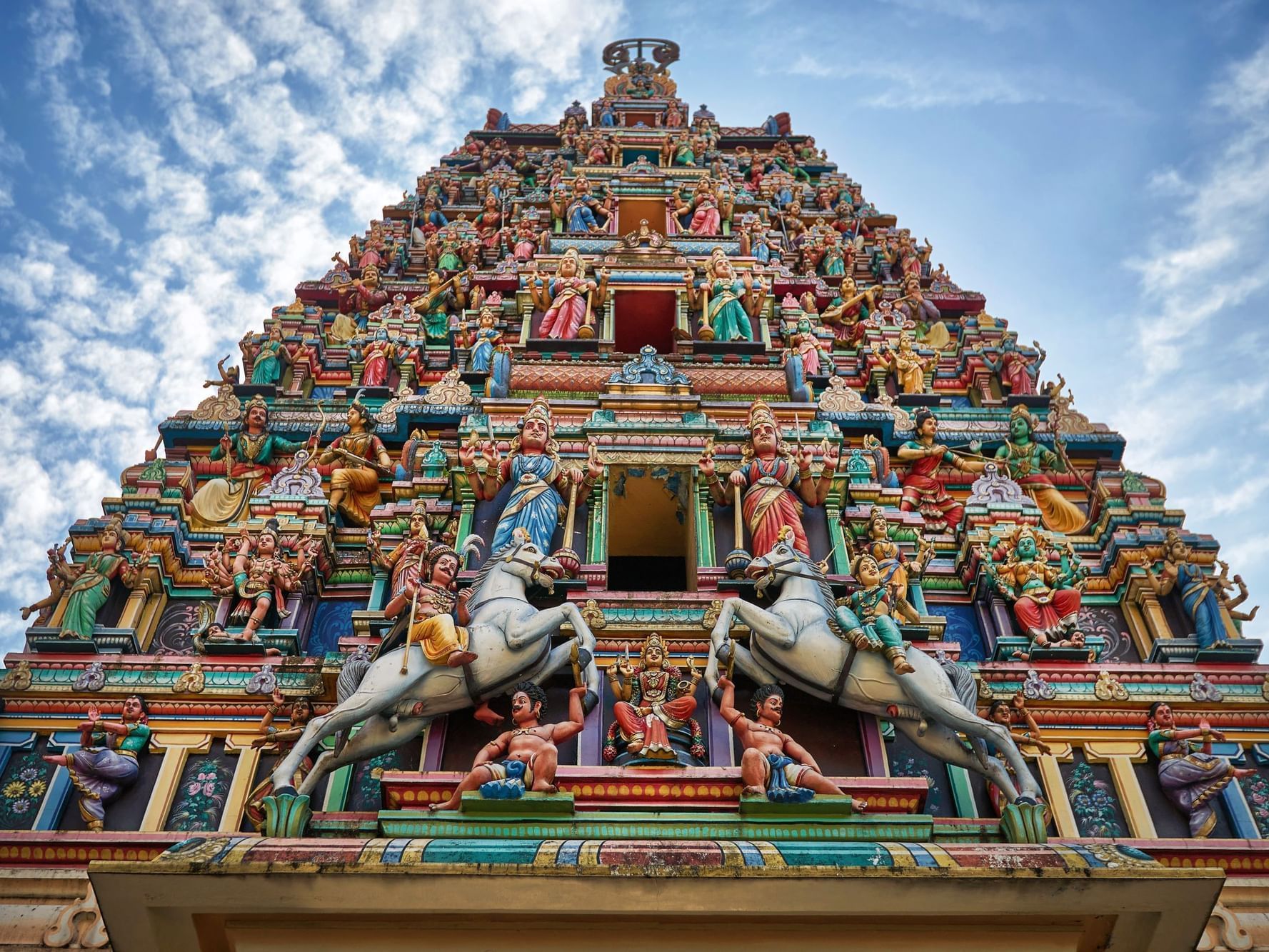
The Sri Maha Mariamman Temple, located in Chinatown, is the oldest temple of Goddess Mariamman, the manifestation of Goddess Parvati and the oldest Hindu temple in the city. Built in the Dravidian architectural style, the temple has a Raja Gopuram Tower at the entrance. The temple experiences a huge crowd, especially during the festivals of Deepavali and Thaipusam, in which there is a long procession to the Batu Caves carrying containers of milk to offer to Lord Murugan. The temple structure is similar to the body of a man, his head pointing towards the west and feet towards the east. The feet are showcased by a 75-foot tall tower at the entrance having sculptures of 228 Gods and Goddesses beautifully and finely crafted. It is a 5-tiered tower with a gateway for each and the chief deity resides in the inner part of the only entrance which faces towards the east. After the entrance is the main hall where the chief and other deities of the temple reside. The premise has a dome, ornamented and decorated precisely with garbagraham, the innermost sanctum where the idol of God resides, having its roof and walls with the priest standing in front of it during the puja. There are three shrines in the main temple along with four others of Lord Muruga and on his left; there is the shrine of Lord Ganesha. The Chariot found inside the temple is made of 350 kg of silver, and decorated with 240 bells. The temple is open from 6 am to 9 pm daily.

Located in Brickfields, the Sri Kandaswamy Koil is a popular temple that is over a century old. It is considered to be one of the most orthodox temples in the country. A Maha Kumbhabhishekham, an annual consecration ceremony is held every year in the temple premises.

The Shree Lakshminarayan Mandir is the abode of Lakshminarayan, a manifestation of Lord Vishnu and his wife Goddess Lakshmi. Attached to the temple are a community centre, a multi-purpose hall, and a classroom for spiritual and educational lessons. Located near the Jalan Ipoh Road, the temple is open for four hours each in the morning and evening.

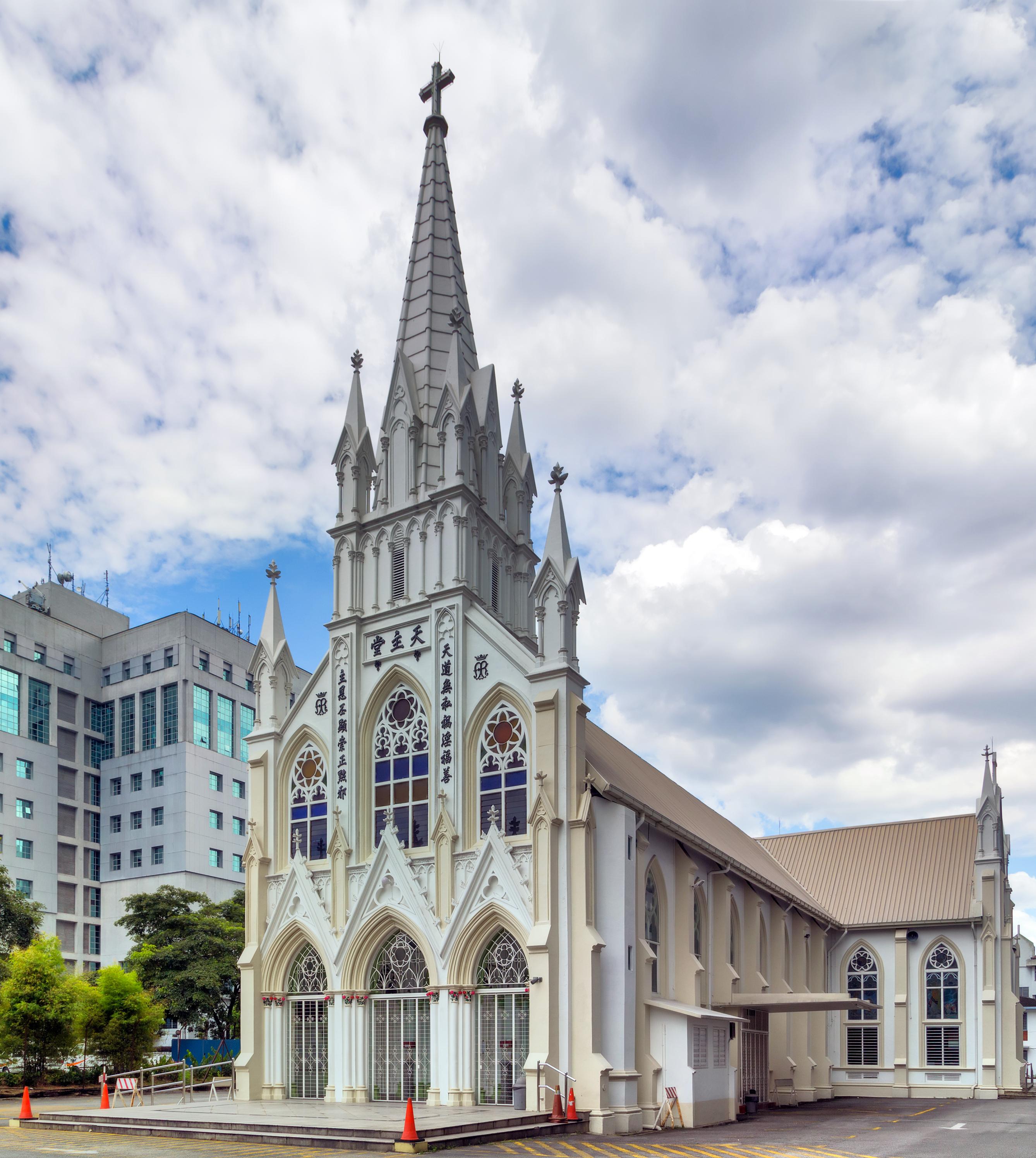
Located in Jalan Tun Sambanthan, the Holy Rosary Church is one of the most well-preserved sacred places in Kuala Lumpur. Built during the pre-war years, its roots date 100 years back during which it was blessed by Father Francis Emile Terrien. This church is famous for its Neo-Gothic style of architecture. This style of architecture encompasses elements such as glass windows, a marvellous vault, a flying buttress, a white exterior, and a pointed arch. Major changes took place in the mid-1980s when the Government acquired a small piece of land in front of the church. The Government built a hostel and community hall on the church land that was used for meetings and other such purposes. The church was renovated in 2003 as it marked the 100th anniversary of the Parish. The church is open every day from 7 am to 6 pm.

And that’s it for Kuala Lumpur. Next week, let’s check out Malaysia’s administrative and judicial capital, Putrajaya.

Travel Bucket List: Malaysia Part 20 – Kuala Lumpur Part 2

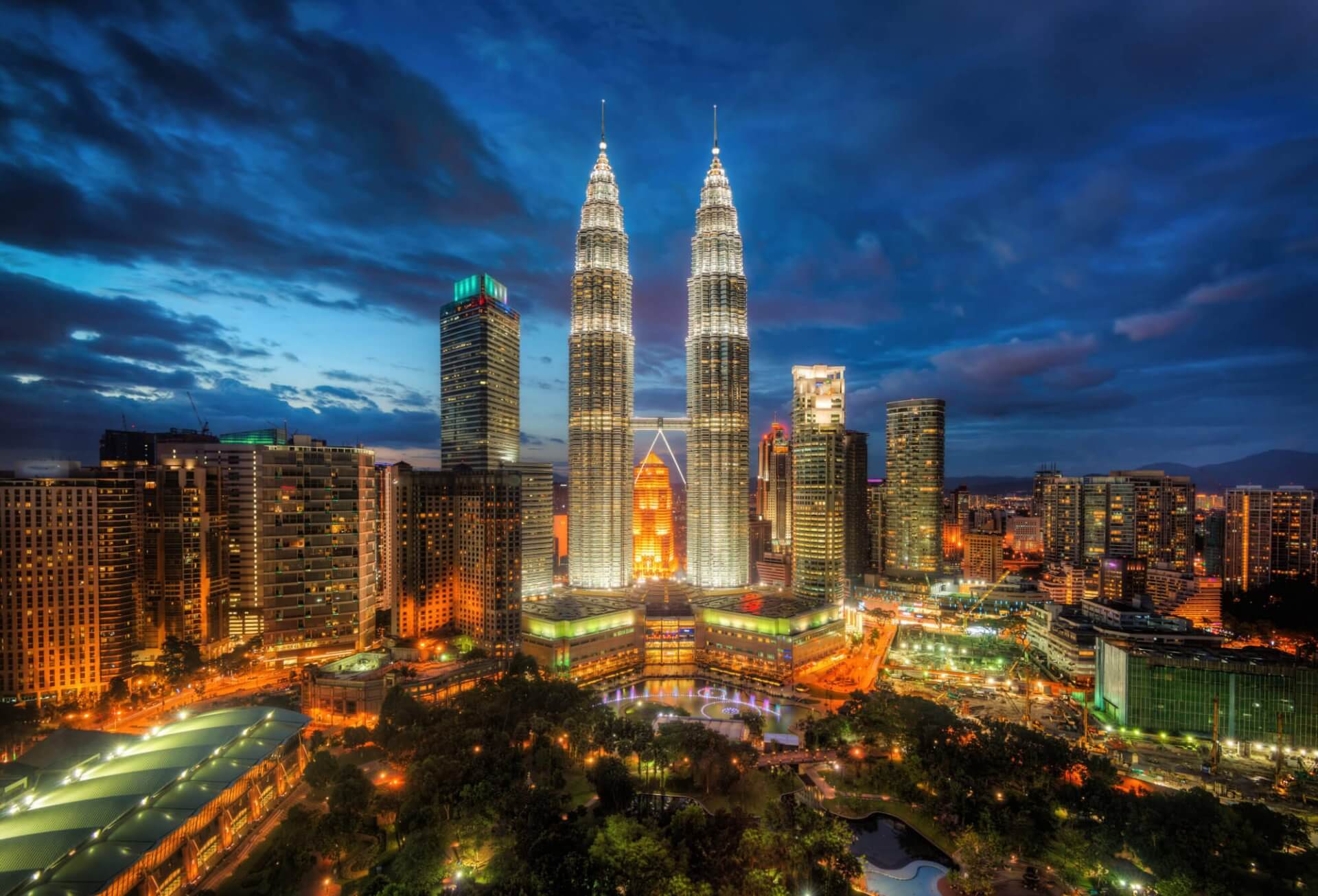
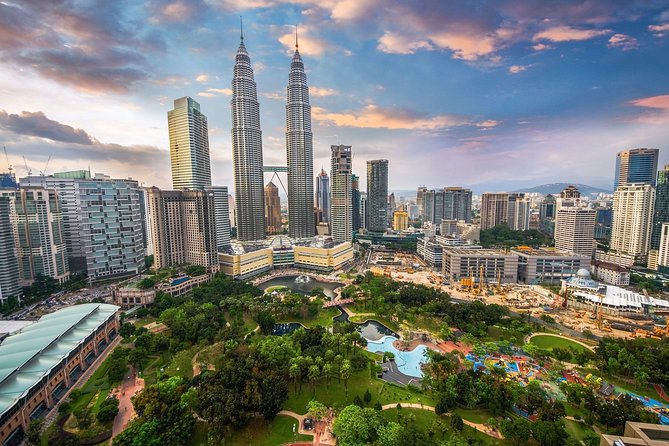
Petronas Twin Towers, the world’s tallest building until 2004, has a double-decker sky bridge that joins the 41st and 42nd floors of the two towers at about 170 meters above ground level, while the observation deck is located yet higher on the 86th level. The Twin Towers are also home to the Dewan Filharmonik Petronas concert hall, Southeast Asia’s leading venue for classical music.

The sky bridge at Petronas Twin Towers is the world’s highest two-storey bridge, joining the 41st and 42nd floors of the two towers. It not only acts as a podium where one can change elevators to reach higher levels but can also be used as a safe evacuation route in cases of emergency. Only the 41st level is open for visitors but is limited to only 1000 visitors per day. Located on the 86th level of Tower 2, the observation deck is at a height of 370 meters from the ground and offers a breathtaking 360-degree aerial view of the city. To visit the Petronas Towers, visitors must first purchase tickets. Tickets can be purchased online or at the counter. Discounted tickets for seniors are available for those 55 years of age and above. Queues for tickets can get quite long sometimes. The observatory also has miniature models of the Petronas Towers and the city of Kuala Lumpur. Each group is allowed 20 minutes to admire the view and to take photos. The tower sky bridge and observation are closed on Mondays and Tuesdays to Saturdays, it is open from 9 am to 9 pm with the last admissions at 8:30 pm. On Fridays, it is open from 9 am to 1 pm and then again between 2:30 to 9 pm. Entry fees for adults between 13 and 60 are RM 80 per person while children between 3 to 12 pay RM 33, senior citizens above the age of 60 need to pay RM 42 and infants below the age of 3 can enter for free.

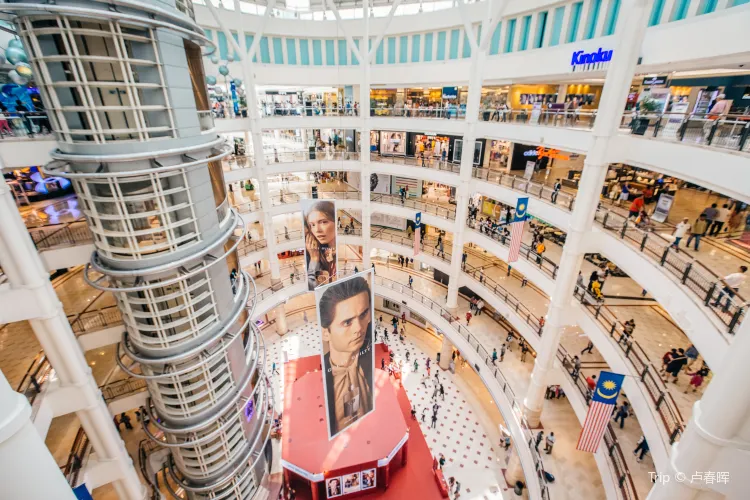
Suria KLCC is a 140,000-square-meter upscale retail centre at the foot of the Petronas Towers. It features mostly foreign luxury goods and high-street labels. Its attractions include an art gallery, an underwater aquarium and a science centre. Boasting approximately 300 stores, Suria KLCC is touted as one of the largest shopping malls in Malaysia. The Petronas Philharmonic Hall, also built at the base of the towers, is frequently associated with Suria KLCC’s floorspace. During holidays or celebration days, Suria KLCC is the top spot to see the decorations, especially at the main entrances and also in Centre Court. It also promotes the uniqueness and beauty of Malaysia’s cultural diversity to visitors.

Located at Suria KLCC Mall, Aquaria KLCC is one of the largest aquariums in Southeast Asia, housing more than 250 varied species of animals. Spread over 60,000 square feet over two levels, the main highlight is the 90-meter underwater tunnel. The oceanarium takes one on a journey from the highlands to the rivers, through the rainforest, into the coral reefs and then into the open ocean. The aquarium is divided into two levels and is essentially a journey across different water sources. Aquaria KLCC also hosts fish feeding sessions on Monday, Wednesday and Saturday. The aquarium is open from 10 am to 8 pm, Monday to Sunday, with the last admission at 7 pm. The entry fee is RM 69 for adults, RM 59 for children and RM 49 for senior citizens, while the disabled or handicapped need to pay RM 16.

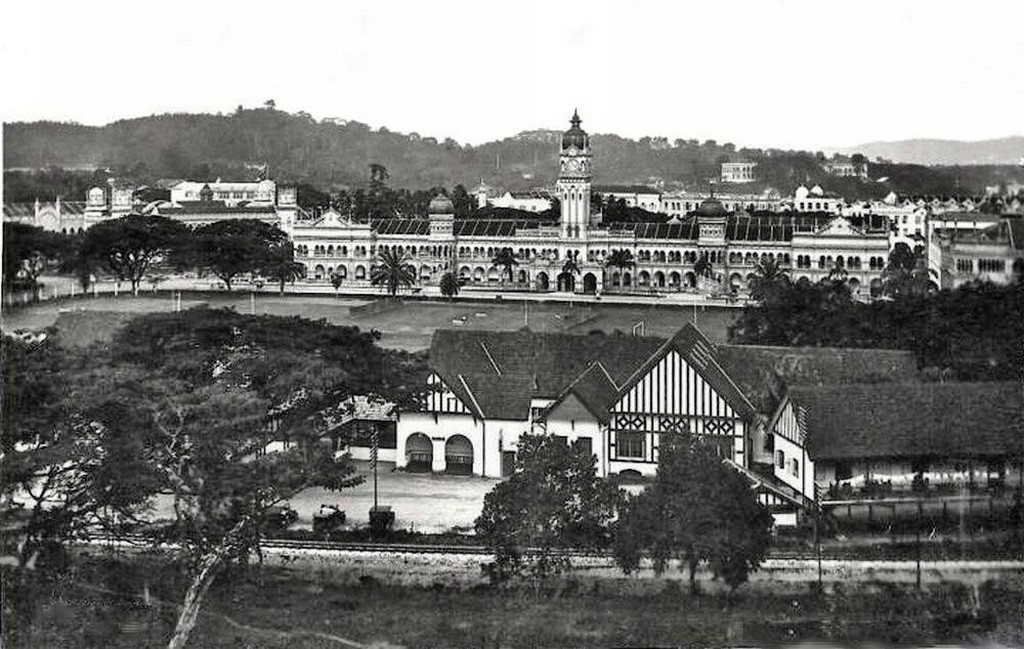
Merdeka Square, also known as Dataran Merdeka, is an iconic landmark. Situated in front of the famous Sultan Abdul Samad Building, it is a popular sightseeing spot, with buildings like the National Textile Museum and City Gallery surrounding it. Earlier known as Selangor Club Padang, Merdeka Square is where, at midnight on August 31, 1957, the independence of the Federation of Malaya from the British Empire was officially announced. The most striking sight of Merdeka Square is the 95-meter-tall flagpole, where the Malay flag was raised after independence for the first time. It is also the venue of the Independence Day Parade each year. There is also a black marble plaque close to the flagpole, marking the exact location where the Malayan flag was raised for the first time after independence. The Hari Merdeka Parade or the Independence Day Parade is held at Merdeka Square annually. There is a light show that takes place daily at 9 pm.

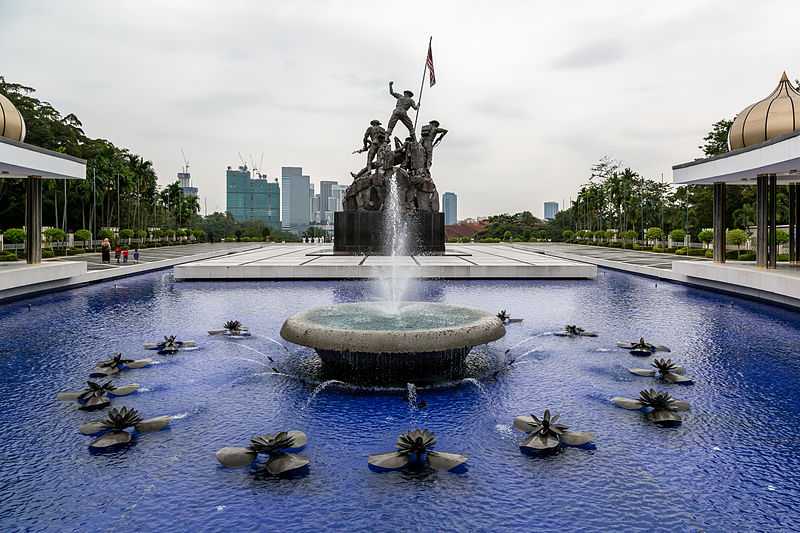
The National Monument of Malaysia, popularly known as Tugu Negara, is dedicated to the 11,000 people who were martyred during the First and Second World Wars and the subsequent emergency period of Malaysia’s independence. Located along Jalan Tamingsabi, at the northern end of the Lake Gardens, Tugu Negara has many details, each of which is symbolic of the various stages of struggle and achievements against both the British and Japanese forces. The National Monument was designed and sculpted more than 50 years ago by the Austrian-born designer and sculptor, Felix de Weldon. The bronze figurines symbolize extreme courage, strength, leadership, suffering and self-sacrifice. The sculpture depicts a group of seven soldiers, of whom one holds onto the national flag of Malaysia, another soldier is armed with a decorative rifle and bayonet; and a third soldier is armed with a machine gun. Two of the soldiers are tending to a wounded ally and this gesture is highly symbolic of their hard-earned victory, whereas the remaining two are slumped on the feet of the memorial, representing the defeated communist forces. Additionally, the strong granite base is carved with a prominent message: “Dedicated to the heroic fighters in the cause of peace and freedom, may the blessing of Allah be upon them”, in English, Latin and the Malay Jawi script. The crescent-shaped Central Pavilion has two special features: a microfilm vault where the names of all the fallen heroes are engraved, and a metal grille that not only houses the vault but also displays the different state emblems of Malaysia. The national monument is open daily from 7 am to 6 pm.

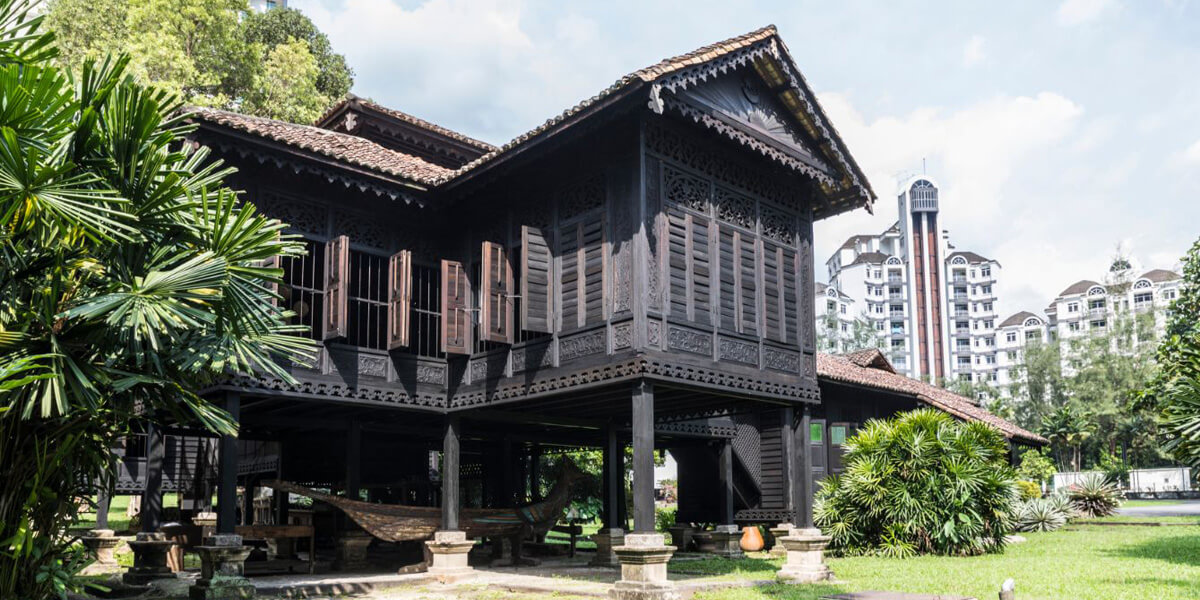
Located in Jalan Stonor, Rumah Penghulu Abu Seman is a wooden stilt house. One of the oldest wooden houses in Malaysia, it is known for its vernacular style of architecture. Adorned with antique furniture and artefacts, the heritage structure was constructed by some of the most skilled Malaysian artisans in the early 1900s. While the house was initially owned by Mukim Bagan Samak’s local headman, it was later restored by the leading national heritage NGO, Badan Warisan Malaysia. A guided tour of Rumah Penghulu Abu Seman is available which provides an insight into the traditional Malaysian lifestyle and culture.

Rumah Penghulu Abu Seman encompasses a combination of traditional as well as modern architectural elements. The house has a sloped roof, a beamed foundation and a pier that are specifically built for harsh monsoons. Louvre windows and walls further help to regulate the internal temperature by blocking the heat and capturing the breeze. The house is surrounded by a traditional heritage garden, which houses over 50 plant species. These plant species have historical and cultural significance for Malaysians. Rumah Penghulu Abu Saman is closed on Sundays and public holidays and from Monday to Saturday, it is open from 11 am to 3 pm. Entry fees are RM 10 per person and guided tours start from RM 10 per person and run during its opening hours.

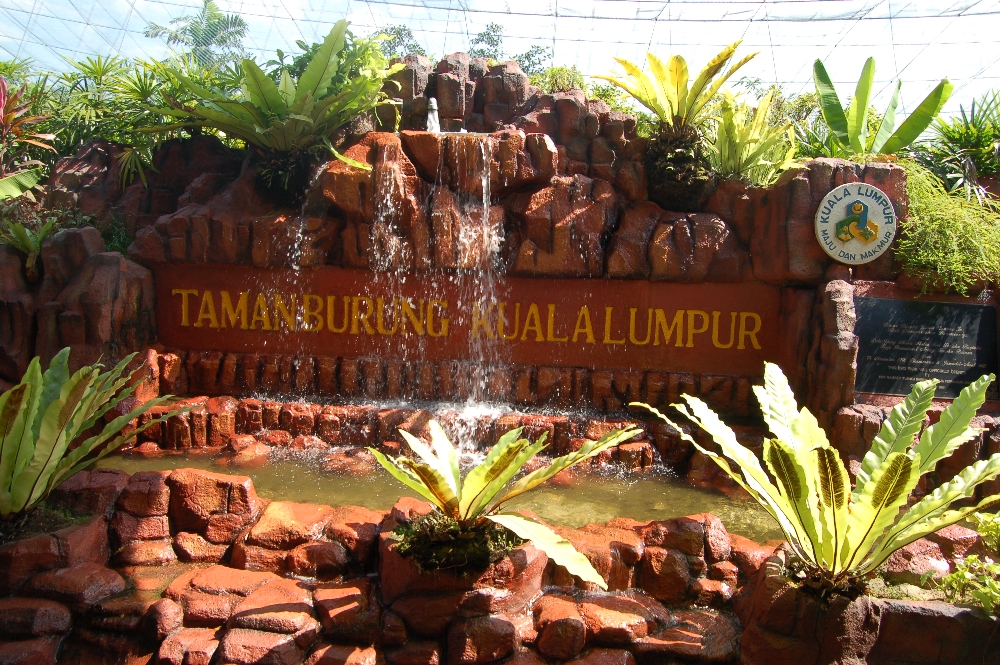
The Taman Burung Kuala Lumpur, also known as the Kuala Lumpur Bird Park, is a 20.9-acre public aviary adjacent to the Lake Gardens. This is the largest covered bird park in the world, housing more than 3,000 birds. There are feeding booths at various points in every zone where one can feed cut fruits and milk to the free-flying birds. The bird park is divided into 4 zones, with the main entrance leading directly to Zone 1 and Zone 2 having the ticket booth. The main entrance of the park directly leads to the first zone housing a netted walk-in aviary. Free-flying birds are fed at 10:30 am while eagles are fed at 2:30 pm. Zone 2 is home to the Baya weaver famous for its nest-building skills, the Nicobar pigeon, which is the closest living relative to the Dodo bird, the Ostriches and the Scarlet Ibis with its brilliant scarlet colouration. The third zone houses two members of the hornbill family –the Rhinoceros Hornbill and the Oriental Pied Hornbill. It is also home to the exotic Hill Mynas, the Formosan Blue Magpie originating from Taiwan, and the Purple Swamphen. The Hornbill Feeding time is 11:30 am while the Hornbill Restaurant and Gift Shop is located in this zone and is open from 9 am to 8 pm daily. The fourth zone, which is the biggest, houses the walk-in parrot enclosure and is home to 20 different species of parrots. The main attraction of this zone is the Waterfall Aviary where Milky Storks live in a netted enclosure that has a 30-foot high freshwater waterfall.
This leads to the Oriental Bird Aviary which has some 50 species of oriental birds. This zone also has an air-conditioned Bird Gallery, an Education Station and a Bird School. The Bird Park also has a 350-seat open-air Amphitheatre which conducts daily Bird Shows. The Daily Amphitheatre timings are between 12:30 to 3 pm. The bird park is open every day between 9 am to 6 pm and has entry fees of RM 63 for adults and RM 42 for children.

The Kuala Lumpur City Center Park, popularly known as KLCC Park, is a 50-acre garden located at the base of Petronas Towers and opposite Suria KLCC Shopping Centre. The major attractions include the Lake Symphony, the As Syakirin Mosque, and the children’s public pool. The water fountain show is held daily at 8, 9 and 10 pm.

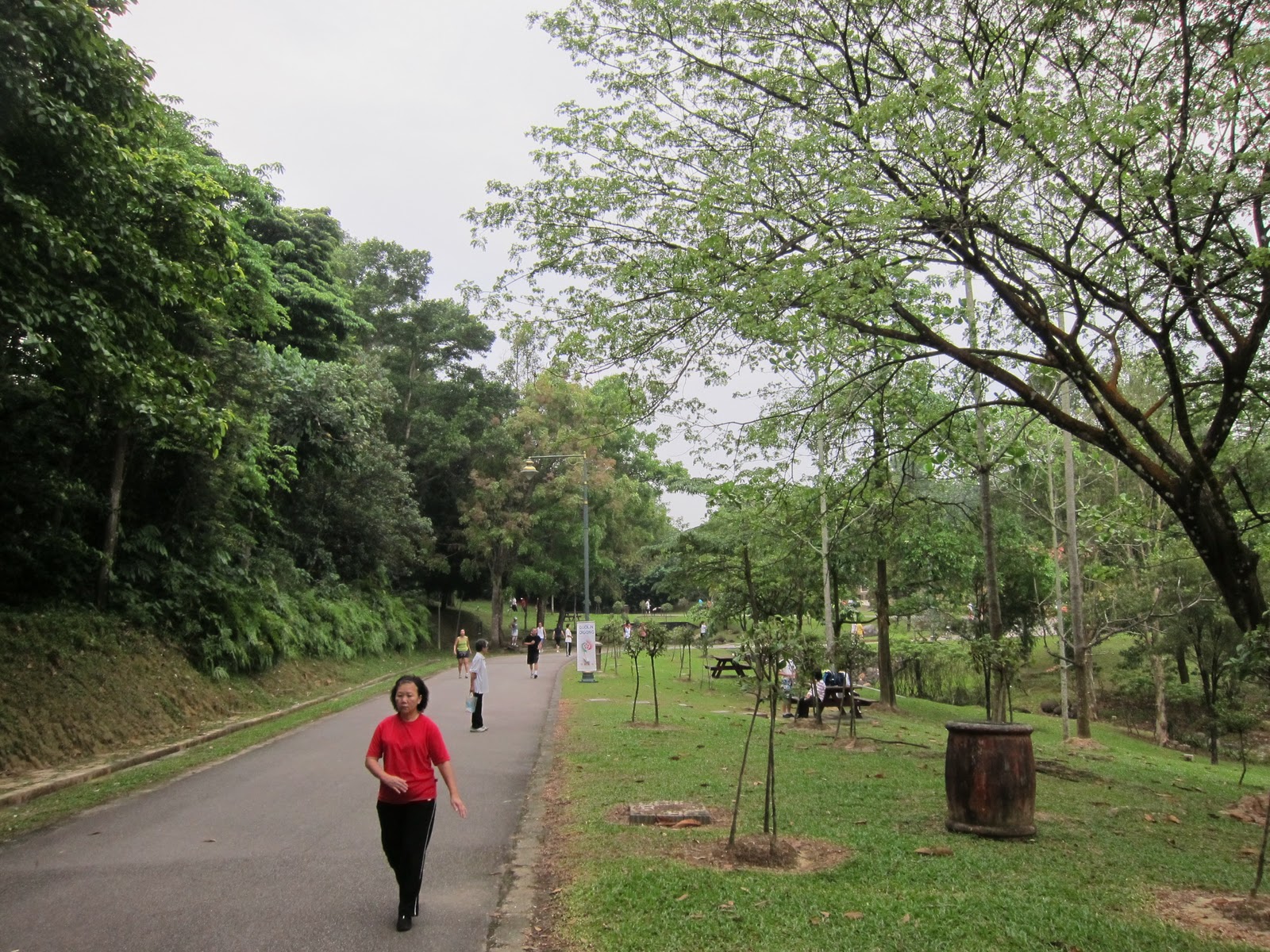
The park has been designed to add a touch of greenery to the iconic Petronas Towers. The KLCC Park has a 1.3km long jogging track, bounded by ornate sculptures and terracotta pavements. The Lake Symphony which is situated right at the mouth of the Twin Towers lights up everyone’s hearts with their musical fountain shows. The park is decorated with ornate waterfalls at a few points along its tracks which make the surroundings appear magical. The park is open between 7 am to 10 pm every day.

The KL Forest Eco Park, formerly the Bukit Nanas Forest Reserve, is the only tropical rainforest in Kuala Lumpur. The 9-hectare forest reserve is also one of the oldest forest reserves in Malaysia. The main attractions are the well-maintained walking trails, diverse trees, and a kid’s playground. It is also home to a forest Canopy Walk – a 200-meter wood and steel aerial bridge. The bridge towers above the reserve offer a stunning view of the Kuala Lumpur skyline. The 200m canopy walk provides a great view of Kuala Lumpur and the rainforest to its visitors. It also makes for good photographs and offers peaceful surroundings. Visitors can learn about natural medicines and herbs in the Herbal Garden. There are footpaths for casual joggers and natural trails for adventure seekers in the park. The best time to visit the park is between 7 and 9 am as it becomes crowded after 10 am.

Source

Spanning 92 hectares, the green and landscaped Perdana Botanical Gardens is in Kuala Lumpur’s Heritage Park. The park is a great jogging site and houses different species of orchids, a hibiscus park, and a 20-acre bird park. Inside the garden also lies a deer park, a sunken garden, a herb garden, and a collection of rare trees, cycads, bamboo, and grass.

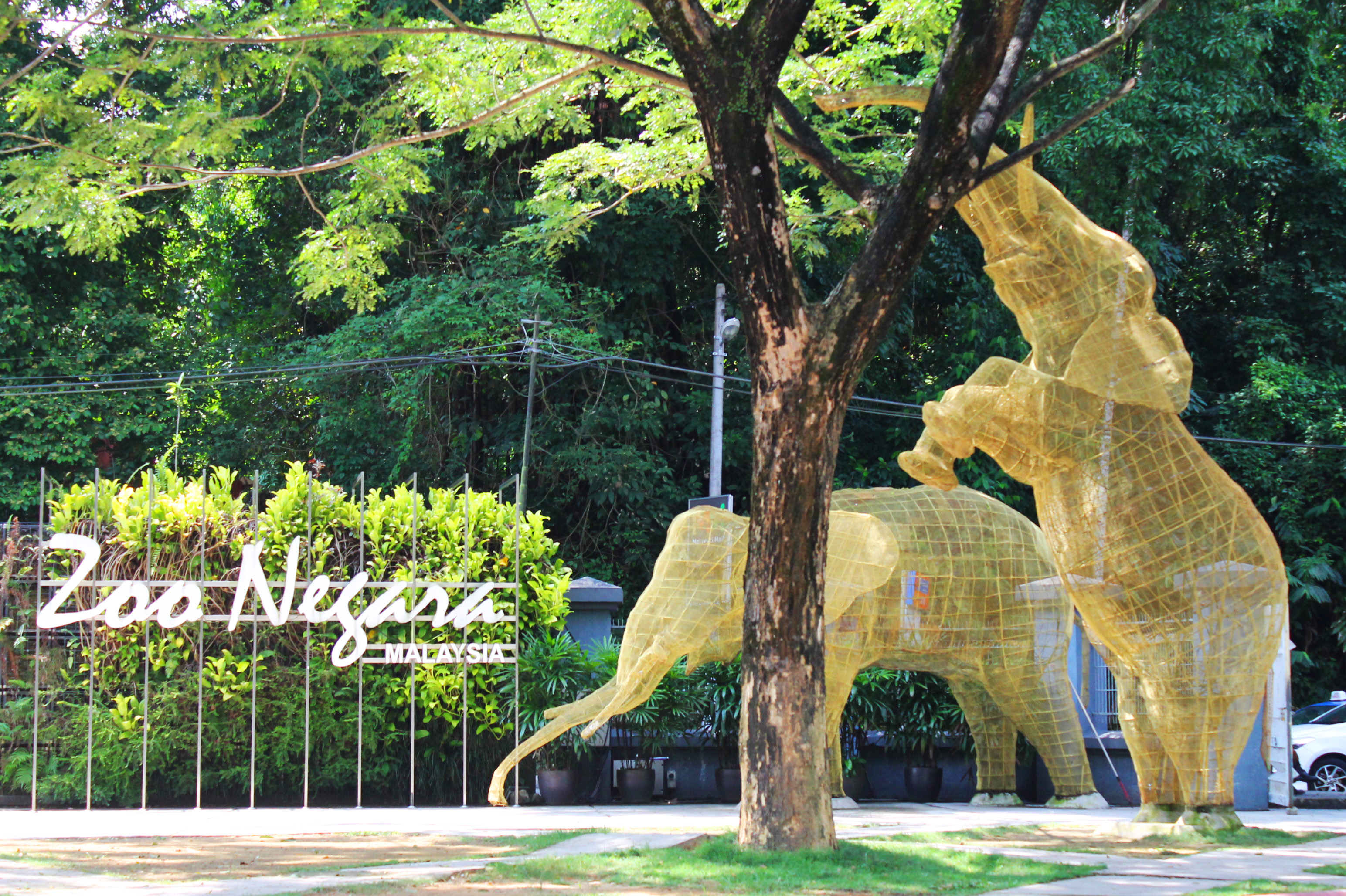
The National Zoo of Malaysia, commonly known as Zoo Negara, is spread over more than 100 acres and is home to more than 476 wildlife species. The main highlight of this zoo is Malaysia’s famous giant pandas, Xing Xing and Liang Liang. Visitors are free to stroll through the park and get a firsthand experience of the concept of an open zoo. There are several Banyan trees at Zoo Negara, with one gigantic Banyan tree that is supposedly the oldest in Malaysia.

The exhibits at the National Zoo are present in a replicate of their natural habitat; this allows visitors and animals to get a more natural experience. There is also a scenic lake present that houses several flamingos in the zoo. There are more than 16 exhibits at the zoo, and each one of them offers something new to its visitors. The zoo is open from 9 am to 5 pm daily and last admissions are at 4 pm. Entry fees are RM 85 for adults, and RM 43 for children.

The Kuala Lumpur Butterfly Park, located adjacent to the Lake Gardens and the KL Bird Park, is one of the largest butterfly parks in the world. Spread over 80,000 square feet of the landscaped garden, it houses over 5,000 butterflies, exotic plants, butterfly-host plants, and ferns. This park is also home to rhinoceros beetles and praying mantises and is dotted with cascading waterfalls and several ponds with Japanese Koi fish and freshwater turtles. The main attractions here are the landscape gardens which span over an area of 80,000 sq ft with over 5,000 live butterflies along with the butterfly-host plants where they are allowed to flutter about freely in their natural habitats. There is also a special glass shed with a highly temperature-regulated atmosphere where all the Himalayan butterfly species make themselves home. There are more than 120 different species of butterflies and at special ‘butterfly meeting’ booths one is allowed to hold the butterflies. A museum in the premises has a wide range of preserved insects like rhinoceros beetles and praying mantises. The park is open from 9 am to 6 pm daily and entrance fees are RM 22 for adults and RM 11 for children between 2 and 11.

Sentul Park is a beautiful and contemporary lake park on 35-acre land which is a community park for condominium block residents, with only a part of it accessible to the public. The park is located near Jalan Ipoh and is well-linked by bus, train, and road. Sentul Park grabs public attention for its major attraction, the Kuala Lumpur Performing Arts Centre or KLPAC, a vibrant performing arts centre arranging many shows and performances around the year. Sentul Park holds a very rich history of how the Federated Malay States Railway Workshop was attacked and bombed during World War II. There are still some colonial buildings and hollow shells to explore in the historical lake park. Amidst romantic gardens and a mesmerizing pond are two restaurants that are well known for their continental food. Visitors can also buy koi food and accessories from the very famous Sentul Park Koi Centre. Set up in 2004, the Kuala Lumpur Performing Arts Centre is a 794-seater vibrant performing arts hub equipped with a theatre and an academy for music, dance, and drama. The centre is crafted magnificently with a perfect blend of contemporary railway workshops and modern steel and glass extensions. On show days, it is open from 10:30 am to 8:30 pm while on non-show days, it closes at 6:30 pm. The best time to visit the park is from 7 to 9 pm.

Landscaped on hilly terrain, Taman Tasik Permaisuri is a well-admired and spacious lake park in Cheras. This park stretches over an area of about 40 hectares and is managed by the Kuala Lumpur City Hall. The park has a vast lake where one will find elegant pink lotuses and lilies blooming. This gleaming lake is surrounded by some attractive picnic spots with concrete tables and stools that are provided by the garden officials. The park includes 3 outdoor gyms, scenic fountains, a reflexology walking track, a playground for kids, and a canopy walk. The 7-terraced flower garden has 1800 orchids planted in it. A huge football stadium and a common swimming pool are constructed in the eastern section of the park. The western edge of the park has horses that are kept in an enclosed area. Activities like fishing, tai chi class, jogging, and cycling are practised here daily. Taman Tasik Permaisuri was developed as a terraced flower garden in the 1980s. Open from 7 am to 8 pm, there is no entry fee and parking is free at the entrance.

Occupying a sloppy terrain of 80 hectares, Bukit Jalil Park is a captivating recreational park in the Klang Valley. It houses a beautiful themed garden that features some garden displays depicting tea houses in Japan, an Iranian courtyard with tiles and fountains and traditional Malaysian culture. This well-maintained park has constructed walking and jogging tracks. The lush green foliage, fresh air, and crystal clear fountains make this a local favourite. The park is open from 7 am to 8 pm every day and has no entry fees with free parking at the entrance.

Situated opposite the KL Lake Gardens, the Kuala Lumpur Orchid Garden boasts about 800 species of orchids. While the orchid garden occupies an area of just one hectare, it houses about six thousand orchids as well as exotic species of flowers. The garden has two main varieties of orchids namely Terrestrial Orchids and Epiphytic Orchids, both native to Malaysia. The garden is open daily from 9 am to 6 pm.

Kuala Lumpur’s Chinatown is the hub of food, accessories, clothing, and everything a tourist could ask for with ample sightseeing opportunities. Also referred to as Chee Cheong Kai or Starch Factory Street it was opened by a Chinese man in the street to prevent his fellow countrymen from going back to their home country after the Civil War abandoned the mills they worked at. Spread on the entire street, there are rows of stalls making available fake branded items. Chinatown in Kuala Lumpur is still bright and glowing after sunset, it is a space which never sleeps. Shopping areas in Chinatown include Petaling Street, Central Market, Kota Raya Shopping Complex, and Peter Hoe Beyond. The Sri Mahamariamman Temple was built by Tamil migrants in 1873 and is the main Hindu temple in Kuala Lumpur. The temple displays the sculptures of Sri Mariamman, Lord Ganesha, Lord Muruga, Goddess Lakshmi and many other images. Built in 1880, the Kuan Yin Temple is also known as the Guanyin Temple and is dedicated to Kuan Yin or the Goddess of Mercy. The temple is a mix of European and Chinese architecture. The idol of Shakyamuni can be found in the main prayer hall, to the right of this idol is the idol of South Sea Guanyin and to the left is Kuan Yin’s compassionate side with a thousand hands and a thousand eyes. To the southern end of Petaling Street is the oldest Buddhist temple in Malaysia, the Chan See Shu Yuen Temple. It was built between 1897 and 1906 and is beautifully adorned with colourful paintings and carvings which put to light the Chinese mythology and warriors battling mythical creatures. The Temple also acts as a community centre for the locals. The 121-year-old Kuan Ti Temple, also known as the Guandi Temple is dedicated to Guandi, the Taoist God of literature and war and is situated along Jalan Tun H S Lee. Guan Dao and Guan Jie, sword and spear are placed in front of the Guandi idol which is believed to provide special powers to the devotees if lifted or even touched three times. Masjid Jamek Sultan Abdul Samad is the oldest mosque in Kuala Lumpur and is situated in the middle of the River of Life, fragmenting the River into two. The mosque is always open except for the days when the tiles get slippery due to wet weather. The mosque can be visited during one of the five prayer calls for the best experience.

Brickfields is Kuala Lumpur’s Little India. A melange of the old and the new – swanky high rise standing along colonial kampung or village-style houses, Brickfields is located near KL Sentral. The bustling neighbourhood offers Indian snacks and the neighbourhood is lined with shops. Brickfields is home to some of the most important religious attractions of Kuala Lumpur and the locality houses temples and churches.

Travel Bucket List: Malaysia Part 19 – Kuala Lumpur Part 1

Officially, the Federal Territory of Kuala Lumpur or Wilayah Persekutuan Kuala Lumpur, Kuala Lumpur or KL as it is colloquially known, is a federal territory and the ceremonial, legislative and judicial capital city of Malaysia. It is one of the fastest-growing cities in Asia and the largest city in Malaysia, covering an area of 243 sq. km. Greater Kuala Lumpur, also known as the Klang Valley, is an urban agglomeration of 7.564 million people as of 2018 and is among the fastest-growing metropolitan regions in Southeast Asia, both in population and economic development. Serving as the cultural, financial, and economic centre of Malaysia, the city is also home to the Parliament of Malaysia and the Istana Negara, the official residence of the Yang di-Pertuan Agong or the monarch of Malaysia.

Kuala Lumpur first developed around 1857 as a town serving the tin mines of the region and served as the capital of Selangor from 1880 until 1978. Kuala Lumpur was the founding capital of the Federation of Malaya and its successor, Malaysia. The city remained the seat of the executive and judicial branches of the Malaysian federal government until these were relocated to Putrajaya in early 1999. However, some sections of the political bodies remain in Kuala Lumpur. The city is one of the three federal territories of Malaysia, enclaved within the state of Selangor.

Kuala Lumpur has undergone rapid development in recent decades and is home to the tallest twin buildings in the world, the Petronas Towers, which have since become an iconic symbol of Malaysian development. The sixth most-visited city in the world in 2019, Kuala Lumpur houses three of the world’s ten largest shopping malls, ranks 70th in the world and second in Southeast Asia for the Economist Intelligence Unit’s Global Liveability Ranking and ninth in ASPAC and second in Southeast Asia for KPMG’s Leading Technology Innovation Hub 2021.

Kuala Lumpur’s name means muddy confluence in Malay; where Kuala is the point where two rivers join or an estuary, and lumpur means mud. One suggestion is that it was named after Sungai Lumpur or the muddy river; in the 1820s, a place named Sungei Lumpoor was said to be the most important tin-producing settlement up the Klang River. However, this derivation does not account for the fact that Kuala Lumpur lies at the confluence of Gombak River and Klang River, and therefore should be named Kuala Gombak, since the Kuala is typically named after the river that joins a larger river or the sea. Some have argued that Sungai Lumpur in fact extended down to the confluence and therefore the point where it joined the Klang River would be Kuala Lumpur, although this Sungai Lumpur is said to be another river joining the Klang River 1.5 km upstream from the Gombak confluence, or perhaps located to the north of the Batu Caves area.

It has also been proposed that Kuala Lumpur was originally named Pengkalan Lumpur or muddy landing place, in the same way that Klang was once called Pengkalan Batu or stone landing place, but became corrupted into Kuala Lumpur. Another theory says that it was initially a Cantonese word, lam-pa, meaning flooded jungle or decayed jungle. There is no firm contemporary evidence for these suggestions other than anecdotes. The name may also be a corrupted form of an earlier forgotten name.

Kuala Lumpur was originally a small hamlet of just a few houses and shops at the confluence of the Sungai Gombak and Sungai Klang. Kuala Lumpur became established as a town around 1857, when the Malay Chief of Klang, Raja Abdullah bin Raja Jaafar, aided by his brother Raja Juma’at of Lukut, raised funds from Malaccan Chinese businessmen to hire Chinese miners from Lukut to open new tin mines there. The miners landed at Kuala Lumpur and continued by foot to Ampang, where they opened the first mine. Kuala Lumpur was the furthest point up the Klang River to which supplies could conveniently be brought by boat, and therefore became a collection and dispersal point serving the tin mines.

When the Ampang mines succeeded, and exported the first tin in 1859, Sutan Puasa was already trading near Ampang. The town, spurred on by tin-mining, started to develop around Old Market Square or Medan Pasar, with roads radiating out towards Ampang as well as Pudu and Batu, where miners had also begun to settle in, and Petaling and Damansara. The miners formed gangs and frequently fought over control of the best tin mines. Leaders of the Chinese community were conferred the title of Kapitan Cina by the Malay chief, and Hiu Siew became the first Kapitan of Kuala Lumpur.

Early Kuala Lumpur was a small town that suffered from many social and political problems – the buildings were made of wood and atap which is palm frond thatching. The buildings were prone to catching fire, and due to a lack of proper sanitation the town was plagued with diseases. It also suffered from a constant threat of flooding due to its location. The town became embroiled in the Selangor Civil War in part over control of revenue from the tin mines. Kuala Lumpur was captured in 1872 and burnt to the ground. The war and other setbacks, such as dropping tin prices, led to a slump and a major outbreak of cholera caused many to flee. The slump lasted until late 1879, when rising prices for tin allowed the town to recover. In late 1881, the town was severely flooded, after a fire that had destroyed the entire town in January. Yap Ah Loy, together with Frank Swettenham who was appointed the Resident in 1882, were the two most important figures of early Kuala Lumpur with Swettenham credited with its rapid growth and development and its transformation into a major urban centre.

The early Chinese and Malay settled along the east bank of the Klang River, with the Chinese mainly settled around the commercial centre of Market Square and the Malays, and later Indian Chettiars and Muslims, residing in the Java Street area, now Jalan Tun Perak. In 1880, the colonial administration moved the state capital of Selangor from Klang to the more strategically advantageous Kuala Lumpur, and government buildings and living quarters were to the west of the river. Government offices and a new police headquarters were built on Bukit Aman, and the Padang initially created for police training. The Padang, now known as Merdeka Square, would later become the centre of the British administrative offices when the colonial government offices moved to the Sultan Abdul Samad Building in 1897.

Frank Swettenham, on becoming the British Resident, began improving the town by cleaning up the streets. He also stipulated in 1884 that buildings should be constructed of brick and tile so that they would be less flammable, and that the town be rebuilt with wider streets to reduce fire risk. Kapitan Yap Ah Loy bought a sprawling piece of real estate to set up a brick factory for the rebuilding of Kuala Lumpur, the eponymous Brickfields. Demolished atap buildings were replaced with brick and tile buildings, and many of the new brick buildings had five-foot ways and Chinese carpentry work. This resulted in a distinct eclectic shop house architecture typical to this region. Road access was expanded, linking tin mines with the city with the main arterial routes of the present Ampang Road, Pudu Road and Petaling Street. Law reforms were implemented and new legal measures introduced to the assembly.

The construction of a railway line between Kuala Lumpur and Klang, completed in 1886, spurred the growth of the city. As development intensified in the 1880s, putting pressure on sanitation, waste disposal and other health measures. A Sanitary Board created on 14 May 1890 was responsible for sanitation, road upkeep, street lighting, and other functions. This would eventually become the Kuala Lumpur Municipal Council. In 1896, Kuala Lumpur was chosen as the capital of the newly formed Federated Malay States.

Kuala Lumpur expanded considerably in the 20th century. From 0.65 sq km in 1895, it was extended to 20 sq km in 1903 and to 93 sq km in 1948 and to 243 sq km in 1974 as a Federal Territory. The development of a rubber industry in Selangor fuelled by the demand for car tyres in the early 20th century led to a boom, and the population of Kuala Lumpur increased from 30,000 in 1900 to 80,000 in 1920. The commercial activities of Kuala Lumpur had been run to a large extent by Chinese businessmen. During World War II, Kuala Lumpur was captured by the Imperial Japanese Army on 11 January 1942. Despite suffering little damage during the course of the battle, the wartime occupation of the city resulted in significant loss of lives; at least 5,000 Chinese were killed in Kuala Lumpur in just a few weeks of occupation by Japanese forces, and thousands of Indians were sent as forced labour to work on the Burma Railway where many died. They occupied the city until 15 August 1945. Kuala Lumpur grew during the war and continued after the war during the Malayan Emergency between 1948 and 1960, during which Malaya was preoccupied with a communist insurgency and New Villages were established on the outskirts of the city.

On 31 August 1957, the Federation of Malaya gained its independence from British rule. Kuala Lumpur remained the capital after the formation of Malaysia on 16 September 1963 with the Malaysian Houses of Parliament completed at the edge of the Lake Gardens in the same year. Kuala Lumpur achieved city status on 1 February 1972, becoming the first settlement in Malaysia to be granted the status after independence. Later, on 1 February 1974, Kuala Lumpur became a federal territory. Kuala Lumpur was ceded by Selangor to be directly controlled by the central government, and it ceased to be capital of Selangor in 1978 after the city of Shah Alam was declared the new state capital. Putrajaya was declared a Federal Territory on 1 February 2001, as well as the seat of the federal government. The administrative and judicial functions of the government were shifted from Kuala Lumpur to Putrajaya, Kuala Lumpur however still retained its legislative function, and remained the home of the Yang di-Pertuan Agong or the Constitutional King.

From the 1990s onwards, major urban developments in the Klang Valley extended the Kuala Lumpur metropolitan area. This area, known as Greater Kuala Lumpur, extends from the Federal Territory of Kuala Lumpur westward to Port Klang, east to the edge of the Titiwangsa Mountains as well as to the north and south. The area covers other administratively separate towns and cities and is served by the Klang Valley Integrated Transit System. The geography of Kuala Lumpur is characterised by the huge Klang Valley, bordered by the Titiwangsa Mountains in the east, several minor ranges in the north and the south, and the Strait of Malacca in the west.

Kuala Lumpur and its surrounding urban areas form the most industrialised and economically, the fastest-growing region in Malaysia. The city remains the economic and business hub of the country and Kuala Lumpur is a centre for finance, insurance, real estate, media, and the arts in Malaysia. Tourism plays an important role in the city’s service-driven economy.

Menara Kula Lumpur, or Kuala Lumpur Tower, located within the Bukit Nanas Forest Reserve, is the tallest telecommunications tower in Southeast Asia and the 7th tallest in the world. The thrilling 360-degree view of Kuala Lumpur skyline from the tower is the main attraction. The six-storey, 421-meter-tall KL Tower is also popular for the revolving restaurant it houses. The tower is the highest viewpoint in the city and acts as the Islamic Falak observatory, which is used to observe the moon during the holy month of Ramadan. The architecture of this building is reflective of Islamic-style Arabic scripts, intricate Islamic tiles, and floral and abstract patterns. Designed by the architect Kumpulan Senireka Sdn. Bhd, the construction took place in three phases over a span of five years. The 421-metre-tall tower was officially inaugurated on October 1, 1996 and has been used for broadcasting purposes ever since.

The base design of Menara KL was meant to symbolize the human journey for perfection in life. The prominent globular pinnacle of the tower has its inspirations rooted to a Malaysian spinning top. The main lobby of the upper ground floor has ornamental glass domes which emit a diamond-like sparkle. To pay homage to the traditional Islamic and Persian architecture and to display its Islamic roots, Muqarnas, a type of corbel has been used as the main decorative element. The roof of the pod is at 355 m and after the placement, the overall height increases to 421 m.

The observation deck at Menara Kuala Lumpur is located at a height of 276 m above ground level and offers a stunning and thrilling view of the city. The Sky Deck is located at a height of 300 m above the ground and offers spectacular views of the city skyline at day and during sunset. Tickets for the Sky Deck, including the Observation Deck and Sky Tower are RM 99 and RM 52 for adults and children between 4 and 12 years. KL Tower is open daily from 10 am to 9 pm.

The Jelutong Tree located in the premise of KL Tower is more than a century old. To conserve the tree, the position of the tower was shifted, and a series of barricades were put up so that the roots of the tree were not harmed during excavation. The tower is lit up, from the ground floor to the top of the antenna mast, with LED lights. Visitors should check the weather forecast before booking the tickets for the observation deck and the sky deck, as in case it rains or drizzles, the open-air sky deck is shut, and visitors can only access the observation deck only. Tickets are non-refundable. Menara Kuala Lumpur is open from 10 am to 9 pm daily.

Nestled in the heart of Kuala Lumpur, Ilham Tower is the fourth-tallest structure in Malaysia. The 60-storey tower was designed by Foster+Partners and is a combination of residential as well as commercial spaces. The Ilham Tower houses a 4-star hotel, art gallery, gift shop, food joints and office suites. and is famous for the Ilham Art Gallery, which houses a great collection of contemporary as well as modern art pieces. The tower is open from 11 am to 7 pm between Tuesday and Saturday and is closed on Mondays and public holidays. Guided tours of 30-minute duration are available at 11:30 am on Thursdays and 11 am on Saturdays and are subject to availability.

That’s all about Kuala Lumpur in this part. More coming up next week!