
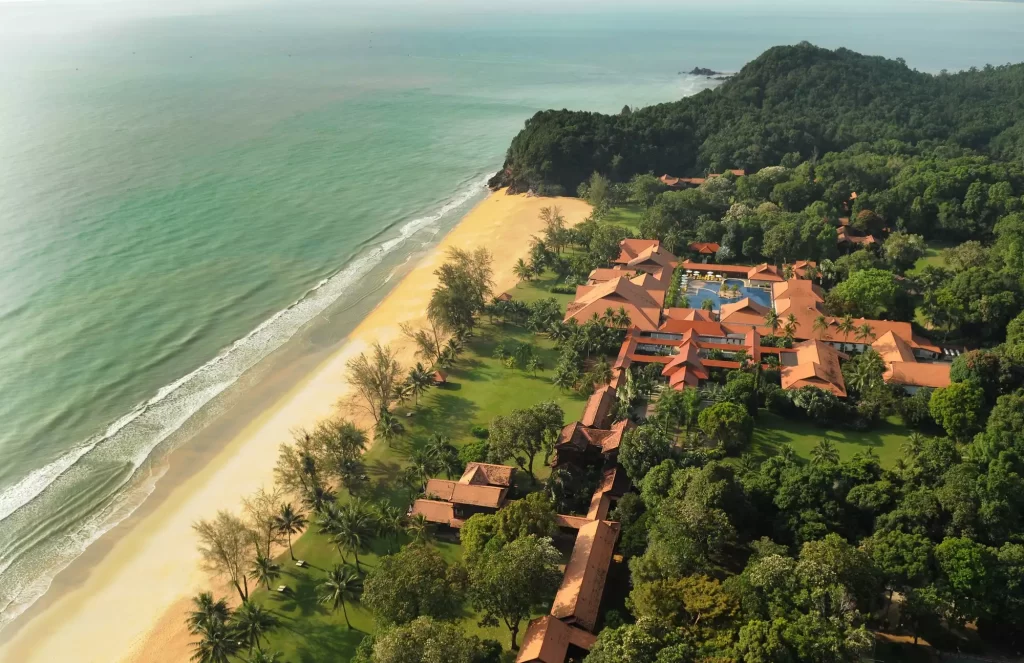
Cherating
A coastal town, which is one of the wettest places in Malaysia, Cherating is famous for its beach resorts. Cherating also has the distinction of being the location of Asia’s first Club Med. This town is a Malaysian seasonal destination famous for white-sand beaches, surfing and windsurfing. Cherating’s Bay is an ideal spot for swimming most of the year, while surfing is popular during the monsoon months. Outside of the surf season, Cherating is quite empty which only adds to the appeal. The best time to visit Cherating would be the dry season, between April to October as there are heavy monsoons here that might end up disrupting the trip.
The major attraction of Cherating is the giant leatherback turtles which migrate yearly to reside on the beaches here. The showstoppers, however, are the mystical fireflies which reside on the trees along the banks of the rivers. Cherating has a cultural village which sells traditional textiles and handicrafts. There is a turtle sanctuary located on Cherating’s beaches. The turtles lay their eggs in July and August.
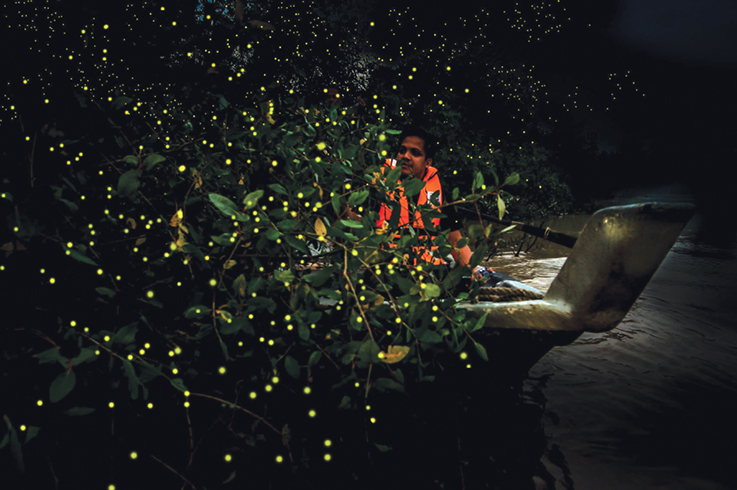
The Fireflies Tour is an hour-and-a-half-long boat tour which takes one through the waters of Cherating and explores the beauty of this popular beach town. The river cruise begins at 8 pm and has a fee of RM 35 per adult and RM 25 per child. The Malaysian Peninsula has only two natural lakes, both of which flow through Pahang and Lake Chini is one of them. It is Malaysia’s second-largest lake and is made up of a series of 12 smaller lakes. A tour of the lake takes one on a calm, serene ride through the lake with the tour guide reminiscing about the stories of the mythical dragon who lives in the lake and is the guardian of the lost city of gold which was once located underwater. The tour takes around 6.5 hours starting from any time between 8 am and 9:30 pm. The tour fee is 270 RM to 355 RM per child; and RM 520 to RM 757 per adult. An ATV ride lets one jump into one of the all-terrain vehicles and breeze through the beautiful sand beaches of Cherating. The ride fee is about RM 90 per person. At Cherating, one must not miss the opportunity to surf on the beautifully crested waves. There are many beachside surf clubs open for all which rent out surfing boards and surfing safety minikits.

At the Cherating Turtle Sanctuary, one is allowed to watch the nesting turtles and also witness the return of the ones who migrate to the east-coast every year, but only under the expert supervision of the turtle rangers of the Cherating Turtle Sanctuary. There are special areas on the shore where these giant turtles come to lay their eggs and then head back towards the sea. This process can be observed more frequently during the months from May through September ideally when the tide is hidden. Visitors can take a tour which takes between 3.5 and 4 hours to complete and is free, but if one wants to set up a tent to observe their daily behaviour, the fee is RM 30 per person. The Mangrove Cruise on the Cherating River is an hour-and-a-half-long cruise that gives one the chance to learn about the importance of mangroves in the ecosystem and the ways to protect them. Taking 90 minutes to complete, it costs RM 35 per adult and RM 25 per child.

Chendor Beach is a white sand beach with shallow and clear waters that provide a beautiful picturesque destination. The well-maintained beach is just the perfect place to unwind leisurely and hang out with your friends and family, especially during the mesmerizing sunrise and sundown. The beach is well known for surfing.
Tioman Island
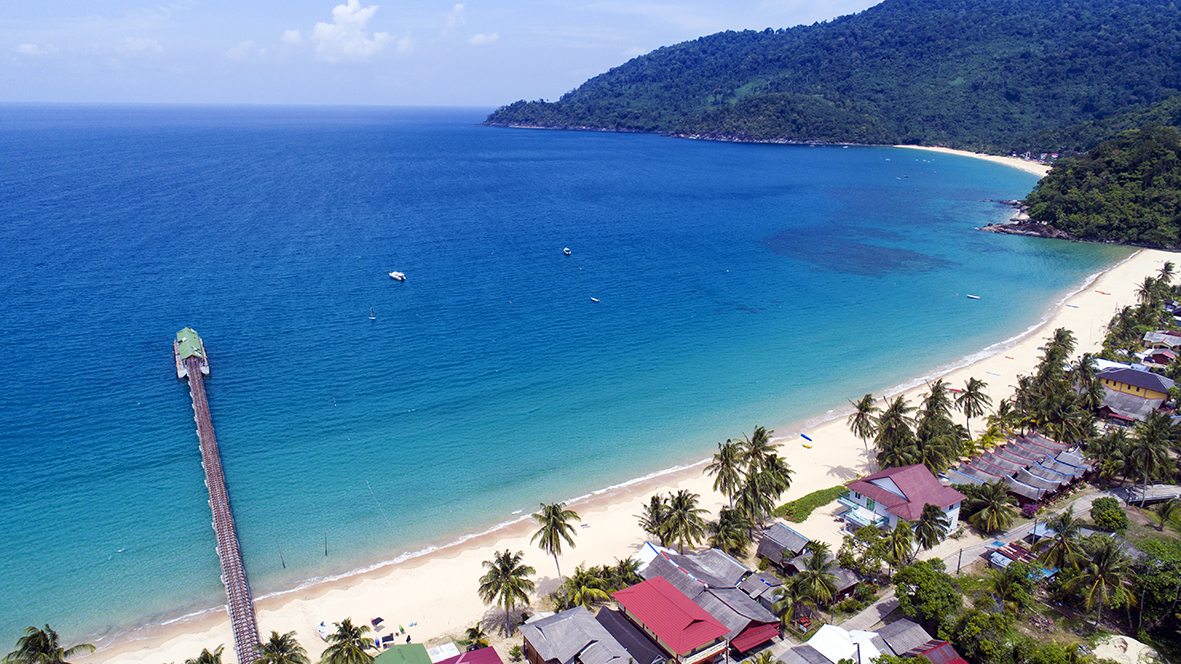
Lying about 32 km off the east coast of Malaysia, Tioman Island is 39 km long and 12 km wide and has seven villages, the largest and most populous being Kampung Tekek on the central western coast. The densely forested island is sparsely inhabited and is surrounded by numerous coral reefs, making it a popular scuba diving, snorkelling, and surfing spot. There are many resorts and chalets for tourists around the island, which has duty-free status. The island is accessed via ferry service from the coastal town of Mersing.
Tioman has been used for thousands of years by Austronesian fishermen as an essential navigation point and a source of fresh water and wood. During the past thousand years, it has played host to Chinese, Arab, and European trading ships, and often Chinese porcelain shards can be found on beaches around the island. In more recent history, Tioman played host to both the British and the Japanese navies during the Second World War. As a result, the waters around the island are littered with war remains, including HMS Repulse and HMS Prince of Wales. The island does not allow buildings to have more than three stories.
The marine area around Tioman Island and eight other nearby islands have been declared as marine parks and marine reserves. Apart from its diverse marine life, the inland rainforest area was protected in 1972 as the Pulau Tioman Wildlife Reserve. However, a large part of the original reserve was sacrificed for agricultural and touristic development in 1984; the remaining area is approximately 8,296 hectares. There are several protected species of mammals on the island, including the binturong, long-tailed macaque, slow loris, black giant squirrel, red giant flying squirrel, mouse deer, brush-tailed porcupine, and common palm civet, from a total of 45 species of mammals and 138 species of birds, including the majestic frigatebird. Tioman also has species that are endemic to its shores. The Tioman walking catfish Clarias batu can be seen on rainforest walks. The Kajang slender litter frog is only known to be found in Mount Kajang.
Tioman’s corals have been affected by a mass bleaching event in 2010 whereby the island lost a significant portion of its live coral cover. That resulted in many corals turning a dull white colour and some even fragmenting into pieces of dead coral skeleton. The 2016 bleaching event only touched on Tioman’s coral reefs, and as such, the coral has remained in good and healthy condition.

According to legend, Tioman Island is the resting place of a beautiful dragon princess. Whilst flying to visit her prince in Singapore, this beautiful maiden stopped to seek solace in the crystal-clear waters of the South China Sea. Enraptured by the charms of the place, she decided to discontinue her journey. By taking the form of an island, she pledged to offer shelter and comfort to passing travellers. Local mythology claims that the island is the embodiment of the mighty dragon Sri Gumom. The dragon was on his way to visit his sister Gunung Linga or Lingin Peak. Still, the great Sri Rama forbade the meeting, and Sri Gumom was turned into a stone and fell into the deep sea where he now remains, frozen in eternity as this beautiful island with its distinctive topography.
Like mainland Malaysia, Tioman Island has a hot and humid climate, with sunny afternoons and warm evenings but cool nights. Temperatures are usually consistent and the calm weather peppered with occasional showers and storms. The tourist season peaks between May and August, when the weather generally displays the least rainfall. The monsoon winds begin to blow in October, bringing heavy rain and strong waves till January which is the start of the surfing season. During this time, ferries run once a day, while only a few hotels will open at discounted rates. Still sparsely populated, most villages are connected by sea taxi or speedboat or jungle trail, which means visitors usually stay at their first ferry stop for the entire trip.
Among the seven villages, Air Batang Village, more commonly referred to as ABC Village, Juara and Kampung Tekek are the prime destinations. Kampung Telek is the administrative centre and the largest village of Tioman Island. It is the major spot connecting the island to Mersing and Tanjung Gemok through ferries. Tioman Airport is also located in Kampung Tekek. Sunbathing at Paya beach, rustic relaxation at Genting Village, surfing at Juara Beach, hiking to Asah Waterfall, snorkelling at Salang and a visit to a Marine Park Information Center is a must.
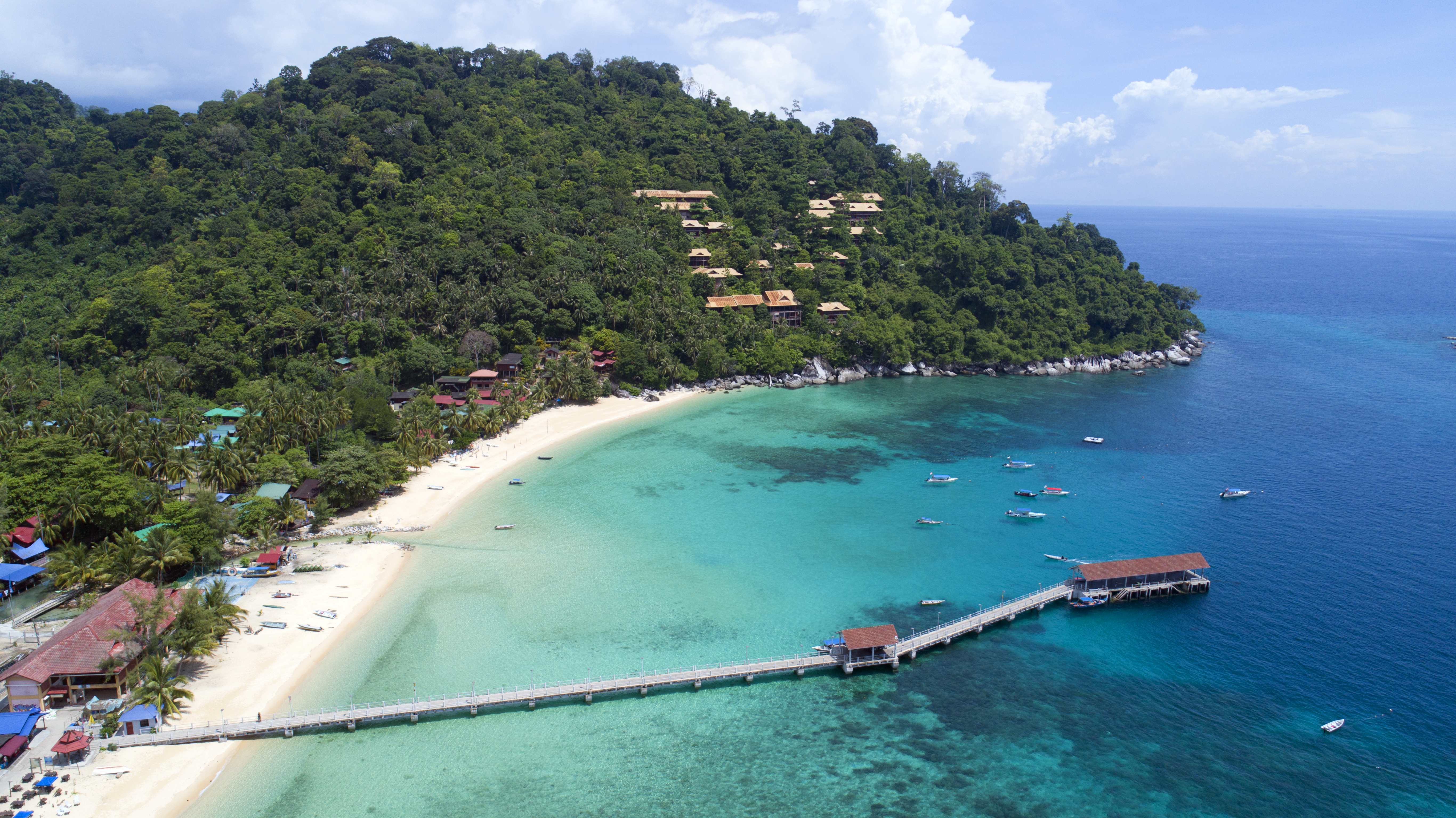
Overseas visitors to Tioman Island, are required to pay the Marine Park Fee which is RM 30. The most common way of getting to Tioman Island is by ferry from Mersing. Note that an entry fee of RM 10 known as Tioaman Toll has to be paid here. Ferries from Tanjung Gemok to Tioman Island need not pay a toll.

Paya is a small village with a beach on Tioman’s west coast. It’s a popular tourist spot, especially for Singaporean visitors and families, with two major resorts and a small-budget hotel providing chalet accommodation. The beach area stretches slightly more than half a km and is a beautiful expanse of fine white sand fringed by gentle seas. The deeper waters off the jetty and neighbouring Tomok Island are where living coral reefs reside for snorkelling activities, while cooling mountain streams, spectacular boulder formations and lush rainforest views occupy Paya’s hilly backyard, with a dramatic view of Gunung Kajang. The village is named after its abundance of mangrove swamps or paya in the local language. Behind the tatty wooden huts and homes along the beach, a shallow river feeds through a rich mangrove landscape, with boats parked at deeper sections under the shade of a thick forest canopy. Nature lovers will appreciate the rich rainforest scenery, with a jungle trail from Tioman Paya Resort that leads to Rock Falls, a rocky stream with small pools for swimming. At the northern end of the village, visitors can follow another trail across a moderate slope that ends at a beach, Teluk Sri Intan and then continue their journey on a gravel road to the TAT Turtle Sanctuary, before exiting out to Tekek town through Berjaya Tioman Resort. Finally, at the southern end of Paya, a partly paved jungle trail leads to Genting Village.
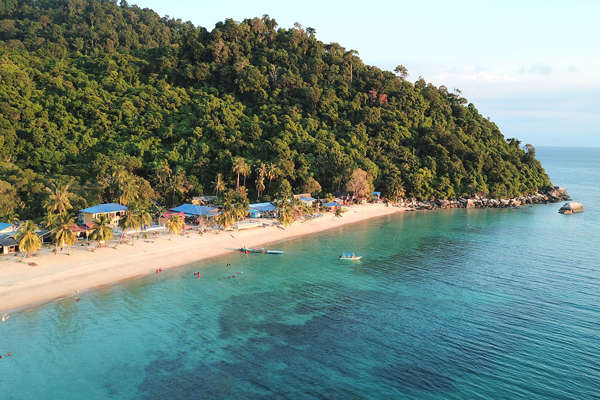
Genting is a large village along the west coast of Pulau Tioman, located between Paya and Nipah Village. It occupies a 1.5 km stretch of beach with a hilly backyard of lush rainforest. A favourite spot for mainland locals and Singaporean tourists, Genting has a sizeable collection of budget hotels and local restaurants clumped tightly along the beachfront. Weekends usually bustling with activity, people and karaoke music throughout the night. The sea here is moderately rocky, but the waters are clear while the large boulders give the landscape some aesthetic character. Most of the resorts offer chalet-based accommodations that spill along hill slopes from the beach.

Tekek is the largest village of Pulau Tioman, located along a 3 km coastal stretch at the island’s central west between Paya and Ayer Batang. Essentially its capital and progressively being developed into a proper town, Tekek has basic modern infrastructure. It is also the gateway to Juara by overland transfer and a hub for duty-free shopping. Tekek also has the largest concentration of dive centres, with most offering full board accommodation. Tourist attractions in the area include the Marine Park while restaurants and hawker stalls are widely available.

Salang is a popular beach destination north of Pulau Tioman, located along the west coast in a secluded bay. It attracts large crowds of global backpackers and is a great place for meeting people across the world over beer or two, with a good range of budget hotels along the beach and countryside. Salang is also a diver’s den, being the closest village to many reef sites and wrecks around Tioman, including Coral Island, Chebeh, Batu Malang and Fan Canyon. The last stop on the Mersing ferry route, Salang offers a good range of tourist facilities, activities and conveniences, backed by lush rainforest surroundings. The sea waters within this peaceful bay have great visibility, with warm stretches of sand along the shore and vibrant coral reefs under the ocean.

Air Batang, or ABC Village as it’s popularly known, is a rural village along the west coast of Pulau Tioman, immediately north of Tekek. Located south of Panuba Bay and 3 km before Salang via the jungle trail, the village is a traditional backpacker hideout, with a high concentration of budget hotels offering basic accommodation, though quite a few resorts have upgraded their chalets in recent years. The beach is a linear 1.5 km stretch of sand, with emerald clear waters and lush landscapes. At low tide, the seabed reveals a pretty carpet of boulders, pebbles and rocks of various sizes. A few dive centres operate within the vicinity while local and western food is easy to be found. A quick boardwalk connects the west end of Air Batang to the Marine Park directly.
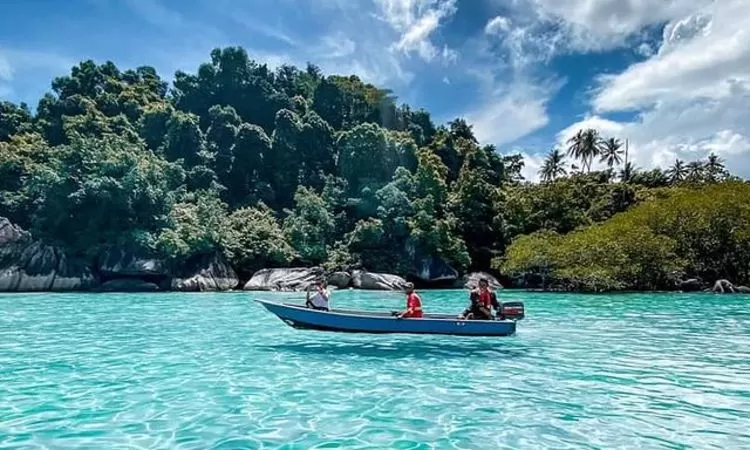
Pulau Tulai is a small island off the coast of Tioman, more popularly known as Coral Island. Located about eight nautical miles north of Tioman’s west coast, the island can be seen clearly from the beachfront of Salang Village, the closest access point by speedboat. It is almost always included in any round-island snorkelling trip offered by tour operators and hotels. A favourite snorkelling spot, the sea waters around the island are rich with coral reefs and marine life while some famous dive sites can be found within its vicinity, such as Chebeh. Tour boats will land first at Pasir Panjang, the longest beach stretch on the island with relatively shallow waters. A second or third snorkelling session later will lead to Genting Bay and Batu Malang Rocks for deep water coral viewing.

Pulau Renggis is a small island that sits off the coast of Tekek Village. A popular snorkelling spot included in most round-island tour packages, Renggis offers great visibility in relatively shallow sea waters, approximately 20 meters, abundant coral reefs, colourful marine fish and the opportunity to swim with resident harmless black-tip baby sharks. Sometimes, visitors can also spot sea turtles resting along the sea bed.
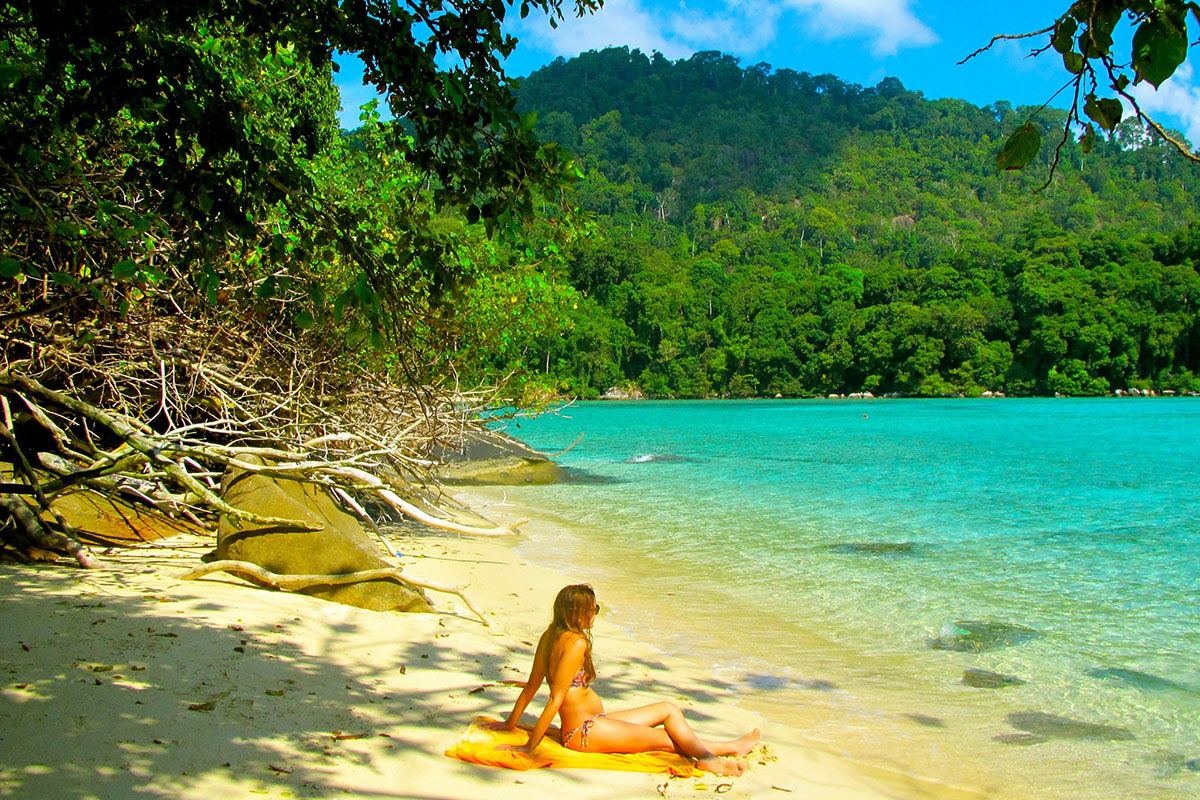
Monkey Bay is a beautiful beach tucked behind Salang Village, accessible by a speedboat or a jungle trail. This sweeping bay has a beautiful beach with a calm pool of seawater and lush rainforest surroundings. It’s also an optional snorkelling spot on round-island tours by speedboat from any village, but visitors can also hike there in an hour from Salang. Conversely, the trail connects to Air Batang or ABC Village. Starting from there, it is an undulating two-hour trail through Panuba Bay and Monkey Beach before it hits the bay. As the trail is sometimes obscure, one should always follow the path that winds closest to the electric poles. Visitors who make the hike are rewarded by a sweeping beachfront that is secluded and tranquil.
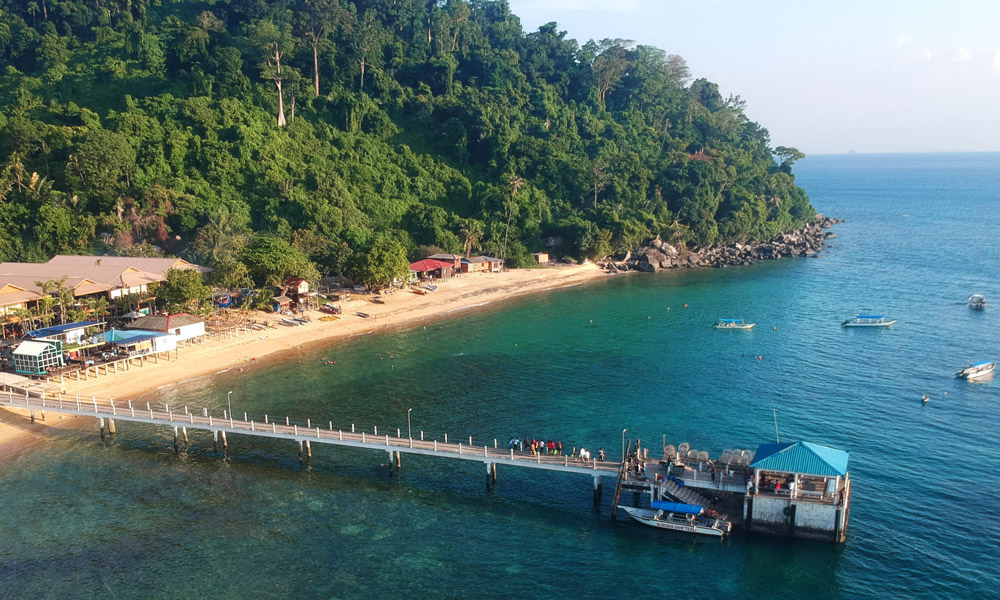
Marine Park is a coral sanctuary at Tekek located at its east edge, with an information centre opposite the beachfront that highlights Pulau Tioman’s underwater heritage. A popular snorkelling spot for tourists on round-island tours, the marine park has a limited number of coral reefs in the deeper waters, though there is a great amount of marine fish. A jetty extends from the small beach area, allowing visitors to walk out to the reefs and feed the fish without getting wet if they so desire; most will be snorkelling. Entrance to the marine park and the information centre is free; both are open from 9:30 am to 6 pm daily. During the monsoon months, the information centre is closed but the marine park remains open.
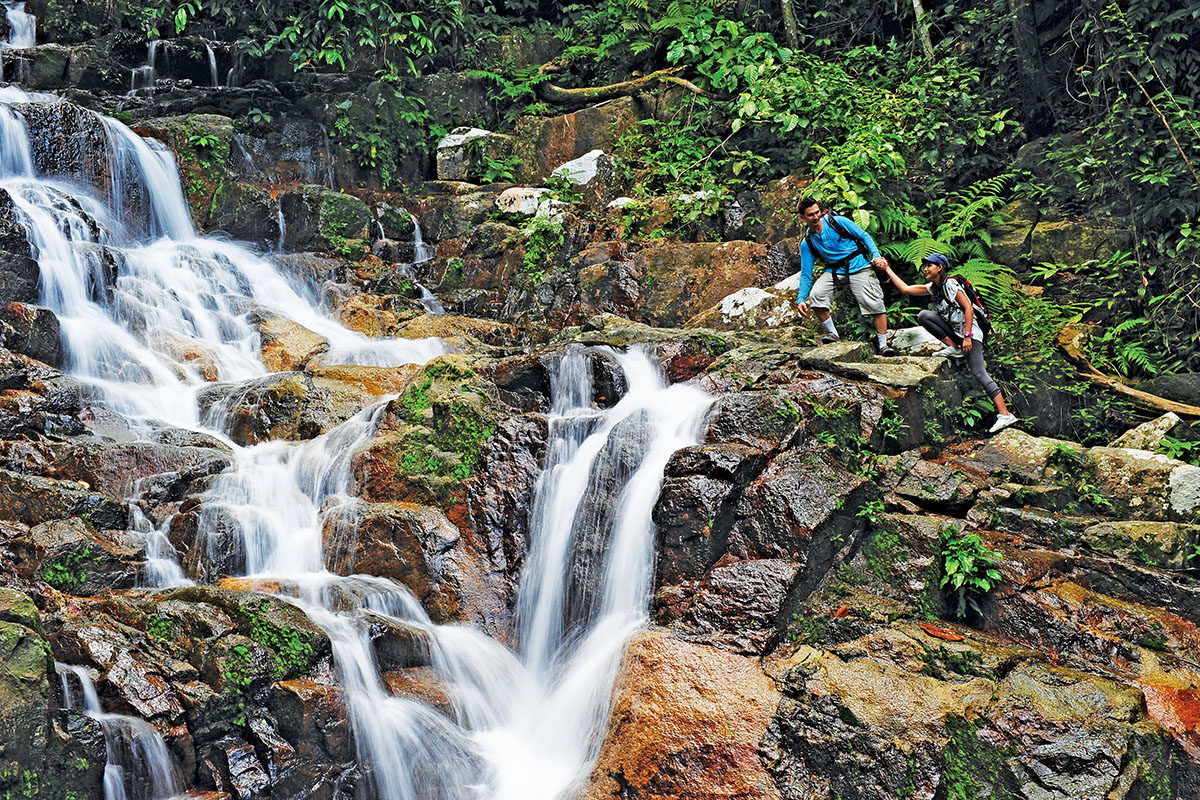
One of the finest waterfalls on Tioman Island, the Asah waterfall is located at the semi-abandoned village of Kampung Asah off Mukut village and offers breathtaking views from the top. A beautiful cascade drops into a pool hemmed in by granite slabs, the waterfall is nestled within the lush greenery of Tioman’s rainforest. Often included in the itinerary of tour packages from speedboat operators and hotels, visitors can access the waterfall park via the jungle trail from Mukut.
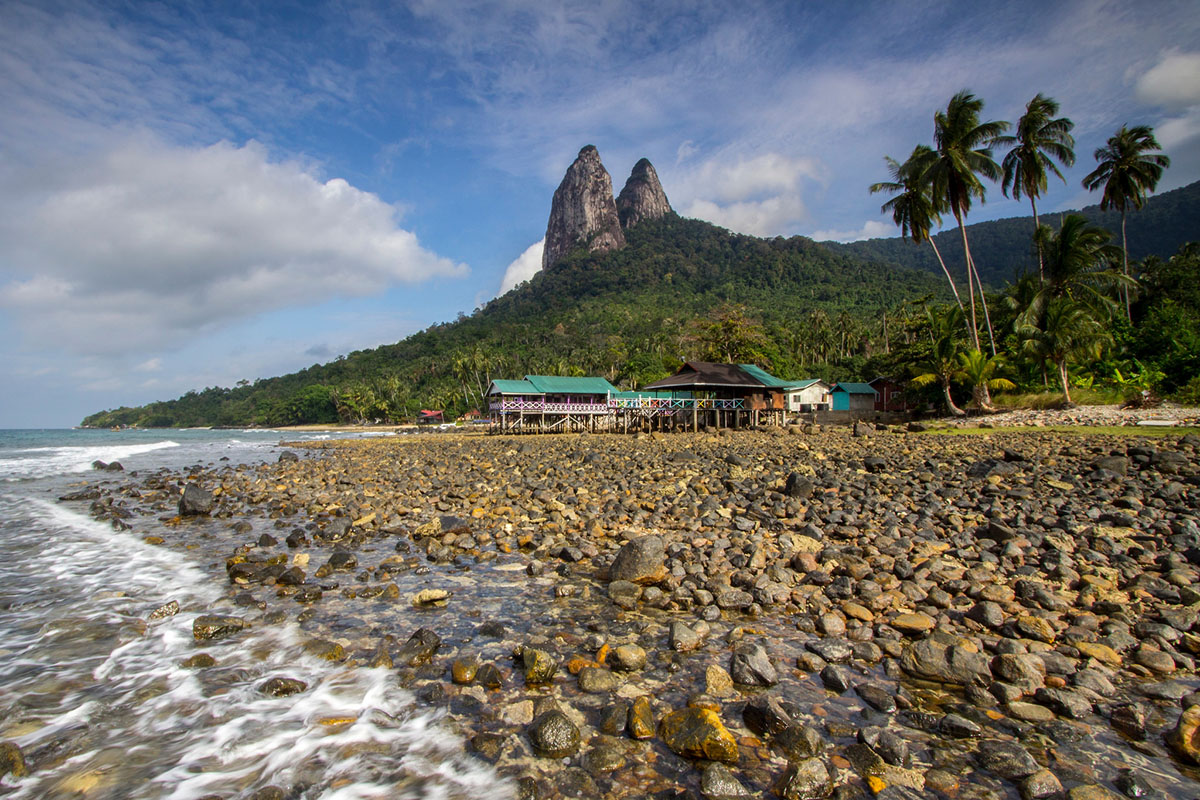
The famous Dragon Horns or Twin Peaks of Gunung Semukut, a mountain at Mukut Village, is Pulau Tioman’s most striking natural landmark. These two giant monoliths tower over the south coast of Tioman at approximately 700 meters high, with sharp pinnacles that resemble the horns of a dragon. One of Malaysia’s most sought-after rock climbing destinations, a trail begins from the base at Mukut Village and splits into different routes to attack different points of the mountain.
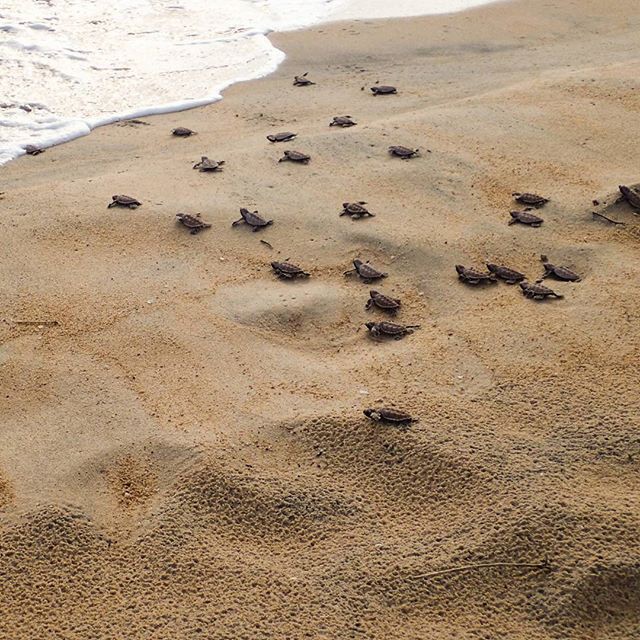
The Juara Turtle Project or JTP is a sea turtle conservation centre at Juara Village, providing education to locals and visitors on the eco-management of this endangered marine species. The centre also runs a volunteer programme complete with half-board accommodation to help with patrols, research, repairs, cleaning, tour guiding, and turtle egg collection, incubation and release of hatchlings. Turtle nesting season lies between March and October; during this time, JTP volunteers roam around the island for wild nests, collect the eggs and transfer them to a hatchery for incubation. The babies are released to sea when hatched successfully. During the day between 10 am and 5 pm, the centre organises a guided conservation talk at a donation fee of MYR10 per pax.
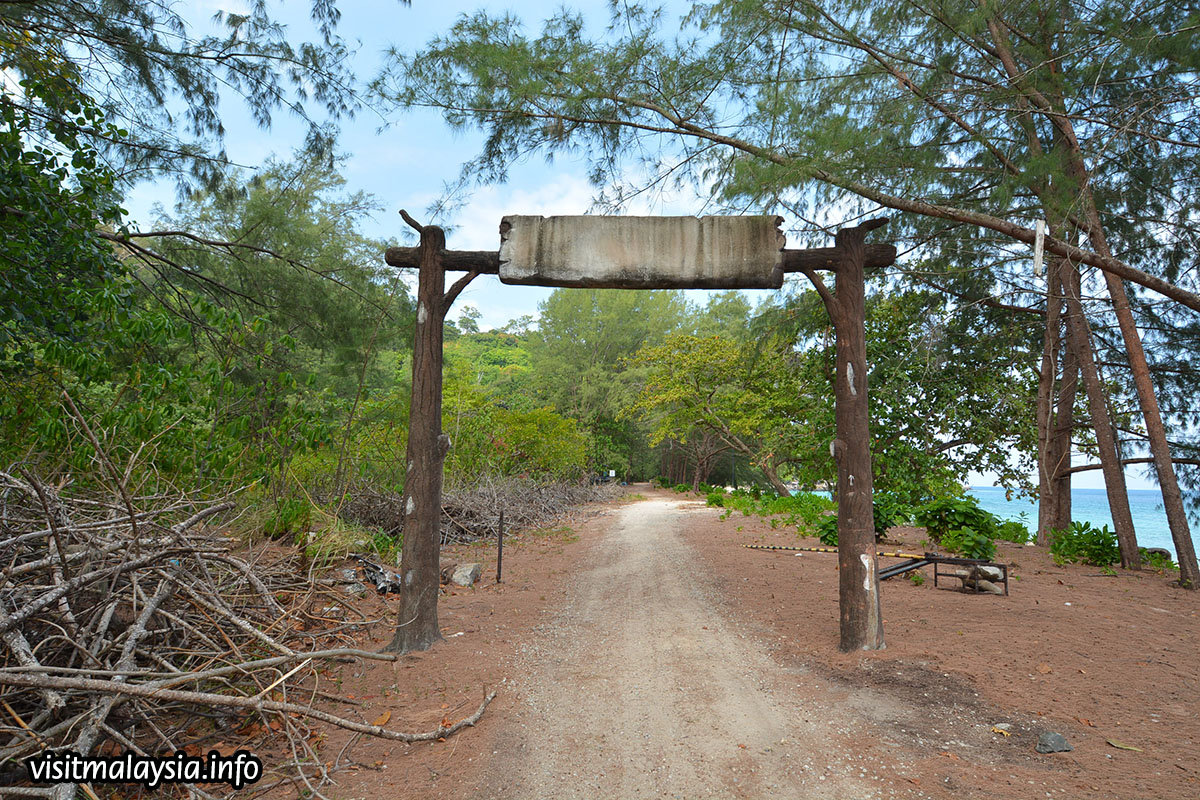
TAT or the Tengku Arif Temenggung Turtle Sanctuary is a turtle hatchery and conservation centre at Tekek Village, located along the gravel trail to Paya Village after the Berjaya Tioman Resort. Hidden on a beautiful secluded beachfront at Teluk Sri Intan Bay, the sanctuary comes under the royal patronage of Pahang together with the Department of Fisheries Malaysia. Currently, volunteers from the Juara Turtle Project collect the eggs laid during nesting season between March and October, transport them to their incubation site at Juara, and then release them back here once hatched. Visitors are free to visit and enjoy the beach at all hours but should be mindful to keep it clean.
 Memories and Such