In My Hands Today…

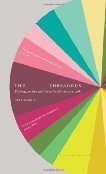
The Flavour Thesaurus – Niki Segnit

Ever wondered why one flavour works with another? Or lacked inspiration for what to do with a bundle of beetroot? The Flavour Thesaurus is the first book to examine what goes with what, pair by pair.

The book is divided into flavour themes including Meaty, Cheesy, Woodland and Floral Fruity. Within these sections it follows the form of Roget’s Thesaurus, listing 99 popular ingredients alphabetically, and for each one suggesting flavour matchings that range from the classic to the bizarre.

You can expect to find traditional pairings such as pork & apple, lamb & apricot, and cucumber & dill; contemporary favourites like chocolate & chilli, and goat’s cheese & beetroot; and interesting but unlikely-sounding couples including black pudding & chocolate, lemon & beef, blueberry & mushroom, and watermelon & oyster.

There are nearly a thousand entries in all, with 200 recipes and suggestions embedded in the text. Beautifully packaged, The Flavour Thesaurus is not only a highly useful, and covetable, reference book for cooking – it might keep you up at night reading.

In My Hands Today…

Dangerous Tastes: The Story of Spices – Andrew Dalby

Spices and aromatics―the powerful, pleasurable, sensual ingredients used in foods, drinks, scented oils, perfumes, cosmetics, and drugs—have long been some of the most sought-after substances in the course of human history. In various forms, spices have served as appetizers, digestives, antiseptics, therapeutics, tonics, and aphrodisiacs. Dangerous Tastes explores the captivating history of spices and the fascination that they have aroused in us, and the roads and seaways by which trade in spices has gradually grown. Andrew Dalby, who has gathered information from sources in many languages, explores each spice, interweaving its general history with the story of its discovery and various uses.

Dalby concentrates on traditional spices that are still part of world cinnamon, cloves, ginger, pepper, saffron, and chili. He also discusses aromatics that are now little used in food but still belong to the spice trade and to traditional frankincense, myrrh, aloes-wood, balsam of Mecca. In addition, Dalby considers spices that were once important but that now are almost long pepper, cubebs, grains of Paradise.

Dangerous Tastes relates how the Aztecs, who enjoyed drinking hot chocolate flavored with chili and vanilla, sometimes added annatto (a red dye) to the drink. This not only contributed to the flavor but colored the drinker’s mouth red, a reminder that drinking cacao was, in Aztec thought, parallel with drinking blood. In the section on ambergris, Dalby tells how different cultures explained the origin of this Arabs and Persians variously thought of it as solidified sea spray, a resin that sprung from the depths of the sea, or a fungus that grows on the sea bed as truffles grow on the roots of trees. Some Chinese believed it was the spittle of sleeping dragons. Dalby has assembled a wealth of absorbing information into a fertile human history that spreads outward with the expansion of human knowledge of spices worldwide.

In My Hands Today…

Invitation to a Banquet: The Story of Chinese Food – Fuchsia Dunlop

Chinese was the earliest truly global cuisine.

When the first Chinese laborers began to settle abroad, restaurants appeared in their wake. Yet Chinese has the curious distinction of being both one of the world’s best-loved culinary traditions and one of the least understood.

For more than a century, the overwhelming dominance of a simplified form of Cantonese cooking ensured that few foreigners experienced anything of its richness and sophistication, but today that is beginning to change.

In Invitation to a Banquet, award-winning cook and writer Fuchsia Dunlop explores the history, philosophy, and techniques of Chinese culinary culture. In each chapter, she examines a classic dish, from mapo tofu to Dongpo pork, knife-scraped noodles to braised pomelo pith, to reveal a distinctive aspect of Chinese gastronomy, whether it’s the importance of the soybean, the lure of exotic ingredients, or the history of Buddhist vegetarian cuisine.

Meeting food producers, chefs, gourmets, and home cooks as she tastes her way across the country, Fuchsia invites readers to join her on an unforgettable journey into Chinese food as it is cooked, eaten, and considered in its homeland. Weaving together history, mouthwatering descriptions of food, and on-the-ground research conducted over the course of three decades, Invitation to a Banquet is a lively, landmark tribute to the pleasures and mysteries of Chinese cuisine.

In My Hands Today…

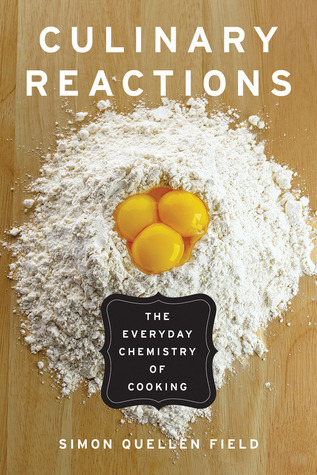
Culinary Reactions: The Everyday Chemistry of Cooking – Simon Quellen Field

When you’re cooking, you’re a chemist! Every time you follow or modify a recipe, you are experimenting with acids and bases, emulsions and suspensions, gels and foams. In your kitchen you denature proteins, crystallize compounds, react enzymes with substrates, and nurture desired microbial life while suppressing harmful bacteria and fungi. And unlike in a laboratory, you can eat your experiments to verify your hypotheses.

In Culinary Reactions, author Simon Quellen Field turns measuring cups, stovetop burners, and mixing bowls into graduated cylinders, Bunsen burners, and beakers. How does altering the ratio of flour, sugar, yeast, salt, butter, and water affect how high bread rises? Why is whipped cream made with nitrous oxide rather than the more common carbon dioxide? And why does Hollandaise sauce call for “clarified” butter? This easy-to-follow primer even includes recipes to demonstrate the concepts being discussed, Whipped Creamsicle Topping—a foam; Cherry Dream Cheese—a protein gle; Lemonade with Chameleon Eggs—an acid indicator; and more!