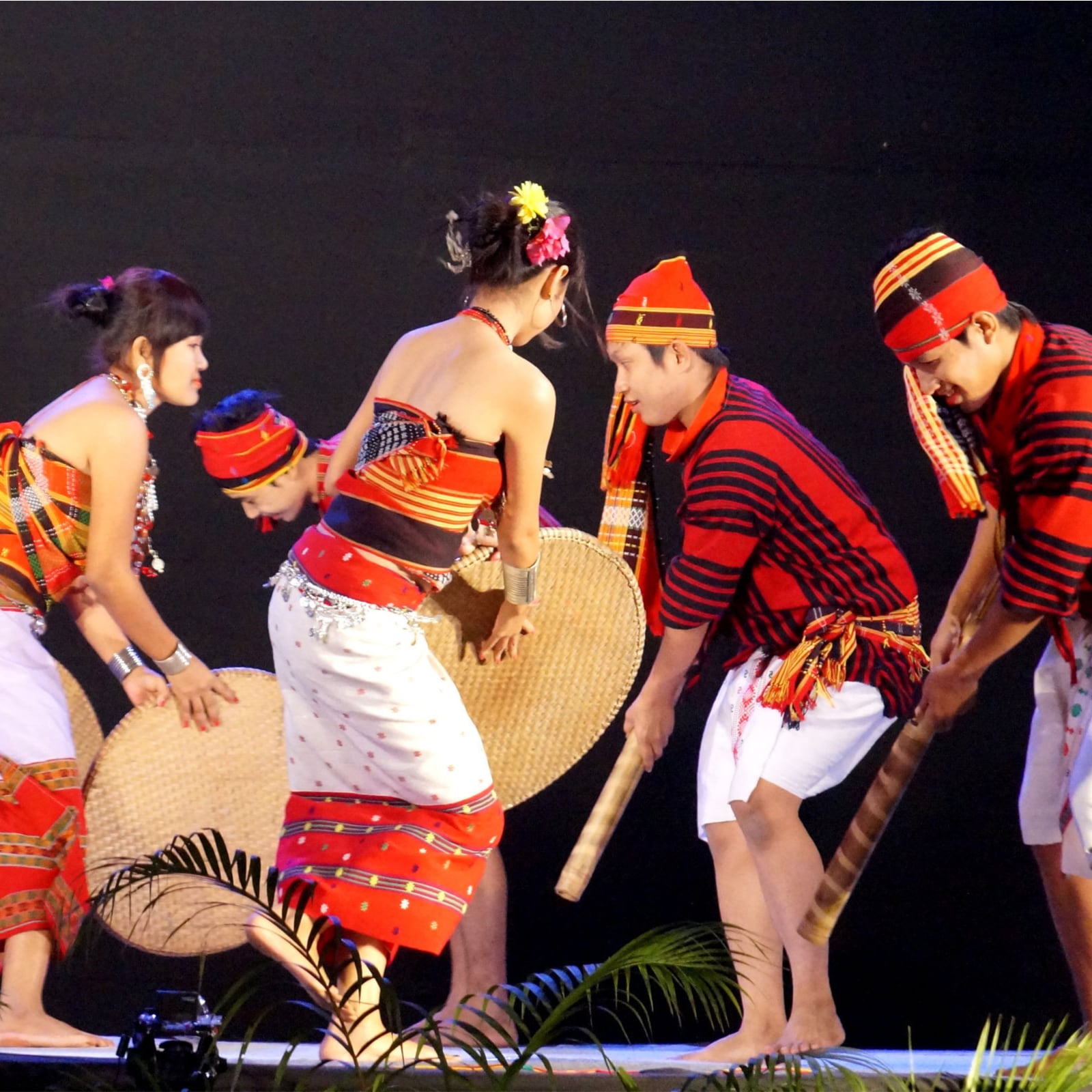
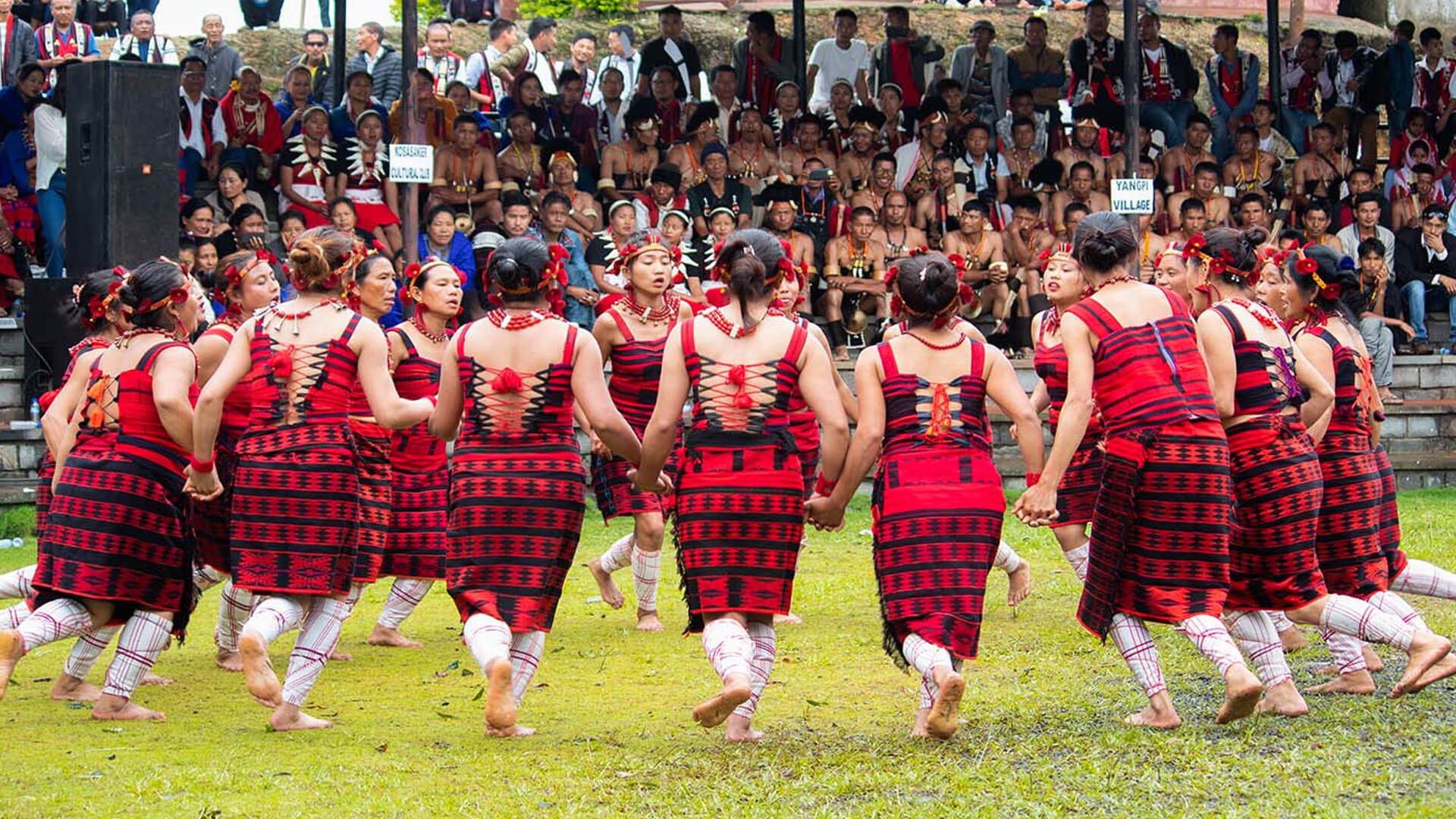
India is a land of festivals and the more colourful, the better. One such colourful festival is Biju, celebrated by the Chakma community in Tripura, marking the dawn of a New Year for the community. The festival is also celebrated by seven other ethnic groups in Tripura: Marma, Tangchangya, Tripuris, Mro, Khumi, Khiyang and Chak. The Marmas call the festival Sangraig, Tangchangya refers to it as Bishu, Truipis call it Baisuk and Ahmia name it Bihu.
Celebrated over three days, Biju falls on the last day of the Bengali calendar. The festival is a celebration of the arrival of spring and is one of the most important cultural events in the region. The festival has been celebrated in the region for thousands of years and is deeply rooted in the cultural heritage of the northeastern part of India and Bangladesh. The festival is a celebration of the end of the harvest season and the beginning of a new agricultural cycle.
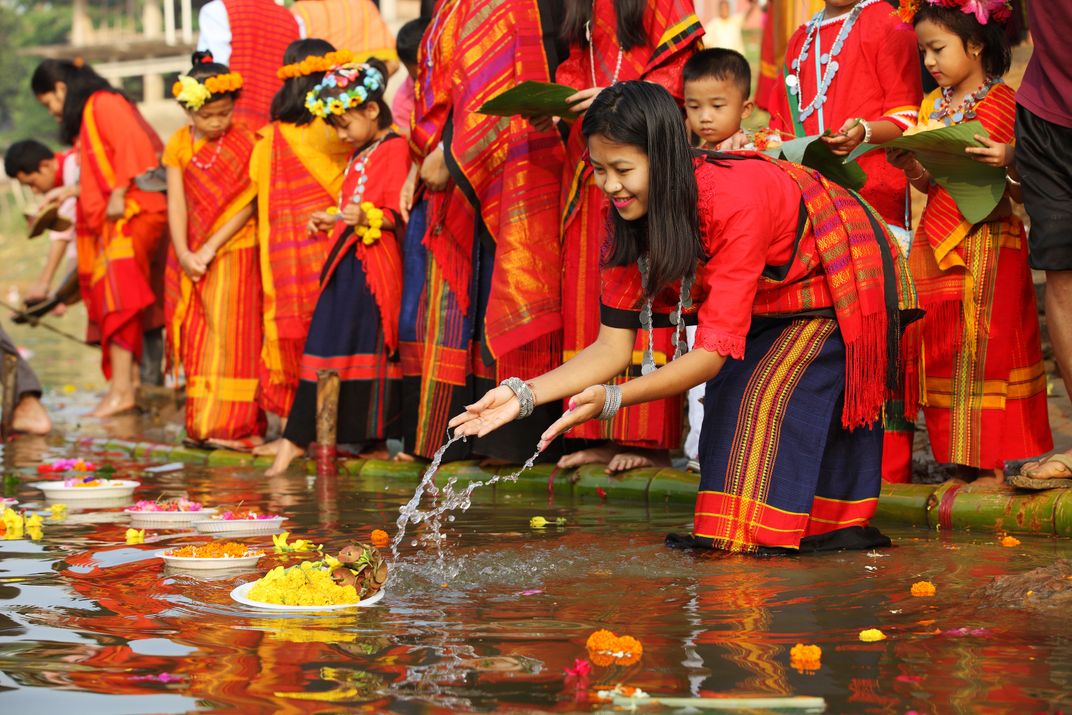
Each day of the festival has its own distinct traditions and customs. On the first day of Biju, called Phool Biju, people clean their houses and decorate them with flowers. They also pay floral tributes to the nearby rivers. The second day, called Mul Biju, is celebrated with the performance of traditional songs and dances, culminating with the famous Biju dance. On the third and final day, known as Gotche Potche Biju, elders of the community are honoured with an elaborate feast and renew their marriage vows with their spouses. One of the main attractions of the festival is the special Biju dance, accompanied by the rhythms of traditional musical instruments that constitute percussion and flute.
Earlier the festival used to be celebrated for over a fortnight. However, in changing times, it is celebrated over three days. The Biju festival is not just limited to cultural events and traditions. It is also a time for family and friends to come together and exchange greetings and gifts. On this day, people visit each other’s homes, exchange sweets and fruits, and offer well wishes for the coming year. The festival is a time for the community to come together and celebrate the end of the harvest season and the beginning of a new agricultural cycle.
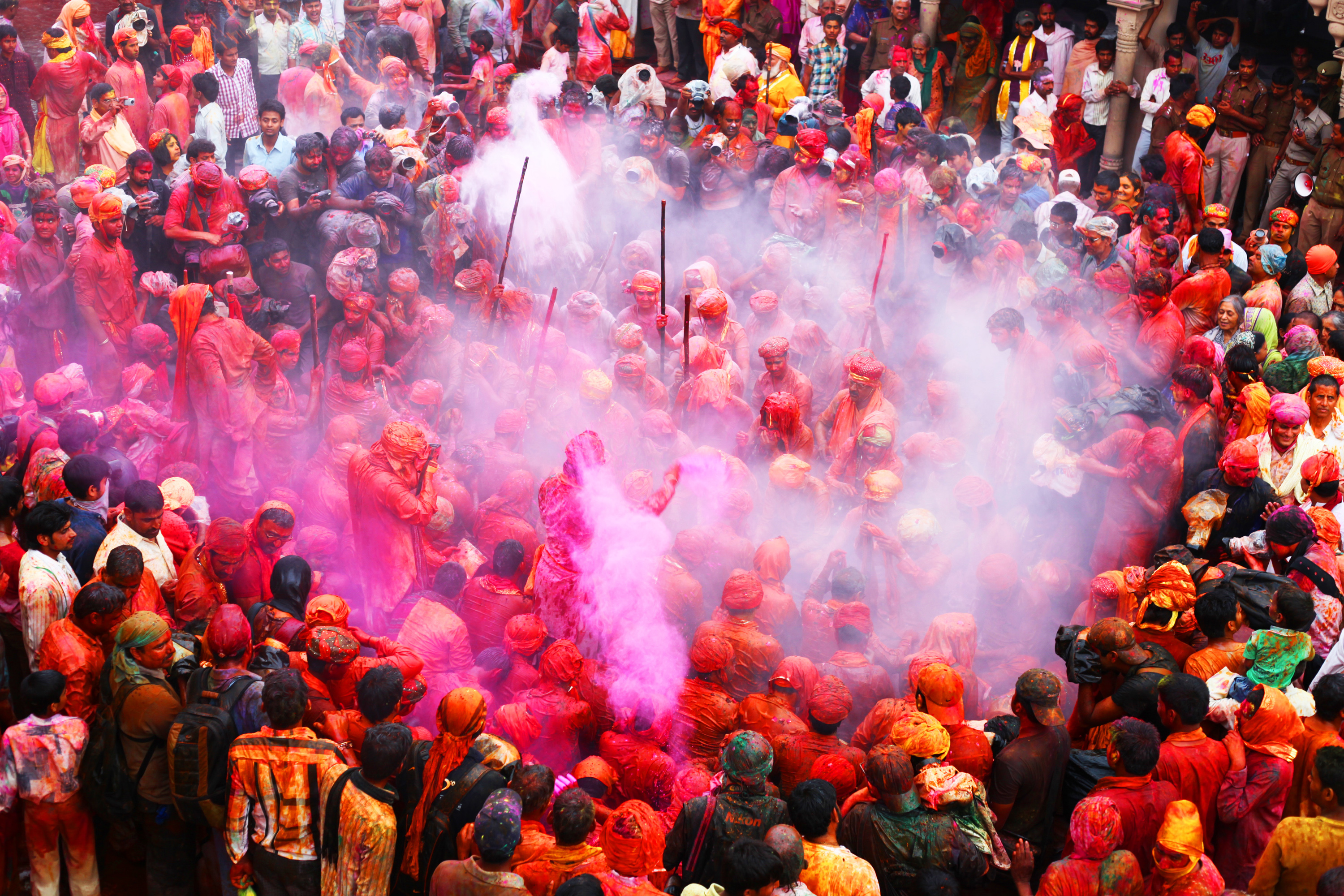
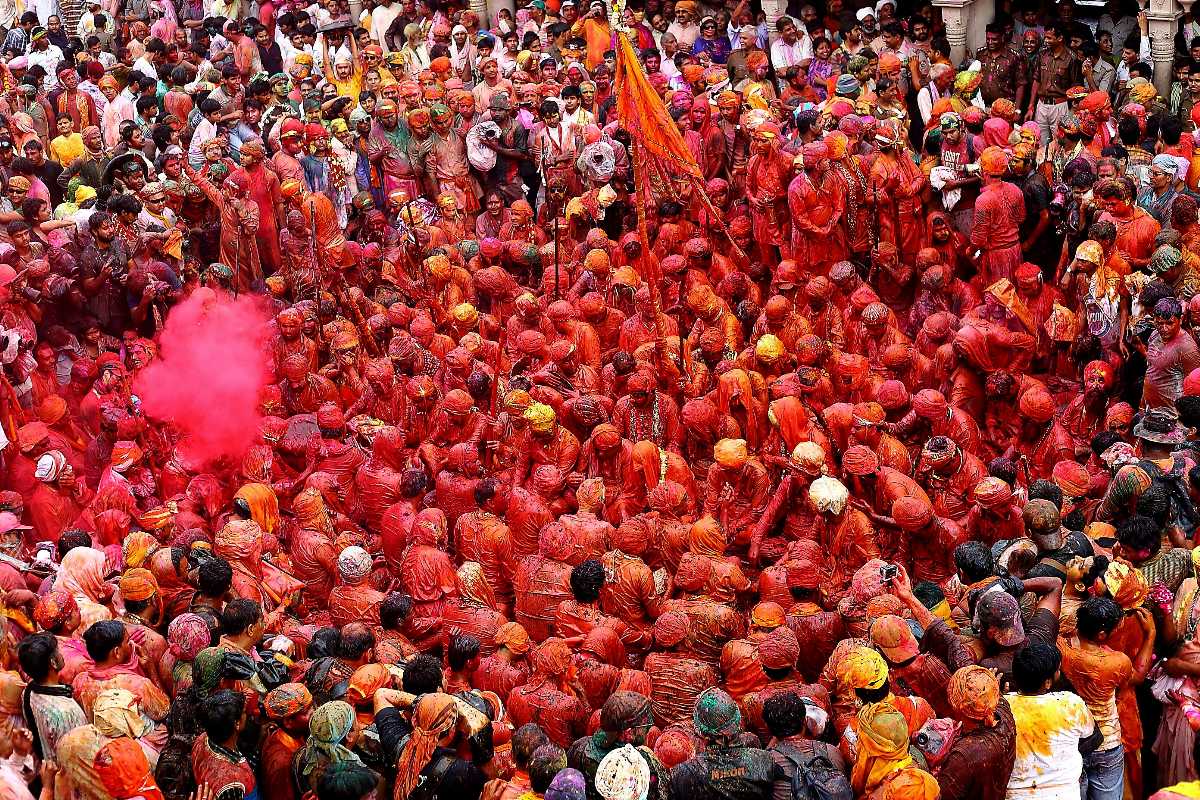
Lathmar Holi or the Holi with sticks is a festival celebrated in the Baj regions of Uttar Pradesh in the twin towns of Barsana and Nandgaon, also known as the towns of Radha and Krishna respectively. Every year, during Holi, thousands of devotees and tourists visit these towns to celebrate the festival. The festivities usually last for more than a week and end on Rang Panchami or Holi. The festival is a celebration of the arrival of spring and the triumph of good over evil and is a time for people to come together, dance, sing, and throw coloured powders at each other, creating a vibrant and joyful atmosphere.
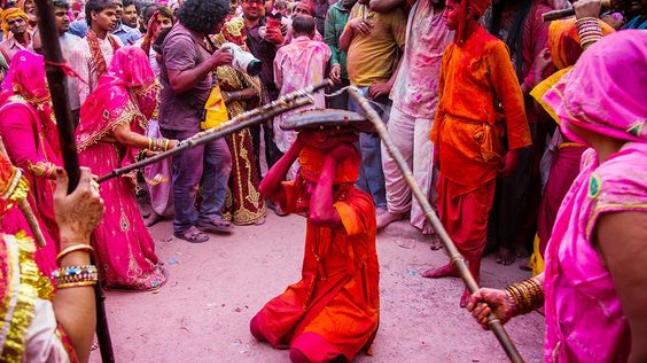
Associated with the legend that is linked to the divine couple Radha Krishna, the festival seeks to recreate it. According to the legend, Lord Krishna who was a resident of Nandgaon and is considered the son-in-law of Vrishabhanu wanted to spray the colours on his beloved Radha and her friends. But, as Krishna and his friends entered Barsana, they were playfully greeted with the sticks by Radha and her friends who drove them out of Barsana. Following the same trend, every year on the occasion of Holi, the men of Nandagaon who are treated as sons-in-law of Barsana visit Barsana and are greeted by women with colours and sticks or lathis. The celebration is enacted in perfect good humour by both sides, the men of Nandgaon and the women of Barsana.
The Lathmar Holi festival is a celebration of the power of women and is a unique expression of the region’s rich cultural heritage. During the festival, named after the lath, a wooden stick that is used by women to chase men. The festival is celebrated on the day before the Hindu festival of Holi and is an expression of the love between Radha and Krishna. The women from the town of Barsana chase men from the neighbouring town of Nandgaon with sticks as a symbolic representation of Radha’s playfulness and power. The men, in turn, sing and dance in a show of reverence to Radha.
One of the highlights of the Lathmar Holi festival is the Lathmar Holi Mela, which is a gathering of people from the surrounding towns and villages. The mela is a lively and colourful affair, with stalls selling food, drinks, and handmade goods. There is also a wide range of entertainment available, including music, dance, and theatre performances.
Another important aspect of the Lathmar Holi festival is the traditional dance and music. The Braj region has a rich tradition of music and dance, and the Lathmar Holi festival provides a platform for these traditions to be showcased. The dances performed during the festival are an expression of joy and happiness and are performed by both men and women. The music played during the festival is characterised by its use of traditional instruments such as the dhol, nagara, and manjira.
One of the most unique parts of the Lathmar Holi festival is the ‘Rang Panchami’ ritual. During this ritual, people come together to throw coloured powders at each other, creating a vibrant and joyful atmosphere. The ‘Rang Panchami’ ritual is an important part of the Lathmar Holi festival and is a time for people to come together and celebrate the arrival of spring.
The Lathmar Holi festival is also a time for love and courtship. During the festival, young men and women come together to meet and get to know each other. If two people are interested in each other, they can exchange gifts and formalise their relationship. This exchange of gifts is known as ‘Rasm-e-Holi’ and is an important part of the Lathmar Holi festival.
The Lathmar Holi festival is a celebration of life, love, and joy and a celebration of the rich and diverse culture of the Braj region. It celebrates the arrival of spring and the triumph of good over evil and is an important part of the cultural heritage of the region.
The Bhagoria festival is a vibrant and colourful festival celebrated by the tribal communities of Madhya Pradesh and Maharashtra, which was originally the Malwa region. The festival is held annually in the Hindu month of Phalguna, which corresponds to February or March in the Gregorian calendar. The Bhagoria festival is a celebration of the arrival of spring and marks the beginning of the harvest season. It is a time for the tribal communities to come together, dance, sing, and exchange gifts. The tribes who participate include the Bhil, Bhilala, and Pateliya.
The festival takes place in the Badwani, Dhar, Alirajpur, Khargone and Jhabua districts of Madhya Pradesh and Maharashtra. It has agricultural significance and coincides with the end of harvesting crops. It is celebrated for seven days in March before the Holi Festival. Traditionally, celebrants travel to the festival grounds with their families on decorated bullock carts. There they purchase the things required to celebrate Holi, dance to traditional musical instruments, sing songs called Lokgeet, and enjoy meeting family and friends.
The Bhagoria festival is unique to the tribal communities of Madhya Pradesh and northeastern Maharashtra and is one of the largest tribal festivals in India. It is a celebration of the vibrant and diverse culture of these communities and attracts visitors from all over the world. The festival is celebrated in different parts of Madhya Pradesh, with the largest celebrations taking place in Jhabua, Alirajpur, and Dhar districts.
One of the highlights of the Bhagoria festival is the ‘Bhagoriya Mela’ or fair. This fair is a gathering of tribal communities from all over the region and is a place for people to come together, socialise, and participate in various activities. The Bhagoriya Mela is a lively and colourful affair, with stalls selling food, drinks, and handmade goods. There is also a wide range of entertainment available, including music, dance, and theatre performances.
The Bhagoria festival is famous for its traditional dance and music. The tribal communities of Madhya Pradesh have a rich tradition of music and dance, and the Bhagoria festival provides a platform for these traditions to be showcased. The dances performed during the festival are an expression of joy and happiness and are performed by both men and women. The music played during the festival is characterized by its use of traditional instruments such as the dhol, nagara, and manjira.
One of the most unique and interesting aspects of the Bhagoria festival is the ‘Haldi-Kumkum’ ritual. During this ritual, married women apply turmeric paste and vermilion powder to each other’s foreheads. The ritual symbolizes the bond between the women and is believed to bring good luck and prosperity. The ‘Haldi-Kumkum’ ritual is an important part of the Bhagoria festival and is performed by women from all the tribal communities that participate in the festival.
The Bhagoria festival is also a time for love and courtship. During the festival, young men and women come together to meet and get to know each other. If two people are interested in each other, they can exchange gifts and formalize their relationship. This exchange of gifts is known as ‘Bhagoria Haat’. The Bhagoria Haat is an important part of the Bhagoria festival and is a time for the young people of the tribal communities to come together and celebrate their relationships.
The Bhagoria festival is a celebration of the rich and diverse culture of the tribal communities of Madhya Pradesh. It is a time for people to come together, socialize, and celebrate the arrival of spring and the beginning of the harvest season. The Bhagoria festival is an important part of the cultural heritage of India and is a unique and vibrant celebration that attracts visitors from all over the world.
The Bhagoria festival is a celebration of life, love, and joy and a time for the tribal communities of Malwa to come together and celebrate their culture and traditions. The Bhagoria festival is a true expression of the rich and diverse culture of India and is a celebration that should not be missed.
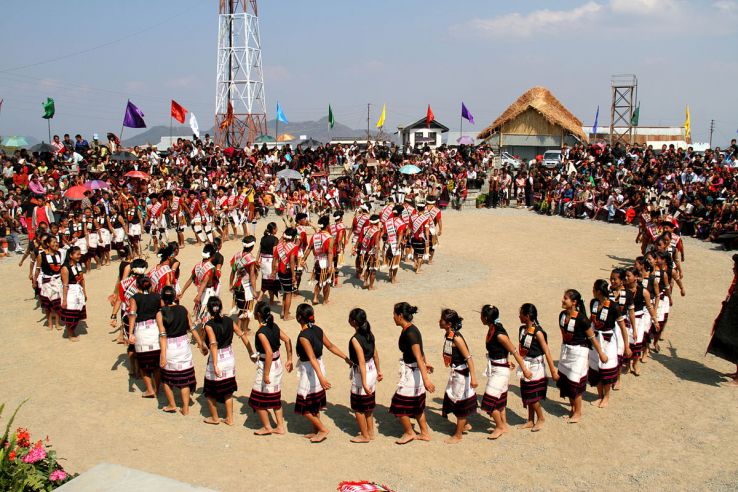
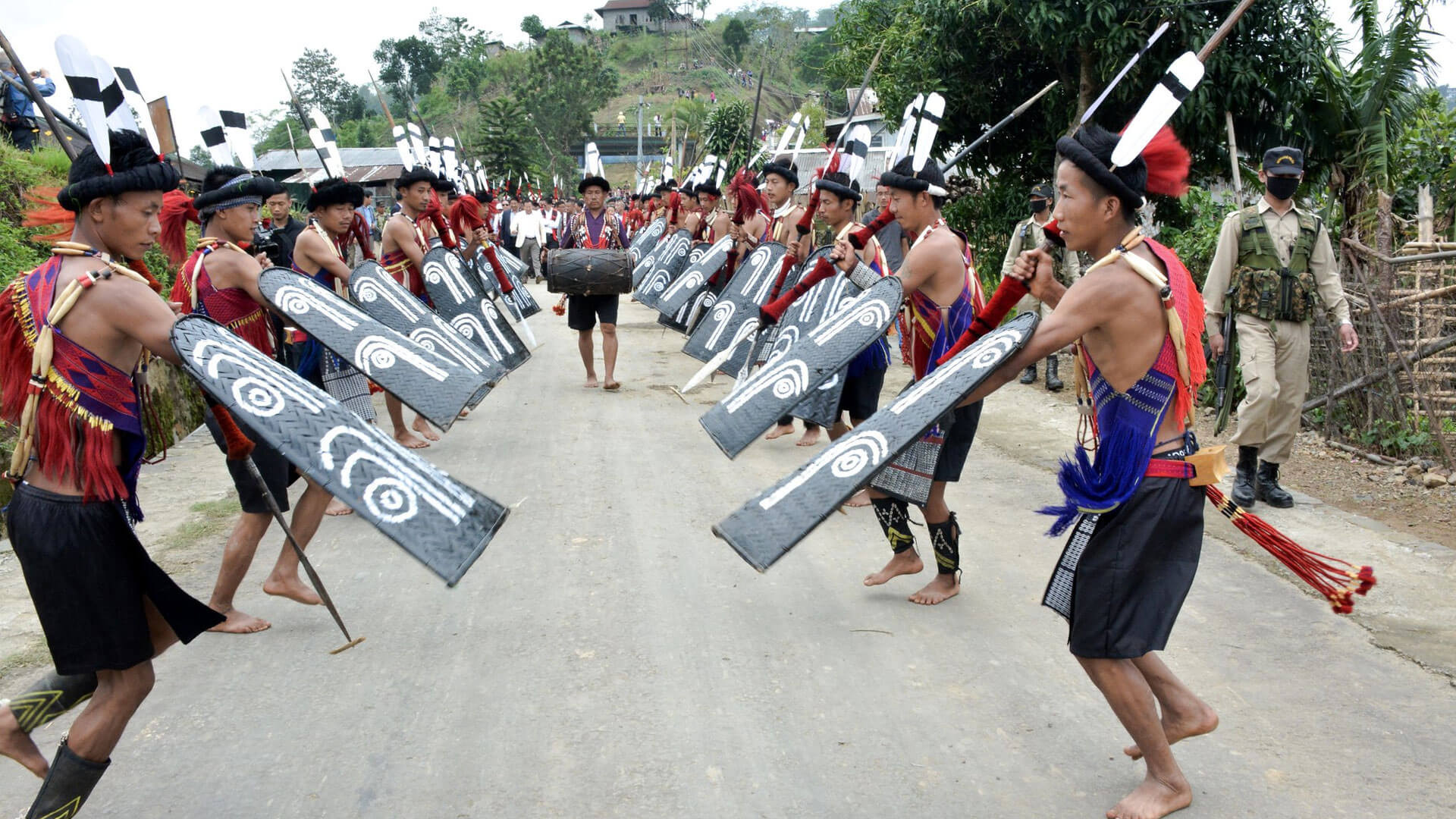
Also known as Sokre-n and Phousanyi, Sekrenyi is a major annual festival of the Angami Nagas, in the northeast Indian state of Nagaland. It is observed for ten days from the 25th day of the Angami calendar month of Kezei, usually corresponding to 25 February in the Gregorian calendar. The festival is a time for purification, renewal, and thanksgiving, and is celebrated with a variety of rituals, feasts, and dances. It is a purification festival held to wash off all past sins. The objective of the festival is to renew and make holy by cleansing the body and the soul of the village as a whole, and to bring forth unity among all communities of Nagaland. It also marks the initiation of young people to adulthood and is considered an identity marker of the Angami. Christian converts among the tribals have gradually rejected these rituals.
Sekrenyi is a compound word formed by Sekre meaning sanctification and Nyi meaning festival. The festival calendar is linked to the agricultural cycle, which varies from village to village. Thus, the celebration is held between the months of December–March, and the duration also varies from ten to fifteen days. It is celebrated by both the Kruna Angami or Pfutsana and Christian Angami. The duration is reduced to five days for the Christian villagers who had earlier converted to Christianity but belonged to the same ethnic group; they participate in the festivities but they do not follow any of the rituals connected with it.
Many rituals and ceremonies are involved with the festival. On the first day, which is known as Kezie, people sprinkle themselves with a few drops of rice water drawn from a pot named Zumho. The water drops are first gathered into leaves, and the chief lady of the house reverently fixes the leaves at the three main corner pillars of the house. This is followed by the men assembling at the well to bathe. On the second day, young men of the village assemble in the village to perform ablutions. They adorn themselves with two new shawls, and then ritualistically sprinkle the holy water on their chests, knees and right arms as a mark of washing away all their sins and ill luck. When they come back from the well, a sacrificial offer of a cock is performed.
The fourth day of the festival marks the New Year of the Angamis. It begins with revelry by singing and feasting which lasts for three days. The young people, both men and unmarried girls with shaven heads gather and sing traditional songs the entire day; the songs relate to past days of valour and bravery. For the revelry of music and dance, the men and women of the community wear the traditional dress; while men carry head hunting spades, women carry baskets. The seventh day is devoted to hunting by the young men of the ethnic group. On the eighth day, the ritual involves pulling down a gate and replacing the old gate that demarcates the property. This is followed in the next two days by the people of villages formally exchanging visits and offering greetings. During the period of the ten-day festivities, field operations are suspended, In local terminology, this is called Penyu. Following the completion of the festival period, when men of the villages have cleansed themselves and sought blessings, cultivation, house building and marriages may restart for the year.
One of the most important rituals of the Sekrenyi festival is the offering of food and other items to the ancestors and the gods. This is done in the form of a feast, known as the Thuwali feast. The Thuwali feast is a grand affair, with a variety of dishes being prepared and served to the community. The food is prepared by the women of the community, who spend days preparing for the feast. This feast is a time for the community to come together and give thanks for the blessings of the past year, and ask for continued blessings in the coming year.
Another important ritual of the Sekrenyi festival is the performance of dances. The Angami people are known for their traditional dances, which are performed during the festival. These dances are performed by both men and women and are a form of storytelling. They tell the stories of the Angami people, their history, and their culture. The dances are accompanied by music, which is played on traditional instruments such as the nga or a bamboo flute and the dama or a drum. The dances are a vibrant and colourful spectacle and are enjoyed by the entire community.
The Sekrenyi festival is also an important social and cultural event, bringing together members of the community from across the region. During the festival, people from different villages come together to participate in the rituals and ceremonies. This is an opportunity for people to reconnect with friends and family, and to strengthen the bonds of the community. The festival is also an opportunity for young people to meet and mingle, and for potential partners to be introduced.
Though technically not a festival in the way we have come to associate festivals with, the Tyagaraja Aradhana is an annual music festival that glorifies the Telugu saint composer Tyagaraja. The music festival is observed in the states of Andhra Pradesh and Tamil Nadu, primarily in Tiruvaiyaru in the Thanjavur district, where Tyagaraja attained Samadhi. The Aaradhana is observed on Pushya Bahula Panchami day when the saint attained samadhi when musicians render the saint’s Pancharatna Kritis.
A composer and Carnatic music vocalist, Thyagaraja or Kakarla Thyagabrahmam was born on the 4 May 1767, to a Telugu Vaidiki Mulakanadu Brahmin family in Tiruvarur in present-day Tiruvarur District of Tamil Nadu. Tyagaraja and his contemporaries, Shyama Shastri and Muthuswami Dikshitar are regarded as the Trinity of Carnatic music. Thyagaraja composed thousands of devotional compositions, most in Telugu and in praise of Lord Rama, many of which remain popular today, the most popular being Nagumomu. Of special mention are five of his compositions called the Pancharatna Kritis or the five gems, which are often sung in programs in his honour, and Utsava Sampradaya Krithis or festive ritual compositions, which are often sung to accompany temple rituals.
Tyagaraja hero-worshipped the celestial sage Narada, a reference to this is Tyagaraja’s krithi Vara Nārada in Vijayaarī raga and in Adi taḷam. Legend has it that a hermit taught him a mantra invoking Narada, and Tyagaraja, meditating on this mantra, received a vision of Narada and was blessed with the book Svarārnavam by the sage. During his last days, Tyagaraja took vows of Sannyasa. Tyagaraja died on a Pushya Bahula Panchami day, or 6 January 1847, at the age of 79. His last composition before his death was Giripai Nelakonna in rāga Sahāna, Ādi tāḷam and was cremated on the banks of the Kaveri river at Thiruvaiyaru.
The Aradhana or ceremony of adoration is held every year on the anniversary of his death which is the fifth day of the waning moon in the Hindu lunar month of Pushya. The Aradhana is conducted by the Sri Thyagabrahma Mahotsava Sabha and is held in the precincts of the samadhi or memorial of the saint located at Thiruvaiyaru village in Thanjavur district. The Aradhana in its present format is less than a century old. A few days before his death in 1847, he formally renounced everything and become a sanyasi. When he passed on, his mortal remains were buried on the banks of the river Kaveri and a small memorial was built at the site. His disciples returned to their respective villages and observed his death anniversary at their own homes. The memorial soon fell into neglect and became quite dilapidated by 1903, when two of the last surviving students to have been taught by Tyagaraja happened to make a nostalgic visit to the site. These were the elderly and eminent musicians Umayalpuram Krishna Bhagavatar and Sundara Bhagavatar who were dismayed by the neglect and dilapidation and had to search for the memorial in the wild foliage of the riverbank. They arranged for the renovation of the samadhi and decided to commemorate the tithi or death anniversary of their guru every year at the Samadhi itself.
In the next year, efforts were made by musical stalwarts to observe the death anniversary regularly at Tiruvayyaru, and to use the occasion as an opportunity for his followers to converge and interact with each other. In 1905, a lavish ceremony, complete with the feeding of the poor and worship at the memorial as per Vedic tenets, was celebrated. Brothers Tillaisthanam Narasimha Bhagavatar and Tillaisthanam Panju Bhagavatar were the main financiers and organisers of the aaradhana. By the next year, the brothers had fallen out with each other and from 1906, each began conducting a parallel Aradhana. Various musicians also aligned themselves with one or the other and two rival factions came into being. The group and Aradhana celebration conducted by Narasimha Bhagavatar came to be called the Periya Katchi or the senior party since he was the elder, and that of Panju Bhat became known as the Chinna Katchi. Gradually, a convention emerged whereby the Chinna Katchi’s celebrations began five days before the Aradhana and concluded on the Aradhana day, while the Periya Katchi’s celebration began on Aradhana day and continued for four days after that. Both groups organised music performances and the feeding of the poor and so the public was the real beneficiary during the nine days. At one point, both groups were united and did not allow women to perform during the Aradhana as in those days, the only women who sang or danced in public were the devadasi or temple performers. Another point in common between the two groups was that they did not permit nadaswaram performances.
In 1921, the aged and childless Bangalore Nagarathnamma, an ardent devotee of Tyaharaja decided to dedicate her life’s earnings to preserving Tyagaraja’s legacy and perpetuating his memory. In 1925, she began the construction of a temple enclosing the memorial and according to some sources, she purchased the land on which the grave stood, whereas according to other sources, her construction was illegal, but tolerated by local residents due to its pious intentions. Nagarathnamma also had an idol of Tyagaraja sculpted and installed in front of the memorial. The consecration of the temple took place in early 1926. The two rival groups, while not interfering with all this, refused to let Nagarathnamma perform her music, or even Harikatha, within the temple which she herself had had constructed. Undeterred, Nagarathnammal began a third front which conducted its music programs at the rear of the shrine. This third event featured many women artists, and perhaps for that very reason, it began eating into the public popularity of the events hosted by the two Katchis. She also filed suits in the local courts demanding the prevention of the Katchis from entering the temple, claiming that it belonged to her by right. She lost the case, but the hours of worship were laid down by the courts, dividing the Aradhana day equally between the two Katchis and her group. Matters continued this way till 1940 when the groups united and it was in 1941 that the Aradhana as we know was first conducted and the choral rendition of the five songs was made an integral feature of the Aradhana. A huge complex is now under construction at Thiruvaiyaru at this site to accommodate the large audience that comes to the concert in ever-increasing numbers every year.