Festivals of India: Aadi Perukku

Today is Aadi Perukku or Aadi 18, a little-known festival celebrated in the state of Tamil Nadu. Also known as Aadi 18, Aadi Perukku is the monsoon festival celebrated in the month Aadi monsoon festival and celebrated on the 18th day of the Tamil month of Adi, which should be sometime between mid-July to mid-August. The festival pays tribute to water’s life-sustaining properties. Nature worship in the form of Amman deities is organised to shower Nature’s bountiful grace on human beings and to bless mankind with peace, prosperity and happiness.

Aadi is a month of fervour and observances dedicated to the Goddesses related to water and other natural forces where prayers and pujas are offered to propitiate the powerful goddess to seek their protection from the inauspicious aspects that are often associated with the month. No weddings or other similar functions are celebrated during this month. It is during this time that the monsoon peaks on the west coast and the rivers of Tamil Nadu, shrunken in the summer heat, get replenished, often to near full levels. The month of Aadi is the fourth month of the year with the first day of the month, usually falling on 16 July, celebrated as Aadi Pandigai or Aadi Perukku, and an important festival to most Tamils, especially newly-weds.

In India the rivers Ganga and Yamuna, Cauvery, Narmada and Godavari are considered sacred. Just like the earth gives us food, water is considered a sacred necessity to meet the needs of individuals. People began to worship water in the form of wells, tanks and rivers. It is common among people to throw fruits, flowers and saffron cloths when the rivers and lakes are in spate purely based on the belief that these rivers are the species of female deities. Similarly, every temple has sacred wells and tanks, and the water in these resources is considered pure.

Aadi Perukku is a unique South Indian and especially a Tamil festival celebrated on the 18th day of the Tamil month of Adi. The festival coincides with the annual freshness of rivers and pays tribute to water’s life-sustaining properties. It is celebrated near river basins, water tanks, lakes and wells of Tamil Nadu when the water level rises significantly heralding the onset of the monsoon.

Aadi Perukku, also called Padinettam Perukku where Padinettu signifies eighteen, and Perukku denotes rising is a unique occasion dedicated to all the perennial river basins of Tamil Nadu and major lakes water source areas and is intended to celebrate the water rising levels due to the onset of monsoon, which is expected to occur invariably on the 18th day of the solar month, Aadi which corresponds to the 2 or 3 August every year. This festival is observed predominately by women in Tamil Nadu as a water ritual, to honour nature.

The association of this ritual with fertility, sex and reproduction is both natural and human. This water ritual practice is performed on the banks of Rivers, which is described as a rice-cultivation tract. The history of this ritual practice dates back to the ancient period and was patronised by the Kings and royal households. Aadi is the month for sowing, rooting and planting of seeds and vegetation since it is peak monsoon time when rain is showered in abundance.

Apart from people flocking to waterfalls for pre-monsoon and monsoon festivals, people living on the banks of rivers and other water sources offer pujas to the water goddess and river gods so that when nurseries are raised in the fields subsequently and sustained by the northeast monsoon, the crops will be ready for harvest during the Thai Pongal celebration in 5 months in mid-January.

The most visible manifestations of the month of Aadi are the huge kolams or rangolis that are painstakingly patterned early each morning in front of houses. They are usually bordered with red and across the front doorway at the top are strung mango leaves. The first of the month is marked with a special puja, followed by a feast with payasam prepared with coconut milk, boli and vadai.

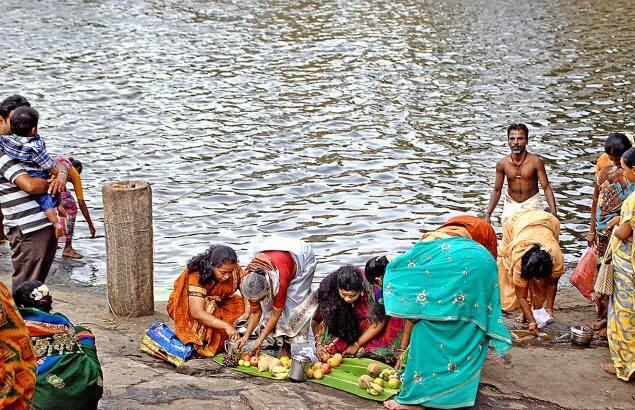
Aadi Perukku is a day of offerings and prayers to these rivers, which mean so much to the lives and prosperity of the people. The day is an occasion for rejoicing particularly for those living on the banks of all the main rivers, their branches and tributaries. The festival of Aadi Perukku is mainly observed by families living on the banks of the Cauvery River. On this auspicious day, relatives and friends collectively pray for the intermittent supply of water that would ultimately result in a good harvest. The devotees take a dip in the holy water. After the bath, they wear new clothes and perform some rituals at the bathing ghats along the Cauvery River. This is followed by abhishekham or the bathing of the Goddess Kaveri or Kaveri Amman.

A special lamp is prepared using jaggery and rice flour. The lamp is placed on the mango leaves, to which a yellow thread, turmeric and flowers are also added. The lamp is lit by the women and together with its accompaniments is floated in the river. Different forms of rice dishes are prepared and offered to the Goddess. Some of the commonly prepared rice dishes that vary in ingredients, colours or flavours include coconut rice, sweet Pongal, curd rice, lemon rice and tamarind rice. The devotees also worship the sacred river Mother Cauvery with rice offerings, Akshata and flowers. After completing the puja, the devotees eat the feast along the banks of the river with their families. The entire event turns out to be like a picnic on the banks of the Cauvery River.

Young girls observe this auspicious puja together with married women. It is a popular belief that maiden girls who make the offerings of Kaapparisi, a sweet dish made from jaggery and hand-crushed rice, Karugamani which are black coloured beads and Kaadholai which are earrings carved out of palm leaves shall be rewarded with good husbands. Young women play and dance to the tunes of folk songs on the occasion of Aadi Perukku. In some Tamil communities, the sons-in-law are invited on the day of Aadi Perukku and gifted new clothes. There is also a ritual in some districts of Tamil Nadu, wherein the newlyweds spend a month before Aadi Perukku at their parents’ home. Then on the day of Aadi Perukku, a gold coin is added to their Thali or Mangalsutra and they return with their husbands.

Mulaipari or the sprouting or germination of nine grains or navadhanyam in baskets or clay mud pots is a very important ritual which takes place at almost every village Goddess celebration. In its most original form, it is an exclusively women’s ritual and is of great importance to the whole village. The participants of the processions carry earthen pots with grown grains from nine different types of grains inside on their heads and walk towards a river where the contents are dissolved. Before the procession starts, special songs and dances like Kummi Pattu and Kummi are performed. The original meaning of the ritual performance is a request to the village Goddess for rain and the fertility of the land, to secure a rich harvest. The women are involved in large groups significantly implying the fertility of women also ensures the continuity of the human race with peace and harmony through empowered women.

All the year’s major festivals are packed into the six months that follow, culminating with Thai Pongal in mid- January, giving meaning to the Tamil saying, Aadi Azhaikkum, Thai Thudaikkum which means

Festivals of India: Eid al-Fitr

Yesterday marked the last day of the fasting month of Ramadan and today, billions of Muslims worldwide celebrate the festival of Eid al-Fitr.

Eid al-Fitr or the Feast of Breaking the Fast, is the earlier of the two official holidays celebrated within Islam, with the other being Eid al-Adha. This festival marks the end of the month-long dawn-to-sunset fasting of Ramadan and falls on the first day of Shawwal in the Islamic calendar. Because the Islamic calendar is lunar, the date of the festival changes every year. The start of the Hijri month varies based on when the new moon is sighted by local religious authorities. Also known as Ramzan Eid, the Lesser Eid, or simply Eid, Eid al-Fitr commemorates the end of the fasting month of Ramadan. An occasion for special prayers, family visits, gift-giving and charity, it takes place over one to three days, beginning on the first day of Shawwal, the 10th month in the Islamic calendar and is a day of joy as families get together after a month of austerity and fasting.

One of the five pillars of Islam, during the ninth month of the Islamic calendar, Ramadan, nearly all Muslims are required to fast from sunrise to sundown and abstain from smoking, drinking, including water and sexual activity during the daylight hours. Ramadan is the month in which the Prophet Muhammad received the teachings of the Quran, the Islamic holy book, as a guide for mankind and a means for judging between right and wrong. Fasting during Ramadan, known as Sawm, is one of the five pillars, the basic principles that are essential to the Islamic faith. Muslims observe Ramadan by reading the Quran, emphasising charity or zakat, abstaining from food and drink during daylight hours, and concentrating on prayer and study to increase their taqwa, or sacred consciousness. Fasting during Ramadan takes people out of their normal lifestyles and requires them to engage in solemn contemplation and examination. Experiencing hunger and thirst is supposed to heighten people’s awareness of the sufferings of the poor, and gain a greater appreciation for what they have.

After a month of prayer, devotion and self-control, Muslims celebrate the accomplishment of their sacred duties during Ramadan with the beginning of Eid al-Fitr, or the Festival of Breaking the Fast. The festival is a national holiday in many countries with large Muslim populations. Celebrations of Eid al-Fitr typically last for three days, one day fewer than those of Eid al-Adha. For this reason, Eid al-Fitr is often called Lesser or Smaller Eid. Eid al-Adha, known as Greater Eid, is seen as the more important holiday of the two.

Eid al-Fitr was originated by the Islamic prophet Muhammad. According to certain traditions, these festivals were initiated in Medina after the migration of Muhammad from Mecca. Anas, a well-known companion of the Islamic prophet, narrated that, when Muhammad arrived in Medina, he found people celebrating two specific days in which they entertained themselves with recreation and merriment. At this, Muhammad remarked that Allah had fixed two days of festivity: Eid al-Fitr and Eid al-Adha.

During Eid al-Fitr, Muslims take part in special morning prayers, greet each other with formal embraces and offer each other greetings of Eid Mubarak or Have a blessed Eid. They gather with family and friends, give games and gifts to children and prepare and eat special meals, including sweet dishes like baklava or Turkish delight in Turkey, date-filled pastries and cookies in Saudi Arabia and Iraq and bint al sahn or honey cake in Yemen.

Another of the five pillars of Islam is Zakat or giving to those in need. Muslims often prepare for Eid al-Fitr by giving money to charity so that less fortunate families can enjoy the festivities as well. In addition to charity, Muslims are also encouraged to give and seek forgiveness during Eid al-Fitr and look forward to the opportunity to fast again during Ramadan the following year.

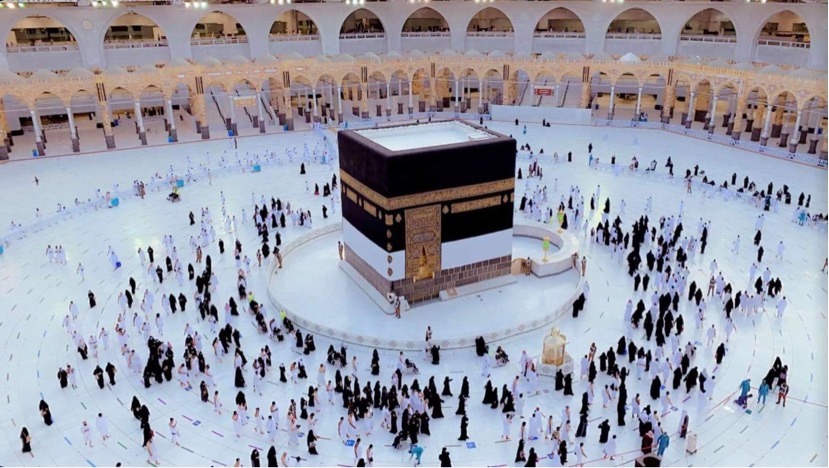
Traditionally, Eid al-Fitr begins at sunset on the night of the first sighting of the crescent moon. If the moon is not observed immediately after the 29th day of the previous lunar month, either because clouds block its view or because the western sky is still too bright when the moon sets, then the holiday is celebrated the following day. Eid is celebrated for one to three days, depending on the country and it is forbidden to fast on the day of Eid, and a specific prayer is nominated for this day. As an obligatory act of charity, money is paid to the poor and the needy known as Zakat-ul-Fitr before performing the Eid prayer which is performed by the congregation in an open area such as a field, a community centre or a mosque. No call to prayer is given for this Eid prayer, and it consists of only two units of prayer, with a variable amount of Takbirs and other prayer elements depending on the branch of Islam observed. The Eid prayer is followed by the sermon and then a supplication asking for Allah’s forgiveness, mercy, peace and blessings for all living beings across the world. The sermon also instructs Muslims as to the performance of rituals of Eid, such as the zakat. The sermon of Eid takes place after the Eid prayer, unlike the Friday prayer which comes first before prayer with some imams believing that listening to the sermon at Eid is optional. After the prayers, Muslims visit their relatives, friends, and acquaintances or hold large communal celebrations in homes, community centres, or rented halls.

In India, Eid is a public holiday and the holiday begins after the sighting of the new moon on Chand Raat. On that evening, people head to markets to finish their shopping for Eid, for clothing and gifts and begin preparing their food for the next day. Traditional Eid food often includes biriyani, sheer khurma, and sevvaiyyan, a dish of fine, toasted sweet vermicelli noodles with milk and dried fruit, among other regionally-specific dishes. Women and girls also put henna in each others’ hands and the next morning, Muslims go to their local mosque for the Eid Namaz and give Eid zakat before returning home. Afterwards, children are given Eidi or cash gifts and friends and relatives visit each other’s homes to eat and celebrate. In Pakistan, this Eid is also known as Chhoti or Lesser Eid and is celebrated more or less like in India. At home, family members enjoy a special Eid breakfast with various types of sweets and desserts, including Kheer and the traditional dessert Sheer Khurma, which is made of vermicelli, milk, butter, dry fruits, and dates. Children also get cash gifts known as Eidi with the State Bank of Pakistan issuing fresh currency notes every year for this purpose.

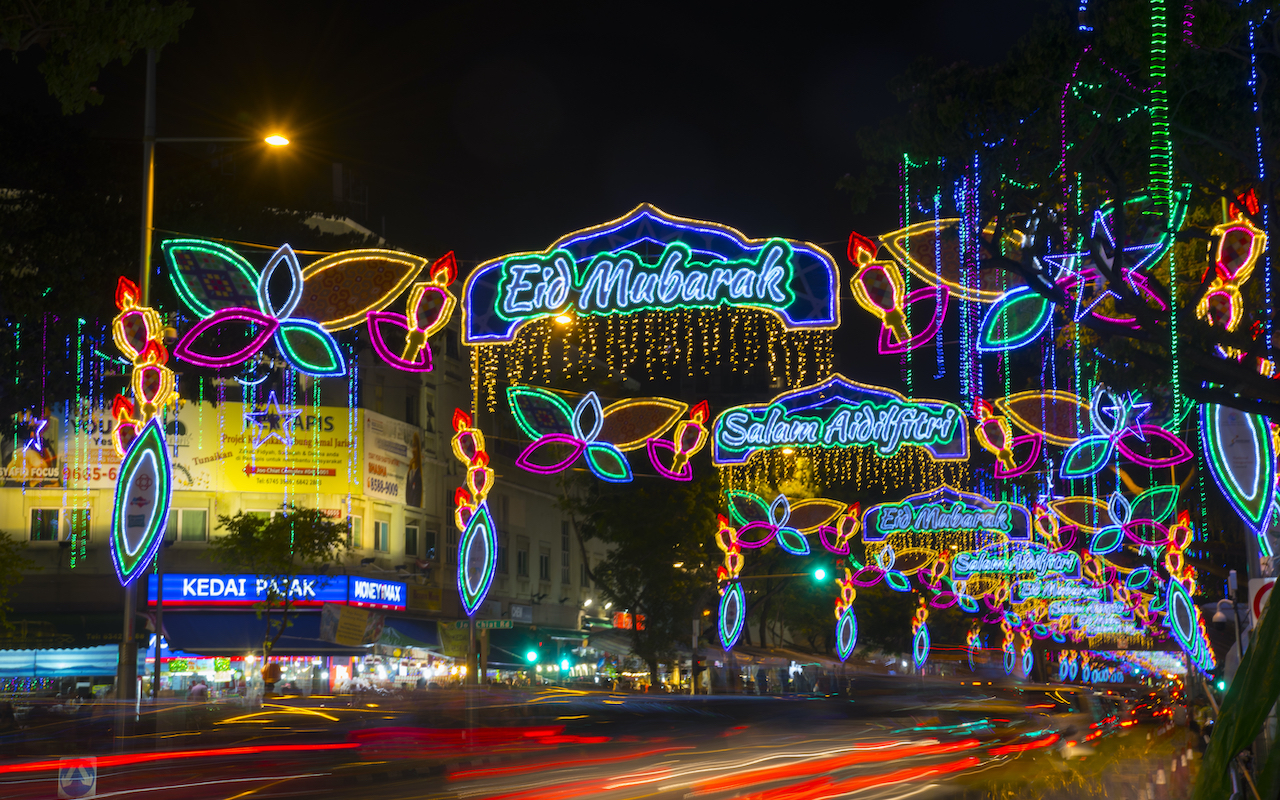
In Malaysia, Singapore, and Brunei, Eid is more commonly known as Hari Raya Aidilfitri, Hari Raya Idul Fitri, Hari Raya Puasa, Hari Raya Fitrah or Hari Lebaran where Hari Raya means a celebration day. It is customary for workers in the city to return to their home town to celebrate with their families and to ask forgiveness from parents, in-laws, and other elders. This is known in Malaysia as balik kampung or homecoming. The night before Hari Raya is filled with the sounds of takbir in the mosques or musallahs. In many parts of Malaysia, especially in the rural areas, pelita, panjut or lampu colok which are oil lamps, similar to tiki torches are lit up and placed outside and around homes. Special dishes like ketupat, rendang, lemang which is a type of glutinous rice cooked in bamboo and other Malay delicacies such as various kuih-muih are served during this day. It is common to greet people with Salam Aidilfitri or Selamat Hari Raya which means Happy Eid. Muslims also greet one another with maaf zahir dan batin, which asks to forgive their physical and emotional wrongdoings. In Singapore and Malaysia, especially in the major cities, people take turns to set aside a time for an open house when they stay at home to receive and entertain neighbours, family and other visitors. It is common to see non-Muslims made welcome during Eid at these open houses. Children are given token sums of money, also known as Duit Raya, from their parents or elders.

To everyone celebrating Eid, Eid Mubarak and Selamat Hari Raya Adilfitri!

Festivals of India: Gangaur

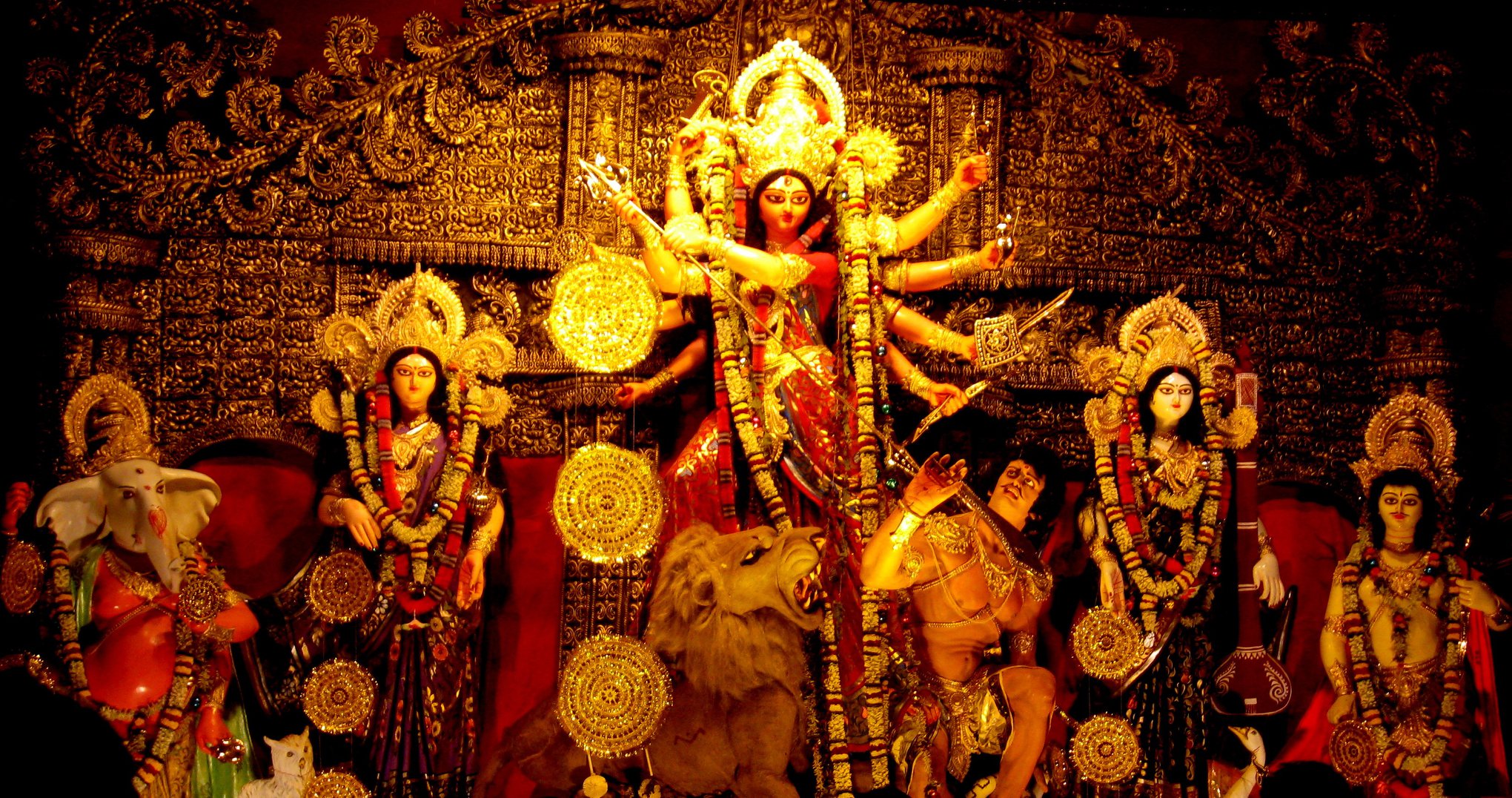
Celebrated as colourfully as the festival of Holi, the festival of Gangaur is celebrated in Rajasthan as well as some parts of Gujarat, Madhya Pradesh, and West Bengal. One of the most important festivals in Rajasthan, it is celebrated by women who worship Gauri, the wife of Lord Shiva during March–April. Gangaur is a celebration of spring, harvest, marital fidelity, and childbearing. The name comes from a portmanteau of Gana and Gaur where Gana is a synonym for Lord Shiva and Gaur stands for Gauri or Parvati who symbolises saubhagya or marital bliss. For the people of Rajasthan, Goddess Parvati represents perfection and marital love and so the Gangaur festival is very important.

The festival also marks the celebration of spring and harvest. Gana signifies Lord Shiva, and Gangaur symbolises Lord Shiva and Parvati together. As per legends, Gauri won Lord Shiva’s affection and love with her deep devotion and meditation. And after that, Gauri visited her paternal home during Gangaur to bless her friends with marital bliss. The festival rituals start right after the day of Holi and attract a large number of visitors and tourists.

Married women pray for a happy married life as well as the welfare, health, and long life of their husbands while those unmarried worship Gauri to be blessed with a good husband. Migrants to Kolkata started celebrating Gangaur and this celebration is more than a century old in Kolkata.

The festival commences on the first day of the month of Chaitra, the day following Holi, and continues for 16 days. For a newly-wedded girl, it is binding to observe the full course of 18 days of the festival that comes after her marriage. Even unmarried girls fast for the full period of 16 days and eat only one meal a day. Festivity consummates on the 3rd day of the Shukla paksha of the Chaitra month. Fairs or Gangaur Melas are held throughout the 18 days.

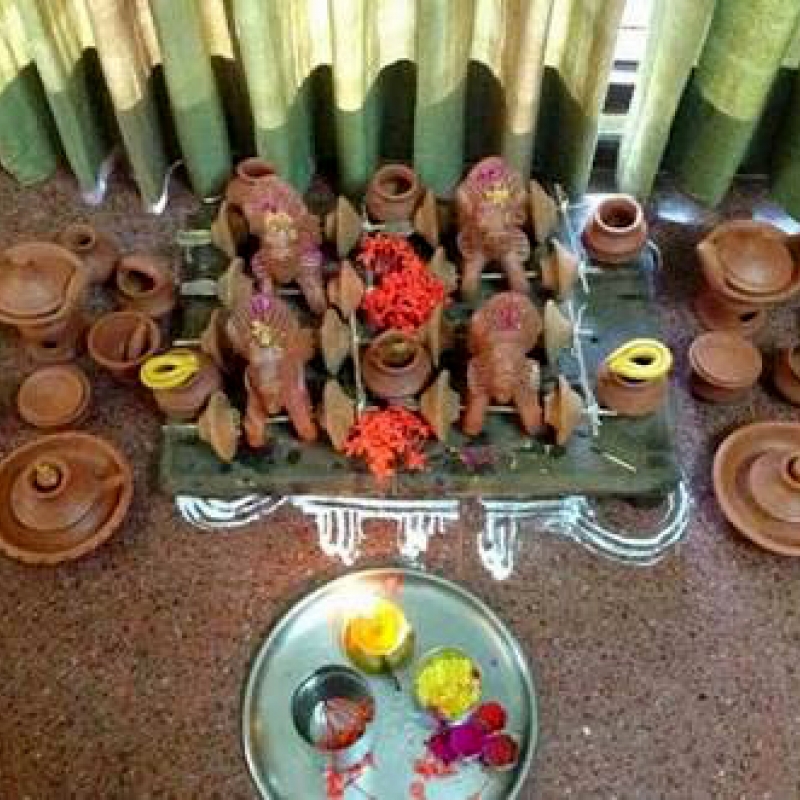
Images of Isar or Shiva and Gauri or Parvati are made of clay and in some Rajput families, permanent wooden images are painted afresh every year by reputed painters called matherans on the eve of the festival. A distinct difference between the idols of Teej and Gangaur is that the idol will have a canopy during the Teej Festival while the Gangaur idol would not have a canopy. These figures are then placed within baskets along with wheatgrass and flowers; wheat plays an important role in the rituals as it signifies harvest. People also buy earthen pots known locally as Kunda, and decorate them in a traditional Rajasthani painting style called maandna. It is customary for married women to receive gift hampers from their parents known as Sinjara, which comprises clothes, jewellery items, makeup and sweets which are generally sent on the second last day of the festival which the women use to get ready on the final or main celebration day. The ladies decorate their hands and feet by drawing designs with Mehndi or Henna.

Ghudlias are earthen pots with numerous holes all around and a lamp lit inside them. On the evening of the 7th day after Holi, unmarried girls go around singing songs of ghudlia carrying the pots with a burning lamp inside, on their heads. On their way, they collect small presents of cash, sweets, jaggery, ghee, and oil and this continues for 10 days i.e. up to the conclusion of the Gangaur festival when the girls break their pots and throw the debris into the well or a tank and enjoys a feast with the collection made.

The festival reaches its climax during the last three days. The images of Gauri and Isar are dressed in new garments specially made for the occasion. Unmarried girls and married women decorate the images and make them look like living figures. At an auspicious hour in the afternoon, a procession is taken out with the images of Isar and Gauri, placed on the heads of married women. Songs are sung about the departure of Gauri to her husband’s house. The procession comes back after offering water on the first two days. On the final day, she faces in the same direction as Isar and the procession concludes in the consignment of all images in the water of a tank or well. The women bid farewell to Gauri and turn their eyes and the Gangaur festival comes to an end.

Celebrated throughout Rajasthan, however, the most notable festivities happen in Udaipur, Jaisalmer, Jodhpur, Nathdwara and Bikaner. In Udaipur, this festival coincides with the Mewar Festival which takes place during the two days following it.

In Jaipur, a sweet dish called a ghewar is characteristic of the Gangaur festival with people buying the sweet to eat and distribute. A procession, with the image of Gauri, commences from the Zanani-Deodhi of the City Palace, then passes through Tripolia Bazaar, Chhoti Chaupar, Gangauri Bazaar, Chaugan stadium and finally converges near the Talkatora. Old palanquins, chariots, elephants, bullock carts, and folk performances make this procession all the grander.

In Udaipur, there is a dedicated Ghat named after Gangaur. The Gangaur Ghat or Gangori Ghat is situated on the waterfront of Lake Pichola and serves as the prime location for the celebration of multiple festivals, including the Gangaur festival. Traditional processions of Gangaur commences from the City Palace, and several other places, which passes through various areas of the city. The procession is headed by old palanquins, chariots, bullock carts and performances by folk artists. After the processions are complete, the idols of Gan and Gauri are brought to this ghat and immersed in Lake Pichola. Women try to balance brass pitchers on their heads, which is another attraction of this fiesta. The celebration is concluded with fireworks on the banks of the lake.

In other parts of the state, on the final day, colourful parades carrying bejewelled images of Goddess Parvati proceed all over the villages and cities, and this is accompanied by local bands.

Valentine’s Day

Today is Valentine’s Day which worldwide is celebrated as the day of love. Also called Saint Valentine’s Day or the Feast of Saint Valentine, Valentine’s Day is celebrated annually on February 14 and originated as a Christian feast day honouring one or two early Christian martyrs named Saint Valentine and, through later folk traditions, has become a significant cultural, religious, and commercial celebration of romance and love in many regions of the world.

There are several martyrdom stories associated with the various Valentines connected to February 14, including an account of the imprisonment of Saint Valentine of Rome for ministering to Christians persecuted under the Roman Empire in the third century. According to an early tradition, Saint Valentine restored sight to the blind daughter of his jailer and numerous later additions to the legend have better related it to the theme of love. An 18th-century embellishment to the legend claims he wrote the jailer’s daughter a letter signed “Your Valentine” as a farewell before his execution while another addition posits that Saint Valentine performed weddings for Christian soldiers who were forbidden to marry.

The Feast of Saint Valentine was established by Pope Gelasius I in 496 AD to be celebrated on February 14 in honour of Saint Valentine of Rome, who died on that date in 269 AD. The day became associated with romantic love in the 14th and 15th centuries when notions of courtly love flourished, apparently by association with the lovebirds of early spring. In 18th century England, it grew into an occasion in which couples expressed their love for each other by presenting flowers, offering confectionery, and sending greeting cards, known as valentines. By the 1900s printed cards began to replace written letters due to improvements in printing technology. Ready-made cards were an easy way for people to express their emotions in a time when direct expression of one’s feelings was discouraged. Cheaper postage rates also contributed to an increase in the popularity of sending Valentine’s Day greetings. The Valentine’s Day symbols that are used today include the heart-shaped outline, doves, and the figure of the winged Cupid. In Italy, Saint Valentine’s Keys are given to lovers as a romantic symbol and an invitation to unlock the giver’s heart, as well as to children to ward off epilepsy, also known as Saint Valentine’s Malady. Americans probably began exchanging hand-made valentines in the early 1700s. Today, according to the Greeting Card Association, an estimated 145 million Valentine’s Day cards are sent each year, making Valentine’s Day the second largest card-sending holiday of the year, after Christmas.

An official feast day in the Anglican Communion and the Lutheran Church, the day is not a public holiday anywhere. Many parts of the Eastern Orthodox Church also celebrate Saint Valentine’s Day on July 6 in honour of the Roman presbyter Saint Valentine, and on July 30 in honour of Hieromartyr Valentine, the Bishop of Interamna in modern-day Terni, Italy.

While the European folk traditions connected with Saint Valentine and St. Valentine’s Day have become marginalised by the modern Anglo-American customs connecting the day with romantic love, some remaining associations connect the saint with the advent of spring. While the custom of sending cards, flowers, chocolates and other gifts originated in the UK, Valentine’s Day remains connected with various regional customs in England. In Norfolk, a character called Jack Valentine knocks on the rear door of houses leaving sweets and presents for children with many children scared of this mystical person. In Slovenia, Saint Valentine or Zdravko was one of the saints of spring, the saint of good health and the patron of beekeepers and pilgrims as the belief is that plants and flowers start to grow on this day and has been celebrated as the day when the first work in the vineyards and the fields commences. The day is also said to mark the beginning of spring.

The oldest known valentine still in existence today was a poem written in 1415 by Charles, Duke of Orleans, to his wife while he was imprisoned in the Tower of London following his capture at the Battle of Agincourt. (The greeting is now part of the manuscript collection of the British Library in London, England.) Several years later, it is believed that King Henry V hired a writer named John Lydgate to compose a valentine note to Catherine of Valois.

Cupid is often portrayed on Valentine’s Day cards as a naked cherub launching arrows of love at unsuspecting lovers. But the Roman God Cupid has his roots in Greek mythology as the Greek god of love, Eros. Accounts of his birth vary; some say he is the son of Nyx and Erebus; others, of Aphrodite and Ares; still others suggest he is the son of Iris and Zephyrus or even Aphrodite and Zeus, who would have been both his father and grandfather. According to the Greek Archaic poets, Eros was a handsome immortal who played with the emotions of Gods and men, using golden arrows to incite love and leaden ones to sow aversion. It wasn’t until the Hellenistic period that he began to be portrayed as the mischievous, chubby child he’d become on Valentine’s Day cards.

Giving red roses may be an obvious romantic gesture today on Valentine’s Day, but it wasn’t until the late 17th century that giving flowers became a popular custom. The practice can be traced back to when King Charles II of Sweden learned the language of flowers which pairs different flowers with specific meanings on a trip to Persia and subsequently introduced the tradition to Europe. The act of giving flowers then became a popular trend during the Victorian Era, including on Valentine’s Day, with red roses symbolising deep love.

So here’s wishing everyone a very Happy Valentine’s Day. Remember, where there is love, there is life!

Festivals of India: Vasant Panchami

Spring is in the air and over the weekend, the festival of Vasant Panchami, which marks the arrival of spring was celebrated last Saturday. Also known as Saraswati Puja in honour of the Goddess of learning, Goddess Saraswati, the festival is celebrated across the Indian subcontinent in various ways depending on the region. Vasant Panchami also marks the start of preparation for Holika and Holi, which take place forty days later. The Vasant Utsava or festival on Panchami is celebrated forty days before spring, because any season’s transition period is 40 days, and after that, the season comes into full bloom.

Vasant Panchami is celebrated every year on the fifth day of the bright half of the Hindu lunisolar calendar month of Magha, which typically falls in late January or early February. It is generally winter-like in northern India, and more spring-like in central and western parts of India on Vasant Panchami, which gives credence to the idea that spring is actually in full bloom 40 days after the Vasant Panchami day.

Not just observed by the Hindus, Vasant Panchami has been a historical tradition of the Sikhs as well and is known as Sri Panchami in the southern states. On the island of Bali and among the Hindus of Indonesia, it is known as Hari Raya Saraswati and marks the beginning of the 210-day long Balinese Pawukon calendar.

Vasant Panchami is dedicated to the Goddess Saraswati who is the Goddess of knowledge, language, music and all arts. She symbolizes creative energy and power in all its forms, including longing and love. The season and festival also celebrate the agricultural fields’ ripening with yellow flowers of mustard crop, which Hindus associate with Goddess Saraswati’s favourite colour with people dresssing in yellow saris or shirts and accessories, sharing yellow-coloured snacks and sweets. Some add saffron to their rice and then eat yellow cooked rice as a part of an elaborate feast.

The main reason for yellow being the dominant colour during Vasant Basant Panchami is because at this time, bright yellow flowers of ripe mustard plants can be spotted in the fields of rural North India as well as many seasonal flowers are yellow, including marigold and daffodils which are offered to the Goddess. Though Goddess Saraswati is seen wearing a white saree with white flowers and pearls, it is said that yellow is her favourite colour which is why the Goddess is decorated with yellow flowers and sarees of the same colour, though people also sometimes use white symbolising purity and wisdom. Another reason behind using yellow is said that on this festival the sun starts moving northwards or on its Uttarayan path and the yellow colour symbolises and teaches everyone to become serious and sharp like the sun.

Many families mark this day by sitting with babies and young children, encouraging their children to write their first words with their fingers, and some study or create music together. On the day before Vasant Panchami, Goddess Saraswati’s temples are filled with food so that she can join the celebrants in the traditional feasting the next morning. In temples and educational institutions, statues of the goddess are dressed in yellow and worshipped with many educational institutions arranging for special prayers in the morning to seek the blessing of the Goddess. Poetic and musical gatherings are held in some communities in reverence for Goddess Saraswati.

In Nepal, Bihar and the eastern states of India such as West Bengal including the north-eastern states like Tripura and Assam, people visit temples dedicated to the Goddess and worship her by performing the Saraswati Puja with most schools arranging special Saraswati pujas for their students on their premises. In Bangladesh, all major educational institutes and universities observe it with a holiday and a special puja. In Odisha, the festival is celebrated as Basanta Panchami, Sri Panchami or Saraswati Puja with prayers performed in schools and colleges across the state. Children aged four and five years old start learning on this day in a unique ceremony named Khadi-Chuan or Vidya-Arambha. In southern states such as Andhra Pradesh, the same day is called Sri Panchami where Sri refers to her as another aspect of the one Goddess Devi. In Tamil Nadu, Goddess Saraswati is celebrated on the penultimate day of the ten-day Dusshera festival. On this day, books belonging to all members of the family are kept in front of a photograph or statue of the Goddess and prayed. The next day, every one of the books are opened and a few lines from each read. Children starting school also have a Vidya Arambam ceremony where parents help them trace a word on rice. GG & BB also had this ceremony when they were about two, just before they started pre-school.

The festival is associated with the emotions of love and emotional anticipation in Kutch in Gujarat and is celebrated by preparing a bouquet and garlands of flowers set with mango leaves, as a gift. People dress in saffron, pink or yellow and visit each other with songs about Lord Krishna’s pranks with Goddess Radha, considered to mirror Kama-Rati sung which also symbolises Lord Kamadeva and his wife Rati. In Maharashtra, Madhya Pradesh, Chhattisgarh and Uttar Pradesh, after bathing in the morning, people worship Shiva and Parvati and make offerings of mango flowers and the ears of wheat. In the Punjab region, Basant is celebrated as a seasonal festival by all faiths and is known as the Basant Festival of Kites. Children buy dor or thread and guddi or patang or kites for the sport. The people of Punjab wear yellow clothes and eat yellow rice to emulate the yellow mustard or sarson flower fields, or play by flying kites.

Namdhari Sikhs have historically celebrated Basant Panchami to mark the beginning of spring and other Sikhs treat it as a spring festival, joyfully celebrating it by wearing yellow-coloured clothes, emulating the bright yellow mustard flowers in the fields. Maharaja Ranjit Singh, the founder of the Sikh Empire, encouraged the celebration of Basant Panchami as a social event in the Gurdwaras. In 1825 he gave 2,000 rupees to the Harmandir Sahib Gurdwara in Amritsar to distribute food and held an annual Basant fair and sponsored kite flying as a regular feature of the fairs. Maharaja Ranjit Singh and his queen Moran would dress in yellow and fly kites on Basant Panchami and also hold a darbar or court in Lahore on this day which lasted ten days when soldiers would dress in yellow and show their military prowess. In the Malwa region, the festival of Basant Panchami is celebrated with wearing of yellow dress and kite flying. In Kapurthala and Hoshiarpur, a Basant Panchami fair is held where people attend wearing yellow clothes, turbans or accessories. Sikhs also remember the martyrdom of the child Haqiqat Rai on Basant Panchmi, who was arrested by the Muslim ruler Khan Zakariya Khan after being falsely accused of insulting Islam. Rai was given the choice of converting to Islam or death and, having refused conversion, was executed on the Basant Panchami of 1741 in Lahore, Pakistan. Nihangs go to Patiala on Basant Panchami and dress in Pink and Yellow on the month of Vaisakh and not only on the day of Basant Panchami.

In Bali and among Indonesian Hindus, Hari Raya Saraswati which is the festival’s local name, is celebrated with prayers in family compounds, educational institutions, and public venues from morning to noon. Teachers and students wear brightly coloured clothes instead of their usual uniforms, and children bring traditional cakes and fruit to school for offerings in a temple.

In Pakistan, kite flying in Lahore goes back centuries and evolved into a highly competitive sport after partition and the creation of Pakistan, not limited to spring only. Given the shared history and culture in the Indian subcontinent, the Punjabi Muslims in and around Lahore also celebrate kite flying as a sport in Pakistan from home rooftops during the Basant season.

Another legend behind Vasant Panchami is based on the Hindu god of love called Kama. Pradyumna is Kamadev personified in Krishna’s Book. Thus Vasant Panchami is also known as Madana Panchami with Pradyumna the son of Rukmini and Lord Krishna who awakens the passions of the earth and its people and so the world blooms anew. It is remembered as the day when the Rishis or sages approached Lord Kama to wake up Lord Shiva from his yogic meditation. They support Goddess Parvati who is doing penance to get Lord Shiva as a husband and seek Kama’s help to bring Lord Shiva back from his meditation to worldly desires. Lord Kama agrees and shoots arrows, made of flowers and bees, at Shiva from his heavenly bow of sugarcane to arouse him to pay attention to Goddess Parvati. Lord Shiva awakens from his meditation, but when his third eye opens, a fireball is directed to Lord Kama who is burnt to ashes. Vasant Panchami is hence remembered not only as the day Kamadeva was asked to stir Lord Shiva’s desire for Goddess Parvati but also as the time of year Kamadeva stimulates the passions of both the earth and its people, as the lands come alive with new blossoms.