In My Hands Today…

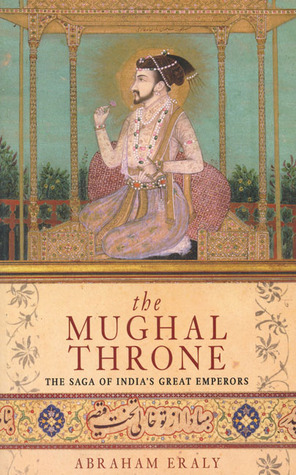
The Mughal Throne – Abraham Eraly

A history of the great Mughal rulers of India, one of the world’s greatest empires.

In December 1525 Babur, the great grandson of the Mongol conqueror Tamberlaine, crossed the Indus river into the Punjab with a modest army and some cannon. At the battle of Panipat five months later he routed the mammoth army of the Afghan ruler of Hindustan. Mughal rule in India had begun. It was to continue for over three centuries, shaping India for all time.

Full of dramatic episodes and colourful detail, THE MUGHAL EMPIRE tells the story of one of the world’s great empires.

In My Hands Today…

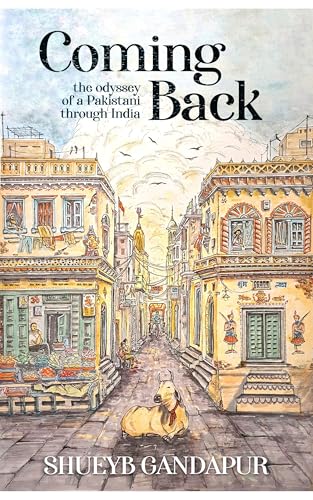
Coming Back: the Odyssey of a Pakistani through India – Shueyb Gandapur

Coming Back is a captivating travelogue exploring the shared heritage of South Asia.

In a world marked by political divisions and religious tensions, this unique travel memoir offers a fresh perspective on the enduring connection between Pakistan and India.

As a Pakistani visitor to India, the author delves into the motivations behind his journey, the shared similarities and intriguing differences between the two nations, and the emotional reunions with long-lost compatriots who migrated across borders.

In My Hands Today…

India, Bharat and Pakistan: The Constitutional Journey of a Sandwiched Civilisation – J. Sai Deepak

India, Bharat and Pakistan, the second book of the Bharat Trilogy, takes the discussion forward from its bestselling predecessor, India, That Is Bharat. It explores the combined influence of European and Middle Eastern colonialities on Bharat as the successor state to the Indic civilisation, and on the origins of the Indian Constitution. To this end, the book traces the thought continuum of Middle Eastern coloniality, from the rise of Islamic Revivalism in the 1740s following the decline of the Mughal Empire, which presaged the idea of Pakistan, until the end of the Khilafat Movement in 1925, which cemented the road to Pakistan. The book also describes the collaboration of convenience that was forged between the proponents of Middle Eastern coloniality and the British colonial establishment to the detriment of the Indic civilisation.

One of the objectives of this book is to help the reader draw parallels between the challenges faced by the Indic civilisation in the tumultuous period from 1740 to 1925, and the present-day. Its larger goal remains the same as that of the first, which is to enthuse Bharatiyas to undertake a critical decolonial study of Bharat’s history, especially in the context of the Constitution, so that the religiosity towards the document is moderated by a sense of proportion, perspective and purpose.

In My Hands Today…

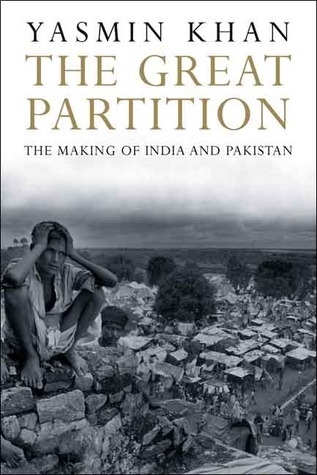
The Great Partition: The Making of India and Pakistan – Yasmin Cordery Khan

The partition of India in 1947 promised its people both political and religious freedom—through the liberation of India from British rule, and the creation of the Muslim state of Pakistan. Instead, the geographical divide brought displacement and death, and it benefited the few at the expense of the very many. Thousands of women were raped, at least one million people were killed, and ten to fifteen million were forced to leave their homes as refugees. One of the first events of decolonization in the twentieth century, Partition was also one of the most bloody.

In this book Yasmin Khan examines the context, execution, and aftermath of Partition, weaving together local politics and ordinary lives with the larger political forces at play. She exposes the widespread obliviousness to what Partition would entail in practice and how it would affect the populace. Drawing together fresh information from an array of sources, Khan underscores the catastrophic human cost and shows why the repercussions of Partition resound even now, some sixty years later. The book is an intelligent and timely analysis of Partition, the haste and recklessness with which it was completed, and the damaging legacy left in its wake.

In My Hands Today…

Sultan: A Memoir – Wasim Akram, Gideon Haigh

For twenty years, Wasim Akram let his cricket do the talking – his electrifying left-arm pace, his explosive left-handed striking, his leadership and his inspiration. For another twenty years he kept his own counsel about those days, full of drama, controversy and even mystery, in a country, Pakistan, that to outsiders is a constant enigma. Until now.

Sultan tells the story of cricket’s greatest left-arm bowler, and one of its greatest survivors, who was chosen from the streets of Lahore and groomed by Imran Khan to become champion of the world – man of the match in the final of the 1992 World Cup. Along the way were unforgettable rivalries with the greatest of his time, from Viv Richards and Ian Botham to Sachin Tendulkar and Shane Warne. Along the way, too, a backdrop of conspiracy and intrigue over ball tampering and match fixing about which Wasim finally sets the story straight.

But there’s more: Sultan goes frankly into the crumbling and rebuilding of Wasim’s private life, marred by the tragedy of his first wife’s death and the torment of addiction. The result is an unprecedented insight into the life of a cricketer who revolutionised the game with his speed and swing, and a patriot buoyed and burdened by the expectation of one of the game’s most fanatical public.