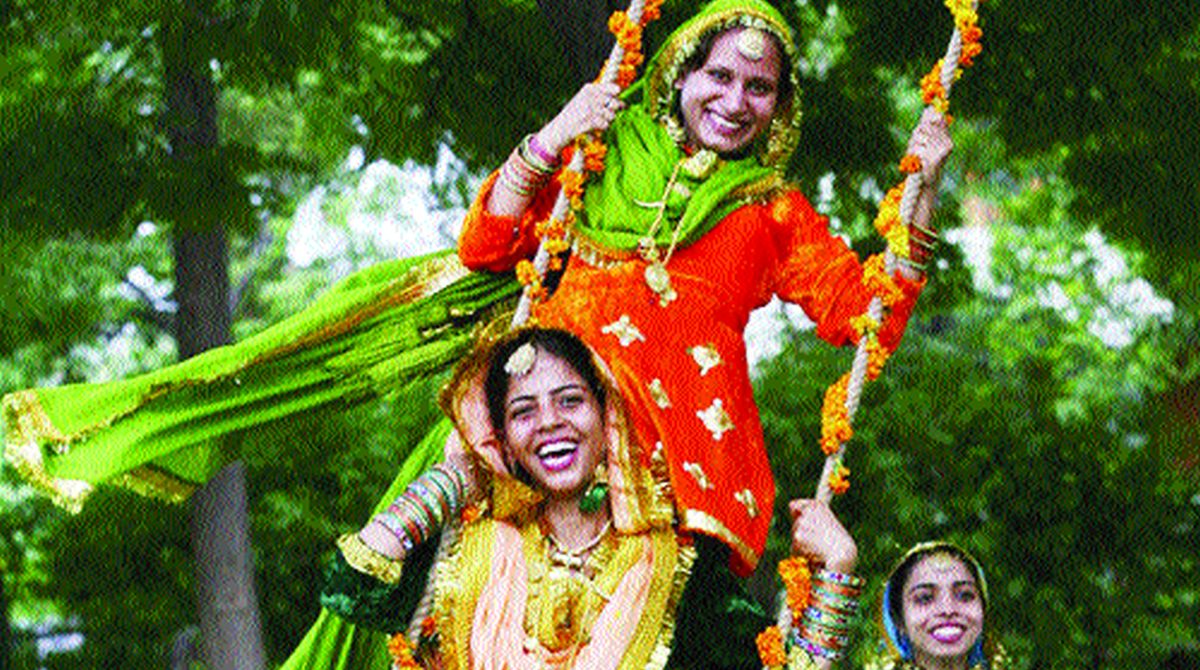
Festivals of India: Hariyali Teej

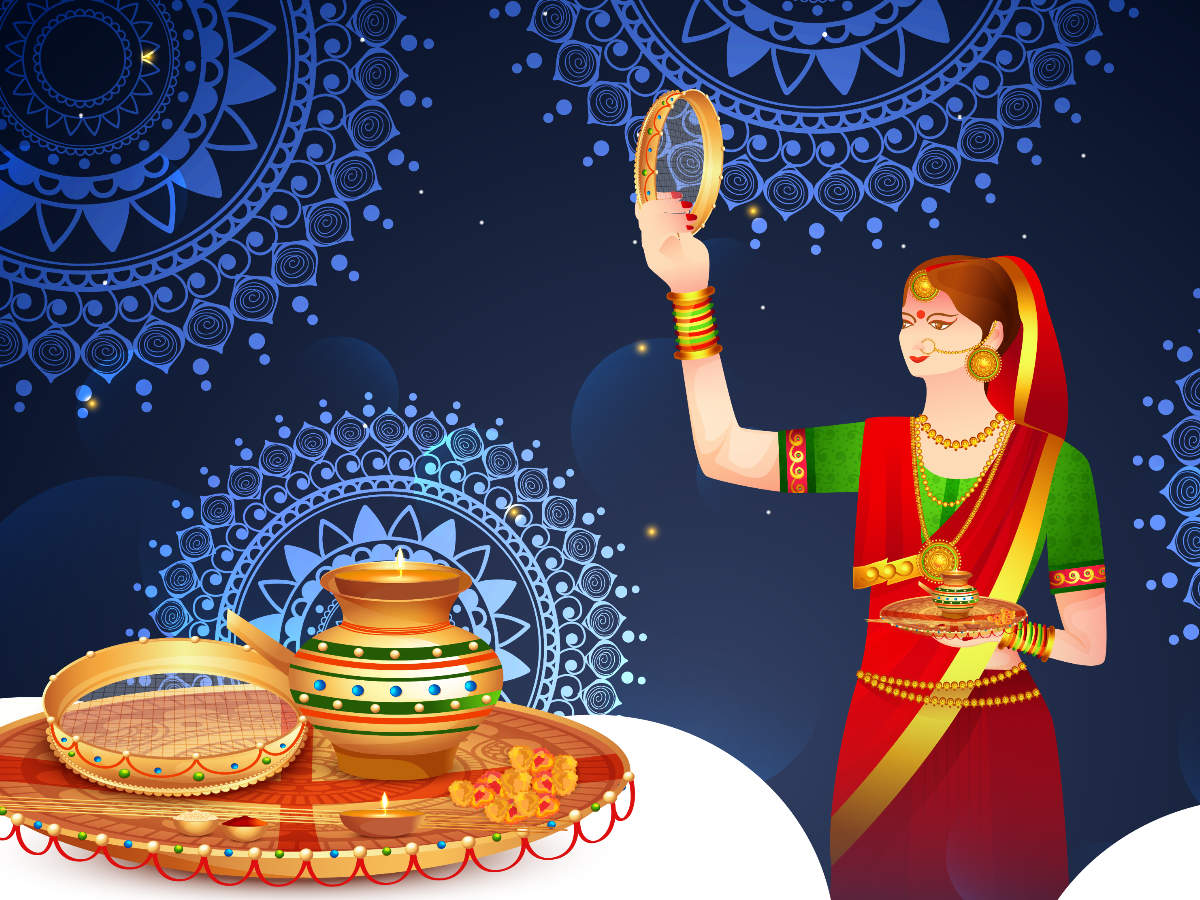
Also known as Chhoti Teej, Madhusrava Teej and Shravana Teej, today is the festival of Hariyali Teej aka Green Teej, a festival celebrated on the third day after the full moon in the month of Shraavan, the fifth month of the Hindu calendar which begins in mid to late July and ends in August. As this is the monsoon season when the surroundings become green, the Shraavana Teej is also called Hariyali Teej. The month of Shravan is very important for the sub-continent as it is connected to the arrival of the south-west monsoons. The festival usually falls a couple of days before the festival of Nag Panchami, when snakes are worshipped. The festival of Hariyali Teej holds the same significance as Karwa Chauth observed by the married Hindu women in certain parts of India.

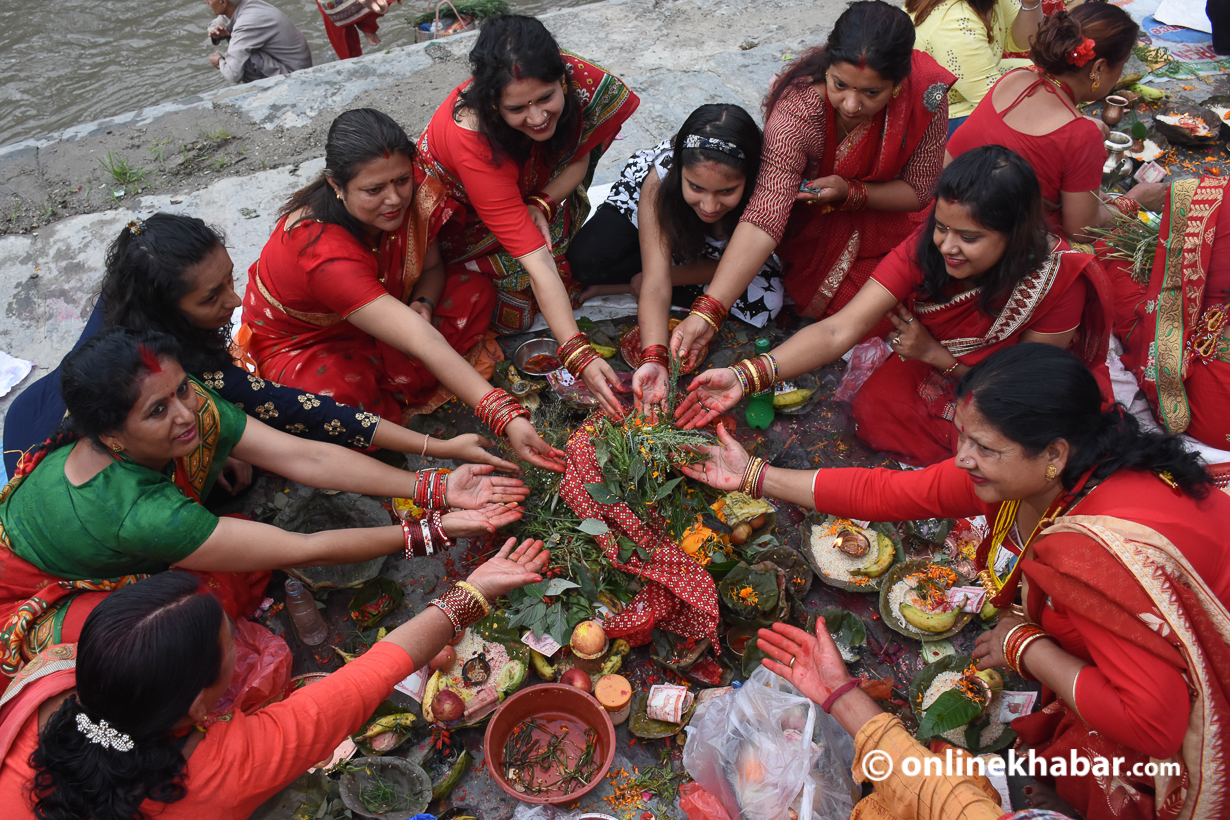
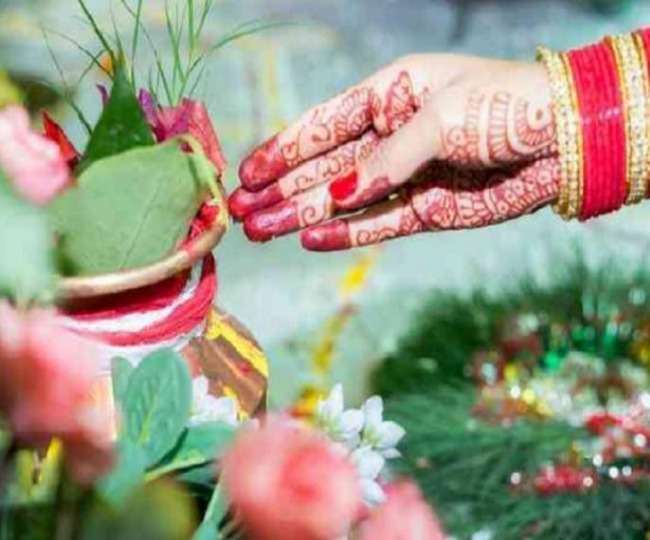
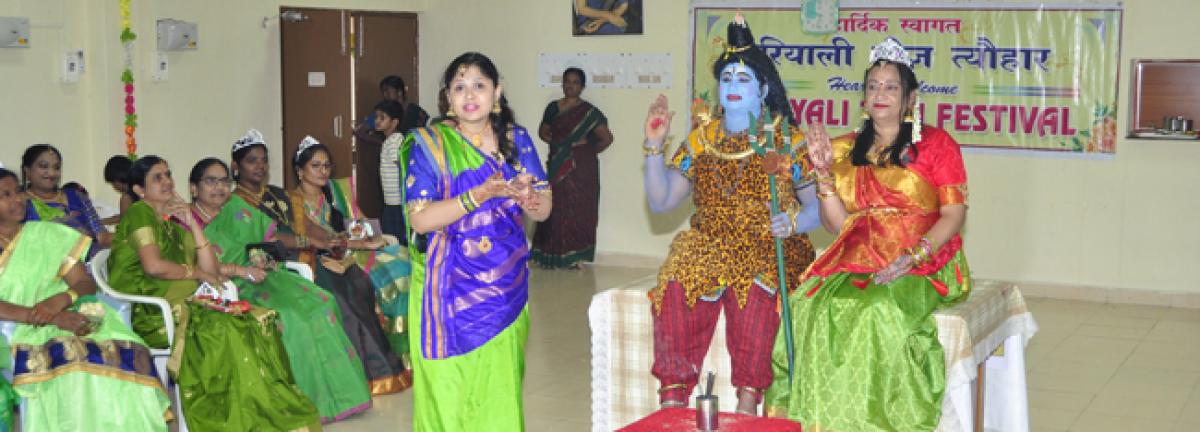
Teej is the generic name for a number of Hindu festivals that are celebrated by women in many parts of India, mainly in north and central India and Nepal. The monsoon festivals of Teej are primarily dedicated to Goddess Parvati and her union with Lord Shiva with women often fasting in celebrations. Teej refers to the third day that falls every month after the new moon or amavasya, and the third day after the full moon night of every month. The festival celebrates the bounty of nature, the arrival of clouds and rain, greenery and birds with social activity, rituals and customs. These festivals for women, include dancing, singing, getting together with friends and telling stories, dressing up with henna-coloured hands and feet, wearing red, green or orange clothes, sharing festive foodsand playing under trees on swings.

Hariyali Teej is also celebrated to remember the reunion of Lord Shiva and Goddess Parvati, the day they married. As per Hindu mythology, on this day, an incarnation of Goddess Parvati was abducted by her friends to stop her marriage with Lord Vishnu. Goddess Parvati’s friends knew that she secretly loved Lord Shiva and yearned to marry him, so her friends kidnapped and hid her in the forest. Goddess Parvati used this time to pray Lord Shiva who was so moved by the prayers that he agreed and they were married with the blessings of her father. Goddess Parvati fasted and was austere for many years and was accepted by Lord Shiva as his wife in her 108th birth and is also known as Teej Mata. Devotes observe fast and do a special puja (prayer) to worship the moon with milk, flowers, and curd. On Sindhara Teej married daughters receive the gifts by her mother such clothes, bangles, bindi, mehandi, etc. Ghevar, a special sweet, are given to them on this day. These gifts are known as Sindhara.

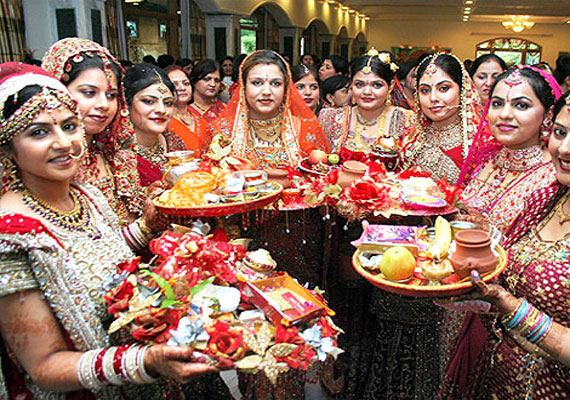
On Teej, just as on Karva Chauth, the mother sends a baya or gift. The baya, which consists of a variety of foodstuffs, is placed on a thaali or a plate at a place of worship where a chowk or square has been decorated, and an idol or picture of Goddess Parvati has been installed. The puja is performed in the morning while the evenings are set aside for folk singing and dancing, including women’s prayers for their husbands’ longevity and their families.

The traditional areas of celebration of Hariyali Teej are Punjab, Haryan Uttar Pradesh, Bihar, Jharkhand, Madhya Pradesh and Rajasthan.

In Punjab, Teej is known as Teeyan and is seen as a seasonal festival which is dedicated to the onset of the monsoon. During Hariyali Teej, girls play on swings that are set up under trees or open courtyards and during Teej, in-laws, husbands and other family members give gifts, typically new clothes and accessories, to girls and women. Boys fly kites and make sweets. The festival is celebrated by women of all faiths, and lasts from the third day of the bright half of the lunar month of Sawan as per the Punjabi calendar to the full moon of Sawan for about 13 days. Teeyan involves women getting together and performing Gidda, married women visiting their families and receiving gifts. It is also traditional for women to ride on swings. Fairs are organised in schools and colleges where dance competitions are held.

In Haryana, the festival is celebrated as an official holiday. Many functions are organised by the government to celebrate this festival, which welcomes the rainy season. Boys traditionally flew kites from morning to evening. Swings are set up in open courtyards, under trees for the season. Girls apply henna to their hands and feet and are excused from household chores on this day. On Teej, girls often receive new clothes from their parents.

In Rajasthan, Teej welcomes the monsoon and is observed in the month of Shravan which comes in July or August. The monsoon rains fall on the parched land and the pleasing scent of the wet soil rises into the air. Swings are hung from trees and women dressed in green clothes sing songs in celebration of the advent of the monsoon. This festival is dedicated to Goddess Parvati, commemorating her union with Lord Shiva. Goddess Parvati is worshipped by seekers of conjugal bliss and happiness. An elaborate procession is taken out in Jaipur for two consecutive days during the festival watched by people in large numbers. The Teej idol is covered with a canopy whereas the Gangaur idol is open. The traditional ghevar sweet is also associated with the festival. The day before Haryali Teej, is celebrated as Sinjara, wherein women put henna on their hands and eat.

The celebrations of Hariyali Teej are very elaborate in all the Krishna temples in Vridavan in Uttar Pradesh. Swings are laid for the deity and this ceremony is known as Jhullan Leela. Religious hymes and songs are chanted in all the temples and idols of Lord Krishna and Goddess Radha are beautifully adorned with ornaments and after the celebrations; water is showered over the devotees to mark the arrival of monsoons.

The tradition of Vat Vriksha also forms an important part of the Shravani Teej. In many places, swings are hung on the branches of a banyan tree or Vat Vriksha and even in houses. Women spend the day swinging along and dancing and singing with other women. On the day of Hariyali Teej women are given all the liberty for enjoyment and merry making. In Hindu mythology the banyan tree is sacred and its hanging branches are said to reflect knowledge. So, worshipping the Vat Vriksha on the occasion of Hariyali Teej is also considered auspicious.

On the day of Hariyali Teej, women also observe strict fast known as Nirjala Vrat, where they are not allowed to even drink water for the whole day. The Hariyali Teej vrat can be kept both by married and unmarried women and the fast is broken at night after worshipping the moon. On this day women worship Teej Mata or Goddess Parvati for the prosperity and well-being of their husbands. The idols of Lord Shiva and Goddess Parvati are worshipped and songs are sung in their honour.

Festivals of India: Ashadi Ekadashi

Tomorrow is Ashadi Ekadashi which is also known variously as Shayani Ekadashi which literally means sleeping eleventh or the Maha Ekadashi or the great eleventh or Prathama Ekadashi or the first eleventh. It is the eleventh lunar day or ekadashi of the bright fortnight or shukla paksha of the Hindu month of Ashadha which happens sometime in June or July and so is also known as Ashadhi Ekadashi or Ashadhi. This holy day is of special significance to Vaishnavas, followers of the Hindu protector God, Lord Vishnu.

On this day images of Vishnu and Lakshmi are worshipped and the entire night is spent chanting prayers and devotees keep fast and take vows on this day, to be observed during the entire chaturmas, the holy four-month period of rainy season. These may include, giving up a food item or fasting on every Ekadashi day. It is believed that Lord Vishnu falls asleep in Ksheersagar or the cosmic ocean of milk on Shesha naga, the cosmic serpent. Thus the day is also called Dev Shayani Ekadashi or the god sleeping eleventh or Hari Shayani Ekadashi or Vishnu sleeping eleventh. Vishnu finally awakens from his slumber four months later on Prabodhini Ekadashi or the eleventh day of the bright fortnight in the Hindu month of Kartik which comes sometime in October or November. A fast is observed on Shayani Ekadashi. The fast demands abstainance from all grains, beans, cereals, certain vegetables like onions and certain spices.

In the scripture Bhavishyottara Purana, Lord Krishna narrates the significance of Shayani Ekadashi to Yudhishthira, as the creator god Lord Brahma narrated the significance to his son, the sage Narada once. The story of king Mandata is narrated in this context. The pious king’s country had faced drought for three years, but the king was unable to find a solution to please the rain gods. Finally, sage Angiras advised the king to observe the vrata or vow of Dev Shayani Ekadashi and when the king sis so, by the grace of Lord Vishnu, there was rain in the kingdom.

In my home state of Maharashtra, on this day, a huge yatra or religious procession of pilgrims known as Pandharpur Ashadi Ekadasi Waari Yatra culminates at Pandharpur in Solapur district in south Maharashtra, situated on the banks of the Chandrabhaga River. Pandharpur is main center of worship of the deity Vitthal, a local form of Lord Vishnu. Hundreds of thousands of pilgrims come to Pandharpur on this day from different parts of the state with some of them carrying Palkhis or palanquins with the footwear and images of the saints of Maharashtra, each from a different part of the state. As per tradition, saint Dnyaneshwar’s palki leaves from Alandi, while saint Tukaram’s begins at Dehu, both near Pune. The pilgrims are referred to as Warkaris and they sing Abhangas or hymns written by Saint Tukaram and Saint Dnyaneshwar, dedicated to Lord Vitthal. This 700-800 year old tradition takes 21-days of walking from various parts of the state, reaching Pandharpur on Ashadi Ekadashi where they take a holy dip in the sacred Chandrabhaga or Bhima River before proceeding to visit the Vitthal Temple. The road next to our building in Mumbai is part of one of the routes the warkaris take and in the beginning of their trek, one night, we hear them pretty much the whole night, as various groups of warkaris start their journey, singing abhangs and hymns and we just know that Ashadi Ekadashi is just around the corner.

Ashadi Ekadashi is also the beginning of the holy four month period known as Chaturmas from June/July to October/November which will end on Prabodhini Ekadashi, the eleventh day of the bright half of the month of Kartik which is the eighth month of the Hindu lunar calendar. It is believed that the devas of demigods start their four month long sleep on the Ashadi Ekadashi and sjould not be disturbed which is why the Chaturmas period is considered inauspicious for weddings and other celebrations and is considered a suitable time for householders to have an annual renewal of faith by listening to discourses on dharma, and by meditation and vrata or self-control. Penance, austerities, religious observances, recital of mantras, bathing in holy rivers, performing sacrifices, and charity are prescribed. Fasts and purity during this period help maintain health, for which there is likely a scientific rationale, disease spreading more readily with the onset of monsoon. A number of Hindus, particularly those following the Vaishnav tradition, refrain from eating onions and garlic during this period. In Maharashtra, a number of Hindu families also do not eat any preparations made from egg plant, brinjal or aubergene. Asetics or Sanyasis are supposed to halt during this period at one selected place called the monsoon retreat, and give discourses to the public. Major celebrations within this holy period include Guru Purnima, Krishna Janmashtami, Raksha Bandhan, Ganesh Chaturthi, Navratri, Diwali and Champa Sashthi, which as per tradition in Maharashtra, is the day Chaturmas ends.

Source

In Jainism this practice is collectively known as Varshayog and is prescribed for Jain monasticism when wandering monks believe that during the rainy season, countless bugs, insects and tiny creatures that cannot be seen in the naked eye take birth massively. Therefore, these monks reduce the amount of harm they do to other creatures so they opt to stay in a single place for the four months to incur minimal harm to other lives. These monks, who generally do not stay in one place for long, observe their annual rains retreat during this period, by living in one place during the entire period amidst lay people, observing a vow of silence, meditation, fasting and other austerities, and also giving religious discourses to the local public. One of the most important Jain festivals, Paryushana, falls during the beginning of this period, which concludes with Kshamavani Diwas or Forgiveness Day, when lay people and disciples say Micchami Dukkadam and ask forgiveness from each other. Amongst Jain merchants, there is a tradition of inviting monks to their respective cities during Chaturmas to give religious instruction.

In Buddhism, it is believed that Gautama Buddha stayed at the royal garden of King Bimbisara of Rajgir, whom he had recently converted, for the period of Chaturmas and gave sermons. This practice is followed by monks to this day. Another reason for ascetics to stay in one place during the rainy season is that the tropical climate produces a large number of insects, which would be trampled by travelling monks.

Festivals of India: Vata Purnima

Also called Vata Savitri, Vata Purnima is a Hindu celebration observed by married women in the Mithila region of Bihar and Jharkhanand, some regions of Uttar Pradesh and the western states of Maharashtra, Goa and Gujarat. It is a day which celebrates a married woman’s love for her husband. The northern states celebrate Vata Savitri which usually occurs about 15 days before Vata Purnima. This year the Vata Savitri vrat was celebrated on 10 June and the Vata Purnima will be celebrated tomorrow, 24 June.

On this full moon day, called Purnima in India, during the three days of the month of Jyeshtha according to the Hindu calendar, which falls in May–June in the Gregorian calendar, a married woman marks her love for her husband by tying a ceremonial thread around a banyan tree. The celebration is based on the legend of Savitri and Satyavan as narrated in the epic Mahabharata.

According to the legend, the childless king Aswapati and his consort Malavi wished to have a son and they pray to the God Savitr who appears before the king and tells him he will soon have a daughter who is named Savitri in honor of the God. Savitri is so beautiful and pure that no man will ask for her hand in marriage. Her father tells her to find a husband on her own and she sets out on a pilgrimage for this purpose and finds Satyavan, the son of a blind king named Dyumatsena who lives in exile as a forest-dweller. Savitri returns to find her father speaking with Sage Narada who tells her she has made a bad choice: although perfect in every way, Satyavan is destined to die one year from that day. Savitri insists on going ahead and marries Satyavan. Three days before the foreseen death of Satyavan, Savitri takes a vow of fasting and vigil. Her father-in-law tells her she has taken on too harsh a regimen, but she replies that she has taken an oath to perform the regimen and Dyumatsena offers his support. The morning of Satyavan’s predicted death, he is splitting wood and suddenly becomes weak and lays his head in Savitri’s lap and dies. Savitri places his body under the shade of a Banyan tree or Vat. Yama, the God of death, comes to claim Satyavan’s soul and Savitri follows him as he carries the soul away. She offers him praise and Yama, impressed by both the content and style of her words, offers her any boon, except the life of Satyavan. She first asks for eyesight and restoration of the kingdom for her father-in-law, then a hundred children for her father, and then a hundred children for herself and Satyavan. The last wish creates a dilemma for Yama, as it would indirectly grant the life of Satyavan. However, impressed by Savitri’s dedication and purity, he offers her one more chance to choose any boon, but this time omitting “except for the life of Satyavan”. Savitri instantly asks for Satyavan to return to life. Yama grants life to Satyavan and blesses Savitri’s life with eternal happiness. Satyavan awakens as though he has been in a deep sleep and returns to his parents along with his wife. Meanwhile, at their home, Dyumatsena regains his eyesight before Savitri and Satyavan return. Since Satyavan still does not know what happened, Savitri relays the story to her parents-in-law, husband, and the gathered ascetics. As they praise her, Dyumatsena’s ministers arrive with news of the death of his usurper. Joyfully, the king and his entourage return to his kingdom.

Though the tree does not play a significant role of the story, it is worshiped in memory of the love in the legend. The festival is followed by married women only, and is prohibited for children and widows.

On the occasion of the festival, married women keep a fast of three days for their husbands life, just like what Savitri did. During the three days, pictures of a Vat or a banyan tree, Savitri, Satyavan, and Yama, are drawn with a paste of sandal and rice on the floor or a wall in the home. Golden engravings of the couple are placed in a tray of sand, and worshiped with mantras and banyan leaves. Women also listen to the Savitri-Satyavan katha or story and worship the banyan tree outside. A thread is wound around the trunk of the tree, and copper coins are offered. Strict adherence to the fast and tradition is believed to ensure the husband a long and prosperous life.

According to an expert, B. A. Gupte, the Puranas seem to suggest that the mythology behind the festival is symbolic of natural phenomena with the festival the representation of the annual marriage of the earth and nature represented by Satyavan and Savitri. It is like the way the earth dies every year and is rejuvenated by the powers of nature and points out that the Vat or banyan tree was likely chosen due to the mythological aspects connected to the tree known to Indians. Today, the festival is celebrated with women dressing in fine sarees and jewelry, and their day begining with the offering of any five fruits and a coconut. Each woman winds white thread around a banyan tree seven times as a reminder of their husbands and then they fast for the whole day.

Festivals of India: Baisakhi

Today marks the beginning of the Hindu solar new year and this means its festival time! The new year is set in sync with the solar cycle of the lunisolar Hindu calendar and it falls on or about 14 April every year according to the Gregorian calendar. Across the Indian subcontinent, various communities celebrate the day as their new year. It is the New Year’s Day for Hindus in Assam, Bengal, Bihar, Himachal Pradesh, Haryana, Kerala, Odisha, Punjab, Tamil Nadu, Uttar Pradesh, Uttrakhand and other parts of India. However, this is not the universal new year for all Hindus. For some, such as those in and near Gujarat, the new year festivities coincide with the five-day Diwali festival. For others, the new year falls on Cheti Chand, Gudi Padwa and Ugadi which falls a few weeks earlier. Essentially a spring harvest festival, in the state of Punjab, it is known as Baisakhi, Vaisakhi or Vaisakha Sankranti as it marks the first day of the month of Vaisakha.

Baisakhi is a historical and religious festival in both Hinduism and Sikhism. For Hindus, the festival is their traditional solar new year, a harvest festival, an occasion to bathe in sacred rivers such as the Ganges, Jhelum, and Kaveri, visit temples, meet friends and take part in other festivities. For the Sikhs, Vaisakhi observes major events in the history of Sikhism and the Indian subcontinent that happened in the Punjab region.

The significance of Baisakhi as a major Sikh festival marking the birth of the Sikh order started after the persecution and execution of Guru Tegh Bahadur for refusing to convert to Islam under the orders of the Mughal Emperor Aurangzeb. This triggered the coronation of the tenth Guru of Sikhism and the historic formation of the Khalsa, both on the Vaisakhi day. The Khalsa tradition started in the year 1699, as it is on this day that the 10th Guru of the Sikhs, Guru Gobind Singh laid down the foundation of the Panth Khalsa, that is the Order of the Pure Ones, by baptising Sikh warriors to defend religious freedoms. This gave rise to the Vaisakhi or Baisakhi festival observed as a celebration of Khalsa Panth formation and is also known as Khalsa Sirjana Divas and Khalsa Sajna Divas. The Birth of the Khalsa Panth was probably on 30 March 1699. Since 2003, the Sikh Gurdwara Prabhandak Committee named it Baisakh or Vaisakh, making the first day of the second month of Vaisakh according to its new Nanakshahi calendar. A special celebration takes place at the Talwandi Sabo, where Guru Gobind Singh stayed for nine months and completed the recompilation of the Guru Granth Sahib, in the Gurudwara at Anandpur Sahib the birthplace of the Khalsa, and at the Golden Temple in Amritsar.

Ranjit Singh was proclaimed as Maharaja of the Sikh Empire on 12 April 1801, which was the Baisakhi day, creating a unified political state with Sahib Singh Bedi, a descendant of Guru Nanak dev, conducting the coronation. Vaisakhi was also the day when the British colonial empire official, General Reginald Dyer, committed the Jallianwala Bagh massacre on a gathering, an event influential to the Indian movement against colonial rule.

On Baisakhi, Mandirs and Gurdwaras are decorated. Hindus perform a mandatory daan or charity especially of hand fans, water pitchers and seasonal fruits. A ritual dip in the Ganga river or other holy water bodies is often performed and community fairs are held at Hindu pilgrimage sites and in many areas, a procession of temple deities is taken out. Sikhs hold kirtans, visit local Gurdwaras, community fairs and Nagar kirtan processions are held, and people gather to socialise and share festive foods.

The tradition of celebrating Baisakhi among Punjabi Hindus predates the birth of Sikhism. In undivided Punjab, before India’s partition, the Hindu shrine of Katas Raj was known for its Baisakhi fair which was attended by around 10,000 pilgrims, mostly Hindus. Similarly, at the shrine of Bairagi Baba Ram Thaman, a Baisakhi fair was held annually since the 16th century, which is today in Kausar in Pakistan’s Punjab, which was attended by around 60,000 pilgrims and Bairagi saints from all over India used to throng the shrine. The most spectacular gathering of the Baisakhi fair is at Thakurdwara of Bhagwan Narainji at Pandori Mahatan village in Gurdaspur district of Punjab where the fair lasts for three days from the 1st day of Vaisakha to the 3rd day of Vaisakha. The celebrations start in form of a procession on the morning of the 1st day of Vaisakha, carrying the Mahant in a palanquin by Brahmacharis and devotees. After that, the Navgraha Puja is held and charities in money, grains and cows are done. At sunset, the Sankirtan is held in which the Mahant delivers religious discourses and concludes it by distributing prasad or holy offerings of Patashas or candy drops. Pilgrims also do the ritual bath at the sacred tank in the shrine.

According to the Khalsa Sambat, the Khalsa calendar started with the creation of the Khalsa which was 13 April 1699 and accordingly, Baisakhi has been the traditional Sikh New Year. The alternative Nanakshahi calendar begins its year a month earlier on 1 Chait which generally falls on 14 March and begins with the birth year of the Guru Nanak Dev in 1469.

Vaisakhi is an important festival among Dogra Hindus of the Jammu region. On this day, people get up early in the morning, throng the rivers, canals, and ponds and take a ritual dip on this occasion. In Dogra households, a puja or prayer is performed then and part of the food crop is offered to the deities. New fruits of the year are enjoyed with the ritual bath at the Tawi river being common in Jammu. Baisakhi is celebrated at Udhampur on the banks of the Devika river where for three days devotees enjoy folk songs. At Sudhmahadev, this festival is celebrated with great pomp and show where folk singers come down and competition of folk songs is held. You will find vendors with stalls of eatables and games during this time. People also go to the Nagbani temple near Jammu to witness the grand new year celebration. The occasion is marked by numerous fairs and people come by the thousands to celebrate the festival.

In Himachal Pradesh, Baisakhi is an important festival for the Hindus. People get up early in the morning and have their ritual bath. Two earthen lamps are lit on this day, one with oil and the other with ghee and kept in a large saucer along with a water pot, blades of evergreen turf, Kusha, Incense, sandal, vermillion and money and the household deities are worshipped with all these items. Alms are given in form of rice and pulses with small coins called Nasrawan. Fried cakes of black gram prepared a day in advance are distributed to neighbours after the prayers and other special delicacies are prepared. In the evenings’ people enjoy the many fairs organised for three days.

In the state of Haryana, Baisakhi is celebrated with a fair in Kurukshetra at Baan Ganga Tirtha, which is associated with Lord Arjuna of the Mahabharata. There is a Vaisakhi tradition of a ritual bath at the sacred tank of Baan Ganga Tirtha and a fair is held annually on Baisakhi. The Haryana government also organises a Baisakhi festival in Pinjore Gardens to commemorate this festival.

In the state of Uttar Pradesh, Baisakhi is also known as Sattua or Satwahi, as Sattu, made by dry roasting and finely grinding grams is donated and consumed on this day. The common rites during this festival are bathing in a river or pond and eating sattu and jaggery.

Wishing everyone who celebrates this festival a very Happy New Year! Enjoy this day and especially the yummy food, though socialising may still not be allowed under social distancing norms in most countries.

Festivals of India: Lohri

Today, Punjab will come together to celebrate the festival of Lohri. A celebration of the winter solstice, Lohri is is a popular Punjabi winter folk festival which is beloved in the Punjab region. The significance and legends about the Lohri festival are many and these link the festival to the region. It is believed by many that the festival commemorates the passing of the winter solstice. Lohri marks the end of winter, and is a traditional welcome of longer days and the sun’s journey to the northern hemisphere by Sikhs and Hindus in the region. Lohri is observed the night before Makar Sankranti, also known as Maghi, according to the solar part of the lunisolar Bikrami calendar and typically falls about the same date every year which is January 13 in the month of Paush and is set by the solar part of the lunisolar Punjabi calendar and in most years it falls around 13 January of the Gregorian calendar. An official restricted holiday in the Indian Punjab, Haryana and the National Capital Territory of Delhi, Lohri is not a holiday in the Pakistani Punjab, but It is, observed by Hindus, Sikhs and some Muslims there.

There are many folklores about Lohri which is the celebration of the arrival of longer days after the winter solstice. According to folklore, in ancient times Lohri was celebrated at the end of the traditional month when the winter solstice occurs with the day after Lohri celebrated as Maghi Sangrand.

The festival is ancient, originating in the regions near the Himalayan mountains where winter is colder than the rest of the subcontinent. Hindus traditionally lit bonfires in their yards after the weeks of the rabi season cropping work, socialised around the fire, sang and danced together as they marked the end of winter and the onset of longer days. After the night of bonfire celebrations, Hindus would mark Makar Sankranti and go to a sacred water body such as a river or lake to bathe. Over the years, however, instead of celebrating Lohri on the eve of when winter solstice actually occurs, Punjabis started to celebrate it on the last day of the month during which winter solstice takes place.

The festival’s ancient significance is both as a winter crop season celebration and a remembrance of the Sun deity or Surya. Lohri songs mention the Sun god asking for heat and thanking him for his return. Other legends explain the celebration as a folk reverence for the Lord of fire or Agni or the goddess of Lohri. Yet another folklore links Lohri to the tale of Dulla Bhatti. The central theme of many Lohri songs is the legend of Dulla Bhatti who lived in Punjab during the reign of Mughal emperor Akbar. He was regarded as a hero in Punjab, for rescuing Hindu girls from being forcibly taken to be sold in slave market of the Middle East. Amongst those he saved were two girls Sundri & Mundri, who gradually became a theme of Punjab’s folklore. As a part of Lohri celebrations, children go around homes singing the traditional folk songs of Lohri with Dulla Bhatti’s name included in them. One person sings, while others end each line with a loud “Ho!” sung in unison. After the song ends, the adult of the home is expected to give snacks and money to the singing troupe of youngsters.

Some people believe that Lohri has derived its name from Loi, the wife of Saint Kabir. There is a legend amongst some people that Lohri comes from the word ‘loh’, which means the light and the warmness of fire. Lohri is also called lohi in rural Punjab. According to another legend Holika and Lohri were sisters. While the former perished in the Holi fire, the latter survived with Prahlad. Eating of til or sesame seeds and rorhi or jaggery is considered to be essential on Lohri day. Perhaps the words til and rorhi merged to become tilorhi, which eventually got shortened to Lohri.

Lohri is celebrated with a bonfire, the lighting of which during this winter festival is an ancient tradition. Eating sheaves of roasted corn from the new harvest and celebrating the January sugarcane harvest is how Lohri is celebrated. Sugarcane products such as jaggery and gachak or peanut candy are central to Lohri celebrations, as are nuts which are harvested in January. The other important food items of Lohri are radishes and mustard greens. During this time, it is traditional to eat gajak, sarson da saag with makki di roti, radish, ground nuts and jaggery as well as til rice which is made by mixing jaggery, sesame seeds and rice. In some places, this dish is called Tricholi.

In various places of the Punjab, about 10 to 15 days before Lohri, groups of young and teenage boys and girls go around the neighbourhood collecting logs for the Lohri bonfire. In some places, they also collect items such as grains and jaggery which are sold and the sale proceeds are divided amongst the group. In some parts of Punjab, there is a popular “trick or treat” activity which is engaged in by boys to select a group member to smear his face with ash and tie a rope around his waist. The idea is for the selected person to act as a deterrent for people who refrain from giving Lohri items. The boys will sing Lohri songs asking for Lohri items. If not enough is given, the householder will be given an ultimatum to either give more or the rope will be loosened. If not enough is given, then the boy who has his face smeared will try to enter the house and smash clay pots or the clay stove.

During the day, children go from door to door singing folk songs. These children are given sweets and savories, and occasionally, money. Turning them back empty-handed is regarded inauspicious. Where families have newly-weds and new borns, the requests for treats increases. The collections gathered by the children are known as Lohri and consist of til, gachchak, crystal sugar, jaggery, peanuts and phuliya or popcorn. Lohri is then distributed at night during the festival. Sesame seeds, peanuts, popcorn and other food items are also thrown into the fire. For some, throwing food into the fire represents the burning of the old year and start the next year on Makar Sankranti

The bonfire ceremony differs depending on the location in Punjab. In some parts, a small image of the folk Lohri goddess is made with gobar or cattle dung decorating it, kindling a fire beneath it and chanting its praises. The folk Lohri goddess is believed to be an ancient aspect of the celebration, and is part of a long tradition of the winter solstice celebrations manifesting as a god or goddess. In other parts, the Lohri fire consists of cow dung and wood with no reference to the Lohri goddess. The bonfire is lit at sunset in the main village square. People toss sesame seeds, gur, sugar-candy and rewaries on the bonfire, sit around it, sing and dance till the fire dies out. Some people perform a prayer and go around the fire. This is to show respect to the natural element of fire, a tradition common in winter solstice celebrations. It is traditional to offer guests til, gachchak, jaggery, peanuts and phuliya or popcorn. Milk and water are also poured around the bonfire by Hindus to thank the Sun God and seeking his continued protection. Chants of “Aadar aye dilather jaye” meaning “may honour come and poverty vanish” are chanted while moving around the fire.

In the northern union territory of Jammu and Kashmir, Lohri in Jammu is special because of various additional traditions associated with it like Chajja making and dancing, hiran dance and preparing Lohri garlands. Young children prepare a replica of a peacock known as Chajja. They carry this Chajja and then go from one house to other house celebrating Lohri. In and around Jammu, a special hiran or deer dance is performed. Selected houses which have auspicious ceremonies prepare eatables and children wear special garlands made of groundnuts, dry fruits and candies on the day of the festival.

Among some sections of the Sindhi community, the festival is traditionally celebrated as Lal Loi. On the day of Lal Loee children bring wood sticks from their grandparents and aunts and light a fire burning the sticks in the night with people enjoying, dancing and playing around the fire. The festival is gaining popularity amongst other Sindhis where Lohri is not a traditional festival.