

Thirukoḻi Temple, Uraiyur, Tamil Nadu
Thirukoḻi Temple, now often referred to as Nachiar Koil, stands in Uraiyur, a suburb of Tiruchirappalli in Tamil Nadu. It’s one of the 108 Divya Desams, the sacred temples dedicated to Vishnu. But this place flips the usual script. Here, the goddess takes centre stage. Kamalavalli Nachiyar leads every procession, while the god follows. That alone makes the temple worth a closer look.
The story behind Thirukoḻi begins with a curse and a childless king. Rishi Brighu cursed Lakshmi to be born as a mortal. Meanwhile, Nanda Chola, a Chola king desperate for an heir, prayed to Mahalakshmi. His prayers worked. While hunting near a lotus pond, he found a baby girl nestled among the petals. He named her Kamalavalli, the child of the lotus. When Kamalavalli grew up, she visited Srirangam and fell in love with Ranganatha, the reclining Vishnu. She vowed to marry him. Ranganatha appeared in the king’s dream, revealing that the girl was Lakshmi herself. The king dressed her in bridal clothes and took her to Srirangam. As she approached the deity, she vanished. Ranganatha had accepted her. To honour the marriage, Nanda Chola built a temple at Uraiyur. Vishnu appears here as Azhagiya Manavala Perumal, the beautiful groom, standing in a wedding pose, facing north. Kamalavalli sits beside him, lotus in hand, as his bride. Another legend adds local flavour. A fowl and an elephant fought at this spot. The fowl won. So the place became known as Kozhiyur, kozhi meaning fowl in Tamil.

The temple likely existed before the seventh century, though exact dates blur into the past. The Medieval Cholas built the core structure around the eighth century CE. Later dynasties: Pandyas, Vijayanagar kings, Madurai Nayaks, added layers, renovations, and inscriptions.
Uraiyur itself holds weight in Tamil history. It was the early capital of the Chola dynasty, one of the great powers of South India. Karikala Chola, a legendary ruler known for building the Grand Anicut on the Kaveri River, made Uraiyur his base before the capital moved to other cities. The town thrived as a centre of trade and cotton production during the Sangam period, from 300 BCE to 300 CE. The temple also marks the birthplace of Thiruppaan Alvar, one of the 12 poet-saints who sang hymns to Vishnu. Thiruppaan’s verses appear in the Nalayira Divya Prabandham, the sacred canon of the Alvars. His presence here connects the temple to a broader spiritual and literary movement that shaped South Indian Vaishnavism.
The temple follows classic Dravidian design. A granite wall surrounds the complex, enclosing shrines, courtyards, and water tanks. The five-tiered Rajagopuram, the gateway tower, rises above, marking the entrance with carvings of gods, mythic creatures, and scenes from epics. Inside, the main shrine houses Azhagiya Manavala Perumal, standing in wedding attire and facing north. North-facing shrines are rare in Divya Desams, making this layout unusual. Kamalavalli Nachiyar sits beside him, no separate sanctum, lotus in hand. The vimana above the shrine is called Kamala Vimanam.
The temple has separate shrines for Ramanuja and Nammalvar, two towering figures in Vaishnavite tradition. Inside the Nammalvar shrine, paintings line the walls, images of Vishnu’s avatars, Vaishnava teachers, and scenes of dharma and justice. These murals date to the early 1800s, bright hues fading but still vivid. The layout isn’t grand by the standards of Srirangam or other large temple-cities. But it’s intimate, with detail packed into every corner. Carvings, inscriptions, and architecture all speak to centuries of devotion and craft.
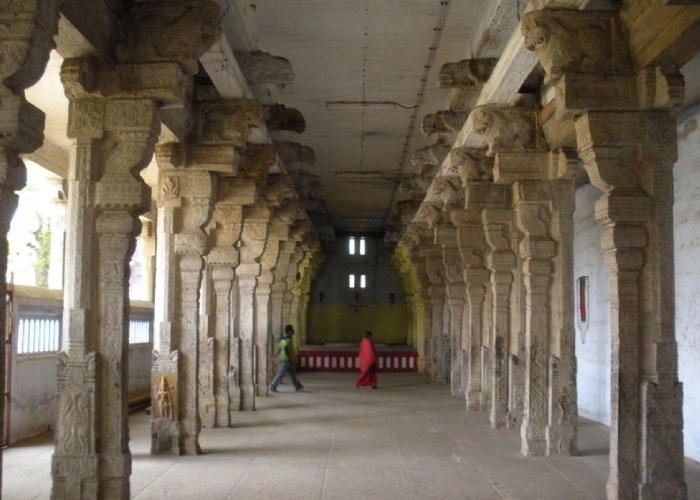
Worship at Thirukoḻi follows a strict daily rhythm. Priests perform rituals six times a day, from 7 am to 8 pm. Each ritual has three steps: alangaram (decoration), neivethanam (food offering), and deepa aradanai (waving of lamps). During the final step, nagaswaram pipes and tavil drums fill the air, priests chant from the Vedas, and devotees prostrate before the temple mast.
The temple honours the goddess first in every ritual and procession. Kamalavalli Nachiyar moves ahead; Azhagiya Manavala Perumal follows. This reversal of typical temple hierarchy gives Thirukoḻi its nickname: Nachiar Koil, the goddess’s temple.
Festivals bring drama. Serthi Sevai, the homecoming festival, is the biggest. During the Tamil month of Panguni (March–April), the processional idol from Srirangam, Namperumal, arrives at Thirukoḻi. The images of Namperumal and Kamalavalli are adorned together in the Serthi hall, celebrating their eternal union. Special rituals, processions, and thousands of pilgrims fill the temple grounds.
Another festival honours Thiruppaan Alvar’s birthday. His processional idol is brought from Thirukoḻi to Srirangam, where he receives grand honors: a silk turban, garlands, sandal paste, and a shawl. These gestures are meant to bring a smile to the saint’s face. After, the idol visits the shrines of Nammalvar and the goddess, accompanied by chanting from the Nalayira Divya Prabandham. Other festivals: Dolostava, Vasanthothsava, and Navaratri keep the temple active year-round. Community involvement runs deep. Locals prepare offerings, organise annadhanam (free meals), and maintain traditions passed down through generations.
Reaching Thirukoḻi is straightforward. The temple sits about three km from Tiruchirappalli Junction, connected by frequent town buses and auto-rickshaws. The surrounding streets are busy with vendors selling flowers, garlands, and incense. The atmosphere is lived-in, not curated for tourists. Pilgrims remove their shoes at the entrance and step into a different rhythm. The temple is open from 5 am to 12:30 pm. and again from 4:30 pm. to 8:30 pm. Devotees line up for darshan, waiting patiently, sometimes in the heat, sometimes in the rain. After darshan, many sit near the water tanks or under the shade of temple trees. Some walk to the shrine of Thiruppaan Alvar or Nammalvar, pausing to reflect or chant. The temple feeds a hundred devotees daily through its annadhanam scheme, funded by donations. Sharing a meal in the temple hall becomes part of the experience: food as blessing, community as ritual. Local hospitality shows in small gestures: directions offered, prayers shared, stories told. Uraiyur feels quieter than Trichy proper, less rushed. The pilgrimage isn’t about ticking off a site, it’s about slowing down, noticing details, and absorbing the place.
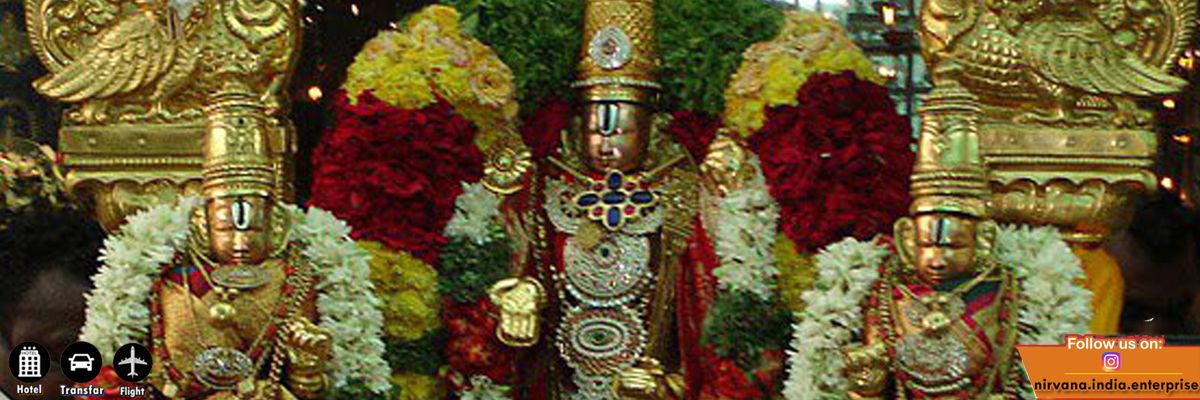
Thirukoḻi shaped Vaishnavite culture in subtle but lasting ways. The temple appears in 24 hymns in the Nalayira Divya Prabandham, composed by Kulasekara Alvar and Thirumangai Alvar. These verses are still chanted during rituals and festivals, keeping the Alvars’ voices alive. The temple’s emphasis on the goddess influenced how communities thought about divine hierarchy. In most Vishnu temples, the god dominates. Here, Kamalavalli’s prominence flipped that script, creating space for female-centred worship within a predominantly male-focused tradition.
Today, the temple is managed by the Hindu Religious and Endowment Board of the Government of Tamil Nadu. Management balances tradition with practical needs: maintaining structures, funding festivals, and supporting daily worship. Restoration efforts are ongoing. Old murals need care, gopurams need repair, and water tanks require cleaning. Government and private donations fund these projects. Technology plays a role, online booking for accommodations, digital archives of inscriptions, and social media updates about festivals. Tourism is modest compared to Srirangam, but steady. Devotees make up most visitors, though historians, architecture enthusiasts, and curious travellers also come. The temple’s annadhanam scheme continues, feeding devotees daily and keeping the tradition of communal meals alive.
Thirukoḻi Temple stands apart in the Divya Desam circuit. Its goddess-centred worship challenges assumptions. Its connection to Uraiyur ties it to Tamil history and kingship. Its architecture, though modest, carries centuries of craft and care. For pilgrims, it offers something rare: a temple where the goddess leads, and the god follows, where legends of love and devotion play out in stone and ritual. For anyone interested in Indian spirituality, it’s a reminder that tradition isn’t static; it shifts, adapts, and sometimes flips the script. Visit if you can. Walk the streets of Uraiyur. Sit by the lotus tank. Watch the rituals. Listen to the stories locals tell. And maybe you’ll leave with a different sense of what sacred space can mean.
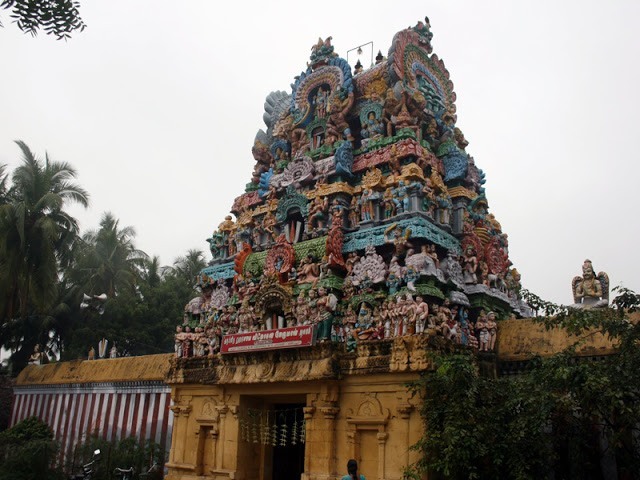
Thirukkarambanoor Temple, Uthamarkoil, Tamil Nadu
Thirukkarambanoor, better known today as Uthamarkoil or Sri Purushothaman Perumal Temple, sits on the outskirts of Tiruchirappalli in Tamil Nadu, near the Kollidam (Coleroon) river. It is a Divya Desam, but a very unusual one. Here, Vishnu, Shiva, and Brahma all have shrines inside the same complex, making it the only Divya Desam where the Trimurti share one sacred space.
The core legend begins with Vishnu testing Brahma. Vishnu takes the form of a kadamba tree at this spot, without announcing himself. Brahma recognises the presence of the lord and starts worshipping the tree with thirumanjanam, the ritual bath. The water from this worship collects and becomes Kadamba Theertham, the temple tank. When Vishnu is satisfied with Brahma’s devotion, he grants him a boon: Brahma will have a shrine here and receive worship alongside him. That alone flips the standard storyline where Brahma is usually sidelined.
Another track brings in Shiva. After Shiva cuts off one of Brahma’s five heads in anger, the severed head sticks to his hand as a karmic stain. To get rid of this burden, Shiva wanders as Bhikshatana, the begging ascetic, asking for alms. When he reaches Thirukkarambanoor, Vishnu asks Lakshmi to give alms to Shiva. She fills Shiva’s begging bowl completely, which is why she is called Poornavalli, “the one who filled the bowl.” Shiva’s sin starts to ease here and is finally erased later at Thirukandiyur.
So in this one story, you have Vishnu testing Brahma, Brahma worshipping Vishnu, Shiva depending on Lakshmi’s grace, and all three ending up with shrines in the same compound. The core message is not subtle: no single form of God is enough. They all lean on one another, and the devotee is asked to look beyond faction lines.

Historically, the temple seems to have taken shape in the late eighth century CE under the Medieval Cholas. Later, Vijayanagara rulers and the Madurai Nayaks added to the structures, gopurams, and mandapams, as they did across the Kaveri belt. Inscriptions trace donations, land grants, and festival endowments, tying the place into the political economy of temple Tamil Nadu. The site also appears in the Nalayira Divya Prabandham, the Tamil Vaishnava canon. Thirumangai Alvar sings of the lord here as Uthamar, “the perfect one.” A local tradition says Thirumangai Alvar stayed at Uthamarkoil while working on the fortification walls of Srirangam, using this temple as his base. That connects the place to the much larger project of building up Srirangam as a Vaishnava centre.
In 1751, during the Carnatic conflicts between the British and French, the temple reportedly served as an infantry base for both sides. Unusual detail: the complex came through with minimal structural damage. It’s a small example of how these temples were not just spiritual spaces, but also strategic assets in a war zone. When we romanticise “timeless” temples, we forget they sat right in the path of empires and gunpowder.
Uthamarkoil follows the Dravidian model but with its own logic. A granite wall encloses the complex, with the main tank just outside the gateway. Inside, shrines for Vishnu, Shiva, and Brahma are housed within the same campus, each with its own sanctum and tower, yet visually and ritually linked. Vishnu is worshipped here as Purushothaman Perumal, with Lakshmi as Poornavalli Thayar. Shiva appears as Bhikshadanar, the begging ascetic, and Brahma sits in a separate sanctum, a rare working Brahma shrine in South India. The very act of walking between these shrines makes you physically experience the unity the myths talk about.
Architecturally, you get the standard features: gopurams, pillared halls, subsidiary shrines. But the mood is different from the massive temple-cities. It feels compact and layered rather than overwhelming. Add in the Kadamba Theertham tank, the river nearby, and the relatively low-rise surroundings, and there’s a strong sense of human scale. Not every sacred space has to shout. Some accounts mention that the temple’s strategic role during the eighteenth-century conflicts led to minor defensive modifications without sacrificing the core iconography. That mix of sacred and practical is part of the aesthetic story too.
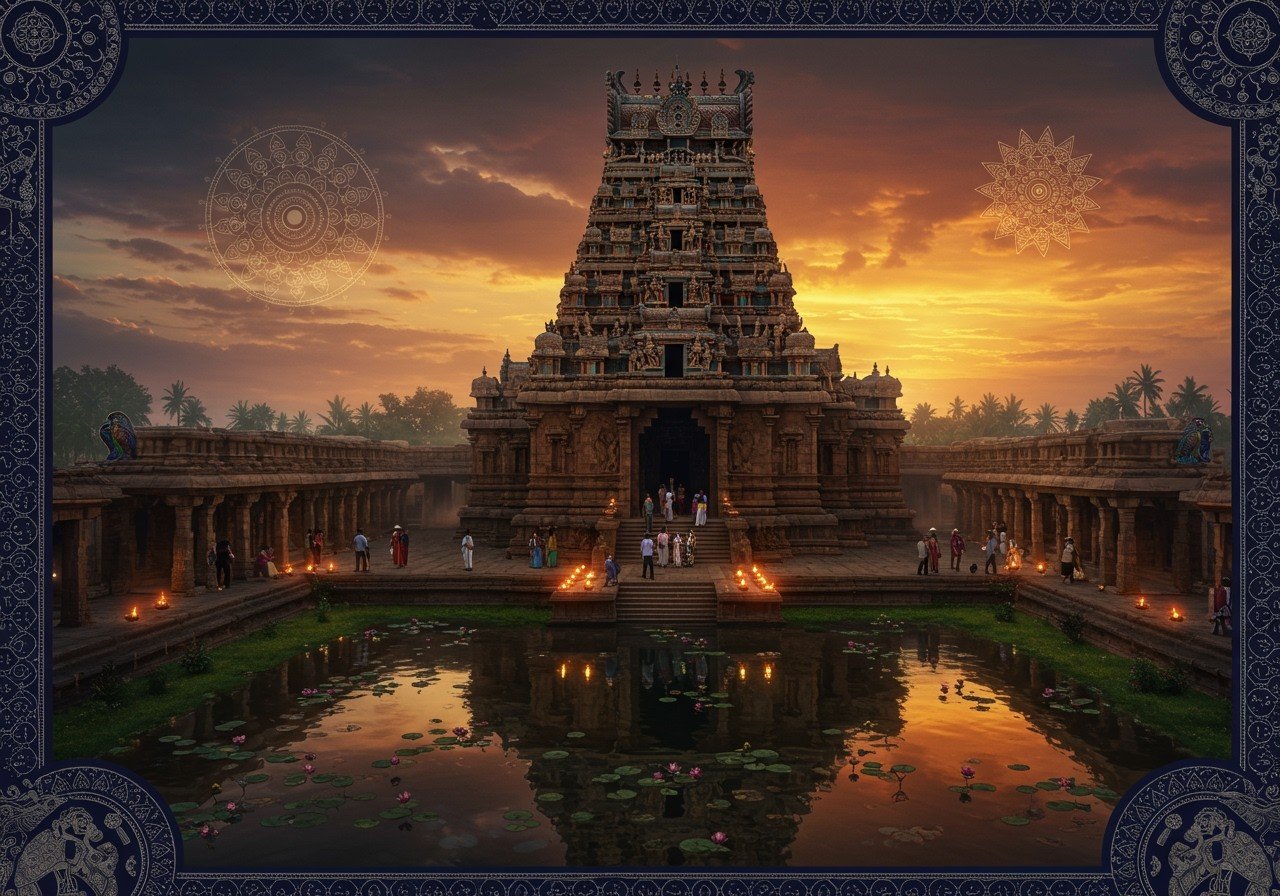
Ritual life here runs on a tight routine. There are six daily pujas for each of the Trimurti deities, from early morning to night. Each cycle includes alangaram (decoration), naivedyam (offering of food), and deepa aradanai (lamp worship). Priests chant Vedic mantras and Tamil hymns, and the deities receive separate but coordinated attention.
The major festival is the Brahmotsavam in the Tamil month of Karthigai (roughly November–December). Processional images of Purushothamar and Bhikshadanar are taken through the streets around the temple, side by side. Again, the temple refuses to choose one god over another; it stages them together. Another key event is the Kadamba Tiruvizha, when the festival image of Ranganatha from Srirangam is brought to Kadamba Theertham here for the ceremonial bath. That links Uthamarkoil into a larger ritual circuit with Srirangam. Tradition also says King Dasharatha performed a yajna here to ask for sons, long before Rama’s birth. Childless couples still come with that story in mind, seeking fertility blessings.
In practical terms, Uthamarkoil is easily accessible. It lies just off the Trichy–Salem highway, about 10 km northwest of Tiruchirappalli, near the banks of the Kollidam. Buses and shared autos run regularly; the last stretch is walkable through a typical temple-side settlement with tea stalls, small shops, and houses. The first thing that may strike you is that the place is not overrun. Compared to Srirangam, there is breathing room. You can stand in front of each sanctum without being pushed, let your eyes adjust to the dim light, and actually look at the deities. The space invites a quiet pause rather than a rush. Many take time by the Kadamba Theertham tank nearby, believed to have healing powers. The sound of temple bells, birds, and the river nearby creates a blend both calming and alive.
Thirukkarambanoor’s unique tri-deity setup has inspired Tamil literature and art for centuries. The temple entrances and pillars bear carvings not only of the Trimurti but also festive scenes and sacred dances, connecting the place to vibrant local traditions. Poets like Thirumangai Alvar included this temple in their hymns, bringing it spiritual prominence. The temple challenges rigid classification of sects. Here, Shaivism and Vaishnavism coexist visibly, influencing regional identity. Festivals often blend music, dance, and recitation traditions from different streams, making Thirukkarambanoor a cultural meeting point.
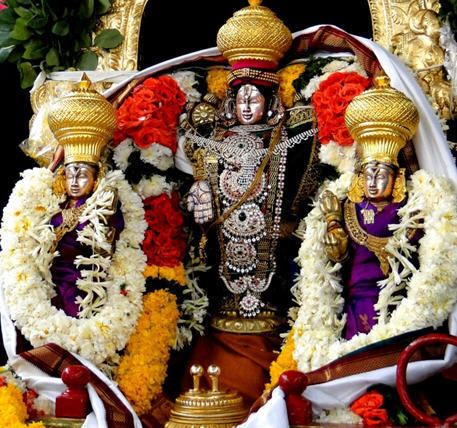
Today, Uthamarkoil is managed by the Tamil Nadu Hindu Religious and Endowment Board. The temple hosts six daily rituals for each of the three deities, plus major festivals like Brahmotsavam in the Tamil month Karthigai (November-December). Despite modern pressures, traditions of daily worship continue uninterrupted. Restoration projects focus on preserving the temple’s distinctive stone carvings and murals. Crowds are moderate, mostly pilgrims and devotees from nearby towns, though interest from history and architecture buffs is growing.
Thirukkarambanoor Temple stands as a rare see-through lens into Hinduism’s fluid unity. By housing Brahma, Vishnu, and Shiva side by side, it asks us to rethink boundaries: sectarian, architectural, ritual, and cultural. The temple isn’t just a sacred space for worship but a symbol of harmony and complexity within Indian spirituality. Its layered stories, intimate scale, and lived traditions challenge assumptions about what a Divya Desam can be. This temple offers not just a place to pray, but a place to reflect on how diverse beliefs weave together to form a living, breathing spirituality. If you visit Uthamarkoil, slow down. Notice the quiet dialogues between the gods. Listen to hymns sung for both Shiva and Vishnu. Walk the stone paths shaped by centuries of devotion and conflict. You might leave recognising how faith is less about dividing lines, and more about shared sacred space.

