Festivals of India: Wangala

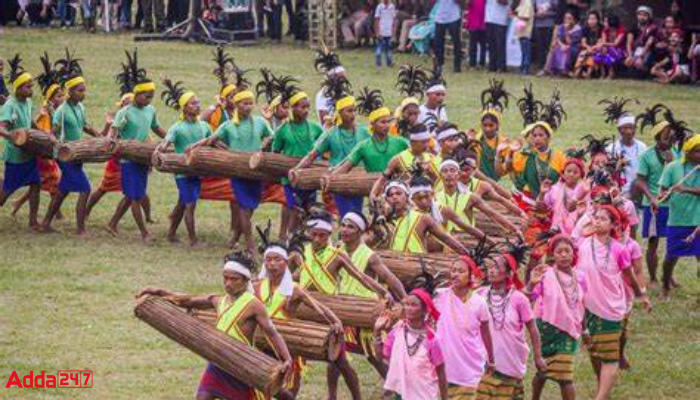
Also known as the Hundred Drums Festival, the Wangala festival is one of the most significant and colourful celebrations of the Garo tribe in Meghalaya. This post-harvest festival marks the end of the agricultural year. It is a thanksgiving ceremony for Misi Saljong, also known as Pattigipa Ra’rongipa or the Great Giver, the sun god of fertility. The Wangala festival is a vibrant display of Garo culture, traditions, and their deep connection to nature and agriculture.

The Wangala festival has its roots in the ancient agricultural practices and beliefs of the Garo people. The Garos, one of the major tribes of Meghalaya, are known for their matrilineal society and strong connection to the land. Agriculture has been the primary occupation of the Garos for centuries, and their festivals and rituals are closely tied to the agricultural cycle.

The exact origin of the Wangala festival is lost in the mists of time, but it is believed to have been celebrated for many generations. The festival’s name, “Wangala,” is derived from the Garo word “wanna,” which means celebration. It is a time when the community comes together to express gratitude for a bountiful harvest and to seek blessings for the coming year.

Historically, the Wangala festival was celebrated independently in every Garo village. Each village would have its dates and duration for the festival, which could last anywhere from a few days to a week. However, in recent times, efforts have been made to organise a centralised Wangala celebration to showcase Garo culture to a wider audience and preserve their traditions.

The Wangala festival is deeply rooted in Garo mythology and their traditional belief system. At the festival’s heart is the worship of Misi Saljong, the sun god, believed to be the provider of good harvests and prosperity. According to Garo mythology, Misi Saljong taught the Garo people the art of agriculture. He showed them how to clear the land, sow seeds, and harvest crops. The Garos believe that it is through Misi Saljong’s blessings that they receive abundant harvests. The Wangala festival is their way to express gratitude to this benevolent deity and to seek his continued favour. Another important mythological figure in the Wangala festival is Goera, the goddess of agriculture. Goera is believed to be the protector of crops and is often invoked alongside Misi Saljong during the festival rituals.

The Garos also believe in various nature spirits that inhabit the forests, rivers, and mountains. These spirits are thought to play a role in the success of their agricultural endeavors. During the Wangala festival, offerings are made to these spirits to appease them and ensure their cooperation in the coming agricultural year.

One of the myths associated with the Wangala festival tells of a time when the Garo people faced a severe drought. The crops were failing, and the community was on the brink of starvation. The village elders gathered to perform rituals and prayers to Misi Saljong. According to the legend, Misi Saljong appeared to them in a dream and instructed them to perform a dance with drums and to make offerings of rice beer. When the villagers followed these instructions, rain began to fall, and their crops were saved. This myth is said to be the origin of the drum dance that is now central to the Wangala celebrations.

The preparations for the Wangala festival begin well in advance of the actual celebration. As the harvest season nears its end, the village elders come together to decide on the dates for the festival. Traditionally, the festival is held in November, but the exact dates can vary depending on the completion of the harvest and other local factors. Once the dates are set, the entire community gets involved in the preparations. 

One of the most important preparations is the brewing of rice beer, known as “chu” in the Garo language. Rice beer plays a significant role in Garo rituals and celebrations. The brewing process begins several weeks before the festival to ensure that the beer is properly fermented by the time of the celebration. The Garos take great pride in their traditional clothing, and the Wangala festival is an occasion to showcase their finest attire. Women prepare colourful wraparound skirts called dakmanda and blouses kutchi. Men ready their traditional dhotis and vests. Special attention is given to the headdresses, often adorned with feathers and hornbill beaks.

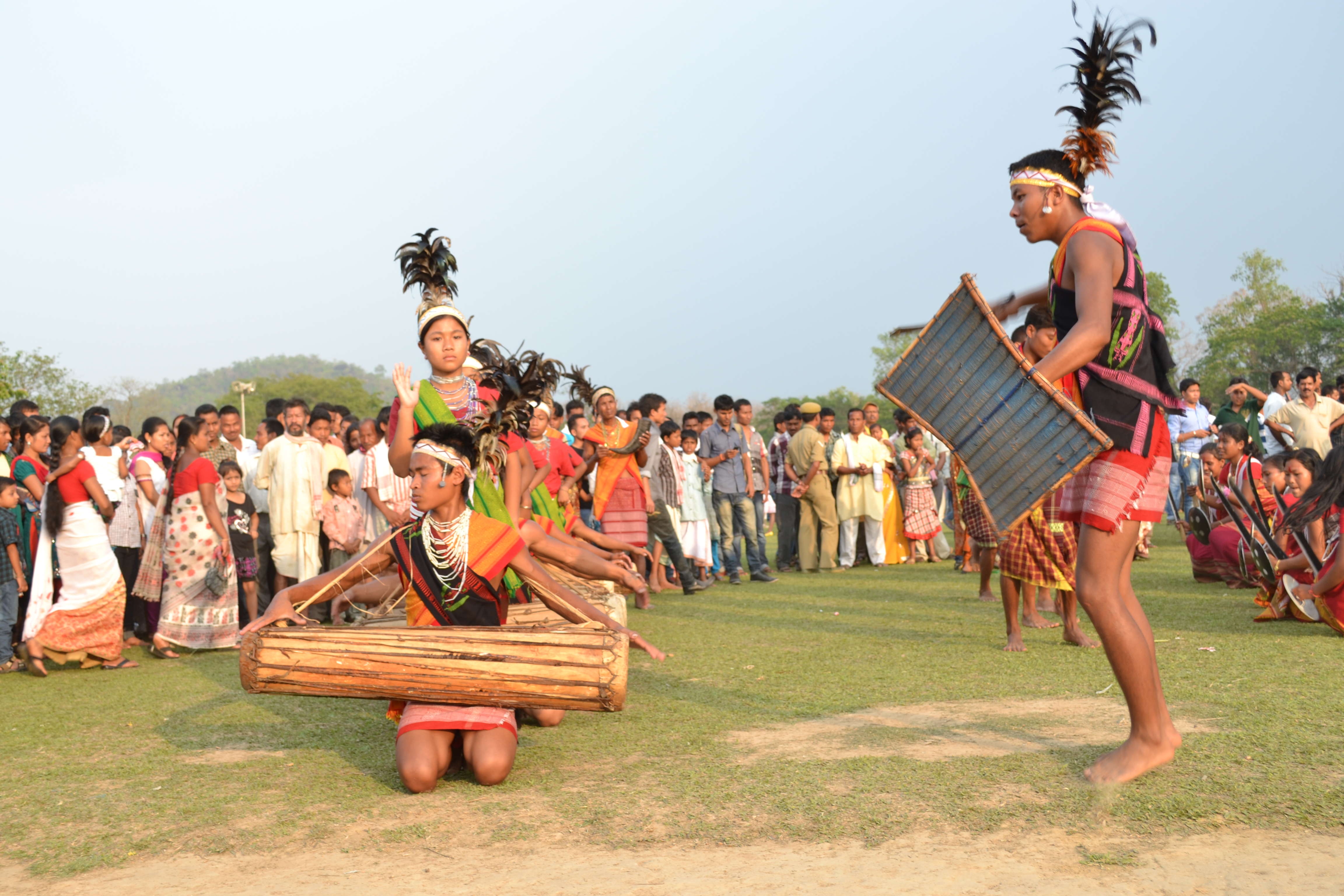
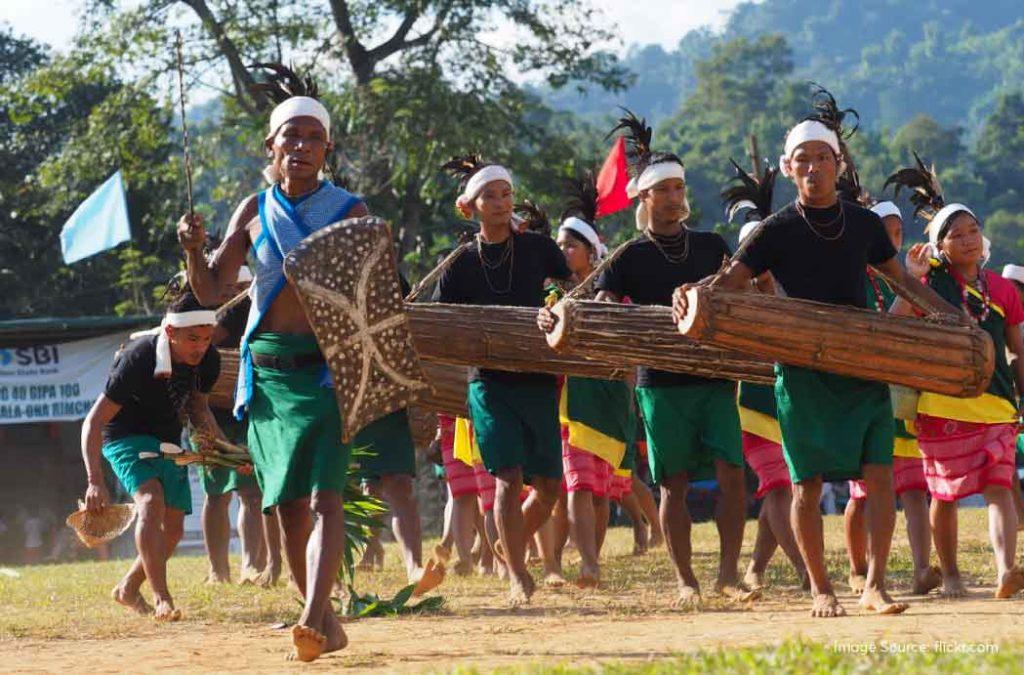
The festival’s alternative name, “Hundred Drums Festival,” highlights the importance of drums in the celebration. Skilled craftsmen in the village work on repairing old drums and making new ones. The primary drum used in the Wangala festival is the “dama,” a long, cylindrical drum made from hollowed-out tree trunks and animal hide. The entire village undergoes a thorough cleaning in preparation for the festival. Houses are repaired and whitewashed. The central area where the main celebrations will take place is cleared and decorated with bamboo structures, flowers, and leaves.

A significant amount of time is spent preparing food for the festival. Large quantities of rice, meat, and vegetables are readied for the communal feasts that will take place during the celebration. In the weeks leading up to the festival, the community, especially the youth, practice the traditional dances and songs that will be performed during the Wangala. 

The Wangala festival typically lasts two to three days, although in some villages, it can extend up to a week. The celebration is a mix of solemn rituals and joyous festivities. The first day of the festival is known as Salgittal or Salgittoa, which means “thanksgiving.” This day is marked by several important rituals. The festival begins with the village priest, the “Kamal,” performing an invocation ceremony. The Kamal offers prayers to Misi Saljong and other nature spirits, seeking their blessings for the community. The first fruits of the harvest are offered to Misi Saljong. This typically includes newly harvested rice, vegetables, and fruits. The offering is made on a special altar set up for the occasion. In some villages, a ceremonial sacrifice of a rooster or a goat may be performed. This is done to appease the spirits and ensure their continued favour. The Nokma or village chief and other important members of the community are anointed with rice powder mixed with water. This symbolises purification and preparation for the festivities to come. A sacred fire is lit, which will be kept burning throughout the festival. This fire symbolises the presence of Misi Saljong among the people.

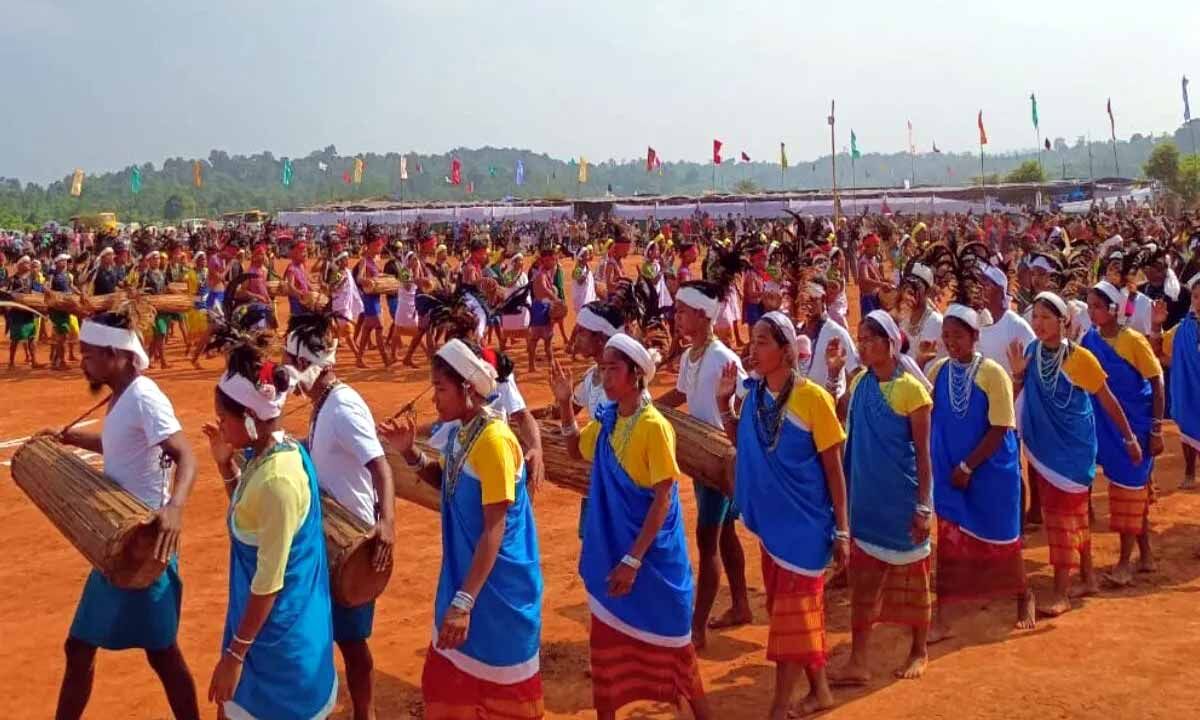
The second day, known as Kakkat or Kakket, is the main day of celebration. This is when the most iconic events of the Wangala festival take place. The day begins with the Rugala ceremony, where Nokma and his wife lead a procession to the central festival ground. They carry a basket of rice, which symbolises the community’s harvest. The highlight of the festival is the Wangala dance. Dancers, dressed in colourful traditional attire, form lines with men and women alternating. They dance to the rhythmic beat of drums, bamboo clappers, and gongs. The dance movements mimic various agricultural activities such as sowing, weeding, and harvesting. This is where the festival gets its alternative name. A hundred or more drums are played simultaneously, creating a thunderous and mesmerising rhythm. The sound of the drums is believed to reach Misi Saljong, carrying the community’s prayers and gratitude. A grand feast is held where the community comes together to share food and rice beer. This feast symbolises the abundance of the harvest and the spirit of community sharing. Various traditional games and sports are organised, including wrestling, tug-of-war, and archery competitions. 

The final day of the festival is typically reserved for concluding rituals. The Kamal leads the community in offering final thanksgiving prayers to Misi Saljong and other deities. The sacred fire lit on the first day is ceremonially extinguished, marking the end of the festival. The community elders bless the younger generation, wishing them prosperity and good fortune for the coming year. In some villages, there are rituals to bid farewell to the spirits and deities, thanking them for their presence during the festival.

Music and dance are integral to the Wangala festival. The most important musical instruments used during the celebration include the Dama, a long, cylindrical drum that gives the festival its “Hundred Drums” moniker; the Nagra, a smaller drum used to provide counterpoint rhythms; the Gong which is used to provide additional rhythmic elements; and Bamboo Clappers which provides a distinctive clacking sound that complements the drums. The Wangala dance is a complex performance that tells the story of the agricultural cycle. The dancers move in synchronised patterns, their movements representing different farming activities. Swaying movements represent the swaying of rice plants in the wind while stomping feet mimic the act of threshing rice and hand movements show the sowing of seeds and the harvesting of crops. The dance is performed in lines, with men and women alternating. As the dance progresses, the tempo of the music increases, and the movements become more energetic, culminating in a joyous celebration of the harvest.

Food plays a central role in the Wangala festival. The celebration is an opportunity for the community to come together and share in the abundance of the harvest. Some traditional dishes served during the festival include Wak Pura, a dish made from pork and bamboo shoots, Nakham Bitchi, a chicken curry cooked with special herbs, Pura which are various types of smoked meat, Minil Songa, a dish made from fish and local vegetables, and Pitha which are rice cakes often served as dessert. Rice, being the main crop, features prominently in all meals. It is often served with various meat and vegetable side dishes. The traditional rice beer, “chu,” is essential to the celebration. It is consumed during the feasts and used in various rituals as an offering to the deities.

The Wangala festival holds immense social and cultural significance for the Garo community. The festival brings the entire community together, strengthening social bonds and reinforcing a sense of shared identity. Through the rituals, dances, and music, the festival helps in preserving and passing down Garo cultural traditions to younger generations. The festival marks the end of the agricultural year and the beginning of a new cycle, helping to structure the community’s annual activities. Today, the festival has become a tourist attraction, bringing economic benefits to the region. The festival’s focus on nature worship and agricultural cycles helps maintain an awareness of environmental issues among the community.

While the Wangala festival remains an important part of Garo culture, it faces several challenges in the modern era. As more young Garos move to cities for education and employment, there’s a risk of losing touch with traditional practices. The spread of Christianity among the Garo community has led to changes in how the festival is perceived and celebrated. There are concerns that the increasing tourism around the festival might lead to its commercialisation, potentially diluting its cultural significance. Changes in agricultural practices and environmental conditions pose challenges to the traditional agricultural cycle that the festival celebrates. Despite these challenges, the Wangala festival has shown remarkable resilience and adaptability. 

In recent years, there have been concerted efforts to preserve and promote the festival. While individual villages still celebrate Wangala, there are now also centralised celebrations organized by cultural organizations and the state government. These larger events help in showcasing Garo culture to a wider audience. Efforts are being made to document the rituals, songs, and dances associated with the festival to ensure their preservation. Schools and colleges in the Garo Hills region often organise programs to educate students about the significance of Wangala and other traditional festivals. The festival is now promoted as a cultural tourism event, attracting visitors from across India and abroad. While this brings economic benefits, care is taken to maintain the festival’s authenticity. Some communities have adapted certain aspects of the festival to align with changing religious beliefs while still maintaining its core cultural significance.

The Wangala festival is more than just a harvest celebration; it is a vibrant expression of Garo culture, spirituality, and connection to the land. Through its colorful dances, rhythmic music, traditional attire, and communal feasts, Wangala offers a window into the rich cultural heritage of the Garo people.

As the festival continues to evolve in the face of modern challenges, it remains a testament to the resilience and adaptability of indigenous cultures. The Wangala festival serves as a reminder of the importance of preserving cultural traditions while also embracing change.

Festivals of India: Madhvacharya Jayanti

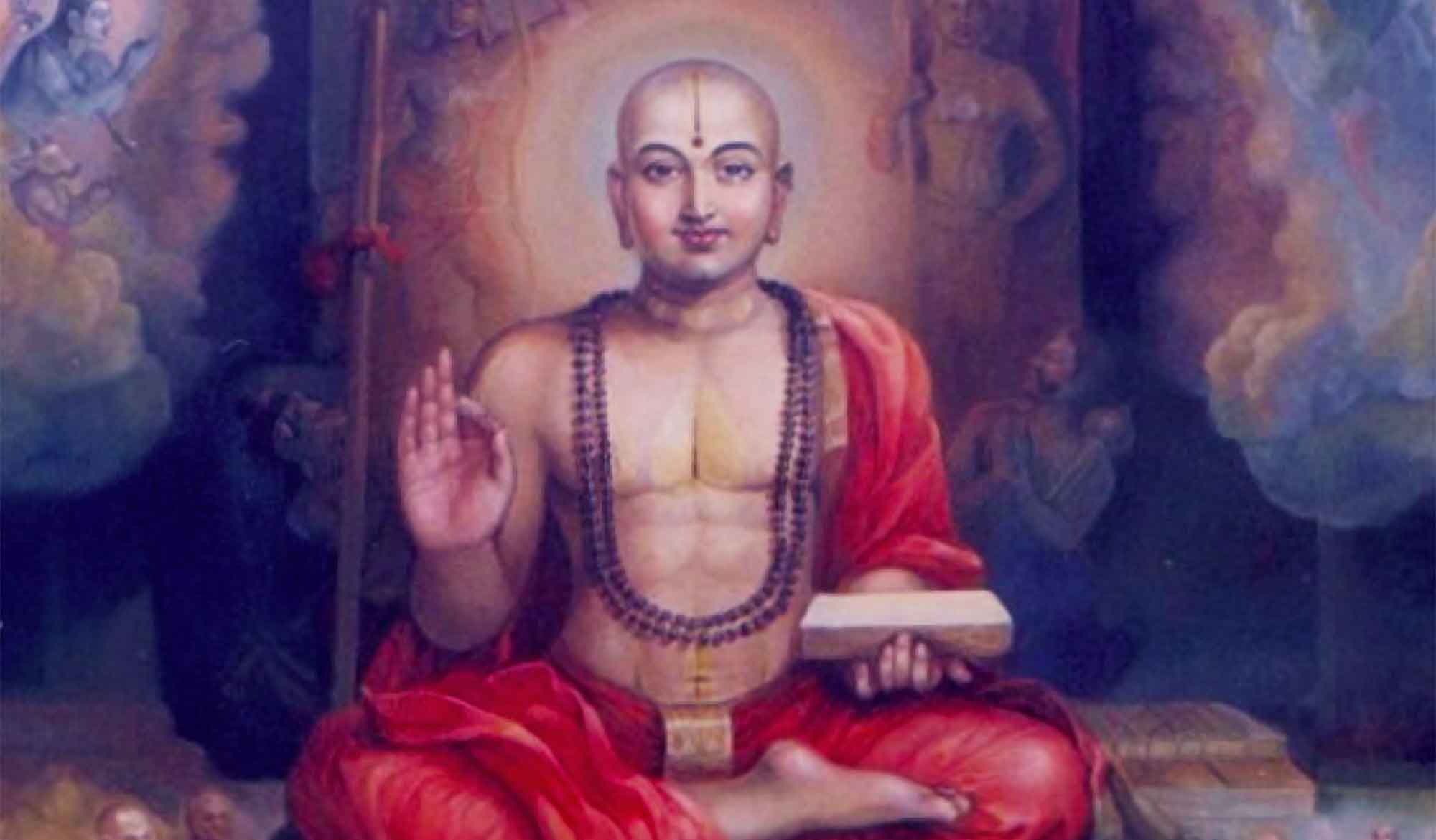
Commemorating the birth anniversary of Sri Madhvacharya, one of India’s most influential philosophers and theologians, Madhvacharya Jayanti typically falls in September or October according to the Gregorian calendar, marks the birth of a man who profoundly impacted Hindu philosophy and continues to inspire millions of followers worldwide.

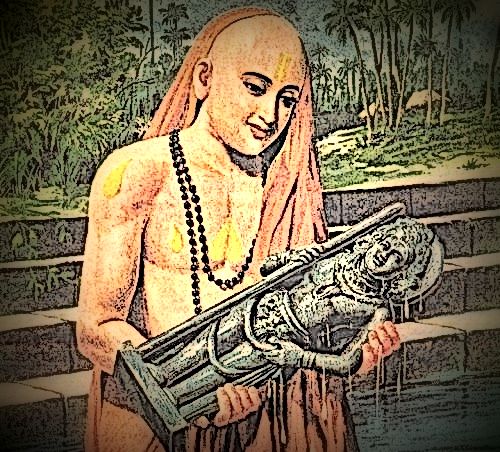
Sri Madhvacharya, also known simply as Madhva, was born in 1238 in Pajaka, a small village near Udupi in the present-day state of Karnataka. He is renowned as the founder of the Dvaita or dualism school of Vedanta philosophy, which he called Tattvavada, meaning “arguments from a realist viewpoint”. 

Madhvacharya’s life was marked by extraordinary events from the very beginning. According to hagiographies, his birth was accompanied by divine signs and miracles. His parents, Madhyageha Bhatta and Vedavati had long yearned for a child and considered his birth a blessing from Lord Vishnu. Even as a young boy, Madhvacharya displayed remarkable intelligence and spiritual inclination. At the tender age of five, he received spiritual initiation, and by twelve, he had already accepted sannyasa, the most renounced order of spiritual life. This early renunciation set the stage for his lifelong dedication to spiritual pursuits and philosophical inquiry.

Madhvacharya’s contributions to Indian philosophy and theology are vast and enduring. His accomplishments can be broadly categorized into philosophical, literary, and social reforms.

Madhvacharya’s most significant contribution was the formulation and propagation of the Dvaita or dualism school of Vedanta. This philosophy stands in contrast to the Advaita or non-dualism philosophy of Adi Shankara and the Vishishtadvaita or qualified non-dualism of Ramanuja. The Dvaita philosophy asserts that there are fundamental differences between the individual soul or jiva, matter or prakriti, and God or Ishvara.

Madhvacharya propounded the concept of five-fold differences or pancha bheda. The pancha bheda is was the difference between God and the individual soul; the difference between God and matter; the difference between individual souls; the difference between soul and matter; and the difference between various forms of matter.

Madhvacharya identified Vishnu as the Supreme Being, equating Him with Brahman as described in the Upanishads. Unlike some other Indian philosophical schools that viewed the world as an illusion, Madhvacharya asserted that the world is real and not merely an illusion or maya. Controversially, Madhvacharya proposed that some souls are eternally destined for hell, a concept not commonly found in Hindu philosophy.

Madhvacharya was a prolific writer, authoring numerous works that expounded his philosophy and interpreted sacred texts. His literary output is impressive, with thirty-seven works attributed to him. Some of his most important works include commentaries on the thirteen principal Upanishads, offering his unique interpretations of these ancient texts. His commentary on the Brahma Sutras, the foundational text of Vedanta philosophy, is considered one of his most important works. Madhvacharya’s commentary on the Bhagavad Gita provides insights into his understanding of karma yoga and bhakti yoga and the Mahabharata Tatparya Nirnaya presents his interpretation of the Mahabharata, emphasising its spiritual and philosophical aspects. The Bhagavata Tatparya Nirnaya is a commentary on the Bhagavata Purana, this work elucidates Madhvacharya’s views on devotion to Vishnu while the Anu-Vyakhyana, considered his masterpiece, is a supplement to his commentary on the Brahma Sutras.

Madhvacharya was not just a philosopher but also a social reformer. He challenged prevailing social norms and worked towards making spiritual knowledge accessible to all. Madhvacharya declared that the path to salvation was open to all, regardless of caste or birth. This was a revolutionary idea in medieval India, where spiritual knowledge was often restricted to upper castes. He established the Ashta Mathas or Eight Monasteries in Udupi, which became centres of learning and spiritual practice. Madhvacharya emphasized bhakti or devotion as a means of spiritual realisation, making spirituality more accessible to the common people.

The life of Madhvacharya is replete with stories of miraculous events and divine interventions. While these stories may be viewed as hagiographical embellishments, they form an integral part of the tradition and reflect the reverence in which Madhvacharya is held by his followers.

According to tradition, Madhvacharya’s birth was not ordinary. It is said that his parents had been childless for many years and prayed fervently to Lord Ananteshwara, a form of Lord Vishnu for a son. Their prayers were answered, and Madhvacharya was born as an incarnation of Vayu, the wind god.

Several miraculous events are associated with Madhvacharya’s childhood. It is said that Madhvacharya’s father had accumulated many debts. To help repay these, young Madhva miraculously converted tamarind seeds into gold coins. Near Madhvacharya’s house lived a demon named Maniman in the form of a snake. The young Madhva is said to have killed this demon with the big toe of his left foot. Stories tell of Madhvacharya’s ability to appear instantly before his mother whenever she felt anxious, jumping from wherever he was playing. As a child, Madhvacharya is said to have consumed 4,000 bananas and thirty large pots of milk in one sitting, demonstrating his divine nature.

Madhvacharya is believed by his followers to be the third incarnation of Vayu, the wind god. According to this belief, the first incarnation was Lord Hanuman, the devoted servant of Lord Rama, the second was Bhima, one of the Pandava brothers in the Mahabharata while Madhvacharya was the third and final incarnation. This belief in Madhvacharya’s divine origin adds to his authority as a spiritual leader and philosopher in the eyes of his followers.

One of the most significant mythological stories associated with Madhvacharya is his supposed encounter with Vyasa, the legendary author of the Vedas and Puranas. According to tradition, Madhvacharya travelled to Badrikashrama in the Himalayas, where he met Vyasa in person. This meeting is said to have lasted for several days, during which Vyasa imparted advanced spiritual knowledge to Madhvacharya and confirmed the correctness of his philosophy.

Madhvacharya Jayanti is celebrated with great devotion and enthusiasm, particularly in South India where his influence is strongest. The festival typically falls on the Vijaya Dashami day in the month of Ashwin, typically between September and October according to the Gregorian calendar.

Madhvacharya Jayanti serves multiple purposes. It’s a day to remember and honour the life and teachings of Madhvacharya. For followers of the Dvaita philosophy, it’s a time for spiritual introspection and renewal of their commitment to Madhvacharya’s teachings. The festival provides an occasion to educate people, especially the younger generation, about Madhvacharya’s philosophy and contributions to Indian thought. It brings together the community of Madhvacharya’s followers, strengthening their bonds and shared spiritual heritage.

The celebration of Madhvacharya Jayanti involves various rituals and activities. Temples dedicated to Madhvacharya or those belonging to the Dvaita tradition conduct special pujas or worship ceremonies on this day. Devotees often engage in the recitation of Madhvacharya’s works or texts that he commented upon, such as the Bhagavad Gita. Scholars and spiritual leaders give discourses on Madhvacharya’s philosophy and its relevance in contemporary times. Many communities organise cultural programs featuring devotional music and dance performances. Following Madhvacharya’s teachings on social reform, many followers engage in charitable activities on this day. Some devotees observe a fast on this day as a form of spiritual discipline and many try to visit Udupi, the centre of Madhvacharya’s activities, or other places associated with his life.

Madhvacharya’s influence extends far beyond his immediate followers. His ideas have had a lasting impact on Indian philosophy and spirituality. Madhvacharya’s philosophy significantly influenced later Vaishnava thinkers. The founder of Gaudiya Vaishnavism, Chaitanya Mahaprabhu, and his followers thoroughly studied Madhvacharya’s works before developing their philosophy. The prominent Gaudiya Vaishnava theologian, Jiva Goswami, drew heavily from Madhvacharya’s writings in composing his works. 

Madhvacharya’s emphasis on devotion or bhakti as a means of spiritual realisation contributed to the broader Bhakti movement in India. His teachings helped make devotional practices more accessible to common people, regardless of their caste or social status. Madhvacharya established a strong tradition of disciplic succession. Notable scholars in this lineage include Jayatirtha, Vyasatirtha, and Raghavendra Tirtha, who further developed and propagated Dvaita philosophy.

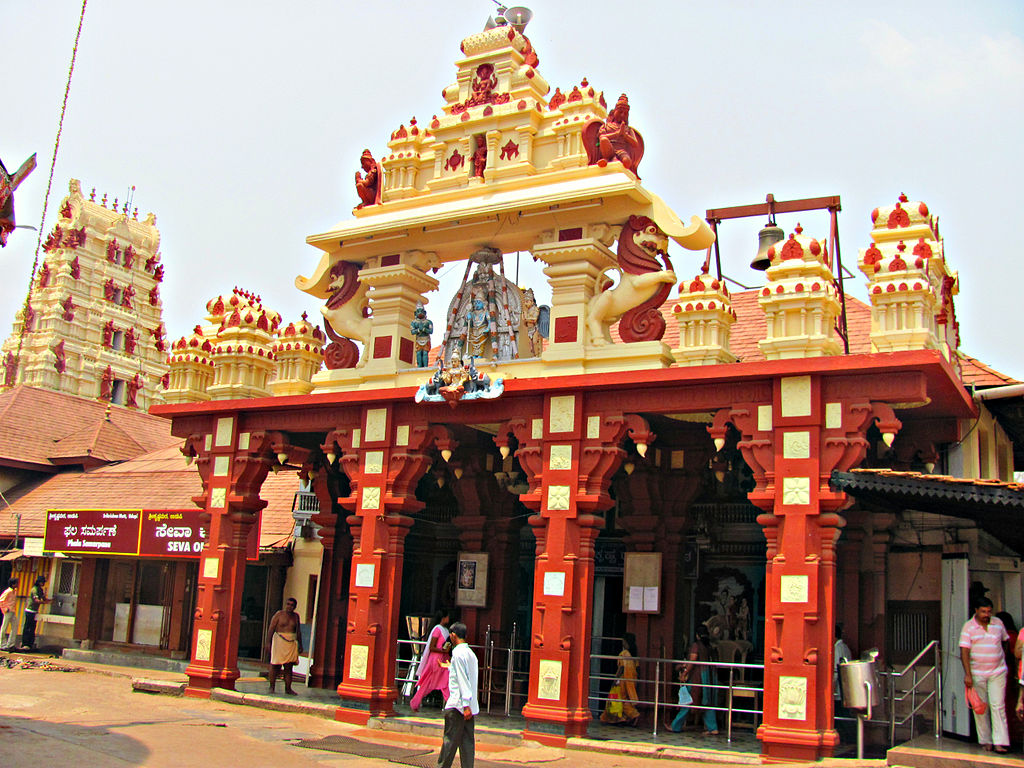
The eight mathas or monasteries established by Madhvacharya in Udupi continue to be important centres of learning and spiritual practice. The most famous among these is the Udupi Krishna Matha, known for its unique tradition of Krishna worship. 

Madhvacharya identified Vishnu as the Supreme Being, possessing infinite auspicious qualities. He taught that God is independent and self-existent; the world is dependent on God for its existence and functioning; God is the efficient and material cause of the universe; and divine grace is essential for salvation.

Regarding the individual soul or jiva, Madhvacharya taught that souls are eternal and innumerable, each soul is unique and maintains its individuality even after liberation, the soul is inherently dependent on God, and knowledge of one’s true nature as a servant of God is crucial for spiritual progress.

Unlike some Indian philosophical schools that view the world as an illusion, Madhvacharya asserted that the world is real, not illusory, the diversity we see in the world is real and not merely an appearance, and the world is subject to God’s control and exists for His pleasure.

Madhvacharya outlined a clear path to spiritual liberation. These are Knowledge or Jnana which is understanding the nature of God, soul, and the world; devotion or Bhakti which means cultivating loving devotion to Lord Vishnu; detachment or Vairagya by which one develops dispassion towards worldly pleasures, and divine grace because ultimately, liberation depends on God’s grace.

A unique aspect of Madhvacharya’s philosophy is the concept of gradation among souls. He proposed that souls are categorised based on their inherent qualities and potential for liberation and some souls are destined for eternal liberation, some for eternal bondage, and others which will oscillate between the two states. This concept of gradation and eternal damnation for some souls has been one of the more controversial aspects of Madhvacharya’s philosophy.

While Madhvacharya lived and taught in the 13th century, his ideas continue to be relevant in the modern world. His emphasis on the reality of difference resonates with modern ideas of pluralism and diversity. The concept of each soul being unique underscores the importance of individual worth and potential. Madhvacharya’s emphasis on righteous living and devotion provides a framework for ethical behavior in daily life. His approach to critically examining existing philosophies encourages intellectual inquiry and debate. The view of the world as real and valuable can foster a sense of responsibility towards the environment. 

Like any philosophical system, Madhvacharya’s Dvaita has faced challenges and criticisms. The idea that some souls are eternally condemned has been difficult for many to accept. Critics argue that Madhvacharya’s conception of God is too anthropomorphic. Some scholars have questioned Madhvacharya’s interpretations of Vedic texts, arguing that they are sometimes forced to fit his philosophical framework. Critics have pointed out perceived logical inconsistencies in some aspects of Dvaita philosophy. Despite these challenges, Madhvacharya’s philosophy continues to thrive and evolve, with modern scholars offering new interpretations and defences of his ideas.

While Madhvacharya Jayanti is primarily celebrated in India, particularly in the southern states, it has gained recognition globally due to the spread of Hinduism and the growing interest in Indian philosophy. The epicentre of Madhvacharya Jayanti celebrations is Udupi, Karnataka, where Madhvacharya established his primary matha. The Krishna Temple here becomes a focal point of festivities. Throughout Karnataka, especially in coastal regions, temples and mathas organise special pujas, discourses, and cultural programs. Tamil Nadu, Andhra Pradesh, and Kerala also see significant celebrations, particularly in areas with a strong Madhva following. While celebrations are less prominent in North India, some Vaishnava communities do observe the day with devotional activities.

Madhvacharya Jayanti is more than just a birthday celebration; it’s a testament to the enduring impact of a philosopher who lived over 700 years ago. Madhvacharya’s life, teachings, and legacy continue to inspire millions, offering a unique perspective on the nature of reality, the divine, and the human condition. His emphasis on the reality of difference, the supremacy of Vishnu, and the path of devotion has left an indelible mark on Hindu philosophy and practice. The annual celebration of Madhvacharya Jayanti serves as a reminder of his contributions and an opportunity for spiritual renewal for his followers.

We’re reminded of the rich philosophical traditions of India and their continued relevance in our modern world. Whether one agrees with all aspects of his philosophy or not, there’s no denying the profound impact Madhvacharya has had on Indian thought and spirituality. 

Festivals of India: Sindoor Khela

Source

Sindoor Khela, also known as Sindur Khela or Vermilion Play, is a vibrant and joyous Bengali Hindu tradition that takes place on the final day of Durga Puja, known as Vijayadashami. This colourful ritual is primarily celebrated by married women and is a beautiful expression of feminine energy, marital bliss, and sisterhood. As the grand festivities of Durga Puja come to a close, Sindoor Khela serves as a fitting finale, filled with laughter, camaraderie, and the vibrant red hue of sindoor or vermilion powder.

The exact origins of Sindoor Khela are not precisely documented, but the tradition is believed to have evolved over centuries as part of the broader Durga Puja celebrations in Bengal. Durga Puja itself has a rich history dating back to the late 16th and early 17th centuries, gaining prominence during the Bengal Renaissance of the 18th and 19th centuries.

Sindoor Khela likely emerged as a way for women to come together and celebrate their marital status, fertility, and the divine feminine energy embodied by Goddess Durga. The use of sindoor in Hindu traditions has ancient roots, with references in texts dating back to the Vedic period, around 1500–500 BCE.

In Bengali culture, sindoor holds great significance for married women. It is applied along the parting of their hair, known as sindoor daan, as a visible symbol of their married status. The red color of sindoor is associated with the strength and power of Shakti, the primordial cosmic energy represented by the divine feminine.

The tradition of Sindoor Khela may have originated as a way for women to reaffirm their marital bonds and seek the blessings of Goddess Durga for a long and prosperous married life. Over time, it evolved into a more inclusive celebration, embracing the spirit of sisterhood and female empowerment.

While there isn’t a specific mythological story directly tied to the origin of Sindoor Khela, several legends and beliefs associated with sindoor and Goddess Durga provide context for the ritual’s significance. According to Hindu mythology, Durga Puja celebrates the annual visit of Goddess Durga to her maternal home on Earth. On Vijayadashami, she prepares to return to her abode in Mount Kailash, where her husband Lord Shiva resides. Sindoor Khela is seen as a way for mortal women to bid farewell to the Goddess and seek her blessings before she departs.

In one version of the Sati legend, when Lord Shiva carried the lifeless body of his wife Sati after she immolated herself, parts of her body fell at different locations, creating Shakti Peethas. It is said that at the Kalighat temple in Kolkata, Sati’s right toe fell, and the sindoor from her forehead touched the ground. This story connects the use of sindoor to the divine feminine energy of Shakti. Some folklore suggests that Lord Krishna applied sindoor on Radha’s forehead as a symbol of their eternal love. This tale emphasises the romantic and devotional aspects associated with sindoor. In Hindu tradition, sindoor is considered a symbol of saubhagya or marital bliss and good fortune. It is believed that applying sindoor invokes the blessings of the divine for a long and happy married life.

Sindoor Khela typically takes place on the afternoon of Vijayadashami, after the formal rituals of Durga Puja have concluded. The celebration unfolds in several stages – married women gather at the Durga Puja pandal, a temporary structure housing the Durga idol dressed in traditional Bengali attire, usually white sarees with red borders. The women first offer prayers to Goddess Durga, seeking her blessings and expressing gratitude for the festivities. As part of the ritual, women apply sindoor to the feet and forehead of the Durga idol, symbolically preparing her for her journey back to Mount Kailash. The main event begins as women start applying sindoor to each other’s foreheads and along the parting of their hair. This is done with great enthusiasm, often resulting in faces, necks, and parts of the saree being covered in the red powder. Women exchange sweets and bless each other, wishing for happiness, prosperity, and longevity in their married lives. The ritual often culminates in dancing and singing, with women forming circles and enjoying the festive atmosphere. While traditionally limited to married women, in many communities, Sindoor Khela has become more inclusive, allowing widows, divorced women, and even unmarried women to participate in the spirit of sisterhood and celebration.

Sindoor Khela holds deep significance in Bengali culture and Hindu traditions. The ritual celebrates the power and beauty of womanhood, emphasising the strength and grace embodied by Goddess Durga. For married women, it’s a way to reaffirm their marital status and seek blessings for a happy married life. The communal nature of the celebration fosters a sense of sisterhood and unity among women. The red colour of sindoor is associated with fertility and prosperity, symbolizing the life-giving power of women. During Sindoor Khela, social barriers often dissolve as women from different backgrounds come together in celebration. The ritual is an important marker of Bengali cultural identity, preserving traditions and passing them on to future generations. For many women, Sindoor Khela provides a rare opportunity for uninhibited joy and expression, offering emotional release and bonding.

While Sindoor Khela is primarily associated with Bengali Hindu culture, similar traditions can be found in other parts of India, albeit with regional variations. In Odisha, a similar ritual called “Aparajita” is performed during Kumar Purnima, where women play with powdered rice and flowers. During Gudi Padwa celebrations, Maharashtrian women participate in “Haldi Kumkum,” exchanging turmeric and vermilion as symbols of auspiciousness. In some North Indian communities, women exchange sindoor during Karva Chauth festivities.

As society evolves, so does the celebration of Sindoor Khela. Many communities now welcome women of all marital statuses to participate, promoting a more inclusive celebration of womanhood. With growing environmental awareness, some groups are opting for eco-friendly, organic sindoor or even using flower petals as a colorful alternative. Bengali communities worldwide now celebrate Sindoor Khela, adapting the tradition to local contexts while preserving its essence. The vibrant visuals of Sindoor Khela have made it popular on social media platforms, increasing awareness and appreciation of the tradition globally. Contemporary artists and photographers often capture the essence of Sindoor Khela, creating powerful imagery that celebrates feminine energy and cultural heritage.

While Sindoor Khela is largely celebrated as a joyous tradition, it has faced some criticism and controversy in recent years. The traditional focus on married women has been criticized for excluding other women, though many communities are now becoming more inclusive. Some argue that the emphasis on marital status perpetuates patriarchal norms and reduces women’s identity to their marital roles. The use of synthetic sindoor, which may contain harmful chemicals, has raised health and environmental concerns, prompting a shift towards natural alternatives. Like many traditional festivals, Sindoor Khela has seen increased commercialisation, which some feel dilutes its spiritual and cultural significance. As the tradition gains global attention, there are concerns about potential cultural appropriation and misrepresentation. Despite these critiques, many participants and cultural experts argue that the essence of Sindoor Khela lies in its celebration of feminine energy, community bonding, and cultural heritage, which transcends its association with marital status.

Sindoor Khela stands as a vibrant testament to the enduring power of cultural traditions and their ability to adapt to changing times. This colorful celebration encapsulates the joy, strength, and unity of women, while also serving as a bridge between ancient customs and modern sensibilities. Rooted in the rich tapestry of Bengali Hindu culture, Sindoor Khela has grown from a ritual celebrating marital status to a more inclusive festival of womanhood and sisterhood. Its evolution reflects broader societal changes, demonstrating how traditions can remain relevant by embracing new interpretations while preserving their core essence. 

The festival’s growing popularity and adaptations across different communities highlight its universal appeal. The images of women laughing, dancing, and covered in vibrant red sindoor have become powerful symbols of joy, freedom, and female bonding, transcending cultural and geographical boundaries. As we look to the future, Sindoor Khela has the potential to play an important role in cultural preservation, women’s empowerment, and community building. Ultimately, Sindoor Khela reminds us of the importance of celebrating life, honoring traditions, and coming together in joyous harmony. As it continues to evolve, this beautiful tradition will undoubtedly remain a cherished part of cultural heritage, spreading its message of love, unity, and feminine power for generations to come.

Festivals of India: Viswakarma Jayanti – Celebrating the Divine Architect

Viswakarma Jayanti is a significant festival in India, dedicated to Lord Vishwakarma, the divine architect and craftsman of the gods. The festival honours the contributions of artisans, craftsmen, and engineers who play a crucial role in shaping the world around us.

Lord Vishwakarma is a prominent figure in Hindu mythology, revered as the divine architect and craftsman of the gods. He is often depicted as a deity with multiple arms, holding various tools and instruments associated with construction and craftsmanship. According to Hindu scriptures, Vishwakarma is credited with designing and building some of the most magnificent structures in the universe, including the palaces of the gods, celestial weapons, and even entire cities.

Vishwakarma is believed to be the son of Lord Brahma, the creator of the universe. As the divine architect, Vishwakarma inherited his father’s creative abilities and was bestowed with the responsibility of designing and constructing the physical world. He is often associated with the Rigveda, one of the oldest sacred texts in Hinduism, where he is described as the divine carpenter and the all-seeing god.

Throughout Hindu mythology, Vishwakarma is credited with numerous architectural marvels and inventions. Some of his most notable creations include Swarga Loka which is the heavenly abode of Lord Indra, the king of the gods. Swarga Loka is described as a magnificent palace adorned with precious gems and surrounded by lush gardens. Vishwakarma is believed to have constructed the Pushpaka Vimana, a flying chariot used by the gods. This celestial vehicle is often mentioned in ancient texts and is considered a symbol of advanced engineering and craftsmanship. The legendary city of Dwaraka, the capital of Lord Krishna’s kingdom, is said to have been built by Vishwakarma. The city was renowned for its grandeur and architectural brilliance. The capital city of the Pandavas in the epic Mahabharata, Indraprastha, was also designed by Vishwakarma. The city was known for its opulent palaces, intricate designs, and advanced infrastructure.

Viswakarma Jayanti is celebrated to honour the contributions of Lord Vishwakarma and to seek his blessings for success and prosperity in various fields of craftsmanship and engineering. The festival holds special significance for artisans, craftsmen, engineers, architects, and industrial workers, who consider Vishwakarma as their patron deity. The festival is typically celebrated on the last day of the Bengali month of Bhadra, which usually falls in mid-September. This day is also known as Kanya Sankranti or Bhadra Sankranti. In some regions, the festival is observed on the day following Diwali, the festival of lights.

Viswakarma Jayanti is celebrated with great enthusiasm and devotion across India. The celebrations vary from region to region, but some common practices and rituals are observed universally. On Viswakarma Jayanti, devotees set up altars and idols of Lord Vishwakarma in their homes, workshops, and factories. The idols are adorned with flowers, garlands, and other decorations. Special prayers and rituals are performed to invoke the blessings of the divine architect. Devotees offer fruits, sweets, and other delicacies to the deity as a mark of respect and gratitude.

One of the unique aspects of Viswakarma Jayanti is the worship of tools, machinery, and instruments used in various trades and professions. Artisans, craftsmen, and industrial workers clean and decorate their tools and equipment, and perform rituals to seek the blessings of Vishwakarma for their smooth functioning and success in their work. This practice symbolises the importance of tools and machinery in the creation and sustenance of the physical world.

In many regions, community feasts and gatherings are organised to celebrate Viswakarma Jayanti. People come together to share meals, exchange greetings, and participate in cultural programs and activities. These gatherings foster a sense of camaraderie and unity among the community members.

In some parts of India, particularly in the eastern states of West Bengal, Odisha, and Assam, flying kites is a popular tradition on Viswakarma Jayanti. The skies are filled with colourful kites of various shapes and sizes, symbolizing the spirit of freedom and creativity.

Viswakarma Jayanti is steeped in rich mythology and folklore, with numerous stories and legends associated with Lord Vishwakarma and his divine creations. One of the most famous stories associated with Vishwakarma is the creation of the golden city of Lanka. According to Hindu mythology, Vishwakarma built the city of Lanka for Lord Shiva. The city was made entirely of gold and was known for its unparalleled beauty and grandeur. However, Lord Shiva later gifted the city to the demon king Ravana as a reward for his devotion and penance. Lanka became the capital of Ravana’s kingdom and played a central role in the epic Ramayana.

The Sudarshana Chakra, a powerful weapon wielded by Lord Vishnu, is believed to have been crafted by Vishwakarma. According to legend, Vishwakarma created the Sudarshana Chakra using the dust from the sun’s rays. The weapon is known for its incredible speed and precision, and it is said to have the ability to destroy any enemy.

Another interesting story revolves around the birth of Vishwakarma’s daughter, Sanjana. According to mythology, Sanjana was married to Surya, the sun god. However, unable to bear the intense heat and radiance of her husband, Sanjana created a shadow of herself, known as Chhaya, and left her in her place while she went to her father’s house. When Surya discovered the deception, he sought Vishwakarma’s help to reduce his heat and radiance. Vishwakarma agreed and used his divine skills to trim Surya’s radiance, making it bearable for Sanjana to return to her husband.

Viswakarma Jayanti is celebrated with great enthusiasm in various parts of India, each region adding its unique cultural flavour to the festivities. In West Bengal, Viswakarma Jayanti is a major festival, especially among the working class, artisans, and industrial workers. The festival is marked by elaborate rituals, community feasts, and cultural programs. Factories, workshops, and offices are decorated with flowers and lights, and special prayers are offered to Lord Vishwakarma. The tradition of flying kites is also a significant part of the celebrations in this region.

In Odisha, Viswakarma Jayanti is celebrated with great devotion and enthusiasm. Artisans and craftsmen worship their tools and machinery, seeking the blessings of Vishwakarma for success and prosperity in their work. Special rituals and prayers are performed in temples and homes, and community feasts are organized to mark the occasion.

In Karnataka, Viswakarma Jayanti is celebrated particularly among the Vishwakarma community, which comprises artisans, craftsmen, and engineers. The festival is marked by the worship of tools and machinery, special prayers, and community gatherings. Cultural programs and activities are organised to celebrate the contributions of the Vishwakarma community to society.

In Tamil Nadu, Viswakarma Jayanti is celebrated particularly among industrial workers and artisans. Special prayers and rituals are performed in factories, workshops, and homes to seek the blessings of Lord Vishwakarma. The festival is also marked by community feasts and cultural programs, fostering a sense of unity and camaraderie among the people.

In today’s fast-paced and technologically advanced world, the celebration of Viswakarma Jayanti holds significant relevance. The festival serves as a reminder of the importance of craftsmanship, creativity, and innovation in shaping the world around us. It honours the contributions of artisans, craftsmen, engineers, and industrial workers, who play a crucial role in the development and progress of society.

Viswakarma Jayanti highlights the importance of skill development and innovation in various fields of craftsmanship and engineering. The festival encourages individuals to hone their skills, embrace creativity, and strive for excellence in their respective trades and professions. It also serves as an inspiration for the younger generation to pursue careers in craftsmanship and engineering, contributing to the growth and development of the nation.

For the Vishwakarma community, celebrating Viswakarma Jayanti fosters a sense of pride and identity. The festival provides an opportunity for the community to come together, celebrate their heritage, and honour their patron deity. It also serves as a platform to showcase their skills, talents, and contributions to society.

The worship of tools and machinery during Viswakarma Jayanti also emphasises the importance of environmental sustainability. By seeking the blessings of Vishwakarma for the smooth functioning of their tools and equipment, individuals are reminded of the need to use resources responsibly and sustainably. The festival encourages the adoption of eco-friendly practices and technologies in various fields of craftsmanship and engineering.

Viswakarma Jayanti is a celebration of creativity, craftsmanship, and innovation. It honours the contributions of Lord Vishwakarma, the divine architect, and the countless artisans, craftsmen, and engineers who shape the world around us. The festival is marked by elaborate rituals, community gatherings, and cultural programs, fostering a sense of unity and pride among the people.

Festivals of India – Paryushana

In the ancient Indian tradition of Jainism, one of the most sacred and revered festivals is Paryushana. This auspicious event, which spans over eight days for Svetambara Jains and ten days for Digambara Jains, is a time of profound spiritual reflection, austerity, and purification. As the monsoon rains subside and the harvest season approaches, Jains across the world come together to observe this holy period, seeking forgiveness, practicing non-violence, and renewing their commitment to the path of enlightenment.

The origins of Paryushana can be traced back to the 6th century, when the 24th Tirthankara, Lord Mahavira, walked the earth and propagated the teachings of Jainism. It is believed that during the monsoon season, when travel was difficult and the risk of harming life was heightened, Lord Mahavira encouraged his followers to remain in one place and dedicate themselves to spiritual pursuits.

This practice of staying in one place and focusing on self-purification became known as Paryushana, derived from the Sanskrit word Paryu-shan, which means abiding or coming together. Over time, this period of spiritual retreat evolved into a sacred festival, celebrated annually by Jains worldwide.

Paryushana is a time of intense spiritual discipline, where Jains strive to adhere to the core principles of their faith with unwavering commitment. The festival is marked by a series of rituals and observances that are deeply rooted in the Jain philosophy of non-violence or ahimsa, truthfulness or satya, non-stealing or asteya, celibacy or brahmacharya, and non-attachment or aparigrahass.

During Paryushana, Jains observe various forms of fasting and abstinence. Some may choose to abstain from food and water entirely for the duration of the festival, while others may opt for partial fasts or consume only specific types of food. This practice of self-denial is believed to purify the body and mind, cultivating a sense of detachment and spiritual clarity.

One of the most significant rituals of Paryushana is the Pratikraman, a ceremony of confession and forgiveness. Jains believe that even unintentional harm caused to living beings through thoughts, words, or actions accumulates negative karma. During Pratikraman, Jains seek forgiveness from all living beings, including plants and animals, for any harm they may have caused knowingly or unknowingly. This act of humility and repentance is seen as a crucial step towards spiritual purification.

Throughout Paryushana, Jains engage in the recitation and study of sacred texts, such as the Kalpa Sutra for Svetambara Jains and the Tattvartha Sutra for Digambara Jains. These texts contain the teachings and principles of Jainism, and their recitation is believed to deepen one’s understanding and commitment to the faith.

Paryushana is a time for intense meditation and spiritual discourse. Jains gather in temples or community centres to engage in collective meditation, listen to sermons and discourses by monks and scholars, and participate in discussions on the teachings of Jainism. These activities are designed to cultivate inner peace, wisdom, and a deeper connection with the spiritual path.

Like many ancient festivals, Paryushana is steeped in rich mythology and traditions that have been passed down through generations. These stories and customs not only add to the cultural significance of the festival but also serve as powerful reminders of the core values of Jainism.

According to Jain mythology, it was during the Paryushana period that Lord Mahavira, the 24th Tirthankara, attained enlightenment after years of intense spiritual practice and austerities. This event is celebrated on the fifth day of Paryushana, known as Bhagavan Mahavir Janma Kalyanak, which commemorates his birth and enlightenment.

Another significant myth associated with Paryushana is the story of Anant Nath, the 14th Tirthankara. It is believed that on the 14th day of Paryushana, known as Anant Chaturdashi, Anant Nath attained moksha which is the liberation from the cycle of birth and death. This day is celebrated with special rituals and ceremonies, including the worship of the Anant Nath idol.

One of the most revered and controversial traditions of Jainism is Santhara, a voluntary and peaceful fast unto death. While not directly associated with Paryushana, this practice is often undertaken by Jain monks and nuns during the festival, as it is considered an auspicious time for spiritual purification and the attainment of moksha.

For Digambara Jains, the sixth day of Paryushana is celebrated as Sugandh Dashami. On this day, Jains offer fragrant flowers and incense to the Tirthankaras who are enlightened beings as a symbol of their devotion and commitment to the path of non-violence and spiritual purity.

While Paryushana has its roots in ancient traditions, its significance extends far beyond the realm of religious observance. In today’s fast-paced and often materialistic world, the festival serves as a powerful reminder of the importance of spiritual growth, self-reflection, and environmental consciousness.

At the heart of Paryushana lies the principle of non-violence or ahimsa, which is not only a core tenet of Jainism but also a universal value that resonates with people of all faiths and backgrounds. By observing Paryushana, Jains actively promote a lifestyle of compassion and respect for all living beings, setting an example for others to follow.

The practice of fasting and abstinence during Paryushana has a direct impact on reducing one’s carbon footprint and promoting environmental sustainability. By minimizing consumption and adopting a more mindful approach to resource utilization, Jains demonstrate their commitment to preserving the delicate balance of nature.

In a world plagued by stress, anxiety, and constant distractions, Paryushana offers a much-needed opportunity for introspection, meditation, and the cultivation of inner peace. By disconnecting from the material world and focusing on spiritual growth, Jains not only benefit themselves but also contribute to a more mindful and compassionate society.

Paryushana is not just an individual journey but also a communal celebration. Jains from all walks of life come together during this festival, fostering a sense of unity, solidarity, and shared purpose. This collective experience strengthens the bonds within the Jain community and serves as a powerful reminder of the importance of social cohesion and mutual support.

The Jain festival of Paryushana is a profound and transformative experience that transcends religious boundaries. It is a celebration of spiritual purification, non-violence, and the unwavering pursuit of enlightenment. Through its rituals, myths, and traditions, Paryushana not only honors the teachings of Lord Mahavira and the Tirthankaras but also serves as a beacon of hope and inspiration for a more compassionate and sustainable world.

As we navigate the complexities of modern life, the lessons of Paryushana remind us to pause, reflect, and reconnect with our inner selves and the natural world around us. By embracing the principles of non-violence, truthfulness, and detachment, we can cultivate a deeper sense of harmony and peace within ourselves and with all living beings.

So, whether you are a follower of Jainism or simply someone seeking spiritual growth and environmental consciousness, the festival of Paryushana offers a powerful opportunity to embark on a journey of self-discovery, compassion, and enlightenment.