Recipes: Amritsari Dal or Langarwali Dal

I have been curious about this dal for a few months now, but the couple of times I wanted to make it, I didn’t have the whole urad dal on hand. So a couple of months back, when I had some on hand, I decided it was time to finally make this.

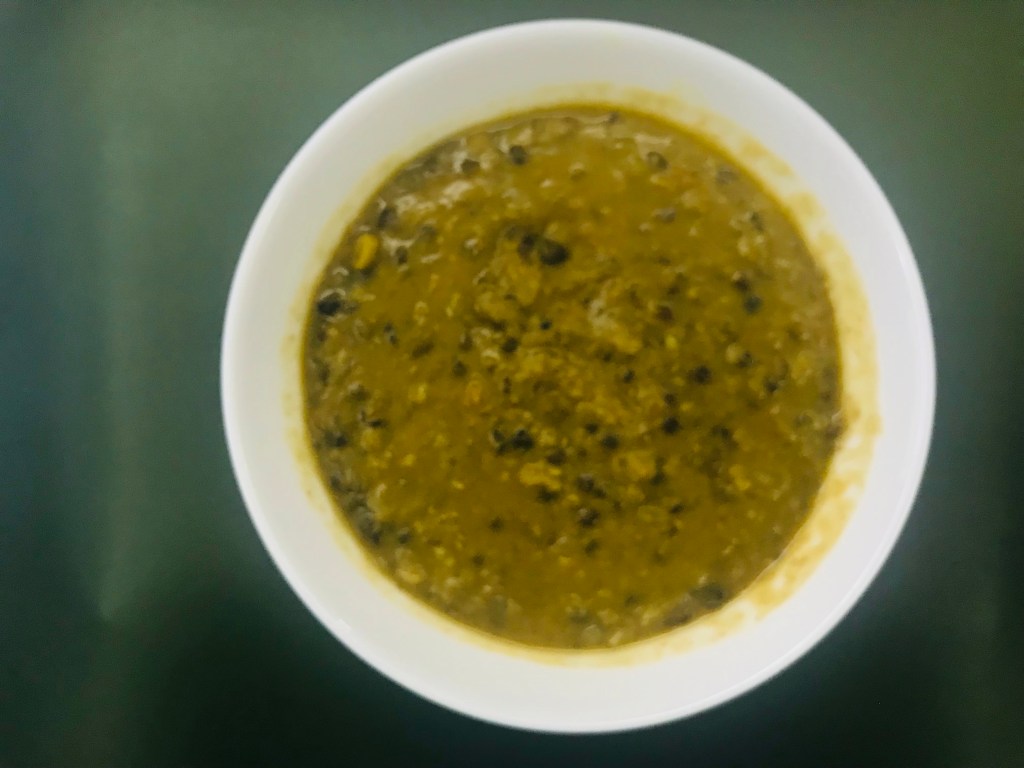
This dal is rustic and comes from the homes of Punjab and is also called Langarwali Dal as it is often served at Sikh Gurudwaras, especially the Harmandir Saheb in Amritsar. Made from two types of dals, urad and chana, this dal does not have too many spices and is usually slow cooked, sometimes overnight to make a creamy, soft dal that just melts in the mouth. But because we don’t have the time these days to slow cook it, it’s made in the pressure cooker.

Amritsari Dal or Langarwali Dal

Ingredients:

  • 1 cup whole black urad dal
  • ¼ cup chana dal
  • ¼ tsp turmeric powder
  • 2 tbsp finely minced ginger
  • 2 tbsp finely mined garlic
  • 2-3 tbsp ghee, oil or butter
  • 1 tsp minced green chillies
  • 1 medium sized onion, finely chopped
  • 2 medium sized tomotoes, finely chopped
  • ½ tsp red chilli powder
  • 2 tbsp finely chopped coriander leaves
  • 1 tbsp finely chopped mint leaves (optional)

Method:

  • Soak the urad dal and chana dal in water for at least 5-6 hours until the urad dal is soft to touch.
  • Wash the dal well and put inside the pressure cooker with enough water to cover it, add turmeric powder, 1 tbsp each of ginger and garlic and about 1 tsp salt and cook for about five to six whistles. Open the cooker when the pressure goes away and slightly mash the dals with the back of a spoon or a whisk.
  • In a separate pan, heat the ghee, oil or butter and when it heats up, add in the finely chopped onion, stir until the onions turn translucent.
  • Then add in the balance minced ginger and garlic and stir well.
  • Add the mined green chillies and stir.
  • Saute until the onions become a nice golden colour.
  • When the onions turn golden, add In the finely chopped tomatoes. Mix well and let the tomatoes cook until they become mushy
  • Let the mixture cook until the oil releases from the sides. At this point, add the red chilli powder
  • Pour the tempering into the dal mixture and mix well
  • Add salt and water if needed and mix well
  • Let the dal come to a nice rolling boil.
  • Lower the flame and let the dal simmer for about 5 minutes. You can simmer for longer if you want, and the results will be better.
  • Garnish with coriander leaves and mint leaves, if you are using them and serve hot with rice, rotis or nan.

Note that the dal will thicken as it cools, so you may need to thin it a bit before serving if you plan on cooking it ahead of time. Also the dal tastes much better if eaten the next day, so it may be a good idea to cook it ahead of time.
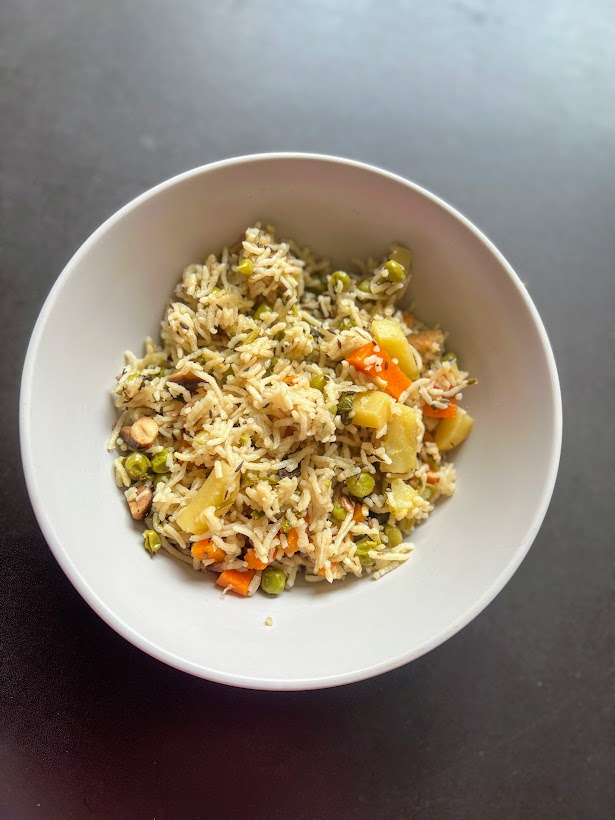
Recipes: Coriander Mint Pulao

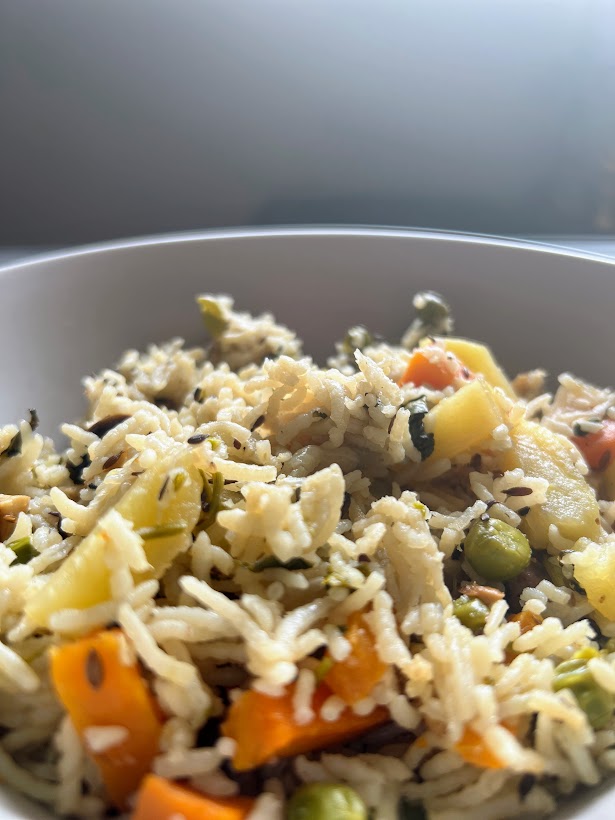
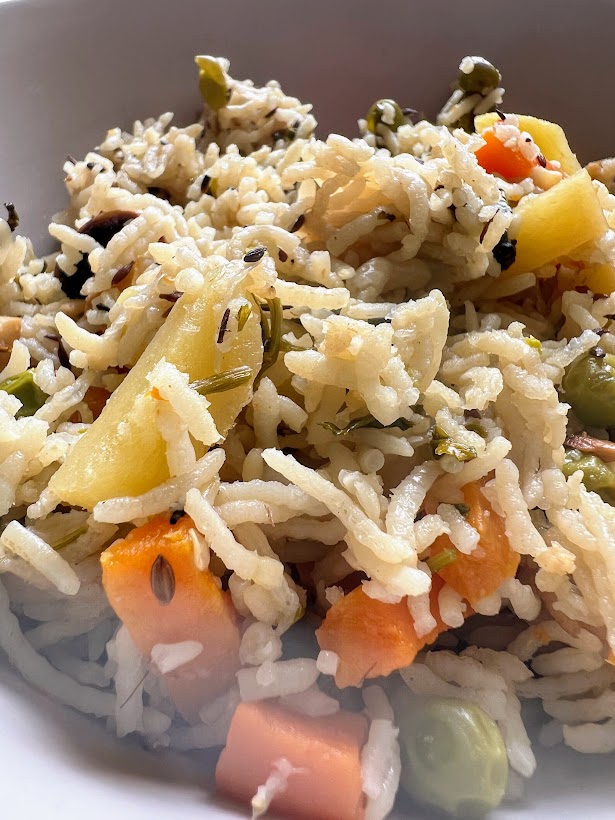
During GG’s internship, she used to take her lunch when she had to work in the office and this meant I made one pot meals more than usual. When I got bored of making the usual pulaos, I tried this coriander and mint pulao as I had some mint leaves which was getting spoilt. The recipe is different from my usual mint pulao where I grind the mint leaves to a paste and this one had a very subtle smell and taste of mint and coriander and was very tasty. It is a definite keeper and I will be making this again soon.

Coriander Mint Pulao

Ingredients:

  • 2 cups basmati rice, soaked in water for about 20-30 minutes
  • 2 tbsp ghee
  • 1 large onion, finely sliced
  • 1 carrot, peeled and cut into 2-inch sticks
  • 1 potato, peeled and cut into 2-inch sticks
  • ¼ cup green peas
  • 1 green chilli, slit
  • A one-inch piece of ginger, julienned
  • 10-12 pieces of cashew nut
  • 1 tsp cumin seeds
  • 3 cloves
  • 3 cardamom
  • 1 bay leaf
  • A one-inch piece of cinnamon
  • 2 tbsp mint leaves, chopped
  • 2 tbsp coriander leaves, chopped
  • Salt to taste

Method:

  • Wash the basmati rice well and drain keep aside.
  • In a pan, heat the ghee and when the ghee heats up, add in the cumin seeds and let them splutter.
  • Then add the cloves, cardamom, cinnamon and bay leaf and saute for a few seconds.
  • Next, add in the green chilli and ginger and saute for a few seconds.
  • Now add in the cashew nuts and saute till the cashew nuts turn golden brown.
  • At this point, add in the sliced onions and saute till the onions become translucent.
  • When the onions are translucent, add in the chopped vegetables and saute for a few minutes.
  • Add in the chopped coriander and mint leaves and saute for a few seconds. We don’t need to cook them, just let them wilt.
  • Lastly, add in the rice and salt and saute for a minute or two.
  • Transfer everything to a rice cooker and add water. I usually add 2 cups of water for every cup of rice, but please use your discretion and the instructions in the packet of rice.
  • Cook the rice either in the rice cooker or on the stovetop and once the rice is done, let the pan stand for about 5 minutes before opening it.
  • Fluff the rice with a fork before serving. Serve hot with a raita of your choice.

Recipe: Orange Kozambu

During the Chinese New Year period, here in Singapore, you get lots of different types of Mandarin oranges. I love Mandarin oranges and during that time, on a call with my mum and sister, we started talking about the Orange Kozambu my mum used to make. Inspired by that call and the two cartons of Mandarin oranges I had in the house, I made some of this delicious kozambu. I made it slightly different from how my mother makes it, making it more like my Milagu Kozambu and I felt this was a better way to make it as it kept for more than a week in the fridge. This is perfect with some rice and any stir-fried curry on a cold or rainy day. You can increase the number of peppercorns depending on your spice tolerance.

Orange Kozambu

Ingredients:

  • 2 mandarin oranges
  • 2 tsp Peppercorns
  • 7-8 Red Chillies
  • 2 tsp Urad Dal
  • 3 tsp Chana Dal
  • 1 tsp Cumin Seeds
  • 3 tsp Coriander Seeds
  • 1 tsp Mustard Seeds
  • Tamarind piece as big as a piece of lime (make sure you remove all fibre from the tamarind as well as any seeds which may be there). Alternatively, you can use 1-2 tbsp tamarind paste
  • Salt to taste
  • 2-3 tbsp jaggery powder
  • ¼ tsp Asafoetida
  • 2 tbsp Gingelly Oil (if this oil is not available, then use the oil you use for your daily cooking)

Method:

  • Peel the oranges and remove any fibre from the peel as well as the segments.
  • Chop the orange peel into fine pieces and remove the seeds from the segments and chop them also finely.
  • Wash the peel and the segments and keep them aside.
  • In a pan, heat about 1 tbsp gingelly oil and after the oil warms up, add the tamarind piece, peppercorns, red chillies, urad dal, chana dal, asafoetida, cumin seeds and coriander seeds and fry them until the urad dal turns a golden brown colour.
  • If you are using tamarind paste, don’t add the paste to the oil, instead, you can use it while cooking the kozambu.
  • Once the spices cool down, blend them to a fine paste and keep aside.
  • Heat the balance gingelly oil and when the oil warms up, add the mustard seeds and let them splutter.
  • Then add the chopped mandarin orange peel and segments and fry for about 5-7 minutes, until the peel is fully cooked.
  • Then add the blended paste and enough water to make the kozambu to the consistency you require. This kozambu will thicken slightly when cool, so thin it accordingly.
  • Add salt to taste as well as some jaggery if you find it spicy and let it cook till the orange peel and segments are fully cooked and the mixture becomes thick and reduces.
  • Check for seasoning and switch off the gas.
  • Serve hot with rice and any curry. Potatoes go very well with this kozambu.

In My Hands Today…

Animal, Vegetable, Miracle: A Year of Food Life – Barbara Kingsolver

Author Barbara Kingsolver and her family abandoned the industrial-food pipeline to live a rural life—vowing that, for one year, they’d only buy food raised in their own neighborhood, grow it themselves, or learn to live without it.

Part memoir, part journalistic investigation, Animal, Vegetable, Miracle is an enthralling narrative that will open your eyes in a hundred new ways to an old truth: You are what you eat.

2023 International Year of Millets

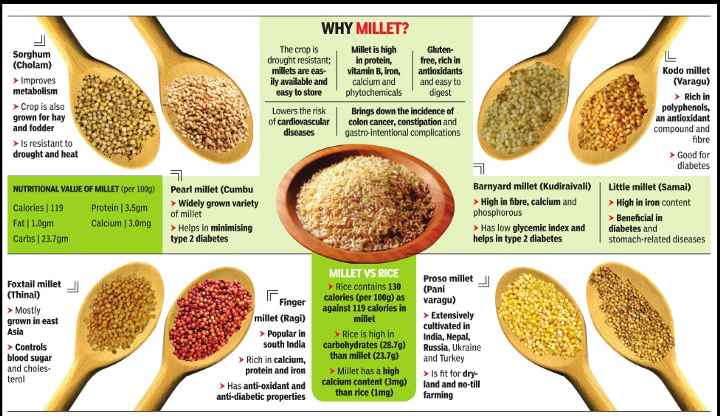
Millets have been an integral part of our diet for centuries. In addition to a plethora of health benefits, millets are also good for the environment with low water & input requirement. Millets are a group of small-seeded grasses that have been cultivated for thousands of years in many parts of the world, including Africa, Asia, and Europe. They are known for their tolerance to harsh growing conditions, such as drought and high temperatures, and are often grown in areas where other crops are not able to survive. Because their surface is rough, millets are known as coarse grains and include sorghum, pearl millet, finger millet, little millet, foxtail millet, proso millet, barnyard millet, and kodo millet.

Millets contain higher amounts of protein than other cereals and are even considered nutritionally superior to wheat and rice. Millets are also known to have a more balanced amino acid profile and are a good source of phytochemicals, which possess anti-inflammatory and anti-oxidative properties. These coarse grains are abundant with nutrients like carbohydrates, protein, dietary fibre, good-quality fat, and minerals like calcium, potassium, magnesium, iron, manganese, zinc and B complex vitamins. The health benefits of eating millet include improving immunity and preventing infections, helping in detoxifying the body, reducing the risk of developing cardiovascular diseases by lowering bad cholesterol levels, supporting metabolism and helping in managing diabetes and obesity because they are low in glycemic index and high in fibre, aid in the regulation of blood glucose levels. Millets contain both fibres and phytonutrients, which may help reduce the risk of developing colorectal cancer. Millets, especially finger millet, contain a high amount of potassium that is essential for the proper functioning of the kidneys, brain and muscles. They are also gluten-free, making them a suitable option for people with celiac disease or gluten intolerance.

In addition to their nutritional benefits, millets also have the potential to improve food security in many regions. They have a short growing season and can be planted and harvested quickly, making them a reliable source of food even in times of drought or other natural disasters. Furthermore, they can be grown on marginal lands, which are often not suitable for other crops, and are able to fix atmospheric nitrogen, which allows them to be grown in low-fertility soils, and also helps to reduce the need for chemical fertilizers.

Another important aspect of millets is their role in sustainable agriculture. These grains require less water and fewer inputs compared to other crops, making them more environmentally friendly. They also have a low carbon footprint and are able to sequester more carbon in the soil than other crops, which helps to combat climate change.

To create awareness and increase the production & consumption of millets, the United Nations, at the behest of the Government of India, declared 2023 the International Year Millets so that these ancient grains can become more mainstream.

Millets are incredible ancestral crops with high nutritional value and can play an important role and contribute to the collective efforts to empower smallholder farmers, achieve sustainable development, eliminate hunger, adapt to climate change, promote biodiversity, and transform agrifood systems. Greater millet production can support the livelihoods of smallholder farmers and can provide decent jobs for women and youth and the revenue created can boost economic growth. The possibility of a health cereal alternative with millets, the risks associated with production shocks can be mitigated. The International Year of Millets 2023 and the push towards increasing millet production will contribute to the 2030 Agenda for Sustainable Development. IYM 2023 hopes to galvanise interest in millets among various stakeholders like farmers, the youth and civil society and push governments and policymakers to prioritise the production and trade in these cereals.

Despite their many benefits, millets are often overlooked in favour of other crops, such as wheat and rice. The international year of millets will be an opportunity to raise awareness of the potential of these grains to improve food security and nutrition, support sustainable agriculture, and combat climate change. The UN is encouraging governments, civil society organizations, and the private sector to take action to promote the use of millet in food and agriculture. This includes increasing research and development on millet cultivation and processing, as well as promoting their consumption through education and marketing campaigns.