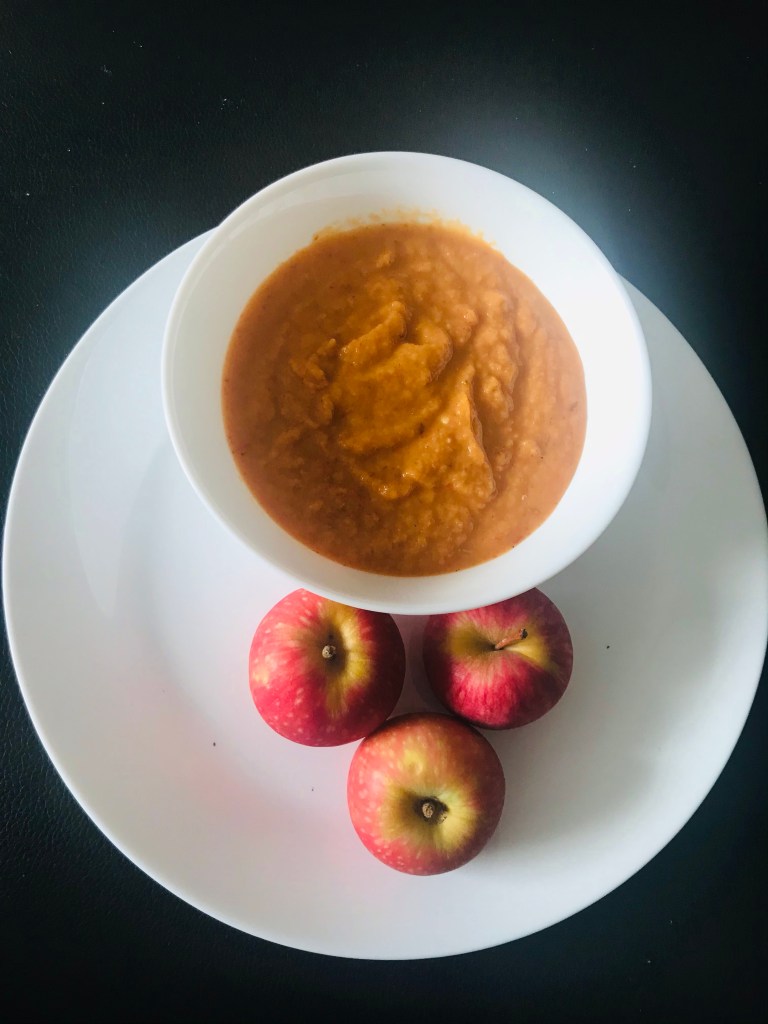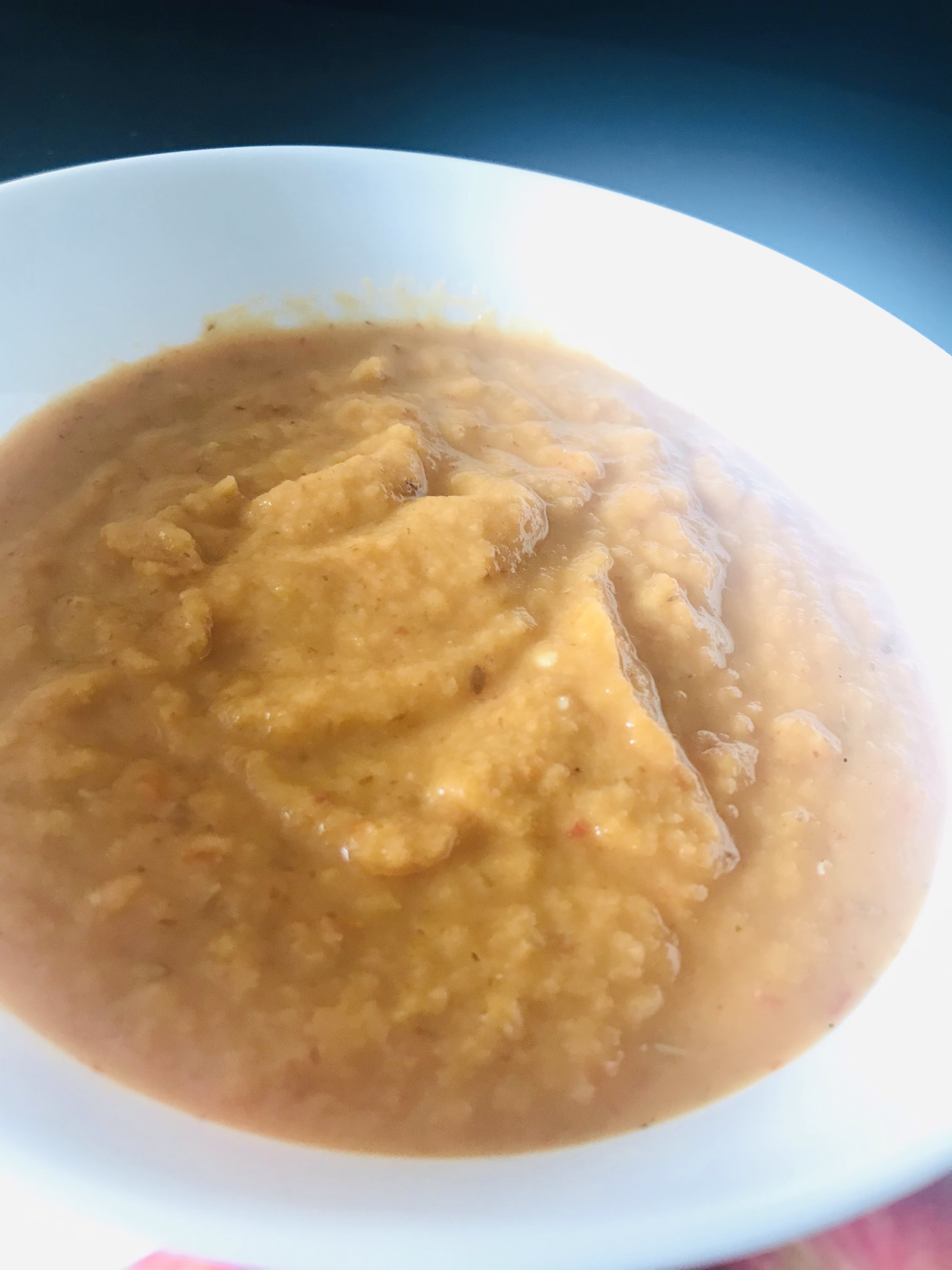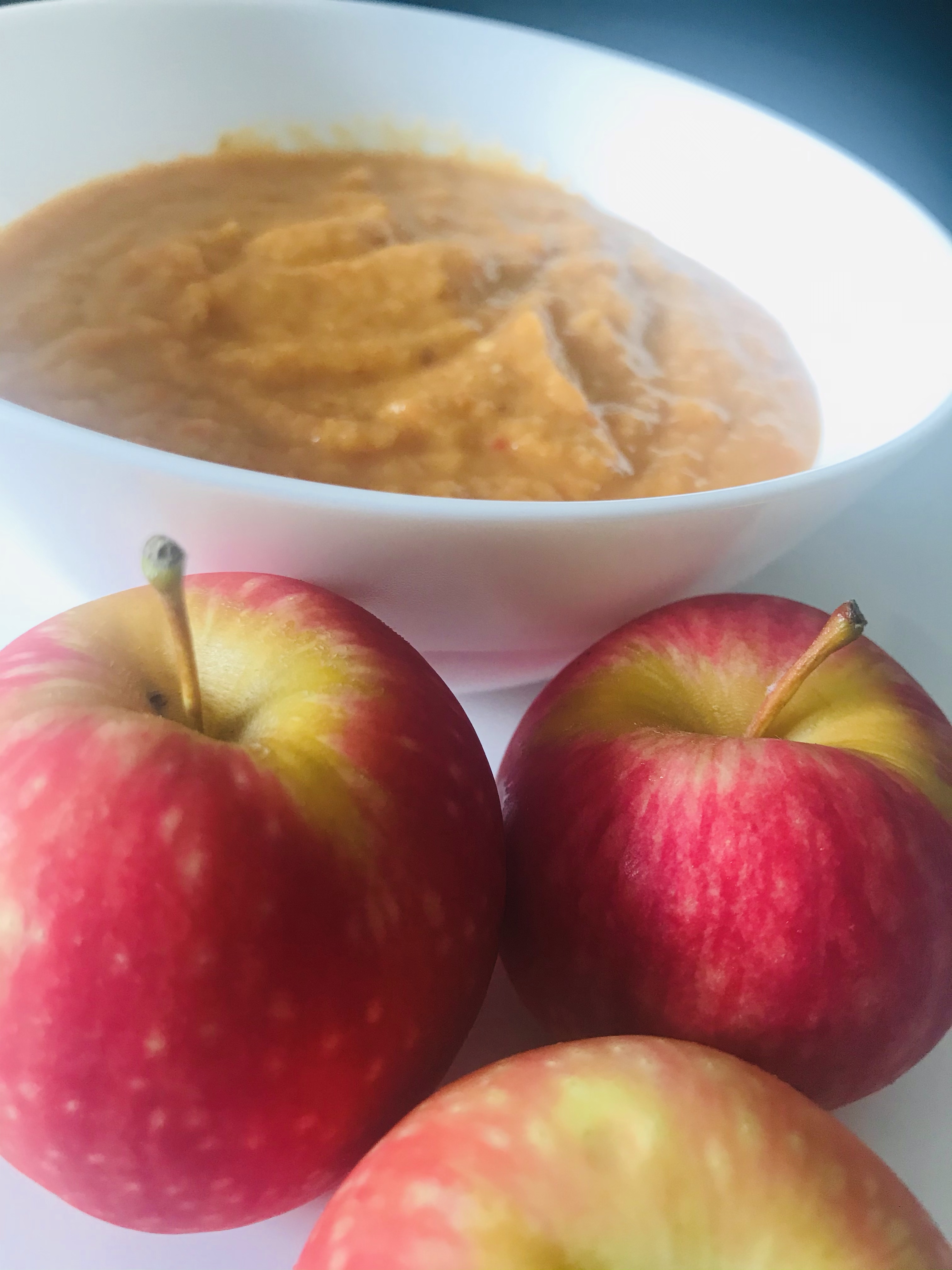
Recipes: Apple Chutney

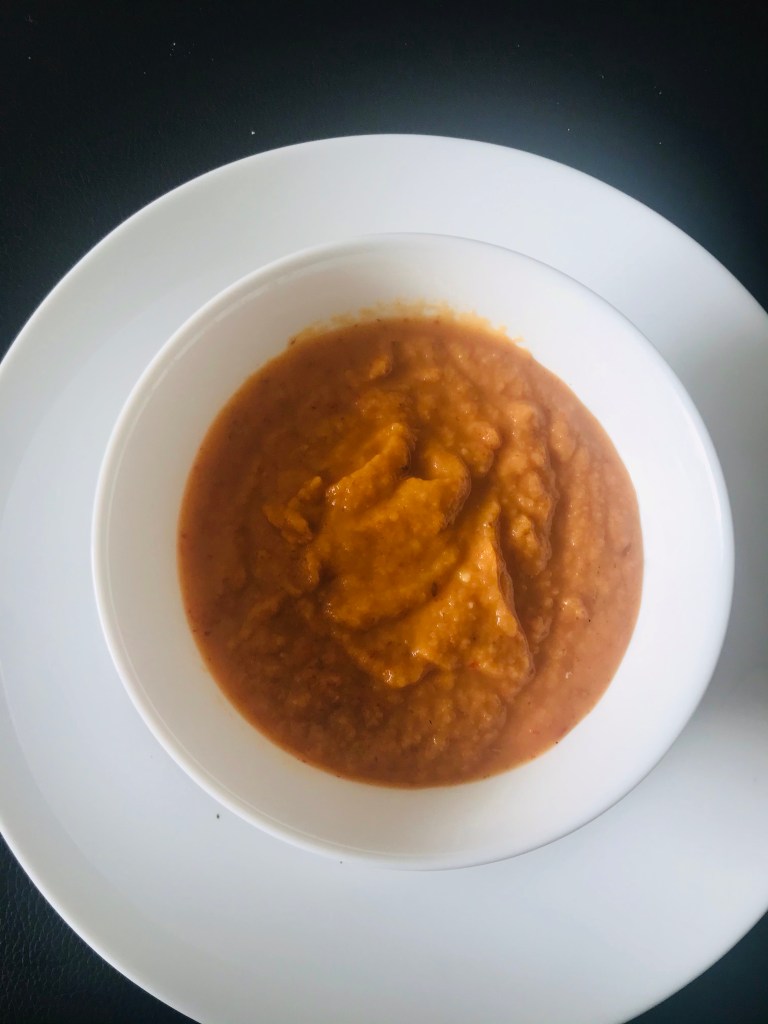
I love chutneys and regular readers will know by the number of chutney recipes in the recipes tab. Also, chutneys are extremely versatile and so easy to experiment with that I do make them because I like experimenting in the kitchen. Also chutneys go well with so many dishes – slather it on bread and make it a sandwich or eat it as an accompaniment to the myriad breads available in the Indian cuisine as well as rice.

I saw a version of this recipe on a local channel and was intrigued by the usage of apples. Though I have made a Green Apple Chutney, this chutney cooked the apples, which was different. I tried and twised it a bit as I am wont to do.

Apple Chutney

Ingredients:

  • 1 medium sized onion, chopped
  • 1 medium sized tomato, chopped
  • 1 red apple, chopped
  • 1 green apple, chopped
  • 1-inch piece of ginger
  • 5-6 cloves of garlic, minced
  • 3-4 dried red chillies
  • 1 tsp cumin seeds
  • 1 tbsp oil
  • Salt to taste

Method:

  • Heat oil in a pan and when it warms, fry the cumin seeds till they pop. Then add the ginger and garlic and fry them till they start to become slightly crispy. Then add the dried red chillies and let them cook for a minute or so.
  • Now add the onions and fry them till they become translucent. Next add the tomatoes and cook them till they start to become mushy.
  • Add add the chopped apples, and let them cook till they start to lose their shape.
  • Switch off the gas and let it cool completely.
  • Blend to a smooth paste, adding water as needed. Check for seasoning and salt as needed.

Eat this as a spread for sandwiches or as an accompaniment to Indian breads. This chutney was a huge hit at home and had a slight sweet undertones because of the red apples. By adding the green apple, it gave a slight tartness, which can be done away with if you want it as a sweet chutney. Just replace the green apple with a second red apple.

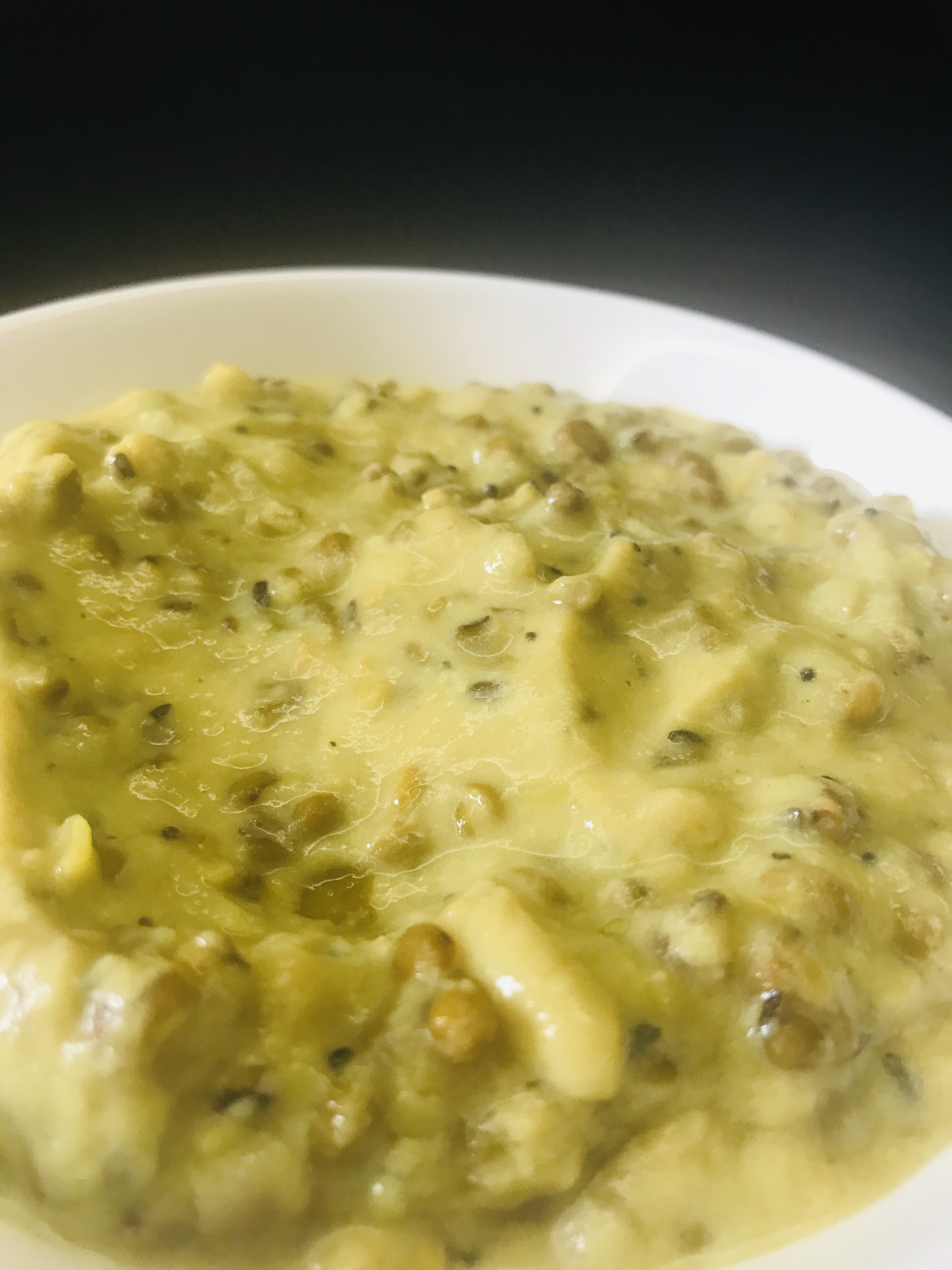
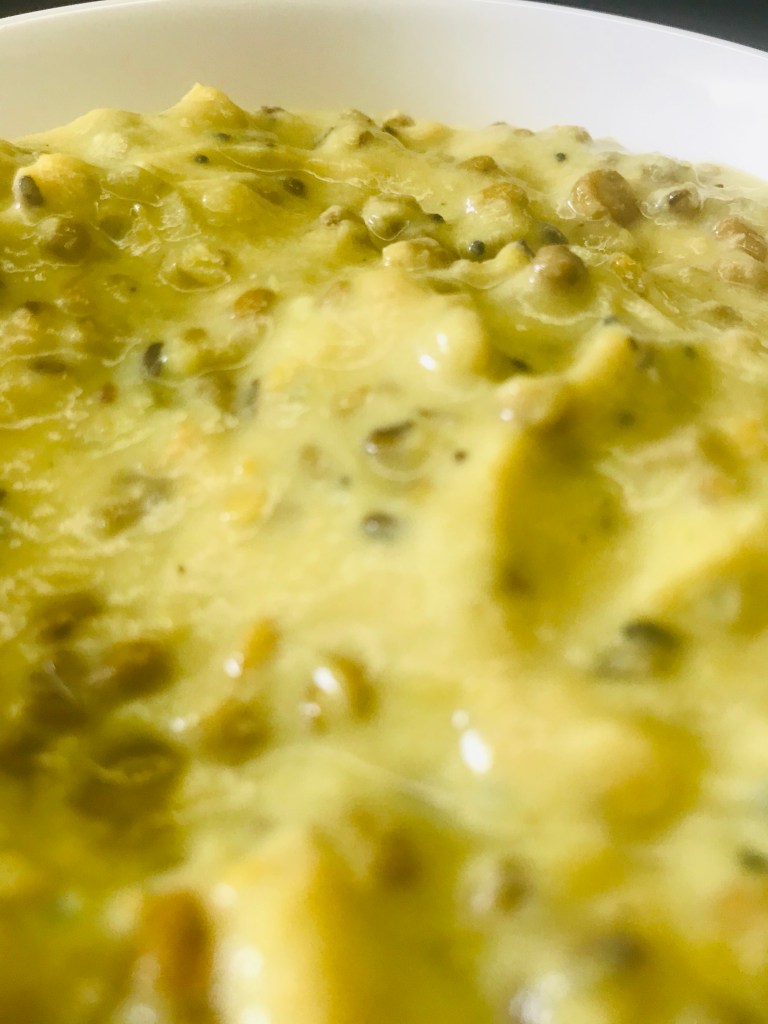
Recipes: Gujarati Khatta Mung aka Whole Green Gram Dal in a Buttermilk Gravy

Dal is a staple in most indian households with some variety of the protein packed dish made across the country. So, in order that we don’t get bored with the same kind of dal, I am always on the lookout for interesting takes and variations.

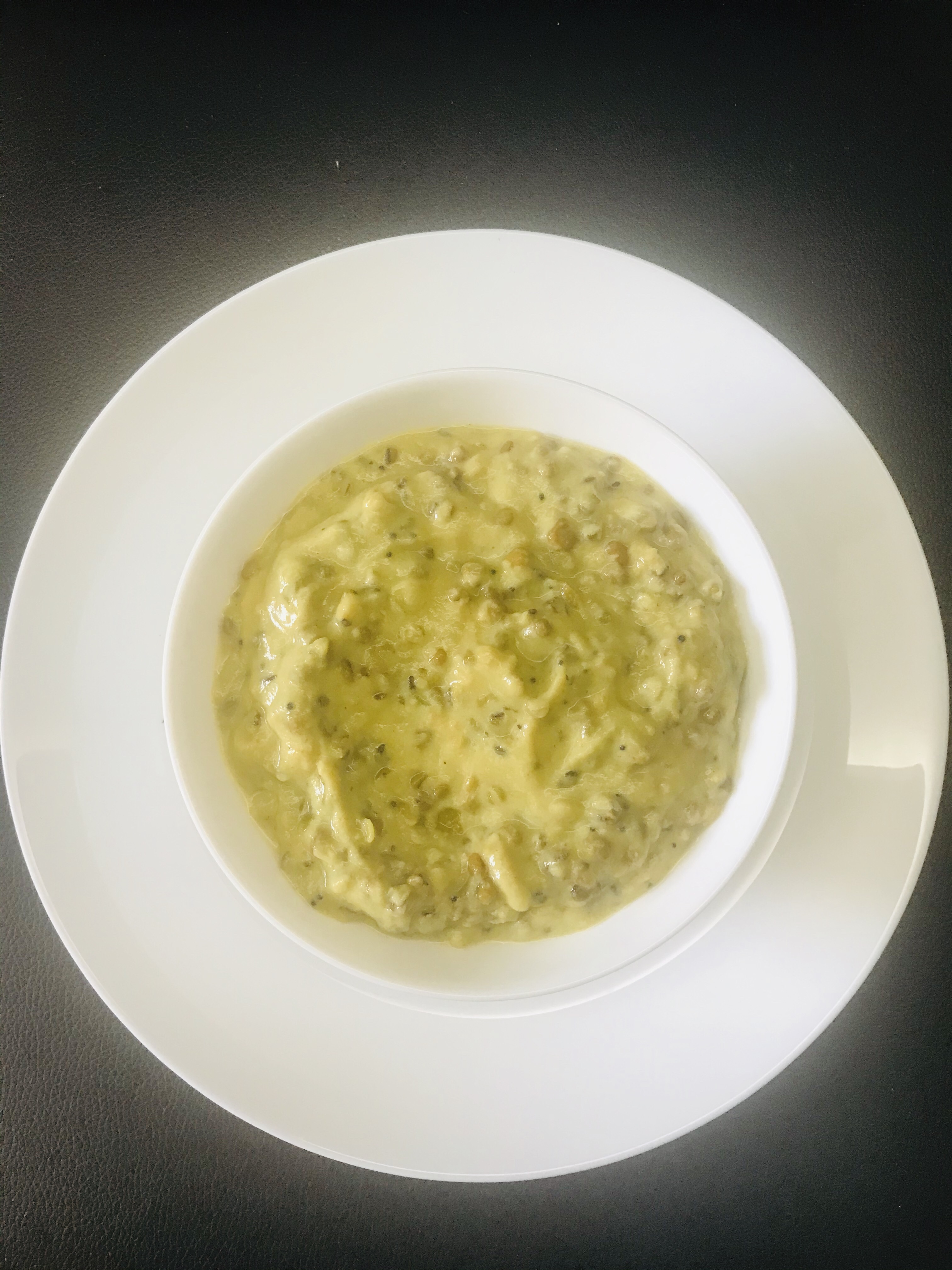
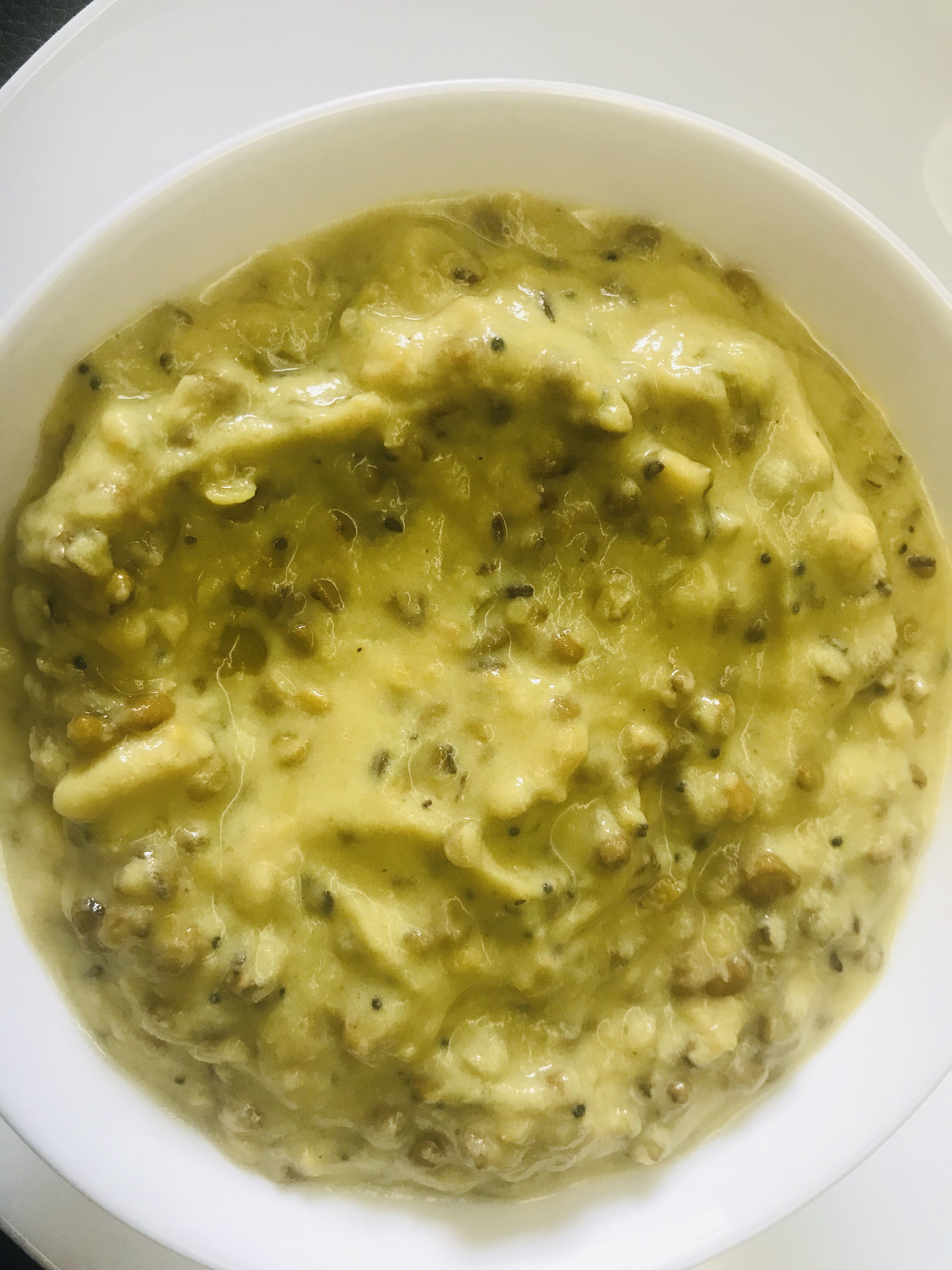
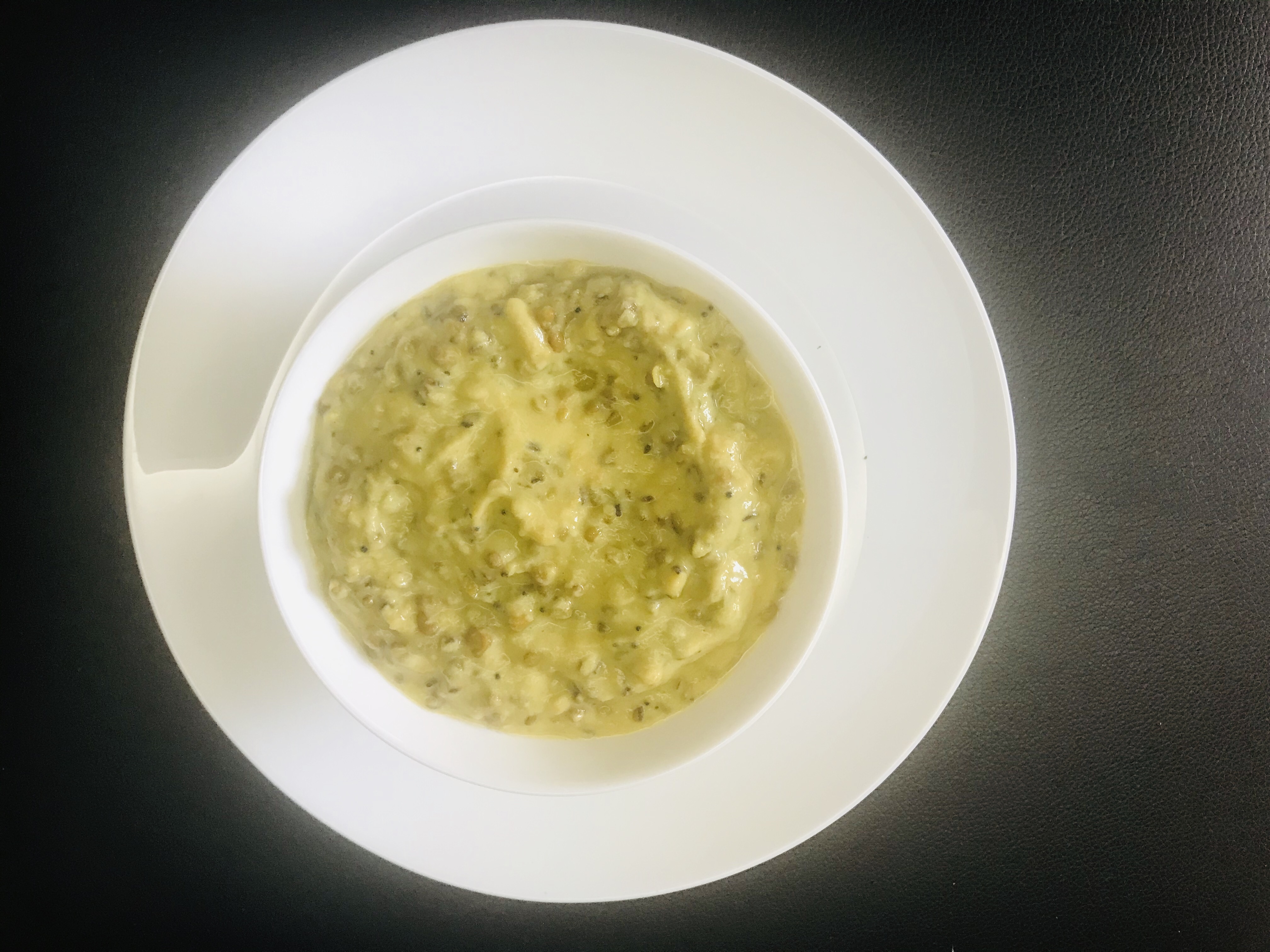
I saw this dal in one of my friend’s Facebook posts and it looked interesting enough to try it. My version may not be the most authentic one, but I enjoyed making and eating the dal. This is a staple in most Gujarati households, but you won’t find this in most restaurants. So let’s see how this is made…

Gujarati Khatta Mung aka Whole Green Gram Dal in a Buttermilk Gravy

Ingredients:

  • ½ cup whole green moong dal, soaked for 4-6 hours
  • ½ to 1 cup yoghurt
  • 2-3 tbsp gram flour or besan
  • ¼ tsp turmeric powder
  • ¼ tsp asafoetida
  • 1 tsp mustard seeds
  • 1 tsp cumin seeds
  • 5-6 curry leaves
  • 1-inch piece of minced ginger
  • 2 green chillies, slit lengthwise
  • 1 tbsp oil
  • Salt to taste
  • Coriander leaves, finely chopped to garnish

Method:

  • Drain the soaked moong dal and in a large pan, cook the soaked and drained moong dal with just enough water to cover it for about 5-7 minutes until it is just cooked and tender. Make sure it does not get mushy.
  • In a separate bowl, whisk the yoghurt well and add the gram flour, turmeric powder, asafoetida, some salt and about a cup of water and whisk till it is smooth with no lumps. Keep aside.
  • Heat oil in another pan and when the oil warms, add the mustard seeds and let the seeds crackle. Then add the cumin seeds and stir for a couple of seconds, followed by the curry leaves. Stir till the curry leaves start to become crisp. Then add the slit green chilles and the ginger and saute for about 30-40 seconds.
  • Now add the cooked moong dal into this tempering and then the yoghurt gram flour mixture and allow everything to come to a nice rolling boil. Let this simmer on a low flame for about 5 minutes.
  • Check for seasoning and add salt if needed.
  • Turn off the flame and garnish with finely chopped coriander leaves and serve hot with rice and a simple vegetable stir fry for a homely lunch.

Recipes: Roasted Cauliflower and Potato Soup

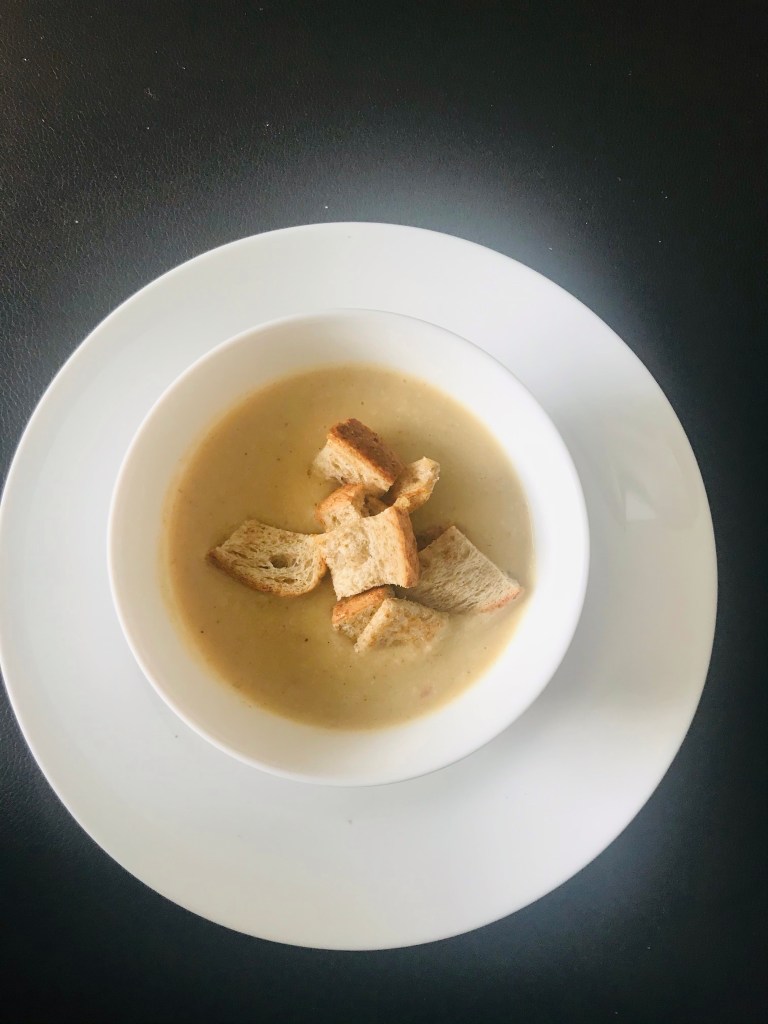
These days we don’t eat rice on Sundays and so I am constantly on the look-out for recipes which we eat, mostly western dishes. One weekend, with an almost bare fridge, I decided to make a cauliflower and potato soup and decided to kick it up a notch by roasting the cauliflower first.

The soup was incredibly creamy and so filling. It also seemed to me to have a slight taste of mushroom soup and this was corroborated by BB & GG who loved it! I will be making this again and this will be added to my repertoire.

Roasted Cauliflower and Potato Soup

Ingredients:

  • 1 head cauliflower, cut into florets and kept aside
  • 1 large potato, peeled and chopped
  • 1 large sweet potato, peeled and chopped
  • 1 medium sized onion, chopped
  • 5-6 garlic cloves
  • 10-12 cashew nuts
  • Salt and Pepper to taste
  • 1 tbsp butter
  • 2-3 tbsps Olive oil

Method:

  • Preheat your oven to 200 degrees celcius.
  • Line a large tray with either baking paper or aluminium foil and spread the chopped cauliflower in it. Drizzle about a tbsp of olive oil and then some salt and pepper and mix well. Pop it into the oven to roast for about 20-25 minutes or until the cauliflowers start to brown. Remove and keep aside.
  • Heat the balance oil and butter in a large saucepan and when warm, add the galic cloves. When the garlic starts to brown, add the cashew nuts and stir for a few minutes.
  • Then add the chopped onions and stir until the onions are translucent.
  • At that point, add the chopped potatoes, some salt and cook covered until the potatoes are done, stirring every few minutes.
  • Let everything cool down and then blend it to a smooth paste in a blender. This works best with a proper blender and an immersion blender may not make it as creamy as we want it to be.
  • Once it is smooth and creamy, bring this back to the saucepan and bring to a boil. Season as needed with salt and pepper and serve hot with bread croutons.

World Pulses Day

As a vegetarian, pulses are essential to our diet and there is no meal without pulses in some form or the other in our meal. Also known as legumes, pulses are the edible seeds of leguminous plants cultivated for food. Dried beans, lentils and peas are the most commonly known and consumed types of pulses. Pulses do not include crops that are harvested green like green peas and green beans which are classified as vegetable crops. Also excluded are those crops used mainly for oil extraction like soybeans and groundnuts as well as leguminous crops that are used exclusively for sowing purposes like the seeds of clover and alfalfa.

So why are pulses important crops? Pulses are packed with nutrients and have a high protein content, making them an ideal source of protein particularly in regions where meat and dairy are not physically or economically accessible. Pulses are low in fat and rich in soluble fiber, which can lower cholesterol and help in the control of blood sugar. Because of these qualities they are recommended by health organizations for the management of non-communicable diseases like diabetes and heart conditions and pulses have also been shown to help combat obesity.

In addition to the above, pulses are naturally low in fat and contain no cholesterol, which can contribute to reducing the risk of cardiovascular diseases. They are also low in sodium which is a contributor to hypertension. Pulses are a great source of plant-based protein. 100 grams of dry lentils contain a remarkable 25 grams of protein and during cooking, pulses absorb considerable amounts of water, reducing their protein content to around 8 percent. The protein quality of cooked pulses can be increased by simply combining them with cereals in a meal, like lentils with rice, classic Indian food combination. Pulses are a good source of iron and combining them with food containing vitamin C can help optimise optimise the absorption of iron in bodies from pulses, like lemon juice on a dal perhaps. Pulses are high in potassium, which supports heart health and plays an important role for digestive and muscular functions and are often quoted among the top high fibre foods, necessary for supporting digestive health and helping to reduce the risks of cardiovascular diseases as well as an excellent source of folate essential to the nervous system function and especially important during pregnancy to prevent foetal defects. They are low glycaemic index foods and help stabilise blood sugar and insulin levels, making them suitable for people with diabetes and ideal for weight management as well as being naturally gluten-free, they make an ideal food option for coeliacs.

For farmers, pulses are an important crop because they can both sell them and consume them, which helps farmers maintain household food security and creates economic stability. Pulses are also good for the environment because the nitrogen-fixing properties of pulses improve soil fertility, which increases and extends the productivity of the farmland. By using pulses for intercropping and cover crops, farmers can also promote farm biodiversity and soil biodiversity, while keeping harmful pests and diseases at bay. Pulses also contribute to climate change mitigation by reducing dependence on the synthetic fertilizers used to introduce nitrogen artificially into the soil. Greenhouse gases are released during the manufacturing and application of these fertilizers, and their overuse can be detrimental to the environment.

Recognising the value of pulses, the UN General Assembly on 20 December 2013, proclaimed 2016 as the International Year of Pulses which increased the public awareness of the nutritional and environmental benefits of pulses as part of sustainable food production. Building on the success of the International Year of Pulses, Burkina Faso proposed the observance of World Pulses Day and 10 February 2019 was proclaimed as the first World Pulses Day.

Most cultures and cuisines across the world feature pulses in some form or the other. The Indian cusine across states features pulses in different formats from the staple dals and sambars to other dishes like vadas and pakoras. Other dishes include the hummus and falafel from the Mediterranean made of chick peas, to a traditional full English breakfast which usually include baked navy beans, the Bandeja Paisa from Colombia. So try to incorporate some pulses in your daily diet for health!

Recipes: Pune Style Maharashtrian Misal

Misal is probably a quessiantial Maharashtrian dish, you will find it in every corner of the state and each city, town or district has their own variation of this dish. Misal pav consists of usal which is a spicy curry usually made from moth beans, which I think is called haricot beans and pavwhich is a type of an Indian bread roll. The final dish is topped with farsan which are dry snacks or sev, onions, lemon and coriander. It is served as a breakfast dish, as a snack and also as a full meal.

I have been wanting to try and make this for the longest time, but somehow the fact that this is quite a lengthy recipe to make always put me off. Then one Sunday, I finally decided to make it. I read up a few recipes and then did it my own way. Traditionally Misal is made with sprouted green gram or sprouted brown gram, but I decided to make this more healthy by incorporating many dried beans and also since this was a fairly last minute decision, I did not sprout the beans and just soaked them in water. The version I have made is in the Pune style which incorporates poha or flattened rice flakes, while the Nashik version is usually spicy and served with pav, curd, chopped coriander and onion.

Pune Style Maharashtrian Misal

Ingredients:

For the Usal

  • 1.5 – 2 cups mixed dried beans soaked in water overnight (I used a mixture of dried chickpeas, dried black-eyed peas, dried green peas, dried black beans and black chickpeas, but you can use what you have in the kitchen)
  • 1 tbsp oil
  • 1 tsp mustard seeds
  • 5-8 curry leaves
  • 2 medium sized onions, chopped finely
  • 3-4 medium sized tomatoes, chopped finely
  • 1 tbsp tamarind pulp
  • Kashmiri red chilli powder to taste
  • 1 tsp coriander powder
  • 1 tsp cumin powder
  • ¼ tsp turmeric powder
  • ¼ tsp asafoetida powder

For the dry masala paste

  • 1 tbsp cumin seeds
  • 1 tbsp coriander seeds
  • 1 tbsp sesame seeds
  • 7-8 pepper corns
  • 5-6 dried red chillies
  • 1 inch piece of cinammom
  • 4-5 cloves
  • ¼ cup dessicated coconut

For the wet masala paste

  • 1 medium sized onion
  • 1 bulb garlic, peeled
  • 1 inch piece ginger

For the poha

  • 1 cup poha or flattened rice flakes
  • ¼ tsp plus a pinch turmeric powder
  • 1 tsp sugar
  • ¼ tsp asafoetida powder
  • 1 small onion, finely chopped
  • Salt to taste
  • 1 tsp oil

To serve

  • 2-3 onions, finely chopped
  • 2 medium sized potatoes, boiled, peeled and chopped into small pieces
  • 1 cup mixed farsan
  • Date Tamarind chutney (optional)
  • Green Coriander chutney (optional)
  • 1 cup beaten yoghurt mixed with rock salt

Method:

  • Cook the soaked dals in a pressure cooker with a bit of salt and cook till the beans are soft, but not overcooked. Let it cool and keep aside. Don’t drain the water it has been cooked in.

For the dry masala

  • In a dry pan, heat the masala ingredients except the coconut and let them brown.
  • When the dry spices become brown and start to emit an aroma, add the desiccated coconut and continue stirring until the coconut becomes crisp and brown and loses its moisture.
  • Remove from the flame and keep aside till it becomes cool.
  • Then grind it to a fine powder and keep aside. If there is any left over after using it for the usal, you can use it to spice other stir fries.

For the wet masala

  • Grind together the ginger, garlic and onion to a smooth paste and keep aside.

For the Poha

  • Wash the poha in running water till it softens and then let the water drain.
  • Add some salt and the sugar plus a pinch of turmeric powder and mix well. Keep aside.
  • Heat 1 tsp oil in a pan and when the oil heats up, add 1 tsp mustard seeds and let the mustard crackle. Next add the curry leaves and let the leaves become crisp.
  • Then add ¼ tsp turmeric powder and ¼ tsp asafoetida powder and stir for a few seconds.
  • Then add the finely chopped onions and a pinch of salt and let the onions soften.
  • When the onions soften and become translucent, add the soaked poha and mix well.
  • Cover and cook for 3-4 minutes. Remove into a serving dish and keep aside.

For the Usal

  • Heat oil in a large pan and when the oil heats up, add the mustard seeds and let it crackle.
  • When the mustard seeds crackle, add the curry leaves, turmeric powder and asafoetida and let the curry leaves crisp up.
  • Then add the finely chopped onions and let it cook for a while.
  • When the onions are translucent, add the wet masala paste and let it cook for a while.
  • Add the finely chopped tomatoes and cover and cook till the tomatoes become mushy and disintegrate.
  • Now add about 3-4 tbsps of the dry masala (or as much as you want) and then add the cooked beans along with the water it was cooked in.
  • Add in the dry spice powders – cumin powder, coriander powder as well as salt and cook covered for about five minutes.
  • Add in the tamarind paste and about 1 to 2 cups of water (you can make this as thick or thin as you like it) and continue cooking covered for about 10 minutes more.
  • Cover and keep aside till it’s time to assemble it.

To assemble the Misal Pav and Dahi Misal

  • In a bowl, layer some poha and pour in some usal above the poha.
  • Top with some of the onions and potatoes and finally add some farsan on top of it.
  • Add some of the green and tamarind chutney if you want and also a squeeze of lime.
  • You can eat it as it is or with some pav or bread.
  • To make dahi missal after you top the farsan, add some of the prepared yoghurt and tp with the chutneys and then eat as it is.

It’s a tad long to make and takes time, but the taste is totally worth it!