

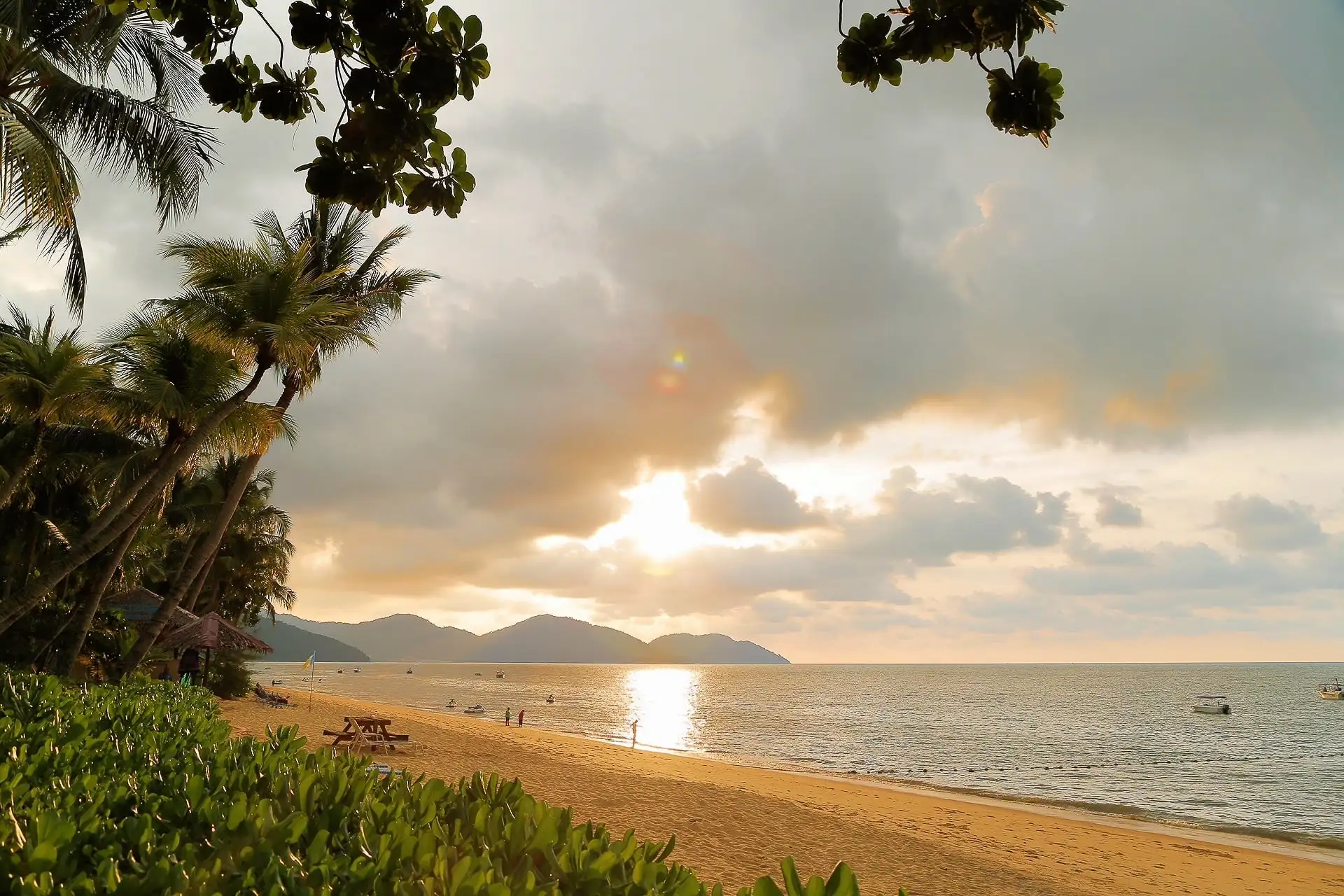
Located along the northern coast of Penang Island, Batu Ferringhi is the prime beach destination in Penang. To cater to the influx of tourists, several major high-rise hotels have been established along the 4 km stretch of beaches. Offering various water sports, from the beach resorts along Batu Ferringhi, on a clear day, one could get a picturesque view of the Andaman Sea and Mount Jerai, located in the neighbouring state of Kedah. In addition, Batu Ferringhi is famous for its night market, which offers a wide variety of merchandise and street food.
There had been human activity within Batu Ferringhi as early as 1592, when an Englishman, Sir James Lancaster, arrived and began pillaging other vessels around Penang Island. However, for much of its recent history, Batu Ferringhi was a quiet village, until the urbanisation of the area began in the 1970s. Due to its location along the northern coast of Penang Island, Batu Ferringhi was hard hit by the 2004 Indian Ocean earthquake and tsunami.
The word ferringhi or feringgi is the modern spelling of the Classical Malay word peringgi, originally used about the Portuguese conquistadors before being applied to all people of European descent. It is cognate with the Thai farang and Khmer barang and all are derived from the Indian word firangi, which itself originates either from the Arabic ferringi or Persian farangi. In the Middle East and Africa, it originally referred to the Franks but came to include Europeans in general. Batu Ferringhi, therefore, would mean the place where Westerners had come ashore, with the Malay word batu, meaning rock referring to the rocky shoreline of this particular area. Among Tamils, the area is known as Paringgi Malai or foreigner’s hill.
James Lancaster, an English privateer, came ashore at this particular area in 1592. This made Lancaster the first European to reach Penang Island. Having come ashore aboard the Edward Bonaventure, Lancaster and his crew proceeded to pillage every vessel they encountered for the next four months.
The urbanisation of Batu Ferringhi only began in the 1970s. This involved the construction of several hotels along the beaches, attracting locals and tourists alike. Condominiums soon followed, offering gorgeous views of the sea overlooking the Malay Peninsula. However, these developments did not come without problems, such as the deteriorating seawater quality that has led to the infestation of jellyfish around Batu Ferringhi.
Batu Ferringhi has a long, clean stretch of sand and lots of beach resorts dotted along it. Jalan Batu Ferringhi is an adjoining road that holds the resorts, shops and restaurants that one can visit. If one has the time, one must also visit the Tropical Spice Garden in Batu Ferringhi and spend a relaxing afternoon surrounded by the scent of spices.

Located at Jalan Tun Syed Sheh Barakbah, Fort Cornwallis or Kota Cornwallis in Malay is one of the most important structures in George Town. It is the largest intact standing fort in Malaysia and it was built to defend Penang from pirate attacks.
Named after Charles Marquis Cornwallis, the Governor General of Bengal, the design of Fort Cornwallis is very much like that of other British forts in India. The fort played a major role in stabilising George Town as a UNESCO World Heritage Site. Inside Fort Cornwallis, there is a bronze statue of Captain Francis Light, along with barracks, ammunition storage areas and prison cells.

With bastions on every corner, Fort Cornwallis is an example of a star fort. The layout, design and construction of a fort were usually done by a military engineer, making it safe, but no engineer was appointed to Penang for the first ten years. It was with the help of Light’s experience as a country trader and the Navy that the fort was designed. There were barracks inside Fort Cornwallis that were made to keep artillery regiments and offices, gunpowder, gun carriages, food and clothing, storerooms for armaments and military prisoners. The bridges were used to provide access to the two gateways, above which were buildings that served as officer’s quarters. The fort’s arsenal consisted of 12 mortars and 110 cannons. One should try to visit the fort after sunset to avoid excessive crowds and heat. Tour guides are available inside the fort, dressed in historic British attire.
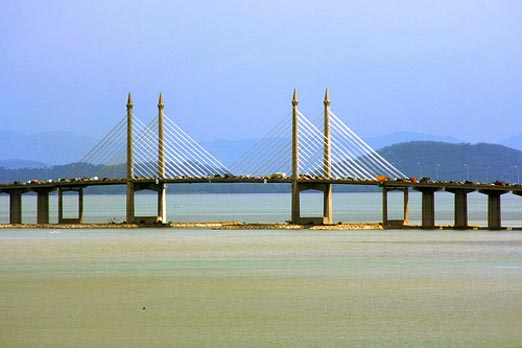
The Penang Bridge is a 13.5-km dual carriageway toll bridge and controlled-access highway. The bridge connects Perai on the mainland side of the state with Gelugor on the island, crossing the Penang Strait. The bridge was the first and, until 2014, the only road connection between the peninsula and the island. The bridge is the second-longest bridge over water in Malaysia, with a length over water of 8.4 km.
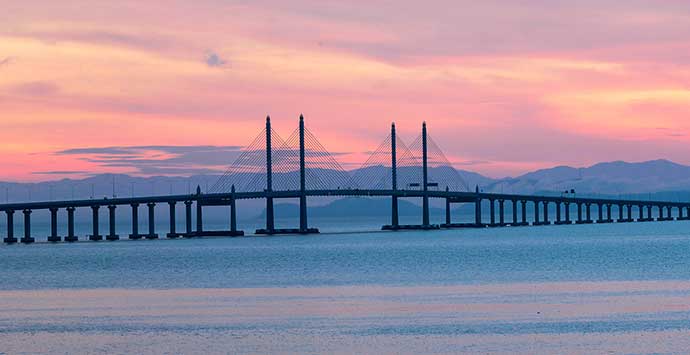
The Second Penang Bridge, also known as the Sultan Abdul Halim Muadzam Shah Bridge, joins the mainland and Penang Island from Seberang Perai up to Gelugar. It stretches across an impressive length of 24 km making it the longest bridge in the Southeast Asian region. The construction of this megastructure commenced in November 2008 and was finally completed in 2014 although the official plan was formulated in 2006. The wide ‘S’ curves featured by this magnificent bridge all along the route not only enhance its overall aesthetics but also help motorists stay focused while driving for 20 minutes straight from either of its ends. The bridge was built for RM 4.5 billion.

Jerejak Island
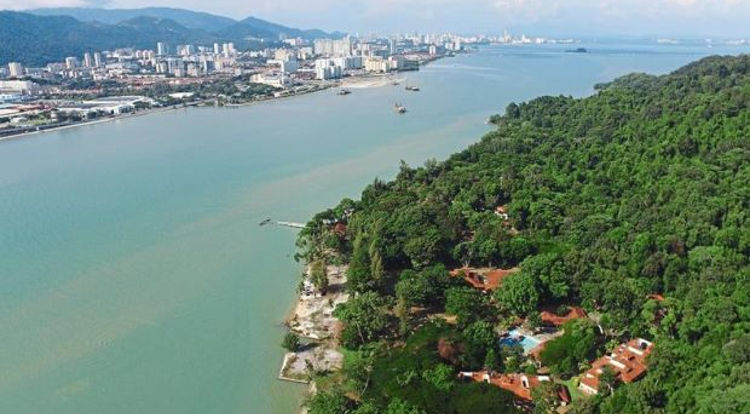
Jerejak Island is a 3.62 sq km islet off the eastern coast of Penang Island. It was formerly the main leper asylum for the Straits Settlements in 1868, a Quarantine station in 1875 and a penal colony in 1969.
Francis Light, the founder of Penang, was said to have arrived in Jerejak Island in early 1786 before heading on to Penang. In 1797, Colonel Arthur Wellesley proposed Jerejak as the possible site for Fort Cornwallis. His idea of establishing a military post in Jerejak was to offer protection to a new township called Jamestown, which was to be set up in present-day Bayan Lepas. Earlier in 1794, there had been an outbreak of malaria caused most likely by the clearing of the jungle to establish George Town, claiming many lives, including Francis Light himself. Thus, Wellesley was not in favour of the site for Fort Cornwallis to be on Penang Island. This plan did not materialise as George Town was starting to become a profitable port and it soon became unnecessary to establish Jamestown or have a military facility in that location.
As a result of Francis Light’s earlier ruling, whereby immigrants were allowed to claim whatever land they could clear, Penang became flooded with immigrants. As a precautionary step, these immigrants were sent to Jerejak’s health inspection centre before they were allowed to proceed to Penang.
In 1868, a leper asylum was completed and then began use in 1871. In 1880, it was expanded becoming the collection centre of leprosy or leprosarium for the Straits Settlements until the 1930s. The leprosarium was closed in the 1960s and part of the island was made into a health quarantine centre for immigrants in 1875 in the eastern and northern parts of the island. A memorial is located at the island dedicated to two crew members of the Imperial Russian Navy who died when their cruiser Zhemchug was sunk by the cruiser SMS Emden of the Kaiserliche Marine in the Battle of Penang on 28 October 1914. This is one of the few incidences of action which took place in Malaysian territory during World War I.
After World War II, there was an increase in the number of tuberculosis patients and a sanatorium was set up at Jerejak for victims. On 12 June 1969, the Jerejak Rehabilitation Centre was set up as a maximum security prison, hence earning the island the moniker, the Alcatraz of Malaysia. The centre was eventually closed in August 1993.
Jerejak Island is served by a 10-minute ferry ride from the Bayan Lepas jetty. Plans were made to redevelop Jerejak into a resort in 2000 and this resulted in the closure of the more unsavoury institutions on the island like the sanatorium and prison. In January 2004, the Jerejak Resort & Spa was opened for business. The resort was built over the area once occupied by the leprosarium. This development remains somewhat controversial, with concerns about the systematic removal of the island’s historical remains and heritage and the impact on Jerejak’s fragile ecosystem.
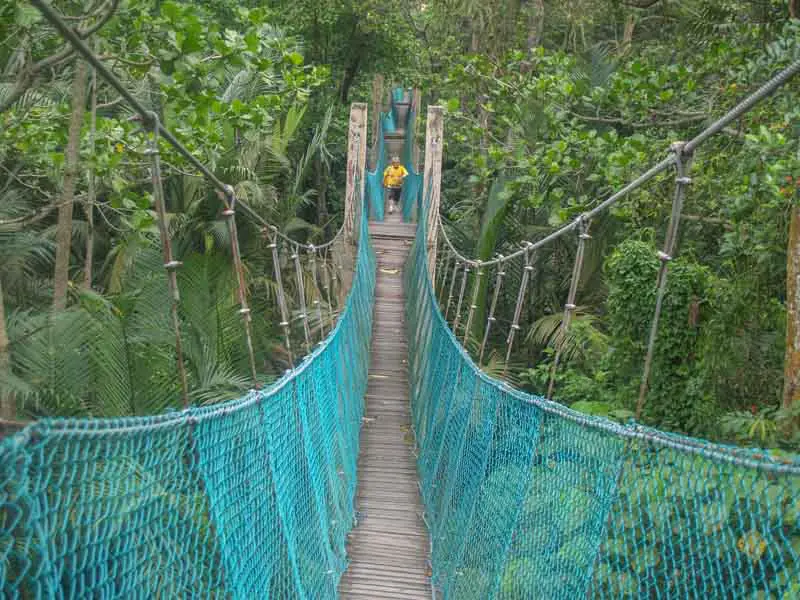
There are several fun trails that tourists can visit to learn more about the island. The Razak Trail leads to the suspension bridge built over the dam that was used for water supply to the hospital and the Prison Trail is yet another interesting adventure trail passing through the jungles to the old and famous prison.
Other Islands
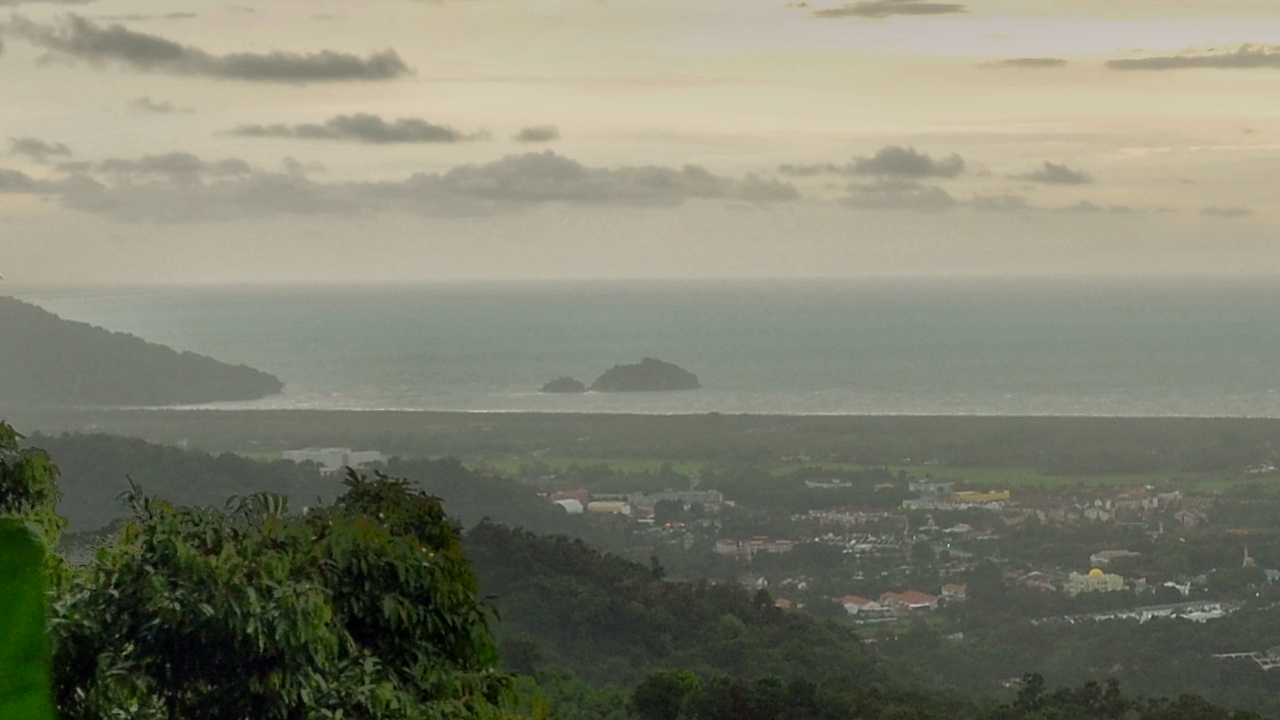
Betong Island is a group of two islets off the southwestern coast of Penang Island. The islets have a combined land mass of .028 sq km. Although they are uninhabited, there is a small fish farm on the larger islet, and they are visited by anglers and fishermen in the daytime.

Kendi Island is an islet off the southwestern tip of Penang Island. Located over 3.4 km from Penang Island, this rocky, uninhabited islet is often frequented by anglers. The terrain of much of the islet’s shoreline is relatively jagged, except for a few narrow beaches.

Rimau Island is an islet off the southeastern tip of Penang Island. Located nearly 832 m from Penang Island, this uninhabited islet is now home to an active lighthouse, which was built by the British in 1885. This particular lighthouse, a 17 m round cylindrical cast iron tower with a lantern and gallery, as well as a single-storey house for the lightkeeper, serves as a beacon for vessels entering the Penang Strait from the south.
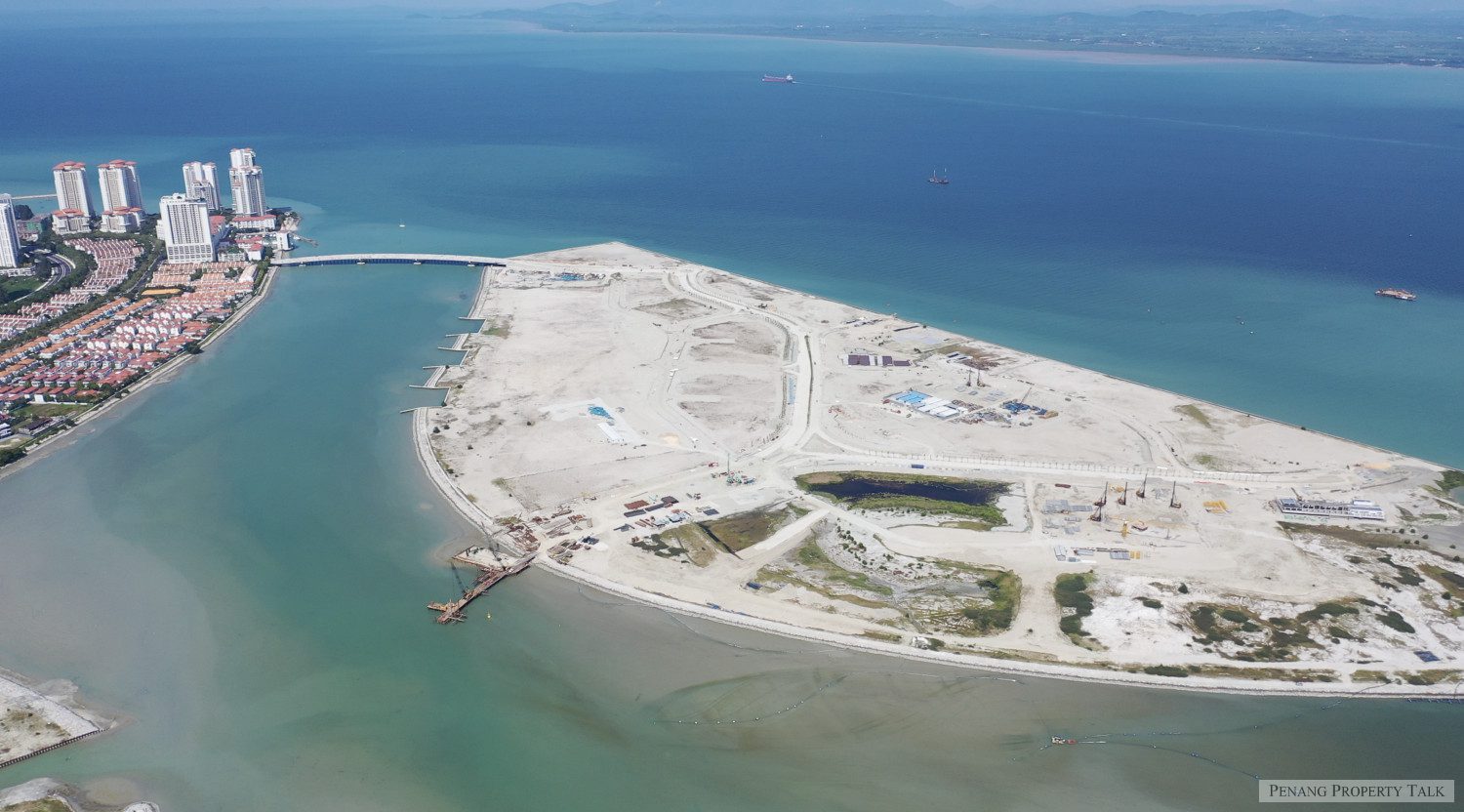
Andaman Island is a 3.1 sq km man-made islet off the northeastern coast of Penang Island. Located just 760 m off the shoreline of Seri Tanjong Pinang within the city of George Town, it is being reclaimed by local developer Eastern and Oriental Berhad as an integrated mixed-use precinct with a gross development value of RM17 billion. Phase 1 of the reclamation project was completed in 2019, paving the way for the construction of The Meg and Arica, the first residential properties on the islet. As of 2023, the islet is connected to Seri Tanjong Pinang via a road bridge, while a second bridge between the islet and Gurney Drive is under construction.

Seberang Perai
Seberang Perai is located on the Malay Peninsula and is separated from Penang Island by the Penang Strait. It shares borders with Kedah to the north and east, and Perak to the south. The city spans an area of 748 sq km and is the third largest city in Malaysia.
Originally part of Kedah, the territory containing the city was ceded to the British East India Company in 1800. It was named Province Wellesley and has been administered as part of Penang ever since. The territory became a centre for cash crop agriculture, while the development of new towns such as Butterworth and Bukit Mertajam followed with the advent of roads and railways towards the end of the 19th century.
After Malaya’s independence, Seberang Perai benefited from the development spillover from George Town. The Port of Penang, the third busiest seaport in the country, was relocated to the municipality in 1974, bolstering its burgeoning industrial-based economy that has attracted numerous multinational companies. Two road bridges were constructed to physically connect Seberang Perai with George Town, complementing an existing ferry service between the two cities. Penang Sentral, a new transit-oriented development, has strengthened Seberang Perai’s role as the logistics hub of northwestern Malaysia. Following decades of rapid urbanisation and infrastructural developments, Seberang Perai was conferred city status in 2019.
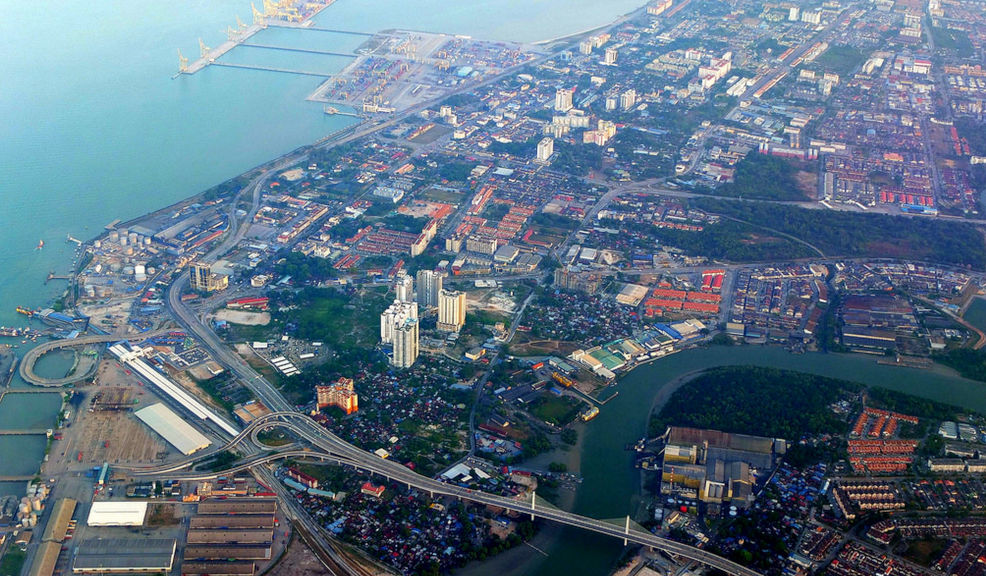
Seberang Perai was originally named Province Wellesley after Richard Wellesley, who was the Governor-General of India when the territory was acquired by the British East India Company or EIC in 1800. The word Seberang Perai is believed to have emerged from a local expression used to refer to the northern banks of the Perai River. After the acquisition of Province Wellesley, the river became the boundary between British-held territory to the south and Kedah to the north. The Thai word plāi, meaning the end, referred to the southern limits of Kedah, which were formed by the river.
The Hokkiens referred to the northern banks of the river as koay kang, which means to cross the river. At the time, passengers from George Town would land at Perai and cross the river to get to Butterworth and the hinterland beyond. The term koay kang coincides with the Malay name Seberang Perai.
Seberang Perai bears evidence of human habitation during the Neolithic era. The site of Guar Kepah, located on the southern banks of the Muda River, is home to human remains found in shell middens that indicate the settlement of the area in that period. Guar Kepah remains the only known example of coastal adaptation among Neolithic humans in Malaysia. Seberang Perai was once a part of the Bujang Valley civilisation. The Mahanavika Buddhagupta plaque and the Cherok Tok Kun megalith, found at Bukit Mertajam, both indicate significant Hindu influence in the area between the 5th and 6th centuries.
In 1786, Francis Light acquired Penang Island from Kedah in exchange for British military protection. However, when Sultan Abdullah Mukarram Shah of Kedah attempted to retake the island by force in response to the EIC’s reneging on military protection, British forces launched a preemptive assault on Perai. The Kedahan forces were routed and the Sultan was forced to sue for peace. In 1800, the EIC annexed a strip of the mainland from Kedah for a sum of 4,000 Spanish dollars. This acquisition, negotiated by George Caunter on behalf of Lieutenant-Governor George Leith, gave the EIC permanent sovereignty over both Penang Island and the newly acquired territory, which was named Province Wellesley after Governor-General of India Richard Wellesley. The Perai River became the international border between the British and Kedah territories.
The annexation of Province Wellesley allowed for the expansion of the cash crop industry from the island to the mainland. This led to the harvesting of spices and sugar, which attracted migrants from China, India, Myanmar and the Middle East, as well as Malay refugees from Kedah fleeing the Siamese conquest. In 1831, the EIC expanded the province Wellesley northwards, moving the international border between British and Siamese territories from the Perai River to the Muda River. The territory’s boundaries were further expanded in 1868 and in the Pangkor Treaty of 1874, effectively enlarging the British-held territory from the Muda River in the north to the Kerian River in the south.
The development of roads and railways in the early 20th century promoted the growth of Province Wellesley’s rubber industry. Malaya’s new rail lines, which ran from the Siamese border to the north to Singapore to the south, cut through Province Wellesley, allowing the Port of Penang to become a major tin exporter. This led to the emergence of new towns, such as Butterworth and Bukit Mertajam, as logistics hubs. The Municipal Ordinance of 1913 resulted in the creation of three local governments within Province Wellesley – the Butterworth and Bukit Mertajam town boards, and the Province Wellesley Rural Board. The creation of local governments further accelerated infrastructural developments within the territory.
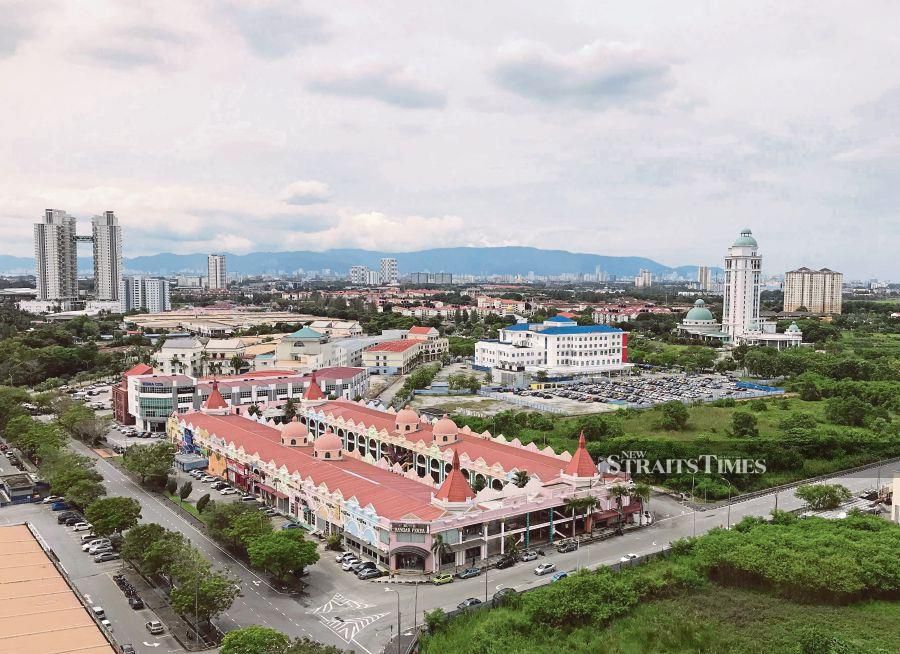
RAF Butterworth was opened just a few months before the outbreak of hostilities between Britain and Japan in December 1941. As Japanese troops landed in Kota Bharu and Songkhla, Allied squadrons defending northern Malaya were decimated and had to retreat to RAF Butterworth by 8 December. The air base was subsequently attacked by Japanese bombers on the following day. The Royal Air Force eventually abandoned it on 15 December. Penang fell to the Japanese four days later.
During the Japanese occupation, Province Wellesley, like George Town, underwent significant social upheaval. Civilians suffered harsh treatment from the Japanese, who attempted to enforce order while living conditions worsened along with the economic situation. Rice farmers in Province Wellesley were encouraged to increase their yields, but the shortfall in rice supply proved too great to be substituted. Despite the establishment of pioneer farms in the territory by Japanese administrators in 1944, food shortages persisted until the end of the war when British forces liberated Penang. Following the war’s end, British authorities swiftly undertook to restore order in Province Wellesley, which was plagued by elements of the Chinese underworld and communist infiltrations.
In 1953, the British reorganised the local governments within the territory. Five local governments – one each for the municipalities of Butterworth and Bukit Mertajam, and three rural district councils – were instituted. After Malaya’s independence in 1957, the local governments were amalgamated within Seberang Perai. In 1961, the Butterworth and Bukit Mertajam municipalities were consolidated with the North and Central Seberang Perai rural district councils, respectively. The three remaining local governments were subsequently merged into a single municipality in 1974. Two years later, Seberang Perai was conferred municipal status and the local government was renamed the Seberang Perai Municipal Council.
In the early 1960s, the Penang state government began industrialising Seberang Perai through the establishment of the first industrial estates at Mak Mandin and Perai. In 1974, the Port of Penang was relocated from George Town to the municipality and in 1980, the adjacent Perai Free Industrial Zone was created to leverage the available maritime and rail infrastructure. These were accompanied by a significant increase in the municipality’s population, which was largely due to the spillover of development from George Town.
Decades of economic growth and the availability of industrial land have led to substantial investments in infrastructure including the completion of the Penang Bridge and the Second Penang Bridge that connect the municipality with George Town. The industrial sector has also spurred the development of newer townships within the municipality such as Seberang Jaya and Batu Kawan. Seberang Perai was granted city status in 2019.
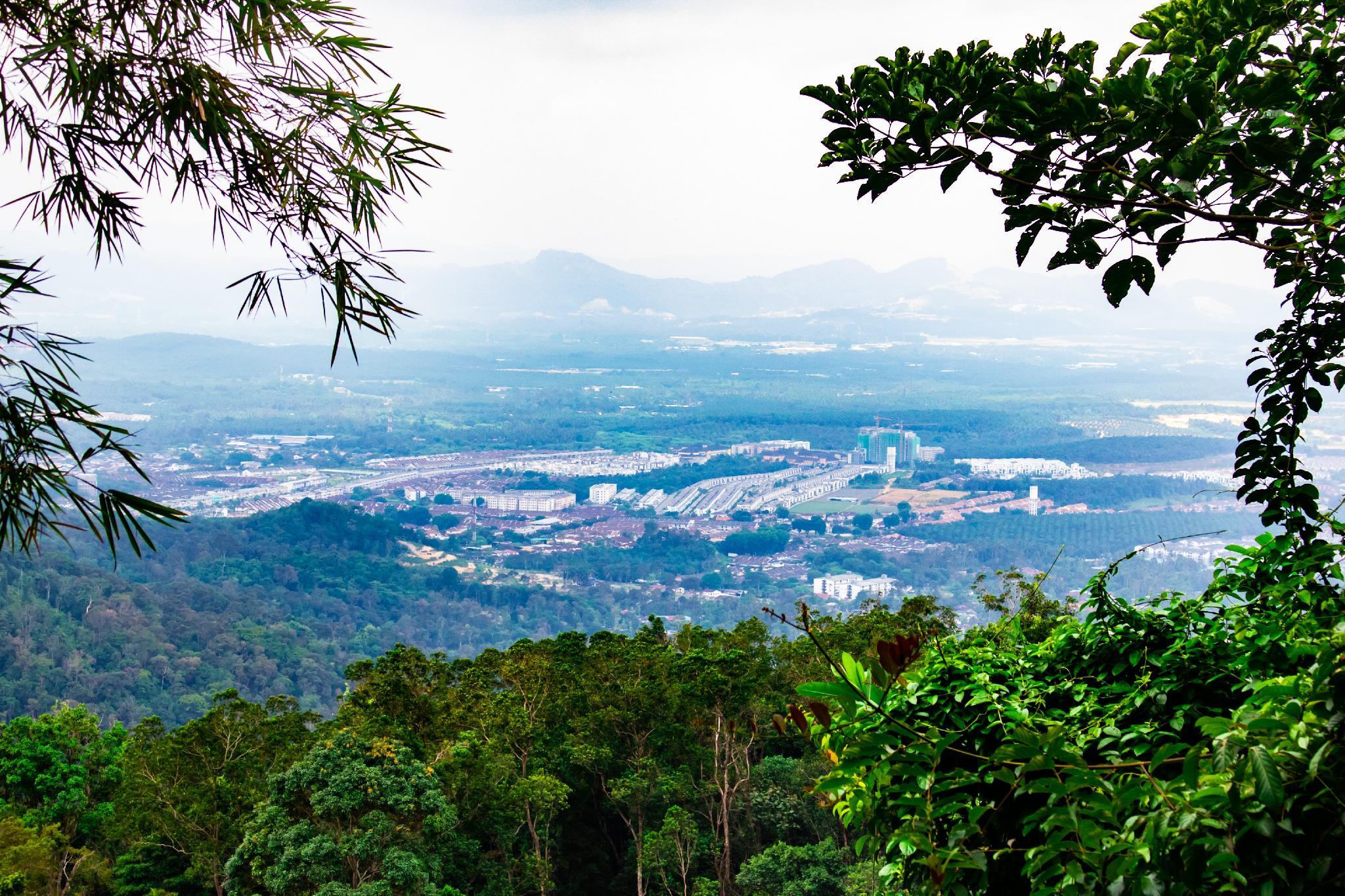
Seberang Perai spans the entire mainland portion of Penang. With a total land mass of 747.8 sq km, Seberang Perai is slightly larger than Singapore. The terrain of the city is mostly flat and alluvial, except for the hilly region along its eastern border with Kedah. Standing at a height of 1,787 ft, Mertajam Hill is the tallest point within Seberang Perai. The city’s coast is divided into a northern sandy shoreline and a muddy, mangrove-covered southern coastline. The southern coast is geographically sheltered by Penang Island, while the northern shoreline is more exposed to the forces of the Malacca Strait.
Seberang Perai’s jurisdiction also includes two offshore islets – Aman and Gedung islands. These islets feature mudflats that connect with the mainland due to sedimentation that occurred during the construction of the Penang Bridge. The city is demarcated by the Muda River to the north, which serves as the border between Seberang Perai and Kedah. To the south, the tripoint between Seberang Perai, Kedah and Perak lies within the Kerian River. Several riverine systems flow through the city, including the Perai, Juru, Jejawi and Tengah Rivers. River pollution caused by industrial waste has been a persistent issue for decades.
Formerly regarded as a poor cousin to George Town, Seberang Perai has undergone significant transformation in the decades following Malaya’s independence. The Penang state government has been actively promoting a policy of balanced development between the two cities, and Seberang Perai has been positioned as the future of Penang. In 2021, Penang Bay, an initiative aimed at promoting sustainable development, urban regeneration and a creative economy between downtown George Town and Butterworth, was officially announced. With significant industrialisation since the 1970s, the city has been designated a growth centre within the George Town Conurbation. The development of newer townships has also driven economic diversification, with a growing services sector concentrated around retail and tourism.

Established in 1988, Penang Bird Park is a nature lover’s paradise, being the first and largest bird park of its kind in Malaysia. This five-acre park located on the mainland portion of Penang is home to over 300 species of birds from all over the world, with more than 150 species from Malaysia alone. One can also witness daily feeding sessions and bird shows, providing an up-close and personal experience with birds such as hornbills, flamingos, pelicans, and swans. Located in Tanjung Bungah, Penang Bird Park is also home to turtles, deer, and snakes.
The park has two walk-in aviaries and two geodesic-domed enclosures, as well as large spaces that imitate the natural habitats of the birds. It is not uncommon to see majestic birds like ostriches frolicking about in these environments. Visitors to the stunning park get to spend a day admiring and even interacting with the majestic birds the Penang Bird Park is home to.
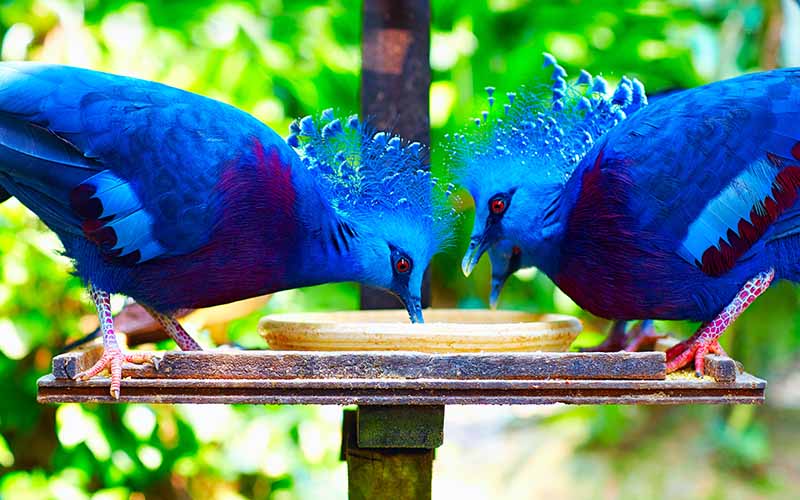
The Bird Park boasts a spirited animal show where several kinds of well-trained birds, including but not limited to parrots, birds, and owls, entertain the numerous spectators. Children, especially, are known to enjoy the show, which is also quite informative and, therefore, an interactive learning experience. The show runs daily at 11 am and 3:30 pm. The bird park is open every day from 9 am to 7 pm and has an entry fee of RM 38 for adults and RM 20 for children below 12. Schoolchildren wearing a Malaysian national school uniform pay RM 10, while the physically and/or mentally handicapped & underprivileged are allowed free entrance. Camera fees are RM 1 per camera, while for a video camera, one needs to pay RM 5.
That’s it about the beautiful state of Penang! I will be back again to explore another Malaysian state.








 Memories and Such