
The school holidays are almost here and instead of a planned trip to India, I am now thinking of other options. One destination which keeps coming to mind and which I have been looking at for a few years now is Hanoi and the Halong Bay cruise. So what should we expect from a few days in Hanoi? Read on…
Located on the banks of the Red River, Hanoi is one of the most ancient capitals in the world. Colonised by the French in 1873, the city was the administrative centre of French Indochina from 1883 to 1945. Because of its French colonial past, the city filled with broad, perpendicular tree-lined avenues, well-preserved colonial buildings, ancient pagodas, and unique museums within the city centre. After the reunification of Vietnam in 1976, it became the capital of the country. October 2010 officially marked 1,000 years since the establishment of the city.
Hanoi is known for its two main neighbourhoods, namely the French Quarter and Old Quarter. Both are packed with attractions, but easily accessible on foot. Of course, not forgetting the iconic Ha Long Bay which is the main reason for planning a trip to Hanoi. Some of the sights I want to really see, do and soak up in Hanoi are…
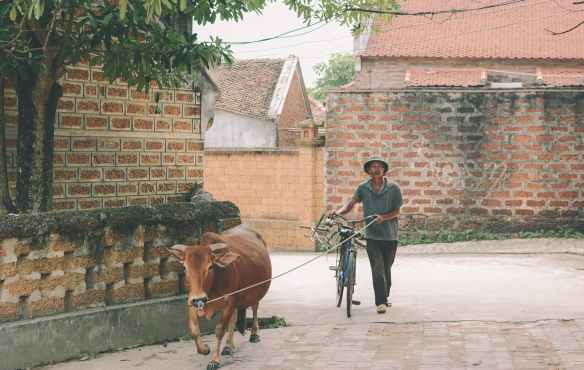
Photo by Huy Phan on Pexels.com
The Old Quarter: The prominent district of the Old Quarter is relatively pedestrian-friendly compared to other cities in Vietnam – on weekends and evenings, the streets are closed off to motorised vehicles to make way for bia hoi bars and food stalls selling a variety of Vietnamese food. For a feel of rich old Vietnamese customs, you can also stroll along ancient commercial streets surrounding Hoan Kiem Lake, which are named after their original businesses dating back about 1,000 years. Located on the northern end of Hoan Kiem Lake, Hanoi Old Quarter’s most popular attractions comprise mostly quaint Buddhist shrines, street markets, and traditional Vietnamese arts.
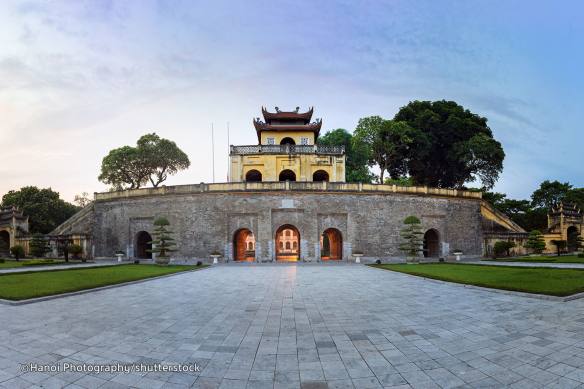
Imperial Citadel of Thang Long: The Imperial Citadel of Thang Long, is an intriguing relic of Vietnam’s history and, signifying its historical and cultural importance, was made a UNESCO World Heritage Site in 2010. Also known as the Hanoi Citadel, many artefacts and items dating back to between the 6th and 20th centuries were excavated in 2004, including foundations of old palaces, ancient roads, ponds and wells. On top of these discoveries, archaeologists also found bronze coins, ceramics and pottery from China and many places in Asia, all of which demonstrate a close trading relationship in the area. Visitors should head for the display room that features interesting excavated items and mock-ups of the citadel itself. The site also has more modern resonance as the home to the D67 Tunnel and House, the headquarters of the Vietnamese People’s Army, from which war was waged from 1955 to 1975.

Ho Chi Minh Mausoleum: The Ho Chi Minh Mausoleum is a place of pilgrimage for many Vietnamese people who come to pay tribute to “Uncle Ho”, the man who led the fight for an independent, unified Vietnam. Queues to see Ho Chi Minh’s embalmed corpse can stretch for hours outside the gigantic mausoleum, and once inside talking, photography and hands in pockets are banned.

Hoan Kiem Lake: The Hoan Kiem Lake in Hanoi attracts tourists and locals looking to get away from the noise and frenetic pace of the city. Peaceful and quiet, the lake surrounds Ngoc Son Temple, a pagoda sitting in the centre on a small island. The temple attracts many visitors and was built in commemoration of the 13th-century military leader Tran Hung Dao who was renowned for his bravery in the battle against the Yuan Dynasty. Homage is also paid to scholar Van Xuong and Confucian master Nguyen Van Sieu. The island on which the temple is built is known as Jade Island and is accessible by the iconic Huc Bridge or Rising Sun Bridge which is a charming scarlet-painted wooden bridge of classical Vietnamese design. The pagoda is also guarded by two towering posts decorated with Chinese writing. The lake and temple are probably the most famous places in Hanoi city in which to rest and enjoy the view and are a great place to sit back and watch the locals.
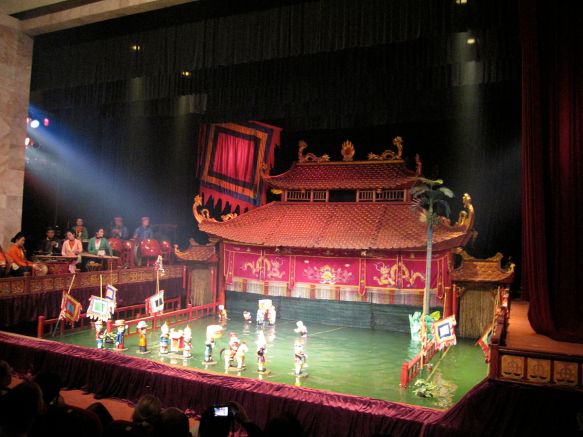
Water Puppet Theatre: The world-famous Thang Long Water Puppet Theatre in Hanoi has its roots in an art form that dates back to the 11th century. The tradition of water puppet theatre stems from a time when rice paddy fields were flooded and villagers would make entertainment by standing in the waist-deep water with the puppets performing over the water. Using large rods to support the puppets it appeared as if they were moving across the water with the puppeteers hidden behind a screen.

Don Xuan Market: Dong Xuan Market is the largest market in Hanoi and has a wide array of products for sale over four floors. Located on the northern edge of the Old Quarter, it is an imposing Soviet-style building, surrounded on all sides by merchant shops and stalls. It is a rough-and-ready type of market (some might even say ‘dirty’), especially in the ground floor wet market area. However, head up the stairs and you will find cheap items available at wholesale prices. It is quite an experience, even if you only leave with a pair of cheap sunglasses and a Vietnamese conical hat.
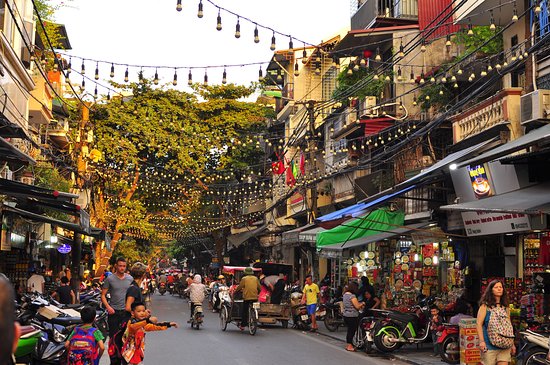
Hang Gai Street: Hang Gai Street is the best place in Hanoi to shop for high quality, fashionable silk materials, traditional Vietnamese apparel, and home furnishings. Also known as Silk Street, the entirety of this 300 metre-long street is lined with fashion boutiques and local tailor shops that have been operating for decades, where you can also order personally tailored suits and dresses that are made to measure. Set on the edge of Hanoi’s Old Quarter near Hoan Kiem Lake, Silk Street is renowned for its quality and choice of craftsmen.
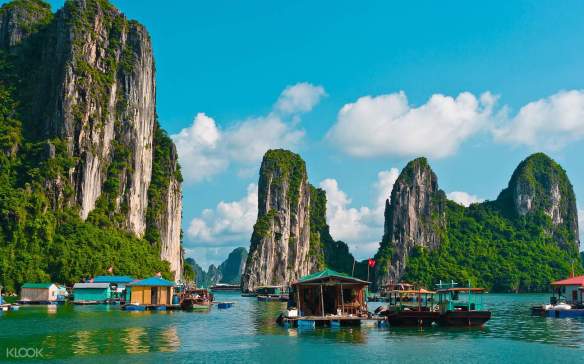
Halong Bay: You can do Halong Bay either as a full day tour or as an overnight one. I am leaning towards the overnight tour as that will give us an experience of sleeping in the cruise itself. Hanoi is only 170 kilometres west of UNESCO-listed Halong Bay, so just about every tour company in the city offers excursions at varying price points. A full day tour to Halong Bay is usually inclusive of roundtrip hotel transport, lunch, tour guide, and cruise along through the incredible scenery of the bay. You also get to explore some of the most popular limestone caves, floating villages, and islets such as Cat Ba Island and Bon Hon Island. Food may be a big issue with us (because we are vegetarians) and so this is something I need to figure out beforehand.
We all love coffee and so I am excited to try Vietnamese coffee at its very source! All in all, this post has made me excited to start planning our holiday to Hanoi. Has it whetted your appetite to visit this lovely city too?
 Memories and Such
